
Software Testing Training
124 min read11 viewsWhat Is the Best Software Testing Training in India?
By TechPratham TeamPublished October 19, 2026Updated October 19, 2026
.png)
Software testing has become an important part of software development because businesses need reliable applications, websites, and digital services. As more companies depend on technology, the need to identify software defects, improve application quality, and provide a smooth user experience continues to create opportunities for skilled software testers.
Many students, fresh graduates, and working professionals search for the best software testing training in India to understand which skills they should learn and how they can prepare for a career in quality assurance (QA).
The best software testing training is not simply a course that covers many tools. It should explain testing fundamentals, provide practical exercises, introduce relevant technical skills, and help learners understand how testing works in real projects.
For beginners, a good learning path usually starts with manual testing and gradually introduces test case design, defect reporting, SQL, API testing, and automation testing. Choosing the right training program depends on your career goals, learning preferences, course curriculum, and opportunities for practical experience.
What Is Software Testing?
Software testing is the process of checking an application to determine whether it works as expected and meets its requirements. It helps identify defects before they affect users and allows development teams to improve software quality.
For example, consider an online shopping website. Users should be able to register, log in, search for products, add items to their shopping carts, make payments, and receive order confirmations.
A software tester checks these features to make sure they work correctly. If a payment fails but the customer is still charged, the tester documents the problem so the development team can investigate and resolve it.
Software Testing Training in India can involve checking functionality, performance, security, usability, and other aspects of an application. Its main purpose is to reduce risks, identify problems, and help deliver a reliable product.
Who Should Join Software Testing Training?
Software testing can be a suitable learning option for people who enjoy solving problems, analysing information, and understanding how applications work. You do not always need previous professional experience to begin learning the fundamentals.
The following groups may benefit from software testing training.
Fresh graduates: Students who have completed their graduation can learn testing concepts and prepare for entry-level QA opportunities.
Beginners with limited technical knowledge: People who are new to software development can start with basic testing principles before moving to more technical topics.
Working professionals: Employees who want to move into software testing or quality assurance can develop relevant skills through structured learning.
Career changers: Individuals exploring a different career path can learn how applications are tested and decide whether QA work matches their interests.
Developers and IT professionals: People already working in technology may benefit from learning testing techniques to improve their understanding of software quality.
Although testing can be learned by beginners, getting a job requires more than completing a course. Practical knowledge, communication, analytical thinking, and interview preparation are also important.
What Is the Best Thing to Learn First in Software Testing?
For most beginners, manual testing is a useful starting point because it helps build an understanding of how software behaves and how defects are identified.
Before learning automation tools, it is helpful to understand what should be tested, why a particular test is necessary, and how to determine whether an application has passed or failed a test.
A structured software testing learning path should include the following skills.
1. Software Testing Fundamentals
Start by learning the purpose of software testing and the difference between quality assurance and quality control. Understand basic testing terminology, verification and validation, and the responsibilities of a tester.
You should also learn about the Software Development Life Cycle (SDLC) and the Software Testing Life Cycle (STLC). These concepts explain how software is developed and how testing activities fit into the development process.
2. Manual Testing
Manual testing involves checking an application's functionality without using automated scripts to perform the checks.
Beginners should learn functional testing, regression testing, smoke testing, sanity testing, and exploratory testing. They should also practise testing common features such as login pages, registration forms, search functions, and shopping carts.
Manual testing develops observation, analytical thinking, and problem-solving skills that remain useful even when working with automation tools.
3. Test Cases and Test Scenarios
A test scenario describes a feature or situation that needs to be tested. A test case provides the steps, test data, and expected results needed to check a particular behaviour.
For example, a login feature may require test cases for valid credentials, incorrect passwords, empty fields, and locked accounts.
Learning to write clear test cases helps testers organise their work, cover different situations, and communicate test results effectively.
4. Defect Reporting
When a tester finds a problem, the issue must be documented clearly so that developers can reproduce and investigate it.
You should learn how to write defect reports containing a meaningful title, steps to reproduce, expected results, actual results, and relevant evidence. Understanding defect severity, priority, and the defect life cycle is also important.
These skills help you work more effectively with developers and other members of a project team.
5. SQL and Database Testing
Applications often store information such as customer details, orders, payments, and account records in databases.
SQL helps testers retrieve and verify stored information. Learning basic queries, filtering, sorting, and joins can help you check whether the application stores the correct data.
For example, after a user registers on a website, a tester may use SQL to verify that the user's details have been saved correctly.
6. API Testing
An API allows different software components to communicate with one another. API testing checks whether these components exchange information correctly and return the expected responses.
Beginners should understand HTTP methods, status codes, request parameters, response bodies, and basic authentication concepts.
API testing is useful because some problems may occur in the application's backend even when the user interface appears to work correctly.
7. Automation Testing
Automation testing uses scripts and tools to execute selected test cases automatically. It can save time when tests need to be repeated frequently, particularly during regression testing.
After learning the fundamentals of manual testing, beginners can explore tools such as Selenium and learn the programming basics required to write and maintain automated tests.
It is not necessary to master every testing tool at the beginning. Focus on understanding testing concepts first, then select tools according to your career goals and the requirements of the roles you want to pursue.
How to Choose the Best Software Testing Training in India
When comparing software testing courses, look beyond promotional claims and examine what the program actually teaches. The right course should help you develop skills that you can apply to practical testing situations.
Consider the following factors before enrolling.
Course curriculum: Check whether the program covers testing fundamentals, manual testing, test case design, defect management, and relevant technical topics.
Trainer experience: Look for instructors who can explain concepts clearly and connect theoretical learning with practical examples.
Hands-on practice: Assignments, exercises, and project work help you apply what you learn rather than simply memorising definitions.
Project exposure: Practical projects can help you understand how to test an application, document defects, and report results.
Learning support: Consider whether you can ask questions, review learning materials, and revisit recorded sessions when available.
Interview preparation: A useful program should help you explain testing concepts, solve scenario-based questions, and present your skills clearly.
Fees and duration: Compare the course fee, schedule, included resources, and any additional costs before making a decision.
Certification details: Understand whether the certificate is issued by the training provider or is an official certification from an external organisation. These credentials serve different purposes.
Choosing a course based on these factors can help you make a more informed decision and avoid selecting a program based only on advertising.
How Long Does It Take to Learn Software Testing?
The time required to learn software testing depends on your existing knowledge, study schedule, and practical experience. Some learners understand the fundamentals within a few weeks, while developing stronger technical and automation skills may take longer.
A beginner could follow this learning plan:
Weeks 1–2: Learn testing fundamentals, SDLC, STLC, and common testing types.
Weeks 1–2: Learn testing fundamentals, SDLC, STLC, and common testing types.
Weeks 3–4: Practise manual testing, test case writing, and defect reporting.
Weeks 5–6: Explore SQL, API testing, and introductory automation concepts.
Weeks 7–8: Work on a practical project, revise important topics, and prepare for interviews.
This is a suggested roadmap rather than a guarantee of job readiness. Your progress will depend on how consistently you practise and how well you understand each topic.
This is a suggested roadmap rather than a guarantee of job readiness. Your progress will depend on how consistently you practise and how well you understand each topic.
During your learning journey, choose a simple application and test it yourself. Write test cases, record any defects you find, and explain why each test is necessary. This will help you develop practical skills alongside theoretical knowledge.
What Career Opportunities Are Available After Software Testing Training?
After developing the necessary skills, learners can explore several roles in software quality assurance. The opportunities available will depend on their technical knowledge, experience, qualifications, and the requirements of individual employers.
Common career options include:
Manual Tester: Checks application features and documents defects.
Software Test Engineer: Performs testing activities and helps evaluate software quality.
QA Analyst: Reviews requirements, identifies risks, and supports quality assurance activities.
Automation Test Engineer: Develops and maintains automated test scripts.
API Tester: Tests communication between application components.
Performance Tester: Evaluates application responsiveness, stability, and behaviour under different workloads.
Beginners often start by learning manual testing and then expand their skills in automation, API testing, or performance testing.
A course can help you prepare for these opportunities, but employment is not automatic. Employers may also evaluate practical exercises, communication, problem-solving ability, and interview performance.
Why Consider TechPratham for Software Testing Training in India?
After understanding what to learn and how to evaluate a training program, the next step is finding a course that matches your learning needs.
TechPratham offers Software Testing Training in India for learners who want to build their understanding of testing concepts and prepare for QA-related opportunities.
The program is designed to support structured learning through trainer-led sessions, practical assignments, project-based exercises, and interview preparation. Learners can use these activities to practise testing scenarios and improve their understanding of how testing works in software projects.
When considering TechPratham, learners can explore the curriculum, ask about the practical exercises included in the current batch, and confirm the available learning resources and career support.
The course may be worth considering if you prefer guided learning instead of studying every topic independently. Before enrolling, review the syllabus and confirm the current schedule, fees, project details, and certificate information to ensure the program meets your expectations.
You can learn more through the official course page:
Frequently Asked Questions
1. What is the best software testing training in India?
The best software testing training in India is a program that teaches testing fundamentals, includes practical exercises, covers relevant technical skills, and helps learners prepare for real testing responsibilities. Compare the curriculum, trainer support, project work, and course terms before choosing.
2. Can a beginner learn software testing without coding?
Yes. Beginners can start with manual testing without prior programming experience. Coding becomes more important when learning automation testing and developing automated test scripts.
3. Which is better for beginners: manual testing or automation testing?
Manual testing is generally a useful starting point because it teaches testing principles, test case design, and defect reporting. Once you understand these concepts, you can move towards automation testing.
4. Is software testing a good career option?
Software testing can be a suitable career for people who enjoy analysing problems and checking application behaviour. Career opportunities depend on your skills, experience, technical knowledge, and the needs of employers.
5. Does software testing training guarantee a job?
No. Completing training does not guarantee employment. Practical knowledge, project experience, communication skills, interview performance, and available vacancies all influence hiring outcomes.
6. Where can I learn software testing in India?
You can learn through self-study, online courses, instructor-led training, and practical projects. TechPratham is one option for learners looking for structured Software Testing Training in India with guided learning and project-based practice.
Conclusion
The Best Software Testing Course in India is one that helps you understand how software works, identify defects systematically, and develop the practical skills needed for QA responsibilities.
For beginners, a sensible approach is to start with testing fundamentals and manual testing, learn how to write test cases and report defects, and then develop additional skills in SQL, API testing, and automation.
Take time to compare course curricula, practical learning opportunities, trainer support, and career preparation before enrolling. Consistent practice and a clear understanding of testing concepts will help you build a stronger foundation for your career.
If you are looking for structured guidance, explore TechPratham's Software Testing Training in India and review the course details to decide whether it matches your learning goals.
Related Articles
Software Testing Training
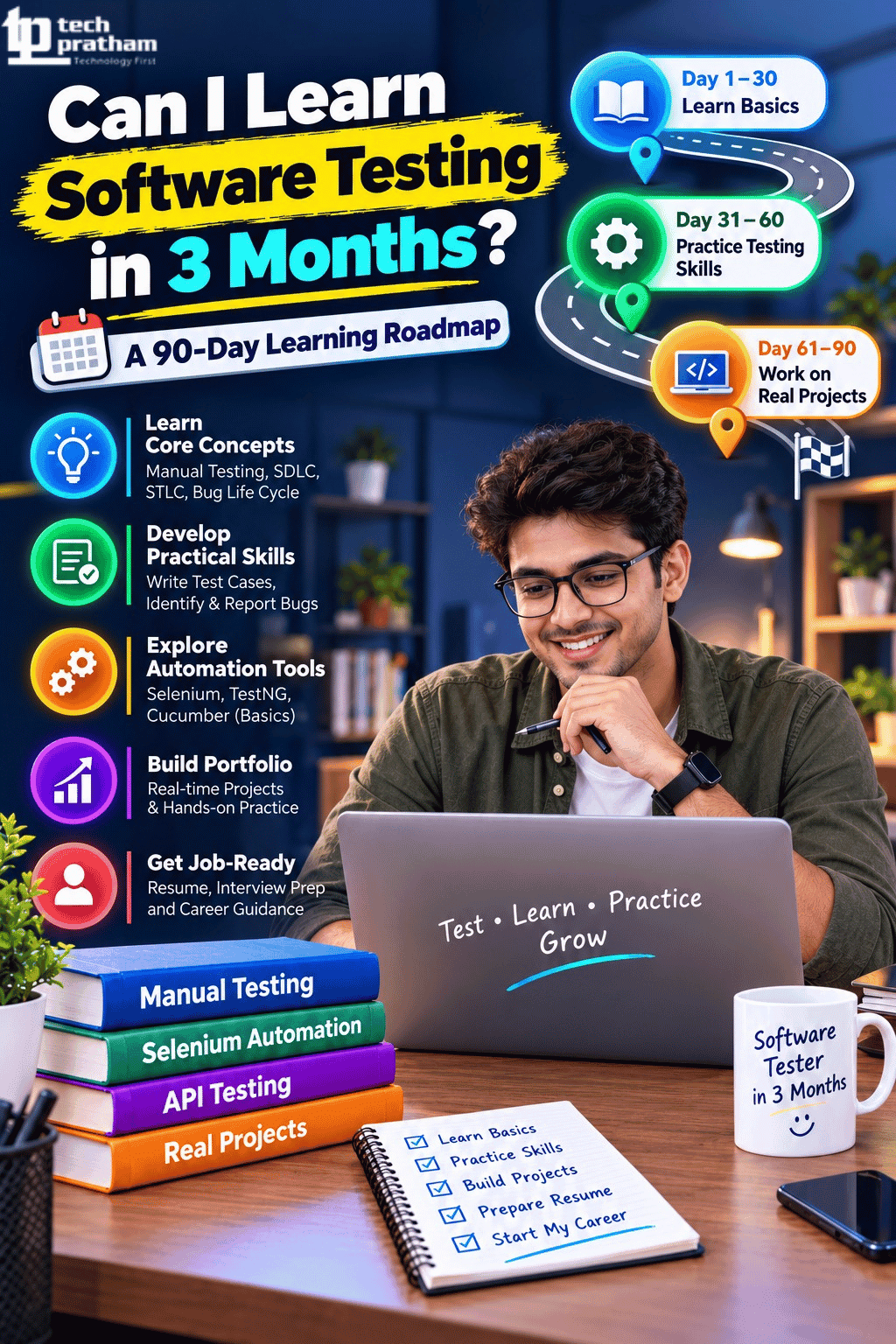
Can I Learn Software Testing in 3 Months? A 90-Day Learning Roadmap
Learn software testing in 3 months with a 90-day roadmap covering manual testing, test cases, SQL, API testing and automation tools.
Software Testing Training
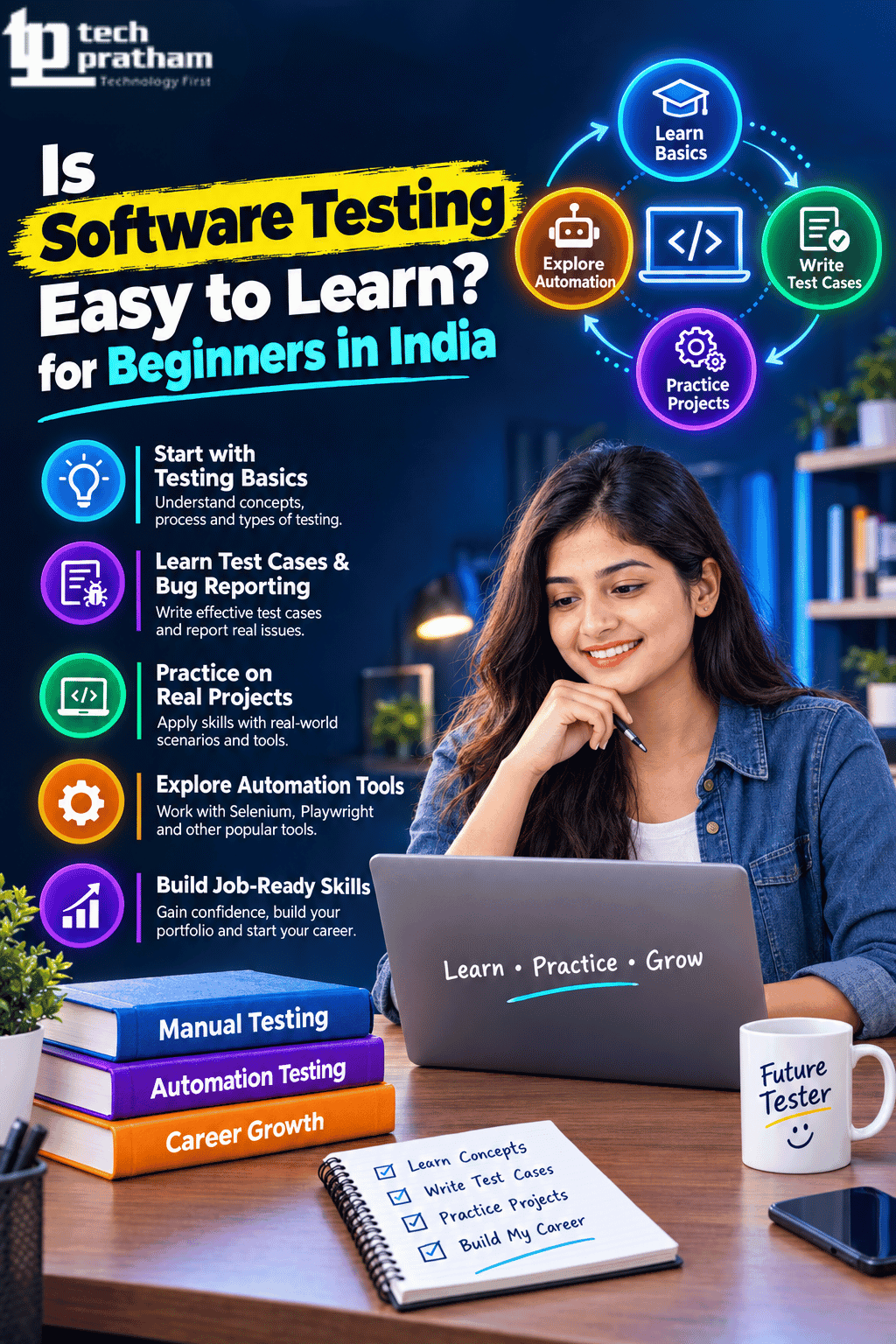
Is Software Testing Easy to Learn for Beginners in India
Learn whether software testing is easy for beginners in India, explore essential skills, course modules and career opportunities.





 +91-8882178896
 +1 (343) 477-0926