




















Start typing to search courses...

Type in the search box to find courses
CoursesData Analytics
Database Course
Data Analytics

Database Course

Learn database concepts, DBMS, relational modeling, database design, normalization, transactions, indexing, security, backup, recovery, and performance through practical projects.

5/5(4,890 Reviews)

Level

Advanced

Duration

8 weeks

Enquire This Course

About
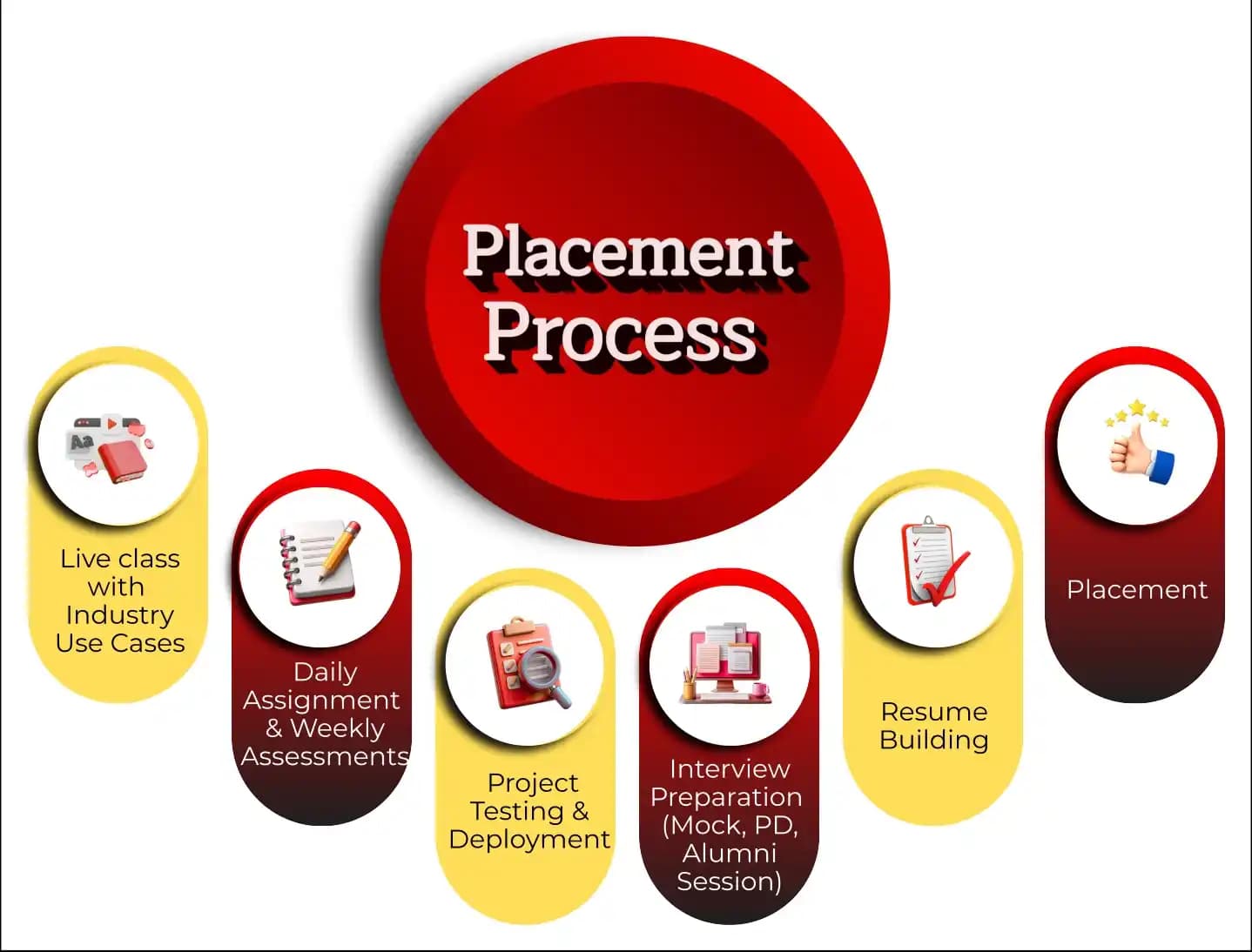
Training Plan
Course Curriculum
New Batch
Projects
Certificate
Testimonials
FAQ
Interview FAQ

Placement Client

Accenture Logo
AWS Logo
Capgemini Logo
Deloitte Logo
Genpact Logo
HP Logo
Intel Logo
Microsoft Logo
Infosys Logo
Zoho Logo
Zelis Logo
Wipro Logo
Saint Gobain Logo
ONX Logo
Nava Logo
Infosys Logo
HCL Logo
Egon Zehnder Logo
Cognizant Logo
Bosch Logo
Bank of America Logo
Accenture Logo
AWS Logo
Capgemini Logo
Deloitte Logo
Genpact Logo
HP Logo
Intel Logo
Microsoft Logo
Infosys Logo
Zoho Logo
Zelis Logo
Wipro Logo
Saint Gobain Logo
ONX Logo
Nava Logo
Infosys Logo
HCL Logo
Egon Zehnder Logo
Cognizant Logo
Bosch Logo
Bank of America Logo

About Database Course

Build practical and job-ready database skills with structured training covering database fundamentals, DBMS, relational data models, database architecture, database design, normalization, keys and constraints, transactions, indexing, security, backup, recovery, and performance concepts.

This Database Course starts with the fundamentals of databases and DBMS and gradually progresses toward designing, managing, securing, and optimizing relational database systems. Learners understand how data is structured, stored, related, accessed, and managed within modern database environments.

The course covers essential concepts including database types, DBMS architecture, relational databases, schemas, tables, entities, attributes, relationships, keys, constraints, and data integrity. Learners also understand how Entity Relationship models and relational models are used to design structured databases.

A major focus of the Database Training is database design and normalization. Learners explore functional dependencies, First Normal Form, Second Normal Form, Third Normal Form, BCNF, and denormalization concepts to understand how well-structured databases reduce redundancy and improve data consistency.

The program also covers database operations and management concepts including transactions, ACID properties, concurrency, indexing, database security, access control, backup and recovery, monitoring, and performance optimization.

SQL is introduced as a supporting technology for interacting with relational databases, while detailed SQL querying, joins, CTEs, window functions, and advanced SQL programming are covered separately through the dedicated SQL course.

The course emphasizes practical learning through real-world database scenarios and projects. Learners apply database design, normalization, data integrity, transaction, indexing, security, and performance concepts to practical business problems.

The Database Certification program is suitable for beginners, students, developers, data professionals, analysts, and working professionals who want to build a strong foundation in database systems and database management.

Video Thumbnail

Training Plan

01
About trainer

About trainer

Working professional who is carrying more than 10 years of industry experience.

02
Decks & Updated Content

Decks & Updated Content

Access to updated presentation decks shared during live training sessions.

03
e-Book

e-Book

E-book provided by TechPratham. All rights reserved.

04
Assignments & MCQs

Assignments & MCQs

Module-wise assignments and MCQs provided for practice.

05
Video Recording

Video Recording

Daily Session would be recorded and shared to the candidate.

06
Projects

Projects

Live projects will be provided for hands-on practice.

07
Resume Building

Resume Building

Expert-guided resume building with industry-focused content support.

08
Interview Preparation

Interview Preparation

Comprehensive interview preparation with real-time scenario practice.

Database Course Curriculum

Module 1: Database Fundamentals and DBMS

Understand the fundamentals of databases, DBMS, database types, and how database systems organize and manage structured information.

Introduction to Databases
What is a Database?
Database Characteristics
DBMS Overview
RDBMS Overview
Database vs DBMS
Database vs RDBMS
Database Applications
Database Types
Centralized Databases
Distributed Databases
Cloud Database Concepts
DBMS Components

Module 2: Database Architecture and Data Models

Learn how database systems are structured and understand the major data models used to represent and organize information.

Database Architecture
Three-Level Architecture
External Level
Conceptual Level
Internal Level
Data Independence
Logical Data Independence
Physical Data Independence
Data Models
Hierarchical Model
Network Model
Relational Model
Object-Oriented Concepts

Module 3: Relational Database Concepts

Understand how relational databases organize information using tables, relationships, attributes, schemas, and relational structures.

Relational Databases
Relations
Tables
Rows and Columns
Attributes
Tuples
Domains
Schemas
Relationships
One-to-One Relationships
One-to-Many Relationships
Many-to-Many Relationships
Relational Integrity

Module 4: Database Design and ER Modeling

Learn to translate business requirements into structured database designs using entities, attributes, relationships, and ER diagrams.

Database Design Fundamentals
Requirement Analysis
Entities
Attributes
Relationships
Entity Sets
ER Model
ER Diagrams
Cardinality
Participation Constraints
Weak Entities
Strong Entities
ER to Relational Mapping
Practical Database Modeling

Module 5: Keys and Database Constraints

Learn how keys and constraints maintain uniqueness, relationships, accuracy, and integrity within relational databases.

Primary Keys
Foreign Keys
Candidate Keys
Super Keys
Alternate Keys
Composite Keys
Unique Constraints
NOT NULL Constraints
CHECK Constraints
DEFAULT Constraints
Referential Integrity
Entity Integrity
Domain Integrity

Module 6: Database Normalization

Master normalization techniques used to reduce data redundancy, improve consistency, and create efficient relational database structures.

Normalization Fundamentals
Data Redundancy
Functional Dependencies
Partial Dependencies
Transitive Dependencies
First Normal Form
Second Normal Form
Third Normal Form
Boyce-Codd Normal Form
Denormalization
Normalization Examples
Practical Database Design

Module 7: Database Operations and Transactions

Understand how database operations are managed through transactions while maintaining data consistency and reliability.

Database Operations
CRUD Concepts
Transaction Fundamentals
Transaction States
ACID Properties
Atomicity
Consistency
Isolation
Durability
COMMIT
ROLLBACK
Savepoints
Transaction Management
Data Consistency

Module 8: Concurrency and Transaction Management

Learn how database systems handle multiple users and simultaneous operations while maintaining consistent and reliable data.

Concurrency Fundamentals
Concurrent Transactions
Lost Updates
Dirty Reads
Non-Repeatable Reads
Phantom Reads
Isolation Levels
Locking Concepts
Shared Locks
Exclusive Locks
Deadlocks
Concurrency Control
Transaction Scheduling

Module 9: Database Indexing and Performance

Understand how indexing and database optimization techniques improve data access and overall database performance.

Indexing Fundamentals
Why Indexes Matter
Primary Index
Secondary Index
Clustered Index Concepts
Non-Clustered Index Concepts
Composite Indexes
Index Selection
Index Trade-offs
Query Performance Concepts
Execution Concepts
Performance Monitoring
Database Optimization

Module 10: Database Security and Access Control

Learn how databases protect sensitive information through authentication, authorization, roles, permissions, and access-control mechanisms.

Database Security Fundamentals
Authentication
Authorization
Users and Roles
Permissions
Access Control
Role-Based Access
Data Privacy
Encryption Concepts
SQL Injection Awareness
Security Best Practices
Database Auditing
Secure Database Management

Module 11: Backup, Recovery and Database Administration

Understand essential database administration concepts for protecting data, recovering from failures, and maintaining database availability.

Database Backup
Full Backup
Incremental Backup
Differential Backup
Recovery Concepts
Disaster Recovery
Recovery Strategies
Failure Types
Data Recovery
Database Monitoring
Maintenance
High Availability Concepts
Database Administration Fundamentals

Module 12: Practical Database Design and Projects

Apply database concepts to real-world business scenarios by designing structured databases and solving practical data management problems.

Business Requirement Analysis
Database Schema Design
ER Diagram Development
Database Normalization
Keys and Constraints
Transaction Planning
Indexing Strategy
Database Security
Backup Planning
Performance Considerations
Project Documentation
Practical Database Projects
Interview Preparation

Data Analytics Courses

No related courses found

Additional Program Highlights

Learning Materials

Comprehensive study materials and resources

HD
Resume Writing

Professional resume building session

HD
Interview Preparation

Master your interview skills

HD
Live Project Demo

Real-world project demonstrations

HD

Upcoming Batches

Can't find a batch you were looking for?

Who Should Take This Course?

IT Professionals

Non-IT Career Switchers

Fresh Graduates

Career Opportunities

Database Developer

Database Analyst

Database Administrator

Key Projects

Database Course

TCS

TCSRetail Database Design


Scenario: Design a retail database for a TCS team in Mumbai to organize customers, products, orders, stores, and transactions.

Live Work:

  • Design relational database
  • Create ER model
  • Apply normalization
Outcome: Build practical database design skills
HDFC Bank

HDFC BankBanking Data Management


Scenario: Design a banking database for an HDFC Bank team in Mumbai to manage customers, accounts, transactions, branches, and financial records.

Live Work:

  • Model banking entities
  • Define keys and constraints
  • Apply database normalization
Outcome: Develop database management skills
Wipro

WiproEmployee Database Management


Scenario: Design an employee database for a Wipro team in Bengaluru to manage employees, departments, roles, salaries, and organizational records.

Live Work:

  • Build relational data model
  • Apply normalization
  • Plan database access controls
Outcome: Master practical database concepts
Infosys

InfosysHealthcare Database System


Scenario: Design a healthcare database for an Infosys team in Hyderabad to manage patients, doctors, appointments, treatments, and medical records.

Live Work:

  • Design database schema
  • Map entities and relationships
  • Plan data integrity rules
Outcome: Apply database modeling skills
Mobile Banner

Latest HiringNEW

No hiring posts

Recently Placed Candidates

No placements available

Latest HiringNEW

No hiring posts

Our Success Mantra

Commitment Icon
Commitment

  • Ensuring quality training every day

Commitment Icon
Fulfillment

  • Meeting learning goals with confidence

Commitment Icon
Accomplishment

  • Students achieving industry-ready expertise

Our Learner Voice

Loading reviews...

Beyond Courses:

Additional Support We Provide

24/7 Support

LinkedIn Profile

Resume Writing

Alumni Sessions

Interview Preparation

Live Projects

What is a database?

What is DBMS?

What is an RDBMS?

What is a database course?

Is database difficult to learn?

What is database normalization?

What is the difference between DBMS and RDBMS?

What are the different types of database keys?

What is normalization?

What are the normal forms?

What is referential integrity?

What are ACID properties?

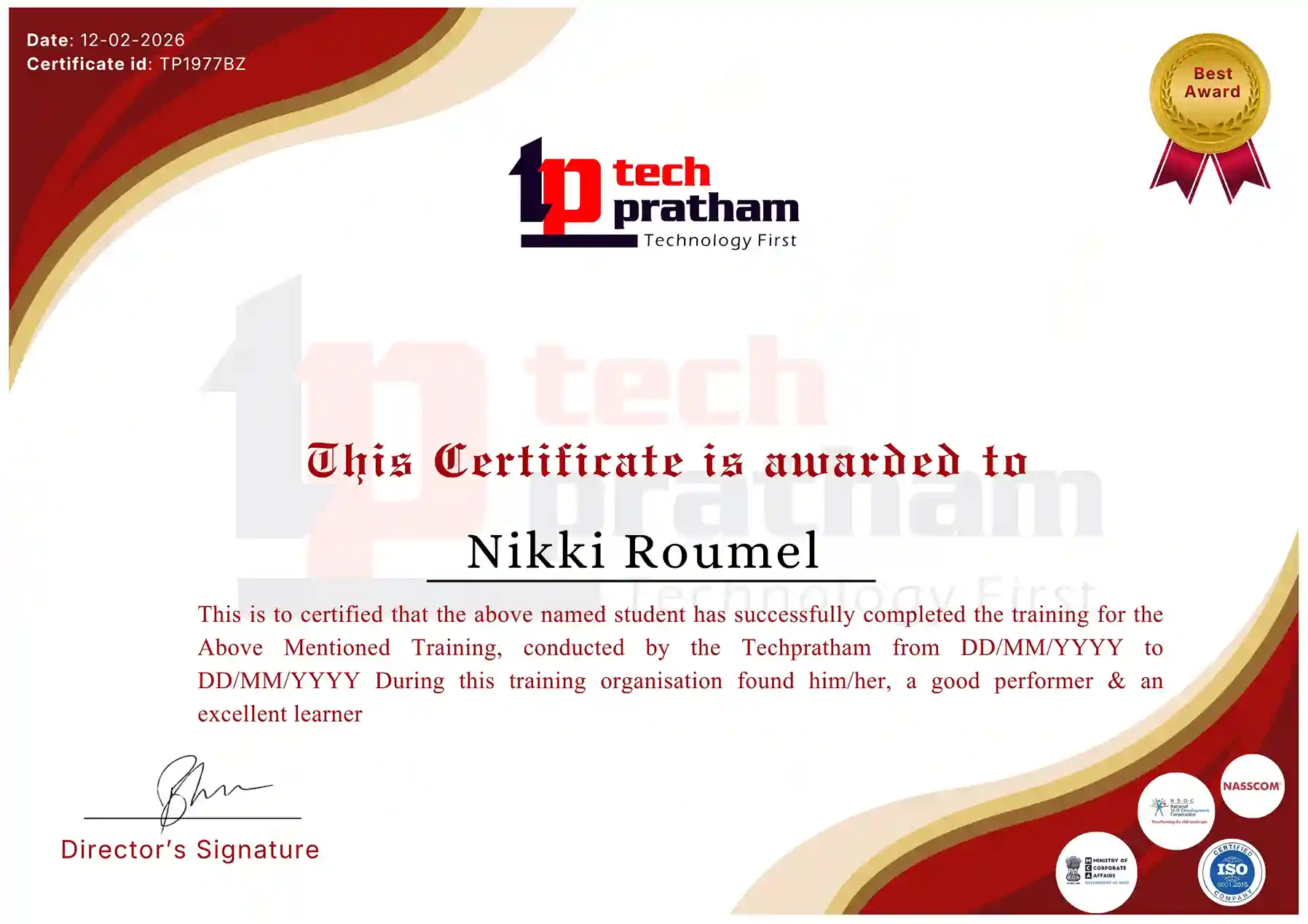
Database Certification

Upon successful completion of the applicable course requirements, learners can receive a Database Certification from TechPratham recognizing their structured learning and practical understanding of database systems, DBMS, relational modeling, database design, normalization, transactions, indexing, security, backup, recovery, and performance concepts.

The program combines conceptual learning with practical database projects based on real-world business scenarios.

Certification is subject to TechPratham's applicable course completion, assessment, and certification criteria.

Industry-Recognized Certification

Certificate
Database Certification

News Highlights

TechPratham Introduces Hire-Train-Deploy Model to Transform HR & ERP Talent in the AI Era
TechPratham Empowering Future Professionals Through AI-Focused HR & ERP Training

Featured In

Featured Logo 1Featured Logo 2Featured Logo 3Featured Logo 4Featured Logo 5Featured Logo 6Featured Logo 7Featured Logo 8Featured Logo 9Featured Logo 10Featured Logo 11Featured Logo 12
TechPratham Gains Recognition for Bridging the HR & ERP Skills Gap with Hire-Train-Deploy
TechPratham's Hire-Train-Deploy Approach Reshaping HR & ERP Careers in the AI-Driven Industry