


















Start typing to search courses...

Type in the search box to find courses
CoursesData Analytics
Machine Learning Course
Data Analytics

Machine Learning Course

Learn Machine Learning fundamentals, algorithms, model development, evaluation, optimization, and real-world applications through practical projects and hands-on training.

5/5(4,890 Reviews)

Level

Advanced

Duration

8 weeks

Enquire This Course

About
Training Plan
Course Curriculum
New Batch
Projects
Certificate
Testimonials
FAQ
Interview FAQ

Placement Client

Accenture Logo
AWS Logo
Capgemini Logo
Deloitte Logo
Genpact Logo
HP Logo
Intel Logo
Microsoft Logo
Infosys Logo
Zoho Logo
Zelis Logo
Wipro Logo
Saint Gobain Logo
ONX Logo
Nava Logo
Infosys Logo
HCL Logo
Egon Zehnder Logo
Cognizant Logo
Bosch Logo
Bank of America Logo
Accenture Logo
AWS Logo
Capgemini Logo
Deloitte Logo
Genpact Logo
HP Logo
Intel Logo
Microsoft Logo
Infosys Logo
Zoho Logo
Zelis Logo
Wipro Logo
Saint Gobain Logo
ONX Logo
Nava Logo
Infosys Logo
HCL Logo
Egon Zehnder Logo
Cognizant Logo
Bosch Logo
Bank of America Logo

About  Machine Learning Course

Build practical and job-ready Machine Learning skills with structured training designed for students, fresh graduates, data professionals, developers, and working professionals who want to understand how machine learning models are developed and applied to real-world problems.

This Machine Learning Course covers the complete machine learning workflow, starting with fundamentals and progressing through data preprocessing, exploratory data analysis, feature engineering, supervised learning, unsupervised learning, model evaluation, model optimization, ensemble methods, and practical machine learning applications.

Learners develop a strong understanding of regression and classification algorithms such as Linear Regression, Logistic Regression, Decision Trees, Random Forest, K-Nearest Neighbors, Support Vector Machines, and other commonly used machine learning techniques. The course also covers clustering, dimensionality reduction, recommendation concepts, and techniques for selecting and improving machine learning models.

The Machine Learning Training includes hands-on learning through practical datasets and real-world business scenarios. Learners work through the complete workflow of preparing data, selecting features, training models, evaluating performance, tuning parameters, and interpreting results.

The course also introduces practical machine learning pipelines and deployment fundamentals so learners understand how trained models can move from experimentation toward real-world applications. Python may be used as an implementation tool where appropriate, while the primary focus remains on Machine Learning concepts, algorithms, modeling, and problem-solving.

The program includes practical projects covering business analytics, customer behavior, financial risk, and operational prediction. These projects help learners develop experience in applying machine learning concepts to real-world scenarios rather than learning algorithms only through theory.

The course can support career paths such as Machine Learning Engineer, Machine Learning Analyst, Data Scientist, AI/ML Developer, Predictive Analytics Professional, and Data Analyst. Learners can also use the knowledge gained through the course to prepare for relevant machine learning certification and technical interviews.

Video Thumbnail

Training Plan

01
About trainer

About trainer

Working professional who is carrying more than 10 years of industry experience.

02
Decks & Updated Content

Decks & Updated Content

Access to updated presentation decks shared during live training sessions.

03
e-Book

e-Book

E-book provided by TechPratham. All rights reserved.

04
Assignments & MCQs

Assignments & MCQs

Module-wise assignments and MCQs provided for practice.

05
Video Recording

Video Recording

Daily Session would be recorded and shared to the candidate.

06
Projects

Projects

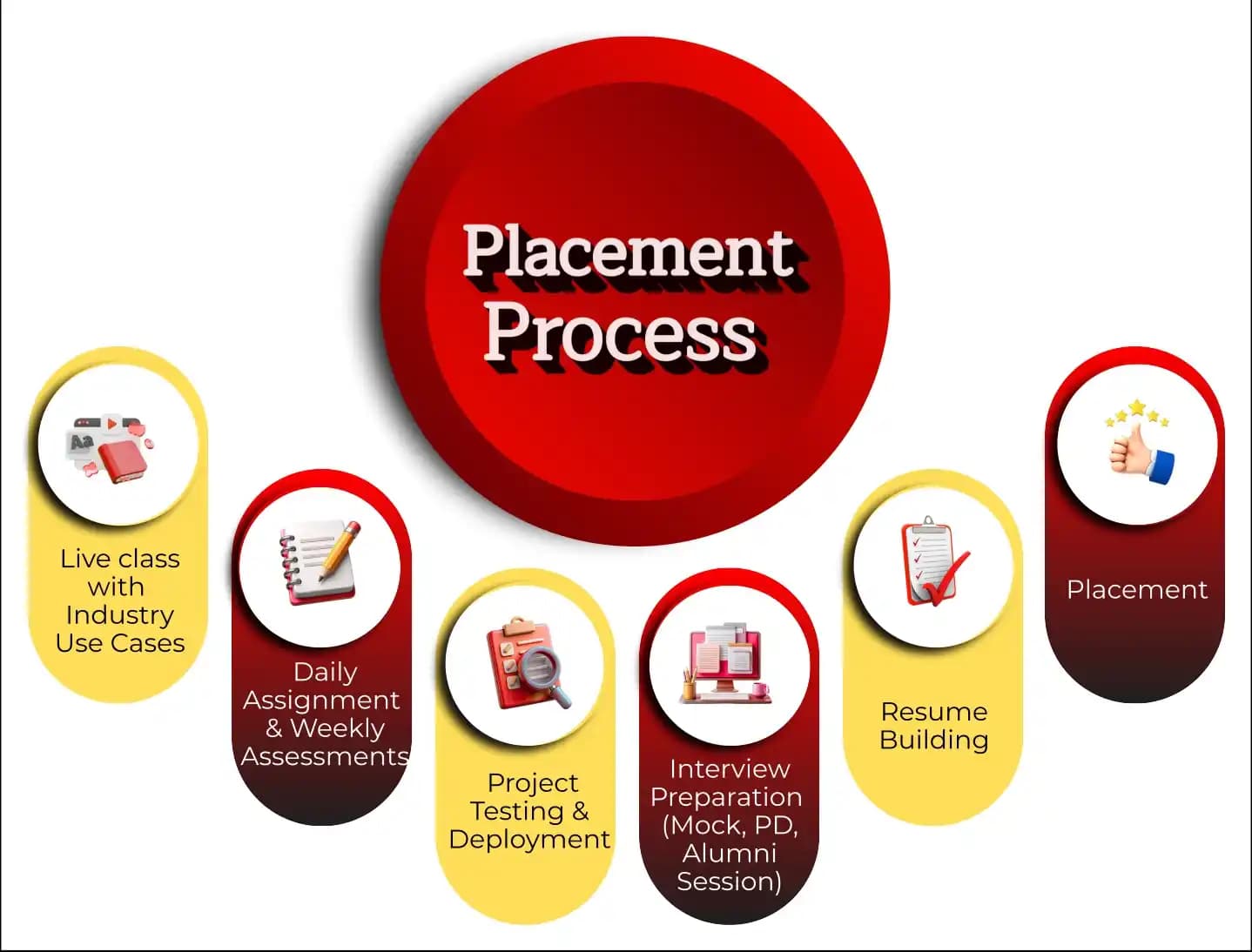
Live projects will be provided for hands-on practice.

07
Resume Building

Resume Building

Expert-guided resume building with industry-focused content support.

08
Interview Preparation

Interview Preparation

Comprehensive interview preparation with real-time scenario practice.

Machine Learning Course Curriculum

Module 1: Machine Learning Fundamentals

Understand the foundations of machine learning, its major approaches, common use cases, and the complete workflow used to develop machine learning solutions.

Introduction to Machine Learning
Machine Learning Applications
Types of Machine Learning
Supervised Learning
Unsupervised Learning
Semi-Supervised Learning
Machine Learning Workflow
Training and Testing Data
Features and Labels
Machine Learning Challenges

Module 2: Data Preprocessing and Exploration

Learn how to prepare raw datasets for machine learning by cleaning, transforming, exploring, and understanding data before model development.

Data Collection
Data Cleaning
Missing Values
Duplicate Data
Outlier Detection
Data Transformation
Encoding Categorical Data
Feature Scaling
Exploratory Data Analysis
Data Distribution
Correlation Analysis

Module 3: Feature Engineering and Selection

Learn how to create, transform, select, and optimize features that can improve machine learning model performance.

Feature Engineering Fundamentals
Feature Creation
Feature Transformation
Feature Scaling
Feature Selection
Correlation-Based Selection
Dimensionality Reduction
Principal Component Analysis
Feature Importance
Avoiding Data Leakage

Module 4: Regression Algorithms

Learn regression techniques for predicting continuous values and understand how to train, evaluate, compare, and improve regression models.

Regression Fundamentals
Linear Regression
Multiple Linear Regression
Polynomial Regression
Regularization
Ridge Regression
Lasso Regression
Regression Metrics
Residual Analysis
Model Interpretation

Module 5: Classification Algorithms

Learn classification techniques for predicting categories and build models using widely used machine learning algorithms.

Classification Fundamentals
Logistic Regression
K-Nearest Neighbors
Decision Trees
Random Forest
Support Vector Machines
Classification Workflow
Binary Classification
Multiclass Classification
Model Comparison

Module 6: Model Evaluation and Validation

Learn how to measure machine learning model performance and select reliable models using appropriate evaluation and validation techniques.

Model Evaluation
Train-Test Split
Cross Validation
Confusion Matrix
Accuracy
Precision
Recall
F1 Score
ROC and AUC
Regression Metrics
Overfitting
Underfitting

Module 7: Unsupervised Learning

Learn how machine learning models discover patterns and groups in unlabeled datasets using clustering and dimensionality reduction techniques.

Unsupervised Learning
Clustering
K-Means
Hierarchical Clustering
DBSCAN
Cluster Evaluation
Dimensionality Reduction
PCA
Customer Segmentation
Pattern Discovery

Module 8: Ensemble Learning and Model Optimization

Learn advanced techniques for improving machine learning predictions by combining models and optimizing their parameters.

Ensemble Learning
Bagging
Boosting
Random Forest
Gradient Boosting
AdaBoost
Model Stacking
Hyperparameter Tuning
Grid Search
Random Search
Model Optimization

Module 9: Advanced Machine Learning Applications

Explore practical applications of machine learning across prediction, recommendation, anomaly detection, and business decision-making scenarios.

Predictive Analytics
Recommendation Systems
Anomaly Detection
Customer Prediction
Risk Prediction
Demand Forecasting
Churn Prediction
Fraud Detection
Business Intelligence Applications
Machine Learning Use Cases

Module 10: Machine Learning Pipelines

Learn how to organize preprocessing, feature engineering, model training, and evaluation into repeatable machine learning workflows.

Machine Learning Pipelines
Data Preparation Pipelines
Transformation Pipelines
Model Training Workflow
Pipeline Validation
Reproducible Workflows
Model Versioning Concepts
Experiment Tracking
Workflow Automation
Pipeline Best Practices

Module 11: Model Deployment Fundamentals

Understand the fundamentals of taking trained machine learning models toward real-world applications and production environments.

Model Deployment Concepts
Model Serialization
Prediction APIs
Batch Prediction
Real-Time Prediction
Model Serving
Deployment Workflows
Monitoring Concepts
Model Performance Tracking
Production Considerations

Module 12: Machine Learning Projects and Career Applications

Apply machine learning concepts through practical projects and develop the skills required to solve business problems using data-driven models.

End-to-End ML Projects
Business Problem Definition
Dataset Preparation
Feature Engineering
Model Development
Model Evaluation
Model Optimization
Results Interpretation
Project Presentation
Interview Preparation
Career Applications

Data Analytics Courses

No related courses found

Additional Program Highlights

Learning Materials

Comprehensive study materials and resources

HD
Resume Writing

Professional resume building session

HD
Interview Preparation

Master your interview skills

HD
Live Project Demo

Real-world project demonstrations

HD

Upcoming Batches

Can't find a batch you were looking for?

Who Should Take Machine Learning Course?

IT Professionals

Non-IT Career Switchers

Fresh Graduates

Career Opportunities

Machine Learning Engineer

Machine Learning Analyst

Data Scientist

Key Projects

Machine Learning Course

Infosys

InfosysCustomer Churn Prediction


Scenario: Build a customer churn prediction solution for an Infosys team in Bengaluru to identify customers at risk of leaving and support targeted retention strategies.

Live Work:

  • Prepare customer behavior data
  • Train classification models
  • Evaluate churn predictions
Outcome: Build practical prediction skills
TCS

TCSLoan Risk Prediction


Scenario: Develop a loan risk prediction model for a TCS team in Mumbai to classify applications and support data-driven lending decisions using customer and financial data.

Live Work:

  • Clean applicant datasets
  • Build classification models
  • Compare model performance
Outcome: Develop practical ML modeling skills
Accenture

AccentureSales Demand Forecast


Scenario: Create a demand prediction solution for an Accenture team in Hyderabad to estimate product demand and support inventory and sales planning.

Live Work:

  • Analyze historical sales data
  • Build prediction models
  • Evaluate forecast performance
Outcome: Build predictive analytics skills
Wipro

WiproCustomer Segmentation


Scenario: Develop a customer segmentation solution for a Wipro team in Pune to group customers by behavior and support targeted marketing and business strategies.

Live Work:

  • Prepare customer behavior data
  • Apply clustering techniques
  • Analyze customer segments
Outcome: Build practical clustering skills
Mobile Banner

Latest HiringNEW

No hiring posts

Recently Placed Candidates

No placements available

Latest HiringNEW

No hiring posts

Our Success Mantra

Commitment Icon
Commitment

  • Ensuring quality training every day

Commitment Icon
Fulfillment

  • Meeting learning goals with confidence

Commitment Icon
Accomplishment

  • Students achieving industry-ready expertise

Our Learner Voice

Loading reviews...

Student review testimonial

Beyond Courses:

Additional Support We Provide

24/7 Support

LinkedIn Profile

Resume Writing

Alumni Sessions

Interview Preparation

Live Projects

What is Machine Learning?

What is Machine Learning used for?

What are the main types of Machine Learning?

What is supervised learning?

What is unsupervised learning?

What is the difference between Machine Learning and Deep Learning?

What is the difference between supervised and unsupervised learning?

What is overfitting?

What is underfitting?

What is cross-validation?

What is feature engineering?

What is the difference between classification and regression?

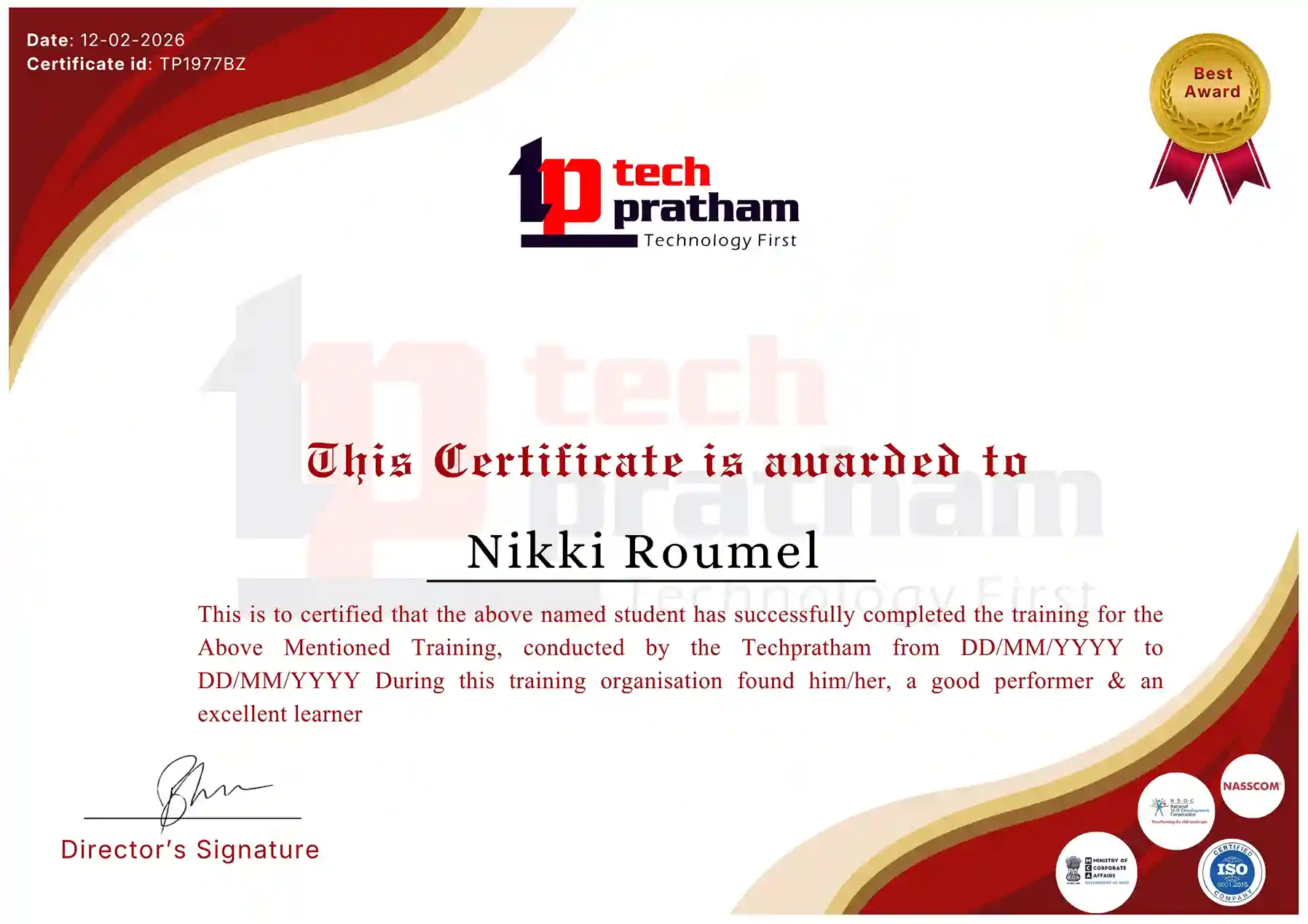
Machine Learning Certification

Upon successful completion of the applicable course requirements, learners can receive a Machine Learning Certification from TechPratham recognizing their learning and practical understanding of machine learning concepts, algorithms, model development, evaluation, and applications.

The course combines structured learning with practical projects covering areas such as classification, prediction, customer segmentation, model evaluation, and machine learning workflows. These projects help learners demonstrate their ability to apply machine learning concepts to practical business problems.

Certification is subject to TechPratham's applicable course completion, assessment, and certification criteria.

Industry-Recognized Certification

Certificate
Machine Learning Certification

News Highlights

TechPratham Introduces Hire-Train-Deploy Model to Transform HR & ERP Talent in the AI Era
TechPratham Empowering Future Professionals Through AI-Focused HR & ERP Training

Featured In

Featured Logo 1Featured Logo 2Featured Logo 3Featured Logo 4Featured Logo 5Featured Logo 6Featured Logo 7Featured Logo 8Featured Logo 9Featured Logo 10Featured Logo 11Featured Logo 12
TechPratham Gains Recognition for Bridging the HR & ERP Skills Gap with Hire-Train-Deploy
TechPratham's Hire-Train-Deploy Approach Reshaping HR & ERP Careers in the AI-Driven Industry