














Start typing to search courses...

Type in the search box to find courses
CoursesAgentic Ai
Master In Agentic AI
Agentic Ai

Master In Agentic AI

Master Program in Applied & Agentic AI builds hands-on expertise in real-world AI and autonomous agents, covering design, deployment, and scalable solutions for modern industry needs.

5/5(4,890 Reviews)

Level

Advanced

Duration

8 weeks

Enquire This Course

About
Training Plan
Course Curriculum
New Batch
Projects
Certificate
Testimonials
FAQ
Interview FAQ

Placement Client

Accenture Logo
AWS Logo
Capgemini Logo
Deloitte Logo
Genpact Logo
HP Logo
Intel Logo
Microsoft Logo
Infosys Logo
Zoho Logo
Zelis Logo
Wipro Logo
Saint Gobain Logo
ONX Logo
Nava Logo
Infosys Logo
HCL Logo
Egon Zehnder Logo
Cognizant Logo
Bosch Logo
Bank of America Logo
Accenture Logo
AWS Logo
Capgemini Logo
Deloitte Logo
Genpact Logo
HP Logo
Intel Logo
Microsoft Logo
Infosys Logo
Zoho Logo
Zelis Logo
Wipro Logo
Saint Gobain Logo
ONX Logo
Nava Logo
Infosys Logo
HCL Logo
Egon Zehnder Logo
Cognizant Logo
Bosch Logo
Bank of America Logo

About Master In Agentic AI

Master Program in Applied & Agentic AI by Tech Pratham is a career-focused, industry-aligned program designed to help learners master applied artificial intelligence and next-generation agentic AI systems. This program is built to meet the growing demand for professionals who can design, deploy, and scale intelligent AI solutions in real-world business environments.

The curriculum covers essential applied AI concepts, including machine learning, deep learning, large language models (LLMs), data-driven decision-making, and AI model deployment. In addition, the program offers in-depth training in agentic AI, focusing on autonomous agents, multi-agent systems, workflow orchestration, and AI-driven automation used in modern enterprises. Learners gain practical exposure to tools, frameworks, and architectures that are widely adopted across industries.

Video Thumbnail

Training Plan

01
About trainer

About trainer

Working professional who is carrying more then 10 years of industry experience.

02
Decks & Updated Content

Decks & Updated Content

Access to updated presentation decks shared during live training sessions.

03
e-Book

e-Book

E-book provided by TechPratham. All rights reserved.

04
Assignments & MCQs

Assignments & MCQs

Module-wise assignments and MCQs provided for practice.

05
Video Recording

Video Recording

Daily Session would be recorded and shared to the candidate.

06
Projects

Projects

Live projects will be provided for hands-on practice.

07
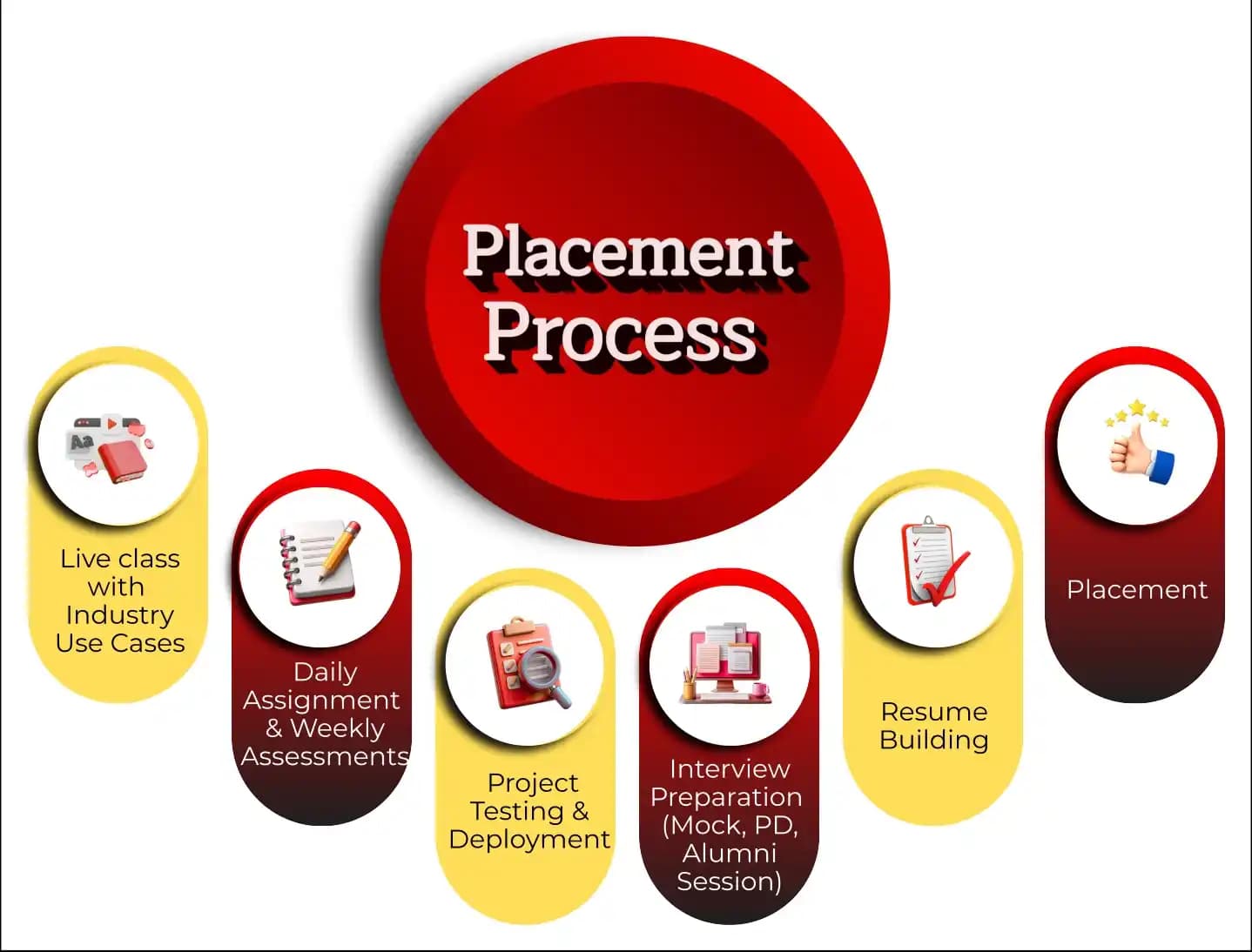
Resume Building

Resume Building

Expert-guided resume building with industry-focused content support.

08
Interview Preparation

Interview Preparation

Comprehensive interview preparation with real-time scenario practice.

Master In Agentic AI Course Curriculum

Python for AI & Automation (Foundation Layer)

Python for AI & Automation (Foundation Layer) builds core Python skills to automate tasks and create a strong base for AI and machine learning development.

Module 1: Python Essentials for AI
 Python syntax, data types, control flow
 Functions, modules, virtual environments
 OOP concepts (important for agents)
Module 2: Python for Automation & AI
 File handling, APIs, JSON
 Web requests, REST API consumption
 Async programming basics
 Logging, exception handling
Module 3: AI-Ready Python Libraries
 NumPy, Pandas
 Requests, FastAPI (intro)
 LangChain utilities (preview)

Introduction to Agentic AI & LLM Ecosystem 

A foundational overview of how autonomous AI agents work with large language models to plan, reason, and execute tasks across modern AI systems.

What is Agentic AI?
Role of LangGraph, AutoGen, CrewAI in the ecosystem
OpenAI vs Azure OpenAI vs AWS Bedrock
Introduction to foundational concepts: Agents, Tasks, Graphs

 Basics of LangChain and LangGraph

An introductory overview of using LangChain and LangGraph to build, connect, and orchestrate intelligent, multi-step AI workflows.

LangChain recap: Chains, Tools, Memory
LangGraph architecture and why it matters
Installation, environment setup, and first LangGraph DAG

Exploring LangGraph Core Concepts 

A concise introduction to building stateful, multi-step AI workflows using LangGraph for agent orchestration and decision-making.

Nodes, Edges, State Machines
Understanding transitions and handlers
Building a simple agentic task flow

Python SDK and Node Configuration

 An overview of setting up the Python SDK and configuring nodes to build, connect, and manage scalable AI workflows efficiently.

Deep dive into LangGraph Python SDK
Defining nodes and reactive transitions
Testing individual components with unit test strategy

Multi-Agent Setup with LangGraph

A practical introduction to designing and orchestrating multiple AI agents that collaborate and share state using LangGraph.

Multi-agent interaction via graph state
Introducing dynamic task allocation
Conditional logic and loops in graphs

Context Handling in Graphs

An overview of managing, passing, and maintaining context across nodes to enable consistent and intelligent decision-making in graph-based AI workflows.

Memory, buffers, and shared state
Prompt engineering for modular agents
Using LangChain tools inside LangGraph

Introduction to AutoGen

A beginner-friendly overview of AutoGen for building and coordinating conversational AI agents that collaborate to solve complex tasks.

AutoGen vs LangGraph
AutoGen architecture and agent design
Basic use-cases and sample projects

Building Custom Agents with AutoGen

A practical guide to designing, configuring, and deploying tailored AI agents using the AutoGen framework.

Defining roles and communication protocols
Tool integration in AutoGen
Building helper agents and supervisor agents

Combining AutoGen and LangGraph

 An introduction to integrating AutoGen agents with LangGraph to build scalable, coordinated, and state-aware multi-agent AI systems.

Orchestrating AutoGen inside LangGraph
Handling multi-turn conversations
Error handling and edge case design

Invoice Parsing with LangGraph

A practical overview of using LangGraph to extract, validate, and process invoice data through structured, multi-step AI workflows.

Designing agents for invoice interpretation
Simulating document variations
Defining success metrics for extraction

Image Processing Pipeline (OCR) 

An overview of building an OCR-based pipeline to extract, clean, and structure text from images for automated data processing.

Tools: Azure Cognitive Vision, AWS Textract, Tesseract
Building OCR extractor modules
Integration with LangGraph pipeline

Intermediate Graph Building

A focused overview of designing more complex graph-based AI workflows with conditional logic, state management, and optimized execution.

Data validation agents
Retry and fallback agents
Visualizing graphs with tools like Graphviz

Intro to Containerization with Docker

A beginner-friendly overview of using Docker to package, deploy, and run applications consistently across different environments.

Docker basics, images, volumes, networks
Writing Dockerfiles for Python/Node.js agents
LangGraph inside Docker

Docker Compose and Multi-Service Setup 

An introduction to orchestrating multiple services using Docker Compose for streamlined development and deployment workflows.

Docker Compose YAML structure
Orchestrating multiple agents/services
Environment variables and secrets

 Testing Dockerized LangGraph Solutions

An overview of validating and testing LangGraph applications running in Docker to ensure reliability, scalability, and smooth deployments.

Local dev + container testing
Bind mounts, logging, and debug modes
Container-to-container communication

Introduction to Kubernetes (K8s)

 A beginner-level overview of Kubernetes for orchestrating, scaling, and managing containerized applications in production environments.

Pods, Deployments, Services, ConfigMaps
K8s vs Docker Compose
Setup Minikube for local testing

 Deploying LangGraph in K8s

An overview of deploying and managing LangGraph-based AI workflows on Kubernetes for scalable and resilient production setups.

Writing Kubernetes manifests
Helm vs Kubectl
Deploying a sample LangGraph pipeline

 AutoGen on Kubernetes

A concise overview of deploying and scaling AutoGen-based multi-agent systems on Kubernetes for production-ready AI workloads.

Scaling agents
Managing state in distributed environment
Logging and monitoring via Prometheus & Grafana

Azure Cloud Deployment

An introduction to deploying, managing, and scaling applications on Microsoft Azure using secure, reliable cloud services.

Resource Group, App Service, Container Registry
Deploying Docker container to Azure Web App
Azure OpenAI API authentication & quota handling

AWS Cloud Deployment

An introduction to deploying, managing, and scaling applications on Amazon Web Services using secure, scalable, and cost-effective cloud infrastructure.

ECS + Fargate for LangGraph
Using Bedrock for model inference
Integration with CloudWatch, IAM, Textract

CI/CD for Agentic AI Pipelines

An overview of implementing automated build, test, and deployment pipelines to continuously deliver reliable and scalable agentic AI systems.

GitHub Actions basics
Docker build & push workflow
Kubernetes auto-deploy pipeline

Production-Ready Agentic Systems

An overview of designing, deploying, and maintaining robust agentic AI systems with scalability, security, and real-world reliability.

Rate limiting & retries
API Gateway/Reverse Proxy integration
Secure key management

Logging and Observability 

An overview of monitoring, tracing, and logging AI systems to gain visibility into performance, behavior, and system health.

LangGraph/AutoGen internal logs
Using OpenTelemetry
Tracing long-running agent flows

 Performance Benchmarking

 An overview of measuring, analyzing, and optimizing system performance to ensure efficient, reliable, and scalable AI applications.

Token usage analysis
Latency optimization
Cost-performance balance in cloud

Advanced Prompt Engineering for Agents

An in-depth look at designing optimized prompts that improve reasoning, coordination, and decision-making in AI agents.

Structured outputs with ReAct and CoT
Use of external toolkits (LlamaIndex, Vector DBs)
Model adaptation and few-shot strategies

User Feedback Loops in Agentic Systems

An overview of incorporating user feedback to continuously refine, adapt, and improve agent behavior and system performance.

Capturing feedback on agent outputs
Self-healing agents with AutoGen feedback loops
Dynamic policy adjustment

Simulation & Testing Frameworks

An overview of simulating real-world scenarios and testing AI systems to validate behavior, reliability, and edge cases before production.

End-to-end pipeline testing
A/B test experiments
Integration with synthetic data generation

Case Study – Enterprise Invoice Agent

A real-world case study showcasing the design, deployment, and optimization of an AI-powered invoice processing agent for enterprise use.

Simulating multilingual invoices
Table extraction logic
Structured JSON/Excel output via agents

Agent Behavior Tuning

An overview of fine-tuning agent logic, prompts, and parameters to achieve more accurate, efficient, and predictable AI behavior.

Prompt templating with LangChain
Personality config for agents
Context vs history vs memory tradeoffs

 Capstone Design Review

A comprehensive review of the final project, evaluating architecture, design decisions, and real-world readiness of the agentic AI solution.

Each participant/team presents their initial design
Review and feedback from mentors

Capstone Development Support 

Guided assistance and mentorship to help build, refine, and successfully complete a production-ready capstone project.

Debugging session
Review state transitions
Test cases writing session

Deployment of Capstone to Cloud 

An overview of deploying the final capstone project to a cloud platform with scalability, security, and production readiness

Pick Azure or AWS for deployment
Secure deployment best practices

Monitoring and Final Test Runs

A final validation phase focused on monitoring system behavior and executing end-to-end tests to ensure production readiness.

Review CI/CD
Final testing of K8s deployment

Capstone Presentations – Round 1

The first presentation round where learners showcase capstone concepts, architecture, and initial implementation progress.

Showcase final projects
Peer review

Capstone Presentations – Round 2

The final presentation round highlighting completed capstone solutions, live demos, and overall project outcomes.

Continuation of presentations
Instructor evaluation

Graduation and Wrap-up

A closing session celebrating project completion, key learnings, and next steps in the agentic AI journey.

Program summary and learning’s
Certification distribution
Discussion on next-level topics (RAG, LLMOps, etc.)

Agentic Ai Courses

No related courses found

Additional Program Highlights

Learning Materials

Comprehensive study materials and resources

HD
Resume Writing

Professional resume building session

HD
Interview Preparation

Master your interview skills

HD
Live Project Demo

Real-world project demonstrations

HD

Upcoming Batches

Can't find a batch you were looking for?

Who Should Take Master In Agentic AI

IT Professionals

Non-IT Career Switchers

Fresh Graduates

Job Roles For Master In Agentic AI

Agentic AI Engineer

AI Workflow Architect

Autonomous Systems Developer

Key Projects

Master In Agentic AI

Workday

WorkdayAutonomous HR AI Agent


Scenario: Agentic AI built to autonomously resolve HR queries by understanding intent, triggering workflows, updating records, and learning from feedback to enhance experience

Live Work:

  • Designed intent driven AI task flows
  • Automated HR actions via smart agents
  • Tuned AI responses using feedback loops
Outcome: Faster HR resolution with minimal human effort
Microsoft

MicrosoftSelf Acting IT Support AI


Scenario: Agentic AI solution enabling proactive IT support by predicting issues, automating fixes, orchestrating tools, and continuously optimizing service delivery.

Live Work:

  • Built AI agents for issue prediction
  • Automated incident resolution steps
  • Integrated tools for end to end actions
Outcome: Reduced downtime and improved IT efficiency
Salesforce

Salesforce Intelligent Sales AI Agent


Scenario: Agentic AI designed to manage sales operations by analyzing leads, executing actions, coordinating agents, and adapting strategies to maximize efficiency gains daily

Live Work:

  • Created AI agents for lead handling
  • Automated follow ups and task actions
  • Optimized sales flows using AI logic
Outcome: Higher conversion with optimized sales flow
UiPath

UiPath Autonomous Process AI Bot


Scenario: Agentic AI platform automating business processes by sensing events, making decisions, executing bots, and self optimizing workflows across systems seamlessly now.

Live Work:

  • Designed decision based AI agents
  • Integrated bots with agentic logic
  • Enabled self learning workflows
Outcome: Smarter automation with adaptive execution
Mobile Banner

Latest HiringNEW

No hiring posts

Recently Placed Candidates

No placements available

Latest HiringNEW

No hiring posts

Our Success Mantra

Commitment Icon
Commitment

  • Ensuring quality training every day

Commitment Icon
Fulfillment

  • Meeting learning goals with confidence

Commitment Icon
Accomplishment

  • Students achieving industry-ready expertise

Our Learner Voice

Loading reviews...

Student review testimonial

Beyond Courses:

Additional Support We Provide

24/7 Support

LinkedIn Profile

Resume Writing

Alumni Sessions

Interview Preparation

Live Projects

What is the difference between AI Agents and traditional AI models?

What are AI Agents?

What is Agentic AI?

How do AI Agents differ from traditional AI tools?

Can AI Agents be used in business?

Do I need programming skills to work with AI Agents?

What are the key components of an Agentic AI system?

How does Agentic AI handle decision-making under uncertainty?

What programming languages and frameworks are commonly used to build Agentic AI systems?

How can Agentic AI improve ROI and operational efficiency in organizations?

What are the biggest challenges in scaling Agentic AI for large organizations?

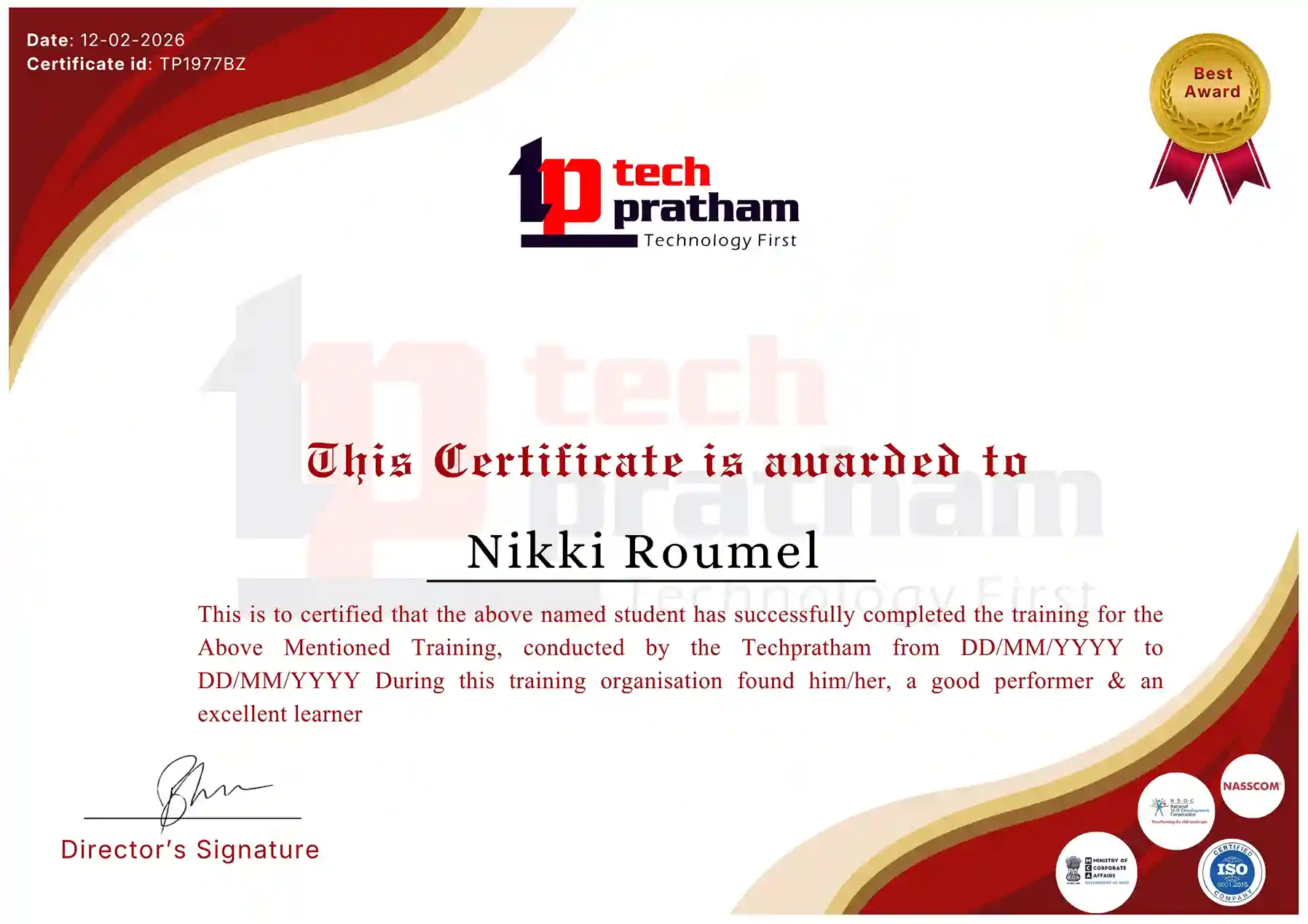
About Agentic AI Certification

The Agentic AI Learning Certification by TechPratham validates structured learning and hands-on practice in Agentic AI, including building AI agents, tool usage, workflows, and real-world automation use cases.


This certification is designed for students and professionals to showcase foundational competence in Agentic AI through guided training and real-world projects conducted as part of the program.


Important:


This is a learning certification (training certificate) provided by TechPratham to confirm completion of structured training and hands-on projects in Agentic AI.


Learners may optionally pursue global certifications from platforms such as NVIDIA, Microsoft, Amazon Web Services, and Google Cloud for international recognition.


Global certifications are optional and not mandatory for jobs.

Industry-Recognized Certification

Certificate
Course Name

News Highlights

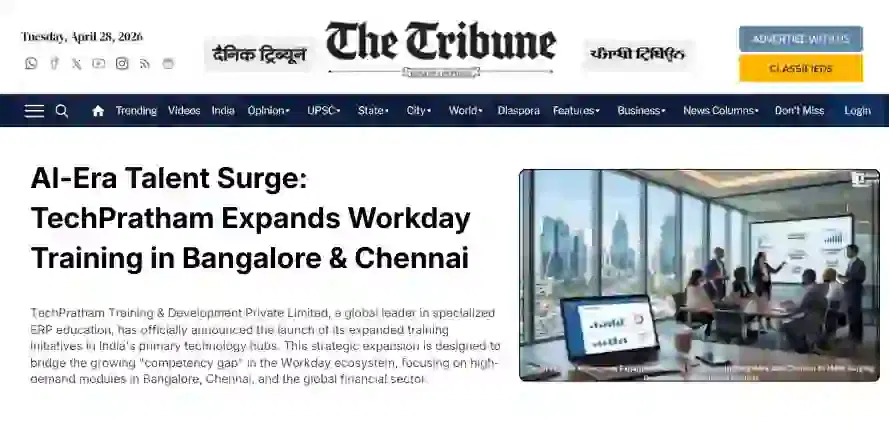
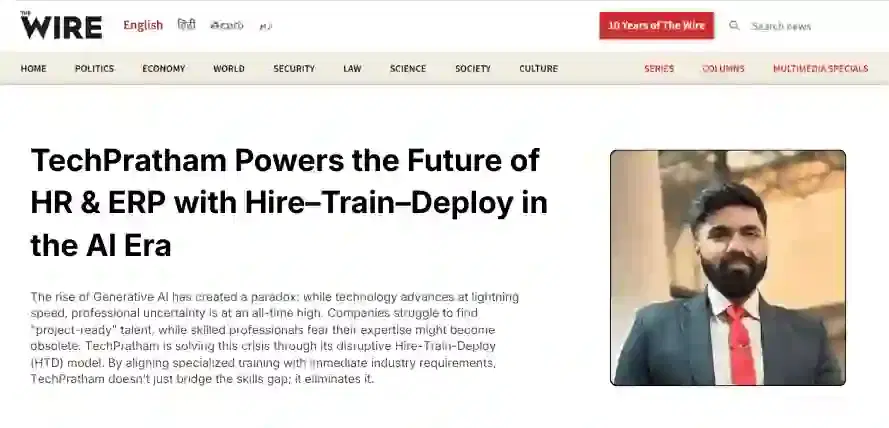
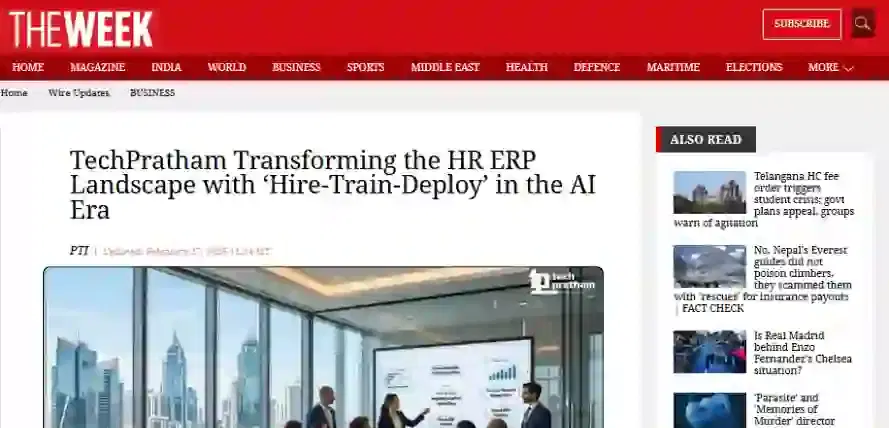
TechPratham Introduces Hire-Train-Deploy Model to Transform HR & ERP Talent in the AI Era
TechPratham Empowering Future Professionals Through AI-Focused HR & ERP Training

Featured In

Featured Logo 1Featured Logo 2Featured Logo 3Featured Logo 4Featured Logo 5Featured Logo 6Featured Logo 7Featured Logo 8Featured Logo 9Featured Logo 10Featured Logo 11Featured Logo 12
TechPratham Gains Recognition for Bridging the HR & ERP Skills Gap with Hire-Train-Deploy
TechPratham's Hire-Train-Deploy Approach Reshaping HR & ERP Careers in the AI-Driven Industry
India Flag

India

Head Office

G-31, 1st Floor, Sector-3, Noida - 201301

India Flag+91-8882178896
WhatsApp
USA Flag+1 (343) 477-0926
WhatsApp
India Flag

India

Noida Office

C-2, Sector-1, Noida, Uttar Pradesh - 201301

India Flag+91-8882178896
WhatsApp
USA Flag+1 (343) 477-0926
WhatsApp
India Flag

India

Hyderabad Office

LVS Arcade, 6th Floor, Hitech City, Hyderabad

India Flag+91-8383058741
WhatsApp
USA Flag+1 (343) 477-0926
WhatsApp
© 2026 TechPratham. All rights reserved.An ISO 9001:2015 Certified Company