




Master’s in AI Chip Architecture & Agentic EDA Orchestration is an advanced, industry-focused program designed for engineers who want to lead next-generation semiconductor innovation. This program trains you to design high-performance AI processors, optimize silicon architectures, and implement intelligent, agent-driven EDA workflows. You will master AI accelerator design, chip architecture modeling, power and performance optimization, and autonomous design orchestration. With real-time projects and hands-on exposure to modern EDA tools, you gain the expertise required for AI hardware engineering, advanced SoC design, and intelligent semiconductor automation.
CoursesVLSI Embedded Systems And Chip Design
VLSI Embedded Systems And Chip DesignMaster's in AI Chip Architecture & Agentic EDA Orchestration
Master's in AI Chip Architecture & Agentic EDA Orchestration
Master’s in AI Chip Architecture & Agentic EDA Orchestration trains engineers to design intelligent AI processors using autonomous EDA workflows and next-gen silicon innovation.
5/5(4,890 Reviews)
Level
Advanced
Duration
16 weeks
Placement Client


.png&w=3840&q=75)












About Master's in AI Chip Architecture & Agentic EDA Orchestration

Training Plan
01

About trainer
Working professional who is carrying more than 10 years of industry experience.
02

Decks & Updated Content
Access to updated presentation decks shared during live training sessions.
03

e-Book
E-book provided by TechPratham. All rights reserved.
04

Assignments & MCQs
Module-wise assignments and MCQs provided for practice.
05

Video Recording
Daily Session would be recorded and shared to the candidate.
06

Projects
Live projects will be provided for hands-on practice.
07

Resume Building
Expert-guided resume building with industry-focused content support.
08

Interview Preparation
Comprehensive interview preparation with real-time scenario practice.
Master's in AI Chip Architecture & Agentic EDA Orchestration Course Curriculum
VLSI Embedded Systems And Chip Design Courses
Additional Program Highlights

Comprehensive study materials and resources
HD

Professional resume building session
HD

Master your interview skills
HD

Real-world project demonstrations
HD
Upcoming Batches
Can't find a batch you were looking for?
Who Should Take Master's in AI Chip Architecture & Agentic EDA Orchestration
IT Professionals
Non-IT Career Switchers
Fresh Graduates
Working Professionals
Ops/Administrators/HR
Developers
BA/QA Engineers
Cloud / Infra
IT Professionals
Non-IT Career Switchers
Fresh Graduates
Job Roles For Master's in AI Chip Architecture & Agentic EDA Orchestration
AI Chip Architect
AI Accelerator Design Engineer
RTL Design Engineer
Physical Design Engineer
EDA Automation Engineer
AI Hardware Engineer
SoC Design Engineer
Timing Analysis Engineer
Post-Silicon Validation Engineer
Semiconductor Machine Learning Engineer
AI Chip Architect
AI Accelerator Design Engineer
RTL Design Engineer
Key Projects
Master's in AI Chip Architecture & Agentic EDA Orchestration

End-to-End AI Accelerator Design & Verification Project
In this project, learners architect a complete AI accelerator from specification to verification. You will define compute units, pipelines, memory hierarchy, and dataflow; implement RTL using HDLs; and verify functionality using simulation and testbenches. Master modern AI chip design workflows used in industry. • Design MAC units, tensor cores, and an optimized memory hierarchy. • Develop RTL using Verilog/SystemVerilog with modular architecture. • Build testbenches and perform functional and coverage verification. • Analyze throughput, latency, and bandwidth for performance tuning.Key Highlights:

Agentic EDA Orchestration for Adaptive Floorplanning
Build an intelligent EDA orchestration system that uses agentic AI to automate floorplanning and optimization. Integrate AI agents with standard EDA tools to explore design trade-offs, minimize area, reduce wirelength, and enforce timing constraints. Learn how AI transforms chip design productivity. • Develop AI agents for automated placement and routing optimization. • Implement timing closure, congestion reduction, and area balancing. • Integrate scripts with industry EDA tools for adaptive workflows. • Compare AI-driven and traditional floorplanning efficiency metrics.Key Highlights:

Performance-Driven AI Chip Synthesis & Power Optimization
This project focuses on synthesizing an AI chip with performance, power, and area optimization. You will use high-level synthesis (HLS), power analysis tools, and agent-assisted optimization loops to balance throughput and efficiency, mirroring workflows used in cutting-edge semiconductor design. • Execute the RTL-to-GDS flow, including synthesis and timing analysis. • Perform static and dynamic power optimization techniques. • Apply AI-assisted optimization to improve PPA (Power, Performance, and Area). • Validate the design across multiple operating corners and constraints.Key Highlights:
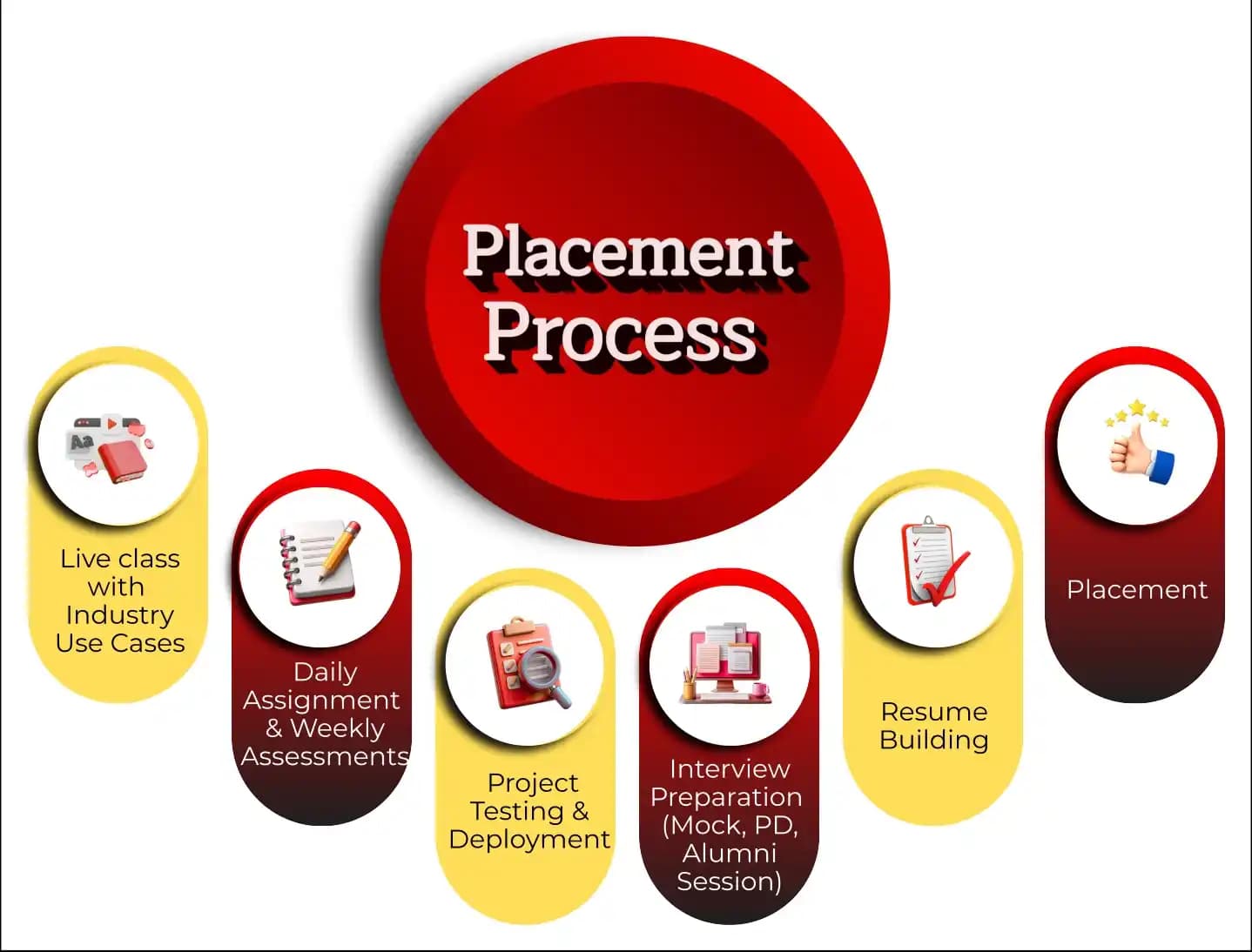
Placement Process

Live Class with Industry Use Cases
- Interactive learning
- Real-world examples
- Expert guidance
- Doubt resolution

Daily Assignment & Weekly Assessments
- Hands-on practice
- Concept reinforcement
- Weekly evaluation
- Timely feedback

Project Testing & Deployment
- Project development
- Testing practice
- Deployment exposure
- Portfolio creation

Interview Preparation (Mock, PD, Alumni Session)
- Mock interviews
- Personal development
- Alumni guidance
- Confidence building

Resume Building
- Resume crafting
- Industry-focused format
- Skills highlighting
- Professional presentation

Placement
- Job assistance
- Interview support
- Career guidance
- Opportunity access
Latest Hiring
No hiring posts
Recently Placed Candidates
No placements available
Latest Hiring
No hiring posts
Our Success Mantra
 Commitment
- Ensuring quality training every day
 Fulfillment
- Meeting learning goals with confidence
 Accomplishment
- Students achieving industry-ready expertise
Our Learner Voice
Loading reviews...
Beyond Courses:
Additional Support We Provide
24/7 Support
LinkedIn Profile
Resume Writing
Alumni Sessions
Interview Preparation
Live Projects
What Makes TechPratham Training Different?
Feature
TechPratham Advantage
Industry Standard Institutes
Real-World Implementation
Live enterprise tenant access for 24/7 practice on real-world, enterprise-grade scenarios.
Restricted or simulation-based access that lacks real-world complexity.
Subject Matter Experts
Mentorship from certified professionals with 15+ years of global industry experience.
Generic instructors with no hands-on implementation background.
2026 Ready Curriculum
AI-driven curriculum with advanced platform integrations and real-world configurations.
Basic, outdated syllabus that misses key technical integrations.
Daily & Weekly assignments
Daily assignments and weekly assessments focused on concept reinforcement and continuous feedback.
Self-paced learning with no accountability or progress tracking.
End-to-End Lifecycle
Hands-on project testing and deployment with portfolio-ready real-world exposure.
Basic lab exercises without any deployment or testing practice.
Interview Readiness
Structured interview preparation including mock interviews, PD sessions, and alumni guidance.
Minimal support limited to a generic certificate of completion.
Placement Support
Guaranteed interview support through tie-ups with top MNCs and 1-on-1 mock interview sessions.
Basic career tips with no direct industry connections.
Training Support
24/7 technical doubt resolution and personalized mentoring support.
Limited mentor availability and no support after class hours.
Affordable Fees
Competitive fixed pricing with flexible payment options and transparent fee structure.
Inflated fees with hidden costs and low return on investment.
Real-World Implementation
Live enterprise tenant access for 24/7 practice on real-world, enterprise-grade scenarios.
Restricted or simulation-based access that lacks real-world complexity.
Subject Matter Experts
Mentorship from certified professionals with 15+ years of global industry experience.
Generic instructors with no hands-on implementation background.
2026 Ready Curriculum
AI-driven curriculum with advanced platform integrations and real-world configurations.
Basic, outdated syllabus that misses key technical integrations.
Daily & Weekly assignments
Daily assignments and weekly assessments focused on concept reinforcement and continuous feedback.
Self-paced learning with no accountability or progress tracking.
End-to-End Lifecycle
Hands-on project testing and deployment with portfolio-ready real-world exposure.
Basic lab exercises without any deployment or testing practice.
Interview Readiness
Structured interview preparation including mock interviews, PD sessions, and alumni guidance.
Minimal support limited to a generic certificate of completion.
Placement Support
Guaranteed interview support through tie-ups with top MNCs and 1-on-1 mock interview sessions.
Basic career tips with no direct industry connections.
Training Support
24/7 technical doubt resolution and personalized mentoring support.
Limited mentor availability and no support after class hours.
Affordable Fees
Competitive fixed pricing with flexible payment options and transparent fee structure.
Inflated fees with hidden costs and low return on investment.
What is a Master’s in AI Chip Architecture & Agentic EDA Orchestration?
Who should enroll in this AI chip design program?
What skills will I gain in this program?
What tools are covered in this course?
How does Agentic EDA improve chip design?
What career opportunities are available after completing this program?
Explain the difference between a traditional CPU and an AI accelerator architecture.
How would you design an RTL module for a simple AI MAC unit?
What is timing closure, and how do you achieve it in advanced nodes?
How can machine learning improve physical design workflows?
What is Agentic EDA, and how does it differ from scripted automation?
How do you optimize power consumption in AI chip architecture?
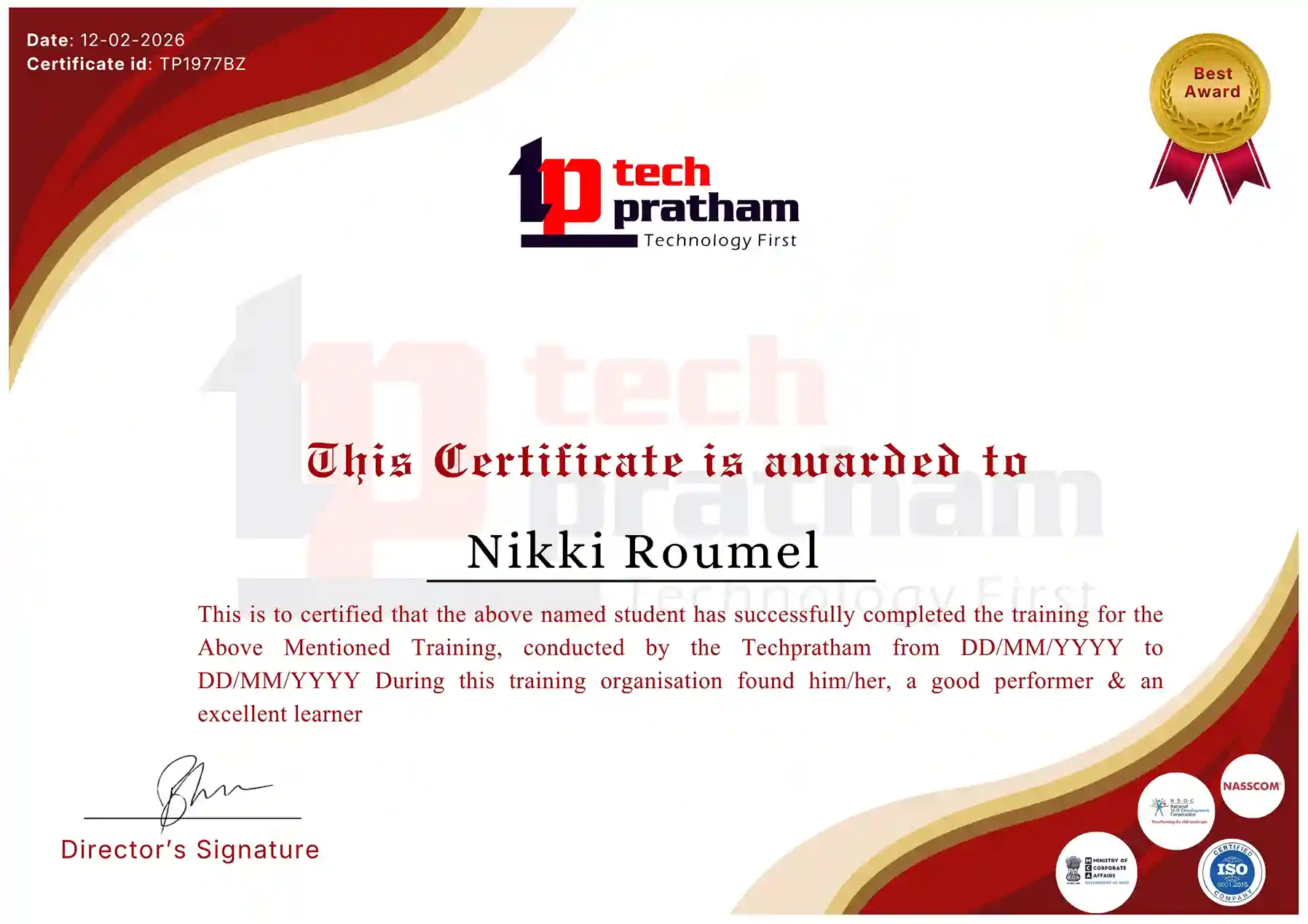
Industry-Recognized Certification
Course Name
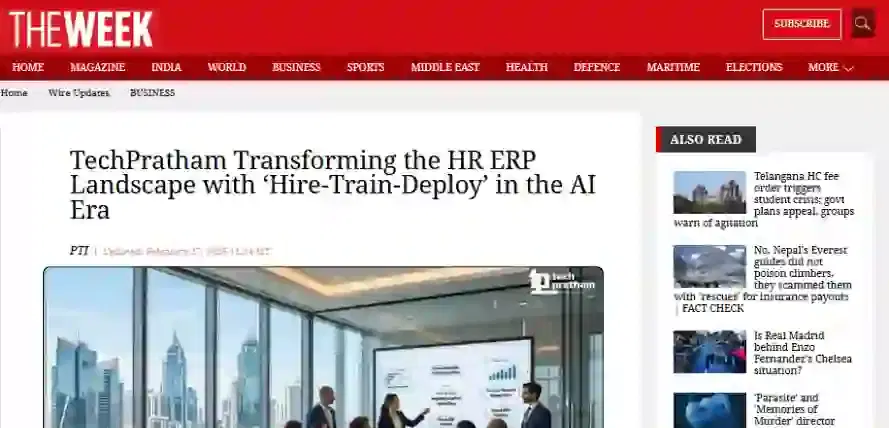
News Highlights
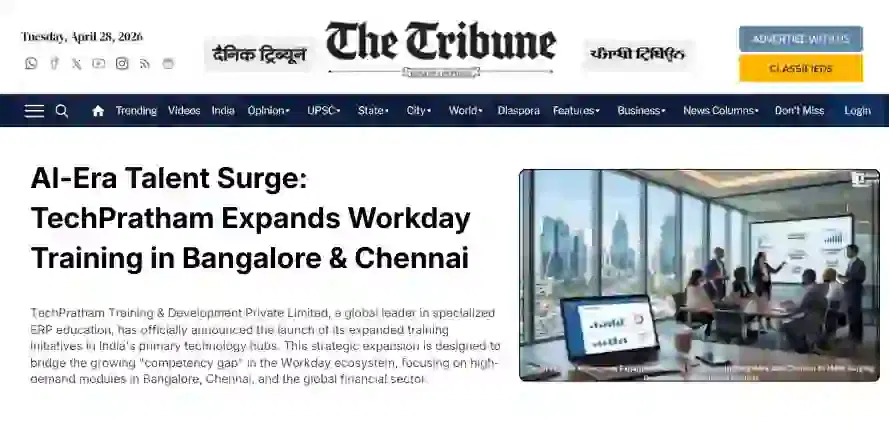
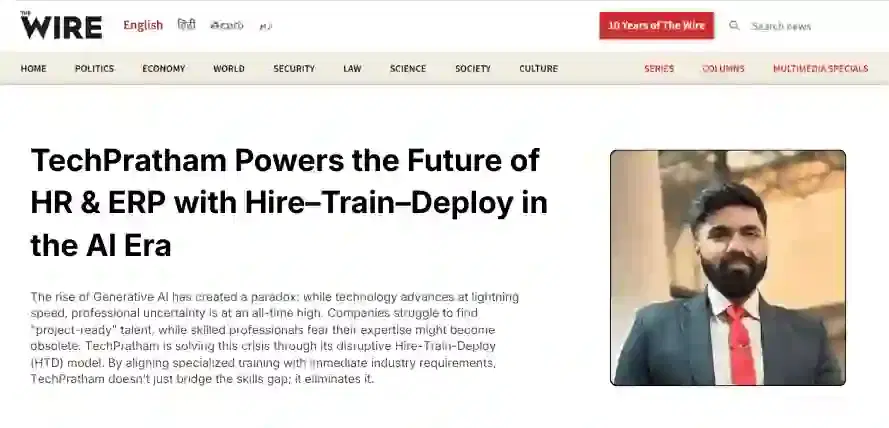
Featured In














About Us
TechPratham is an ISO 9001:2015 certified IT Training and Development, delivering industry-focused certification courses with expert guidance and placement support.
CIN:U62013UP2025PTC223378GST:09AALCT8794N1Z2
Courses
Company
 +91-8882178896
 +1 (343) 477-0926
© 2026 TechPratham. All rights reserved.An ISO 9001:2015 Certified Company