















Learn how to use Techpratham to master Retrieval-Augmented Generation (RAG) to make smart AI systems that can get information from outside sources and generate language. Find out how RAG improves LLMs by giving them real-time, accurate, and domain-specific answers.
Level
Advanced
Duration
8 weeks


.png)


.png)


Techpratham's Retrieval-Augmented Generation course is meant to teach students how to use advanced AI methods to create text that is based on knowledge. Retrieval pipelines, vector databases, embeddings, and LLM integration are all covered in the training. You'll learn how to use tools like Pinecone, FAISS, and LangChain to build RAG-based solutions that can grow. By the end, students will know how to make RAG systems for chatbots, search engines, and decision-support tools that work for big businesses.
Working professional who is carrying more then 10 years of industry experience.
Access to updated presentation decks shared during live training sessions.
E-book provided by TechPratham. All rights reserved.
Module-wise assignments and MCQs provided for practice.
Daily Session would be recorded and shared to the candidate.
Live projects will be provided for hands-on practice.
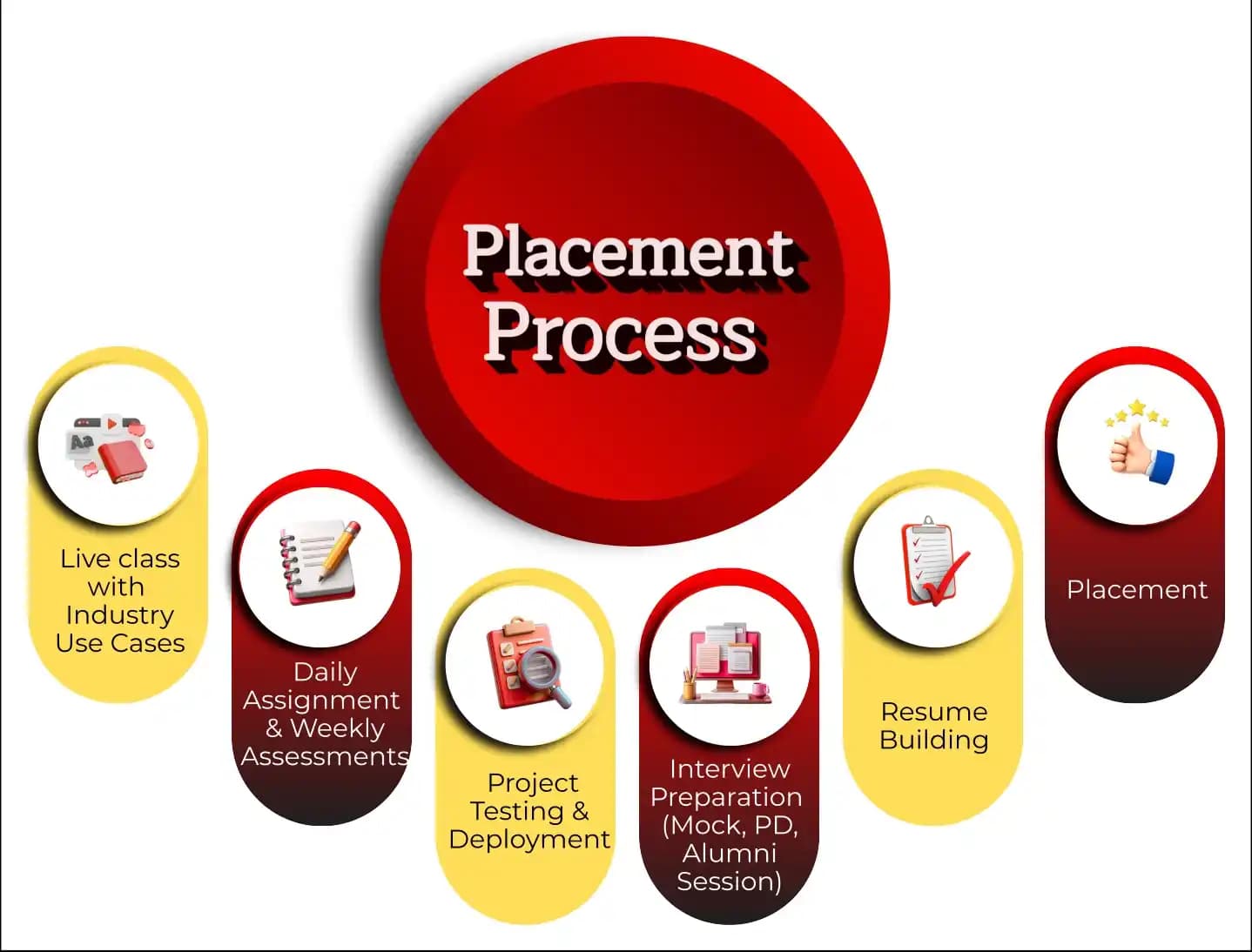
Expert-guided resume building with industry-focused content support.
Comprehensive interview preparation with real-time scenario practice.
Introduction to Retrieval-Augmented Generation (RAG)
Understand the fundamentals and importance of RAG in AI.
Information Retrieval Basics
Learn core retrieval techniques used in RAG, including vector search, embeddings, and similarity measures.
Knowledge Sources for RAG
Explore different external data sources and methods to structure knowledge for efficient retrieval.
Building the Retrieval Pipeline
Develop a retrieval pipeline with embedding models, chunking strategies, and indexing for scalable retrieval.
Generation Layer in RAG
Understand how LLMs integrate retrieved context to generate accurate and coherent responses.
RAG Architectures & Frameworks
Study standard RAG architectures and frameworks like LangChain, LlamaIndex, and Hugging Face implementations.
No related courses found


Test your knowledge...
Can't find a batch you were looking for?
IT Professionals
Non-IT Career Switchers
Fresh Graduates
Working Professionals
Ops/Administrators/HR
Developers
BA/QA Engineers
Cloud / Infra
IT Professionals
Non-IT Career Switchers
Fresh Graduates
Intelligent Legal Document Assistant
Use FAISS to make a legal chatbot that gets case laws and rules from a knowledge base. The assistant gives answers based on facts, making sure that lawyers can quickly find the right legal references.
Healthcare Knowledge Retrieval Chatbot
Use LangChain and Pinecone to make a healthcare-focused RAG chatbot. It will get the right medical documents, research papers, and guidelines to give doctors information based on evidence.
Enterprise Knowledge Base Search Engine
Build a smart search engine for the whole company that uses RAG. The system organizes internal documents and works with LLMs to give employees answers that are relevant, correct, and specific to their field.

How is Retrieval-Augmented Generation (RAG) different from traditional LLMs?
What is Retrieval-Augmented Generation (RAG)?
Why is RAG important in AI?
How does RAG work technically?
What are the main applications of RAG?
Do I need deep ML knowledge to implement RAG?

C-2, Sector-1, Noida, Uttar Pradesh - 201301
LVS Arcade, 6th Floor, Hitech City, Hyderabad