
Agentic AI
140 min read2 viewsHow to Choose the Right AI Training in India: Skills, Certification and Online Learning Guide
By TechPratham TeamPublished November 2, 2026Updated November 2, 2026

Artificial Intelligence is changing how businesses analyse information, communicate with customers, automate processes and make decisions. From content generation and data analysis to intelligent assistants and workflow automation, AI is becoming relevant across industries. As interest in AI grows, more students, graduates and working professionals are exploring ways to develop practical AI skills. However, choosing the right learning programme is not always straightforward. Different courses cover different technologies, levels of expertise and applications. Some focus on AI fundamentals, while others introduce machine learning, generative AI, automation and real-world business applications.
Choosing suitable AI Training in India requires more than comparing course names or looking for a certificate. Learners should understand their goals, evaluate the curriculum, check practical learning opportunities and identify how the skills can support their career development. This guide explains what to look for when selecting AI training, which skills matter, how certification fits into the learning process and what to consider before enrolling in an online programme.
Why Is Artificial Intelligence Becoming an Important Skill?
AI is no longer limited to research laboratories or specialised technology companies. Organisations across sectors are exploring ways to use it in everyday operations. For example, a marketing team may use AI tools to analyse campaign performance and develop content ideas. A financial team may use data-driven systems to identify unusual transaction patterns. Customer support teams can use AI-powered assistants to help organise queries and provide faster responses. These applications demonstrate that AI knowledge can be useful in different professional roles.
Some important areas where AI is being applied include:
Choosing suitable AI Training in India requires more than comparing course names or looking for a certificate. Learners should understand their goals, evaluate the curriculum, check practical learning opportunities and identify how the skills can support their career development.
This guide explains what to look for when selecting AI training, which skills matter, how certification fits into the learning process and what to consider before enrolling in an online programme.
This guide explains what to look for when selecting AI training, which skills matter, how certification fits into the learning process and what to consider before enrolling in an online programme.
- Business operations: Automating repetitive tasks and supporting operational decisions.
- Marketing: Analysing customer behaviour, campaign data and content performance.
- Finance: Supporting financial analysis, risk assessment and anomaly detection.
- Healthcare: Assisting with medical research, information processing and administrative workflows.
- Education: Supporting personalised learning and educational content development.
- Software development: Assisting with coding, testing, documentation and application development.
- Data analysis: Identifying patterns, summarising information and supporting predictions.
Understanding these applications helps learners identify which AI concepts and tools are most relevant to their professional interests.
What Should You Learn in an AI Training Programme?
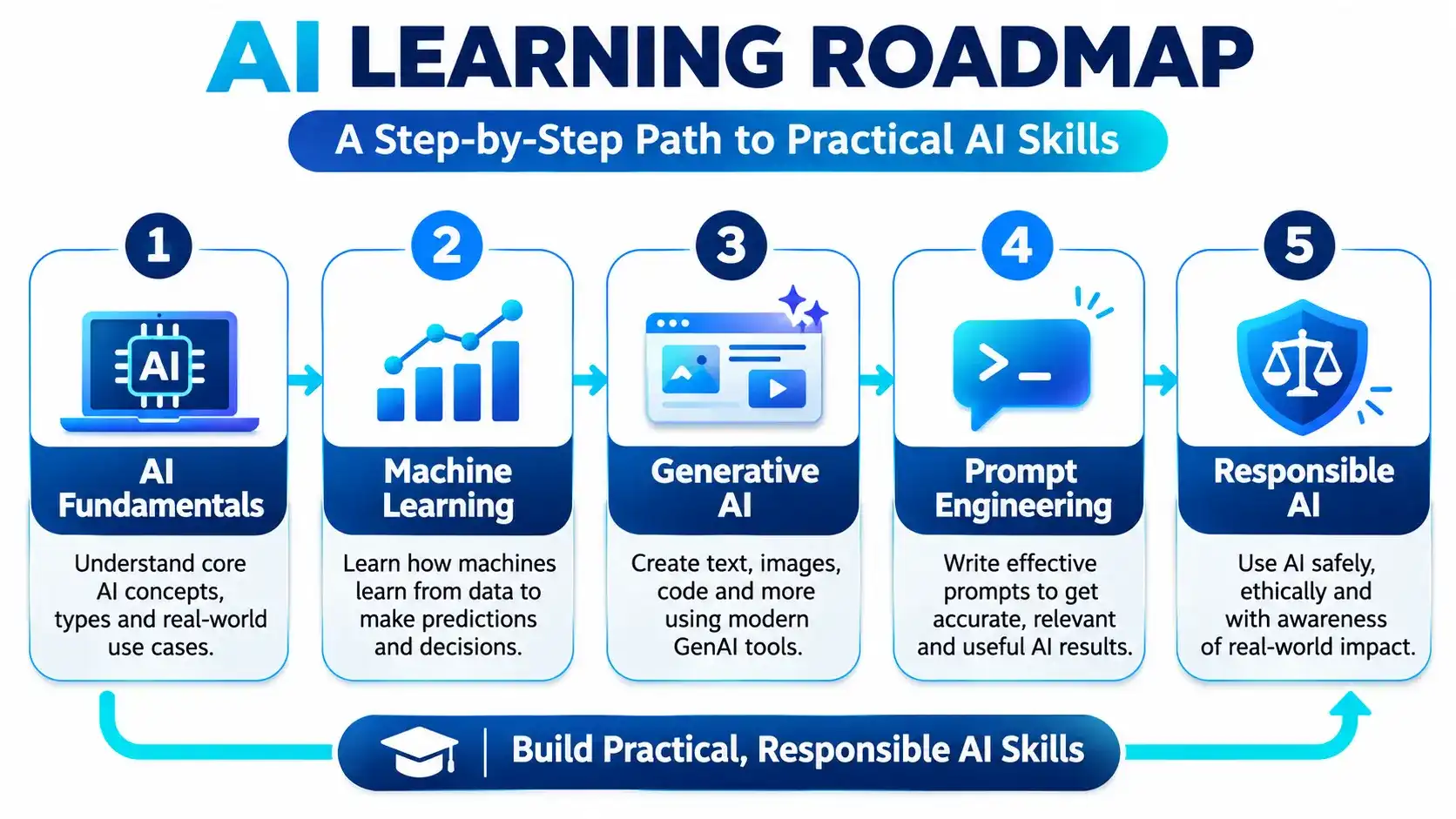
A useful AI learning programme should provide a structured understanding of the subject rather than introducing disconnected tools. The exact curriculum will vary depending on the course level and learning objectives, but several foundational areas are worth evaluating.
1. Artificial Intelligence Fundamentals
Start with the basic concepts of AI, including how intelligent systems process information, recognise patterns and generate outputs. Understanding these foundations makes advanced topics easier to approach.
2. Machine Learning Concepts
Machine learning focuses on developing systems that identify patterns from data. Important concepts include supervised learning, unsupervised learning, model training, testing and evaluation.
3. Generative AI
Generative AI systems can produce text, images, code and other types of content. Learners should understand how these systems work at a conceptual level, their practical applications and their limitations.
4. Prompt Engineering
Prompt engineering involves structuring instructions and context to guide AI systems towards useful outputs. It includes providing clear objectives, relevant information, constraints and evaluating generated responses.
5. AI Tools and Applications
Practical familiarity with AI tools can help learners understand how concepts are used in real tasks. The tools selected should match the programme's objectives and the learner's intended area of application.
6. Data and AI Integration
AI systems often depend on data. Understanding data preparation, quality, interpretation and responsible use is important when working with AI-powered applications.
7. Responsible AI Practices
AI outputs can contain errors, bias or misleading information. Learners should understand privacy, data security, transparency, human review and the importance of validating generated results.
How to Choose the Right AI Training in India
The right programme depends on your current knowledge, career direction and learning expectations. Before enrolling, evaluate the following factors.
1. Define Your Learning Objective
Begin by identifying why you want to learn AI. A student exploring technology careers may need foundational concepts, while a working professional may want to apply AI to existing responsibilities.
Your objective will influence the type and depth of training you should consider.
2. Review the Course Curriculum
Read the curriculum carefully instead of relying only on the course title. Check whether it explains fundamental concepts, introduces relevant tools and includes practical applications.
A structured curriculum should make the learning progression understandable, from basic concepts to more advanced topics.
3. Look for Practical Learning Opportunities
AI knowledge becomes more meaningful when learners apply it to actual tasks. Look for opportunities to work on exercises, case studies, demonstrations or projects.
For example, a practical learning activity could involve creating a document summarisation workflow, analysing a sample dataset or developing a structured prompt for a business task.
4. Evaluate the Learning Format
Consider whether the programme offers the learning format you can consistently follow. Online learning may provide flexibility, while scheduled sessions can offer a more structured routine.
Check the actual delivery format, interaction opportunities, access conditions and support arrangements before enrolling.
5. Understand the Certification Details
If certification matters to your career objective, check what the certificate represents, who issues it and what requirements are involved in earning it.
A certificate can document learning or course completion, but it should not be treated as a guarantee of employment or professional expertise. Practical understanding and the ability to demonstrate skills remain important.
6. Check the Course Level
Some programmes are designed for beginners, while others expect prior knowledge of programming, mathematics or data concepts. Choose a level that matches your current background.
If you are new to AI, a programme with clearly explained fundamentals can provide a stronger starting point.
7. Consider Career Relevance
Evaluate whether the topics connect with the type of work you want to perform. For example, someone interested in business automation may prioritise AI applications and workflow concepts, whereas an aspiring machine learning professional may need deeper technical foundations.
What Is AI Certification Training and Why Does It Matter?
AI Certification Training combines structured learning with a certificate or credential linked to defined course requirements. Depending on the programme, it may cover AI fundamentals, machine learning, generative AI, tools and practical applications.
Certification can be useful in several ways:
- It provides evidence that a learner has completed a particular programme or assessment.
- It can help organise learning around a defined curriculum.
- It gives learners a structured opportunity to study specific AI concepts.
- It can complement a portfolio of practical work.
- It may help communicate learning progress during academic or professional discussions.
However, not all certificates have the same recognition or purpose. Before selecting a programme, verify the issuing organisation, assessment process, eligibility requirements and exact credential being offered.
It is also important to distinguish between a course completion certificate and an external vendor certification. They are not automatically equivalent.
AI Course in India: What Should Beginners Look For?
If you are exploring an AI Course in India for the first time, avoid choosing a programme simply because it includes advanced terminology or a long list of tools.
A beginner-friendly learning path should explain concepts clearly and gradually introduce practical applications.
Consider these points:
- Does the course explain AI fundamentals before moving to advanced topics?
- Are technical terms explained with understandable examples?
- Does it introduce real-world AI use cases?
- Are practical exercises included?
- Does it explain the limitations and responsible use of AI?
- Are the prerequisites clearly mentioned?
- Can the learning outcomes be understood before enrolment?
A learner does not necessarily need to master every AI technology at the beginning. Developing a clear foundation and learning how to apply concepts to relevant problems is a more manageable approach.
Is AI Online Training a Good Option for Working Professionals?

AI Online Training can be a practical option for people balancing professional responsibilities, education and skill development.
Online programmes may allow learners to study from different locations and organise learning around their schedules. However, flexibility alone does not determine the quality of a programme.
Before choosing online AI training, evaluate:
- Learning structure: Is there a clear sequence of topics and learning objectives?
- Practical exposure: Are there exercises or projects to apply concepts?
- Trainer interaction: Are opportunities available to ask questions or clarify doubts?
- Learning resources: Are the study materials and tools explained clearly?
- Access details: Are course duration, session format and resource availability transparent?
- Progress evaluation: Is there a way to assess your understanding?
Working professionals should also identify one or two tasks from their current field where AI could be useful. Applying newly learned concepts to familiar problems can make the learning process more relevant.
Practical AI Projects That Can Strengthen Your Learning
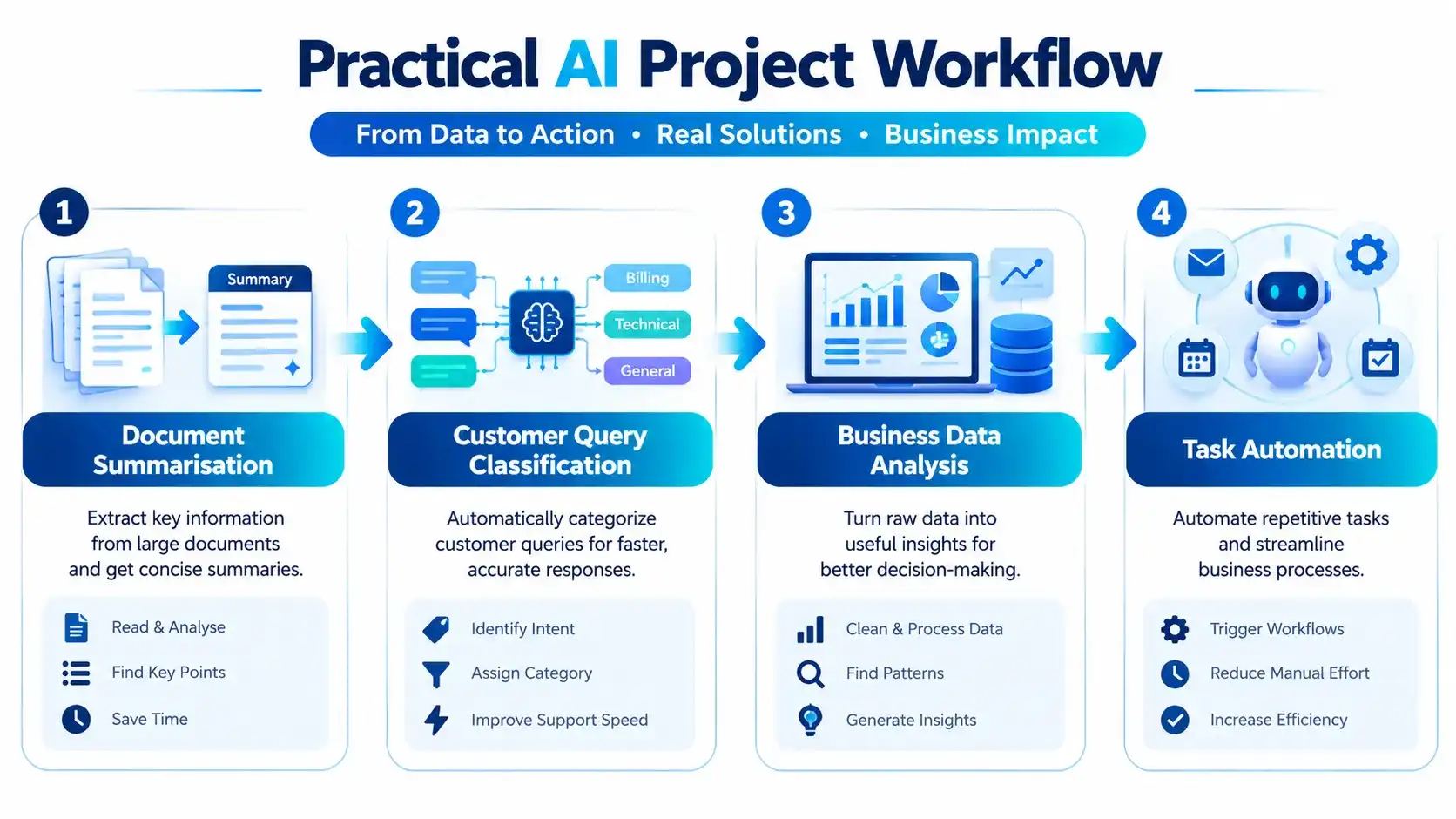
Projects help learners move beyond theoretical understanding. They also provide examples of how AI concepts can be applied to specific problems.
Here are some project ideas suitable for exploring different AI applications:
1. AI-Powered Document Summarisation
Create a workflow that summarises lengthy documents into key points. Evaluate whether the summary preserves important information and accurately reflects the original content.
2. Customer Query Classification
Use a sample collection of customer queries to explore how AI can categorise messages into topics such as billing, technical support and general enquiries.
3. Business Data Analysis Assistant
Explore how AI can help explain trends in a sample dataset. Compare its observations with calculations and visualisations to check accuracy.
4. Intelligent Content Research Workflow
Develop a process that organises research notes, identifies important themes and creates a structured content outline. Review the output for accuracy and originality.
5. Repetitive Task Automation
Identify a simple repetitive task and design a workflow that uses automation and AI assistance where appropriate. Include human review for important decisions.
These are illustrative project ideas, not claims about the projects included in any particular course. Their purpose is to show how learners can connect AI concepts with practical problems.
Which Skills Can You Develop Through AI Learning?
AI learning can support a combination of technical and professional skills. The skills you develop will depend on the curriculum, practice and depth of study.
Some useful areas include:
- Understanding AI concepts and terminology.
- Writing clear prompts and instructions.
- Evaluating AI-generated information.
- Working with data and identifying patterns.
- Understanding basic machine learning concepts.
- Exploring generative AI applications.
- Identifying suitable automation opportunities.
- Communicating insights and limitations.
- Applying responsible AI practices.
- Solving problems through structured thinking.
These skills can complement different career paths. However, completing an AI course alone does not automatically qualify someone for a specialised AI role. Job requirements may also include programming, mathematics, domain knowledge, experience and portfolio evidence.
Common Mistakes to Avoid When Selecting AI Training
Choosing a programme without evaluating its relevance can lead to a mismatch between learning expectations and actual outcomes.
Avoid these common mistakes:
Choosing Only by Course Name: A course with an attractive title may not cover the topics you need. Review the curriculum.
Ignoring Prerequisites: Advanced technical programmes may require prior knowledge. Check the expected starting level.
Focusing Only on Certificates: A certificate is not a substitute for understanding concepts and demonstrating practical ability.
Learning Tools Without Understanding Concepts: Tools change over time. Understanding the underlying principles makes it easier to adapt.
Expecting Guaranteed Career Results: Training can support skill development, but employment outcomes depend on several factors, including experience, practical ability and market requirements.
Ignoring AI Limitations: AI-generated outputs require verification. Responsible use is part of developing genuine AI skills.
How to Start Your AI Learning Journey
If you are ready to begin, follow a simple and consistent approach:
- Identify your reason for learning AI.
- Understand your current knowledge and technical background.
- Explore foundational AI concepts.
- Compare course curricula and learning formats.
- Practise using relevant AI tools.
- Work on small projects related to your interests.
- Review and validate your results.
- Build a portfolio that demonstrates what you can do.
- Continue learning as AI technologies and applications evolve.
This approach helps turn AI learning into a structured skill-development process rather than a short-term attempt to follow technology trends.
Explore AI Training in India with TechPratham
Selecting an AI learning programme is an important step towards understanding how artificial intelligence can be applied in academic, professional and business environments. If you are comparing options for AI Training in India, review the curriculum, learning objectives, practical exposure and certification details before making a decision. Explore the AI Training in India programme at TechPratham to understand the course information and evaluate whether it aligns with your learning goals. Focus on developing a strong foundation, practising with relevant tools and learning to evaluate AI outputs responsibly. These habits can help you build skills that remain useful as AI applications continue to develop.
Frequently Asked Questions About AI Training in India
1. What is AI Training in India?
AI Training in India refers to educational programmes that help learners understand artificial intelligence concepts, technologies, tools and applications. Programmes may cover AI fundamentals, machine learning, generative AI and practical use cases.
2. Who can enrol in an AI course?
Students, graduates, working professionals and individuals interested in understanding artificial intelligence can explore AI courses. Eligibility and prerequisites depend on the specific programme.
3. What is included in AI Certification Training?
The curriculum varies by programme. It may include AI fundamentals, machine learning concepts, generative AI, practical applications and assessments. Always check the course syllabus and certification requirements.
4. Is AI Online Training suitable for beginners?
Yes, online AI training can be suitable for beginners when the programme explains foundational concepts clearly and provides a structured learning path. Check the prerequisites before enrolling.
5. Do I need programming knowledge to learn AI?
Not every introductory AI programme requires programming knowledge. However, technical areas such as machine learning development may require programming, mathematics and data skills.
6. What is the difference between an AI course and AI certification training?
An AI course is a learning programme focused on developing knowledge and skills. AI certification training generally connects structured learning with a certificate or credential, subject to the programme's requirements.
7. Can working professionals learn AI online?
Yes. Online learning can help working professionals study alongside their existing responsibilities. They should compare the schedule, course structure, practical activities and available learning support.
8. Does completing an AI course guarantee a job?
No. Completing a course does not guarantee employment. Career opportunities depend on practical skills, experience, role requirements, problem-solving ability and other qualifications.
9. What practical skills should I develop while learning AI?
Useful skills include prompt writing, data interpretation, understanding AI concepts, evaluating generated outputs, exploring automation and applying responsible AI practices.
10. How should I choose the right AI course in India?
Compare the curriculum, course level, prerequisites, practical learning opportunities, delivery format, certification details and relevance to your goals. Choose a programme that matches your current knowledge and intended learning outcomes.
Related Articles

Agentic AI
Top 10 Artificial Intelligence (AI) Training Institutes in India
Explore the top 10 Artificial Intelligence training institutes in India, covering AI courses, curriculum, skills and career opportunities.
Agentic AI
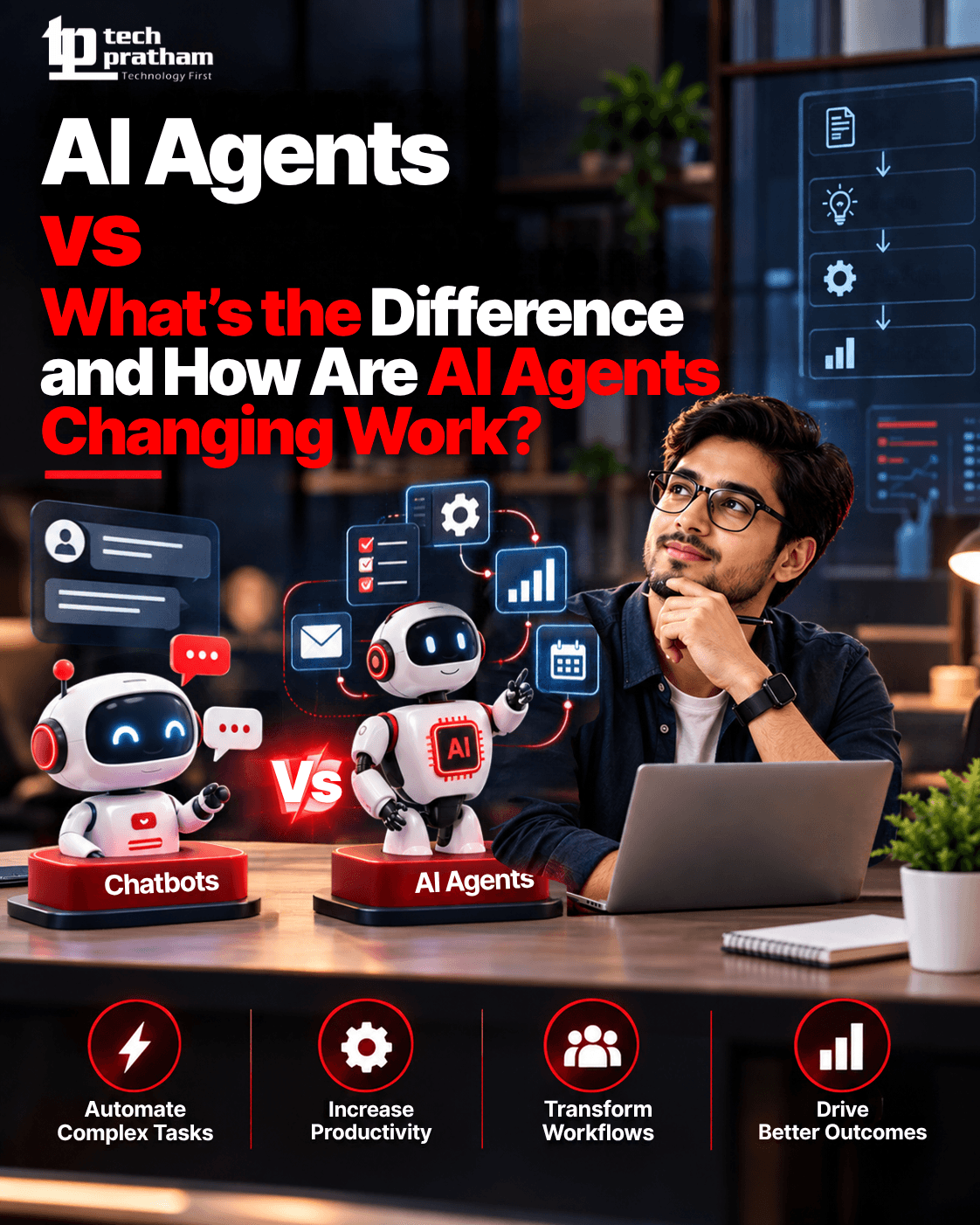
AI Agents vs Chatbots: What’s the Difference and How Are AI Agents Changing Work?
Compare AI agents and chatbots, understand how AI agents work, their business applications, required skills, career opportunities and learning roadmap





 +91-8882178896
 +1 (343) 477-0926