ServiceNow
126 min read4 viewsWhy ServiceNow Is a Good Career Choice for B.Tech Graduates
By TechPratham TeamPublished September 17, 2026Updated September 17, 2026

For many B.Tech graduates, the transition from college to a technology career can be challenging. There are many career paths to consider, including software development, cloud computing, cybersecurity, data, automation, and enterprise platforms. ServiceNow is another technology career path that B.Tech graduates can explore, particularly those interested in enterprise applications, workflow automation, IT service management, administration, development, and business processes.
ServiceNow has also built structured learning and career journeys around roles such as system administration and application development. Its official training ecosystem includes role-based learning, certifications, micro-credentials, and hands-on learning resources.
For fresh graduates, the important question is not simply whether ServiceNow is “good,” but whether its skills, roles, and learning requirements match their interests and background.
What Is ServiceNow?
ServiceNow is an enterprise technology platform used to manage and automate workflows across organizations.
Its ecosystem includes areas such as:- IT Service Management (ITSM)
- IT Operations Management
- Customer Service Management
- Human Resources
- Security Operations
- Governance, Risk and Compliance
- Application development
- Workflow automation
- Platform administration and analytics
This means ServiceNow careers are not limited to a single job profile. Different roles require different combinations of technical, analytical, communication, and business-process skills.
Why Is ServiceNow Relevant for B.Tech Graduates?
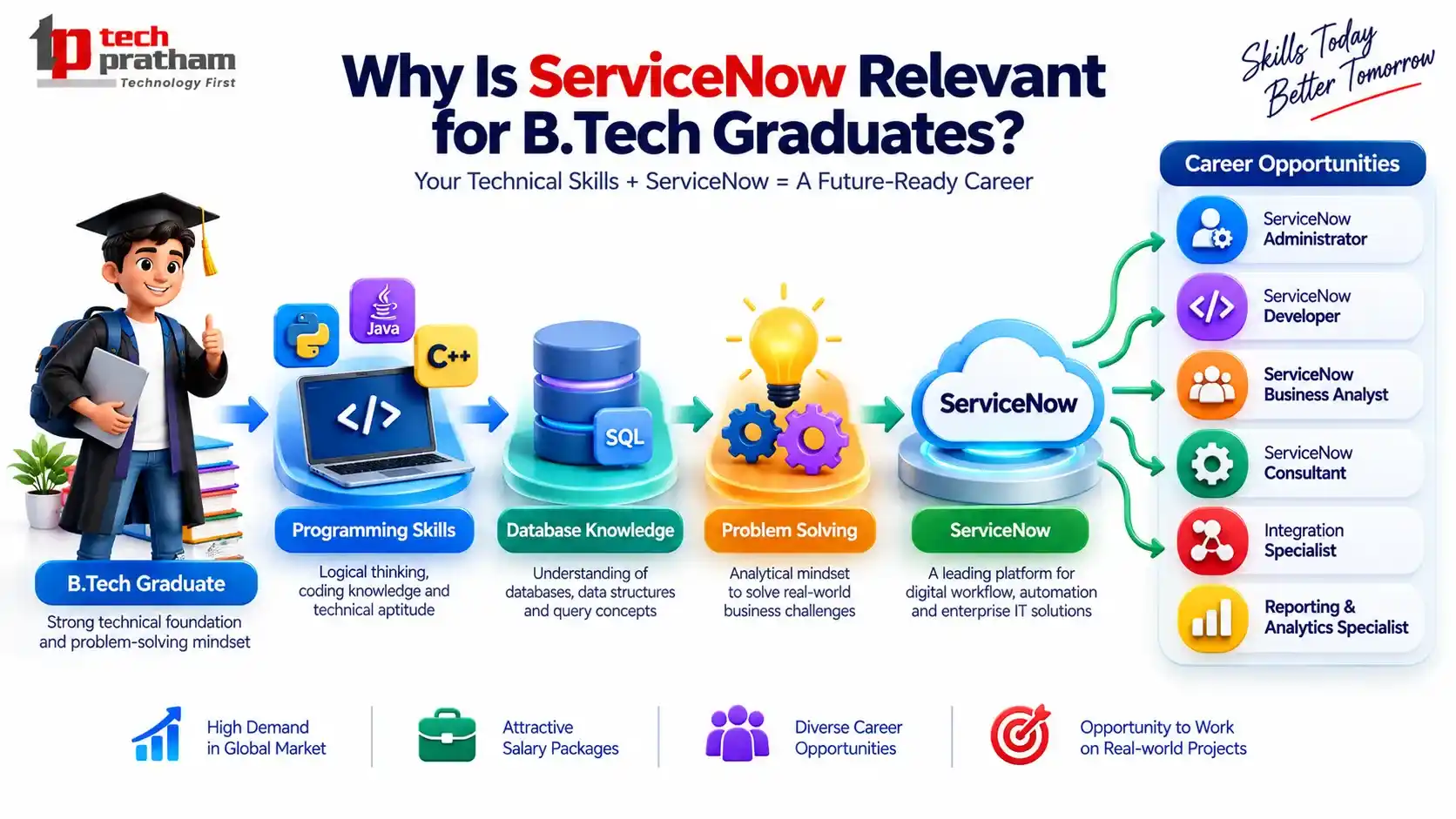
A B.Tech degree can provide a useful foundation in problem-solving, technology concepts, logical thinking, and software systems. These skills can be applied while learning the ServiceNow platform.
For example, a B.Tech graduate may already have exposure to:
- Programming fundamentals
- Databases
- Software development
- Operating systems
- Networking
- Web technologies
- Problem-solving
- Basic system architecture
Not every ServiceNow role requires deep programming knowledge. The required skills depend on the career path you choose. ServiceNow's current career journeys include roles such as AI System Administrator, AI Application Developer, AI Platform Owner, and AI Implementer, reflecting the range of skills across its ecosystem.
What ServiceNow Career Paths Can B.Tech Graduates Explore?
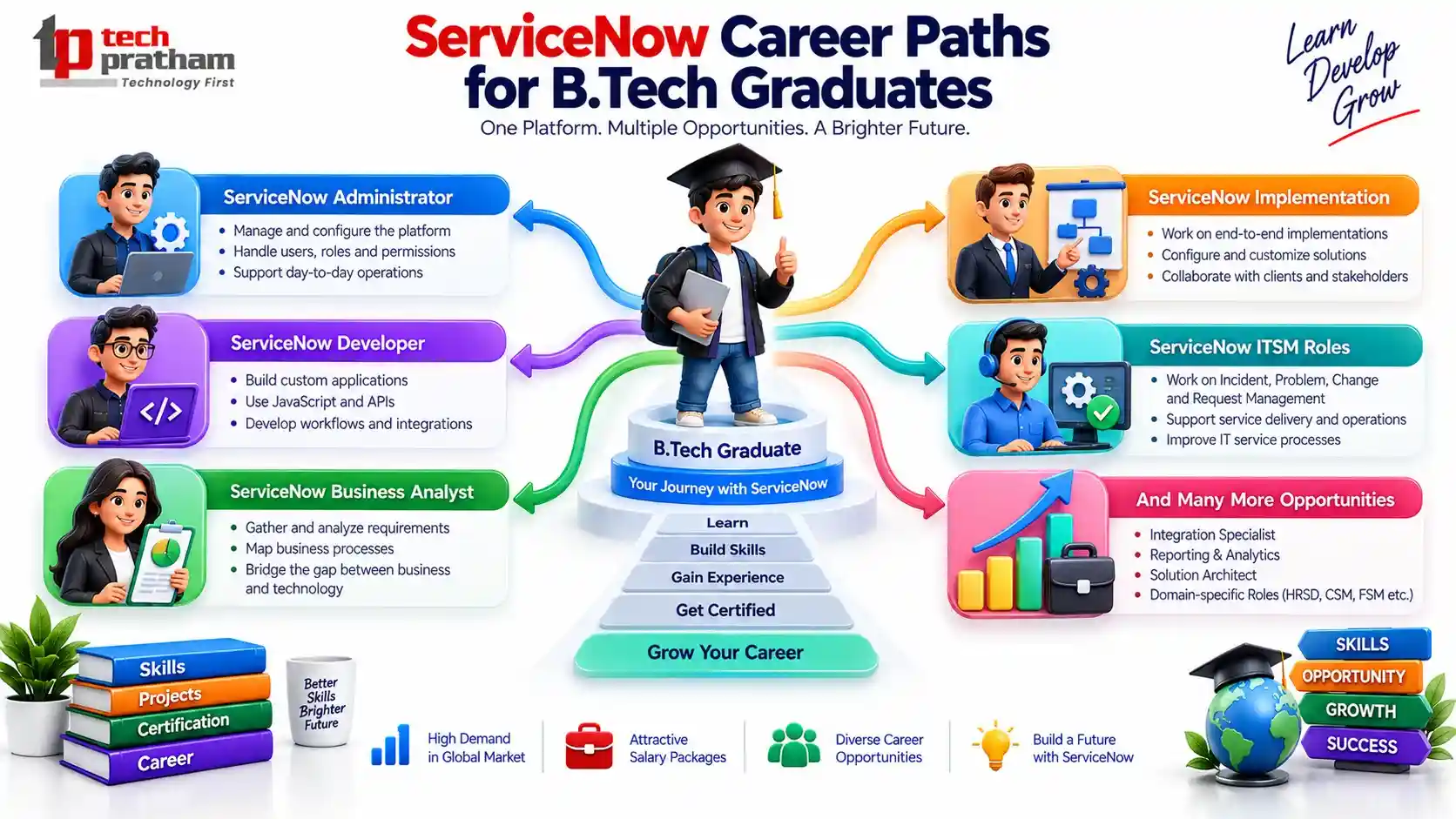
One advantage of learning ServiceNow is that graduates can explore different career directions instead of being restricted to one technical role.
1. ServiceNow Administrator
Administrators work with platform configuration, maintenance, user access, applications, and system-related activities. ServiceNow's Certified System Administrator (CSA) certification validates knowledge and skills related to configuring, implementing, and maintaining the platform.
2. ServiceNow Developer
This path is more technical and can involve application development, scripting, integrations, automation, and platform customization. B.Tech graduates with programming knowledge may find this path particularly relevant.
3. ServiceNow Implementation Roles
Implementation-focused professionals work on translating organizational requirements into ServiceNow solutions. This can involve understanding requirements, configuring applications, testing workflows, and collaborating with stakeholders.
4. ServiceNow Business or Process Analyst
Professionals interested in technology as well as business processes can explore analyst-oriented roles involving requirements, workflows, documentation, and process improvement. The exact responsibilities vary by organization and experience level.
Do B.Tech Graduates Need Coding for ServiceNow?
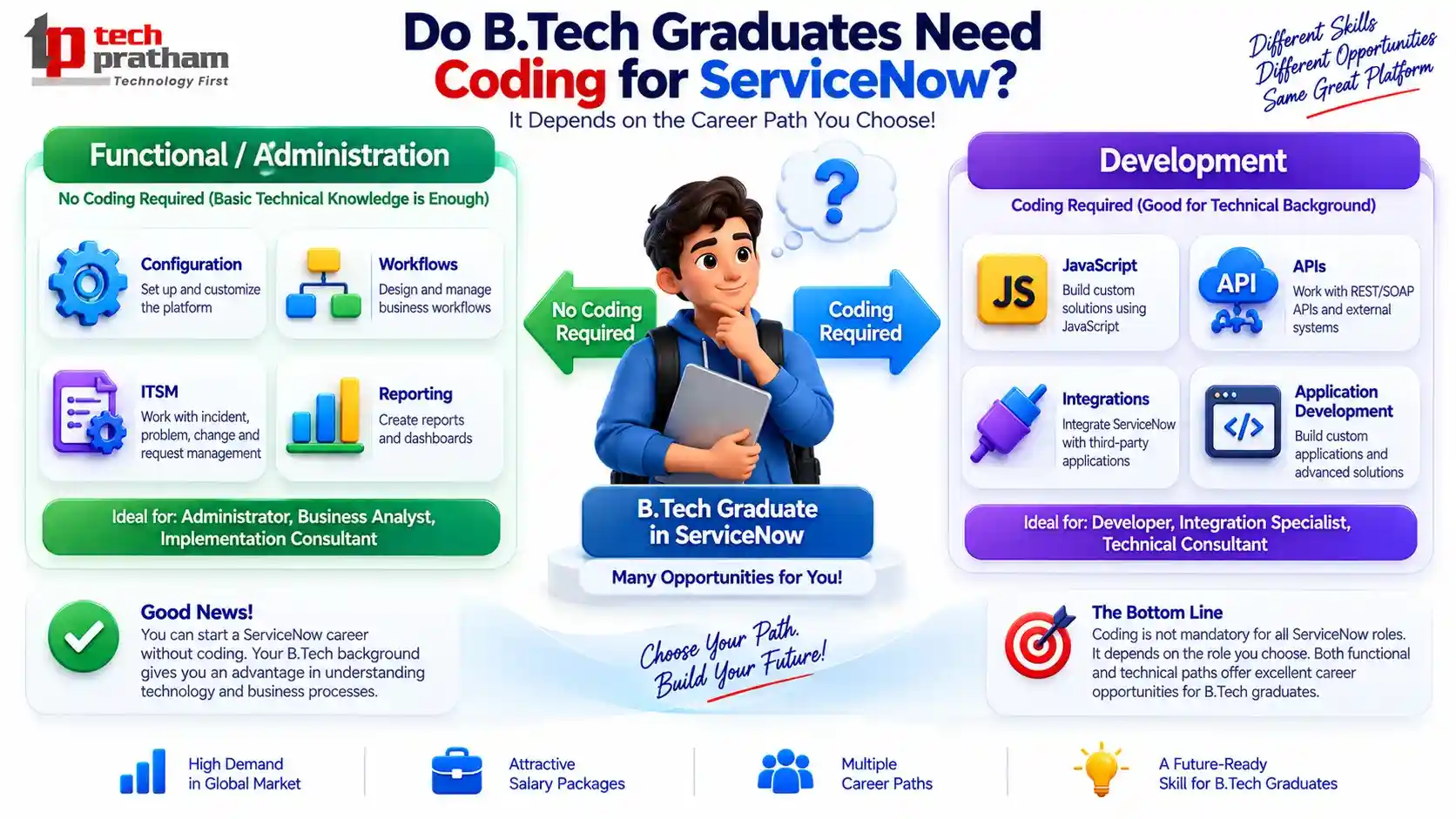
Not for every ServiceNow career path.
This is an important point for freshers. If you choose an administration or functional-oriented path, you may initially focus more on:
- Platform fundamentals
- ITSM concepts
- Configuration
- Workflows
- User administration
- Business rules
- Reporting
- ServiceNow applications
A development-oriented path generally requires stronger technical knowledge, including scripting and application development. Therefore, instead of asking “Do I need coding?”, a better question is:
“Which ServiceNow role do I want to pursue, and what technical skills does that role require?”
That approach helps you build a focused learning roadmap.
What Skills Should Freshers Learn for a ServiceNow Career?
A successful learning plan should combine platform knowledge with practical skills.
Technical Skills
Depending on your chosen path, these may include:
- ServiceNow platform fundamentals
- ITSM concepts
- JavaScript fundamentals
- Databases
- APIs and integrations
- Application development
- Workflow automation
- Reporting and dashboards
- Security and access concepts
Professional Skills
Don't overlook:
- Problem-solving
- Communication
- Requirement analysis
- Documentation
- Team collaboration
- Logical thinking
- Troubleshooting
ServiceNow's certification ecosystem itself distinguishes credentials across areas such as System Administrator, Application Developer, and Implementation Specialist, reinforcing that different career paths require different skill sets.
Is ServiceNow Training Useful for Freshers?
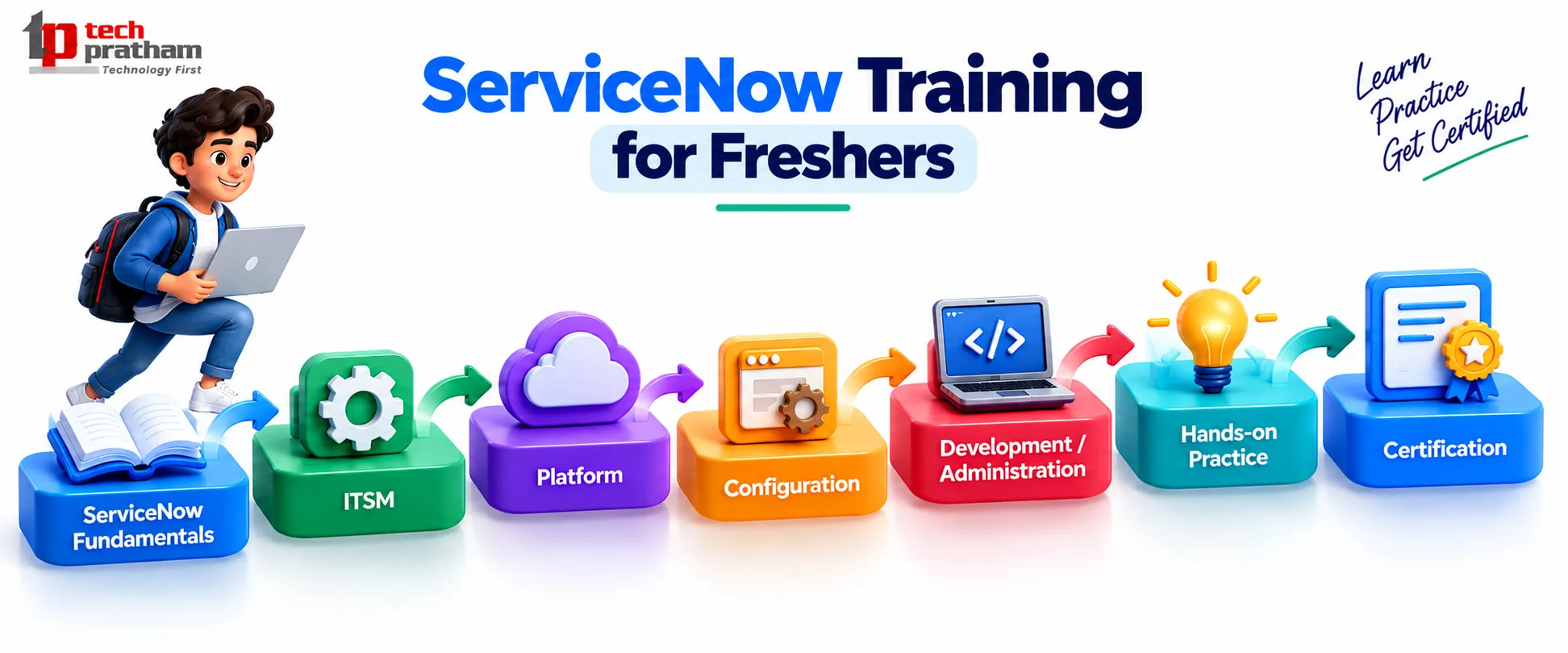
Structured ServiceNow training can help freshers build a foundation before working with real enterprise workflows.
Good ServiceNow training for freshers should not focus only on definitions. It should help learners understand how the platform works through practical scenarios.
A useful learning path can include:
- ServiceNow fundamentals
- ITSM concepts
- Platform navigation
- Users, groups, and roles
- Tables and data
- Forms and lists
- Business rules and workflows
- Reporting
- Scripting fundamentals
- Application development or administration
- Hands-on exercises
- Interview preparation
ServiceNow itself provides structured training, role-based learning paths, simulations, and certification options through ServiceNow University.
Which ServiceNow Certification Can Beginners Consider?
The Certified System Administrator (CSA) is an important foundational certification in the ServiceNow certification ecosystem. The current official CSA exam blueprint says the certification assesses knowledge and skills related to configuring, implementing, and maintaining a ServiceNow system. It also recommends familiarity with areas such as system administration, database concepts, IT help-desk processes, and ServiceNow usage. Certification should, however, be treated as one part of career preparation, not a substitute for practical skills.
A stronger combination is:
Learning + Hands-on Practice + Projects/Scenarios + Certification + Interview Preparation
How Can Freshers Build Practical ServiceNow Skills?
One common mistake is completing a course without practicing what was learned.
Instead, try to understand practical scenarios such as:
A user reports an IT issue. How does an incident move through the ServiceNow workflow?
Or:
An organization wants to automate an approval process. What information, users, conditions, and workflow steps might be involved?
You can also practice:
- Creating sample records
- Understanding tables
- Configuring forms
- Creating workflows
- Building reports
- Working with roles
- Exploring scripting concepts
- Understanding incident, problem, and change processes
ServiceNow's own training materials emphasize practical learning, and its University ecosystem provides learning paths and simulations designed around role-based skills.
What Are the ServiceNow Career Opportunities for Freshers?
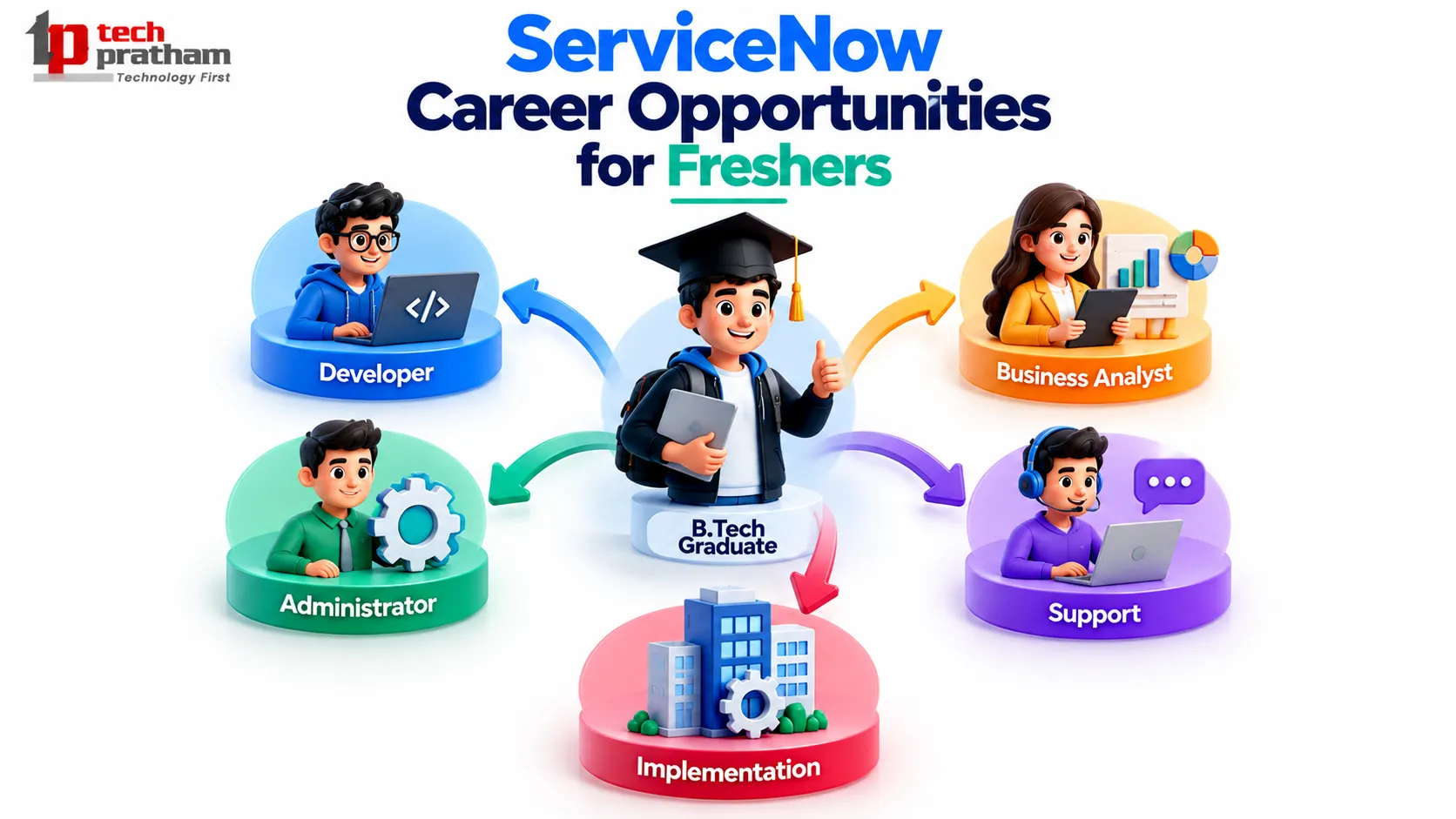
The ServiceNow career for freshers can develop in different directions depending on their skills and specialization.
Possible entry-level or early-career directions include:
- ServiceNow Administrator
- Junior ServiceNow Developer
- ServiceNow Support roles
- ITSM-related roles
- ServiceNow Business Analyst
- Platform support roles
- Application development roles
The availability of specific roles depends on the employer, location, required experience, and candidate skill set.
Over time, professionals can specialize in areas such as ITSM, ITOM, HRSD, CSM, Security Operations, application development, integrations, or platform administration.
These different specializations contribute to the broader ServiceNow career opportunities available across the ecosystem.
Why Choose TechPratham for ServiceNow Training?
Choosing the right learning environment is important, particularly for fresh graduates who are starting with limited practical experience.
At TechPratham, the ServiceNow learning approach can be useful for learners who want structured training around ServiceNow concepts, practical learning, projects, and career preparation.
When evaluating a ServiceNow training program, look for:
- Structured curriculum
- Experienced instructors
- Practical exercises
- Realistic business scenarios
- Hands-on project work
- Interview preparation
- Resume guidance
- Career support
- Clear coverage of the ServiceNow role you want to pursue
TechPratham's ServiceNow training offerings can be explored according to your preferred specialization and learning objective rather than choosing a course only because it has a particular keyword or certification in its title.
ServiceNow vs Traditional Software Development: What Should a B.Tech Graduate Choose?
There is no single career path that is right for every B.Tech graduate.
Consider your interests:
If You Interested | You may explore |
Programming and application building | ServiceNow Development |
System configuration | ServiceNow Administration |
ServiceNow IT processes and workflows | ITSM / Functional roles |
Business requirements | Analyst / Implementation roles |
Automation | Workflow / Platform development |
Technical troubleshooting | Administration / Support |
The better approach is to understand the day-to-day work associated with each path and then choose the skills you want to develop.
Common Mistakes B.Tech Freshers Should Avoid
Learning Without a Career Direction
Don't try to learn every ServiceNow module simultaneously.
Focusing Only on Certification
Certification demonstrates specific knowledge, but practical ability still matters.
Ignoring ITSM Fundamentals
Understanding incidents, problems, changes, service requests, and workflows can provide important context for ServiceNow learning.
Avoiding Hands-On Practice
Reading documentation is useful, but practical exercises help turn concepts into usable skills.
Expecting Immediate Results
A technology career develops through consistent learning, practice, projects, and experience.
FAQs About ServiceNow for B.Tech Graduates
Is ServiceNow suitable for B.Tech freshers?
Yes. B.Tech graduates can explore ServiceNow roles based on their technical background and chosen specialization. The learning requirements vary between administration, development, implementation, and other roles.
Can a B.Tech graduate become a ServiceNow developer?
Yes. Graduates with programming and logical problem-solving skills can learn ServiceNow development, including platform development and scripting.
Is coding mandatory for ServiceNow?
No. Coding requirements depend on the role. Development-oriented positions generally require more programming knowledge than administration or functional roles.
Which ServiceNow certification is good for beginners?
The Certified System Administrator (CSA) is a foundational ServiceNow certification. Candidates should follow the current official exam blueprint and preparation guidance before attempting it.
How should freshers start learning ServiceNow?
Start with platform fundamentals and ITSM concepts, then choose a role such as administration or development and build practical skills through structured learning and hands-on exercises.
Conclusion
ServiceNow for B.Tech Graduates can be a practical career path for those interested in enterprise technology, workflow automation, IT service management, platform administration, or application development.
The biggest advantage is the variety of directions within the ecosystem. A graduate can begin by understanding ServiceNow fundamentals and ITSM, then choose a specialization based on their interests and technical strengths.
For freshers, the strongest approach is not simply to complete a course or certification. Build a combination of platform knowledge, practical skills, problem-solving ability, projects, and professional communication.
If you are considering a ServiceNow career for freshers, start by identifying the role you want to target. Then select the appropriate learning path, practice realistic scenarios, and gradually build your technical profile.
Related Articles

ServiceNow
What Skills Can You Learn in a ServiceNow Course?
Discover ServiceNow skills in ITSM, administration, automation, scripting, integrations, reporting, and troubleshooting for different career paths.

ServiceNow
What Is ServiceNow Certification Training and How Can It Advance Your Career?
Explore ServiceNow certification training, key skills, exam preparation, career opportunities, and how certification can support your IT career.