Start typing to search courses...

Type in the search box to find courses
ServiceNow
234 min read2 views

What Skills Can You Learn in a ServiceNow Course?

By TechPratham TeamPublished September 10, 2026Updated September 10, 2026
learn through ServiceNow Training?

ServiceNow has become an important platform for organizations that want to manage IT services, automate workflows, connect business processes, and improve operational efficiency. As the platform covers both functional and technical areas, learning ServiceNow involves more than understanding a single application.

A well-structured ServiceNow Course can help learners develop skills across IT Service Management (ITSM), platform administration, workflow automation, scripting, reporting, integrations, and problem-solving.

But what skills can you actually learn through ServiceNow Training?

The answer depends on the learning path and career role, but most comprehensive programs introduce learners to the ServiceNow platform first and then build toward functional, administrative, or development-oriented skills.

This guide explains the key skills learners can develop, which areas beginners should focus on first, and how these skills relate to different ServiceNow career paths.

What Skills Can You Learn 

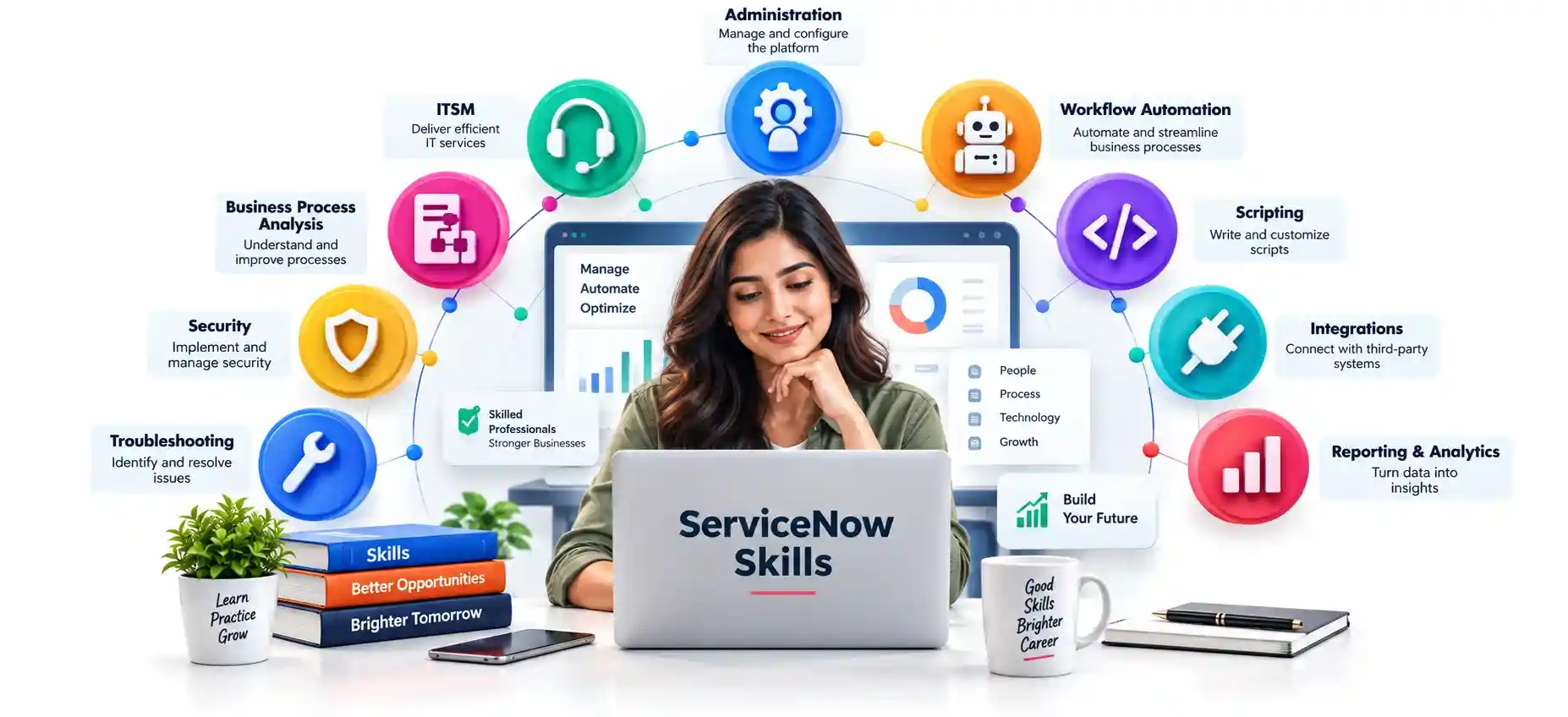
A comprehensive ServiceNow learning path can help you develop a combination of platform, functional, technical, automation, analytical, and problem-solving skills.

The major skill areas include:

  • ServiceNow platform fundamentals
  • ITSM concepts
  • Incident, Problem, and Change Management
  • Service Catalog
  • CMDB
  • Workflow automation
  • Flow Designer
  • ServiceNow administration
  • JavaScript and scripting
  • Business Rules
  • Client Scripts
  • APIs and integrations
  • Reporting and dashboards
  • Security and access control
  • Troubleshooting
  • Business process analysis
The depth of each area depends on whether the course is designed for an administrator, developer, consultant, or another role.

1. ServiceNow Platform Fundamentals

The first skill beginners generally need is understanding how the ServiceNow platform works.

Before moving into scripting or advanced configuration, learners should understand concepts such as:

  • Applications and modules
  • Tables and records
  • Forms and lists
  • Users and groups
  • Roles
  • Navigation
  • Platform configuration
  • Data structure
  • Basic workflows
These fundamentals create the foundation for everything that follows.

A learner who understands how records, tables, applications, and configurations relate to one another will generally find advanced ServiceNow topics easier to understand.

2. IT Service Management (ITSM) Skills
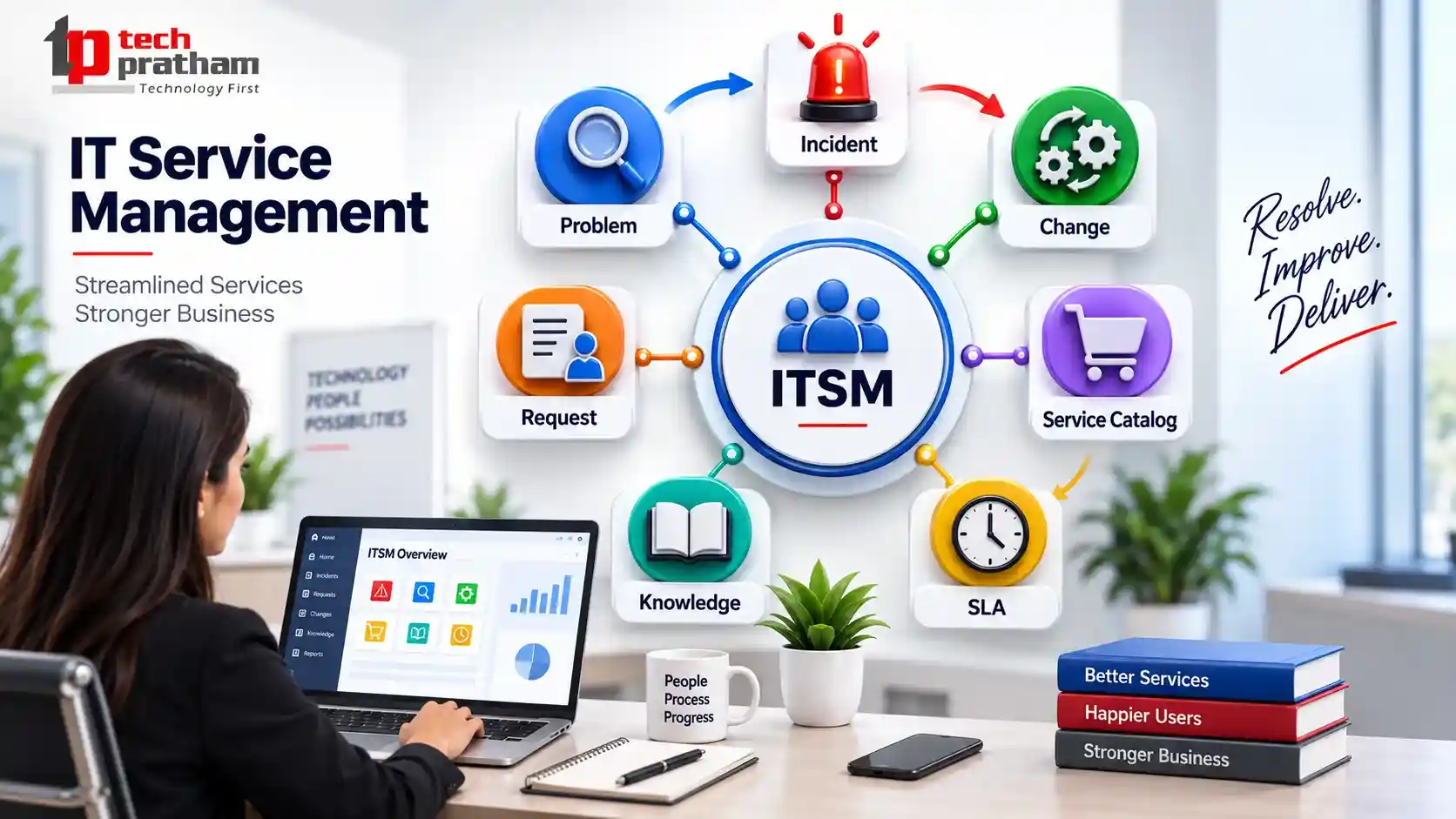
ITSM is one of the most important areas associated with ServiceNow.

Through ServiceNow Training, learners can develop an understanding of how organizations manage IT services and resolve operational issues.

Important ITSM concepts include:

  • Incident Management
  • Problem Management
  • Change Management
  • Request Management
  • Service Catalog
  • Knowledge Management
  • Service Level Management
For example, an incident process may involve:

User reports an issue → Incident is created → Assignment → Investigation → Resolution → Closure

Understanding this process helps learners see how ServiceNow can turn an IT service process into a structured digital workflow.

3. Incident Management Skills

Incident Management focuses on restoring normal service as quickly as possible when an IT issue occurs.

A ServiceNow learner can develop an understanding of:

  • Creating incidents
  • Categorization
  • Prioritization
  • Assignment
  • Incident states
  • Escalation
  • Resolution
  • Closure
  • Service-level considerations
The important skill is not simply learning where to create an incident.

Learners should understand why an incident follows a particular process and how different teams interact with it.

That business-process understanding is useful for both functional and technical roles.

4. Problem Management Skills

An incident addresses an immediate service disruption, while Problem Management focuses on understanding and addressing the underlying cause of recurring issues.

A ServiceNow Course may introduce learners to:

  • Problem identification
  • Root-cause analysis
  • Known errors
  • Problem investigation
  • Workarounds
  • Problem resolution
  • Relationship between incidents and problems
This helps learners understand how ServiceNow can support not only issue resolution but also continuous improvement.

5. Change Management Skills

Changes to IT systems can introduce risks if they are not properly planned and controlled.

ServiceNow Change Management helps organizations structure the change process.

Learners may work with concepts such as:

  • Change requests
  • Change types
  • Risk assessment
  • Approvals
  • Change scheduling
  • Implementation
  • Validation
  • Closure
A practical learner should understand how a change moves through its lifecycle rather than simply memorizing terminology.

6. Service Catalog Skills

The Service Catalog is another important area for ServiceNow professionals.

It provides a structured way for users to request services or items from an organization.

A learner can develop knowledge of:

  • Catalog items
  • Categories
  • Request workflows
  • Variables
  • Approvals
  • Fulfillment processes
  • User requests
For example:

Employee requests laptop → Request submitted → Approval → IT fulfillment → Request completed


This type of scenario demonstrates how ServiceNow connects user requests with automated processes.

7. CMDB Skills

The Configuration Management Database (CMDB) is an important concept for professionals working with IT operations and service management.

Learners can develop an understanding of:

  • Configuration Items (CIs)
  • CI relationships
  • CMDB structure
  • Configuration data
  • Service relationships
  • Discovery concepts
  • Data quality

CMDB knowledge is particularly useful because configuration information can provide context for other IT processes.


For example, understanding relationships between infrastructure components can help teams analyze the potential impact of incidents or changes.

8. Workflow Automation Skills
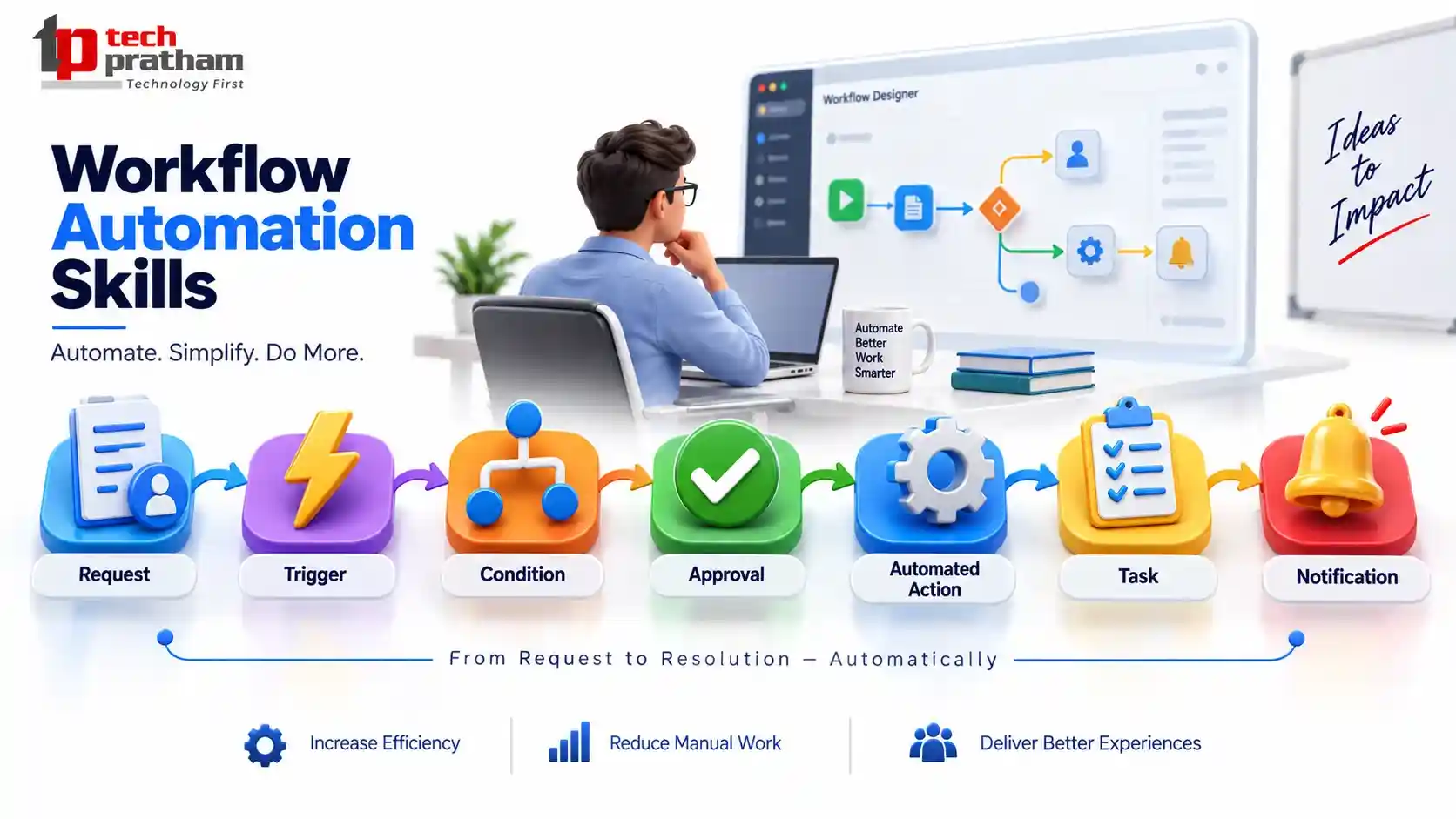
One of the major reasons organizations use ServiceNow is to automate repetitive business and IT processes.

A ServiceNow learner can develop skills related to:

  • Workflow concepts
  • Triggers
  • Actions
  • Approvals
  • Conditions
  • Automated tasks
  • Notifications
  • Process orchestration

Instead of manually moving every request from one team to another, automation can help route tasks according to predefined business rules.


This is where ServiceNow learning moves from basic platform knowledge toward process automation.

9. Flow Designer Skills

Flow Designer is particularly relevant for learners interested in modern ServiceNow workflow automation.

A course may introduce:

  • Flows
  • Triggers
  • Actions
  • Conditions
  • Data handling
  • Subflows
  • Workflow automation
  • Integration-related actions

A simple example could be:


New employee request → Trigger → Manager approval → IT task → Account provisioning → Notification


The objective is to understand how a business requirement can be converted into an automated flow.

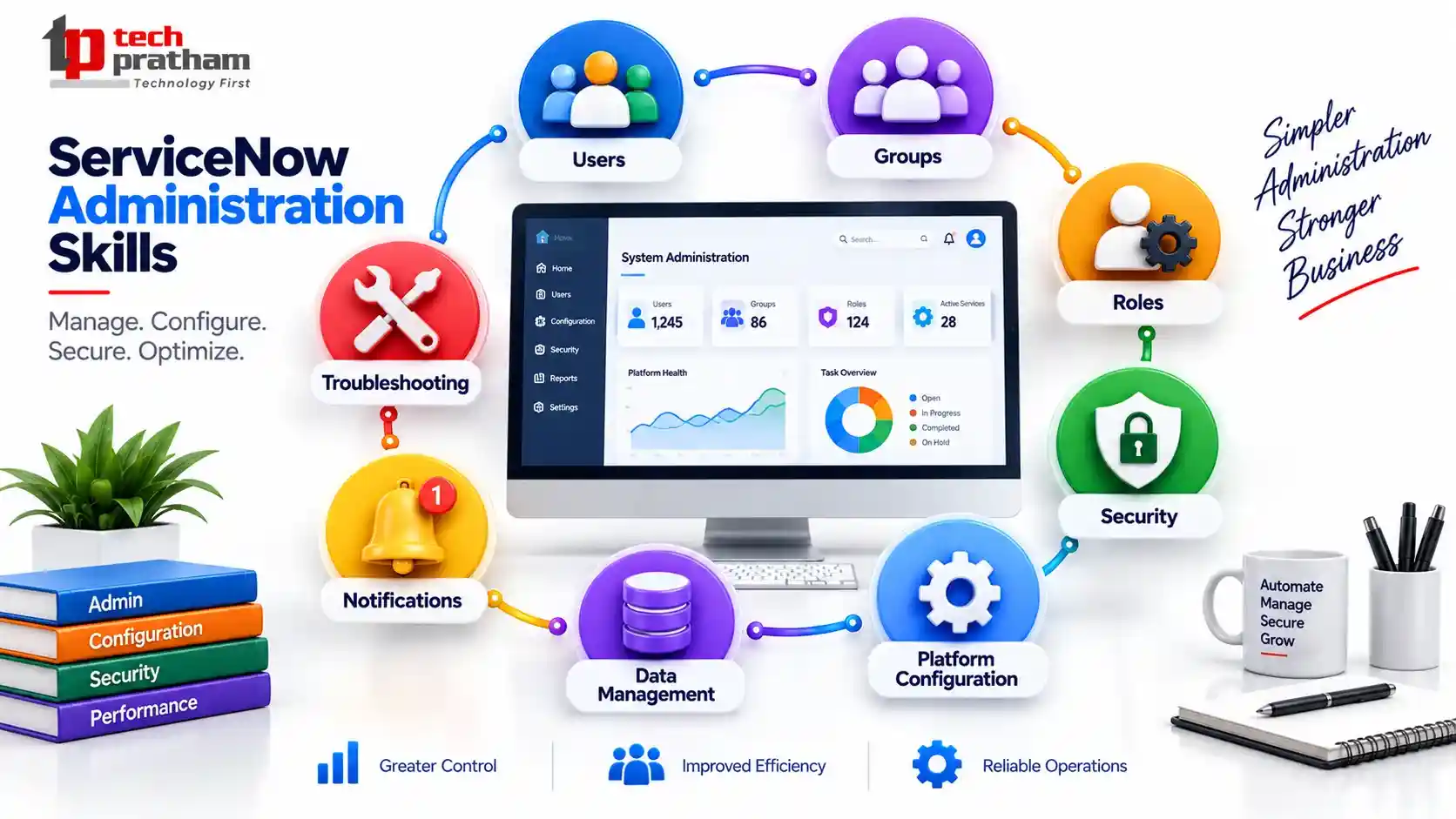
10. ServiceNow Administration Skills

Learners interested in administrator roles need a broader understanding of platform configuration.


Administrative skills can include:


  • User administration
  • Groups
  • Roles
  • Access controls
  • Tables
  • Forms
  • Lists
  • Notifications
  • Configuration
  • Data management
  • Basic troubleshooting

A ServiceNow administrator is not simply a platform user.


The role often requires understanding how configuration decisions affect users, processes, security, and data.


11. ServiceNow Scripting Skills

Technical learners can move beyond configuration into scripting.

ServiceNow development commonly involves JavaScript-based scripting concepts.

Depending on the learning path, learners may study:

  • JavaScript fundamentals
  • Server-side scripting
  • Client-side scripting
  • Glide APIs
  • Script Includes
  • Business Rules
  • Client Scripts
  • UI-related scripting
  • Debugging

You don't necessarily need advanced programming skills before starting every ServiceNow course, but technical development paths require progressively stronger scripting knowledge.


12. Business Rules Skills

Business Rules are an important technical concept in ServiceNow.

Learners can understand how server-side logic can be triggered when records are inserted, updated, deleted, or otherwise processed.

Important concepts include:

  • Before Business Rules
  • After Business Rules
  • Async Business Rules
  • Conditions
  • Server-side logic
  • GlideRecord
  • Performance considerations

The important skill is knowing when a Business Rule is appropriate rather than using it for every customization.

13. Client Script Skills

Client Scripts work on the client side and can influence form behavior.


Learners may explore:


  • onLoad
  • onChange
  • onSubmit
  • Client-side validation
  • Dynamic form behavior
  • User experience

Understanding the difference between client-side and server-side logic is an important step for ServiceNow developers.


14. Integration and API Skills
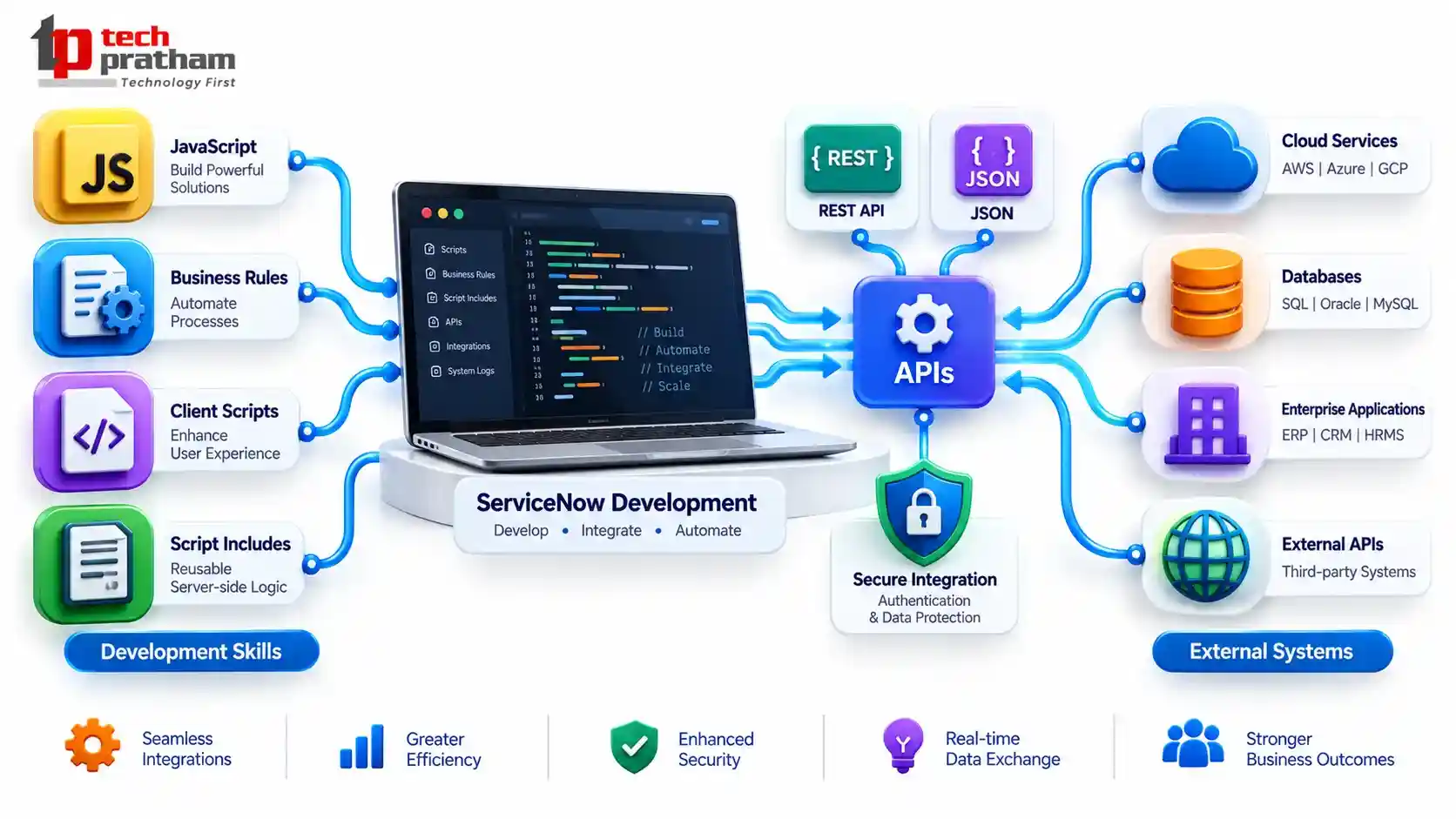
Modern enterprises rarely operate with only one software platform.


ServiceNow may need to exchange information with other applications and systems.


Therefore, technical ServiceNow learning can introduce:


  • REST APIs
  • SOAP web services
  • API requests
  • Authentication
  • Data exchange
  • Integration concepts
  • JSON
  • Data transformation
  • Error handling

Integration knowledge becomes particularly valuable for learners interested in technical or integration-focused ServiceNow roles.


15. Reporting and Dashboard Skills


ServiceNow generates operational data that organizations can use to understand performance and trends.


Learners can develop skills related to:


  • Reports
  • Dashboards
  • Filters
  • Data visualization
  • Metrics
  • Performance analysis
  • Operational insights
For example, an IT manager may want to understand:

  • Number of open incidents
  • Resolution trends
  • SLA performance
  • Request volumes
  • Assignment group workload
Reporting skills help transform platform data into information that business and IT teams can actually use.

16. Security and Access Control Skills

Enterprise platforms need appropriate access controls because different users should not necessarily see or modify the same information.

ServiceNow learners may encounter concepts such as:

  • Users
  • Groups
  • Roles
  • Access Control Rules
  • Permissions
  • Application access
  • Data security
Security knowledge becomes particularly important for administrators, developers, and implementation professionals.

17. Troubleshooting and Problem-Solving Skills

One of the most valuable skills developed through practical ServiceNow learning is problem-solving.

In a real implementation, something may not behave as expected.

A professional may need to investigate:

  • Why a workflow did not execute
  • Why a user cannot access a record
  • Why a notification was not triggered
  • Why a script produced an unexpected result
  • Why an integration failed
  • Why a report is showing incorrect data
This requires logical investigation rather than memorization.

That is why practical exercises are an important part of effective ServiceNow Training.

18. Business Process Analysis Skills

ServiceNow professionals often work between business teams and technology teams.

They need to understand questions such as:

  1. What problem is the organization trying to solve?
  2. Which users are involved?
  3. What should happen when a request is submitted?
  4. Who needs to approve it?
  5. What should happen after approval?
  6. Which tasks can be automated?
This is essentially business process thinking.

It is especially useful for consultants, administrators, business analysts, and functional professionals.

Which ServiceNow Skills Should Beginners Learn First?

Beginners don't need to learn every ServiceNow feature simultaneously.

A logical progression is:

ServiceNow Fundamentals
ITSM Concepts
Incident + Problem + Change Management
Service Catalog + CMDB
Administration
Workflow Automation / Flow Designer
Reporting
Scripting
Integrations

The exact order can change depending on the learner's career goal.

Someone targeting an administrator role may spend more time on configuration, security, users, groups, and workflows.

Someone targeting development may move more quickly into JavaScript, Business Rules, Client Scripts, APIs, and integrations.

What Skills Do You Need for a ServiceNow Administrator?

A ServiceNow Administrator generally needs a combination of platform and functional skills.

Important areas include:

  • ServiceNow fundamentals
  • User and group administration
  • Roles and access
  • Platform configuration
  • ITSM processes
  • Business rules
  • Notifications
  • Workflows
  • Flow Designer
  • Reporting
  • Troubleshooting
An administrator also needs to understand how configuration decisions affect end users and business processes.

What Skills Do You Need for a ServiceNow Developer?

A developer generally needs stronger technical knowledge.

Important areas can include:

  • JavaScript
  • ServiceNow APIs
  • Business Rules
  • Client Scripts
  • Script Includes
  • Glide APIs
  • REST APIs
  • Integrations
  • Data structures
  • Debugging
  • Application development
However, technical skills alone are not enough.

A good ServiceNow developer should also understand the business process behind the requirement.

What Skills Do You Need for a ServiceNow Consultant?

Consulting roles require a combination of technical, functional, and communication skills.

Useful areas include:

  • ITSM knowledge
  • Requirement gathering
  • Process analysis
  • ServiceNow configuration
  • Solution design
  • Stakeholder communication
  • Documentation
  • Problem-solving
  • Testing
  • Implementation concepts
Consultants need to translate business requirements into practical platform solutions.

How Does Practical ServiceNow Training Help Develop These Skills?

Reading about ServiceNow provides theoretical knowledge, but practical scenarios can make the concepts easier to understand.

For example, instead of only learning the definition of Incident Management, a learner could work through:

User reports an issue → Incident created → Priority assigned → Team notified → Issue investigated → Resolution recorded → Incident closed

Similarly, an automation exercise might involve:

Service request → Approval → Automated task creation → Fulfillment → User notification

These exercises help learners understand how different ServiceNow components work together.

When evaluating ServiceNow Training, look for programs that provide practical scenarios rather than only presentations or theoretical explanations.

How Can a ServiceNow Course Help You Choose a Career Path?
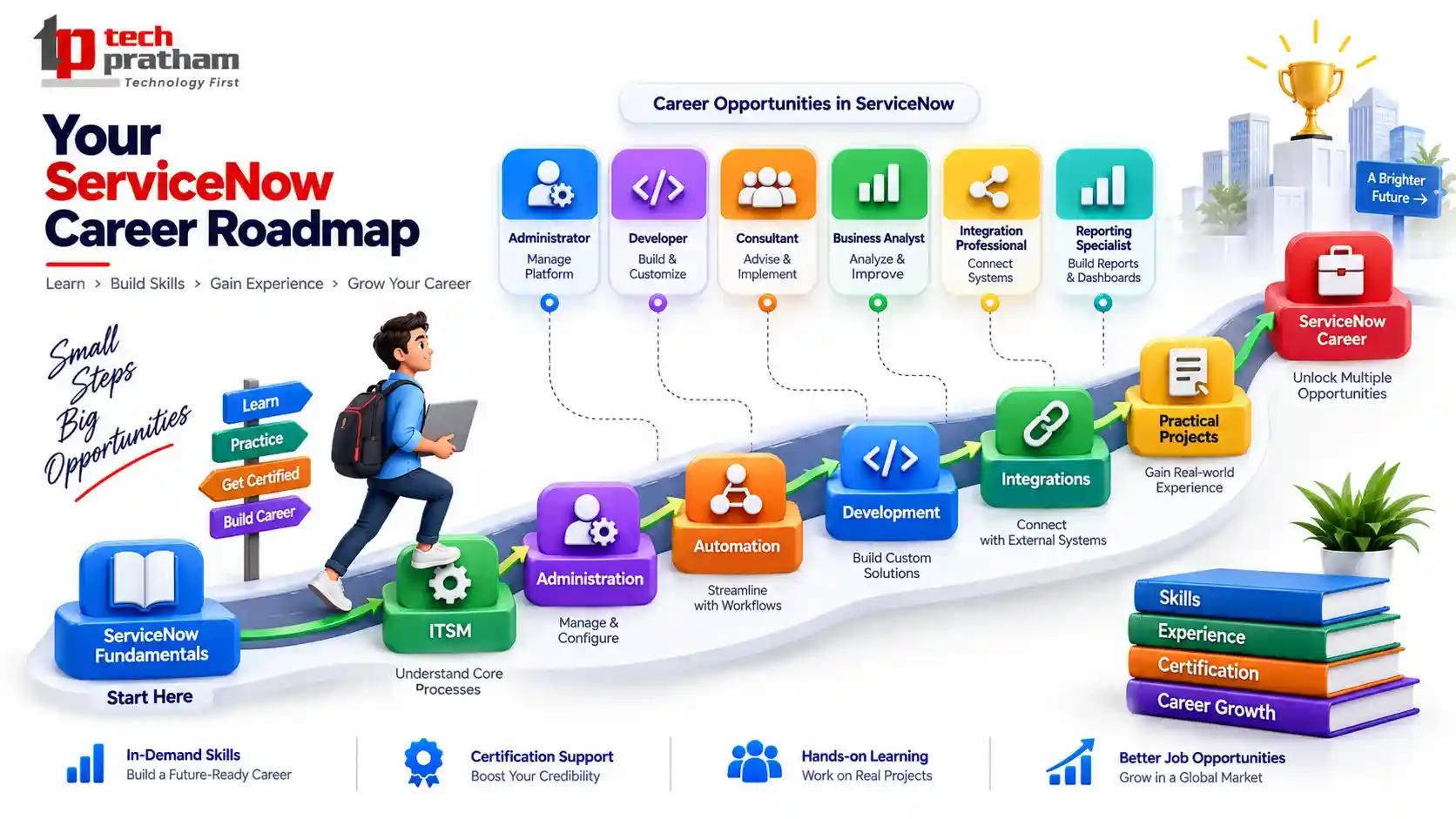
ServiceNow covers several career directions, so your learning path should match your interests.

Career Interest

Skills to Focus On

Administrator

Configuration, ITSM, Security, Workflows

Developer

JavaScript, Scripts, APIs, Integrations

Consultant

ITSM, Requirements, Configuration, Communication

Business Analyst

Business Processes, Requirements, ITSM

Integration Professional

APIs, REST, Data Exchange, Security

Reporting Specialist

Reports, Dashboards, Data Analysis

This doesn't mean a professional must choose only one area. Many experienced professionals develop skills across multiple areas.

Is ServiceNow Training Useful for Beginners?

Yes, provided the learning path starts with the fundamentals and gradually introduces more advanced concepts.

A beginner-friendly learning path should answer three questions:

What is ServiceNow?

How do organizations use it?

How can I configure, automate, or develop solutions on the platform?

Starting with real business scenarios can make the platform easier to understand because learners can connect technical features with practical outcomes.

What Should You Look for in a ServiceNow Course?

Before choosing a ServiceNow Course, consider the curriculum rather than focusing only on the course name.

Look for coverage of:

  • ServiceNow fundamentals
  • ITSM
  • Service Catalog
  • CMDB
  • Administration
  • Workflow automation
  • Flow Designer
  • Scripting
  • APIs and integrations
  • Reporting
  • Security
  • Practical projects
  • Troubleshooting
  • Career-oriented exercises
Also consider whether the program clearly explains which role the training is designed for.

A beginner interested in administration may not need the same depth of scripting as someone preparing for a developer-oriented path.

ServiceNow Skills: Functional vs Technical
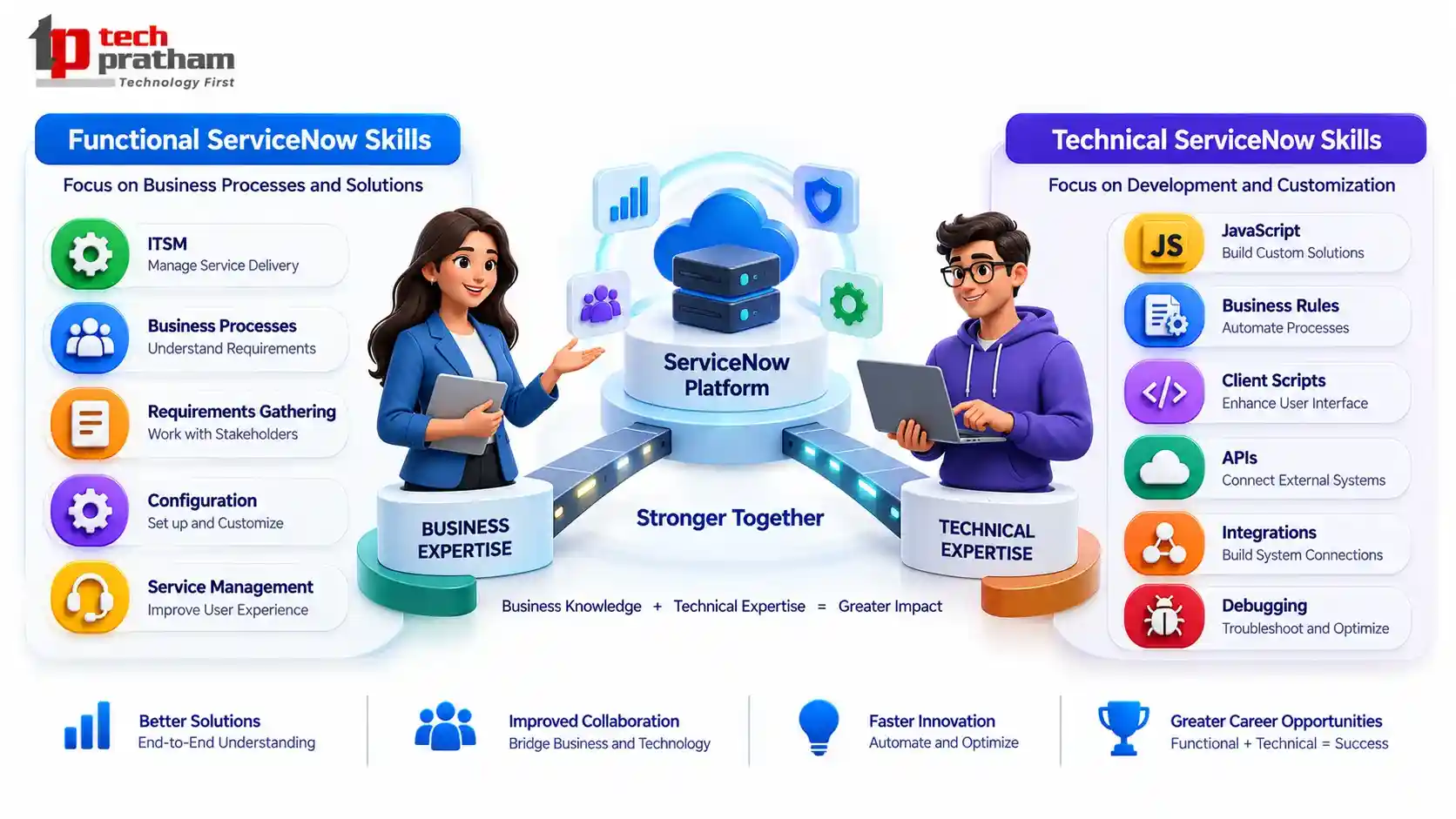
One useful way to understand the ServiceNow ecosystem is to divide skills into two broad categories.

Functional Skills

These focus more on business processes and platform functionality.

Examples:

  • ITSM
  • Incident Management
  • Problem Management
  • Change Management
  • Service Catalog
  • Business processes
  • Requirements gathering
  • Configuration
Technical Skills

These focus more on development and system integration.

Examples:

  • JavaScript
  • Business Rules
  • Client Scripts
  • APIs
  • REST
  • Integrations
  • Data structures
  • Debugging
  • Application development

There is also significant overlap between the two.


For example, a developer who understands ITSM processes can often build solutions that better reflect actual business requirements.

What Is the Most Important ServiceNow Skill?

There isn't one skill that is universally the most important.

For beginners, understanding the platform and ITSM fundamentals provides a strong foundation.

For administrators, configuration, security, workflows, and troubleshooting become important.

For developers, scripting, APIs, integrations, and application development become more important.

For consultants, business process understanding, requirements analysis, communication, and solution design are critical.

So instead of asking “What is the one most important ServiceNow skill?”, a better question is:

       Which ServiceNow skills are most relevant to the role I want to pursue?

How Can You Build ServiceNow Skills Step by Step?

A practical learning roadmap can look like this:

Step 1: Understand ServiceNow Fundamentals

Learn the platform structure, applications, tables, records, users, and roles.

Step 2: Learn ITSM

Understand Incident, Problem, Change, Request, and Service Catalog concepts.

Step 3: Practice Administration

Work with users, groups, roles, configuration, forms, lists, and notifications.

Step 4: Learn Automation

Explore workflows, Flow Designer, approvals, triggers, and actions.

Step 5: Develop Technical Skills

Move into JavaScript, Business Rules, Client Scripts, Script Includes, and APIs if you want a technical role.

Step 6: Practice Integrations

Understand REST APIs, data exchange, authentication, and integration concepts.

Step 7: Build Practical Scenarios

Create small projects that simulate real business requirements.

Step 8: Choose a Specialization

Decide whether your interests are closer to administration, development, consulting, ITSM, reporting, or integrations.

Frequently Asked Questions

What skills can you learn in a ServiceNow course?

You can learn ServiceNow platform fundamentals, ITSM, administration, workflow automation, Flow Designer, scripting, reporting, integrations, security, troubleshooting, and business process analysis.

Is ServiceNow training suitable for beginners?

Yes. Beginners can start with ServiceNow fundamentals and ITSM concepts before moving into administration, automation, scripting, or integrations.

Do I need coding skills to learn ServiceNow?

Not for every ServiceNow role. Functional and administrative paths can involve limited coding, while development and integration roles generally require stronger programming and scripting knowledge.

What programming language is used in ServiceNow?

JavaScript is an important programming language used in ServiceNow development.

What is the difference between ServiceNow Administrator and Developer skills?

Administrators generally focus more on configuration, users, roles, workflows, security, and platform management. Developers typically require deeper knowledge of scripting, APIs, application development, and integrations.

Is ITSM important for learning ServiceNow?

ITSM knowledge is highly useful because many ServiceNow implementations involve managing IT services and processes such as incidents, problems, changes, requests, and service catalogs.

Can ServiceNow skills help with a technical career?

Yes. Depending on specialization, learners can develop skills related to administration, development, integrations, automation, reporting, and enterprise application management.

Final Thoughts

A ServiceNow learning journey can involve much more than learning how to navigate the platform.

It can help you develop a combination of ITSM knowledge, platform administration, workflow automation, scripting, integration, reporting, security, troubleshooting, and business process skills.

The right skills depend on the career path you want to follow. An administrator needs a different depth of knowledge than a developer or consultant.

For this reason, the best ServiceNow Training is not simply the one with the longest syllabus. Look for a learning path that explains how the platform is used to solve real business and IT problems and gives you opportunities to practice those concepts.

Whether you are considering a ServiceNow Course as a beginner or looking to expand existing IT skills, start with the fundamentals, understand the business processes, and gradually build technical or functional expertise around your career goal.