
Upgrade Legacy ERP to Dynamics 365 Business Central
Table of Contents
Upgrade Legacy ERP to Dynamics 365 Business Central
In today’s fast-evolving business environment, relying on outdated ERP systems is no longer sustainable. Legacy systems often lack flexibility, real-time insights, and integration capabilities—holding businesses back from achieving true growth. As companies across India—especially in IT hubs like Bangalore, Hyderabad, Pune, Noida, and Chennai—embrace digital transformation, upgrading to modern solutions has become a strategic necessity.
One of the most powerful and widely adopted platforms today is Microsoft Dynamics 365 Business Central. It offers a complete, cloud-based ERP experience designed for scalability, automation, and intelligent decision-making. If your business is still operating on an outdated system, now is the right time to explore ERP modernization and transition toward a smarter future.
Why Businesses Need ERP Modernization Today
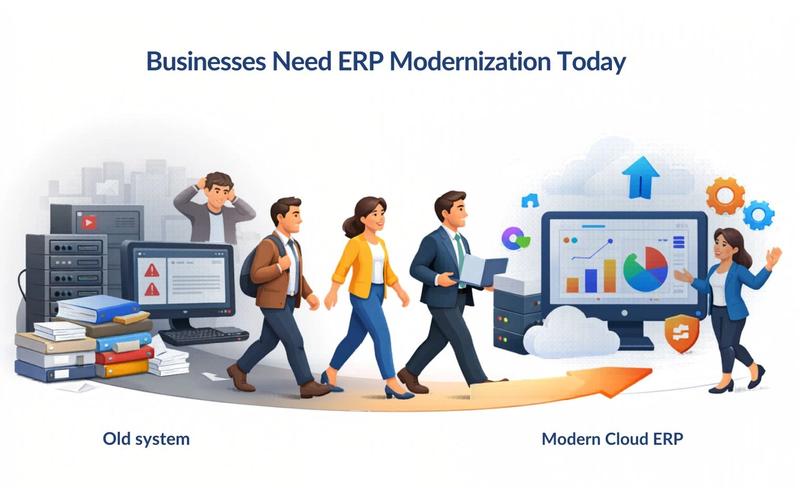
Legacy ERP systems were built for a different era—when business processes were slower and less complex. Today, businesses demand agility, automation, and real-time visibility.
Key Reasons to Modernize:
1. Eliminate manual processes using business process automation
2. Enable real-time reporting for faster decision-making
3. Improve collaboration across departments
4. Support remote and hybrid work environments
5. Ensure better security with a SaaS ERP platform
In India’s competitive markets, especially in Bangalore and Hyderabad, companies are rapidly adopting digital transformation ERP strategies.
Benefits of Upgrading ERP
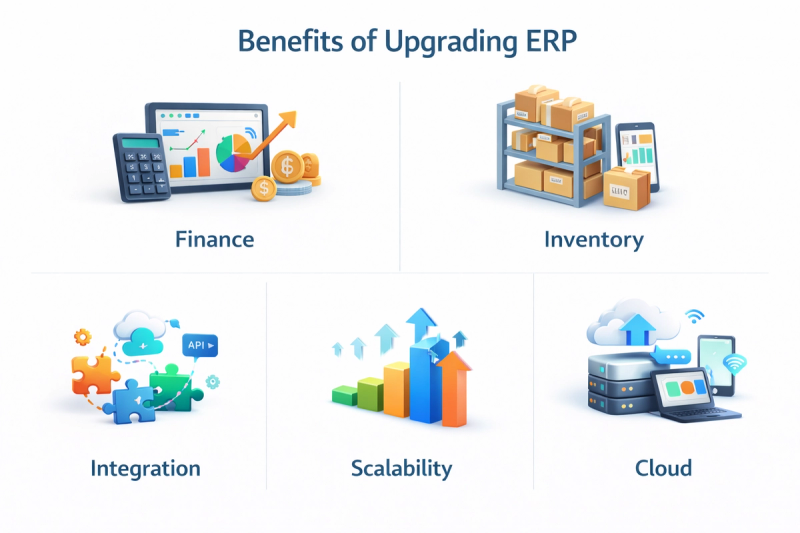
Upgrading from a legacy ERP to Dynamics 365 Business Central delivers measurable improvements across operations.
1. Enhanced Financial Management
a. Real-time cash flow tracking
b. Automated invoicing and reporting
c. Multi-currency and compliance support
d. Strong financial management ERP capabilities
2. Improved Inventory Management
a. Real-time stock tracking
b. Reduced wastage and overstocking
c. Better demand forecasting
d. Efficient inventory management system
3. Seamless Integration
a. Integration with Microsoft 365
b. Power BI for analytics
c. CRM and third-party tools
d. Smooth ERP system integration
4. Scalability for Growth
a. Supports business expansion
b. Flexible modules and features
c. Ideal scalable ERP solution
5. Cloud Accessibility
a. Access data anytime, anywhere
b. Centralized system for multiple locations
c. Powered by a modern cloud ERP solution
Cost of Business Central
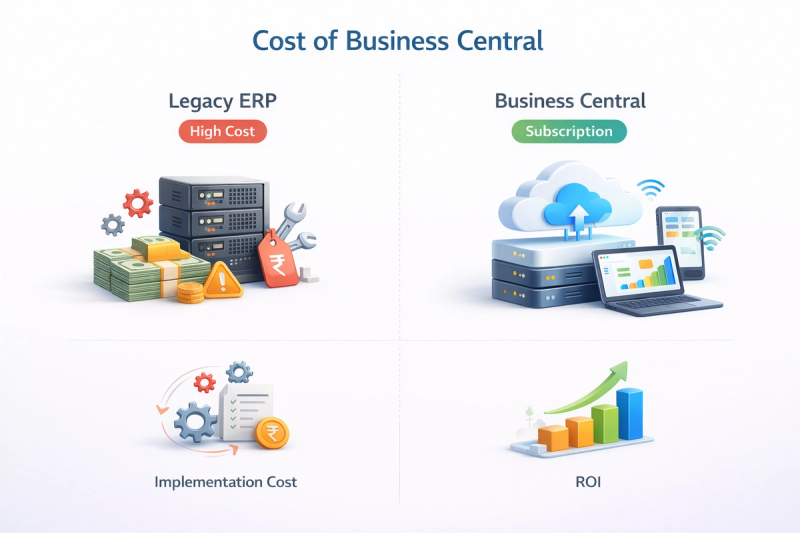
Cost is often a primary concern when businesses consider upgrading their ERP systems. However, Dynamics 365 Business Central offers a cost-effective approach compared to traditional on-premise solutions.
The platform operates on a subscription-based model, which eliminates the need for heavy upfront investments in hardware and infrastructure. Businesses can pay monthly or annually, making it easier to manage budgets and scale usage based on requirements.
Implementation costs may vary depending on factors such as business size, customization needs, and the complexity of data migration. While there is an initial investment, the long-term return on investment is significant. Businesses experience reduced operational costs, improved efficiency, and faster decision-making capabilities.
Migration Process
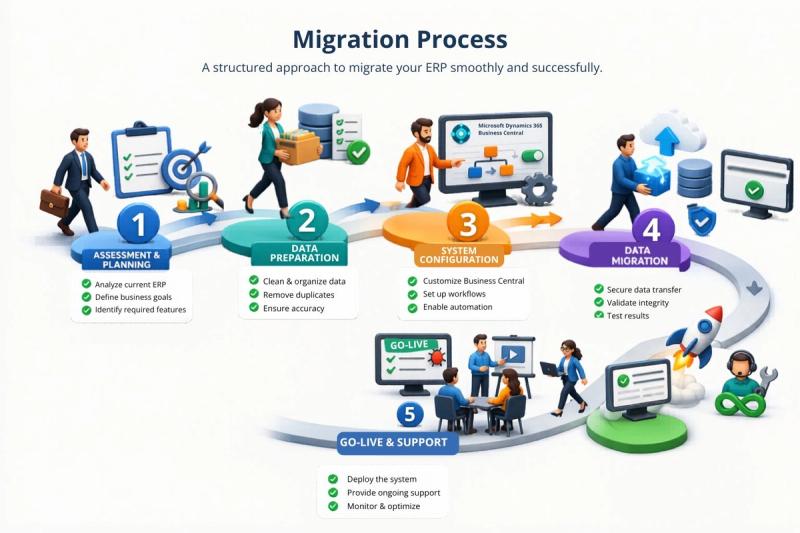
A structured migration approach ensures smooth transition from legacy systems.
Step-by-Step Process:
1. Assessment & Planning
- Analyze current ERP limitations
- Define business goals
- Identify required features
2. Data Preparation
- Clean and organize data
- Remove duplicates
- Ensure data accuracy
3. System Configuration
- Customize Microsoft Business Central features
- Set up workflows and automation
4. Data Migration
- Securely transfer data
- Validate data integrity
5. Testing & Training
- Conduct system testing
- Train employees for adoption
6. Go-Live & Support
- Deploy the system
- Provide ongoing support
Microsoft Business Central Features That Drive Growth
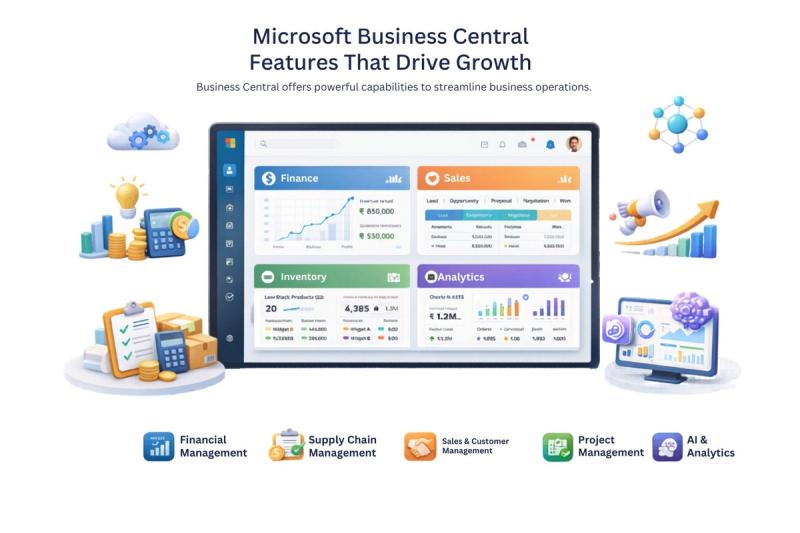
Business Central offers powerful capabilities to streamline business operations.
Core Features:
Financial Management- Budgeting, forecasting, reporting
Supply Chain Management- End-to-end visibility
Sales & Customer Management- Integrated CRM capabilities
Project Management- Resource and task tracking
AI & Analytics- Data-driven insights
These features make it a complete cloud ERP solutions platform for modern businesses.
Why Indian Businesses Are Rapidly Adopting Business Central
India’s business landscape is undergoing rapid digital transformation. Organizations in cities like Bangalore, Hyderabad, Pune, Chennai, and Noida are increasingly adopting modern ERP systems to stay competitive in a global market.
The demand for business process automation is one of the key drivers behind this shift. Companies are looking to reduce manual work, improve efficiency, and enhance productivity. At the same time, the need for real-time data and advanced analytics is pushing businesses toward cloud-based ERP solutions.
Startups and mid-sized enterprises, in particular, are benefiting from the flexibility and scalability offered by Business Central. With minimal infrastructure requirements and easy deployment, it has become a preferred choice for organizations aiming for rapid growth.
Common Challenges in ERP Upgrade (And Solutions)
Upgrading an ERP system is a complex process, and businesses may face challenges such as resistance to change, data migration risks, and integration issues. These challenges can impact the success of the implementation if not addressed properly.
The key to overcoming these challenges lies in proper planning and execution. Businesses should invest in change management strategies to ensure employee buy-in and smooth adoption. Data migration should be handled carefully with proper validation to avoid errors. Additionally, working with experienced implementation partners can help resolve integration complexities and ensure a seamless transition.
Conclusion:
The Future is Cloud ERP
Upgrading from a legacy ERP system to Dynamics 365 Business Central is not just a technical upgrade—it’s a strategic business decision. It enables organizations to improve efficiency, reduce costs, and scale seamlessly.
For businesses in India—especially in Bangalore, Hyderabad, Pune, Noida, and Chennai—adopting cloud ERP solutions is becoming essential to stay competitive.