
How to Become an Agentic AI Expert: Complete Learning Path, Essential Skills & Career Guide
.jpg)
Artificial Intelligence is evolving at an incredible pace. Just a few years ago, AI systems primarily responded to prompts, generated text, or analyzed data. Today, a new generation of intelligent systems is changing the way businesses operate—Agentic AI. Unlike traditional AI models that wait for human instructions, Agentic AI systems can understand goals, make decisions, plan actions, use external tools, collaborate with other AI agents, and complete complex tasks with minimal human intervention.
From automating customer support and software development to streamlining finance, healthcare, logistics, and cybersecurity, Agentic AI is becoming a key driver of enterprise innovation. Organizations around the world are investing heavily in AI agents that can work autonomously, making Agentic AI expertise one of the most valuable skills for the future workforce.
If you're a student, software developer, data professional, or IT expert looking to stay ahead of the curve, now is the ideal time to learn Agentic AI. With the right learning path, practical projects, and an industry-focused Agentic AI certification course, you can build the knowledge needed to create intelligent AI applications and unlock exciting career opportunities.
What Is Agentic AI?
.jpg)
Agentic AI refers to a new class of artificial intelligence systems that can reason, plan, make decisions, and execute tasks autonomously to achieve a defined objective. Instead of simply responding to individual prompts, Agentic AI behaves more like a digital collaborator that can break complex goals into smaller tasks, determine the best course of action, interact with software tools, retrieve relevant information, and adapt based on changing conditions.
For example, imagine asking an AI assistant to organize an international business trip. A traditional chatbot may provide travel suggestions or answer specific questions. An Agentic AI system, however, could compare flight options, book tickets, reserve hotels, schedule meetings, update your calendar, prepare travel documents, monitor flight changes, and notify you of any disruptions—all while keeping your preferences and business objectives in mind.
This ability to plan and execute multiple interconnected actions makes Agentic AI significantly more powerful than earlier AI systems.
Modern Agentic AI solutions often combine technologies such as:
- Large Language Models (LLMs)
- Retrieval-Augmented Generation (RAG)
- AI Agents and Multi-Agent Systems
- Memory and Context Management
- Workflow Automation
- API Integrations
- Vector Databases
- Model Context Protocol (MCP)
- Agent-to-Agent (A2A) Communication
Why Agentic AI Is the Next Big Revolution
Artificial Intelligence has already transformed industries by automating repetitive tasks and improving decision-making. However, most AI systems still depend heavily on continuous human guidance. Agentic AI represents the next stage of this evolution by enabling AI systems to work independently while collaborating with people and digital tools.
Several factors are driving this revolution:
Autonomous Decision-Making
Agentic AI can evaluate different approaches, prioritize tasks, and make informed decisions without requiring a human prompt for every step. This makes it ideal for business processes that involve multiple actions and dynamic environments.
End-to-End Task Automation
Instead of handling isolated requests, AI agents can manage complete workflows—from gathering information and analyzing data to generating reports, communicating with applications, and executing actions.
Enterprise Adoption
Global organizations are integrating Agentic AI into software development, IT operations, healthcare, finance, manufacturing, customer service, and human resources to improve efficiency and reduce operational costs.
Increased Productivity
By automating repetitive work, Agentic AI allows employees to focus on innovation, strategic planning, and complex problem-solving rather than manual processes.
Better Collaboration Between Humans and AI
Rather than replacing human expertise, Agentic AI acts as an intelligent assistant capable of supporting professionals with research, planning, coding, analysis, and decision-making.
AI vs Generative AI vs Agentic AI
Although these terms are often used interchangeably, they represent different stages in the evolution of artificial intelligence.
Traditional AI | Generative AI | Agentic AI |
Analyzes data and makes predictions based on predefined models. | Creates new content such as text, images, code, audio, and videos from user prompts. | Plans, reasons, makes decisions, uses tools, and autonomously completes complex tasks to achieve specific goals. |
Primarily rule-based or predictive. | Prompt-driven and content-focused. | Goal-driven, action-oriented, and autonomous. |
Requires explicit programming for workflows. | Generates responses but depends on user instructions. | Can initiate actions, adapt to changing situations, and collaborate with multiple systems. |
Used for fraud detection, recommendation systems, forecasting, and analytics | Used for content generation, coding assistance, and conversational AI. | Used for AI assistants, workflow automation, autonomous software development, enterprise operations, and intelligent business processes. |
Complete Agentic AI Learning Path: From Beginner to Expert
_11zon.jpeg)
Learning Agentic AI is not about mastering a single programming language or framework—it's about understanding how intelligent systems reason, plan, collaborate, and execute tasks autonomously. As enterprises move beyond traditional chatbots and adopt AI-powered automation, professionals who can build intelligent AI agents are becoming increasingly valuable.
Whether you're a student, software engineer, data scientist, DevOps professional, or automation specialist, following a structured learning roadmap will help you build practical skills and become job-ready. The best Agentic AI course in India combines AI fundamentals with hands-on projects, modern AI frameworks, and real-world business applications.
Below is a step-by-step learning path to help you learn Agentic AI effectively.
Step 1: Build Strong AI & Programming Fundamentals
Every successful AI engineer starts with a solid technical foundation. Before diving into autonomous AI agents, it's important to understand how artificial intelligence works and develop strong programming skills.
Focus on learning:
- Python Programming
- Object-Oriented Programming (OOP)
- Data Structures & Algorithms
- APIs and REST Services
- Git & GitHub
- Linux Basics
- JSON & YAML
- SQL & NoSQL Databases
Python remains the most widely used language for AI development because of its simplicity and extensive ecosystem of AI libraries.
If you're new to AI, many AI classes and AI training courses begin with these foundational topics before progressing to advanced concepts.
Step 2: Learn Artificial Intelligence & Machine Learning
Before building autonomous AI agents, you should understand how AI models learn, predict, and make decisions.
Key concepts include:
- Artificial Intelligence Fundamentals
- Machine Learning
- Deep Learning
- Neural Networks
- Supervised Learning
- Unsupervised Learning
- Reinforcement Learning
- Natural Language Processing (NLP)
- Computer Vision
You don't need to become a research scientist, but understanding these concepts helps you design better AI-powered applications.
Many learners choose an AI engineer course or a best artificial intelligence course to gain structured knowledge before specializing in Agentic AI.
Step 3: Master Large Language Models (LLMs)
Large Language Models (LLMs) are the intelligence engine behind modern AI agents. These models can understand natural language, generate code, summarize information, answer questions, and support reasoning.
As part of your Agentic AI certification course, you should learn:
- How LLMs work
- Prompt Engineering
- Context Windows
- Function Calling
- Tool Calling
- Fine-Tuning Concepts
- Model Evaluation
- Safety & Guardrails
Popular LLMs include:
- GPT Models
- Claude
- Gemini
- Llama
- Mistral
- DeepSeek
Understanding when to use proprietary versus open-source models is an important skill for AI developers working on enterprise solutions.
Step 4: Learn AI Frameworks & Development Tools
Modern Agentic AI applications are built using specialized frameworks that simplify orchestration, memory management, tool integration, and workflow automation.
Some of the most popular AI frameworks include:
LangChain
One of the most widely adopted frameworks for building AI-powered applications. It enables developers to connect LLMs with external tools, APIs, memory, and databases.
LangGraph
Designed for creating stateful AI workflows, LangGraph is ideal for building complex, multi-step AI agents that require decision-making and iterative reasoning.
CrewAI
CrewAI makes it easier to create multiple AI agents with specialized roles that collaborate to solve complex business problems.
AutoGen
Developed for multi-agent conversations and autonomous task execution, AutoGen is widely used for collaborative AI workflows.
Semantic Kernel
Microsoft's Semantic Kernel integrates AI capabilities into enterprise applications and supports orchestration between LLMs and business systems.
OpenAI Agents SDK
Provides tools for building production-ready AI agents with structured workflows, tool use, memory, and safety controls.
Choosing the best AI courses online often depends on whether they provide hands-on experience with these modern frameworks rather than focusing only on theory.
Step 5: Learn Retrieval-Augmented Generation (RAG)
One limitation of standalone LLMs is that they rely primarily on the data available during training. Retrieval-Augmented Generation (RAG) overcomes this by allowing AI systems to retrieve relevant information from external knowledge sources before generating a response.
A well-designed Agentic AI course should cover:
- Document Processing
- Chunking Strategies
- Embeddings
- Semantic Search
- Knowledge Retrieval
- Context Injection
- Response Generation
RAG is widely used for:
- Enterprise Knowledge Assistants
- Customer Support
- Legal Research
- Healthcare Applications
- Financial Analysis
- Internal Documentation Search
Mastering RAG enables AI agents to provide more accurate, context-aware, and up-to-date responses.
Step 6: Understand MCP (Model Context Protocol)
As AI ecosystems become more interconnected, seamless communication between AI models and external tools is increasingly important. The Model Context Protocol (MCP) is an emerging open standard that enables AI systems to securely connect with business applications, APIs, databases, and software tools through a consistent interface.
Instead of creating a custom integration for every service, developers can use MCP-compatible servers to expose data and capabilities in a standardized way.
Learning MCP helps you build AI agents that can:
- Access enterprise knowledge bases
- Read and update documents
- Interact with databases
- Connect with CRM and ERP systems
- Use external APIs securely
- Coordinate workflows across multiple applications
As enterprise adoption grows, familiarity with MCP is becoming a valuable skill for developers building production-ready AI solutions.
Step 7: Learn Agent-to-Agent (A2A) Communication
Many real-world problems are too complex for a single AI agent to solve efficiently. This is where Agent-to-Agent (A2A) communication becomes important.
In an A2A architecture:
- One agent gathers information.
- Another performs research.
- Another writes code.
- Another validates outputs.
- Another interacts with external systems.
Each specialized agent collaborates with others to complete larger workflows more efficiently.
Understanding A2A communication prepares you to design scalable AI systems for enterprise automation, customer service, software engineering, and business operations.
Step 8: Learn Vector Databases
AI agents need memory. Unlike traditional databases that store structured records, vector databases store numerical embeddings representing the meaning of text, images, and other data. This enables semantic search and context-aware retrieval.
Common vector databases include:
- Pinecone
- Weaviate
- Milvus
- Chroma
- Qdrant
- FAISS
Vector databases are essential for:
- Long-Term Memory
- Knowledge Retrieval
- Semantic Search
- Personalized AI Assistants
- Enterprise Document Search
- Recommendation Systems
Learning how embeddings and vector search work is a core component of any Agentic AI developer course.
Step 9: Build Multi-Agent Systems
One of the defining capabilities of Agentic AI is the ability to coordinate multiple AI agents that work together toward a shared objective. Rather than relying on a single model to handle every task, multi-agent systems assign specialized responsibilities to different agents.
For example, an AI-powered customer support platform might include:
- A customer interaction agent
- A knowledge retrieval agent
- A billing agent
- A scheduling agent
- A quality assurance agent
These agents communicate, exchange context, and make coordinated decisions, resulting in more reliable and scalable AI solutions.
Learning how to design, orchestrate, and monitor multi-agent architectures is an essential skill for advanced AI engineers and enterprise developers.
Step 10: Work on Real-World Agentic AI Projects
Theory alone won't prepare you for industry roles. Employers increasingly look for candidates who can demonstrate practical experience through projects and portfolios.
The best Agentic AI training with placement emphasizes hands-on development using real business scenarios.
Here are some high-impact project ideas:
AI Customer Support Agent
Develop an AI assistant that answers customer queries, retrieves knowledge from company documents, creates support tickets, and escalates complex issues to human agents.
AI Research Assistant
Build an intelligent research agent capable of collecting information from multiple trusted sources, summarizing findings, comparing viewpoints, and generating structured reports.
AI Resume Screening System
Create an HR assistant that analyzes resumes, matches candidate skills with job requirements, ranks applicants, and prepares interview summaries.
AI Sales Automation Agent
Design an AI workflow that qualifies leads, drafts personalized emails, schedules meetings, updates CRM records, and generates follow-up reminders.
AI Code Review Assistant
Build an engineering assistant that reviews source code, identifies potential issues, suggests improvements, generates documentation, and recommends best practices.
Enterprise Knowledge Assistant
Create a Retrieval-Augmented Generation (RAG) application that enables employees to search internal documentation, policies, and technical manuals using natural language.
Agentic AI Certification: Why It Matters for Your AI Career
_11zon.jpeg)
As Agentic AI becomes a core technology for enterprise automation and intelligent software systems, organizations are looking for professionals who can do more than just use AI tools—they need experts who can design, build, deploy, and manage autonomous AI agents.
While self-learning through online resources is a good starting point, employers increasingly value candidates who have completed a structured Agentic AI certification course backed by practical projects and real-world experience. A certification demonstrates your commitment to learning and validates that you understand the technologies, frameworks, and best practices required to develop production-ready AI solutions.
What Should You Look for in an Agentic AI Certification Course?
With the growing popularity of AI education, hundreds of training programs are now available. However, not every course prepares learners for industry requirements.
When selecting an Agentic AI certification course , consider whether it includes:
Comprehensive AI Fundamentals
A strong program should begin with the fundamentals of artificial intelligence, machine learning, deep learning, and natural language processing before moving into advanced Agentic AI concepts.
Hands-on Development
Theoretical learning alone isn't enough. Look for courses that include coding exercises, lab sessions, and practical assignments using real AI tools and frameworks.
Modern AI Frameworks
Your course should provide practical experience with technologies such as:
- LangChain
- LangGraph
- CrewAI
- AutoGen
- OpenAI Agents SDK
- Semantic Kernel
Enterprise AI Concepts
Industry-ready training should also cover:
- Large Language Models (LLMs)
- Retrieval-Augmented Generation (RAG)
- Vector Databases
- Model Context Protocol (MCP)
- Agent-to-Agent (A2A) Communication
- Workflow Automation
- AI Security and Governance
Capstone Projects
Best Agentic AI Course in India: What Makes It Different?
Choosing the best Agentic AI course in India isn't simply about finding the lowest course fee. The quality of instruction, project experience, curriculum, mentorship, and career support have a much greater impact on your long-term success.
A high-quality program should offer:
- Industry-experienced AI mentors
- Updated curriculum aligned with current AI trends
- Live instructor-led sessions
- Practical coding assignments
- Enterprise-level projects
- Certification preparation
- Career guidance
- Placement assistance
The best courses focus on solving real business problems rather than only explaining theoretical concepts.
Agentic AI Training Online: Learn from Anywhere
One of the biggest advantages of modern AI education is flexibility. Today, learners can access high-quality Agentic AI training online from anywhere in India without compromising on learning quality.
Online training is ideal for:
- Working professionals
- College students
- Software developers
- Career switchers
- Freelancers
- Entrepreneurs
A good online training program should provide:
- Live interactive classes
- Recorded sessions for revision
- Practical coding exercises
- Personal mentor support
- Doubt-clearing sessions
- Real-world projects
- Flexible weekday and weekend batches
Why Choose TechPratham for Agentic AI Training?
_11zon.jpeg)
At TechPratham, we believe that learning artificial intelligence should go beyond theory. Our Agentic AI Course in India is designed to help learners build practical skills that align with current industry requirements.
Our goal is to prepare students and professionals for real-world AI engineering roles through hands-on learning, mentorship, and career-focused training.
Industry-Relevant Curriculum
Our curriculum is continuously updated to reflect the latest developments in Agentic AI, Large Language Models, intelligent automation, and enterprise AI.
You'll learn technologies that organizations are actively adopting rather than outdated concepts.
Learn from Industry Experts
Our instructors bring real-world experience from AI, software engineering, cloud computing, and enterprise automation projects.
Instead of focusing only on theory, they share practical insights into designing, developing, and deploying intelligent AI systems.
Project-Based Learning
Throughout the program, you'll work on practical applications such as:
- AI Customer Support Agents
- Enterprise Knowledge Assistants
- AI Research Agents
- Resume Screening Systems
- Sales Automation Agents
- Multi-Agent Workflows
- RAG Applications
- Intelligent Business Automation
These projects help you build a strong portfolio that demonstrates your capabilities to employers.
Live Interactive Training
Our learning model combines:
- Live Instructor-Led Sessions
- Hands-On Coding
- Guided Labs
- Interactive Discussions
- Weekly Assignments
- Project Reviews
This approach ensures that learners gain practical confidence rather than simply watching recorded videos.
Certification Preparation
Our Agentic AI certification course includes dedicated preparation for industry-recognized AI certifications, helping you validate your skills and improve your employability.
Flexible Learning Options
Choose the learning mode that best suits your schedule:
- Live Online Classes
- Weekend Batches
- Weekday Batches
- Fast-Track Programs
Career Opportunities After Completing an Agentic AI Course
The rapid adoption of autonomous AI systems is creating a new generation of technology careers. Organizations are no longer looking only for professionals who can build machine learning models—they need experts who can design intelligent AI agents, orchestrate complex workflows, integrate enterprise systems, and automate business processes.
As companies across India and globally invest in Agentic AI, skilled professionals are finding opportunities in startups, multinational corporations, consulting firms, SaaS companies, Global Capability Centers (GCCs), research organizations, and product-based companies.
Completing an Agentic AI course equips you with practical skills that can open doors to a wide range of high-growth AI roles.
Top Career Opportunities in Agentic AI
- Agentic AI Engineer
- AI Engineer
- LLM Engineer
- AI Automation Engineer
- Prompt Engineer
- AI Solutions Consultant
- AI Product Manager
- AI Research Engineer
Agentic AI Engineer Salary in India
One of the biggest reasons professionals are choosing to learn Agentic AI is the strong salary potential. As enterprises continue investing in intelligent automation and AI-powered applications, demand for skilled AI professionals is expected to remain high.
Actual compensation depends on factors such as experience, technical expertise, certifications, project portfolio, location, company size, and interview performance.
Average Salary in India
Experience | Estimated Annual Salary |
Fresher (0–1 Years) | ₹6–10 LPA |
Junior AI Engineer (1–3 Years) | ₹10–18 LPA |
Mid-Level AI Engineer (3–5 Years) | ₹18–30 LPA |
Senior AI Engineer (5–8 Years) | ₹30–45 LPA |
AI Architect / Lead | ₹45 LPA+ |
Industries Hiring Agentic AI Professionals
Agentic AI is not limited to the technology sector. Organizations across multiple industries are exploring autonomous AI solutions to improve productivity, reduce costs, and deliver better customer experiences.
Some of the top industries hiring Agentic AI professionals include:
- Information Technology
- Banking & Financial Services
- Healthcare
- E-Commerce & Retail
- Manufacturing
- Telecommunications
- Education
- Consulting & Professional Services
Future Scope of Agentic AI
Agentic AI is expected to become a foundational technology for enterprise software over the next decade. As organizations seek to automate increasingly complex workflows, intelligent AI agents will play a central role in business operations.
Future developments are likely to include:
Autonomous Enterprise Workflows
AI agents will manage end-to-end business processes with minimal human intervention.
Multi-Agent Collaboration
Specialized AI agents will work together across departments to solve complex business challenges.
AI-Powered Software Development
Agentic AI will assist developers with coding, testing, debugging, documentation, and deployment.
Intelligent Business Assistants
Organizations will deploy AI assistants capable of planning, reasoning, and executing tasks across multiple enterprise systems.
Industry-Specific AI Solutions
Healthcare, finance, manufacturing, retail, logistics, education, and government sectors will continue adopting domain-specific Agentic AI applications.
Frequently Asked Questions (FAQs)
1. What is Agentic AI?
Agentic AI refers to intelligent AI systems that can plan, reason, make decisions, use external tools, and complete complex tasks autonomously with minimal human intervention.
2. Is Agentic AI a good career?
Yes. As businesses adopt autonomous AI systems, demand for skilled Agentic AI professionals is increasing across industries, making it a promising long-term career path.
3. Who can join an Agentic AI course?
Students, software developers, data professionals, automation engineers, IT professionals, and career switchers can all benefit from learning Agentic AI.
4. Do I need coding experience?
Basic programming knowledge, especially Python, is helpful. However, many beginner-friendly courses start with programming fundamentals before moving into advanced AI topics.
5. Which programming language is best for Agentic AI?
Python is the most widely used programming language for developing Agentic AI applications due to its extensive AI ecosystem and community support.
6. What skills are required to become an Agentic AI Engineer?
Key skills include Python, AI fundamentals, Large Language Models (LLMs), prompt engineering, Retrieval-Augmented Generation (RAG), vector databases, AI frameworks, APIs, and workflow automation.
7. How long does it take to learn Agentic AI?
The learning timeline depends on your background. With consistent practice, many learners can build a solid foundation in a few months, while advanced expertise develops through ongoing project work.
8. What is covered in an Agentic AI certification course?
Conclusion
Agentic AI is redefining how software is built, how businesses automate workflows, and how people collaborate with intelligent systems. Rather than simply responding to prompts, modern AI agents can reason, plan, use tools, and complete complex tasks—making them a valuable asset across industries.
Whether you're a student beginning your AI journey, a software developer looking to expand your expertise, or a working professional preparing for the next wave of technological change, investing in the right skills today can create exciting opportunities tomorrow.
A structured Agentic AI course, combined with practical projects, mentorship, and certification, provides the foundation needed to build real-world AI applications and pursue a successful career in this rapidly evolving field.
Related Articles
Top 10 Artificial Intelligence (AI) Training Institutes in India
Explore the top 10 Artificial Intelligence training institutes in India, covering AI courses, curriculum, skills and career opportunities.
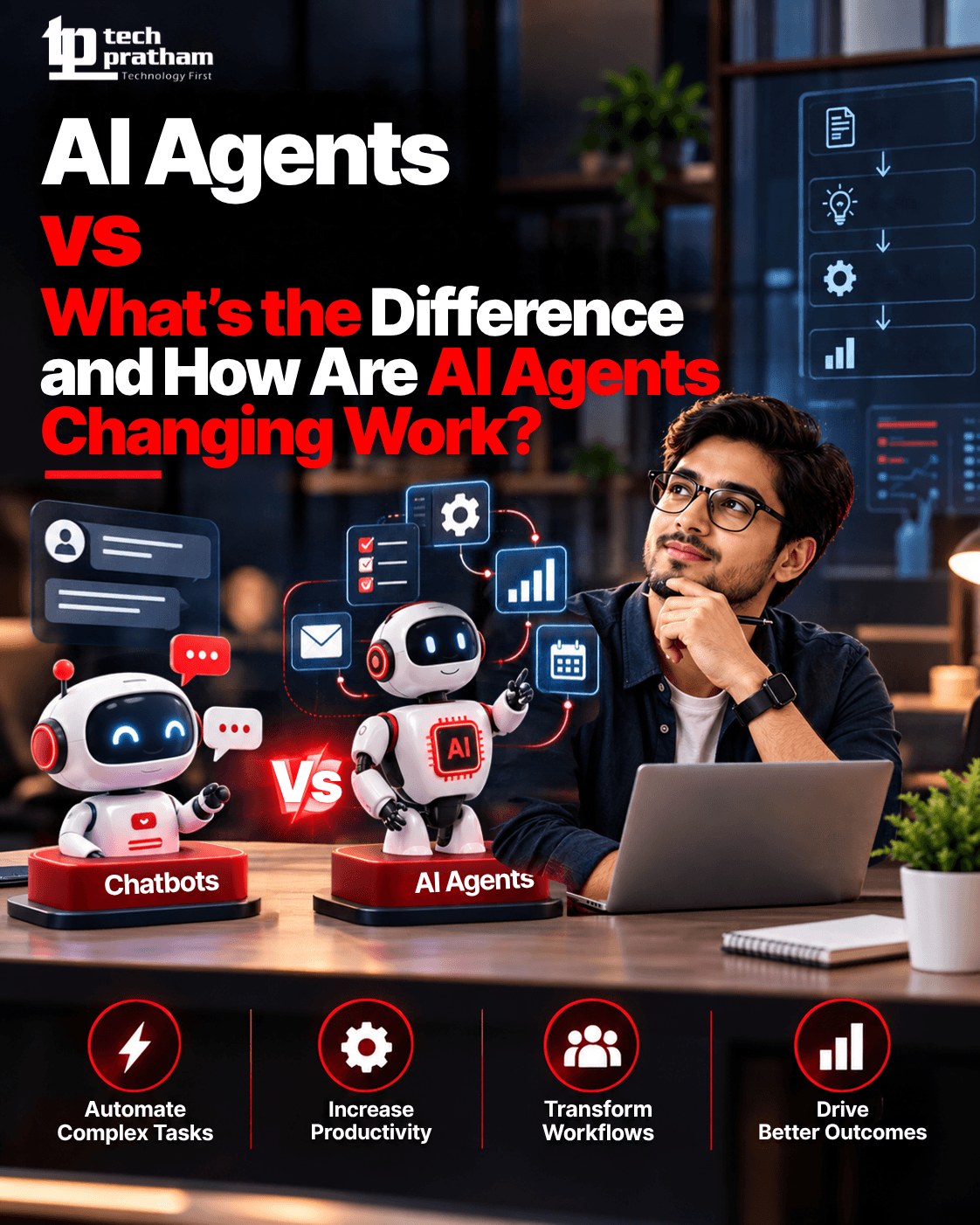
AI Agents vs Chatbots: What’s the Difference and How Are AI Agents Changing Work?
Compare AI agents and chatbots, understand how AI agents work, their business applications, required skills, career opportunities and learning roadmap

Agentic AI Architecture: Components, Workflow & Use Cases
Explore Agentic AI architecture, workflows, RAG, memory, tools, MCP, multi-agent systems, security, and enterprise AI use cases.





 +91-8882178896
 +1 (343) 477-0926