

An Explanation Of Workday Finance Modules, From Core Financials To Spend Management
Table of Contents
Introduction
In today's fast-changing global economy, financial operations need to be as smart and flexible as the choices they help make. As businesses grow and expand into new areas, the need for cloud-based financial solutions that are easy to use has skyrocketed. Workday Finance stands out from the competition in this field because to its complex architecture and wide range of modules. People in India and the US who want to work in corporate finance and are between the ages of 25 and 45 need to know how to use Workday Finance.
This blog breaks down the basic and advanced modules in Workday Finance and shows how learning them can help you get a job in financial operations, reporting, and strategic planning that is ready for the future.
Workday Financial Management?
Workday Financial Management is a single cloud solution that gives organisations real-time financial information, makes operations more efficient, and helps them stay compliant. It works perfectly with Workday HCM, which makes it an essential tool for aligning HR and finance. Its smart design and ability to automate processes provide businesses the power to make decisions based on data and quickly adjust to changes in the market.
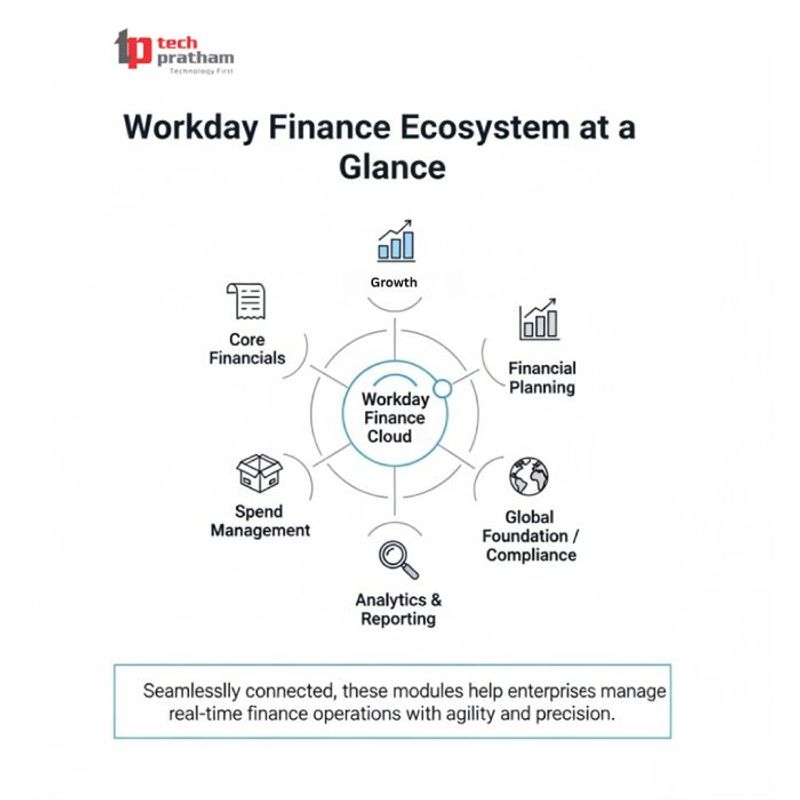
The Core Workday Finance Modules: A Look at the Architecture
Here are the Workday Finance modules that have the biggest effects, along with examples of how they may be used in the real world and career paths that go with them.
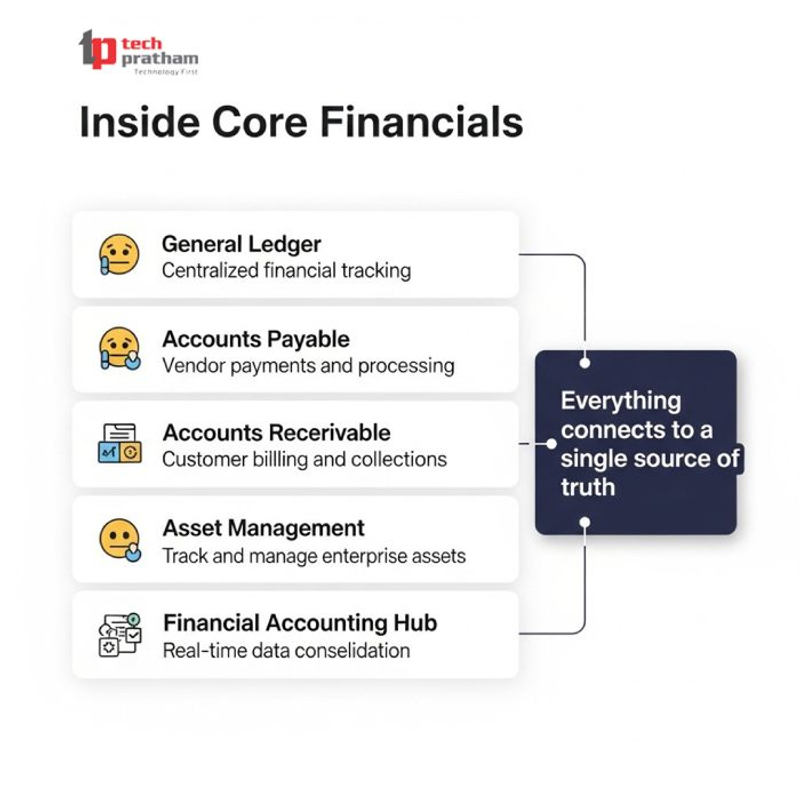
1. The General Ledger (GL)
Functionality: The General Ledger is the main module that records all financial transactions. Workday's GL is different because it has a multi-dimensional design that lets you report and analyse data in a flexible way without having to deal with complicated data structures.
Characteristics:
1) Visibility of transactions in real time.
2) Tagging business dimensions like cost centres, programs, and regions.
3) Model for continuous accounting.
4) Reporting that lets you drill down.
Career Impact: Knowing how to use GL opens up jobs like Finance Analyst, ERP Consultant, and General Ledger Accountant at organisations that use Workday.
2. Accounts Payable (AP)
Functionality: This module makes the whole process of paying suppliers easier. Automated billing, approvals, and reconciliation in Workday's AP system cut down on mistakes and make sure that rules are followed.
Characteristics:
1) Supplier onboarding and management.
2) Smartly scanning and matching invoices.
3) Workflows for getting approval.
4) Automating payments.
Career Impact: AP abilities can help you get jobs as a Payables Specialist, Finance Operations Analyst, or AP Manager on a finance team.
3. Accounts Receivable (AR)
Functionality: The AR module makes it easier to bill customers, keep track of collections, and recognise money. Automation is built into Workday AR to speed up cash flows and stop revenue from leaking out.
Characteristics:
1) Making and sending invoices.
2) Automation of dunning.
3) Collecting payments and making sure they match.
4) Real-time ageing of receivables.
Impact on Your Career: If you want to be a Revenue Analyst, Billing Coordinator, or Order-to-Cash (O2C) specialist, you need to know a lot about AR.
4. Asset Management
Functionality
This module takes care of the whole life cycle of both tangible and intangible assets, from buying them to writing them off and retiring them. Workday's cloud-based tracking and automation capabilities make it easy to keep track of assets.
Things to note:
Acquisition of assets and capitalisation
Setting up depreciation schedules
Tracking impairments
Audit trails and disposal
Career Impact: This is great for compliance officers, asset accountants, and capital asset managers.
5. Cash Management
Functionality: Cash Management lets businesses see how much cash is coming in and going out in real time. It works with bank accounts to provide you a complete picture of your liquidity.
Characteristics:
1) Reconciliation of bank accounts
2) Positioning and predicting cash
3) Money transfers
4) Tools for banking compliance
Career Impact: Important for Treasury Analysts, Finance Controllers, and FP&A (Financial Planning and Analysis) workers.
6. Expenses
Functionality: This module makes it easier for employees to report and get paid for their expenses. With built-in mobile features and AI capabilities, there is less chance of expenditure fraud and more happy employees.
Characteristics:
1) Capture expenses on the go
2) Enforcement and approvals of policies
3) Automating reimbursement
4)Analytics and audit trails
Useful for Corporate Accountants, Compliance Analysts, and Expense Auditors.
📊 Advanced Modules: Strategic Skills That Go Beyond Basic Finance
Advanced Workday modules give you additional analytical depth and help your firm stay on track as finance becomes more strategic and less transactional.
7. Financial Planning (Adaptive Planning)
Functionality: This module makes it easier to plan for agile budgeting, forecasting, and "what if" scenarios. It works using actuals from the GL, which lets you manage performance in real time
. What it has:
- Planning together in real time.
- Forecasting based on drivers.
- Modelling for multiple scenarios.
- Analytics based on dashboards.
Career Impact: This module is very important for jobs like FP&A Specialist, Corporate Strategist, and Business Intelligence Analyst.
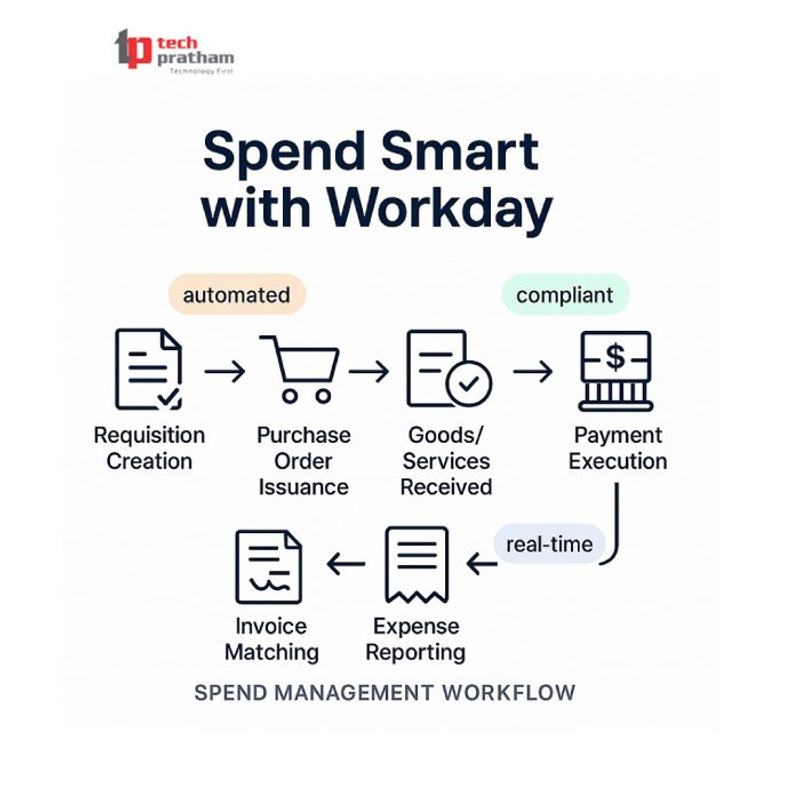
8. Procurement / Spend Management
Functionality: This module controls vendor contracts, indirect spending, and the process of buying things. It gives businesses the power to save money and make sure they follow the rules.
Characteristics:
1) Request for purchase and ordering
2) Managing supplier contracts and catalogues
3) Controls on the budget
4) Diversity among suppliers and performance analytics.
Career Impact: This is best for jobs like Procurement Analyst, Spend Manager, and Sourcing Specialist.
9. Project Accounting
Functionality: Keep track of the expenditures and income of projects that are done inside or outside the company. Allows you real-time visibility into finances and the ability to assess the profitability of each project.
Features:
- Budgeting and costing for projects.
- How to divide up labour costs.
- Keeping track of time and billing.
- Reports on how much money a project makes.
Career Impact: Great for Project Controllers, Engagement Managers, and Project Finance Consultants.
Putting things together, making them smarter, and automating them
Workday Finance is great not only because of its modules, but also because of its built-in intelligence and ability to work with other software:
- Works with HCM, Payroll, and CRM solutions right out of the box.
- Workday Prism gives you real-time analytics.
- Machine learning to find strange behaviour and stop fraud.
- No-code setup for quick updates and deployments.
- Syllabus for People Who Want to Learn Workday Finance.
- Here's a quick look at the syllabus for people who want to learn Workday Finance:
- An Introduction to Workday Finance.
- Navigation, tenants, and building design.
- Core Financials (GL, AP, AR, CM).
- Exercises that use real-life situations.
- Managing expenses and assets.
- Mobile integrations and depreciation simulation.
- Advanced Modules.
- Planning, Buying, and Project Accounting.
- Dashboards and Reporting.
- Reports, analytics, and the foundations of Prism.
- Setting up functional and business processes.
- Setting up validations and business procedures.
- Preparing for interviews and doing practice projects.
- Help with resumes, case studies, and projects.
Workday is a comprehensive cloud-based enterprise platform that goes beyond finance to cover a wide range of business functions, making it one of the most in-demand ERP skills globally. It includes core modules such as Workday Human Capital Management (HCM), Financial Management, Payroll, Expenses, Asset Management, Cash Management, Procurement, Project Accounting, and Adaptive Planning, all designed to work seamlessly on a single unified system. This tight integration allows organizations to gain real-time visibility across HR and finance, improve compliance, and make faster, data-driven decisions. As adoption of Workday continues to grow across multinational companies, Workday training in India has become highly valuable for professionals looking to build careers in finance operations, HR technology, reporting, and strategic planning. With structured training, hands-on projects, and certification-focused learning, professionals trained through Tech Pratham gain expertise across multiple Workday modules and build the practical skills needed to qualify for high-paying global roles in the evolving cloud ERP ecosystem.
Final Thoughts: Why Workday Finance is a Game-Changer
Workday Finance experts are getting high incomes and important jobs in a business world that is becoming more data-driven and networked throughout the world. If you want to be ready for the future, you need to learn workday finance whether you graduated from college in Mumbai or are an analyst in New York.
You don't simply learn how to use an ERP solution when you comprehend its modules, such General Ledger, Spend Management, and more. You also get better at managing your money, running your business, and moving up in your profession.