Beyond ITSM: Why HRSD and GRC Are the Hidden Gems of 2026
Table of Contents
In 2026, digital transformation is evolving far beyond traditional IT Service Management.
Organizations are now shifting focus toward smarter, people-centric and compliance-driven service delivery.
Human Resource Service Delivery (HRSD) is revolutionizing employee experience by automating processes and reducing manual workload.
At the same time, Governance, Risk, and Compliance (GRC) is becoming a critical pillar for security, transparency, and regulatory success.
Together, HRSD and GRC are emerging as the hidden gems powering operational efficiency and business resilience.
Companies that embrace these modules will lead the next era of intelligent enterprise growth.
Why 2026 Will Be a Turning Point for GRC
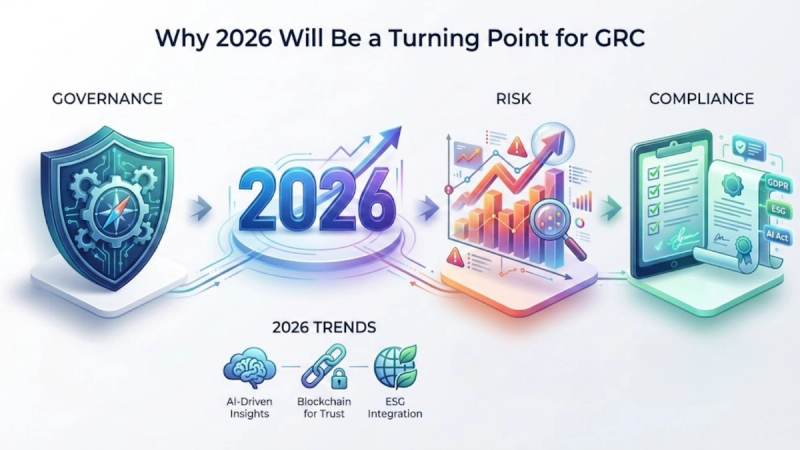
The year 2026 is shaping up to be a defining moment for Governance, Risk, and Compliance (GRC) as organizations worldwide face increasing pressure to manage risk intelligently. With global regulations tightening and the rise of cybersecurity threats and data privacy challenges, businesses can no longer rely on outdated, manual, or reactive risk strategies. Instead, integrated and automated GRC systems are becoming essential for decision-making, compliance management, and business resilience.
In 2026, digital transformation will demand more transparency, accountability, and secure data governance than ever before. As remote and hybrid workplaces expand, companies must safeguard sensitive information and ensure compliance with evolving laws such as GDPR, HIPAA, PCI-DSS, SOC, and emerging AI governance frameworks. The cost of non-compliance is rising, making proactive risk management not just beneficial—but mission-critical.
Modern GRC solutions are now evolving with AI and predictive analytics, enabling organizations to identify risks before they occur and implement automated workflows that reduce human error. Real-time dashboards, integrated security intelligence, and automated audits are replacing spreadsheets and manual reporting, allowing leadership teams to respond quickly and confidently to threats.
Beyond compliance, GRC has become a powerful strategic tool. Businesses are using it to protect brand reputation, improve operational efficiency, and enhance stakeholder trust. Investors, customers, and partners increasingly prefer organizations that demonstrate strong risk governance and ethical practices.
As digital ecosystems grow more complex and interconnected, the companies that adopt advanced GRC platforms in 2026 will gain a distinct competitive advantage. They will operate with greater security, resilience, and agility—while those sticking to old systems will struggle to survive in a high-risk environment.
In short, 2026 marks the year where GRC shifts from a back-office function to a core driver of enterprise success and future-ready innovation.
How Digital HR Service Delivery is Reshaping the Future of Workforce Experience
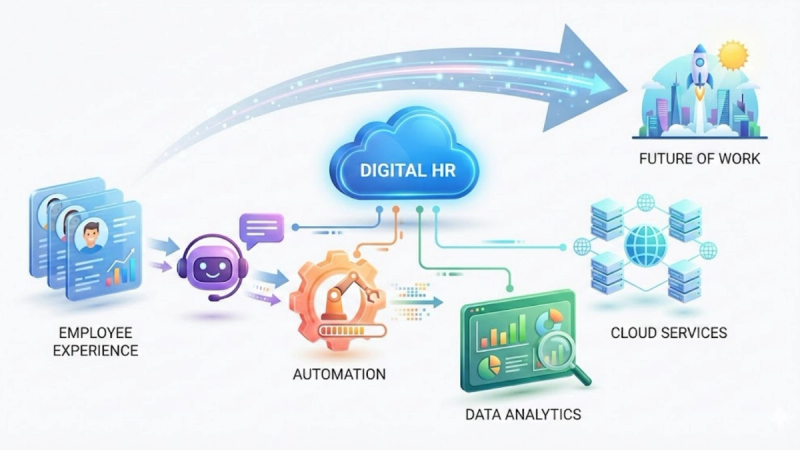
The digitization of HR Service Delivery (HRSD) is reshaping modern workforce management by transforming HR from a manual, process-heavy department into a strategic driver of organizational success. By implementing cloud-based HR platforms, AI-powered support, employee self-service portals, and automated workflows, companies are significantly reducing administrative burden, eliminating paperwork, and accelerating key processes such as recruitment, onboarding, payroll, leave management, and performance reviews. This automation improves accuracy, minimizes human errors, and ensures consistent compliance with organizational and regulatory requirements. Digitized HR service delivery also enhances real-time visibility and analytics, enabling leaders to make faster, data-driven decisions related to talent performance, employee engagement, and workforce planning. From the employee perspective, digital HR tools create a seamless and more satisfying experience, providing 24/7 access to HR services, quicker response times, transparent processes, and improved communication — ultimately boosting retention, productivity, and workplace satisfaction. Additionally, digitization allows organizations to scale efficiently, supporting distributed and hybrid teams while maintaining standardized HR operations across locations. As businesses continue to evolve, the impact of HRSD digitization is clear: it drives operational efficiency, improves employee experience, strengthens organizational agility, and positions HR as a critical engine of digital transformation and long-term business growth.
Enhancing Risk Visibility and Decision-Making Through Integrated ITSM, GRC & Cybersecurity
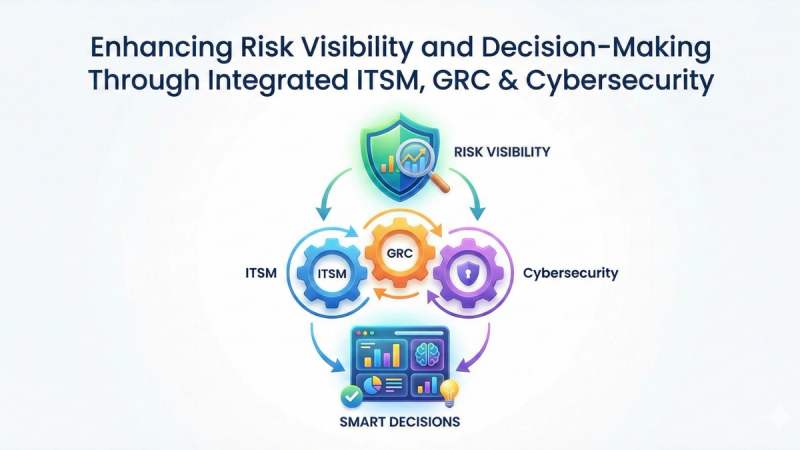
When IT Service Management (ITSM), Governance Risk & Compliance (GRC), and Cybersecurity operate as separate silos, leaders struggle to gain a clear understanding of the organization’s true risk landscape. Each function works with isolated data, resulting in fragmented reporting, inconsistent insights, and delayed decision-making. ITSM may track incident response times and service availability, but without visibility into security vulnerabilities tied to those services. Meanwhile, GRC teams may measure policy adherence and regulatory risk without understanding operational priorities, and cybersecurity teams may flag critical threats without connecting them to business processes or financial impact. This disconnect creates blind spots that make risk harder to predict, prioritize, and mitigate.
By integrating ITSM, GRC, and Cybersecurity into a unified digital ecosystem, organizations create a central hub where all risk-related data converges. This integrated approach enables real-time monitoring, automated workflows, and unified dashboards that provide a complete 360-degree view of operational performance and business exposure. Leadership can clearly see how cybersecurity threats affect service delivery, how compliance gaps influence operations, and which risks have the greatest impact on business continuity, customer experience, and financial outcomes. Instead of reacting to isolated issues, decision-makers gain a proactive, strategic, and accurate understanding of risk at every level.
With centralized risk visibility, organizations strengthen both operational and executive decision-making. Leaders can prioritize investments more effectively, assign responsibilities based on real insights, and align technology, security, and compliance initiatives with overall business strategy. Integrated risk management also improves communication between teams, eliminates duplicated effort, accelerates crisis response, and enables transparent reporting for audits and board-level governance. This holistic model builds trust, enhances accountability, and supports long-term business resilience.
In a rapidly evolving digital environment, where security breaches, regulatory pressures, and service disruptions continue to grow more complex, integrated risk visibility is no longer optional—it is essential. Companies that unify ITSM, GRC, and Cybersecurity will make faster, smarter, and more confident decisions, giving them a measurable advantage in performance, protection, and innovation.
Why Automation and AI Are Accelerating HRSD and GRC Adoption
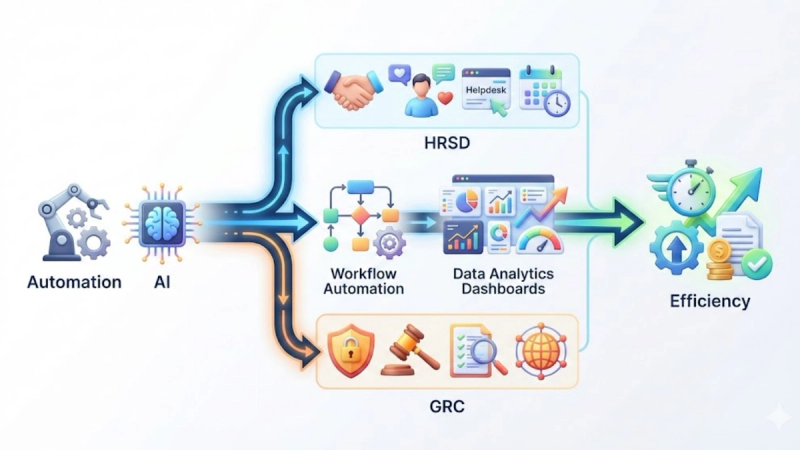
Automation and Artificial Intelligence are rapidly accelerating the adoption of HR Service Delivery (HRSD) and Governance, Risk & Compliance (GRC) by enabling organizations to transform traditional processes into intelligent, automated, and scalable operations. Today’s enterprises are under rising pressure to improve employee experience, increase productivity, ensure regulatory compliance, and strengthen data security — driving a major shift toward digital HR and automated risk management systems. AI-powered HRSD platforms automate time-consuming tasks such as recruitment screening, onboarding, employee query resolution, payroll management, performance evaluations, and internal workflow approvals, allowing HR teams to focus more on strategic initiatives like culture building and workforce transformation. Automation reduces manual errors, speeds up decision-making, and delivers more consistent and reliable HR services across global and hybrid work models.
In the GRC space, AI is revolutionizing how organizations detect risks, monitor compliance controls, predict vulnerabilities, and prevent financial, legal, or cybersecurity failures. Automated reporting, real-time monitoring dashboards, smart auditing, and anomaly detection make it possible to identify issues before they become crises, strengthening operational resilience and stakeholder trust. As regulations and security challenges grow more complex, companies require intelligent systems that can analyze massive volumes of data quickly and accurately — something traditional manual processes can no longer support.
A major factor powering this digital shift is the need for continuous training and skill development to ensure teams are prepared to work with AI-enabled HR and GRC tools. Organizations are increasingly investing in professional development programs to build digital fluency, and training partners like Tech Pratham are helping learners gain practical, job-ready expertise in HRSD, GRC, AI automation, and enterprise digital transformation. Upskilling HR and compliance professionals ensures that technology is used responsibly, ethically, and efficiently, fostering a future-ready workforce.
Automation and AI also enhance decision-making through predictive analytics, enabling leaders to forecast hiring demands, measure employee performance trends, anticipate compliance risks, and plan resources more accurately. These insights convert HRSD and GRC from supportive functions into powerful strategic engines that directly contribute to innovation and growth. In addition, digital platforms provide transparency and improved employee experience with 24/7 access to self-service tools, faster resolutions, and increased trust in internal systems — essential factors for retention and satisfaction in modern workplaces.
Ultimately, the acceleration of HRSD and GRC through automation and AI marks a transformational evolution in enterprise operations. Businesses that adopt intelligent digital solutions gain competitive advantage, improved compliance posture, stronger cybersecurity, optimized costs, and the agility required to navigate rapidly changing business landscapes. Those who embrace training and technology together will lead the future, while those relying on outdated manual systems risk falling behind. Automation and AI are no longer optional — they are the foundation of smarter, more resilient, and future-proof organizations.
HRSD & GRC: Career Opportunities and Salary Trends for a Future-Ready Workforce
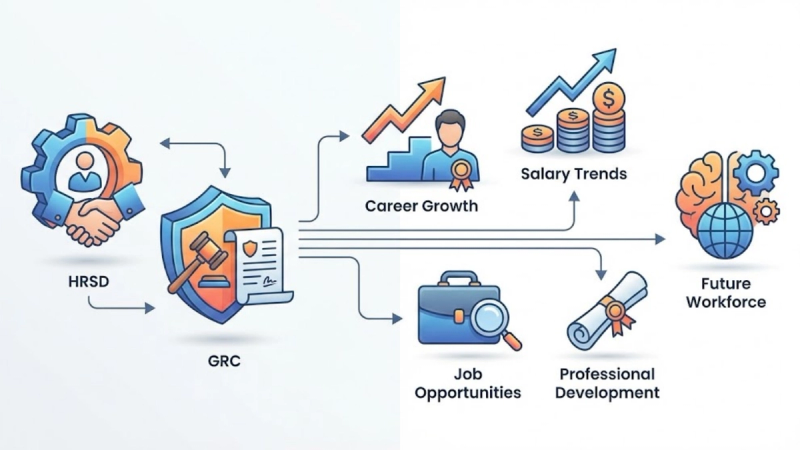
The demand for skilled professionals in Human Resource Service Delivery (HRSD) and Governance, Risk & Compliance (GRC) is rising rapidly as organizations shift toward digital transformation, automation, and stronger regulatory control. Careers in these domains are expanding across industries including IT, finance, healthcare, consulting, and global enterprises, offering strong growth potential and long-term stability. Entry-level roles such as HRSD Analyst, HR Operations Specialist, GRC Analyst, and Risk Compliance Coordinator provide a solid entry point into corporate environments, and salaries typically begin in the range of ₹ 6 – 9 lakhs per year, depending on company size and location. As professionals gain experience, certifications, and technical exposure to digital HR tools, automation, cybersecurity alignment, audit processes, and regulatory frameworks, career paths advance to positions like HRSD Manager, GRC Manager, Risk Specialist, Compliance Lead, and Governance Consultant — where compensation commonly increases to ₹12–22 lakhs annually.
For senior-level positions such as Head of GRC, Risk & Compliance Director, HR Digital Transformation Lead, or Global HRSD Leader, salary packages may reach ₹30 lakhs or more, reflecting the strategic responsibility of driving enterprise-wide policy, security, and workforce management. The earning potential is especially strong for individuals who combine cross-functional expertise across HR, cybersecurity, ITSM, data privacy, legal compliance, and business operations — skills that are increasingly essential as companies integrate digital risk and people-centric processes into a unified operational model.
Training and continuous upskilling play a crucial role in career progression within HRSD and GRC. Professionals who invest in practical training, hands-on tools, and modern compliance frameworks gain a competitive advantage and significantly enhance their employability. The job market in this sector is projected to grow consistently as organizations require stronger governance, automated HR workflows, real-time analytics, and smarter decision-making capabilities. With increasing global regulatory pressure, cybersecurity threats, hybrid workforce models, and demand for employee experience transformation, the need for HRSD and GRC experts will continue to accelerate.
In short, HRSD and GRC offer not only strong salary growth but also dynamic, future-proof career paths where professionals contribute directly to organizational resilience, risk management, and digital innovation. For anyone seeking a high-impact, stable, and rewarding career, HRSD and GRC represent some of the most promising domains of the coming decade.
Roadmap to Build a Successful Career in HRSD & GRC
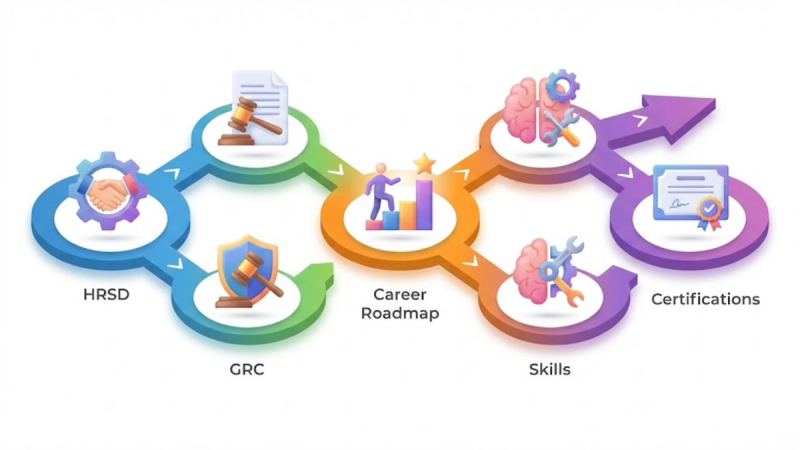
Building a thriving career in HRSD (Human Resource Service Delivery) and GRC (Governance, Risk & Compliance) requires a structured learning pathway, hands-on project exposure, and strong domain knowledge. The first step in this roadmap begins with understanding the fundamentals of IT Service Management, HR processes, compliance frameworks, and risk management concepts. Once the basics are clear, aspiring professionals should gain platform-specific skills by learning tools like ServiceNow HRSD and GRC, where organizations manage employee lifecycle services, automate workflows, track risks, and ensure regulatory compliance. Enrolling in Tech Pratham Training helps learners gain practical, job-focused experience through real-time projects, case studies, and mentorship, which builds the foundation required for professional growth. After foundational training, the next milestone is to work on hands-on implementations such as employee onboarding, HR case management, risk assessments, policy management, and audit workflows. Learners should then focus on achieving globally recognized certifications, which increases credibility and job opportunities.
As professionals advance, they can move into higher-level roles such as HRSD Consultant, GRC Analyst, Risk & Compliance Manager, Process Automation Specialist, and Implementation Lead. With organizations rapidly investing in employee experience and risk governance, the demand for HRSD and GRC experts is growing across IT, BFSI, retail, healthcare, telecom, and manufacturing sectors. Salary growth is strong, with entry-level roles typically offering competitive packages and mid-senior roles receiving significant compensation increases based on experience, specialization, and certifications. Continuous learning, hands-on project expertise, and strong analytical skills play a major role in long-term success. By following this roadmap, professionals can confidently build a rewarding career helping enterprises transform digital operations while unlocking high-paying global opportunities.
Conclusion
In 2026, HRSD and GRC are no longer optional back-office functions — they are strategic pillars driving digital transformation, operational efficiency, and organizational resilience. By integrating intelligent HR service delivery with advanced governance, risk, and compliance systems, companies gain a 360-degree view of performance, risks, and opportunities, enabling faster, smarter, and more informed decision-making. Automation and AI further accelerate this transformation by reducing manual workloads, enhancing predictive insights, and delivering seamless employee experiences, while also ensuring compliance and security in an increasingly complex regulatory environment.
For professionals, this evolution opens up exciting career opportunities with competitive salaries, rapid growth potential, and roles that combine technology, compliance, and human-centric management. With structured servicenow training in India , hands-on experience, and certifications — such as those provided by Tech Pratham Training — learners can build future-ready skills in HRSD, GRC, and digital risk management, positioning themselves as essential contributors to enterprise success.
Ultimately, organizations and professionals who embrace HRSD and GRC in 2026 will not only improve operational performance and employee satisfaction but also gain a competitive edge in a rapidly evolving digital landscape. These hidden gems are redefining what it means to manage people, processes, and risk effectively, ensuring that both businesses and careers thrive in the era of intelligent enterprise.