
How Workday Finance Management Helps Companies to Run a Smoother Financial System

Financial management is the backbone of every successful organization, yet many companies still struggle with outdated systems, manual processes, and limited financial visibility. In today’s fast-paced business environment, organizations require a financial platform that can provide real-time insights, improve operational efficiency, and support strategic decision-making. Workday Finance Management is designed to address these challenges by offering a modern cloud-based financial management solution that helps businesses manage accounting, reporting, planning, and financial operations within a unified system.
Workday Finance Management enables companies to streamline complex financial processes while maintaining accuracy, transparency, and compliance. By integrating financial data across different departments and automating routine tasks such as reporting, reconciliation, and approvals, the platform allows finance teams to focus more on strategic financial planning rather than manual administrative work. With advanced analytics, real-time reporting capabilities, and seamless integration with other enterprise functions, Workday helps organizations build a smoother, more efficient financial system that supports sustainable business growth and informed decision-making.
What is Workday Finance Management?
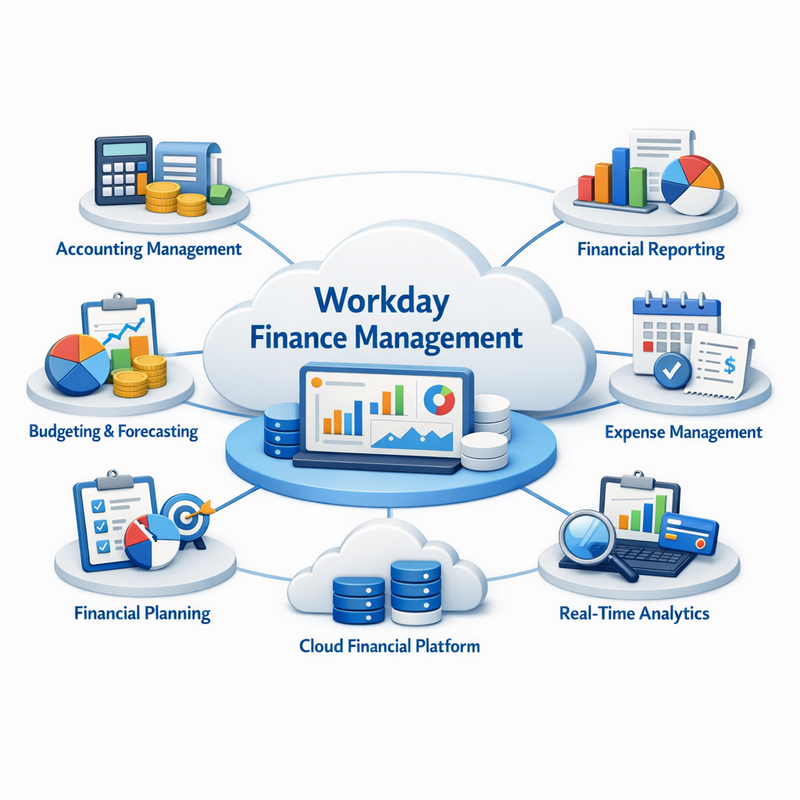
Workday Finance Management is a cloud-based financial management system designed to help organizations manage their core financial operations through a unified and modern platform. It enables businesses to handle important financial processes such as accounting, financial reporting, budgeting, expense management, and financial planning more efficiently. Unlike traditional financial systems that rely on multiple disconnected tools and manual data entry, Workday provides a centralized platform where financial information is updated in real time, allowing companies to maintain better control over their financial data.
Another important aspect of Workday Finance Management is its ability to connect financial processes with other business operations such as human resources, procurement, and project management. This integration helps organizations gain a complete view of their financial performance and operational activities in one place. With advanced analytics and reporting tools, finance teams can generate detailed financial insights, track spending patterns, and monitor business performance to support better strategic decision-making.
Workday Finance Management is also built to support modern organizations that require flexibility, scalability, and strong compliance management. Its cloud-based infrastructure allows businesses to adapt quickly to changing market conditions while maintaining secure and reliable financial operations. Through automation, real-time reporting, and improved data visibility, Workday helps companies simplify complex financial processes and build a more efficient and transparent financial management system.
Why modern businesses need cloud financial systems
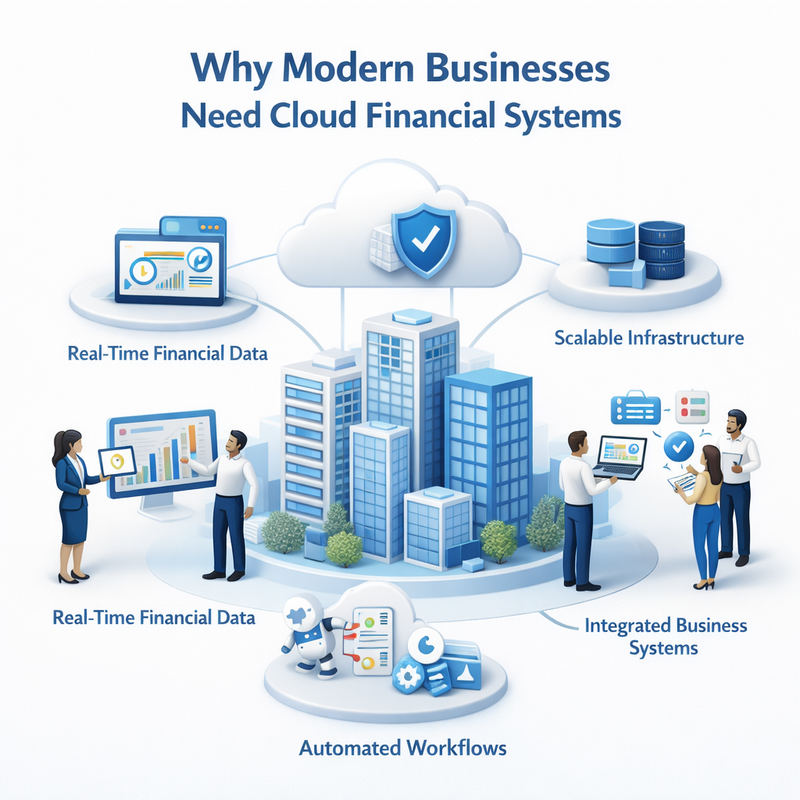
Modern businesses operate in a fast-changing and highly competitive environment where financial data must be accurate, accessible, and available in real time. Traditional on-premise financial systems often rely on manual processes, fragmented tools, and delayed reporting, which can slow down decision-making. Cloud financial systems address these challenges by providing a centralized platform where organizations can manage accounting, financial reporting, budgeting, and financial analysis from a single environment. With real-time financial data and automated workflows, businesses gain better visibility into their financial performance, allowing leaders to make faster and more informed strategic decisions.
Another major reason modern businesses are adopting cloud financial systems is scalability, security, and operational efficiency. Cloud platforms allow companies to easily scale their financial infrastructure as the business grows without investing heavily in complex hardware or system maintenance. In addition, cloud-based financial solutions provide advanced analytics, automated compliance management, and seamless integration with other enterprise applications such as human resources and procurement systems. This level of integration improves collaboration across departments and ensures that financial data remains consistent and accurate, helping organizations build a more agile, transparent, and efficient financial management process.
Overview of Workday’s Finance Capabilities
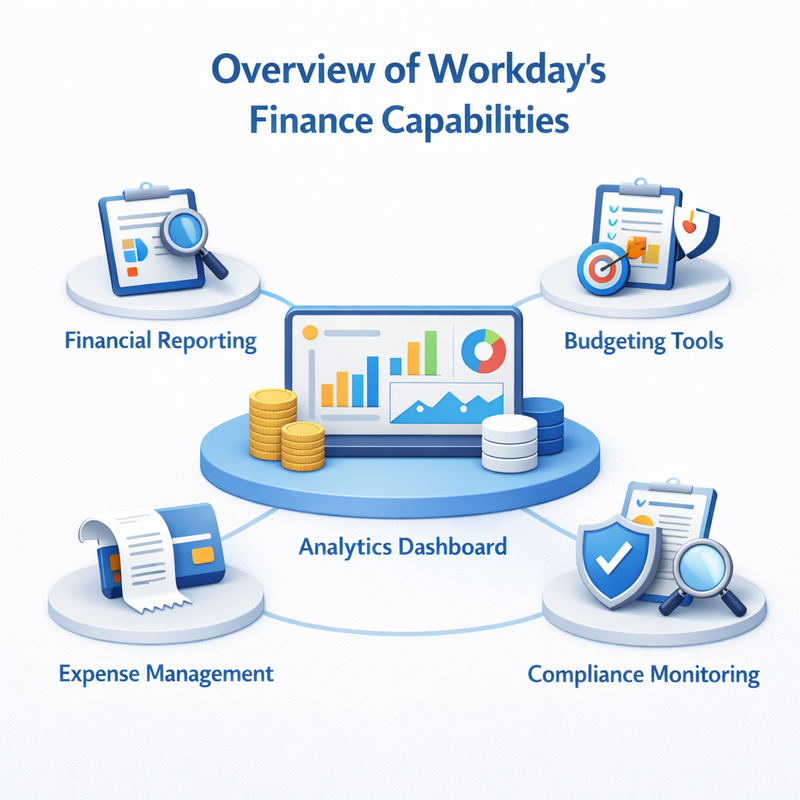
Workday Finance provides a comprehensive set of financial management capabilities that help organizations manage their core financial operations through a unified cloud-based platform. It allows businesses to handle important financial processes such as accounting, financial reporting, budgeting, expense management, and financial planning within a single system. By centralizing financial data and providing real-time insights, Workday helps finance teams monitor financial performance, track transactions, and generate accurate reports. This modern approach reduces the complexity of managing financial systems and enables organizations to make faster and more informed financial decisions.
Workday’s financial capabilities are designed to support modern enterprises that require efficiency, transparency, and scalability in their financial operations. The platform integrates financial processes with other business functions, allowing organizations to maintain better visibility and control over their financial activities. Some of the key capabilities include:
- Real-time financial reporting and analytics for better financial visibility
- Automated accounting processes to reduce manual work and errors
- Budgeting and financial planning tools to support strategic decision-making
- Expense and revenue management for improved cost control
- Integrated financial data across departments to enhance collaboration
- Compliance and audit support to maintain financial transparency and regulatory standards
How Workday Financial Management Improves Financial Visibility
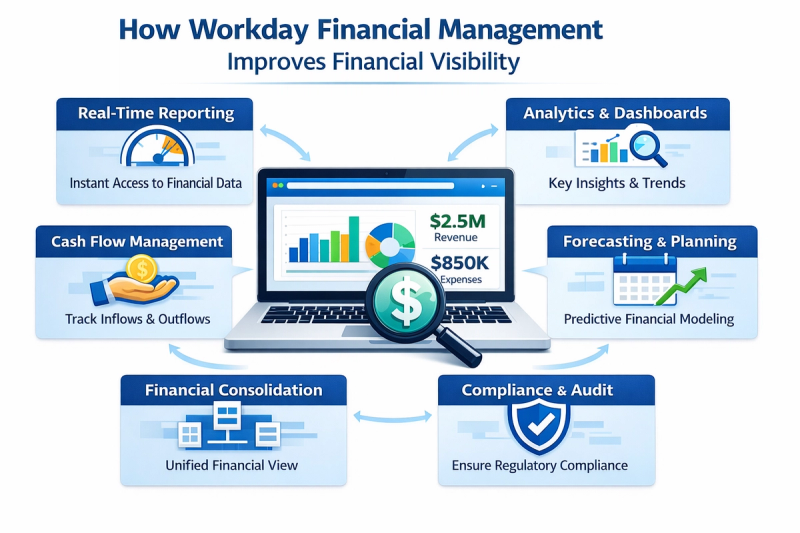
Financial visibility is essential for organizations that want to make accurate and timely business decisions. Workday Financial Management improves financial visibility by providing a centralized platform where all financial data is stored, managed, and analyzed in real time. Instead of relying on multiple disconnected systems or spreadsheets, finance teams can access up-to-date financial information from a single source. This unified approach helps organizations monitor financial performance, track transactions, and quickly identify trends or issues that may affect business operations.
Another important advantage of Workday Financial Management is its real-time reporting and analytics capabilities. The platform allows finance professionals to generate detailed financial reports, dashboards, and insights without waiting for manual data consolidation. With instant access to financial metrics such as revenue, expenses, budgets, and forecasts, decision-makers can respond quickly to changing market conditions. This level of transparency enables organizations to plan more effectively, manage resources efficiently, and improve overall financial control.
Workday also enhances financial visibility by integrating financial data with other business functions such as procurement, human resources, and project management. This integration allows organizations to view financial information in the context of broader business activities, providing a more complete picture of operational performance. By combining real-time data, advanced analytics, and seamless integration across departments, Workday Financial Management helps companies achieve greater financial transparency and make more strategic, data-driven decisions.
Automation Benefits in Workday Finance Management
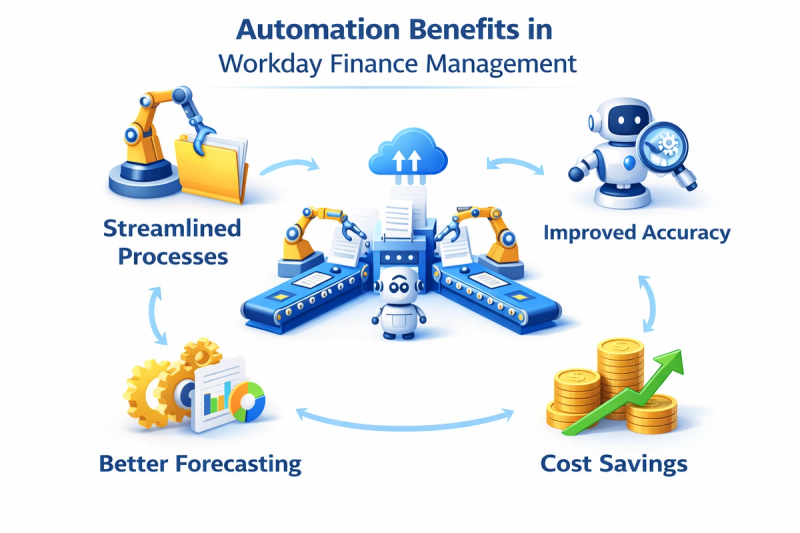
Automation plays a significant role in improving the efficiency of financial operations, and Workday Financial Management provides powerful automation capabilities that simplify complex financial processes. By automating routine tasks such as journal entries, expense approvals, invoice processing, and financial reporting, organizations can significantly reduce the time and effort required to manage daily financial activities. This automation helps finance teams eliminate repetitive manual work, minimize human errors, and ensure that financial data is processed accurately and consistently.
Another key benefit of automation in Workday Finance Management is faster and more reliable financial workflows. Automated approval processes, real-time data updates, and system-generated reports allow organizations to complete financial tasks more quickly and efficiently. As a result, finance teams can focus more on strategic activities such as financial planning, analysis, and business forecasting rather than spending time on manual administrative tasks. This improved efficiency not only enhances productivity but also helps organizations maintain better financial control and operational transparency.
How Workday Improves Compliance and Risk Management
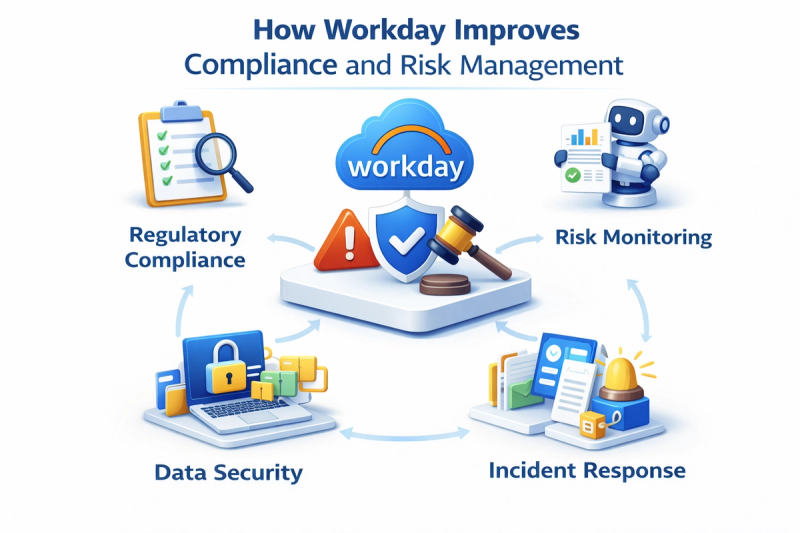
Effective compliance and risk management are essential for organizations that operate in highly regulated business environments. Workday Financial Management helps companies maintain strong financial compliance by providing a centralized platform where financial transactions, records, and reports are securely stored and monitored. This centralized system allows organizations to maintain accurate financial documentation and ensures that financial activities follow established policies, regulatory requirements, and internal governance standards.
Another important way Workday improves compliance is through built-in audit trails and automated controls. Every financial transaction processed in the system is recorded and tracked, creating a transparent record of financial activities. This makes it easier for organizations to conduct internal and external audits, identify potential discrepancies, and maintain accountability across financial operations. Automated approval workflows also ensure that financial processes follow proper authorization steps, reducing the risk of fraud, errors, and unauthorized financial activities.
Workday also strengthens risk management by providing real-time insights into financial data and potential operational risks. With advanced reporting and analytics capabilities, finance teams can monitor financial performance, detect unusual patterns, and respond quickly to potential financial issues. By combining strong security features, automated compliance controls, and detailed financial reporting, Workday enables organizations to maintain regulatory compliance while effectively managing financial risks and ensuring greater transparency in their financial operations. Integration of Finance with Other Business Operations
Modern organizations require financial systems that can connect seamlessly with other business functions to ensure better coordination and data accuracy. Workday Financial Management enables the integration of finance with key business operations such as human resources, procurement, project management, and supply chain activities. By bringing financial and operational data together on a single platform, organizations can gain a more comprehensive view of their business performance. This integration allows finance teams to monitor spending, track budgets, and evaluate financial outcomes in relation to operational activities across different departments.
Another major advantage of integrating finance with other business operations is improved collaboration and more efficient decision-making. When financial data is connected with operational processes, managers and executives can analyze how different business activities impact overall financial performance. This real-time visibility helps organizations allocate resources more effectively, manage costs, and identify opportunities for growth. By aligning financial management with operational workflows, Workday helps businesses create a more transparent, connected, and efficient enterprise environment.
Industries That Benefit from Workday Financial Management
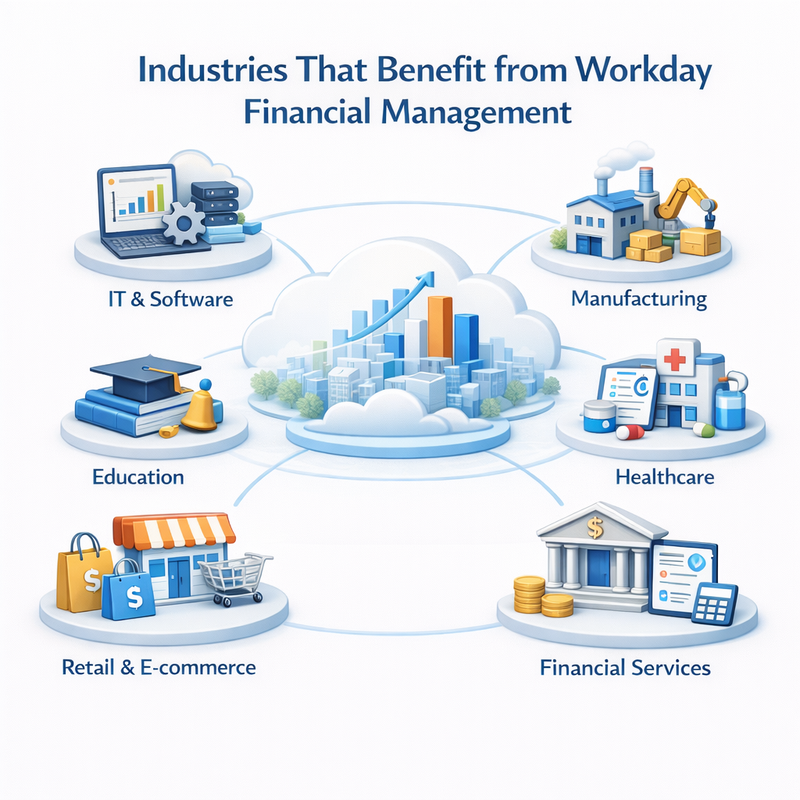
Workday Financial Management is widely used across various industries that require accurate financial reporting, real-time data visibility, and efficient financial operations. Organizations operating in complex and fast-growing sectors often need advanced financial systems to manage large volumes of financial data, track operational costs, and support strategic business decisions. With its cloud-based architecture, automated financial processes, and advanced analytics capabilities, Workday helps businesses across multiple industries streamline financial management and improve operational efficiency.
Several industries benefit significantly from adopting Workday Financial Management due to their need for integrated financial systems and scalable enterprise solutions. Some of the major industries include:
- Information Technology (IT) and Software Companies that manage large-scale projects and global financial operations
- Manufacturing Organizations that require accurate cost tracking, supply chain integration, and financial forecasting
- Healthcare and Life Sciences Companies that need strict compliance, financial transparency, and regulatory reporting
- Financial Services Firms that rely on real-time financial insights and strong risk management capabilities
- Retail and E-commerce Businesses that manage high transaction volumes and complex revenue streams
- Education and Public Sector Organizations that require efficient budgeting, grant management, and financial accountability
These industries use Workday Financial Management to improve financial visibility, automate financial workflows, and support better strategic planning across their operations.
Future of Financial Management with Workday
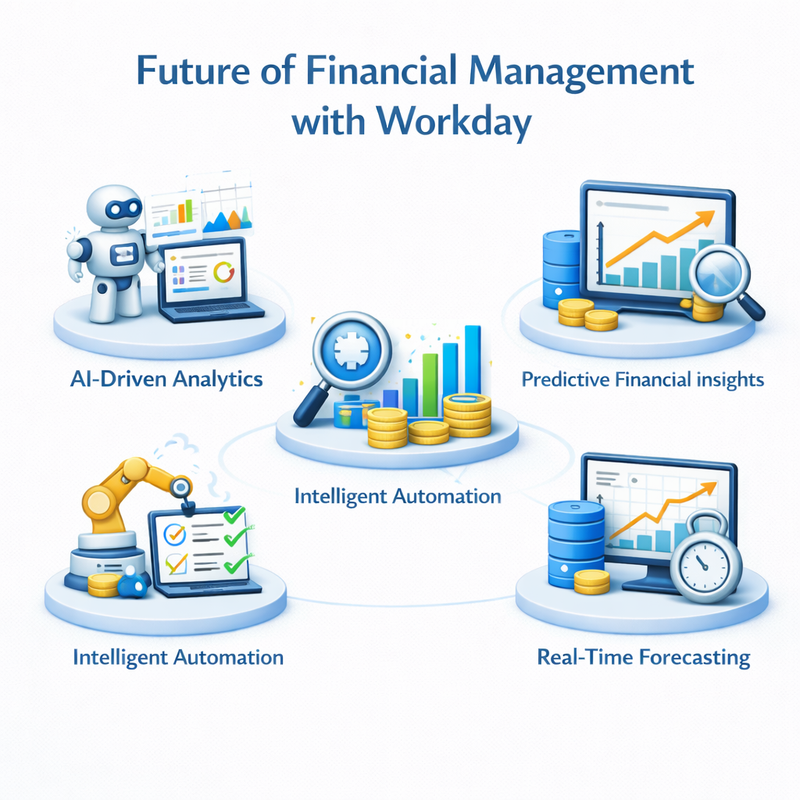
The future of financial management is increasingly driven by digital transformation, data analytics, and cloud-based technologies. Workday Financial Management is positioned to support this evolution by providing organizations with advanced financial tools that enhance accuracy, transparency, and decision-making. As businesses continue to adopt modern financial systems, Workday enables finance teams to move beyond traditional accounting processes and focus more on strategic financial planning and business growth. With real-time financial insights and integrated data across departments, organizations can respond more quickly to changing market conditions and make smarter financial decisions.
Looking ahead, Workday is expected to further enhance financial management through technologies such as advanced analytics, artificial intelligence, and predictive financial modeling. These innovations will allow organizations to forecast financial trends more accurately, identify potential risks earlier, and optimize financial performance. By combining automation, real-time data visibility, and intelligent financial tools, Workday helps businesses build a more agile and future-ready financial management system that supports long-term operational efficiency and sustainable growth.
Conclusion
In today’s digital business environment, organizations need financial systems that provide accuracy, transparency, and real-time insights. Workday Finance Management helps companies modernize their financial operations by replacing outdated systems with a unified cloud-based platform. By centralizing financial data, automating routine tasks, and providing advanced reporting capabilities, Workday enables finance teams to manage complex financial processes more efficiently. This improved efficiency allows organizations to gain better visibility into their financial performance and make informed decisions that support long-term business success.
Overall, Workday Finance Management plays a crucial role in helping businesses build a smoother and more reliable financial system. Its ability to integrate finance with other business operations, support compliance requirements, and provide real-time financial insights makes it a valuable solution for modern enterprises. As organizations continue to focus on digital transformation and data-driven decision-making, adopting advanced financial management platforms like Workday can help companies improve operational efficiency, strengthen financial control, and achieve sustainable growth in an increasingly competitive market.