
How to Choose the Best Guidewire QA Training Institute for Career Growth

Choosing a professional training institute is an important decision for anyone planning to build a career in insurance technology. Guidewire has become an important platform for insurance companies managing policy administration, billing, and claims operations. As these systems support critical business activities, software testing plays an essential role in maintaining their accuracy and reliability.
For aspiring testers and experienced QA professionals, enrolling in the right Guidewire QA Training Institute can help develop the technical knowledge and testing approach required for real-world projects. However, not every training programme offers the same learning experience. Factors such as trainer expertise, curriculum coverage, practical assignments, and interview preparation should be evaluated before making a decision.
Why Is Guidewire QA a Valuable Career Option?
Insurance applications handle sensitive business information and complex workflows. Even a small software defect can affect policy updates, premium calculations, billing activities, or claim processing. This makes quality assurance an important part of Guidewire implementation and maintenance projects.
Guidewire QA professionals work with different application components to verify whether business requirements are functioning correctly. Their responsibilities may include reviewing requirements, preparing test scenarios, executing test cases, identifying defects, and validating application behaviour.
What Should You Look for in a Guidewire QA Training Institute?
Selecting an institute requires more than checking its course fees or duration. Learners should understand what they will actually learn and whether the training prepares them for practical testing responsibilities.
1. Industry-Relevant Trainer Experience
The trainer's experience can significantly influence the quality of learning. Guidewire testing involves understanding both software functionality and insurance workflows. A trainer familiar with project scenarios can explain how testing activities are performed in professional environments.
2. Comprehensive Course Curriculum
A structured syllabus helps learners progress from basic concepts to platform-specific testing activities. A good Guidewire QA Course should cover the fundamentals of software testing along with relevant Guidewire applications. Look for coverage of:
- Guidewire InsuranceSuite fundamentals.
- PolicyCenter, BillingCenter, and ClaimCenter.
- Functional and regression testing.
- Test case preparation and execution.
- Defect identification and reporting.
- End-to-end insurance business workflows.
A curriculum with these topics can provide a stronger foundation than training limited to theoretical explanations.
3. Practical Assignments and Project Exposure
Practical learning helps students understand how testing concepts are applied to actual business situations. For example, a tester may need to verify whether a policy is created correctly, whether billing information is updated, or whether a claim moves through the expected processing stages.
4. Access to a Testing Environment
5. Interview Preparation and Career Guidance
What Skills Should a Guidewire QA Course Cover?
A well-planned learning programme should help students understand the relationship between insurance operations and software testing. Before enrolling in Guidewire QA Training, check whether the following skills are included in the syllabus.
Guidewire InsuranceSuite Fundamentals
Learners should understand the purpose of Guidewire InsuranceSuite and how its applications support insurance business operations. This includes understanding the basic functionality of PolicyCenter, BillingCenter, and ClaimCenter.
PolicyCenter, BillingCenter, and ClaimCenter Testing
Each application supports different insurance activities, so testing requirements also vary.
- PolicyCenter: Testing policy creation, renewals, endorsements, and policy updates.
- BillingCenter: Validating invoices, payments, billing plans, and financial transactions.
- ClaimCenter: Testing claim registration, claim updates, assignments, and settlement workflows.
Understanding these applications helps QA professionals identify functional issues across different insurance processes.
Functional and Regression Testing
Test Case Design and Defect Management
API Testing and Automation Fundamentals
Why Does Practical Learning Matter in Guidewire QA Training?
Understanding testing definitions is only the first step. Professional QA work requires the ability to analyse requirements, identify possible errors, and verify application behaviour under different conditions.
For example, consider an insurance company introducing a new policy renewal feature. A QA professional may need to check whether:
- Existing policy information is retained correctly.
- Renewal dates follow the defined business rules.
- Premium details are calculated accurately.
- Updated policy information appears correctly.
- Related billing activities work as expected.
These scenarios demonstrate why practical exercises are important in Guidewire Testing Training. Project-based learning can also help candidates become familiar with testing documentation, defect life cycles, test execution, and communication between development and QA teams.
Online vs Classroom Guidewire QA Training: Which Is Better?
The right learning format depends on your schedule, learning preferences, and professional commitments. Both online and classroom programmes can provide valuable learning experiences when the course is properly structured.
Benefits of Online Training
Guidewire QA Online Training offers flexibility for working professionals and learners who cannot regularly attend physical classes. Some advantages include:
- Learning from different locations.
- Flexible access to training sessions, depending on the programme.
- Reduced daily travel requirements.
- Opportunities to revise recorded lessons, if available.
- Easier participation alongside professional commitments.
Benefits of Classroom Training
How to Choose the Right Learning Format
Who Should Enroll in Guidewire QA Training?
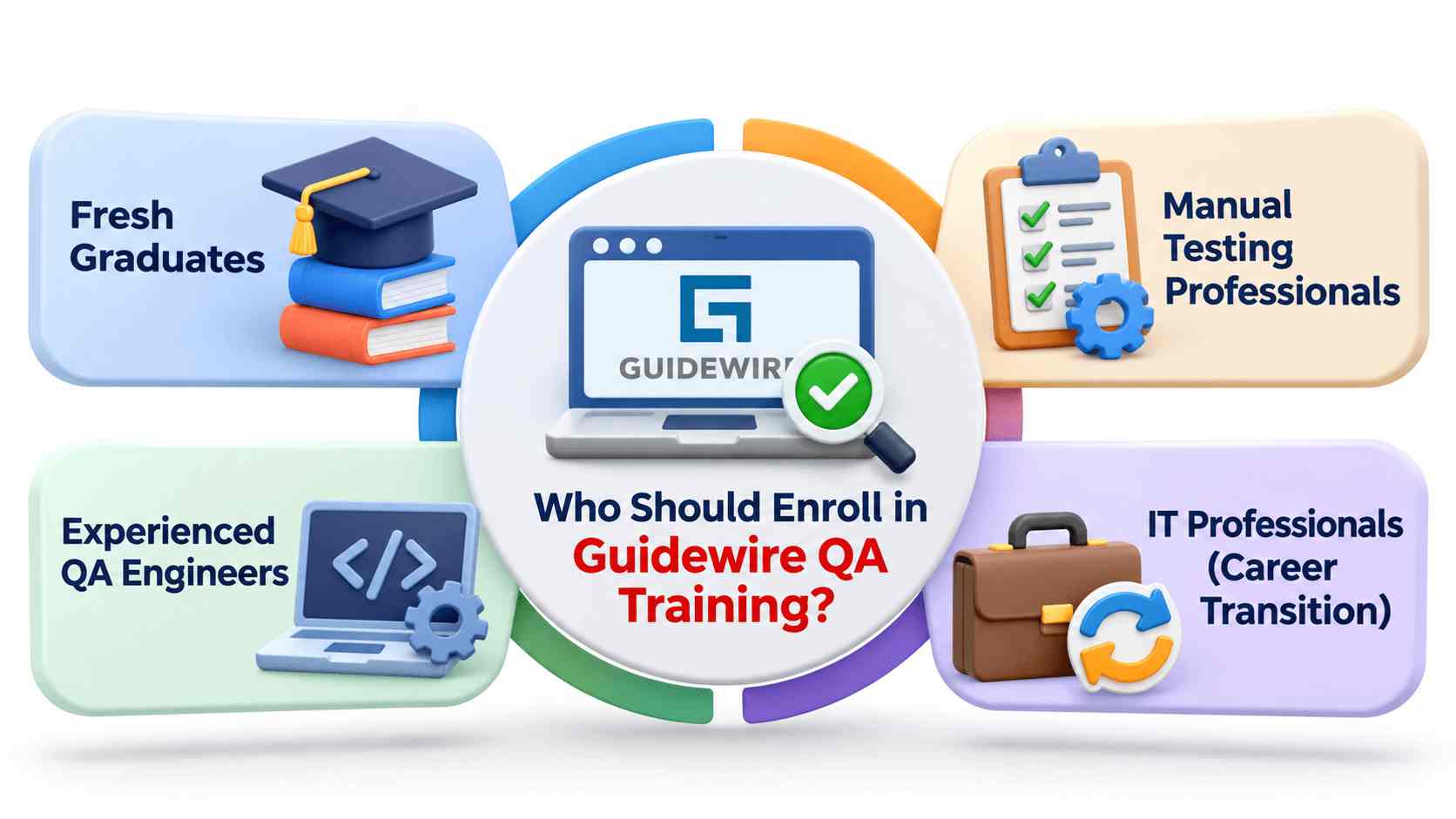
Guidewire QA is suitable for individuals who want to understand software quality assurance and explore how testing works in the insurance technology domain. Fresh graduates with an interest in IT and software applications can consider this field to develop their knowledge of testing methodologies, application functionality, and insurance business processes. Learning basic concepts such as test case preparation, defect identification, and functional testing can help them build a foundation before exploring Guidewire applications.
Manual testing professionals can expand their existing skills by understanding how insurance workflows are tested across PolicyCenter, BillingCenter, and ClaimCenter. Similarly, experienced QA engineers can develop platform-specific knowledge by exploring regression testing, integration testing, and defect management in Guidewire applications.
What Career Opportunities Are Available After Guidewire QA Training?
Learning Guidewire testing concepts can help professionals understand specialised QA responsibilities in insurance technology projects. Career opportunities depend on practical experience, technical ability, project exposure, and employer requirements. Some possible roles include:
Questions to Ask Before Joining a Guidewire QA Training Institute
Before making your final decision, ask the training provider a few important questions. These can help you understand the actual value of the programme.
- Does the syllabus cover PolicyCenter, BillingCenter, and ClaimCenter testing?
- Are trainers familiar with real Guidewire project environments?
- Will learners practise writing and executing test cases?
- Are functional and regression testing concepts included?
- Does the programme cover defect reporting and test documentation?
- Is interview preparation included in the training?
- What kind of doubt-clearing and post-training support is available?
Comparing these factors across different institutes can help you make a more informed decision. Avoid selecting a programme based only on promotional claims or discounted fees.
How to Evaluate the Right Guidewire QA Course for Your Career Goals
The best training programme is one that matches your current knowledge and future career objectives. A fresher may need more support with testing fundamentals, while an experienced tester may prefer advanced Guidewire application scenarios. Consider the following evaluation points:
- Learning objectives: Check whether the course clearly defines the skills you will develop.
- Syllabus depth: Ensure that the programme covers relevant applications and testing activities.
- Practical exposure: Look for exercises based on realistic insurance business scenarios.
- Trainer support: Evaluate how doubts, assignments, and technical questions are handled.
- Career preparation: Check whether interview discussions and project explanations are included.
A thoughtful comparison will help you identify a programme that offers meaningful learning rather than just completing a fixed number of sessions.
Start Your Guidewire QA Learning Journey with TechPratham
Building a career in insurance technology requires a combination of software testing knowledge, platform understanding, and practical problem-solving skills. Choosing a training provider that focuses on these areas can make the learning process more structured.
At TechPratham, learners can explore Guidewire QA Training to develop an understanding of insurance application testing and quality assurance practices. The learning approach focuses on relevant Guidewire concepts, testing fundamentals, practical scenarios, and interview preparation.
Whether you are a fresher exploring software testing or an experienced QA professional looking to expand your technical knowledge, understanding the course curriculum and learning objectives is an important first step.
Explore the Guidewire QA Training Course at TechPratham and take a step towards developing specialised skills in insurance technology.
Frequently Asked Questions
Conclusion
Choosing the right training institute is about evaluating the quality of learning, not simply comparing course fees or training duration. Trainer expertise, relevant curriculum, practical assignments, application knowledge, and interview preparation are important factors to consider.
For anyone interested in building a career in insurance software testing, Guidewire QA Training can provide a foundation for understanding specialised testing requirements. Take time to compare available programmes, review their learning approach, and choose a Guidewire QA Training Institute that aligns with your professional goals.
Related Articles

Guidewire Course Fees, Syllabus and Certification: What Learners Should Know Before Enrolling
Explore Guidewire course fees, syllabus, certification options, and tips to choose the right training program for your career goals.

How to Become a Guidewire Business Analyst: Skills and Learning Path
Learn how to become a Guidewire Business Analyst, develop essential skills, understand insurance workflows, and follow a practical learning path.





 +91-8882178896
 +1 (343) 477-0926