

How to learn Guidewire? A complete guide for beginners in 2026
Table of Contents
Guidewire is a leading software platform used by insurance companies to manage policies, claims, and billing efficiently. If you’re new to the world of insurance technology, learning Guidewire can open doors to lucrative career opportunities. This complete beginner’s guide will help you understand the platform, its core modules, and how to start your learning journey effectively.
Guidewire Basics: Key Concepts and Real-World Applications
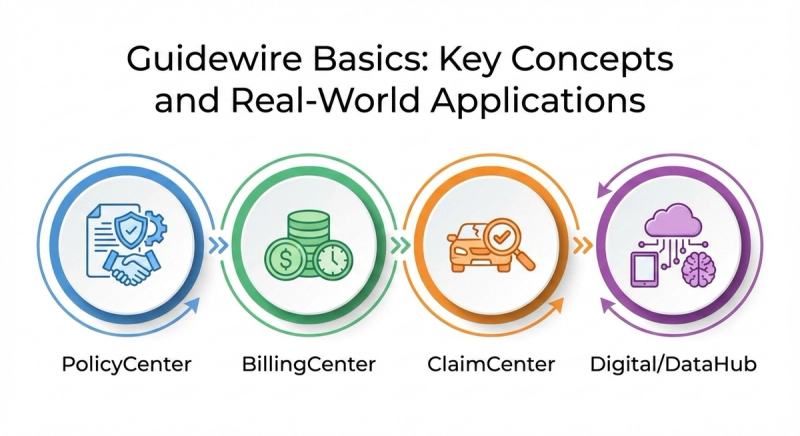
Guidewire is a powerful software platform widely used by insurance companies to streamline core business processes, including policy administration, claims management, and billing operations. Understanding the basics of Guidewire is essential for anyone looking to build a career in insurance technology. At its core, Guidewire consists of several modules—PolicyCenter, BillingCenter, and ClaimCenter—each designed to handle specific aspects of the insurance workflow. Beginners should focus on learning how these modules interact with each other, how data flows across the platform, and how configuration and customization can meet the unique needs of an organization. For professionals seeking structured learning, Guidewire training in India offers hands-on experience with real-world scenarios, making it easier to grasp these fundamental concepts and prepare for practical applications in the industry.
In real-world applications, Guidewire helps insurance companies reduce operational costs, improve customer service, and ensure regulatory compliance. For example, PolicyCenter automates the creation and management of insurance policies, while ClaimCenter ensures timely and accurate processing of claims, reducing errors and delays. BillingCenter simplifies premium calculations and payment collections, providing a seamless experience for both insurers and policyholders. Professionals can enhance their practical knowledge by focusing on the following key areas:
- Understanding the structure of Guidewire modules and their interdependencies.
- Learning configuration, workflow management, and automation within Guidewire.
- Exploring integration with third-party applications and data analytics tools.
- Hands-on practice through projects or sandbox environments provided in Guidewire training in India.
- Understanding industry-specific use cases, such as auto, health, and property insurance.
Mastering these fundamentals provides a solid foundation for more advanced topics like security, reporting, and cloud implementations, positioning learners for successful careers in the rapidly growing field of insurance technology.
Explore Guidewire Core Modules
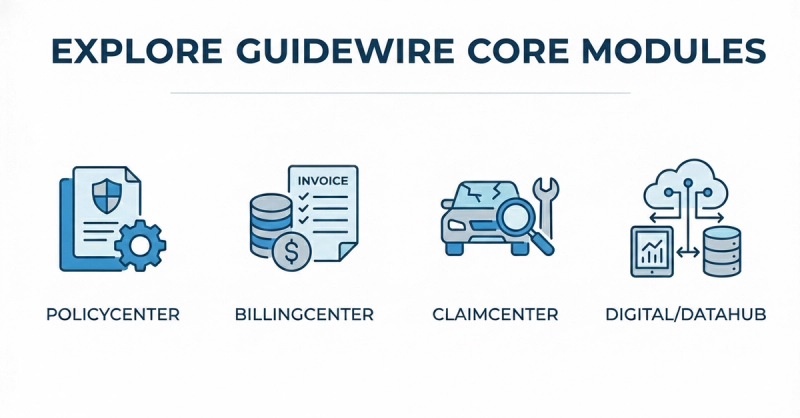
Guidewire is a comprehensive insurance platform that provides specialized modules to manage different aspects of insurance operations. Each module is designed to streamline workflows, improve efficiency, and enhance customer experience. Understanding these modules is essential for beginners aiming to build a career in Guidewire development.
PolicyCenter PolicyCenter is the core module for managing insurance policies throughout their lifecycle—from quoting and underwriting to policy issuance and renewal. It enables insurers to automate policy workflows, manage endorsements, and ensure compliance with regulations. Beginners can gain practical insights into configuring product models, defining business rules, and handling complex insurance scenarios.
BillingCenter BillingCenter focuses on managing customer billing, payments, and accounts receivable. It simplifies premium calculations, automates invoicing, and supports multiple payment methods. Professionals who understand BillingCenter can help insurance companies reduce errors, improve collection efficiency, and maintain accurate financial records.
ClaimCenter ClaimCenter streamlines the claims management process, from first notice of loss (FNOL) to settlement and closure. It helps insurers track claim progress, assign adjusters, and ensure timely resolution. Beginners can learn how to configure claim workflows, set up validation rules, and analyze claim data to enhance operational efficiency.
Digital and DataHub Digital and DataHub modules are designed for integrations, reporting, and data analytics. Digital enables seamless customer interactions across web and mobile platforms, while DataHub consolidates data for reporting and business intelligence. Learning these modules equips professionals with the skills to implement integrations, extract insights from data, and support strategic decision-making in insurance organizations.
Choose the Right Guidewire Learning Resources
Learning Guidewire effectively requires access to the right resources that provide both theoretical knowledge and practical experience. Beginners need a mix of structured guidance, real-world examples, and hands-on exercises to develop confidence and expertise in the platform. Choosing the right learning materials ensures that you not only understand the core functionalities of PolicyCenter, BillingCenter, ClaimCenter, and other modules but also know how to apply them in practical scenarios. A well-rounded approach combining documentation, online courses, video tutorials, and practice projects allows learners to build a strong foundation while gradually advancing to complex workflows and integrations.
Official Guidewire Documentation
The official Guidewire documentation is the most authoritative source for understanding module-specific features, workflows, and system configurations. It provides comprehensive guidance on all aspects of the platform, including installation, configuration, reporting, and integration with third-party systems. Beginners can refer to it for step-by-step instructions, best practices, and examples that illustrate real-world use cases. By spending time with the Guidewire documentation, learners can develop a deeper understanding of how each module interacts within the ecosystem, ensuring they can troubleshoot problems and optimize workflows effectively when working on actual insurance projects.
Guidewire Online Courses
Structured online courses are an excellent way to gain organized, step-by-step learning. Platforms like TechPratham provide Guidewire courses that cover both fundamental and advanced aspects of the platform, designed to help learners progress from theory to practical implementation. These courses often include interactive content, assignments, and simulated project exercises that mimic real insurance workflows, giving learners a hands-on experience while following a guided path. Through such courses, beginners can learn to configure products, automate processes, and manage workflows, all in a structured environment that reinforces learning and builds confidence.
Guidewire Practice Projects
Hands-on practice is the most critical element of mastering Guidewire. Simulating real-world insurance workflows, such as creating policies, processing claims, and managing billing, allows learners to internalize concepts and gain practical problem-solving skills. Tech Pratham emphasizes project-based learning, giving students the opportunity to apply theoretical knowledge in controlled scenarios that reflect real business environments. Guidewire practice projects also help beginners understand workflow automation, validation rules, and module interdependencies, ensuring they are prepared for actual implementation challenges in professional settings. Regular practice not only strengthens technical skills but also builds confidence, making learners more job-ready and efficient in real-world applications.
Guidewire Career Opportunities: Job Roles, Growth, and Future Scope

Guidewire has become a leading platform in the insurance technology industry, powering core processes like policy administration, billing, and claims management. As insurance companies continue to modernize their operations, demand for skilled Guidewire professionals is rising globally. Beginners and professionals looking to enter this field can explore various career paths depending on their expertise and interest in modules like PolicyCenter, BillingCenter, ClaimCenter, or Digital and DataHub.
Job Roles in Guidewire
There are multiple career opportunities in Guidewire for both technical and functional professionals:
- Guidewire Developer: Focuses on developing and customizing modules, workflows, and integrations. Requires knowledge of Guidewire Studio, Gosu programming, and XML configurations.
- Guidewire Functional Consultant: Works on implementing Guidewire solutions according to business requirements, often bridging the gap between technical teams and insurance clients.
- Guidewire Business Analyst: Analyzes business processes, prepares documentation, and ensures that Guidewire solutions meet organizational needs.
- Guidewire Tester/QA Analyst: Ensures quality and reliability of Guidewire modules through rigorous testing, validating workflows, and identifying bugs.
- Guidewire Solution Architect: Designs end-to-end solutions, oversees complex integrations, and guides development teams for large-scale projects.
Career Growth and Future Scope
The career trajectory in Guidewire is promising. Entry-level developers or consultants can start with module-specific roles and gradually move into senior positions such as Lead Developer, Project Manager, or Solution Architect. With insurance companies increasingly adopting digital-first strategies, professionals skilled in Guidewire are in high demand. Additionally, as organizations move towards cloud-based Guidewire implementations, expertise in Guidewire Cloud, integrations, and advanced reporting is becoming highly valued, creating opportunities for long-term career growth.
Salary Trends in Guidewire
Salaries in Guidewire vary depending on experience, role, and location:
- Entry-Level (0–2 years): ₹4–7 LPA for developers and functional consultants in India.
- Mid-Level (3–6 years): ₹8–15 LPA for experienced developers, consultants, or analysts.
- Senior-Level (7+ years): ₹15–30 LPA for solution architects, project leads, and specialized cloud implementation roles.
Globally, Guidewire professionals command even higher salaries, especially in regions like the US, UK, and Singapore, where insurance technology adoption is advanced. Continuous learning, certifications, and hands-on experience with multiple Guidewire modules significantly enhance earning potential.
Tips for Mastering Guidewire as a Beginner
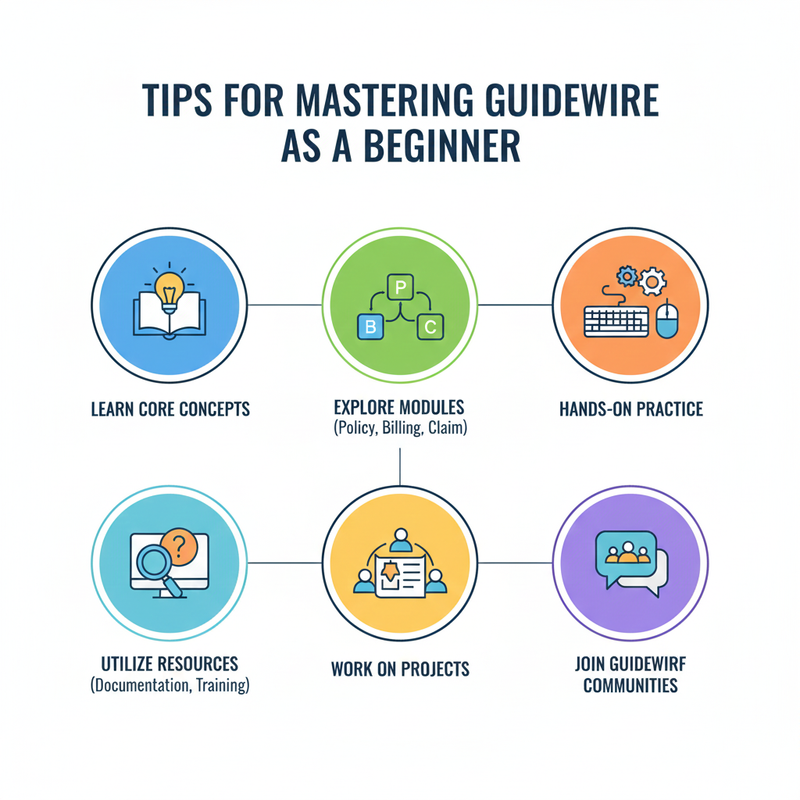
Mastering Guidewire as a beginner can seem challenging due to the platform’s complexity and its specialized focus on the insurance domain. However, with the right approach and consistent practice, anyone can gain proficiency and build a successful career. Here are some actionable tips to help beginners become confident Guidewire professionals:
1. Start with Core Insurance Concepts
Before diving into Guidewire, it’s crucial to understand the fundamentals of insurance operations. Learn the basics of policy administration, claims management, underwriting, and billing processes. A strong understanding of these concepts will make it easier to grasp Guidewire modules such as PolicyCenter, ClaimCenter, and BillingCenter. Beginners who skip this step often struggle with workflow configurations and module interdependencies.
2. Learn Module by Module
Guidewire has multiple modules, each serving distinct business functions. Start with one module—commonly PolicyCenter—to understand how insurance policies are created, managed, and renewed. Gradually explore ClaimCenter for claims processing and BillingCenter for managing payments. Focusing on one module at a time allows you to gain practical knowledge and reduces overwhelm.
3. Hands-On Practice is Key
Theoretical knowledge alone is not enough. Practicing on a sandbox or simulated Guidewire environment helps you apply what you’ve learned. Create sample policies, process claims, and configure workflows to understand real-world scenarios. Many beginners benefit from enrolling in structured courses that include practical projects, such as Guidewire training in Hyderabad, where you get hands-on exposure under expert guidance.
4. Utilize Documentation and Online Resources
Official Guidewire documentation is an essential resource for understanding module-specific features, integration options, and configuration steps. Supplement this with online tutorials, forums, and communities where you can ask questions and learn from experienced developers. Using multiple learning resources ensures a well-rounded understanding of the platform.
5. Work on Small Projects
Simulate real-world insurance workflows by working on small practice projects. For example, configure a product model in PolicyCenter, create a claims process in ClaimCenter, or automate billing scenarios in BillingCenter. These exercises reinforce concepts, improve problem-solving skills, and prepare you for professional assignments.
6. Join Guidewire Communities and Forums
Engaging with Guidewire communities on LinkedIn, Reddit, or specialized forums allows you to stay updated on best practices, common challenges, and new features. Networking with experienced professionals can provide valuable insights and even open doors to internships or job opportunities.
7. Focus on Certifications
While optional, Guidewire certifications validate your expertise and improve employability. Certification courses often provide structured learning paths, practice projects, and assessments to ensure a strong understanding of the platform.
Guidewire Certification Guide
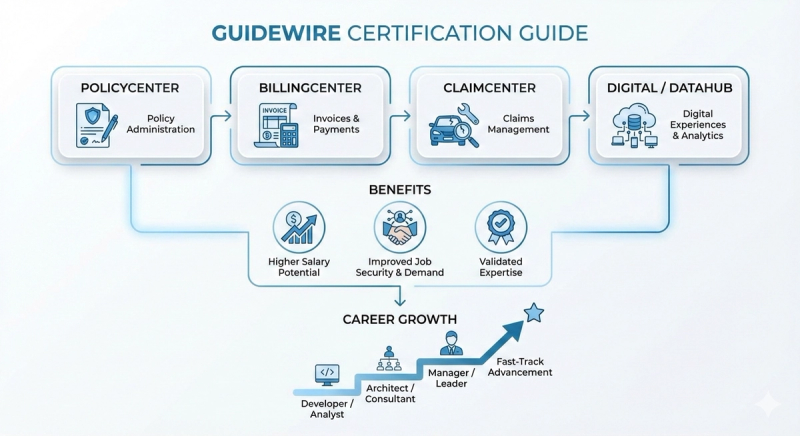
Guidewire certification is a valuable credential for professionals aiming to validate their skills and boost their career in the insurance technology domain. Earning a certification demonstrates your proficiency in Guidewire modules, workflows, and implementations, making you more attractive to employers and improving your job prospects in a competitive market.
Types of Guidewire Certifications
Guidewire offers certifications across its core modules and roles:
- Guidewire PolicyCenter Certification: Validates your ability to configure, customize, and manage policies effectively.
- Guidewire BillingCenter Certification: Focuses on billing workflows, premium calculations, payment processing, and account management.
- Guidewire ClaimCenter Certification: Confirms expertise in claims management, workflow setup, and claims automation.
- Guidewire Digital and DataHub Certifications: Covers integrations, reporting, and digital platform management.
Benefits of Getting Certified
Enhanced Career Opportunities: Certifications open doors to higher-paying roles such as Guidewire Developer, Functional Consultant, or Solution Architect.
Recognition of Skills: Validates your hands-on expertise and understanding of Guidewire best practices.
Competitive Advantage: Helps you stand out in a competitive job market, especially when applying to insurance companies or IT consulting firms.
Structured Learning Path: The preparation process ensures you understand each module comprehensively, improving practical problem-solving abilities.
Preparation Tips for Certification
- Start with the official Guidewire documentation to build a strong conceptual foundation.
- Enroll in structured courses or classroom programs that provide hands-on exercises. For example, professional Guidewire training in Hyderabad offers guided learning, practical projects, and expert mentorship to help you prepare effectively.
- Practice using sandbox environments or simulated workflows to gain real-world experience.
- Take mock tests and review sample questions to familiarize yourself with the exam format.
Conclusion
Guidewire is a powerful and widely adopted platform in the insurance technology industry, offering a range of modules like PolicyCenter, BillingCenter, ClaimCenter, and Digital & DataHub. For beginners, understanding the core concepts, exploring each module in depth, and gaining hands-on experience are essential steps to building a successful career. Leveraging structured learning resources, practice projects, and expert guidance—such as Guidewire training in Bangalore can significantly accelerate your learning curve and prepare you for real-world implementations.
Career opportunities in Guidewire are vast, ranging from developers and functional consultants to solution architects, with competitive salaries and excellent growth prospects. Certification adds credibility and demonstrates your expertise, further enhancing employability in this growing domain. By combining theoretical knowledge, practical experience, continuous learning, and professional certification, beginners can confidently navigate the Guidewire ecosystem and unlock high-paying, rewarding roles in insurance technology.
Ultimately, mastering Guidewire requires patience, dedication, and a structured approach. With the right strategies, resources, and guidance, you can establish yourself as a skilled professional in a field that continues to expand globally, offering long-term career stability and growth.