
Key Steps for Successful Workday Implementation: A Comprehensive Guide in 2026
Table of Contents
A successful Workday implementation can transform how your organization manages HR, finance, payroll, and operations. But without proper planning, many companies face delays, data issues, and low user adoption. That’s why understanding the key steps for successful Workday implementation is essential before starting your project. A structured approach helps reduce risks, control costs, and ensure a smooth transition to the Workday platform.
In this comprehensive guide, we’ll walk through the complete Workday implementation process in simple terms — from planning and system setup to data migration, testing, and go-live support. Whether you’re an HR leader, IT manager, or project stakeholder, these practical steps will help you achieve a successful Workday rollout and maximize long-term business value.
Understanding Workday Implementation in 2026
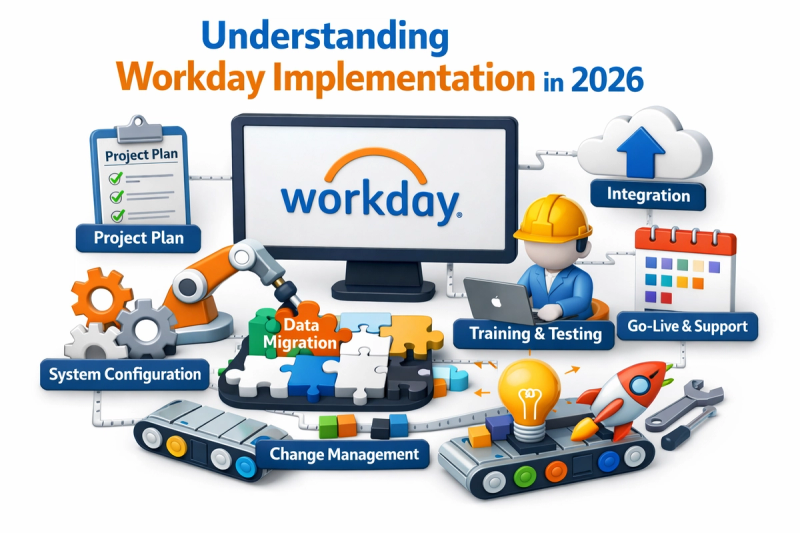
Understanding Workday implementation in 2026 requires a clear view of how organizations adopt and deploy the Workday cloud platform to manage human capital, finance, payroll, and analytics in a unified system. Workday implementation is not just a technical setup; it is a strategic transformation that aligns business processes, data, and people with a modern cloud-first ERP solution. As enterprises move away from legacy systems, Workday enables real-time insights, improved compliance, and scalable operations across global business units.
In 2026, Workday implementations are increasingly influenced by automation, artificial intelligence, and continuous innovation cycles. Features such as intelligent process automation, enhanced reporting, and predictive analytics demand deeper planning during implementation. Organizations must focus on configuration over customization, follow Workday’s launch methodology, and ensure strong data governance to fully leverage platform upgrades without disrupting business operations. This shift makes implementation planning more critical than ever for long-term system stability.
Another key aspect of Workday implementation in 2026 is the emphasis on user experience and change management. Successful implementations prioritize end-user adoption through role-based training, intuitive business processes, and ongoing support models. With hybrid work environments and global workforces becoming standard, Workday implementations must support flexibility, security, and compliance from day one. A well-executed implementation lays the foundation for continuous optimization and sustained business value in the years ahead.
Integrations and third-party systems
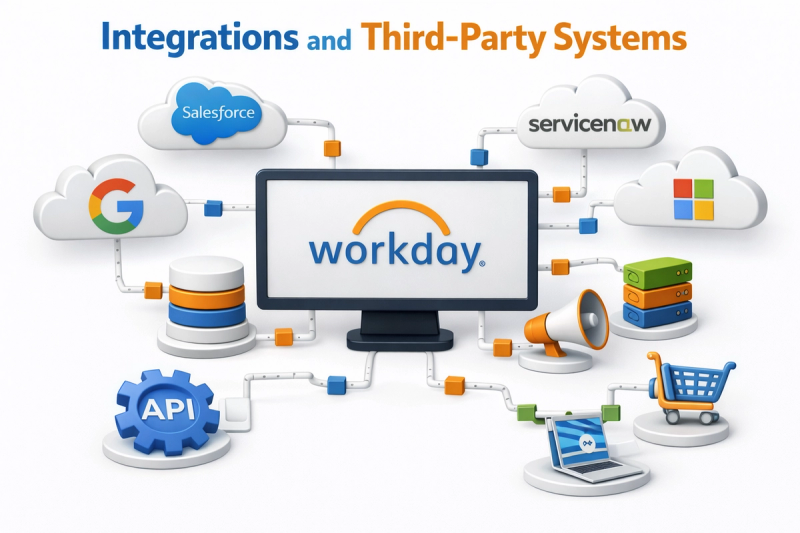
Integrations and third-party systems play a critical role in ensuring the success of a Workday implementation, especially as organizations operate within complex digital ecosystems. In 2026, most enterprises rely on seamless data exchange between Workday and external systems such as payroll providers, ERP platforms, banking systems, and benefits vendors. A well-planned integration strategy ensures real-time data accuracy, operational continuity, and compliance across business functions, reducing manual effort and minimizing integration-related risks.
Workday supports multiple integration types, including Enterprise Interface Builder (EIB), Core Connectors, and Workday Studio, to meet diverse business requirements. EIB is commonly used for simple, file-based inbound and outbound data transfers, while Core Connectors provide pre-built integrations for common use cases like payroll and benefits. Workday Studio is designed for complex, high-volume integrations requiring advanced transformations and orchestration. Selecting the right integration type depends on data complexity, frequency, and system architecture.
Effective integration testing best practices are essential to ensure stability and data integrity before go-live. Testing should cover unit testing, end-to-end system testing, and exception handling scenarios across payroll, ERP, and finance integrations. In 2026, organizations also focus on validating security roles, data encryption, and error monitoring mechanisms during testing. A robust integration testing strategy helps prevent payroll failures, reporting discrepancies, and financial reconciliation issues, ensuring a reliable and scalable Workday ecosystem post-implementation.
Workday Implementation Methodology
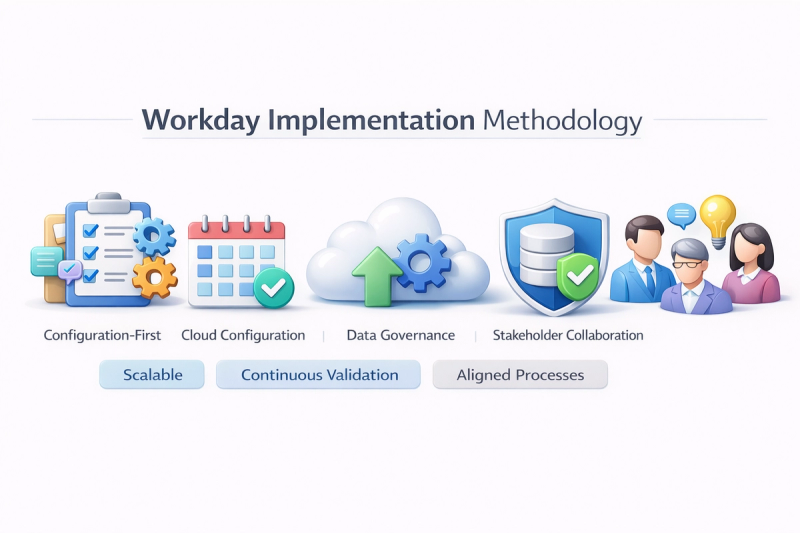
The Workday implementation methodology is a structured, best-practice–driven approach used to deploy Workday solutions with minimal risk and maximum business alignment. In 2026, organizations will follow this methodology to ensure consistency, scalability, and faster adoption while avoiding heavy customization. It focuses on configuration-first principles, strong data governance, stakeholder collaboration, and continuous validation. A well-defined methodology helps enterprises align business processes with Workday’s cloud architecture and prepares them for frequent platform updates.
The Workday Launch methodology is the official framework provided by Workday to deliver predictable and high-quality implementations. It follows a phased lifecycle that includes Initiate, Architect, Configure & Prototype, Test, Deploy, and Optimize. This approach emphasizes early testing, tenant reviews, and user feedback to reduce rework and ensure readiness before go-live. In 2026, the Launch methodology supports iterative execution and continuous improvement, making it suitable for both mid-size and large enterprises.
When it comes to Agile vs Waterfall for Workday projects, Agile is increasingly preferred due to its flexibility and iterative nature, allowing teams to adapt to evolving business needs. Waterfall offers a more rigid, linear structure and works best when requirements are stable and well-defined. Most modern organizations adopt a hybrid model, combining Waterfall planning with Agile execution. This aligns well with a phase-wise implementation breakdown, where planning, configuration, data migration, integrations, testing, training, go-live, and post-implementation optimization are executed in controlled stages to ensure long-term success and ROI.
The Challenge: Complexity and Risk in Modern Rollouts
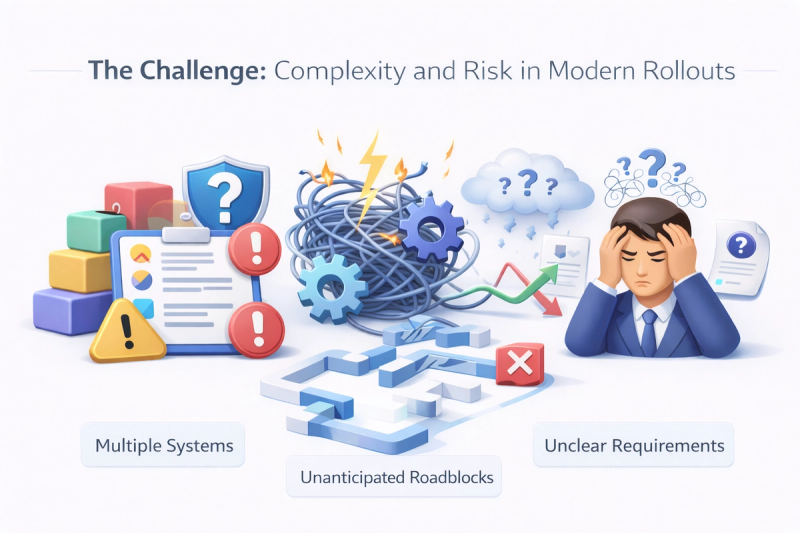
The challenge of complexity and risk in modern enterprise rollouts has increased significantly as organizations adopt cloud-based platforms like Workday across multiple regions and business units. Modern rollouts involve complex data migration from legacy systems, integration with third-party applications, and alignment of standardized processes with local compliance requirements. Without a clear implementation roadmap, strong governance model, and defined ownership, enterprises often face risks such as timeline delays, budget overruns, and data inconsistencies that directly impact business continuity.
In addition, modern rollouts require effective change management and user adoption strategies to reduce operational risk. Resistance to change, inadequate training, and poor communication can lead to low system adoption even after a technically successful deployment. Security configuration errors, role misalignment, and insufficient testing further increase implementation risk in large-scale rollouts. Addressing these challenges early through structured planning, risk mitigation frameworks, and continuous stakeholder engagement is critical to ensuring a stable, scalable, and successful enterprise rollout.
Why Testing is the Game Changer
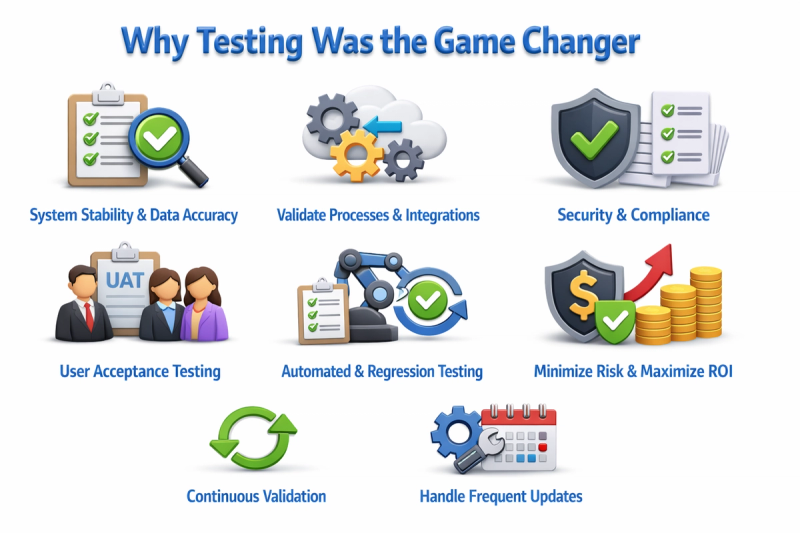
Testing became the game changer in modern enterprise implementations because it directly impacts system stability, data accuracy, and user confidence. In complex platforms like Workday, testing validates end-to-end business processes, integrations, security roles, and data flows before go-live. In 2026, organizations that invest in structured testing reduce critical failures such as payroll errors, reporting inaccuracies, and compliance issues, ensuring a smooth transition from legacy systems to cloud-based operations.
Comprehensive testing also plays a key role in improving user adoption and long-term system success. By involving business users during user acceptance testing (UAT), organizations can identify process gaps early and align configurations with real-world scenarios. Automated testing, regression testing after updates, and continuous validation have become essential best practices in 2026, enabling enterprises to handle frequent Workday releases without disrupting operations. Strong testing strategies ultimately minimize risk, protect business continuity, and maximize return on investment.
Conclusion
A successful Workday implementation in 2026 requires far more than technical execution—it demands strategic planning, the right methodology, strong integrations, rigorous testing, and effective change management. By following a structured implementation approach, leveraging the Workday Launch methodology, choosing the right integration strategies, and prioritizing testing and user adoption, organizations can significantly reduce risk and improve long-term ROI. As enterprises continue to modernize HR, finance, and payroll operations using platforms like Workday, a well-governed, phase-wise implementation ensures scalability, compliance, and business agility. Ultimately, organizations that treat Workday implementation as a continuous improvement journey—not a one-time rollout—are best positioned to achieve sustainable business value and digital transformation success.