
Mastering Workday Finance: Why It’s The Top ERP Skill For Finance Professionals In 2026
Table of Contents
Introduction
Cloud-based ERP (Enterprise Resource Planning) systems are no longer optional in the fast-changing world of finance; they are necessary. As digital financial transformation grows, companies are moving away from old systems and towards platforms that are more flexible, connected, and smart. Workday Finance is a name that always stands out. Fortune 500 firms and fast-growing businesses are both using Workday, which is becoming the gold standard for managing money in the modern world.
Today, those who work in finance are expected to do more than just keep track of numbers; they also need to know how the technology that generates financial data works. As finance and technology become more and more intertwined, there is a rising need for people who know how to set up, test, install, and maintain ERP systems, including Workday. This article talks about why Workday Finance will be one of the most sought-after ERP talents in 2025 and how professionals should use it to protect their jobs in the future.
1. What is Workday Finance?
Workday Financial Management is a cloud-based ERP solution that helps make key finance tasks easier and faster. Workday is much more efficient for both small and large businesses than traditional ERPs since it has real-time analytics, a modern user interface, and the ability to work with other systems.
2. Key Modules in Workday Finance:
Accounting and Finance: You can see how well your finances are doing in real time with customisable reports.
Procurement: Making it easier to buy things and manage suppliers.
Costs: automated tracking of expenses and compliance.
Projects: keeping track of project expenditures, invoices, and how much work is done.
Asset Management: Managing the entire life cycle of fixed assets.
3. What Makes It Different from Old ERPs:
Older systems like SAP and Oracle EBS sometimes need a lot of customisation, manual updates, and aren't very flexible. On the other hand, Workday:
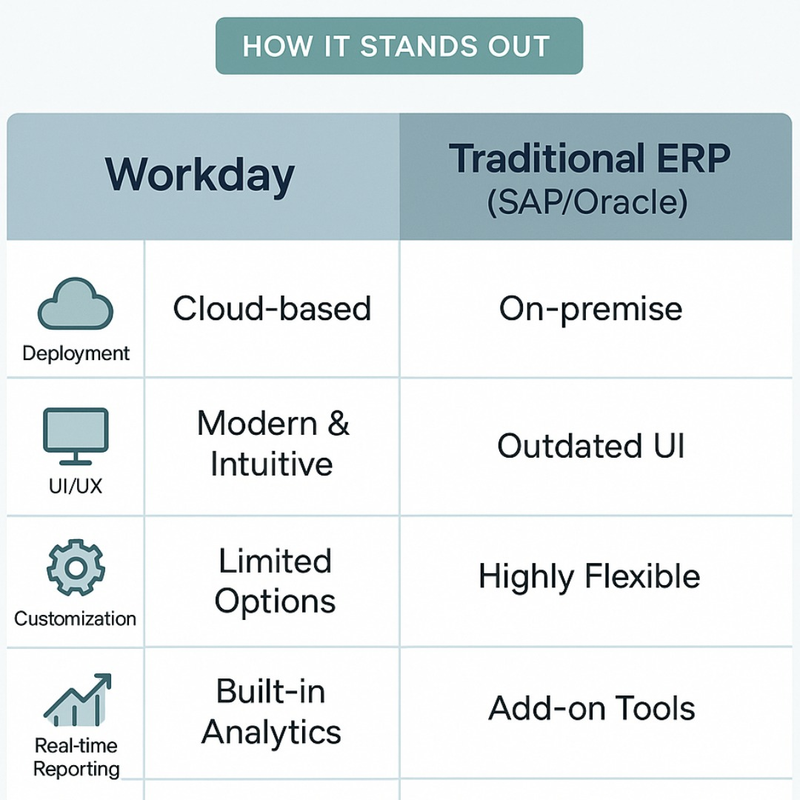
- Is totally cloud-native and gets updated on a regular basis.
- Gives you easy-to-use dashboards with up-to-date financial information.
- It has self-service features that make it less dependent on IT.
- Allows for speedier deployment and growth.
4. Current Market Demand for Workday Finance Professionals
As more businesses use Workday to modernise their financial operations, the need for Workday Finance specialists is growing quickly.
Trends in Jobs:
Workday-related jobs have grown by more than 30% year-over-year in the US, and the same is true in India and Europe, according to data from LinkedIn and Indeed.
- Deloitte, Accenture, PwC, Amazon, Netflix, and IBM are all hiring Workday Finance expertise right now.
- Why MNCs Prefer Workday-Trained Professionals:
- Less time needed for onboarding and training.
- Better results for implementation and integration.
- Better reporting and following the rules.
- Most Wanted Jobs:
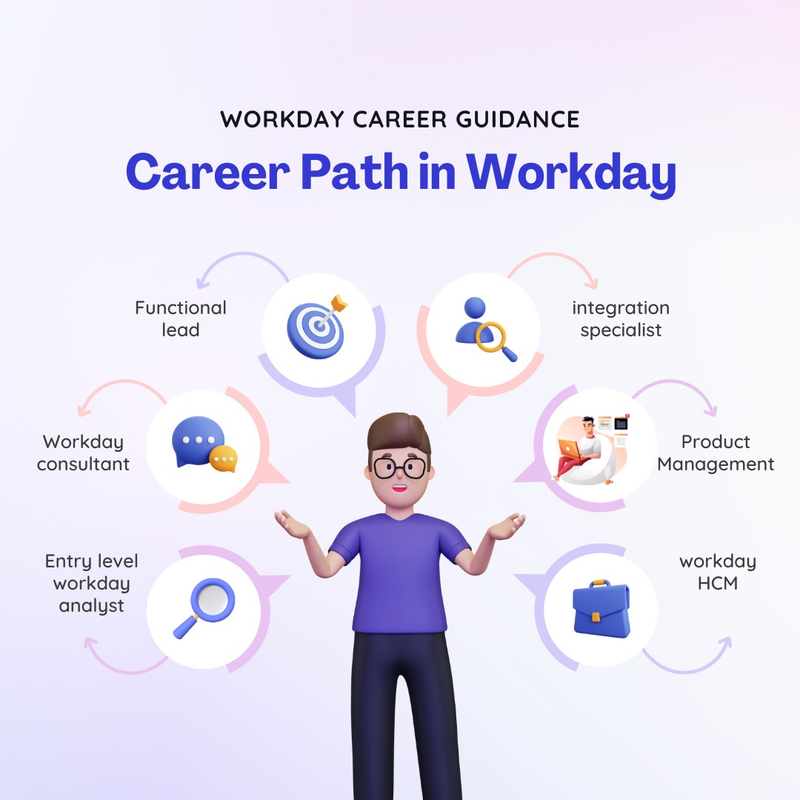
- Financial Analyst for Workday
- Consultant for Workday Finance
- Specialist in Workday Integration
- Analyst for Workday Reporting
- Functional Lead for Workday Finance
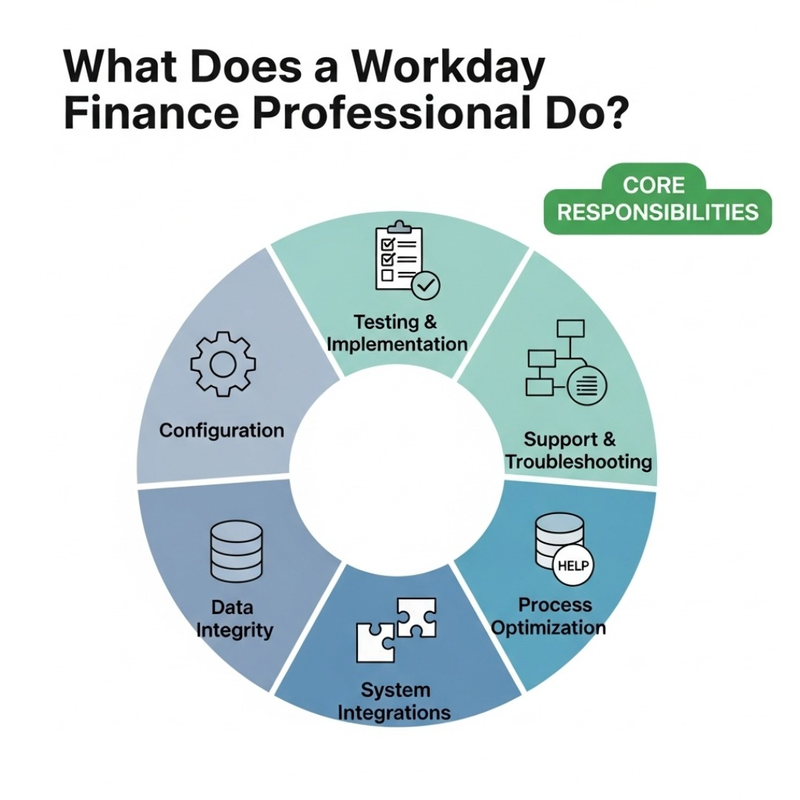
4.1. 🛠️ Core Responsibilities of Workday Finance Professionals
People who work in finance and have been trained in Workday are expected to:
- Set up and keep Workday Financials and Accounting systems running such that they fulfil the demands of the business.
- Test and carefully put into place financial elements.
- Help with the system on a continuous basis, including fixing problems and finding the main cause.
- Make ensuring that data is accurate, complete, and consistent, especially when it is integrated with other platforms.
- Work with teams from different departments to make sure that deployments and updates go well.
- Find ways to make processes better and suggest ways to make systems work better.
- This hybrid job needs someone who knows a lot about functional finance and how to use Workday's tools and frameworks.
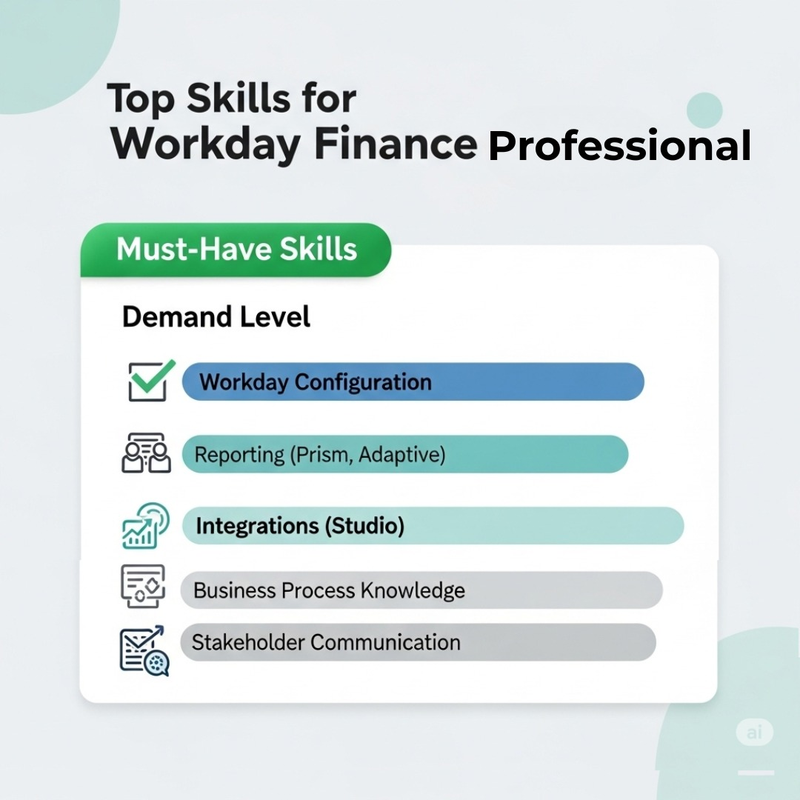
4.2. 🚀 Skills You Need to Succeed in Workday Finance
To achieve successfully in Workday Finance, professionals should build a broad set of skills that includes:
- Workday Financials Configuration: Learning how to build up business processes, tenants, and financial data structures.
- Understanding the Business Process Framework—How to use Workday's customisable process flows for finance operations.
- Tools for Financial Reporting: You should know how to use Workday Prism Analytics and Adaptive Planning to get strategic insights.
- Integration Skills: Knowing how to use Workday Studio and integration APIs to make sure data moves between platforms.
- Communication and Documentation: the ability to explain technical information to stakeholders and keep records of configurations.
4.3. 🎓 How to Learn Workday Finance Effectively
At Tech Pratham, we provide a full Workday Finance Training Program that can help you get ready for a job by filling in the gaps in your expertise.
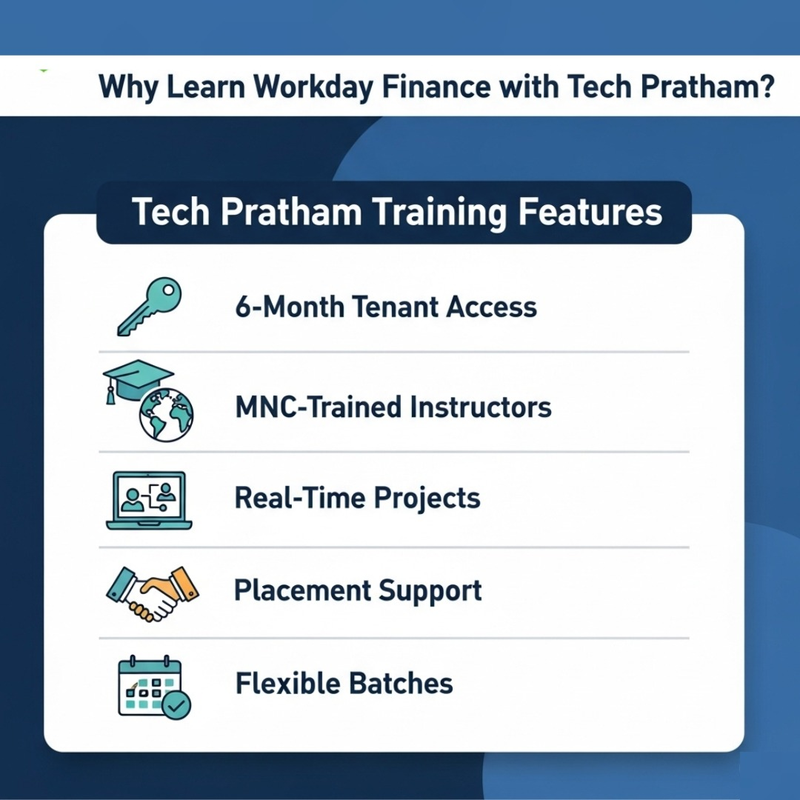
5. Why Choose Our Program?
- MNC-trained teachers with experience in the real world
- Practice in real life with 6-month tenant access
- Live Projects for real-world experience
- Resume and Interview Help to get you the job of your dreams
- Online and weekend classes that can be changed to fit the needs of working people
- Tech Pratham's training will provide you the skills and confidence you need to stand out, whether you're new to ERP or want to transition from another one.
6. Conclusion + Career Tip
As more firms use cloud ERP solutions, Workday Finance has become a game-changer for people who work in finance. It has a lot of features, real-time statistics, and a design that is easy to use, which makes it the best platform for businesses that want to be flexible and accurate.
Now is the moment for finance professionals to learn new skills to make sure their professions stay strong in the future. When you learn how to use Workday Finance, you put yourself at the crossroads of technology and finance, a place where there are endless opportunities for growth.
Jump in today. Find out about Workday. Be the leader tomorrow.