
SAP FICO vs SAP SD: Which One Should You Choose for a Successful SAP Career?

Choosing the right SAP module is one of the most important decisions for anyone planning to build a successful career in enterprise resource planning (ERP). Among the various SAP functional modules, SAP FICO and SAP SD are two of the most popular choices because of their high demand across industries, attractive salary packages, and excellent career growth opportunities.
Many students, graduates, and working professionals often ask, "Which SAP module is better- SAP FICO or SAP SD?" The answer depends on your educational background, career goals, and interests. While one module is designed for finance and accounting professionals, the other is ideal for candidates interested in sales, customer management, and business operations.
What is SAP FICO?
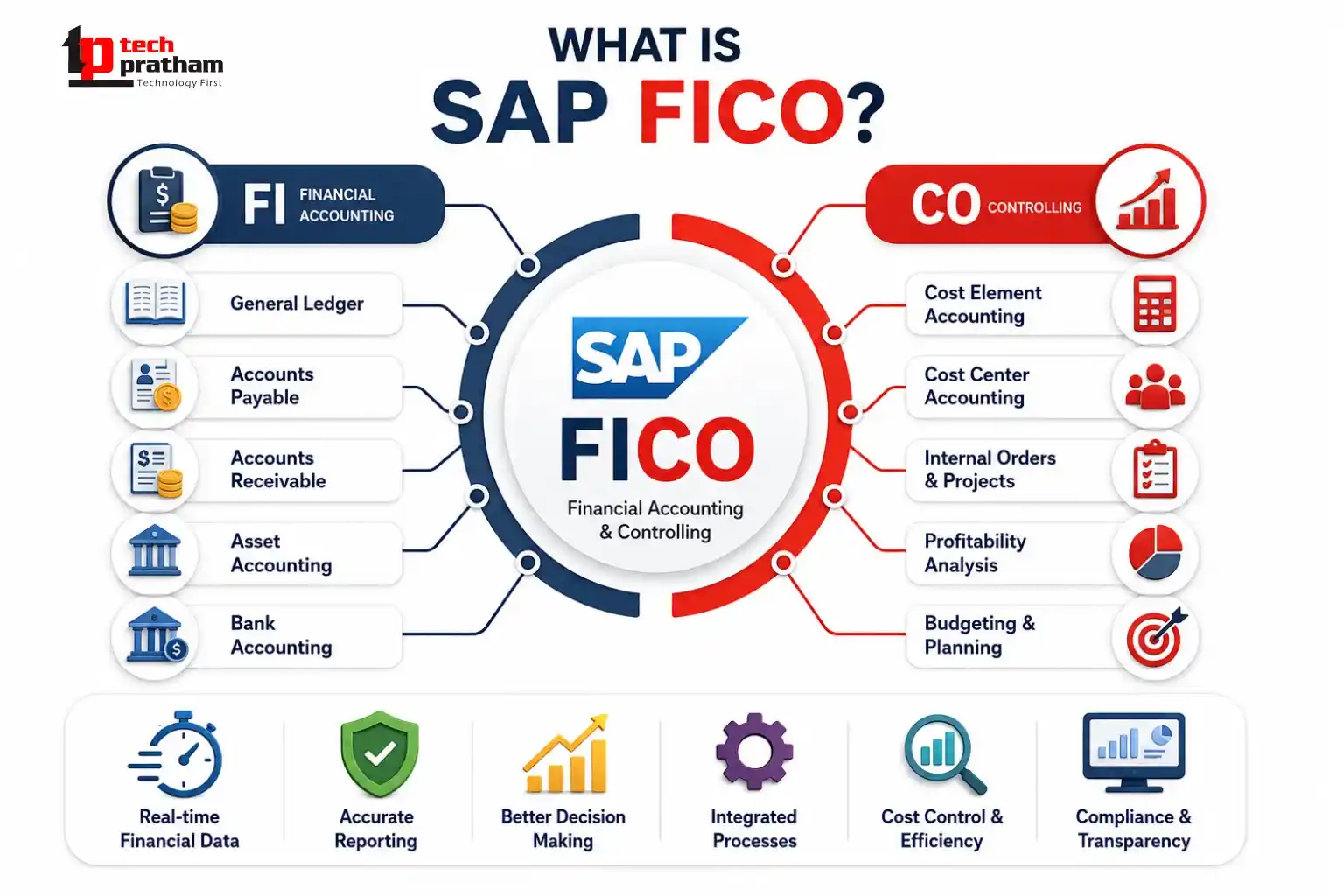
SAP FICO (Financial Accounting and Controlling) is one of the core functional modules of SAP ERP. It helps organizations manage financial transactions, accounting records, budgeting, cost control, and financial reporting. Almost every organization using SAP relies on SAP FICO to maintain accurate financial data and support business decision-making.
Whether it's recording daily financial transactions, preparing balance sheets, managing accounts payable and receivable, or analyzing business profitability, SAP FICO plays a vital role in ensuring financial transparency across an organization.
Main Components of SAP FICO
- Financial Accounting (FI)
- General Ledger (GL)
- Accounts Payable (AP)
- Accounts Receivable (AR)
- Asset Accounting
- Bank Accounting
- Cost Center Accounting
- Profit Center Accounting
- Internal Orders
- Profitability Analysis
Responsibilities of an SAP FICO Consultant
An SAP FICO Consultant works closely with finance teams to implement and manage financial processes within an organization. Their responsibilities include:
- Configuring SAP financial settings
- Managing General Ledger accounts
- Maintaining Accounts Payable and Receivable
- Preparing financial reports
- Budget planning and cost controlling
- Supporting audits and compliance
- Assisting during SAP implementation and migration projects
Because every organization requires efficient financial management, SAP FICO professionals are in demand across banking, healthcare, manufacturing, retail, IT services, and consulting companies.
What is SAP SD?
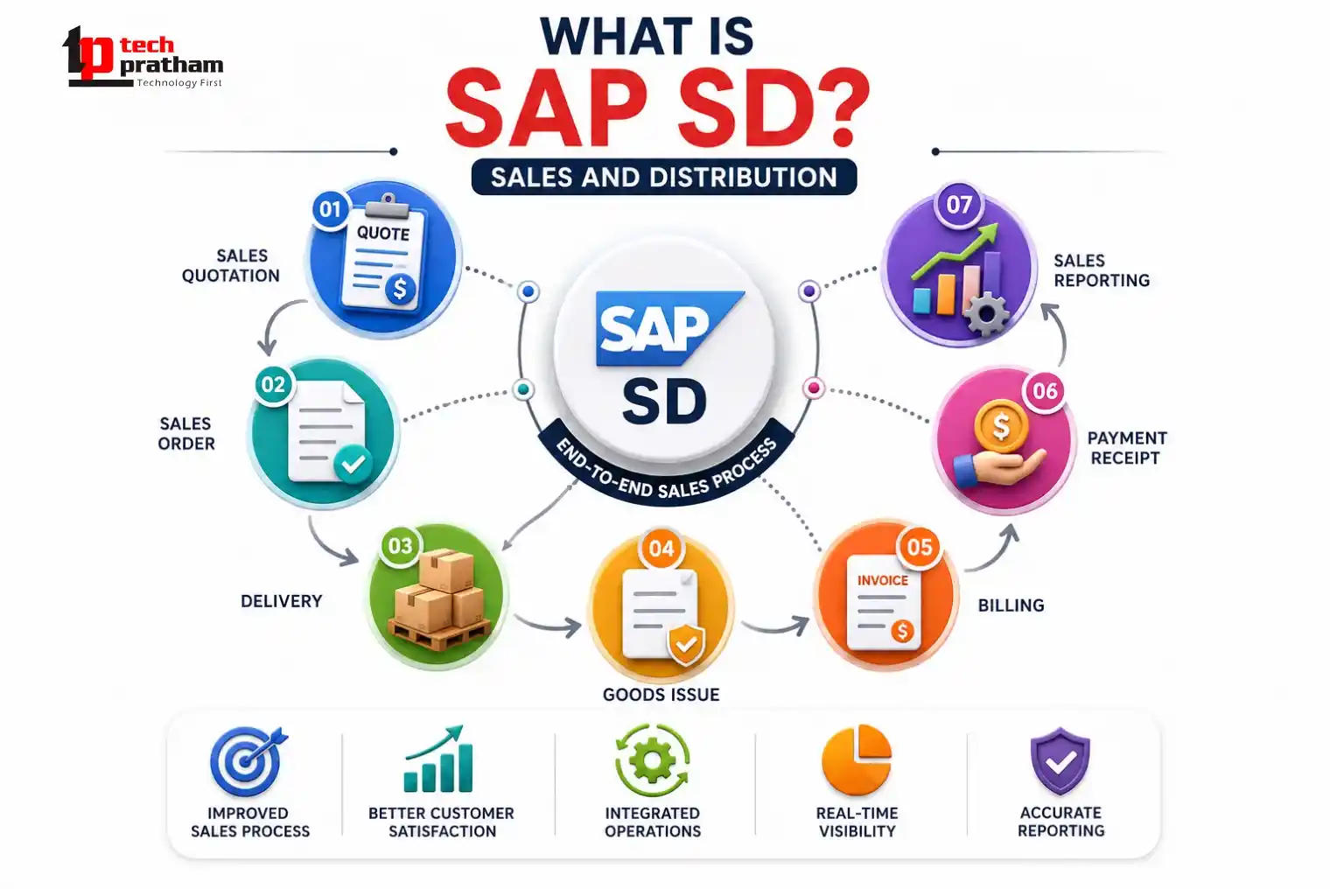
SAP SD (Sales and Distribution) is another core functional SAP module that manages sales operations, customer orders, pricing, shipping, billing, and delivery processes. It helps organizations automate the complete order-to-cash cycle while improving customer satisfaction and operational efficiency.
Businesses use SAP SD to handle customer master data, process sales orders, manage product pricing, generate invoices, and track deliveries. The module integrates with other SAP applications, ensuring smooth communication between sales, finance, warehouse, and logistics departments.
Main Components of SAP SD
- Customer Master Data
- Sales Order Processing
- Pricing
- Delivery Management
- Shipping
- Billing
- Credit Management
- Sales Information System
Responsibilities of an SAP SD Consultant
An SAP SD Consultant is responsible for implementing and managing sales and distribution processes within SAP. Typical responsibilities include:
- Configuring SAP SD
- Processing customer orders
- Managing pricing conditions
- Coordinating shipping and deliveries
- Creating invoices
- Supporting sales teams
- Troubleshooting business process issues
Professionals skilled in SAP SD find opportunities in industries such as retail, manufacturing, e-commerce, logistics, FMCG, automotive, and healthcare.
SAP FICO vs SAP SD: Quick Comparison
Before choosing between SAP FICO and SAP SD, it is important to understand their key differences. While SAP FICO focuses on financial accounting and controlling processes, SAP SD manages sales, customer orders, and distribution activities. The below comparison highlights the major differences between both modules to help you choose the right SAP career path based on your skills and goals.
Key Differences Between SAP FICO and SAP SD
Although SAP FICO and SAP SD are both important SAP functional modules, they focus on different areas of business operations. SAP FICO mainly deals with financial management and accounting processes, while SAP SD manages sales, customer orders, and distribution activities. Understanding these differences helps professionals choose the right SAP career path based on their skills and interests.
SAP FICO focuses on:
- Financial accounting
- Budget management
- Cost controlling
- Taxation
- Asset management
- Financial reporting
- Compliance
Organizations rely on SAP FICO to maintain financial accuracy, improve reporting, and support strategic business decisions.
SAP SD focuses on:
- Customer management
- Sales order processing
- Pricing
- Shipping
- Delivery
- Billing
- Credit management
The primary objective of SAP SD is to optimize sales operations and improve customer satisfaction by automating the entire sales process.
Who Should Choose SAP FICO?
If you have a strong interest in finance, accounting, taxation, or business reporting, SAP FICO is an excellent career choice. The module is designed for professionals who enjoy working with financial data and want to help organizations manage their accounting and controlling processes.
SAP FICO is suitable for:
- B.Com and M.Com graduates
- MBA (Finance) students
- CA, CMA, or CPA professionals
- Accountants and auditors
- Banking and finance professionals
- Freshers with basic accounting knowledge
Although having a commerce background is beneficial, it is not mandatory. With the right training and practical exposure, candidates from other educational backgrounds can also build a successful career in SAP FICO.
Who Should Choose SAP SD?
If you enjoy working with customers, sales operations, business processes, or supply chain management, SAP SD can be the right choice for you. This module focuses on managing customer orders, pricing, billing, and delivery processes, making it ideal for professionals who want to work on the business side of SAP.
SAP SD is suitable for:
- BBA and MBA graduates
- Sales and marketing professionals
- Business administration students
- Customer relationship executives
- Supply chain professionals
- Freshers interested in ERP and business operations
Candidates who have strong communication and analytical skills often perform well as SAP SD Consultants.
Career Opportunities After SAP FICO and SAP SD
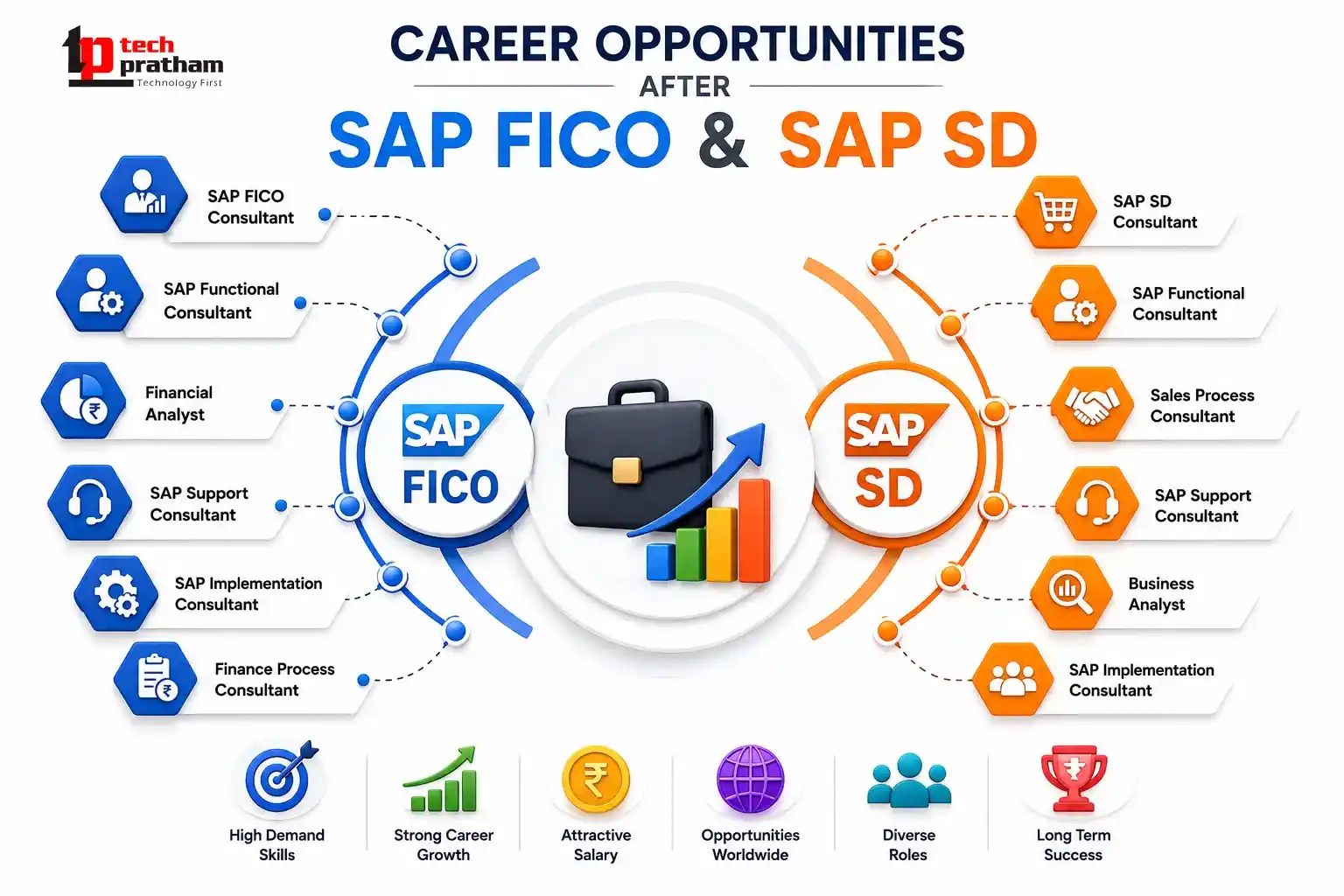
Both SAP FICO and SAP SD offer excellent career opportunities for professionals who want to build a career in SAP consulting. As organizations across industries continue to adopt SAP S/4HANA solutions, the demand for skilled SAP functional consultants is increasing. However, the career path differs for both modules. SAP FICO professionals mainly work in finance and accounting domains, while SAP SD professionals focus on sales, customer management, and business operations.
Career Opportunities in SAP FICO
After learning SAP FICO, you can apply for roles such as:
- SAP FICO Consultant
- SAP Functional Consultant
- Financial Analyst
- SAP Support Consultant
- SAP Implementation Consultant
- Finance Process Consultant
Industries hiring SAP FICO professionals include banking, insurance, manufacturing, healthcare, retail, IT services, pharmaceuticals, and consulting firms.
Career Opportunities in SAP SD
Professionals trained in SAP SD can pursue roles such as:
- SAP SD Consultant
- SAP Functional Consultant
- Sales Process Consultant
- SAP Support Consultant
- Business Analyst
- SAP Implementation Consultant
Demand for SAP SD professionals remains high in manufacturing, logistics, e-commerce, retail, FMCG, automobile, and distribution companies.
SAP FICO vs SAP SD: Salary Comparison
Salary is one of the important factors when choosing between SAP FICO and SAP SD as a career option. Both modules offer competitive salary packages, and the earning potential depends on factors such as experience, SAP certification, technical skills, project exposure, and industry demand.
With the right skills and practical knowledge, professionals in both SAP FICO and SAP SD can achieve strong career growth and attractive salary opportunities.
Professionals with hands-on experience in SAP S/4HANA implementation projects generally receive higher salary packages regardless of the module they choose.
SAP Certification: Why It Matters
Earning an SAP Certification is an important step toward building a successful career in the SAP ecosystem. It validates your technical knowledge, demonstrates your understanding of SAP business processes, and shows employers that you have the skills required to work with SAP solutions in real-world environments. While certification alone does not guarantee a job, it significantly enhances your credibility and improves your chances of getting shortlisted by recruiters.
Many organizations prefer certified SAP professionals because they have proven their expertise through standardized assessments. Whether you choose SAP FICO or SAP SD, certification can help you stand out in a competitive job market and open doors to opportunities in consulting firms, multinational companies, and global enterprises. To get the maximum value from your SAP certification, combine it with:
- Practical SAP S/4HANA experience
- Live projects
- Business process understanding
- Mock interviews
- Resume preparation
Remember, certification is most valuable when supported by practical experience. Completing live projects, understanding real business processes, and gaining hands-on exposure through quality training programs will make you more confident during interviews and better prepared for real-world SAP roles. Employers generally look for candidates who combine SAP certification, practical implementation skills, and business process knowledge to deliver value from day one.
Which Module Has Better Future Scope?
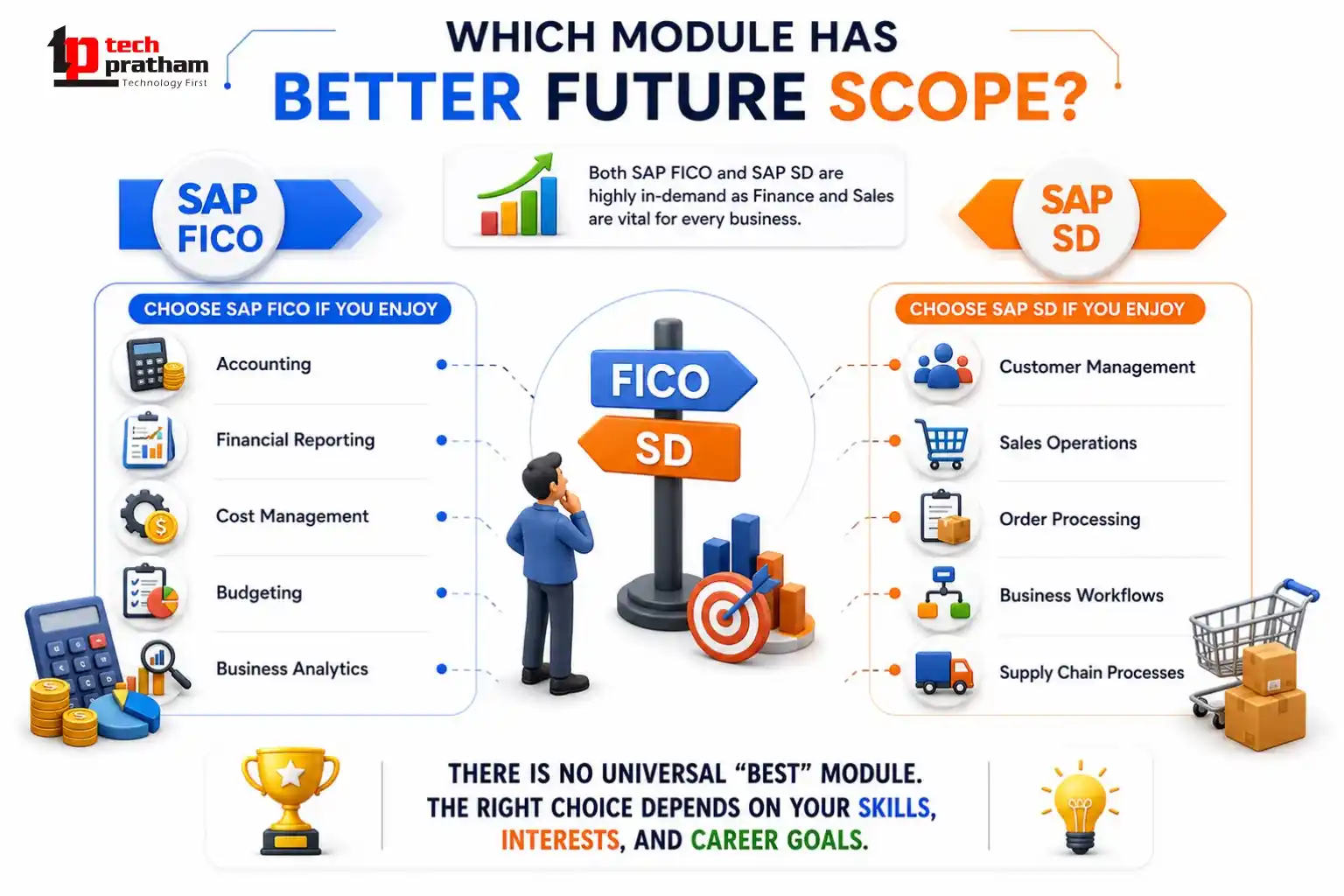
Both SAP FICO and SAP SD offer excellent future scope as businesses across industries continue to invest in SAP solutions and digital transformation. The right choice depends on your career interests, educational background, and the type of business processes you want to work with.
If you are passionate about finance and accounting, SAP FICO is the ideal choice. It focuses on financial reporting, budgeting, cost management, taxation, and business analytics, making it suitable for professionals who want to build a career in corporate finance and financial consulting.
Where Can You Learn SAP FICO or SAP SD?
Choosing the right training institute can significantly improve your learning experience and career opportunities. Look for an institute that offers hands-on SAP S/4HANA training, experienced mentors, live projects, certification guidance, and placement assistance.
Final Verdict
When comparing SAP FICO vs SAP SD, it's important to remember that both modules offer excellent career opportunities and long-term growth. SAP FICO is ideal for individuals interested in finance, accounting, and controlling, while SAP SD is better suited for those who enjoy sales, customer relationship management, and business operations.
Instead of choosing a module based solely on salary or popularity, consider your educational background, strengths, and the type of work you enjoy. Building practical skills through quality training, gaining exposure to SAP S/4HANA, and working on real-world projects will have a greater impact on your career than simply selecting one module over another.
Frequently Asked Questions (FAQs)
1. Which is better: SAP FICO or SAP SD?
2. Can freshers join SAP FICO or SAP SD training?
3. Which SAP module has better career opportunities?
4. How do I choose between SAP FICO and SAP SD?
Related Articles

How to Switch from SAP FICO to SAP S/4HANA Finance
Learn how to move from SAP FICO to S/4HANA Finance with practical skills, certification guidance, AI insights, and career tips

How to Start a SAP FICO Career With a Finance Background
Build a successful SAP FICO career with a finance background. Learn the skills, practical steps, career opportunities, and path to move from finance t

Why Are SAP Skills in High Demand in Hyderabad?
Discover why SAP skills are in high demand in Hyderabad, the top SAP modules, career opportunities, and the value of SAP training for professionals.




 +91-8882178896
 +1 (343) 477-0926