SAP S/4HANA is an enterprise resource planning (ERP) system that helps businesses manage finance, procurement, sales, inventory, manufacturing, and other core operations. As organizations modernize their business processes, professionals with practical SAP knowledge can explore opportunities in implementation, consulting, application support, and business process management.
Choosing the right SAP S/4HANA Training program involves more than learning software features. It is important to understand the course curriculum, practical exercises, trainer experience, learning format, and certification preparation support. Whether you are a beginner, an experienced SAP professional, or someone planning a career transition, the right learning path can help you develop relevant skills.
This guide explains how to choose an online course, evaluate training institutes, prepare for certification, and identify the learning approach that suits your career goals.
What Is SAP S/4HANA and Why Does It Matter?
SAP S/4HANA is an ERP platform designed to help organizations manage business operations using integrated processes and real-time data. It supports different business functions, allowing departments to work with connected information instead of relying on disconnected systems.
For example, when a company processes a customer order, the transaction may involve sales, inventory, delivery, billing, and financial accounting. SAP S/4HANA connects these activities to support consistent data and more efficient workflows.
Learning this platform can be useful for graduates entering enterprise technology, professionals working with SAP systems, and employees who want to move into consulting or implementation roles.
What Does SAP S/4HANA Training Cover?
A structured SAP S/4HANA Course should explain both the platform's fundamentals and the business processes associated with a learner's chosen specialization.
The exact curriculum depends on whether the program focuses on functional consulting, technical development, administration, or a particular business module.
1. SAP S/4HANA Fundamentals
Beginners should understand ERP concepts, SAP architecture, business process integration, and navigation. This foundation makes it easier to understand how transactions move across departments.
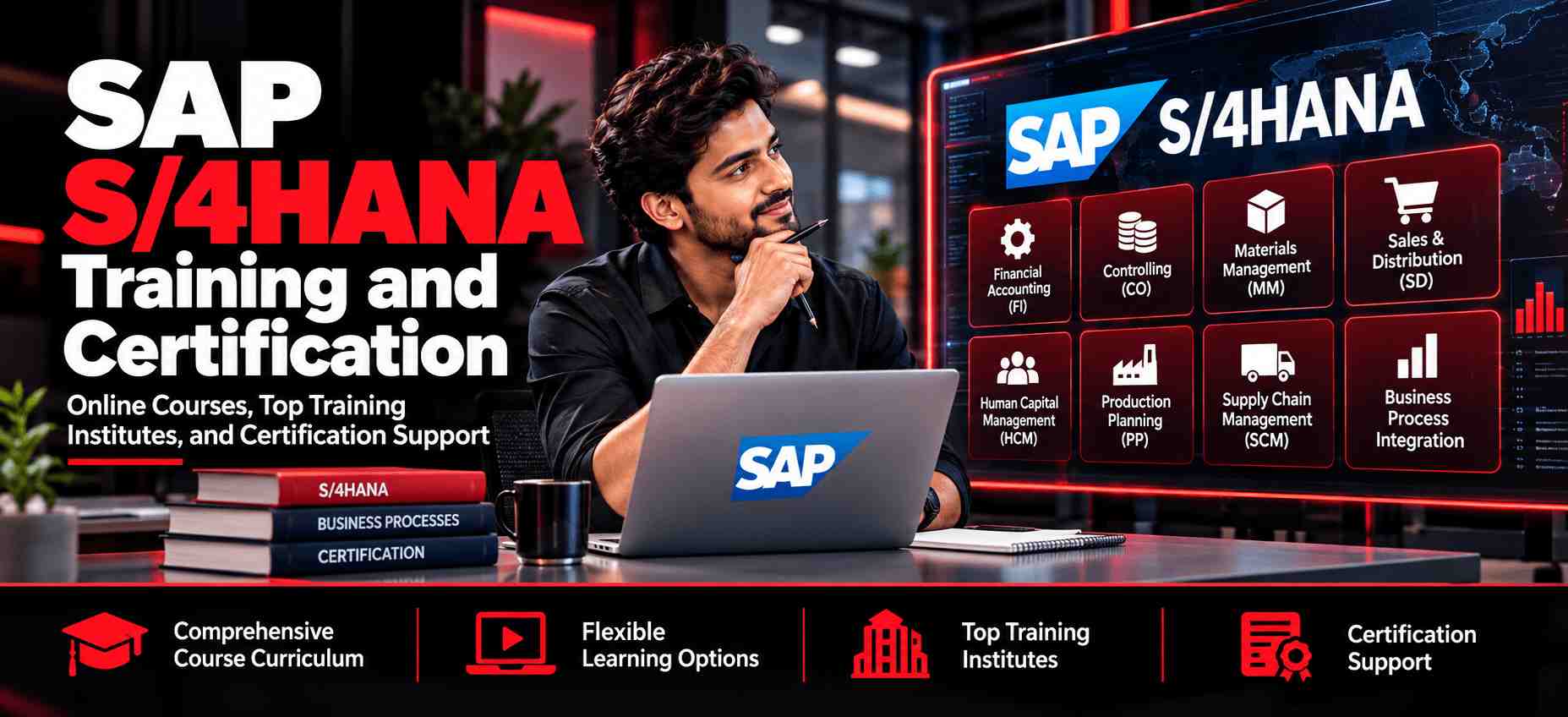
2. Functional Modules
Functional training focuses on business requirements and their implementation in SAP. Common learning areas include:
SAP S/4HANA FICO: Financial accounting and controlling.
SAP S/4HANA MM: Materials management and procurement.
SAP S/4HANA SD: Sales, distribution, and order processing.
SAP S/4HANA PP: Production planning and manufacturing processes.
SAP S/4HANA QM: Quality management and inspection processes.
Learners should select modules according to their existing experience, interests, and target job roles rather than trying to study every module at once.
3. Technical Learning
Technical programs may cover development, extensions, integrations, data models, and application customization. Depending on the curriculum, learners may explore ABAP development, SAP Fiori, or SAP Business Technology Platform concepts.
4. Practical Business Scenarios
Hands-on exercises help learners understand how SAP processes work in real business situations. A useful course should include transaction practice, configuration exercises where relevant, troubleshooting, and scenario-based assignments.
How to Choose SAP S/4HANA Online Training
SAP S/4HANA Online Training allows learners to study without relocating to a training centre. It can be particularly useful for working professionals who need flexible schedules or learners who cannot attend classroom sessions.
Before enrolling, evaluate the following factors.
Live Classes and Learning Flexibility
Check whether the program offers live instructor-led sessions, recorded lessons, weekend batches, or a combination of these formats. Working professionals may prefer flexible schedules, while beginners may benefit from regular instructor interaction.
Trainer Experience
Review the trainer's experience with SAP projects, implementation activities, business processes, and troubleshooting. Practical industry knowledge can make complex topics easier to understand.
Practice Environment
Ask whether access to an SAP practice system is included. Confirm what learners can practise, how long access remains available, and whether the environment supports the module being taught.
Curriculum and Learning Outcomes
The course should clearly explain what learners will be able to do after completing the program. Look for module-specific exercises, business scenarios, assessments, and opportunities to clarify doubts.
Career Guidance
Some programs offer interview preparation, resume guidance, or career support. Confirm exactly what is included and whether any placement-related claims are supported by clear terms. Training alone does not guarantee employment.
How to Evaluate the Top SAP S/4HANA Training Institutes
When comparing options for SAP Training in India, avoid relying only on advertisements, rankings, or placement claims. Instead, evaluate the curriculum, trainer expertise, practical learning opportunities, and certification support to determine whether a program matches your career goals.
Consider these criteria before making a decision:
Curriculum: Does it match your preferred SAP module and career goals?
Trainer expertise: Can the trainer explain practical business scenarios?
Practice access: Is a suitable SAP environment available for exercises?
Batch format: Are timings compatible with your work or study schedule?
Student feedback: Are reviews detailed, relevant, and consistent?
Certification guidance: Does the program explain the exam pathway and preparation requirements?
Fees and policies: Are the total fees, access period, refund conditions, and additional charges clearly stated?
Post-training support: Can you ask questions or revisit learning resources after classes finish?
Compare at least two or three providers using the same criteria. Attend a demo class if possible and ask for a detailed syllabus before paying the course fee.
If you are exploring training options, TechPratham is one provider you can consider while comparing SAP learning programs. Review its available SAP course curriculum, training format, practical learning opportunities, and certification guidance to see whether they align with your learning needs and career objectives.
Online Training vs Classroom Training
Both formats can work well. The better option depends on your schedule, learning preferences, and access to practical systems.
Often suitable for remote learning
Depends on fixed class timings
Can be accessed from different cities
Requires travel to the centre
Live sessions, chat, and virtual discussions
Direct face-to-face interaction
Depends on system access and course design
Depends on lab facilities
Remote learners and working professionals
Learners who prefer an in-person environment
A well-designed online program can provide effective learning, but students should verify the quality of instructor interaction and practical exercises before enrolling.
SAP S/4HANA Certification: What Should You Know?
SAP S/4HANA Certification Training is intended to help learners build knowledge aligned with a relevant SAP certification. The appropriate certification depends on the learner's specialization, experience, and the SAP product or role they want to pursue.
SAP certification offerings and examination requirements can change. Therefore, candidates should verify the current certification name, exam format, eligibility or prerequisites, and available preparation resources through official SAP learning and certification channels.
How Certification Preparation Works
A structured preparation plan generally includes the following steps:
Choose the relevant certification: Identify the SAP role, product, or functional area that matches your goals.
Review the official syllabus: Understand the knowledge areas and competencies assessed.
Study the core concepts: Cover the relevant business processes, configuration concepts, or technical topics.
Practise real scenarios: Use exercises to strengthen your understanding of how the platform works.
Assess your readiness: Review weak areas through practice questions, mock assessments where appropriate, and revision.
Verify exam requirements: Check current registration instructions, fees, delivery options, and certification policies through SAP's official resources.
Certification preparation should build on practical understanding rather than relying only on memorizing questions.
What Is Included in SAP S/4HANA Certification Support?
SAP S/4HANA Certification Support may include guidance on selecting an appropriate exam, understanding the syllabus, organizing study sessions, reviewing important topics, and identifying knowledge gaps.
However, support differs between training providers. Before joining a course, ask whether the following services are included:
- Guidance on the relevant certification pathway.
- A syllabus aligned with current official requirements.
- Topic-wise revision sessions.
- Practice assessments and explanations.
- Help identifying weak areas.
- Guidance on the official exam registration process.
Also, clarify whether the certification examination fee is included in the course price or charged separately. Completing a training course and earning an official SAP certification are different achievements; candidates must satisfy the applicable examination requirements to receive the credential.
Who Should Consider SAP S/4HANA Training?
The platform can be relevant to several professional groups, although the most suitable learning path will differ for each.
Fresh Graduates
Graduates interested in enterprise software can begin with ERP fundamentals and explore functional or technical specializations. Building a clear understanding of business processes and practising relevant scenarios can help prepare them for entry-level opportunities.
Working Professionals
Employees in finance, procurement, supply chain, manufacturing, sales operations, or IT may use SAP training to expand their existing skills. Selecting a module related to their current work can make learning more relevant.
Existing SAP Professionals
Professionals working with earlier SAP environments may consider learning SAP S/4HANA to understand newer processes, capabilities, and implementation approaches relevant to their responsibilities.
Career Switchers
People moving from another industry or technology role should first understand the business processes associated with their chosen specialization. They should also assess the time needed for practical learning before targeting consulting or implementation roles.
Career Opportunities After SAP S/4HANA Training
Completing SAP S/4HANA Training in India can help learners build skills relevant to several ERP-related roles. Actual opportunities depend on prior experience, specialization, practical ability, employer requirements, and market conditions.
Potential roles include:
- SAP S/4HANA Functional Consultant
- SAP FICO Consultant
- SAP MM Consultant
- SAP SD Consultant
- SAP PP Consultant
- SAP ABAP Developer
- SAP Application Support Consultant
- SAP Implementation Consultant
Functional consultants often work with business requirements, process configuration, testing, and implementation activities. Technical professionals may focus on development, extensions, integrations, and troubleshooting. Support roles can involve incident resolution, system monitoring, and process improvement.
For beginners, building practical skills and understanding business workflows is important. Experienced professionals may benefit from connecting their existing domain knowledge with a relevant SAP specialization.
How to Get Started With SAP S/4HANA Training in India
If you are comparing SAP S/4HANA Training in India, begin by identifying your career objective and the time you can dedicate to learning.
Follow this simple approach:
- Decide whether you want to pursue a functional or technical role.
- Select a module that aligns with your interests or professional background.
- Compare course syllabuses, trainers, practice facilities, and class formats.
- Confirm the total fee and the services included.
- Check the relevant official certification pathway, if certification is your goal.
- Create a learning schedule that includes theory, practical exercises, revision, and interview preparation.
TechPratham is one option to explore when comparing SAP training programs. Before enrolling, review the available course details, syllabus, delivery format, practical learning opportunities, and certification guidance to determine whether the program meets your requirements.
For learners who need a structured starting point, the most useful program is one that connects SAP concepts with practical business scenarios and provides clear learning outcomes.
Frequently Asked Questions
1. Which SAP S/4HANA course is best for beginners?
The best course depends on your educational background and career goals. Beginners interested in finance may consider FICO, while those interested in procurement or supply chain may explore MM. Learners interested in sales processes can consider SD. Start with ERP fundamentals and select a module that matches your interests rather than choosing a course solely because it is popular.
2. Can I learn SAP S/4HANA through online training?
Yes. SAP S/4HANA Online Training can include live classes, recorded lessons, instructor discussions, and practical exercises. Before joining, confirm the availability of an SAP practice environment, the trainer's experience, the class schedule, and the level of post-training support. Your progress will also depend on consistent practice and the time you dedicate to learning.
3. Does SAP S/4HANA training include certification?
Not necessarily. Some training programs include certification preparation, while others focus on software knowledge and practical skills. The official certification examination may require a separate registration and fee. Always confirm what the course includes and verify the applicable exam requirements through SAP's official certification resources before enrolling.
4. How do I choose the right SAP S/4HANA training institute?
Compare the curriculum, trainer experience, practice system access, class timings, student feedback, and support services. Ask for a demo session and check whether the syllabus matches your preferred module. Review the fee structure and certification-related terms carefully. A suitable institute should explain its learning outcomes clearly rather than relying only on placement promises or promotional rankings.
Conclusion
Selecting the right SAP learning program requires a clear understanding of your career goals, preferred specialization, available study time, and practical learning needs. A strong course should combine structured lessons with relevant business scenarios, opportunities to practise, and transparent guidance on certification requirements.
Whether you choose classroom learning or SAP
SAP S/4HANA Online Training, evaluate the curriculum, instructor experience, practice facilities, and support services before making a decision. With consistent learning and practical application, you can develop a stronger foundation for exploring SAP-related career opportunities.








 +91-8882178896
 +1 (343) 477-0926