
Best Software Testing Certification for Freshers in India
_11zon.webp)
The software industry is growing rapidly, and with every new application, website, or digital product, the demand for quality assurance professionals continues to increase. Organizations today cannot afford software failures, security issues, or poor user experiences. This is why software testing has become one of the most important domains in the IT industry. For freshers looking to start a rewarding career in technology, software testing offers excellent opportunities without requiring extensive programming expertise. However, with increasing competition, having the right certification can significantly improve your chances of getting hired.
Why Software Testing is a Great Career Option for Freshers
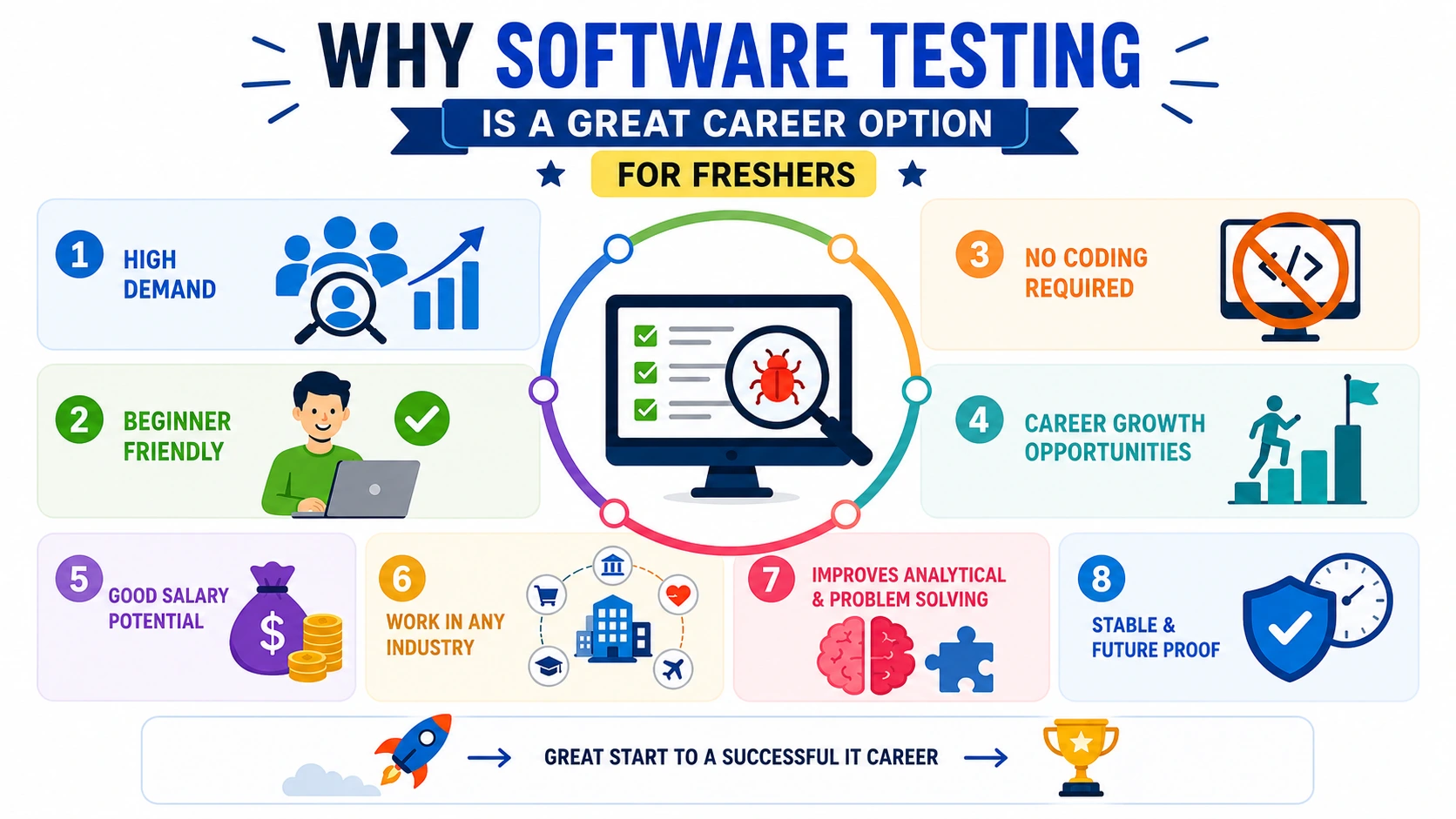
Software testing is the process of evaluating software applications to identify defects, ensure functionality, and verify that the product meets business requirements. Every software product goes through rigorous testing before being released to users. Some reasons why freshers choose software testing as a career include:
- High demand across industries
- Lower entry barriers compared to software development
- Excellent career growth opportunities
- Availability of both manual and automation testing roles
- Opportunities to work with the latest technologies
- Attractive salary packages for skilled professionals
As businesses continue to digitize their operations, the demand for skilled software testers is expected to grow even further.
Why Certification Matters for Freshers
1. Improved Employability
Recruiters often prefer candidates who possess recognized certifications because they indicate a foundational understanding of testing concepts and methodologies.
2. Industry Recognition
Certifications are accepted globally and help employers evaluate your skills objectively.
3. Better Salary Opportunities
Certified professionals often receive higher salary offers compared to non-certified candidates with similar experience levels.
4. Structured Learning
Certification programs provide a systematic understanding of software testing principles, tools, and best practices.
5. Confidence During Interviews
Candidates with certification training generally perform better in technical interviews because they possess both theoretical and practical knowledge.
Best Software Testing Certifications for Freshers in India
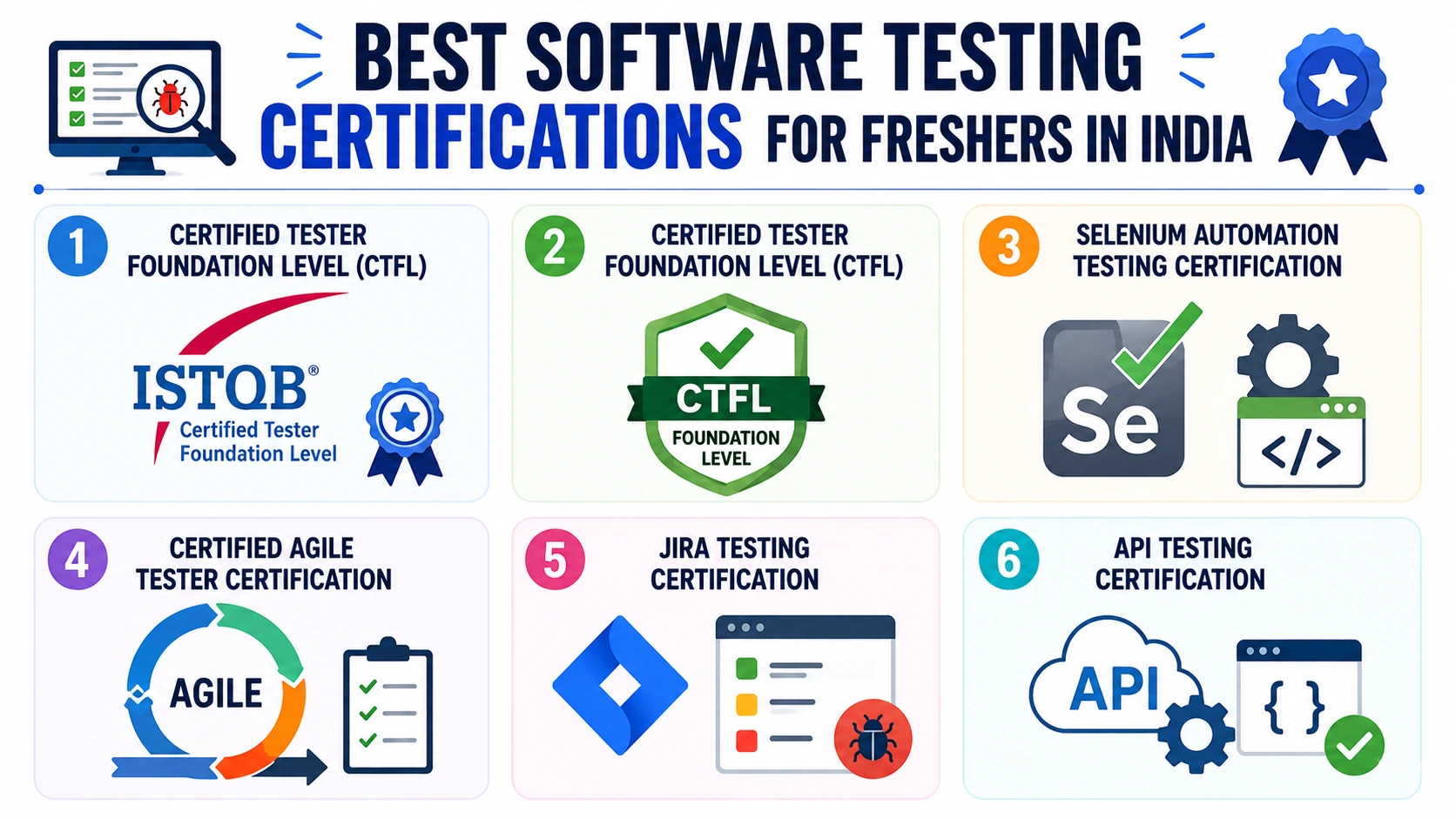
Let's explore the most valuable software testing certifications that freshers can pursue.
1. Certified Tester Foundation Level (CTFL)
The International Software Testing Qualifications Board (ISTQB) is one of the most recognized software testing certification organizations in the world. The ISTQB Foundation Level certification is considered the gold standard for beginners entering the software testing field.
Key Topics Covered
- Software testing fundamentals
- Testing throughout the software development lifecycle
- Static testing techniques
- Test design techniques
- Test management
- Testing tools and automation basics
Benefits:
- Globally recognized certification
- Suitable for complete beginners
- Preferred by multinational companies
- Strong foundation for advanced testing certifications
2. Certified Tester Foundation Level (CTFL)
The CTFL certification is the foundation-level certification offered under the ISTQB framework.
Why Choose CTFL?
- Industry-standard certification
- Covers essential testing concepts
- Recognized by employers worldwide
- Builds credibility for fresher candidates
Many organizations specifically mention CTFL certification as a preferred qualification for software testing positions.
3. Selenium Automation Testing Certification
Automation testing skills are highly valued in today's IT industry. Selenium is the most widely used open-source automation testing tool, making Selenium certification an excellent choice for freshers who want to move beyond manual testing.
Skills Covered:
- Selenium WebDriver
- Test automation frameworks
- TestNG
- Maven
- Automation scripting
- Browser automation
4. Certified Agile Tester Certification
Most modern software companies use Agile methodologies for software development. Understanding Agile testing practices is becoming increasingly important for testing professionals.
Topics Covered:
- Agile principles
- Scrum framework
- User stories
- Sprint testing
- Continuous testing
- Agile quality assurance
Advantages
- Relevant to modern software development environments
- Preferred by Agile organizations
- Improves collaboration skills
5. JIRA Testing Certification
JIRA is one of the most commonly used project management and bug-tracking tools in software companies.
Skills Covered
- Bug reporting
- Issue tracking
- Agile project management
- Sprint planning
- Test case management
6. API Testing Certification
Modern applications rely heavily on APIs for communication between systems. API testing is becoming one of the most sought-after skills in software testing.
Topics Included
- REST APIs
- SOAP APIs
- Postman
- API validation
- Response verification
- Automation concepts
Manual Testing vs Automation Testing Certification
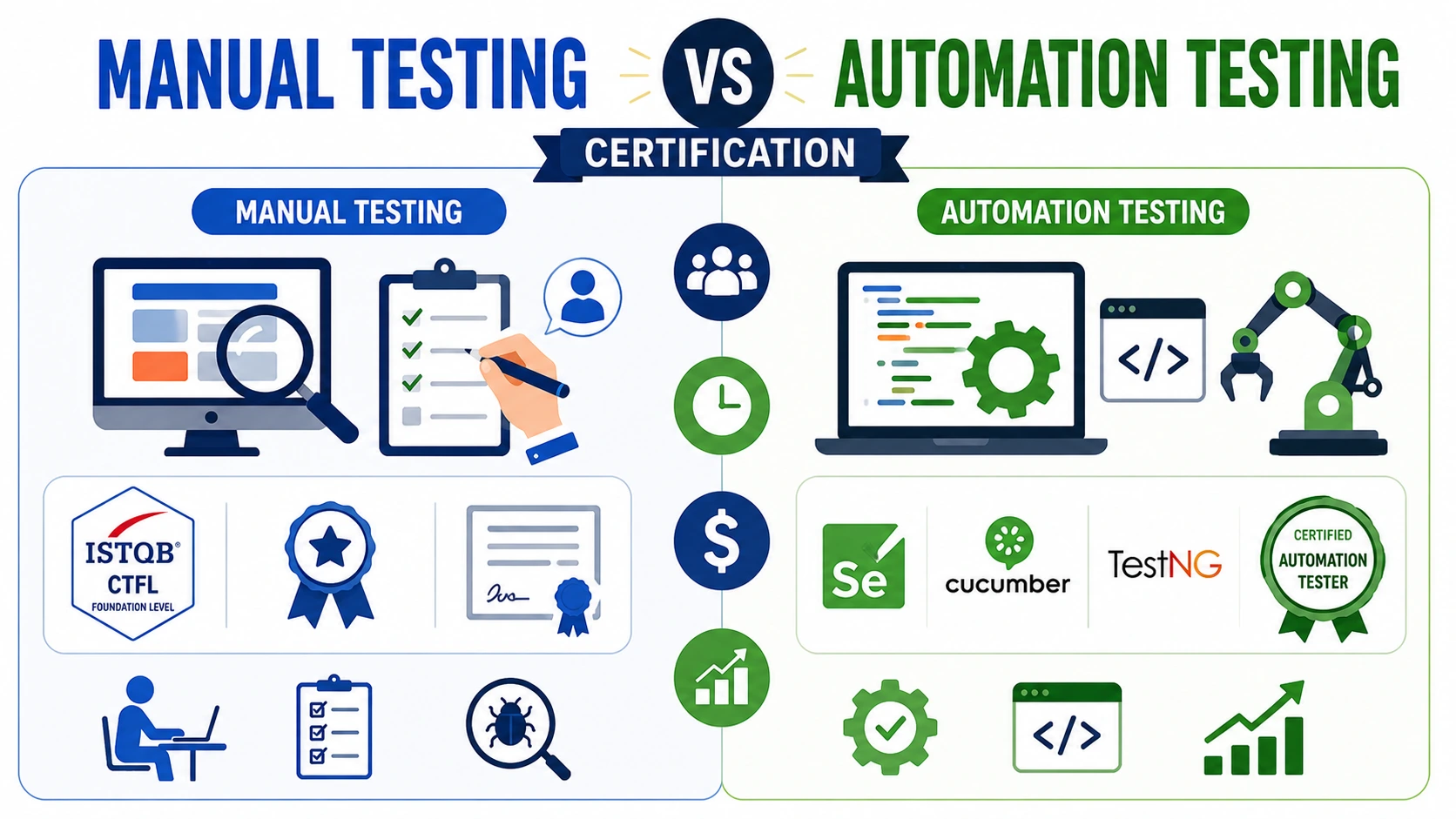
Many freshers entering the software testing field often face a common question: Should I start with Manual Testing Certification or Automation Testing Certification? The answer depends on your current skills, career goals, and technical background. Understanding the strengths of both paths can help you make the right decision.
Manual Testing Certification
Manual testing is usually the first step for beginners because it focuses on understanding the software testing process, identifying defects, and ensuring application quality without requiring programming knowledge.
- Easier for beginners
- Strong foundation building
- Less technical complexity
- Suitable for non-programming backgrounds
Automation Testing Certification
Automation testing involves using tools and scripts to automate repetitive testing tasks. It is highly valued in modern software development environments where speed and efficiency are critical.
- Higher salary potential
- Greater demand in the market
- Faster career progression
- Exposure to advanced technologies
Recommended Approach
Rather than choosing one over the other, freshers should view manual testing and automation testing as complementary skills. Starting with manual testing and gradually transitioning into automation testing creates a strong career foundation, improves employability, and opens the door to better job opportunities and long-term professional growth in the software testing industry.
Skills Freshers Should Learn Along with Certification
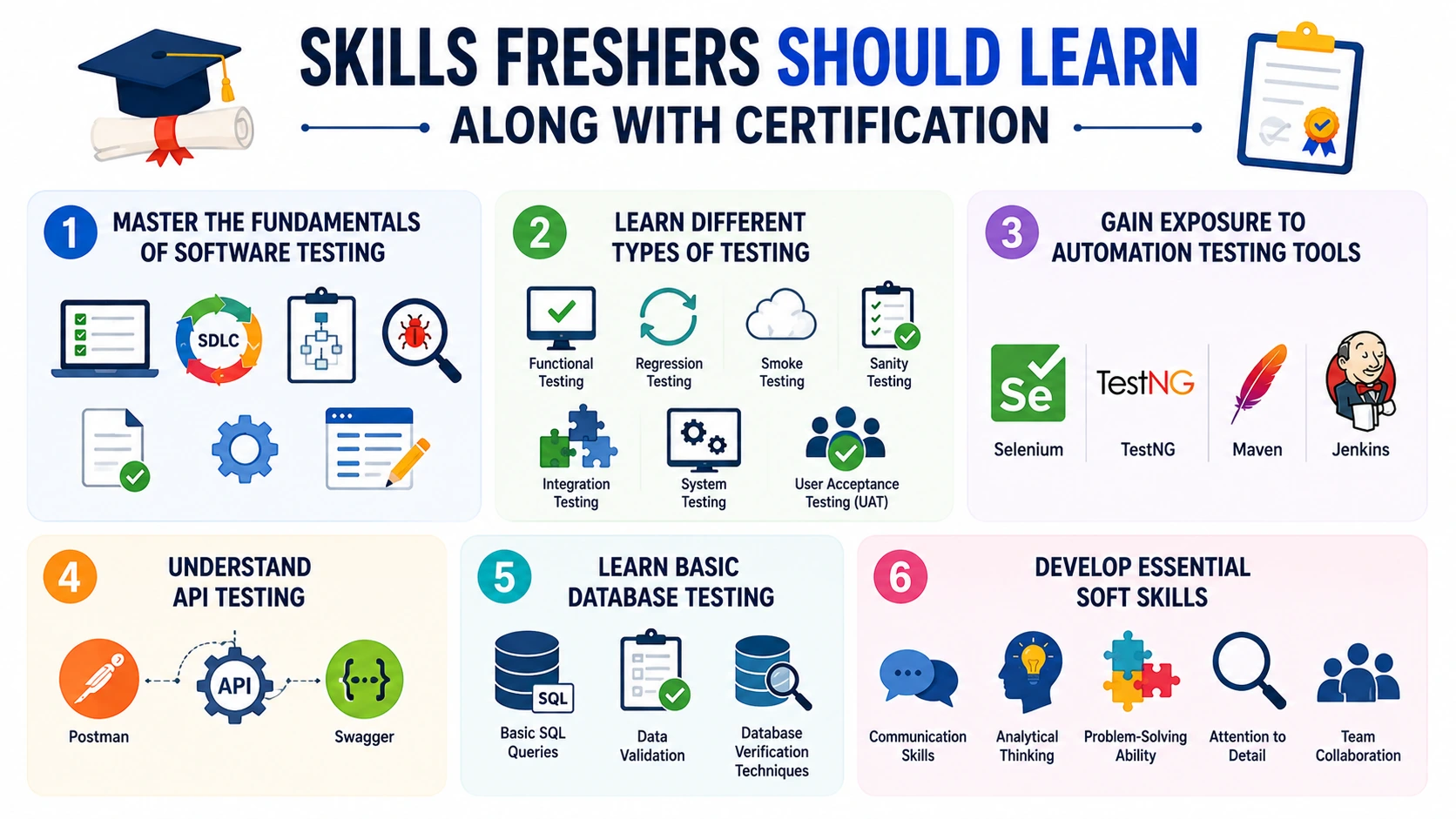
Many freshers believe that earning a software testing certification is enough to secure a job. While certification helps validate your knowledge, employers today look for candidates who can apply that knowledge in real-world projects. Think of certification as your entry ticket and skills as the factors that help you win the race.
1. Master the Fundamentals of Software Testing
Before learning advanced tools, every tester should have a strong understanding of testing concepts. These fundamentals form the backbone of a successful QA career. Key areas to learn include:
- Software Testing Principles
- Software Development Life Cycle (SDLC)
- Software Testing Life Cycle (STLC)
- Defect Management and Bug Reporting
- Test Planning and Test Execution
- Test Case Design Techniques
2. Learn Different Types of Testing
In real projects, testers perform multiple testing activities to ensure software quality. Understanding these testing types can make you more effective and job-ready. Important testing types include:
- Functional Testing
- Regression Testing
- Smoke Testing
- Sanity Testing
- Integration Testing
- System Testing
- User Acceptance Testing (UAT)
3. Gain Exposure to Automation Testing Tools
Automation testing is becoming increasingly important as organizations aim to deliver software faster. Freshers should begin learning popular automation tools such as:
- Selenium
- TestNG
- Maven
- Jenkins
4. Understand API Testing
Modern applications rely heavily on APIs to exchange data between systems. As a result, API testing has become a valuable skill for QA professionals. Popular tools include:
- Postman
- Swagger
Learning API testing helps testers validate backend functionality and identify issues that may not be visible through the user interface.
5. Learn Basic Database Testing
Many software applications store information in databases. Testers often need to verify whether data is being stored and retrieved correctly. Important database skills include:
- Basic SQL Queries
- Data Validation
- Database Verification Techniques
6. Develop Essential Soft Skills
Technical knowledge alone is not enough. Successful testers also possess strong professional skills that help them work effectively with developers, managers, and clients. Key soft skills include:
- Communication Skills
- Analytical Thinking
- Problem-Solving Ability
- Attention to Detail
- Team Collaboration
Career Opportunities After Certification
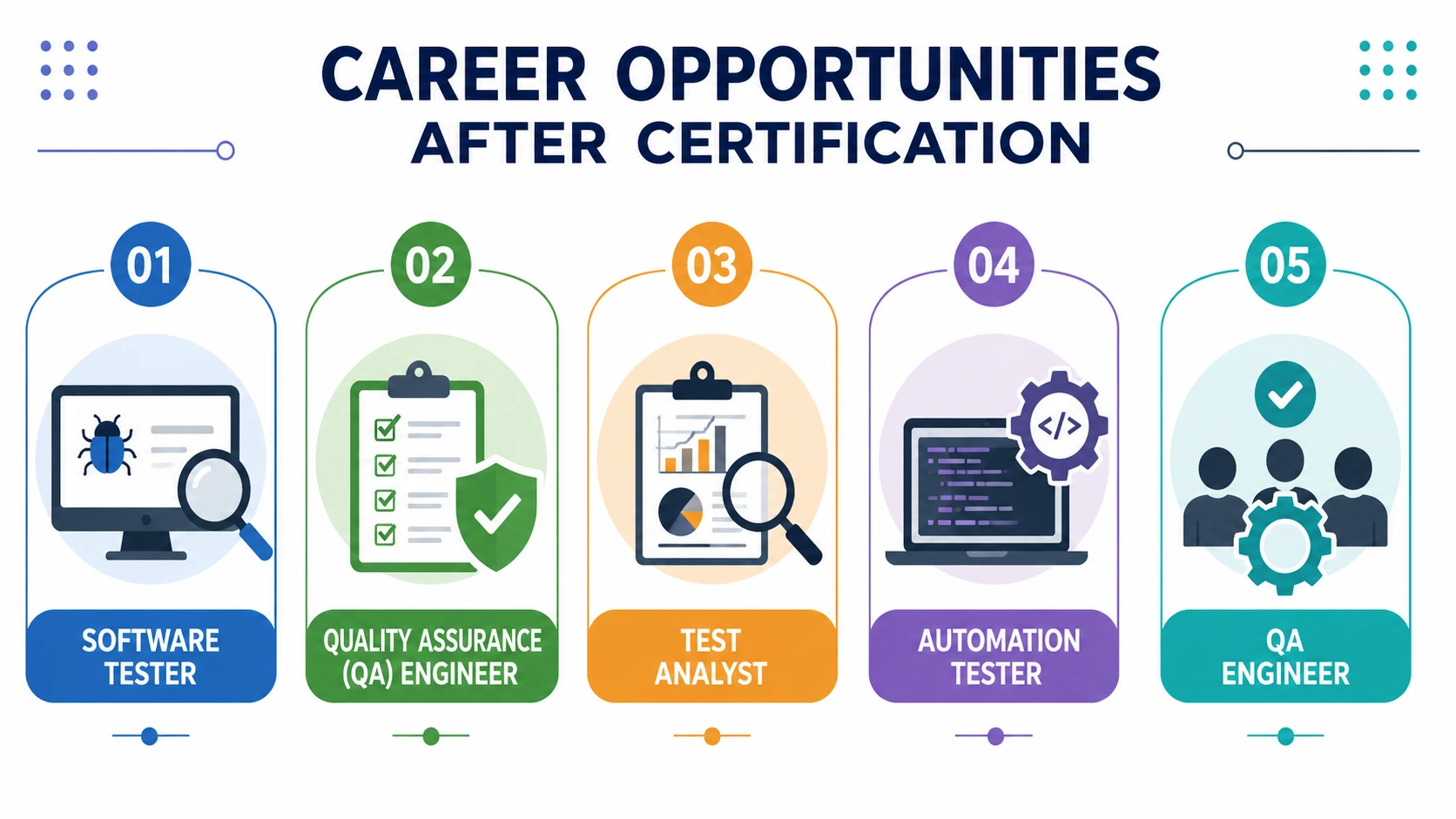
One of the biggest advantages of earning a software testing certification is the wide range of career opportunities it can unlock. As businesses increasingly prioritize software quality and user experience, the demand for skilled testing professionals continues to grow across industries such as IT, healthcare, banking, e-commerce, education, and telecommunications.
1. Software Tester
A Software Tester is responsible for evaluating applications, executing test cases, identifying defects, and ensuring that software functions as expected before it reaches end users. This role is often the starting point for many successful careers in quality assurance.
2. Quality Assurance (QA) Engineer
QA Engineers focus on maintaining software quality throughout the entire development lifecycle. They work closely with developers, business analysts, and project managers to ensure products meet quality standards.
3. Test Analyst
A Test Analyst plays a critical role in understanding business requirements and designing effective testing strategies. This position requires strong analytical and communication skills. Test Analysts help ensure that testing activities align with business objectives and user expectations.
4. Automation Tester
As organizations adopt Agile and DevOps practices, Automation Testers are becoming increasingly valuable. These professionals use automation tools to improve testing efficiency and reduce repetitive manual work.
5. QA Engineer
QA Engineers work closely with development teams to ensure software quality at every stage of the product lifecycle. They focus on defect prevention, quality improvement, and continuous testing practices.
Career Growth Potential
A software testing certification can serve as the first step toward a rewarding and stable career in the IT industry. Whether you begin as a Software Tester, QA Engineer, Test Analyst, or Automation Tester, the field offers diverse opportunities, strong career progression, and the chance to work on innovative technology projects. By continuously upgrading your skills and gaining practical experience, you can build a successful long-term career in software quality assurance.
Salary of Certified Software Testers in India
Salary depends on factors such as skills, certification, location, and company size. Professionals with automation testing and API testing expertise often command higher salaries.
How to Choose the Best Software Testing Certification
With numerous software testing certifications available today, selecting the right one can feel overwhelming, especially for beginners. The best certification for you depends on your career goals, current skill level, and the type of testing role you want to pursue. Rather than choosing a certification based solely on popularity, focus on programs that provide industry-recognized credentials, practical training, and relevant skills that employers actively seek.
1. Define Your Career Goals
Before enrolling in any certification program, determine what you want to achieve. Ask yourself:
- Are you a beginner looking to enter the software testing field?
- Do you want to specialize in manual testing or automation testing?
- Are you aiming for a QA Engineer, Test Analyst, or Automation Tester role?
- Do you plan to work in Agile or DevOps environments?
2. Check Industry Recognition
A certification should be recognized by employers and valued within the software testing industry. Look for certifications that:
- Have strong industry acceptance
- Follow international testing standards
- Are regularly updated to reflect current technologies and methodologies
3. Evaluate the Course Curriculum
A quality certification program should cover both theoretical concepts and practical skills. Key topics should include:
- Software Testing Fundamentals
- SDLC and STLC
- Test Case Design
- Defect Management
- Functional and Non-Functional Testing
- Automation Testing Basics
4. Look for Hands-On Training
Practical experience is one of the most important factors employers consider when hiring testers. Choose a certification program that includes:
- Live projects
- Real-world testing scenarios
- Case studies
- Tool-based exercises
- Mock interview preparation
5. Verify Tool Coverage
Modern software testing involves multiple tools and technologies. Ensure the certification introduces you to tools commonly used in the industry. Popular tools include:
- Selenium
- Postman
- Jira
- TestNG
- Maven
Common Mistakes Freshers Should Avoid
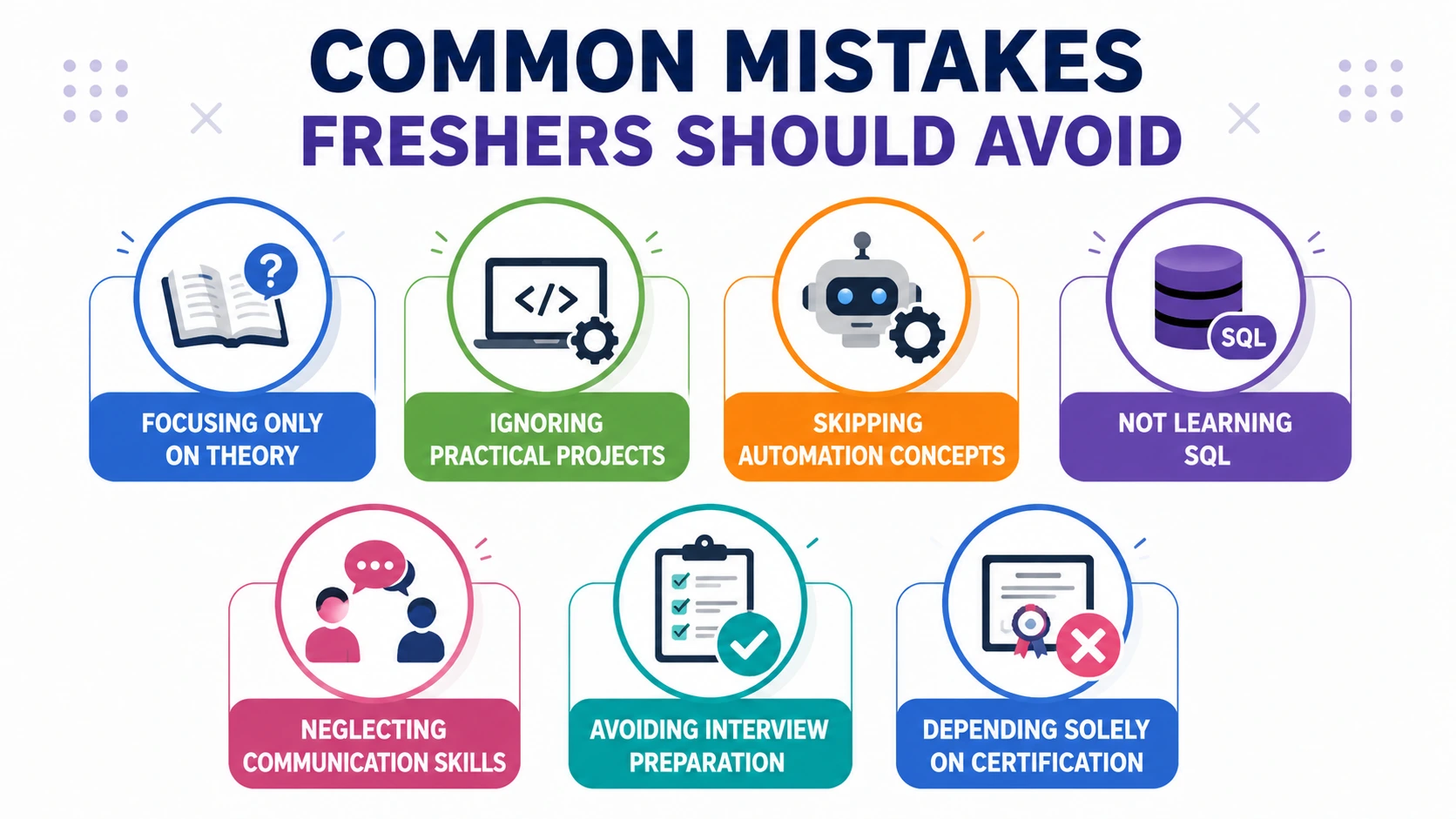
Many beginners make mistakes that slow down their career growth. Employers value practical knowledge and problem-solving abilities alongside certifications. Avoid these common errors:
- Focusing only on theory
- Ignoring practical projects
- Skipping automation concepts
- Not learning SQL
- Neglecting communication skills
- Avoiding interview preparation
- Depending solely on certification
Final Thoughts
Choosing the best software testing certification for freshers in India can significantly impact your career journey. Certifications such as ISTQB Foundation Level, Selenium Automation Testing, Agile Testing, API Testing, and JIRA provide valuable skills that employers actively seek. For beginners, starting with a strong foundation in manual testing and gradually advancing into automation testing is often the most effective approach. Along with certification, focus on practical projects, interview preparation, and continuous skill development.
Related Articles

Switching from Manual Testing to Automation Testing: A Career Transition Guide
Learn how to switch from manual testing to automation testing with essential tools, skills, career tips, and a practical learning path.
How to Start a Career in Software Testing in India as a Fresher
Start your QA career with this fresher guide covering software testing skills, courses, certifications, tools, and career opportunities in India.

How to Choose the Best Automation Testing Training in India: A Complete Beginner’s Guide
Learn how to choose the best Automation Testing Training in India, including tools, curriculum, projects, certification, and career scope.





 +91-8882178896
 +1 (343) 477-0926