
Software Testing Training
157 min read24 viewsHow Working Professionals Can Switch to a Career in Software Testing
By TechPratham TeamPublished September 26, 2026Updated September 26, 2026
.png)
Changing your career after working in another field can feel difficult, especially when you already have a job, responsibilities, and limited time to learn new skills. However, switching to a technology-based career is possible with the right learning plan and practical skills.
Software testing is one career option that many working professionals consider when they want to enter the IT industry or move into a technical role. The field includes manual testing, automation testing, API testing, performance testing, and other specialized areas.
If you are thinking about making a career switch to software testing, you do not always need to start from zero. Your previous work experience, communication skills, problem-solving ability, and knowledge of business processes can also be useful.
This guide explains how working professionals can move toward a career in software testing step by step.
Why Do Working Professionals Consider Software Testing?
There can be different reasons for changing careers. Some professionals want to move from a non-technical role to IT, while others may already be working in IT and want to move into software testing.
Some common reasons include:
- Interest in technology and software
- Desire to move into the IT industry
- Better opportunities for skill development
- Interest in finding a technical career path
- Opportunity to work with different software products
- Scope to learn automation and modern testing tools
Software Testing Training in India is also connected with many other areas of software development. Testers work with developers, business analysts, product teams, and project managers, which makes communication and teamwork important parts of the job.
Can a Working Professional Switch to Software Testing?
Yes, a working professional can learn software testing and work toward a testing career.
However, the transition requires proper preparation. Learning only the definition of testing or watching a few videos may not be enough. You need to understand how testing is performed in real projects and practice using relevant tools.
Your transition can be easier if you follow a structured learning path.
For example:
Testing Fundamentals → Manual Testing → SQL → API Testing → Automation Testing → Testing Tools → Real Project Practice → Interview Preparation
You do not necessarily have to learn everything at once. Start with the basics and gradually move toward advanced skills.
Step 1: Understand What Software Testing Actually Is
Before starting a career switch, understand the role of a software tester.
Software testing is the process of checking software applications to identify defects and verify whether the application works according to its requirements.
A tester may check:
- Whether a feature works correctly
- Whether the application meets business requirements
- Whether the user interface works properly
- Whether data is processed correctly
- Whether different systems work together
Understanding these basic responsibilities will help you decide whether software testing is suitable for your career goals.
Step 2: Start With Manual Testing
Manual testing is generally a useful starting point for beginners and career switchers.
You can begin by learning concepts such as:
- Software Development Life Cycle
- Software Testing Life Cycle
- Test scenarios
- Test cases
- Test data
- Defect reporting
- Severity and priority
- Functional testing
- Regression testing
You should also understand how testers work with developers and business teams during a software project.
The goal is not simply to memorize testing terms. Try to understand why a particular testing method is used and when it should be used.
Step 3: Learn Basic SQL
SQL is another useful skill for software testers.
Applications store a large amount of information in databases. Testers may need to verify whether the correct data is stored, updated, or retrieved.
Start with basic SQL commands such as:
- SELECT
- WHERE
- ORDER BY
- GROUP BY
- JOIN
- INSERT
- UPDATE
- DELETE
For example, if a customer registers on a website, a tester may need to check whether the customer's information has been correctly stored in the database.
You do not need to become a database developer. Basic SQL knowledge can help you perform database-related testing more confidently.
Step 4: Learn API Testing
Modern applications frequently communicate with different services through APIs.
API testing helps testers verify whether these services are working correctly.
You can learn:
- What an API is
- HTTP methods
- GET, POST, PUT, and DELETE
- Status codes
- Request and response
- Headers
Tools such as Postman are commonly used for API testing practice.
Learning API testing can also help you understand how applications communicate in the background, rather than focusing only on the visible user interface.
Step 5: Move From Manual Testing to Automation
Step 5: Move From Manual Testing to Automation
After understanding manual testing fundamentals, working professionals can start learning automation testing.
Automation allows testers to create scripts that perform repetitive testing tasks automatically.
Some commonly used automation tools and technologies include:
- Selenium
- Playwright
- Cypress
- Appium
- TestNG
- Cucumber
Selenium is widely known in web application automation, while Playwright is another modern tool used for browser automation.
You do not need to learn every automation tool. It is generally better to become comfortable with one tool and understand its practical use before moving to another.
Step 6: Learn a Programming Language
Automation testing requires some programming knowledge.
Depending on the tool and career path you choose, you may learn languages such as
- Java
- Python
- JavaScript
- TypeScript
If you are completely new to programming, start with basic concepts.
Focus on:
- Variables
- Data types
- Conditions
- Loops
- Functions
- Arrays
- Classes and objects
- Exception handling
You do not need to become an expert software developer before starting automation testing. Your initial goal should be to understand enough programming to create, read, and maintain automation scripts.
Step 7: Practice With Realistic Projects
One of the most important steps in a career switch is practical practice.
Instead of only studying theory, try testing applications that are similar to real business products.
For example, you can practice testing:
- E-commerce websites
- Banking applications
- Travel booking websites
- Food delivery applications
- Employee management systems
- Learning management systems
Create test cases, execute them, report defects, perform regression testing, and document your results.
For automation, create scripts for common workflows such as login, search, product selection, checkout, or form submission.
This type of practice can help you understand how testing works in a project environment.
Step 8: Learn Basic Testing Tools
A tester normally works with several tools during a project.
Depending on the role, you may come across tools for:
Test Management: Jira, TestRail and similar tools
Automation: Selenium, Playwright, Cypress
API Testing: Postman
Version Control: Git and GitHub
Build and CI/CD: Jenkins or other CI/CD tools
You do not need to master every tool before applying for jobs. Start with the tools that match the testing role you want to pursue.
Step 9: Understand Agile and Scrum
Many software teams follow Agile development practice. As a tester, you may participate in activities such as:
- Sprint planning
- Daily stand-up meetings
- Sprint reviews
- Retrospectives
- Requirement discussions
- Defect discussions
You should understand basic Agile and Scrum terminology because interviewers may ask questions about how testers work within an Agile team.
Step 10: Build a Testing Resume
When switching careers, your resume needs to clearly show your new skills.
Include:
- Software testing skills
- Testing tools
- Programming language
- API testing knowledge
- SQL knowledge
- Automation projects
If your previous experience is from another industry, do not simply remove it.
Instead, identify transferable skills.
For example, experience in customer support may demonstrate communication and problem-solving skills. Experience in business operations may provide knowledge of business processes and requirements.
The important thing is to clearly connect your previous experience with your new testing skills.
Step 11: Prepare for Software Testing Interviews
After learning the required skills, start preparing for interviews.
Interview preparation should include both theoretical and practical questions.
You may be asked about:
- Different types of testing
- Test case creation
- Defect life cycle
- Severity and priority
- Regression testing
- Smoke and sanity testing
- SQL queries
You should also prepare to explain your career transition.
For example, an interviewer may ask:
"Why do you want to switch your career to software testing?"
Prepare an honest answer that explains your interest in testing, the skills you have learned, and how your previous experience can contribute to your new role.
How Long Does It Take to Learn Software Testing?
The learning time depends on your previous experience, available study time, and the skills you want to develop.
Someone studying a few hours every day may progress faster than someone learning only on weekends.
A simple learning structure could be:
Month 1: Testing fundamentals and manual testing
Month 2: SQL, API testing, and testing tools
Month 3: Programming and automation basics
Month 4: Automation framework, projects, and interview preparation
This is only an example. Your actual learning timeline can be shorter or longer depending on your background and learning pace.
Should Working Professionals Take Software Testing Training?
Structured training can be useful if you are finding it difficult to create a learning path on your own.
A good Software Testing Training in India program should ideally include both concepts and practical learning.
Before choosing a training program, look for areas such as:
- Manual testing fundamentals
- Automation testing
- SQL
- API testing
- Testing tools
- Realistic project practice
- Assignments
The objective should be to develop skills that you can actually demonstrate during interviews and project discussions.
Common Challenges During a Career Switch
Career switching is not always easy. Working professionals may face several challenges.
1. Limited Learning Time
Managing a full-time job and learning a new skill can be difficult.
Creating a fixed study schedule can help. Even one to two focused hours each day can make a difference when followed consistently.
2. Fear of Programming
Many people avoid automation testing because they think they need advanced programming skills.
You can start with basic programming and gradually increase your knowledge through practice.
3. Lack of Project Experience
A career switcher may not have professional testing experience.
You can work on practice projects, create test documentation, build automation scripts, and explain your testing approach during interviews.
4. Getting the First Opportunity
The first job can be the most challenging part of a career transition.
Apply for roles that match your current skill level and continue improving your technical knowledge while attending interviews.
Career Opportunities After Learning Software Testing
After developing testing skills, professionals can explore different roles depending on their knowledge and experience.
Some common roles include:
- Software Tester
- QA Tester
- Manual Tester
- Automation Tester
- QA Engineer
- Software Test Engineer
- Automation Test Engineer
With experience, professionals can also move toward specialized testing roles or leadership positions.
Tips for Working Professionals Switching to Software Testing
If you are planning this career transition, keep the following points in mind:
Start with the basics: Do not rush directly into advanced automation.
Practice regularly: Testing is easier to understand when you practice it.
Choose one automation tool: Build a strong foundation before learning multiple tools.
Work on projects: Practical experience helps you explain your skills during interviews.
Keep your resume focused: Highlight your testing skills and relevant previous experience.
Improve communication: Testers regularly communicate with developers, managers, and business teams.
Keep learning: Testing tools and practices continue to change, so learning should continue even after getting your first job.
Frequently Asked Questions
1. Can a working professional switch to a career in software testing?
Yes, working professionals can switch to software testing by learning the required testing concepts and tools. You can start with manual testing, SQL, API testing, and gradually move to automation testing. Your previous work experience can also be useful, especially if it has helped you develop communication, problem-solving, documentation, or business knowledge.
2. Do I need a technical background to become a software tester?
A technical background is helpful but not always necessary to start learning software testing. Beginners can start with software testing fundamentals and manual testing before learning technical skills such as SQL, API testing, and programming. With regular practice, professionals from different backgrounds can build the skills required for testing roles.
3. How can I switch from a non-IT job to software testing?
Start by learning the basics of software testing and understand how testing is performed in real projects. Then learn manual testing, SQL, API testing, and one automation tool such as Selenium or Playwright. Work on practical projects and prepare a resume that highlights your new testing skills along with relevant experience from your previous career.
4. Is coding necessary for a career in software testing?
Coding is not always required for starting with manual testing, but programming knowledge becomes important if you want to move into automation testing. You can begin with basic programming concepts such as variables, conditions, loops, functions, and classes. Once you understand these concepts, you can use them to create and maintain automation scripts.
5. What should I learn first when switching to software testing?
Start with software testing fundamentals and manual testing concepts. After building a basic understanding, learn SQL and API testing, followed by programming and automation testing. A simple learning path is Manual Testing → SQL → API Testing → Programming → Automation Testing → Projects → Interview Preparation.
6. How long does it take to learn software testing for a career switch?
The time required depends on your previous knowledge, learning speed, and the amount of time you can study each day. With consistent learning and practice, a working professional can build a strong foundation over several months. Learning should include both theory and practical projects instead of focusing only on certificates.
Final Thoughts
Switching from one career to software testing is a gradual process. Working professionals do not have to learn everything in a single day. A structured approach can make the transition easier.
Start with software testing fundamentals, learn manual testing, build your SQL and API knowledge, and then move toward automation. Practice with realistic projects and prepare for interviews alongside your technical learning.
Most importantly, focus on skills that you can demonstrate, rather than simply collecting certificates.
If you are planning a career transition into IT, a structured Software Testing Course in India can provide a learning path covering testing fundamentals, tools, automation, projects, and interview preparation.
With consistent learning and practical experience, working professionals can build the knowledge needed to explore opportunities in software testing.
Related Articles
Software Testing Training
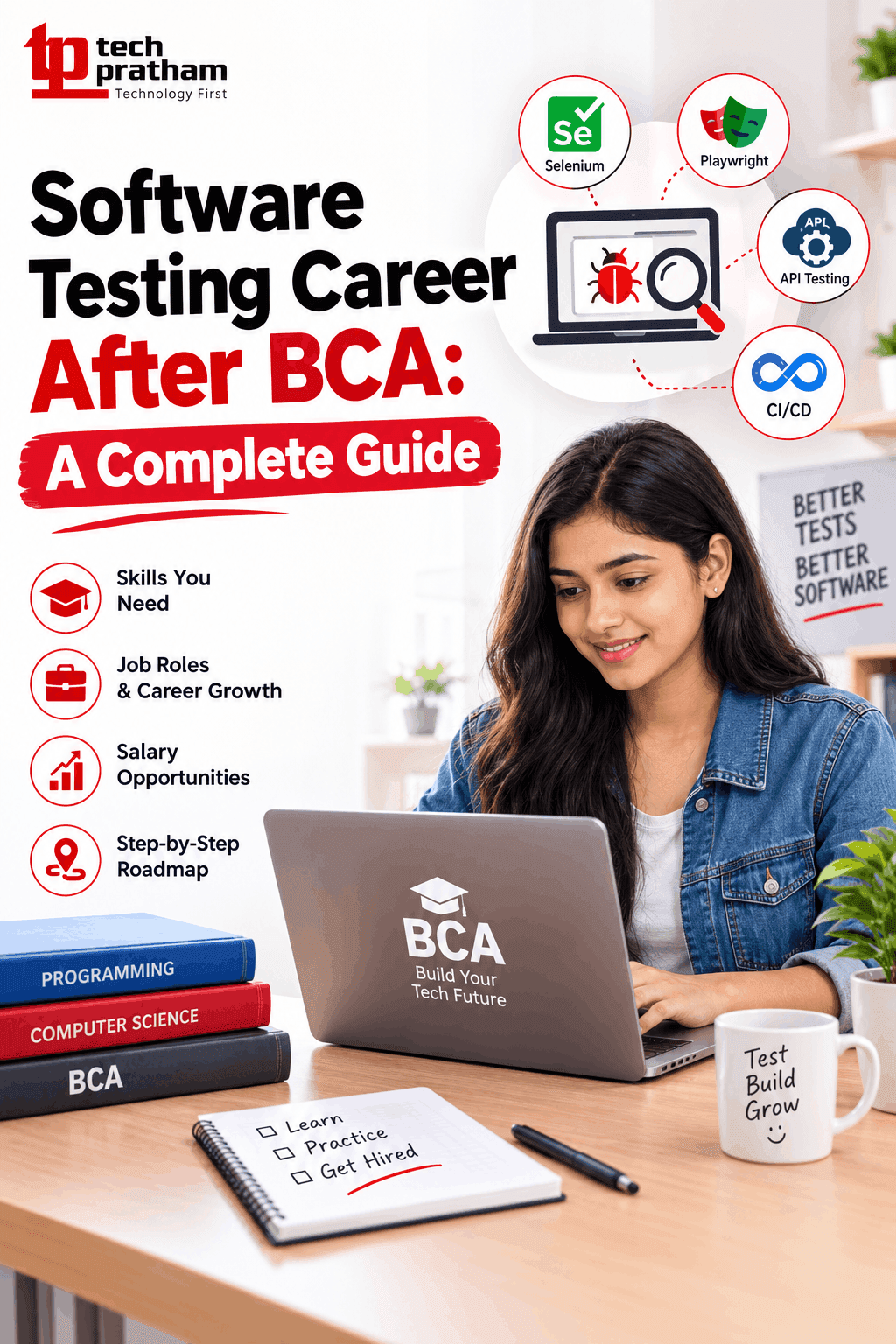
Software Testing Career After BCA: A Complete Guide
Learn how to build a successful software testing career after BCA, including skills, tools, courses, job roles, and career growth opportunities.

Software Testing Training
Switching from Manual Testing to Automation Testing: A Career Transition Guide
Learn how to switch from manual testing to automation testing with essential tools, skills, career tips, and a practical learning path.





 +91-8882178896
 +1 (343) 477-0926