
Software Testing Training
108 min read22 viewsIndia's QA Industry in 2026: Emerging Trends, IT Hubs, and New Career Opportunities
By TechPratham TeamPublished November 21, 2026Updated November 21, 2026
 (1).png)
India's quality assurance industry is changing as businesses continue to build digital products, mobile applications, financial platforms, e-commerce services, and enterprise software. As these systems become more connected, companies need reliable ways to check whether applications work correctly, protect user information, and deliver a smooth experience. This is keeping software quality and testing important across the IT sector.
In 2026, the role of a QA professional is also changing. Testing is no longer limited to checking buttons, forms, and screens manually. Teams use a combination of manual testing, automation, API testing, database validation, and AI-supported tools. Testers are expected to understand how an application works and identify risks before users experience them.
For students, fresh graduates, and working professionals, this shift creates a reason to build practical skills. Software Testing Training in India can help learners understand testing fundamentals, work with commonly used tools, and practise real testing scenarios. The right learning path should combine concepts with hands-on assignments instead of focusing only on theory.
The Indian QA market is not the same in every city. Bengaluru, Hyderabad, Pune, Chennai, Noida, and Gurugram have different technology ecosystems and employer needs. However, the skills that employers look for often overlap, particularly API testing, automation, SQL, and clear communication.
Noida: Opportunities Across IT Services and Digital Businesses
Noida has an established technology and business-services ecosystem, with companies working on enterprise applications, websites, mobile platforms, banking solutions, and customer-facing digital products. These projects require testing at different stages, from checking individual features to validating complete business workflows.
QA professionals may work with manual testing, functional testing, regression testing, API validation, and automation frameworks. The exact requirements depend on the product, client, and project. Some teams need testers who can understand business requirements and prepare test scenarios, while others look for people who can write automation scripts and work with development teams.
For learners planning to enter this field, Software Testing Training in Noida can provide a structured way to learn the basics and practise the tasks commonly performed by QA teams. A useful training plan should include test case writing, defect reporting, test execution, SQL queries, API testing, and exposure to an automation tool.
The city also offers access to the wider Delhi NCR technology market. Candidates should therefore look beyond one job title and explore roles such as QA Analyst, Manual Tester, Automation Tester, Software Test Engineer, and Quality Engineer. Building a clear project portfolio and explaining testing decisions during interviews can help candidates demonstrate their practical understanding.
Gurugram: Quality Engineering for Enterprise and Digital Products
Gurugram is home to technology teams, consulting businesses, financial services companies, startups, and global capability centres. Many organisations in these sectors depend on web applications, customer portals, payment systems, and internal business platforms. Testing helps these products remain stable as features change and user traffic grows.
The work of a QA professional can include understanding requirements, identifying test conditions, checking application behaviour, reporting defects, and confirming that fixes work as expected. In automation-focused teams, testers may also maintain scripts, connect tests to CI/CD pipelines, and investigate failures after a new build.
People who want to develop these skills can consider Software Testing Training in Gurgaon as a way to build a foundation in manual and automation testing. Learners should practise writing clear test cases, reporting bugs with useful evidence, checking APIs, and understanding how data moves through an application.
A strong QA profile is not created by knowing many tool names alone. Employers also value analytical thinking, attention to detail, teamwork, and the ability to explain why a test is important. Candidates who can connect testing activities with real user needs are better prepared to contribute to a project.
Hyderabad: Enterprise Technology and Automation Testing
Hyderabad has a large technology ecosystem that includes IT services, product engineering, healthcare technology, financial applications, and enterprise software. These organisations work on systems where reliability, data accuracy, security, and performance matter. QA teams help check that new features do not affect existing functions and that applications behave consistently.
Testing work may involve functional validation, regression testing, API testing, database checks, and automation. For example, when an organisation updates an online account portal, testers may verify login, profile changes, transaction history, notifications, and related APIs. Automation can help repeat important checks whenever the application is updated.
Software Testing Training in Hyderabad can help aspiring testers learn these activities in a step-by-step manner. A practical course should explain the complete testing life cycle and provide opportunities to work on test scenarios, defect tracking, SQL, API tools, and automation exercises.
As projects become more complex, communication between testers, developers, business analysts, and product teams becomes increasingly important. QA professionals need to describe issues clearly, share reproducible steps, and understand the business impact of a defect. These skills are useful across both manual and automation roles.
Bengaluru: Product Engineering, Automation, and New QA Skills
Bengaluru continues to be one of India's major technology centres, with product companies, startups, IT service providers, and global engineering teams. The range of software being developed in the city creates different testing needs, from web and mobile applications to cloud-based platforms and enterprise products.
Automation is an important part of many QA workflows. Selenium remains widely used, while Playwright is also appearing frequently in job descriptions. API testing, SQL, programming basics, version control, and CI/CD knowledge can strengthen an automation tester's profile. At the same time, manual testing remains useful for exploratory checks, usability, and understanding how real users interact with a product.
For people looking to build these capabilities, Software Testing Training in Bangalore can offer a pathway to learn testing concepts and practise with relevant tools. Learners should choose a programme that includes hands-on exercises, project work, and interview preparation, rather than relying only on demonstrations.
The best tool to learn first depends on the learner's background and the type of role they are targeting. Understanding testing fundamentals makes it easier to learn new frameworks as project requirements change.
Important QA Trends Shaping the Indian IT Industry in 2026
Several changes are influencing how testing teams work in India. These trends are also changing the skills that candidates may need when applying for QA positions.
1. Growing Use of Automation Testing
Companies are using automation to repeat important test cases, reduce repetitive manual work, and check applications more frequently. Selenium continues to be used in many projects, while Playwright is gaining attention for modern web application testing.
Automation does not remove the need for manual testing. Testers still need to explore applications, understand user behaviour, and decide which scenarios should be automated.
2. Increased Focus on API Testing
Modern applications often communicate with multiple services and databases. API testing helps teams check whether these services exchange information correctly.
Tools such as Postman and automation frameworks are useful for validating API responses, status codes, authentication, and data. Learning API testing can therefore add value to a tester's skill set.
3. AI Is Becoming Part of Testing Workflows
Artificial intelligence is helping testers with activities such as generating test ideas, preparing test data, analysing defects, and understanding test results. Generative AI tools can also help testers create draft test cases from requirements.
However, AI-generated results still need human review. Testers must check whether the suggested scenarios are accurate, relevant, and complete. Understanding application behaviour remains an important part of quality assurance.
4. Continuous Testing and CI/CD
Software teams release updates more frequently than before. Continuous integration and continuous delivery practices help teams build, test, and release software in a more organised way.
QA professionals who understand basic CI/CD workflows can work more effectively with developers and automation engineers. They should know how automated tests fit into a build pipeline and how to investigate failed test results.
Which Skills Should Aspiring QA Professionals Learn?
The skills required for a QA role depend on the company and project. However, the following areas provide a useful foundation:
 (1).png)
1). Manual testing: Learn test scenarios, test cases, functional testing, regression testing, and defect life cycles.
2). Automation testing: Understand automation concepts and practise with a framework such as Selenium or Playwright.
3). API testing: Learn how to validate APIs, check responses, and test different request methods.
4). SQL and database testing: Practise writing queries and checking whether application data is stored correctly.
5). Programming basics: Learn the fundamentals of a language such as Java, Python, or JavaScript, depending on your automation path.
6). Testing tools: Get familiar with tools such as Jira, Postman, and relevant automation frameworks.
7). Communication and analytical skills: Learn to explain defects clearly, understand requirements, and work with different project teams.
Freshers can begin with manual testing fundamentals and gradually move towards API and automation testing. Working professionals can build on their existing experience by learning tools and techniques that match their career goals.
How Can Practical Training Help Build a QA Career?
Reading about testing concepts is useful, but practical experience helps learners understand how testing works in real projects. Preparing test cases, executing test scenarios, reporting defects, checking APIs, and working with sample applications can make learning more effective.
A structured training programme should cover both manual and automation testing concepts, provide assignments, and include practical project exercises. Interview preparation can also help learners explain their knowledge and demonstrate how they approach common testing problems.
TechPratham provides online, live instructor-led software testing training with practical learning activities, assignments, project exposure, and interview preparation. The programme is designed to help learners develop relevant testing skills and receive placement assistance as they prepare for opportunities in the IT industry.
Conclusion
India's QA industry is evolving with the growth of digital products, automation, API-based applications, and AI-supported testing. Major technology centres such as Noida, Gurugram, Hyderabad, and Bengaluru continue to form part of the country's wider IT ecosystem.
For people planning to enter Software Testing Training in India or improve their existing skills, the important step is to build a strong foundation and keep learning. Manual testing, automation, API testing, SQL, and practical problem-solving can help candidates prepare for different QA responsibilities.
The future of software quality will involve both technology and human judgement. Testers who understand applications, use tools effectively, and think from the user's perspective can continue to contribute to reliable software development.
Frequently Asked Questions
1. Is software testing a good career option in India in 2026?
Software testing remains an important part of software development. Opportunities exist across IT services, product companies, financial services, healthcare technology, and other sectors. The skills required vary by role and experience.
2. Which skills are important for software testers in 2026?
Manual testing, automation, API testing, SQL, programming basics, and knowledge of tools such as Jira and Postman are useful. AI-assisted testing and CI/CD knowledge can also be relevant for some roles.
3. Is manual testing still required in the IT industry?
Yes. Manual testing is useful for exploratory testing, usability checks, understanding business requirements, and identifying issues that automated scripts may not detect.
4. Should beginners learn Selenium or Playwright?
Both tools are used in automation testing. Beginners should first understand automation fundamentals and then choose a tool based on the type of projects and job requirements they want to pursue.
5. Can freshers start a career in software testing?
Yes. Freshers can begin by learning software testing fundamentals, test case writing, defect reporting, SQL, and API testing. Practical exercises and project knowledge can help them prepare for entry-level roles.
6. How can I prepare for a software testing interview?
Revise testing concepts, practise writing test cases, understand defect life cycles, learn basic SQL and API testing, and prepare to explain practical project scenarios. For automation roles, also practise programming and framework-related questions.
Related Articles

Software Testing Training
The Future of Software Testing: How AI Is Changing the Industry
Discover how AI is changing software testing with smarter automation, faster bug detection, better test coverage, and improved quality.
Software Testing Training
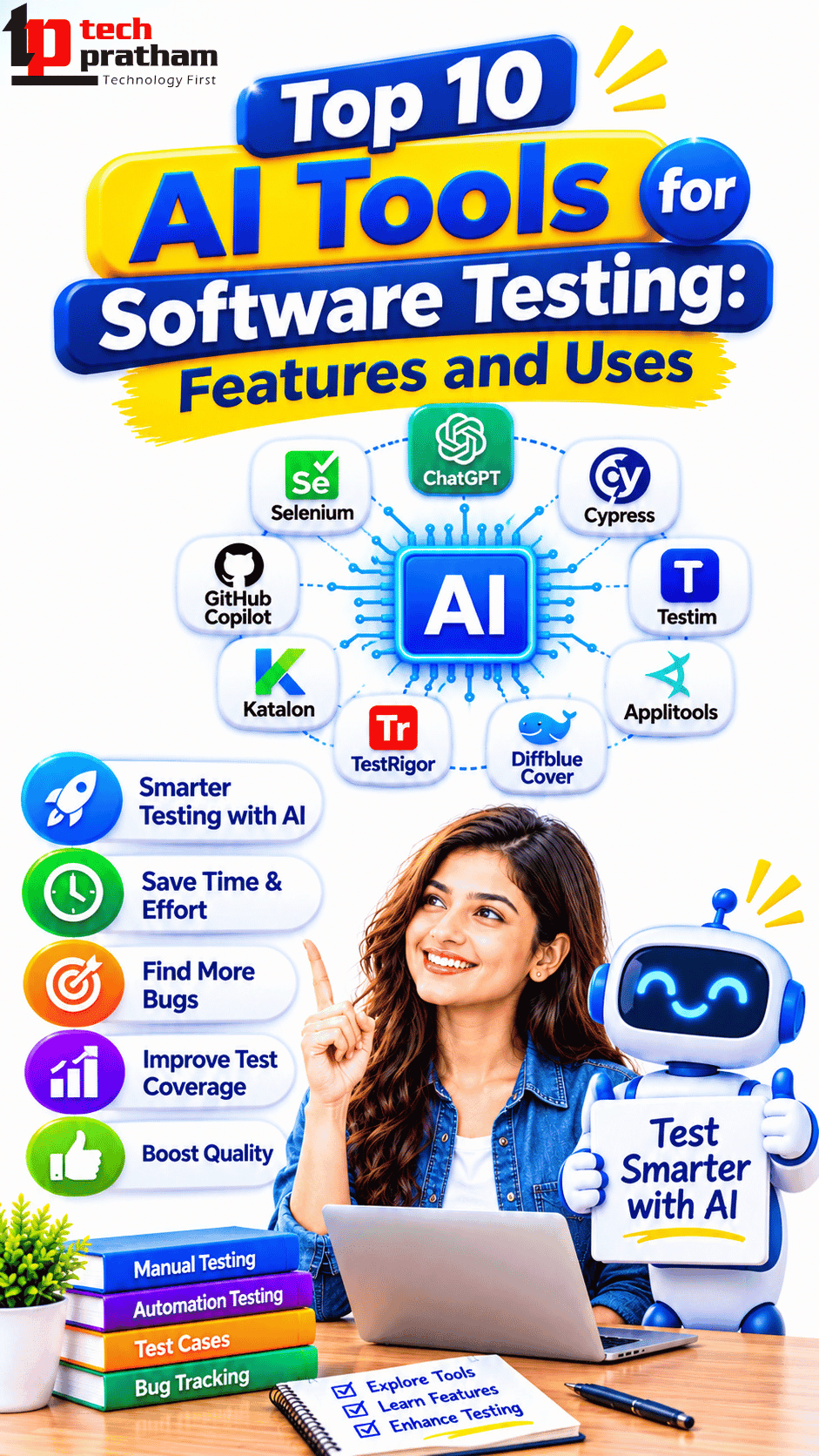
Top 10 AI Tools for Software Testing: Features and Uses
Explore the top 10 AI tools for software testing, their key features, benefits, and uses to improve software quality and efficiency.





 +91-8882178896
 +1 (343) 477-0926