
Software Testing Training
110 min read7 viewsIs Software Testing Easy to Learn for Beginners in India
By TechPratham TeamPublished October 12, 2026Updated October 12, 2026
.png)
Software testing is a popular career option for students, fresh graduates, non-IT candidates, and working professionals who want to enter the IT industry. One of the most common questions beginners ask is, “Is software testing easy to learn?” The answer is yes, software testing can be easy to start learning if you follow a structured approach, understand the fundamentals, and practise with real-world examples.
You do not necessarily need advanced programming knowledge to begin with manual testing. However, building a strong career in software testing requires analytical thinking, attention to detail, problem-solving skills, and continuous learning.
In this guide, we will explain how difficult software testing is for beginners in India, which skills you need, what modules you should learn, how long it may take, and how to prepare for entry-level QA roles.
1. Is Software Testing Easy to Learn for Beginners?
Software testing is generally beginner-friendly because you can start by learning basic concepts without immediately writing complex code. Manual testing focuses on understanding application requirements, checking functionality, identifying defects, and verifying whether software behaves as expected.
For example, imagine testing an online shopping website. You can check whether users can register, log in, search for products, add items to a cart, and complete a purchase. These activities help beginners understand how software testing works in practical situations.
However, learning the fundamentals is only the first step. Understanding technical concepts, writing effective test cases, reporting defects, and working with automation tools require regular practice.
Software Testing Training in India becomes easier when you learn one concept at a time and apply it to practical example.
2. Who Can Learn Software Testing in India?
Software testing is suitable for people from different educational and professional backgrounds. You do not always need an IT degree to begin learning the fundamentals. The following candidates can consider learning software testing:
- Fresh graduates: Students who have completed BCA, B.Tech, B.Sc., B.Com, or other degree programmes can explore entry-level QA opportunities.
- Non-IT candidates: People from non-technical backgrounds can begin with manual testing and gradually develop technical skills.
- Working professionals: Professionals looking to move into software quality assurance can learn testing concepts and tools relevant to their target roles.
- Manual testers: Existing testers can expand their skills by learning SQL, API testing, and automation.
- Career switchers: Individuals exploring a transition into IT can start by understanding software development and testing fundamentals.
Your learning progress will depend on your current knowledge, available practice time, and ability to apply concepts to real-world scenarios.
3. What Should Beginners Learn First in Software Testing?
If you are starting from scratch, follow a logical learning path instead of trying to master every testing tool at once.
Manual Testing Fundamentals
Begin with the basics of software testing, including why testing is necessary, how defects affect applications, and how testers verify requirements.
Learn the difference between quality assurance and quality control, verification and validation, and functional and non-functional testing.
SDLC and STLC
The Software Development Life Cycle (SDLC) explains how software is planned, developed, tested, deployed, and maintained.
The Software Testing Life Cycle (STLC) focuses on testing activities, including requirement analysis, test planning, test case development, test execution, defect reporting, and test closure.
Test Case Design and Defect Management
Learn how to prepare test scenarios, write clear test cases, select suitable test data, and record test results. You should also understand the defect life cycle and the difference between defect severity and priority.
SQL and Database Testing
SQL helps testers validate data stored in databases. Start with queries such as SELECT, WHERE, ORDER BY, and JOIN. Practise checking whether information displayed in an application matches the corresponding database records.
API Testing
API testing checks communication between software components. Learn HTTP methods, status codes, request and response structures, JSON, and basic validation using Postman.
Automation Testing
Once you understand testing fundamentals, explore tools such as Selenium and Playwright. Learn how automated tests interact with web applications, locate elements, perform actions, and verify expected results.
4. Is Coding Required to Learn Software Testing?
Coding requirements depend on the type of testing you want to pursue. Manual testing usually allows beginners to start without programming. Testers analyse requirements, execute test cases, identify defects, and document results. Basic technical knowledge and logical thinking are still valuable.
Automation testing generally requires programming knowledge because automated test scripts must interact with applications and validate results. Selenium is commonly used with languages such as Java or Python, while Playwright supports JavaScript, TypeScript, Python, Java, and .NET.
If you are new to programming, start with manual testing and basic SQL. Once you are comfortable with testing concepts, learn programming fundamentals and gradually move towards automation. You do not need to master multiple programming languages at the beginning. Choose a suitable learning path based on your career goals.
5. What Are the Most Difficult Parts of Learning Software Testing?
Although software testing is accessible to beginners, some concepts require additional effort. Writing effective test cases: Beginners may initially focus only on normal scenarios. Learning to test invalid inputs, boundary conditions, and unexpected user behaviour takes practice.
Understanding technical concepts: SQL queries, API requests, browser behaviour, and automation frameworks can feel challenging without hands-on experience. Finding defects systematically: Testers must investigate application behaviour carefully rather than randomly clicking through screens.
Learning automation: Understanding programming logic, locators, assertions, waits, and debugging requires consistent practice.
Working with real projects: Real applications contain complex requirements, dependencies, and changing business rules. Practical exercises help learners prepare for these situations. The best way to overcome these challenges is to practise with sample applications, review your mistakes, and gradually increase the complexity of your testing tasks.
6. How Long Does It Take to Learn Software Testing?
There is no fixed timeline for learning software testing. Your progress depends on your previous experience, study schedule, and the amount of practical work you complete. As a rough learning plan, a beginner studying consistently might use the following timeline. These periods are illustrative rather than guaranteed completion times. Becoming job-ready may take longer, particularly when you are learning technical skills for the first time.
Focus on understanding and applying concepts rather than completing modules as quickly as possible.
7. Which Software Testing Tools Should Beginners Learn?
Learning tools helps you understand how testing activities are performed in professional environments. Beginners should prioritise tools according to their learning goals.
- Jira: Used for tracking defects, managing tasks, and following work in Agile teams.
- Postman: Helps test APIs by sending requests and validating responses.
- SQL tools: Help execute queries and verify database information.
- Selenium: Supports browser automation and automated regression testing.
- Playwright: Supports modern browser automation and end-to-end testing.
- Test management tools: Help organise test cases, test runs, and testing results.
You do not need to learn every tool simultaneously. Start with manual testing fundamentals and introduce tools when you understand the purpose behind them.
8. How Can Beginners Practise Software Testing?
Practical learning is essential because software testing involves applying concepts to different application behaviours.
Choose a sample website and create test scenarios for registration, login, search, forms, and checkout. Write test cases containing preconditions, steps, test data, and expected results.
Execute the test cases and record the actual results. If you discover unexpected behaviour, document the defect with clear reproduction steps, expected behaviour, actual behaviour, and supporting evidence.
Next, practise basic SQL queries and use Postman to test a sample API. When you are comfortable with these activities, automate selected browser workflows using Selenium or Playwright.
Maintain your work in a small portfolio containing test cases, sample defect reports, API test results, and automation scripts. This can help you demonstrate practical skills during interviews, although employment depends on the role and employer requirements.
9. How Can Software Testing Training Help Beginners?
A structured training programme can help beginners follow a clear learning sequence instead of searching for disconnected tutorials. A suitable course should combine theoretical concepts with practical exercises and project-based learning.
When comparing software testing training programmes in India, check whether the curriculum includes:
- Manual testing, SDLC, STLC, and testing methodologies.
- Test case design, defect management, and Jira.
- SQL queries and database testing.
- API testing using Postman.
- Automation testing with relevant tools.
- Agile workflows and real-time project scenarios.
- Interview preparation and practical assignments
TechPratham's Software Testing Training in India course page is a useful starting point for exploring structured training. Review the current syllabus, hands-on practice, trainer support, and project coverage to determine whether the programme matches your learning needs.
10. Is Software Testing a Good Career Option for Beginners in India?
Software testing can be a suitable career path for people who enjoy problem-solving, investigating application behaviour, and improving software quality. Depending on their skills and experience, candidates may explore roles such as Manual Tester, Software Test Engineer, QA Analyst, API Tester, Automation Test Engineer, or Quality Assurance Engineer.
Entry-level opportunities vary by company, location, technical requirements, and market conditions. Completing a course alone does not guarantee a job.
Candidates should build practical skills, prepare for interviews, understand common testing scenarios, and keep improving their technical knowledge. Learning automation, SQL, API testing, and Agile practices can help you prepare for a broader range of QA responsibilities over time.
Candidates should build practical skills, prepare for interviews, understand common testing scenarios, and keep improving their technical knowledge. Learning automation, SQL, API testing, and Agile practices can help you prepare for a broader range of QA responsibilities over time.
Frequently Asked Questions
1. Can I learn software testing without an IT background?
Yes. You can start with testing fundamentals and manual testing. Learning SQL, APIs, and automation later can help you develop additional technical skills.
2. Is coding necessary for manual testing?
No advanced coding is generally required for manual testing. However, basic SQL and technical knowledge can be useful in many QA roles.
3. Is software testing difficult for freshers?
The fundamentals are manageable for many beginners. Test case design, technical tools, and automation may require additional practice.
4. How many months does it take to learn software testing?
The duration varies by learner and curriculum. A beginner may need several months of consistent study and practice to develop a broader set of job-relevant skills.
5. Which is easier for beginners, manual testing or automation testing?
Manual testing is usually the easier starting point because it does not require immediate programming knowledge. Automation can be learned after establishing a foundation in testing concepts.
6. Can non-IT graduates apply for software testing jobs?
Yes, some employers consider candidates from non-IT backgrounds. Eligibility depends on the employer's educational requirements, role expectations, and the candidate's demonstrated skills.
Conclusion
Software Testing Course in India can be easy to begin learning when you follow a structured roadmap, practise regularly, and build your understanding step by step. Start with manual testing, SDLC, STLC, test case design, and defect management. Then develop your skills in SQL, API testing, Agile practices, and automation tools such as Selenium or Playwright.
For beginners in India, the most important goal is not simply to finish a course but to understand how testing works in real projects. Consistent practice, practical assignments, and interview preparation can help you build a stronger foundation for pursuing software testing opportunities.
Related Articles
Software Testing Training
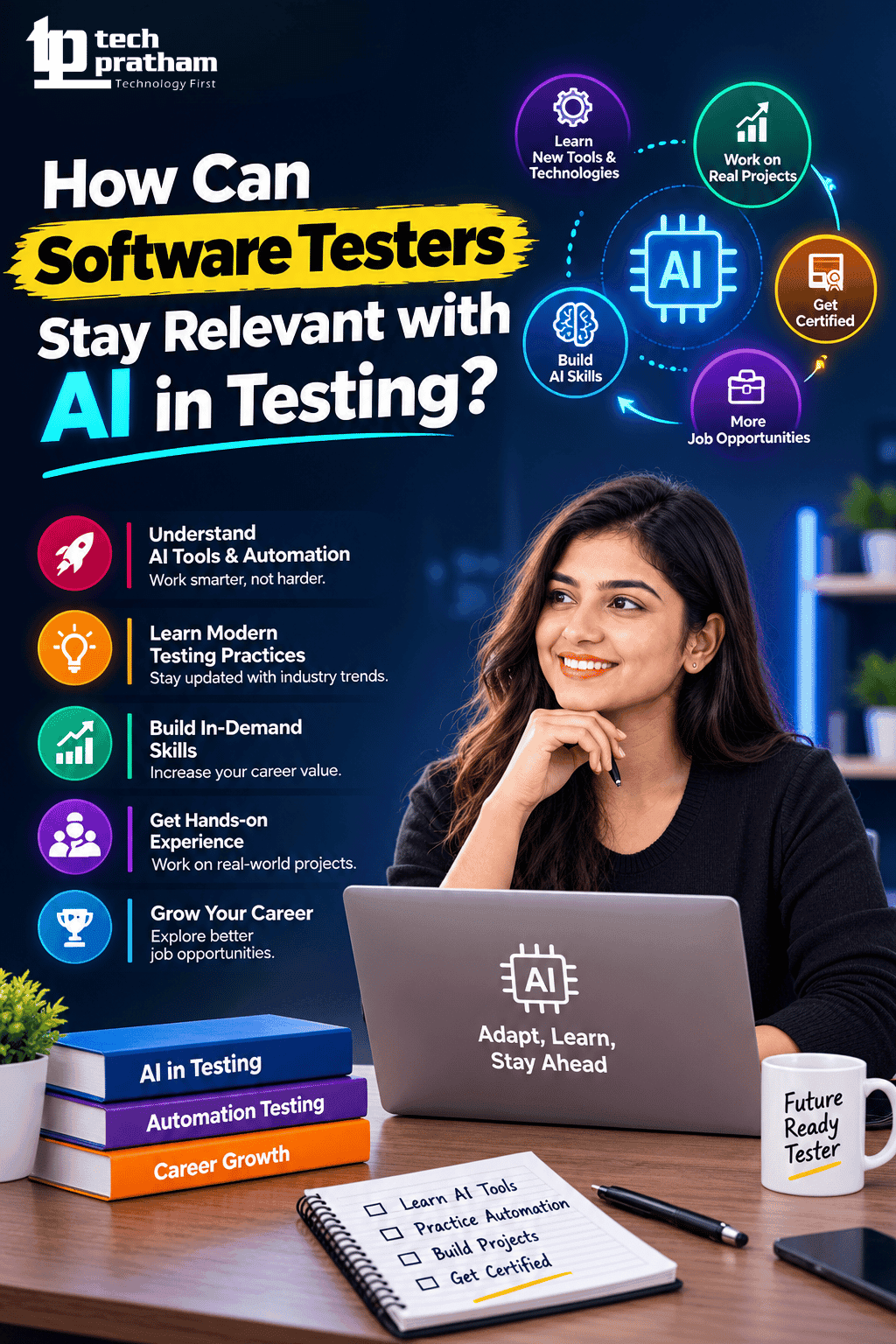
How Can Software Testers Stay Relevant with AI in Testing
Software testers can stay relevant with AI by learning AI tools, automation, prompt skills, data analysis, and modern testing practices.
Software Testing Training
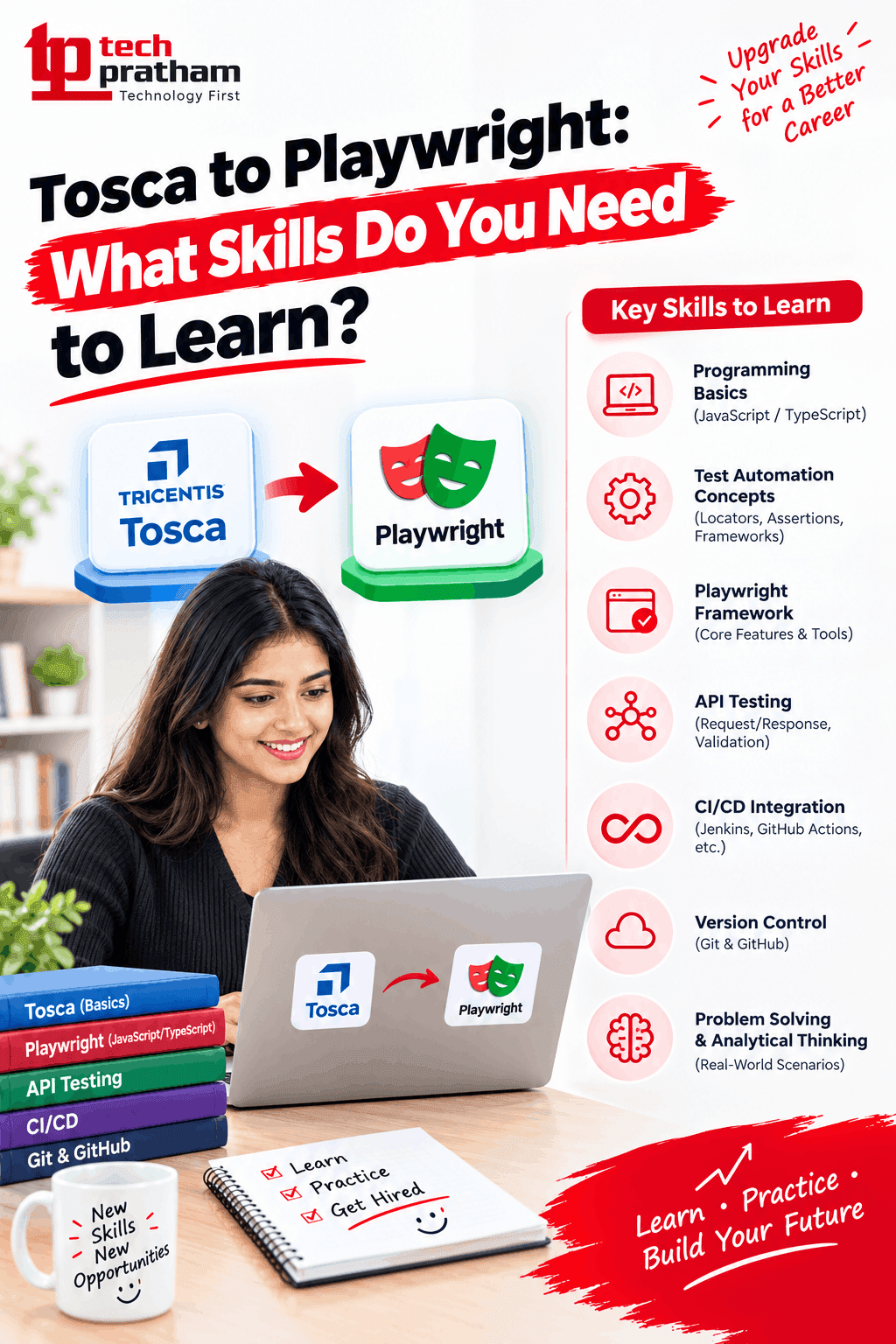
Tosca to Playwright: What Skills Do You Need to Learn
Learn the key skills needed to move from Tosca to Playwright, including coding, automation, API testing, frameworks, and CI/CD.





 +91-8882178896
 +1 (343) 477-0926