
How Modern QA Teams Use AI Without Replacing Human Testers
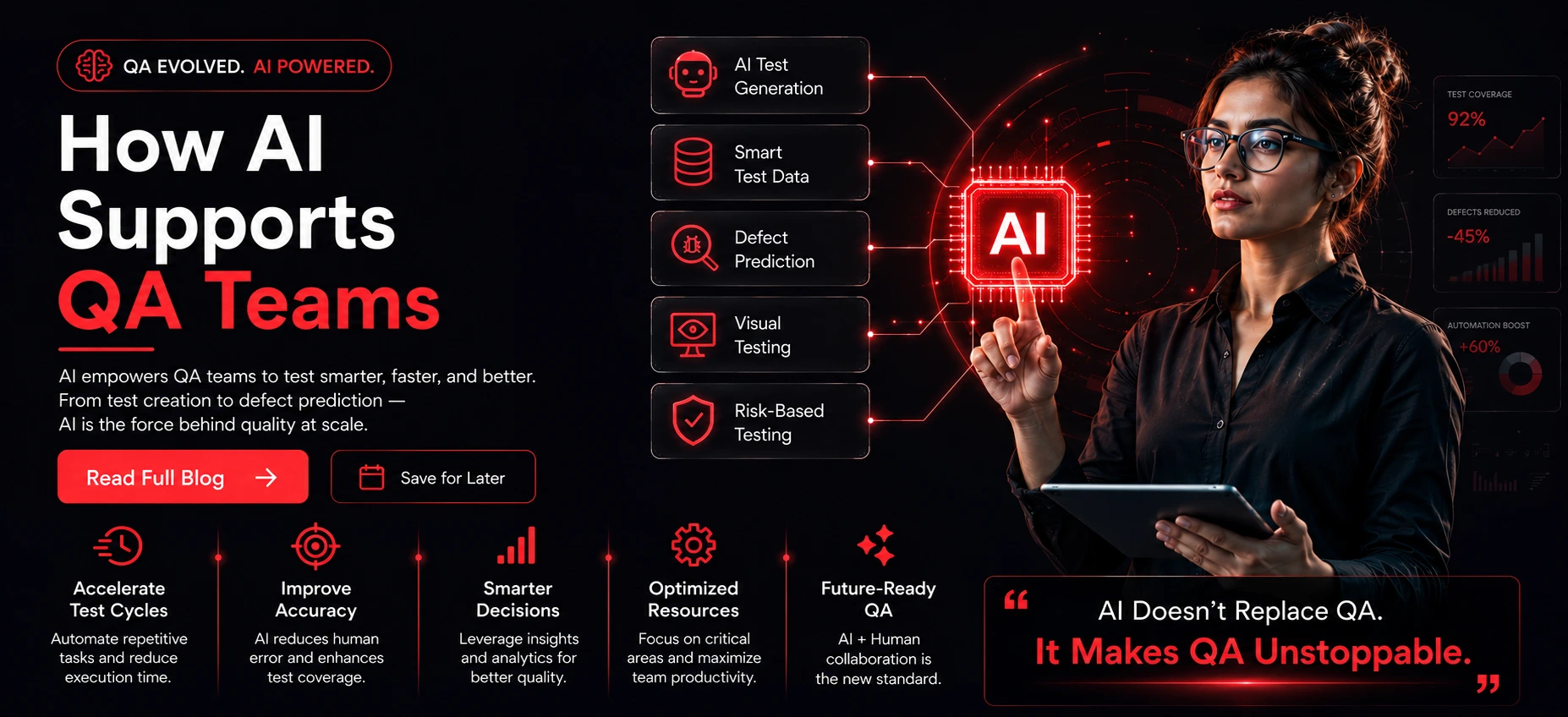
Today's QA professionals work alongside AI to improve software quality, identify complex defects, and deliver better user experiences. As Agile, DevOps, and AI-powered testing continue to evolve, mastering both manual and automation testing is essential for a successful career. Software Testing Training in India equips learners with industry-relevant skills, practical experience, and knowledge of AI-assisted testing tools, helping them stay competitive in the rapidly changing software testing landscape. Software Testing Training is becoming increasingly important as Artificial Intelligence (AI) transforms modern Quality Assurance.
Why Everyone Thinks AI Will Replace Software Testers
.webp)
The rapid growth of AI tools such as ChatGPT, GitHub Copilot, and intelligent testing platforms has changed how many software development tasks are performed. These technologies can generate code, summarize documents, write test cases, and even create automation scripts within seconds. As a result, many students and working professionals have started questioning the future of software testing careers.
Why Human Testers Still Matter
- Understand business requirements and user expectations.
- Perform exploratory and usability testing.
- Detect complex edge cases beyond AI-generated scenarios.
- Validate security, compliance, and real-world workflows.
- Collaborate with development teams to improve software quality.
The Evolution of Software Testing
The software testing process has changed significantly over the past decade.
Rather than replacing testers, AI acts as an intelligent assistant that speeds up routine activities while allowing QA engineers to focus on critical thinking and decision-making.
How AI Is Used in Modern QA Teams
1. AI Helps Generate Test Cases
Creating test cases manually can take considerable time, especially for large applications. AI tools analyze user stories, requirements, and acceptance criteria to generate initial test scenarios.
Benefits
- Reduces manual effort
- Covers common user flows
- Speeds up sprint planning
- Helps identify missing scenarios
- Improves productivity
2. AI Improves Regression Testing
Regression testing is one of the most repetitive activities in software testing. Based on this information, AI recommends which regression tests should run first.
AI can analyze:
- Recent code changes
- Previous defects
- User behavior
- Risk areas
- Production incidents
3. AI Generates Automation Scripts
Writing automation scripts from scratch requires programming knowledge. Instead of spending hours writing boilerplate automation code, testers can review and improve AI-generated scripts.
Modern AI tools can:
- Generate Selenium code
- Suggest Playwright scripts
- Create API test scripts
- Recommend assertions
- Explain existing automation code
4. AI Assists in Bug Reporting
Bug reporting often consumes a significant amount of a tester's time. Instead of spending 20–30 minutes documenting a defect, testers can focus on validating whether the issue truly impacts users.
AI can automatically:
- Generate bug summaries
- Capture screenshots
- Recommend severity levels
- Suggest possible root causes
- Group duplicate defects
Why Human Testers Are Still Essential
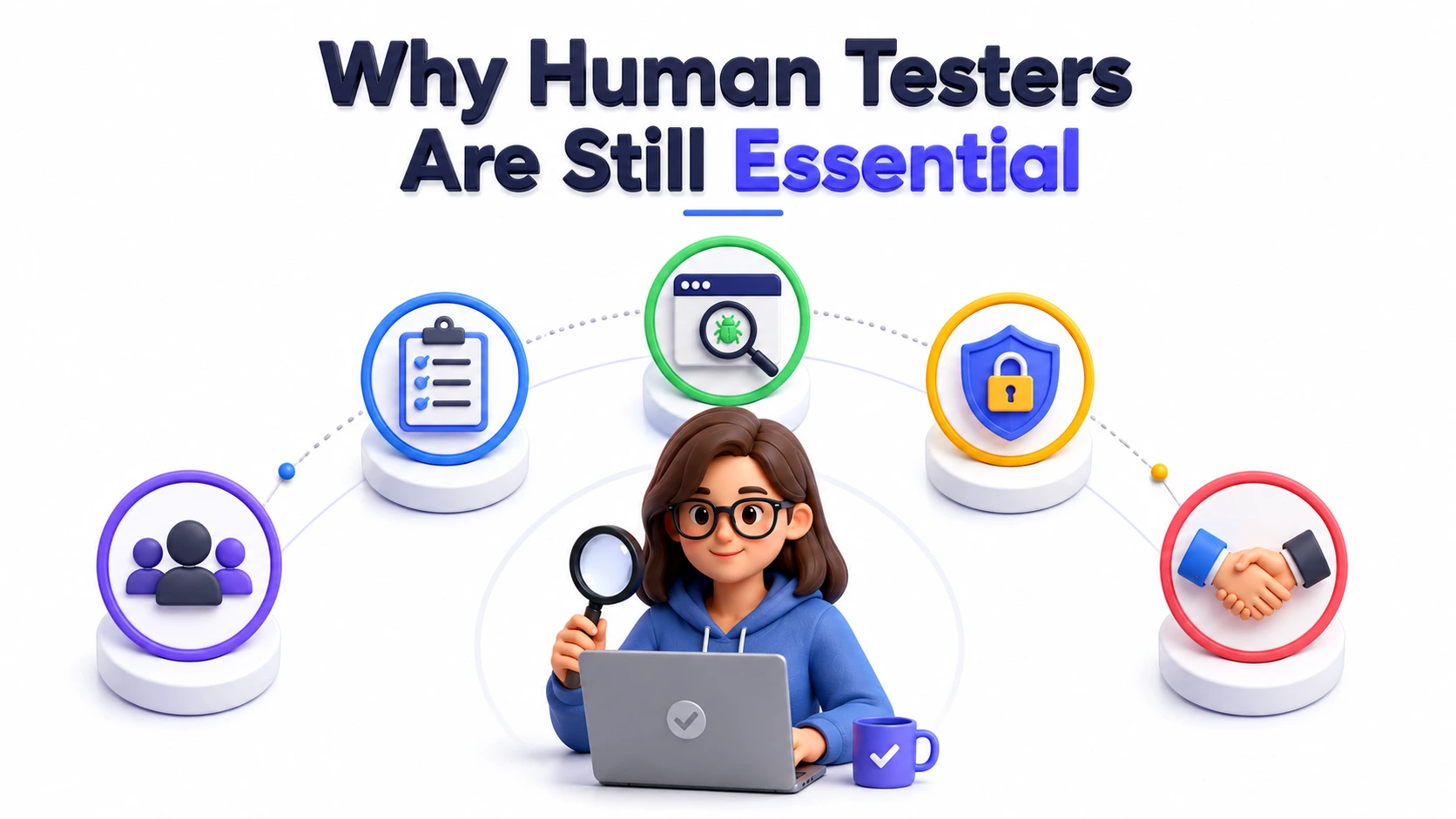
- Understanding business goals
- Performing exploratory testing
- Evaluating user experience
- Identifying unexpected edge cases
- Making risk-based decisions
- Collaborating with developers and stakeholders
- Validating compliance and accessibility requirements
- Ensuring software meets real customer expectations
Challenges of Using AI in Software Testing
While AI offers significant advantages, it also introduces new challenges that every QA team should understand before integrating it into their testing strategy.
1. AI Can Produce Inaccurate Test Cases
AI generates responses based on patterns learned from data, not actual understanding of your application. For example, if a requirement document lacks sufficient detail, AI may:
- Generate incomplete test cases
- Miss important validation scenarios
- Ignore business-specific workflows
- Assume incorrect application behavior
Best Practice: Always review AI-generated test cases before adding them to your test suite.
2. Limited Understanding of Business Logic
Every organization has unique workflows, approval processes, and business rules. These business rules are difficult for AI to infer without detailed context. Consider an insurance claim application:
- Claim approval depends on policy type.
- Different customers have different coverage limits.
- Regulatory rules vary by region.
Best Practice: Provide AI with detailed requirements and let QA engineers validate the final output.
3. Data Privacy and Security Concerns
Many AI platforms process data through cloud-based services. Sharing sensitive project information without proper controls can create security and compliance risks. QA teams should avoid uploading:
- Customer information
- Financial records
- Healthcare data
- Source code containing confidential logic
- Proprietary business documents
How Leading QA Teams Are Adopting AI
Organizations across industries are integrating AI into different stages of software testing to improve speed and efficiency.
Banking and Financial Services
- Prioritizing regression testing for critical transactions
- Detecting anomalies in payment workflows
- Assisting with compliance-related test documentation
E-commerce Platforms
- Generating checkout and payment test scenarios
- Identifying high-risk user journeys during seasonal sales
- Monitoring customer behavior to improve test coverage
Healthcare Applications
- Supporting validation of complex workflows
- Improving regression testing for patient management systems
- Assisting with documentation while maintaining compliance
SAAS Products
- Detecting UI changes that affect automation scripts
- Predicting areas likely to fail after new deployments
- Accelerating release cycles with intelligent test selection
Common Mistakes Teams Make When Adopting AI
Many organizations invest in AI tools but fail to achieve the expected benefits due to implementation mistakes.
Mistake 1: Treating AI as a Replacement for QA
AI is a powerful assistant, not a substitute for skilled QA professionals. While it can automate repetitive tasks such as test case generation, regression testing, and defect analysis, it cannot understand business goals, customer expectations, or application usability.
Mistake 2: Ignoring Prompt Quality
The quality of AI-generated results depends heavily on the prompts provided. Vague or incomplete prompts can produce inaccurate test cases, irrelevant automation scripts, or missing test scenarios.
Mistake 3: Skipping Manual Validation
AI-generated test cases, automation scripts, and bug reports should never be used without review. Human testers must validate AI outputs to ensure they are accurate, relevant, and aligned with real-world business requirements.
Mistake 4: Overlooking Team Training
Implementing AI tools without training can reduce their effectiveness. QA professionals should understand how AI-powered testing tools work, when to use them, and how to interpret their recommendations.
Mistake 5: Measuring Success Only by Speed
Many organizations focus only on faster test execution after adopting AI. While speed is important, the ultimate goal of software testing is delivering high-quality, reliable, and secure applications.
Skills Every QA Professional Should Learn
A successful software tester in the coming years needs more than testing knowledge. Modern QA engineers are expected to understand the complete software development process and contribute throughout the project lifecycle. Some of the most valuable skills include:
- Manual Testing fundamentals
- Automation Testing using Selenium or Playwright
- API Testing with tools like Postman
- SQL and Database Testing
- Agile and Scrum methodologies
- CI/CD concepts
- Version control using Git
- Prompt Engineering for AI tools
Learning these skills helps professionals adapt to changing technologies while remaining valuable to employers.
Why Continuous Learning Matters
Technology never stands still, and neither should software testers. Every year, new testing frameworks, automation tools, and AI capabilities are introduced. Professionals who continue learning are better prepared to work on modern projects and adapt to changing business requirements. Continuous learning also helps testers:
- Stay updated with industry trends
- Improve automation skills
- Understand emerging AI technologies
- Increase confidence during interviews
- Build stronger career opportunities
The most successful QA engineers treat learning as an ongoing process rather than a one-time achievement.
Frequently Asked Questions
1. Will AI replace software testers?
No. AI can automate repetitive testing tasks and assist with analysis, but human testers remain responsible for understanding business requirements, evaluating user experience, performing exploratory testing, and making quality decisions.
2. Which AI tools are commonly used in software testing?
Many organizations use tools such as ChatGPT, GitHub Copilot, Testim, Mabl, Functionize, and Applitools to improve productivity, generate test cases, assist with automation, and analyze defects.
3. Is manual testing still worth learning?
Absolutely. Manual testing provides the foundation for understanding software behavior, business requirements, and user expectations. These skills remain valuable even when using AI-powered testing tools.
4. Do beginners need programming knowledge?
Basic programming knowledge is helpful, especially for automation testing. However, beginners can start with manual testing concepts and gradually learn Java, SQL, and automation frameworks.
5. How can I prepare for AI-assisted software testing?
Build a strong understanding of software testing fundamentals first. Once you're comfortable with manual testing and automation, begin exploring AI tools that support test case generation, automation scripting, and defect analysis.






 +91-8882178896
 +1 (343) 477-0926