The Great Migration: Why Hyderabad's MNCs Are Swapping Legacy ERPs for Workday, ServiceNow, and Dynamics 365
Table of Contents
In recent years, Hyderabad’s multinational corporations (MNCs) have been rapidly moving away from legacy ERP systems and adopting modern cloud solutions like Workday, ServiceNow, and Microsoft Dynamics. This “great migration” is driven by the need for scalable, flexible, and automated business processes that traditional ERPs can no longer support. Hyderabad, with its IT hubs in HITEC City, Gachibowli, and Madhapur, has become a hotspot for digital transformation as companies strive to improve employee productivity, streamline workflows, and gain real-time business insights. From managing HR and finance efficiently in Workday to automating IT operations with ServiceNow and integrating end-to-end business processes in Dynamics, MNCs are leveraging these platforms to stay competitive in a fast-evolving market. Understanding why Hyderabad-based enterprises are choosing cloud ERP solutions over legacy systems is crucial for business leaders and IT professionals looking to optimize operations, reduce costs, and embrace the future of enterprise software.
The Legacy ERP Challenge
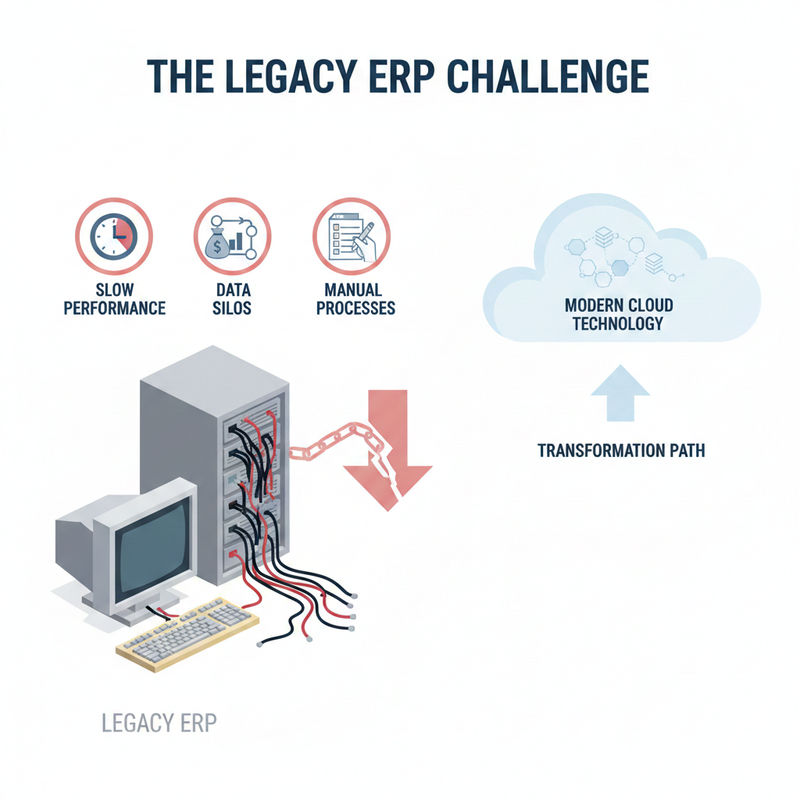
Many Hyderabad-based MNCs are realizing that legacy ERP systems are increasingly becoming a significant barrier to growth, operational efficiency, and overall business agility. These outdated systems, often built on rigid architectures, come with high maintenance costs, limited scalability, and inflexible workflows, making it extremely challenging for organizations to adapt quickly to evolving market demands. One of the most pressing issues is the lack of real-time reporting and analytics, which forces companies to rely heavily on manual processes, disconnected spreadsheets, and siloed data. This not only slows down decision-making but also increases the risk of errors and miscommunication across departments.
For enterprises operating in Hyderabad’s tech hubs such as HITEC City, Gachibowli, and Madhapur, the inefficiency of legacy ERPs can have a direct impact on productivity, customer satisfaction, and time-to-market for critical projects. Moreover, these older systems often lack seamless integration capabilities with modern applications, limiting the adoption of advanced technologies like automation, artificial intelligence (AI), machine learning, and cloud solutions. This creates bottlenecks in workflow automation, reduces operational transparency, and restricts the ability to scale operations efficiently across multiple locations or business units.
As a result, Hyderabad’s MNCs are increasingly exploring cloud-based ERP solutions such as Workday, ServiceNow, and Microsoft Dynamics. These platforms not only offer flexible modules and customizable workflows but also provide real-time insights, enhanced security, and cross-departmental integration, enabling businesses to streamline operations, reduce costs, and remain competitive in a fast-evolving market. The shift from legacy ERPs to modern cloud systems is no longer just a technological upgrade—it has become a strategic business imperative for companies aiming to thrive in Hyderabad’s highly competitive corporate landscape.
Hyderabad: A Hub for ERP Transformation
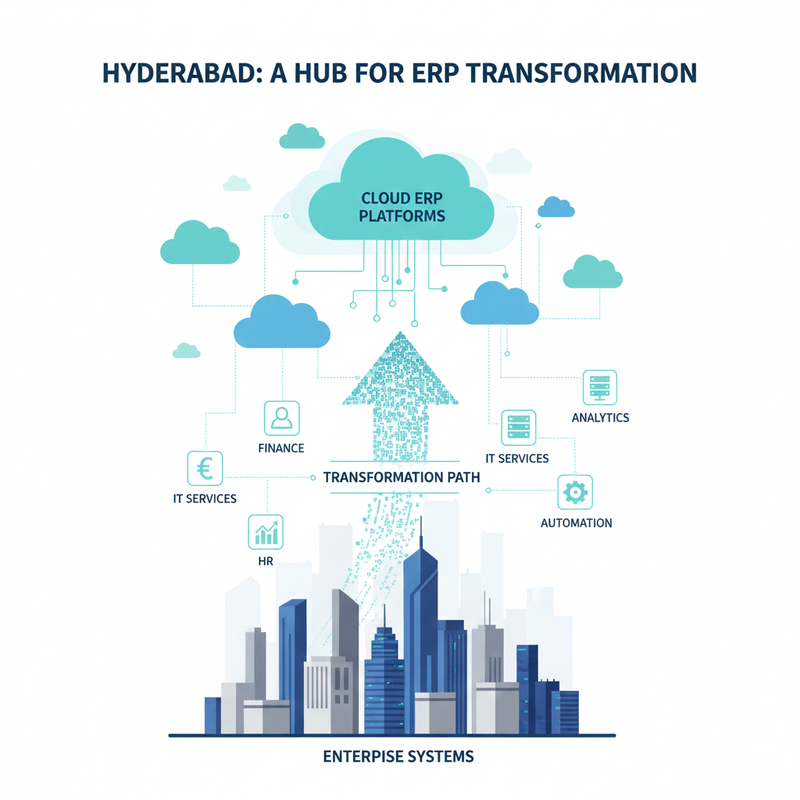
Hyderabad has become a significant player in India's IT and business landscape, drawing in global companies from sectors like IT, finance, healthcare, and pharmaceuticals. The city's well-planned infrastructure, combined with a deep reservoir of skilled professionals, increasing rapidly for Workday training has positioned it as a top choice for international firms seeking to grow their presence in India. HITEC City, Gachibowli, and Madhapur these areas are bustling with multinational corporations, which in turn fuels a strong need for sophisticated, cloud-based ERP systems. These systems must be able to manage intricate, large-scale operations with ease.
Workday for HR and Finance, ServiceNow for IT service management and workflow automation, and Microsoft Dynamics for end-to-end ERP and CRM solutions are replacing legacy ERPs as Hyderabad-based businesses grow. These platforms enable organizations to integrate multiple departments, automate routine tasks, and access real-time analytics, which was previously difficult with traditional systems. The city's strong emphasis on digital transformation, cloud-first strategies, and AI-driven business processes, creating an environment conducive to innovation and efficiency.
Moreover, Hyderabad’s MNCs are leveraging these cloud platforms to streamline workflows, enhance operational efficiency, reduce costs, and make data-driven decisions faster, giving them a competitive edge in a rapidly evolving market. The city’s example demonstrates how a local tech ecosystem can drive ERP transformation at scale, inspiring other Indian metros and enterprises to embrace modern, agile enterprise software solutions. This ongoing shift highlights Hyderabad not just as a technology hub but as a pioneer in ERP modernization, making it a critical case study for businesses evaluating their own ERP migration strategies.
Why MNCs Are Choosing Workday
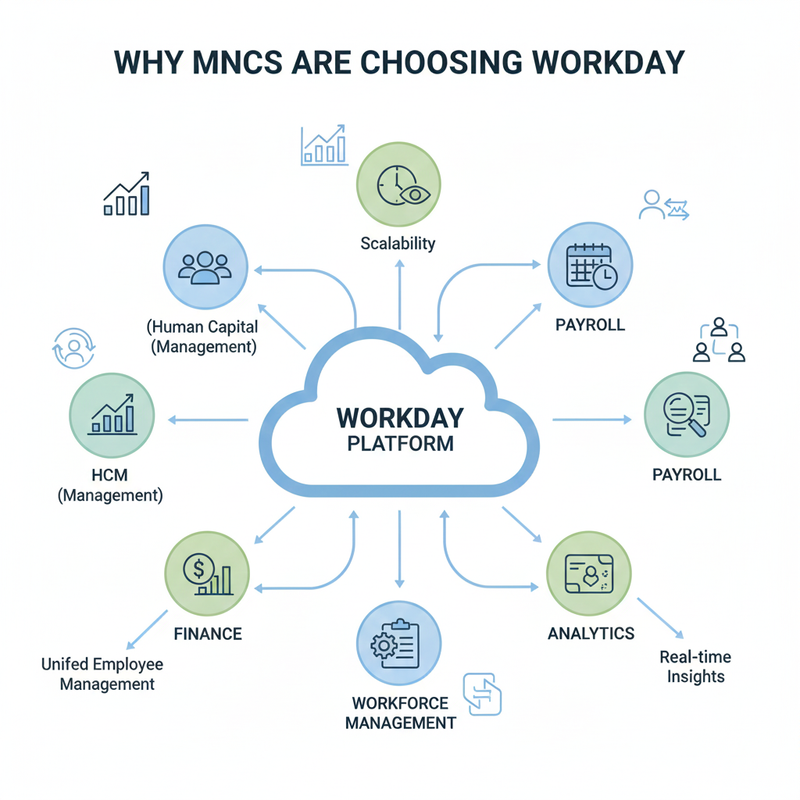
Hyderabad-based MNCs are increasingly adopting Workday Training as their preferred cloud ERP solution for managing HR, Finance, and Payroll operations. Workday’s Human Capital Management (HCM) module allows organizations to efficiently handle recruitment, talent management, performance tracking, and employee engagement, while its Finance module streamlines accounting, budgeting, and financial reporting. The platform’s Payroll module ensures accurate, automated payroll processing, compliance, and seamless integration with global HR policies. One of the key reasons MNCs choose Workday is its scalability, enabling companies to expand operations without worrying about system limitations. Additionally, Workday provides advanced analytics and real-time reporting, giving management actionable insights to drive informed business decisions. For example, enterprises in HITEC City and Gachibowli are using Workday to optimize workforce management, reduce manual errors, and automate financial workflows, resulting in significant productivity gains. Its cloud-native architecture also ensures secure access, flexibility, and continuous updates, making Workday a strategic choice for Hyderabad’s MNCs looking to modernize their ERP systems and stay competitive in a rapidly evolving market.
Why MNCs Are Choosing ServiceNow
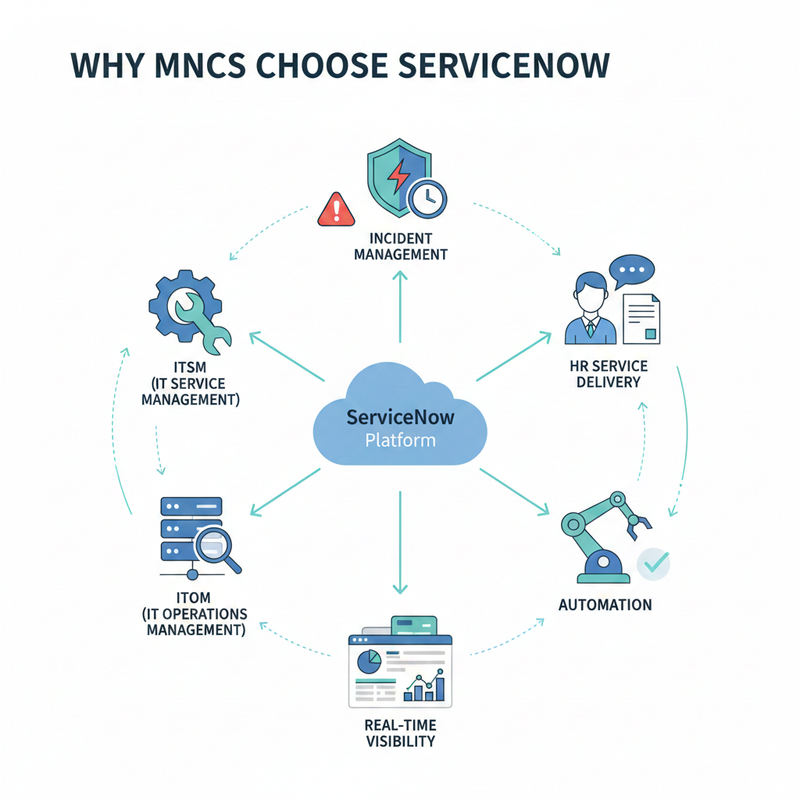
Many multinational corporations are turning to ServiceNow to modernize their IT operations and improve overall business efficiency. ServiceNow’s IT Service Management (ITSM) module enables organizations to streamline incident, problem, and change management processes, ensuring faster resolution and reduced downtime. The IT Operations Management (ITOM) module helps businesses monitor infrastructure, manage services, and automate operational workflows, while the HR Service Delivery (HRSD) module improves employee experience by automating HR requests and onboarding processes. One of the main reasons MNCs adopt ServiceNow is its ability to provide workflow automation, enabling teams to focus on strategic initiatives rather than repetitive tasks. Additionally, the platform drives operational efficiency by offering real-time visibility, data-driven insights, and integration capabilities across multiple enterprise systems. For example, global organizations use ServiceNow to automate IT incident response, streamline HR services, and unify business operations, resulting in significant productivity gains and cost savings. Its cloud-native, scalable architecture makes ServiceNow a reliable and strategic choice for companies aiming to enhance efficiency, reduce manual workloads, and accelerate digital transformation.
Why MNCs Are Choosing Microsoft Dynamics
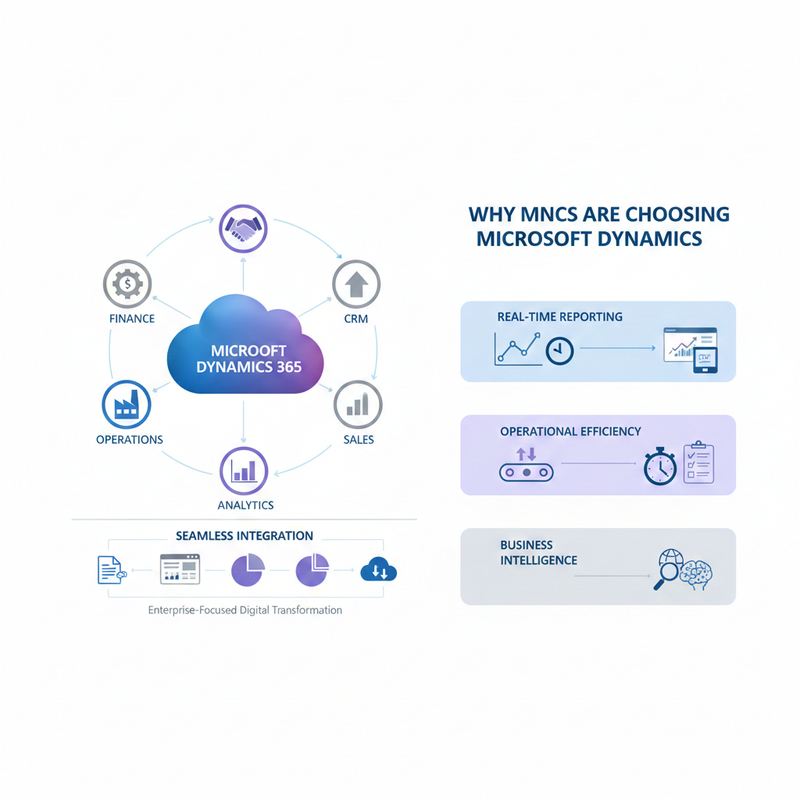
More and more multinational companies are using Microsoft Dynamics as a full cloud ERP and CRM solution to run their entire business. Its Finance module helps businesses simplify accounting, budgeting, and financial reporting, giving them accurate, up-to-date information to help them make better decisions. The CRM module helps businesses manage customer relationships, sales pipelines, and marketing campaigns efficiently, while the Operations module optimizes supply chain management, inventory, and day-to-day business processes. One of the main reasons MNCs choose Microsoft Dynamics is its seamless integration with other Microsoft products such as Office 365, Power BI, and Azure, allowing organizations to leverage a unified technology ecosystem. The platform also offers strong analytics and reporting features that assist businesses in tracking performance, spotting trends, and making data-driven choices. For instance, multinational corporations use Microsoft Dynamics to optimize operational efficiency, improve customer engagement, and automate financial workflows, which lowers costs and boosts productivity. Microsoft Dynamics is a strategic option for multinational corporations (MNCs) seeking to modernize legacy ERPs and accomplish digital transformation across departments due to its cloud-based, scalable architecture.
Workday vs ServiceNow vs Microsoft Dynamics: Key Differences
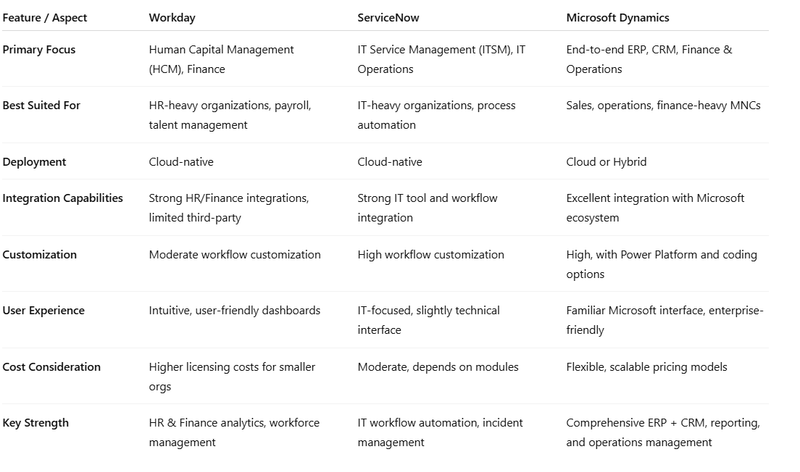
Choosing the right cloud ERP platform is critical for MNCs aiming to modernize legacy systems and enhance operational efficiency. While Workday, ServiceNow, and Microsoft Dynamics are all leading solutions, they differ significantly in focus, modules, and use cases. Understanding these differences helps enterprises make informed decisions based on their business needs, scalability requirements, and integration preferences.
Key Insights:
- Workday is ideal for organizations looking to optimize HR, payroll, and finance
processes.
- ServiceNow excels in IT service management and workflow automation, making it perfect for IT-heavy enterprises.
- Microsoft Dynamics provides a complete ERP and CRM solution, integrating finance, operations, and customer management for end-to-end business optimization.
This clear comparison helps businesses identify the right platform based on their operational focus, budget, and digital transformation goals. By understanding the strengths and limitations of each platform, MNCs can strategically plan ERP migration, workflow automation, and process modernization to maximize ROI.
The ROI of ERP Migration
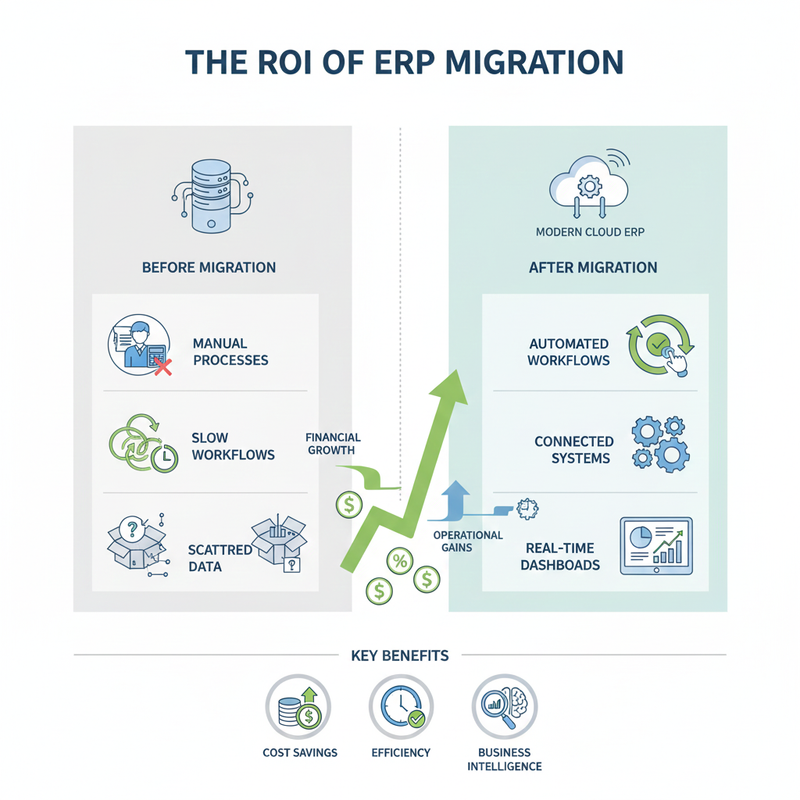
Migrating from legacy ERP systems to modern cloud platforms like Workday, ServiceNow, and Microsoft Dynamics delivers significant return on investment (ROI) for multinational corporations. One of the most immediate benefits is productivity improvement: automated workflows, real-time reporting, and integrated modules reduce manual processes, allowing employees to focus on strategic initiatives rather than repetitive tasks. This not only accelerates operations but also enhances collaboration across departments, leading to faster project completion and improved employee satisfaction.
Another key ROI factor is cost savings. Cloud-based ERP solutions reduce the need for expensive on-premise infrastructure, lower maintenance costs, and minimize errors caused by manual data entry. Companies also benefit from predictable subscription-based pricing, eliminating the financial uncertainty associated with legacy ERP upgrades.
Furthermore, modern ERPs provide better decision-making capabilities through advanced analytics, dashboards, and reporting tools. Executives can access real-time insights into finance, HR, IT, and operations, enabling data-driven strategies that improve efficiency, reduce risks, and maximize revenue.
Future Trends in ERP for Hyderabad MNCs
As Hyderabad-based multinational corporations continue their ERP modernization journey, several key trends are shaping the future of enterprise software. Artificial Intelligence (AI) and machine learning are being increasingly integrated into ERP systems to automate routine tasks, detect anomalies, and provide predictive insights that enable smarter decision-making. Workflow automation is another critical trend, allowing organizations to streamline processes across HR, finance, IT, and operations, reducing manual intervention and boosting productivity.
Advanced analytics and real-time reporting are becoming standard expectations, helping MNCs gain actionable insights from large volumes of data. These insights enable faster, data-driven decisions and help identify growth opportunities, optimize resource allocation, and improve customer experience. Additionally, hybrid ERP setups that combine cloud and on-premise systems are gaining popularity, offering the flexibility to migrate gradually while maintaining control over sensitive data.
Hyderabad’s MNCs are proactively adopting these trends as part of their digital transformation roadmap, focusing on agility, scalability, and innovation. By embracing AI, automation, analytics, and hybrid ERP strategies, organizations are positioning themselves to remain competitive in a rapidly evolving global market. These forward-looking initiatives not only optimize current operations but also future-proof businesses against technological disruptions, making ERP modernization a strategic priority.
Conclusion
The shift from legacy ERP systems to modern cloud platforms like Workday, ServiceNow, and Microsoft Dynamics 365 training in Hyderabad represents a major transformation for Hyderabad’s MNCs. Legacy ERPs, with their inflexibility, high maintenance costs, and limited scalability, can no longer meet the demands of dynamic global enterprises. Cloud-based ERP solutions offer scalable, automated, and integrated workflows, enabling organizations to improve productivity, reduce operational costs, and make data-driven decisions.
By adopting Workday, MNCs optimize HR, payroll, and finance processes; ServiceNow enhances IT service management and workflow automation; and Microsoft Dynamics provides a comprehensive ERP and CRM solution for end-to-end operations. Clear comparisons and differentiation between these platforms help enterprises choose the right solution based on their business needs, operational focus, and long-term goals.
Looking ahead, Hyderabad’s MNCs are embracing AI, automation, analytics, and hybrid ERP setups to future-proof operations and drive continuous digital transformation. The migration to cloud ERPs is no longer just a technology upgrade—it is a strategic imperative for enterprises striving to remain competitive, efficient, and innovative in an ever-evolving business landscape.
For organizations planning their ERP journey, understanding these platforms, their benefits, and future trends is crucial to maximize ROI, streamline operations, and accelerate growth.