
Workday Adaptive Planning Implementation Guide For Business Best Practices & Challenges in 2026
Table of Contents
Implementing Workday Adaptive Planning has become essential for businesses aiming to strengthen financial forecasting, budgeting accuracy, and real-time decision-making. In 2026, organizations are prioritizing agility and digital transformation, making an advanced planning platform critical for staying competitive. Workday Adaptive Planning empowers finance teams to automate manual processes, create dynamic models, and collaborate seamlessly across departments. However, successful implementation requires careful strategy, proven best practices, and strong change management. Many businesses face challenges such as data integration complexities, user adoption barriers, and aligning planning models with real business outcomes. A well-structured implementation roadmap can transform these challenges into opportunities for operational excellence. This guide explores the best practices and key challenges every organization should understand before adoption.
Why Workday Adaptive Planning Is Becoming the Top Enterprise Solution in 2026 ?
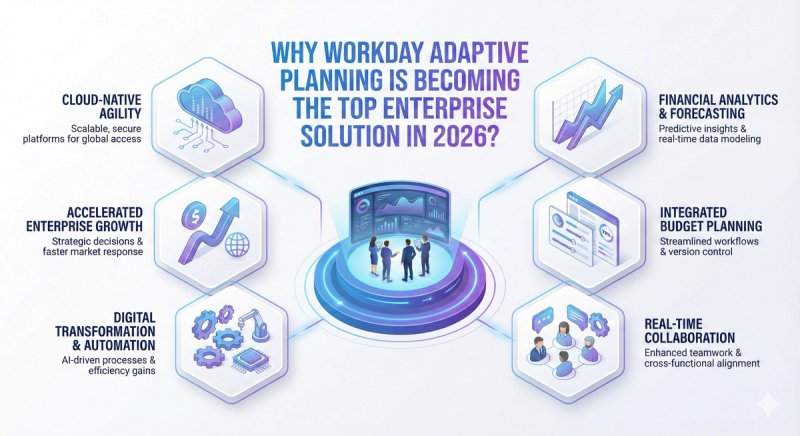
Workday Adaptive Planning is rapidly emerging as the top enterprise solution in 2026, driven by its powerful capabilities in financial planning, budgeting, forecasting, and real-time decision-making. As organizations face increasing economic uncertainty and demands for faster decision cycles, Workday Adaptive Planning empowers finance and business teams to plan smarter through automation, predictive analytics, and collaborative cloud-based modeling. The platform eliminates dependency on traditional spreadsheets and manual processes, reducing errors and accelerating planning, budgeting, and reporting cycles by up to 70%. Its seamless integration with Workday HCM & Financial Management — along with major ERP systems like SAP, Oracle, and NetSuite — ensures unified data, real-time visibility, and accurate forecasting across the enterprise.
Businesses across industries, including technology, healthcare, retail, manufacturing, and banking, are adopting Workday Adaptive Planning to drive operational efficiency, improve profitability, and support confident strategic planning. Advanced capabilities such as scenario modeling, workforce planning, performance tracking, and multi-currency consolidation help leaders respond quickly to market changes and optimize resources. The platform’s intuitive interface, strong security, and scalability make it ideal for both mid-market and large global organizations. With enterprise-wide collaboration, flexible dashboards, and AI-powered insights, Workday Adaptive Planning has become the preferred solution for CFOs, finance leaders, HR teams, and strategy executives aiming to build resilient, data-driven organizations in 2026 and beyond. As digital transformation accelerates, Workday Adaptive Planning continues to stand out as a future-ready platform that empowers businesses to plan, adapt, and grow with confidence.
How Workday Adaptive Planning Empowers Smarter, Faster Business Decisions
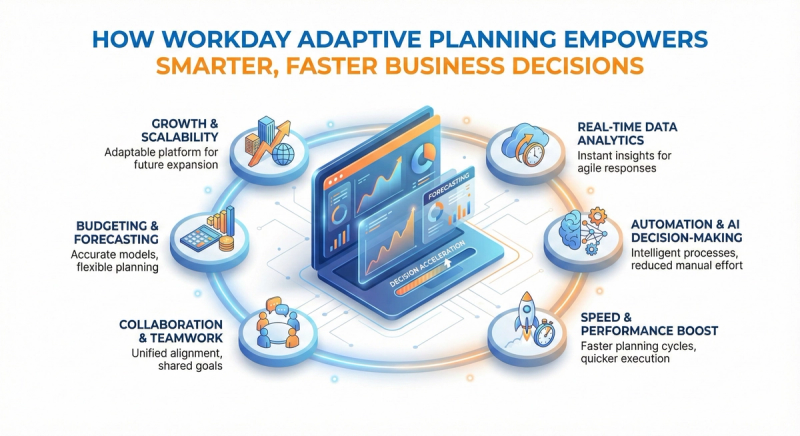
With Workday Adaptive Planning, users can streamline financial planning, budgeting, forecasting, and enterprise performance management through a single, unified cloud platform designed to enhance accuracy, agility, and collaboration. It empowers finance, HR, and operations teams to work together in real time without the limitations of traditional spreadsheet-based processes or disconnected planning systems. Users can easily create dynamic financial models, perform rolling forecasts, automate budgeting workflows, and simulate multiple what-if scenarios to understand the potential impact of changes in revenue, expenses, workforce size, market demand, and economic conditions. This enables organizations to make data-driven decisions faster and respond proactively to evolving business challenges.
Workday Adaptive Planning also allows users to build interactive dashboards, monitor KPIs, analyze variances, and generate automated reports with real-time visibility across departments. With built-in predictive analytics and AI-powered insights, users can identify trends, improve forecast accuracy, reduce financial risk, and plan strategic outcomes more confidently. The platform seamlessly integrates with Workday HCM and Workday Financial Management, as well as major ERP systems like SAP, Oracle, Microsoft Dynamics, and NetSuite, ensuring a single source of truth for enterprise data and eliminating data reconciliation issues.
Beyond financial planning, users can leverage Adaptive Planning for workforce planning, sales and revenue forecasting, operational planning, resource allocation, profitability modeling, capacity planning, and capital expenditure forecasting—all within a secure, scalable, and intuitive environment. Collaboration tools, version control, automated approvals, multi-currency support, and role-based access help distributed teams work efficiently while maintaining governance and compliance. Whether for mid-size organizations or large global enterprises, Workday Adaptive Planning helps users shorten planning cycles, increase forecasting accuracy, optimize business resources, and create long-term resilience. By enabling smarter decision-making and enterprise-wide transparency, it continues to be a transformative solution powering strategic growth and performance excellence in 2026 and beyond.
Workday Adaptive Planning and the Future of AI-Driven Enterprise
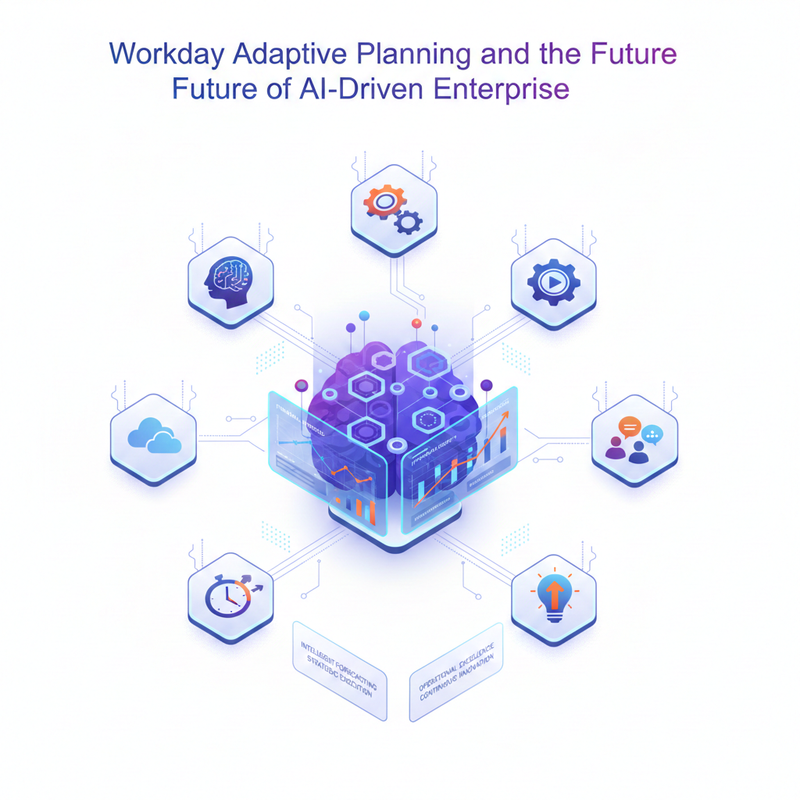
Workday Adaptive Planning and the Future of AI-Driven Enterprise Performance is transforming the way organizations approach financial planning, budgeting, forecasting, and strategic decision-making. As businesses face rapidly changing markets, economic uncertainty, and increasing pressure to optimize performance, Workday Adaptive Planning leverages artificial intelligence and machine learning to provide real-time insights, predictive forecasts, and scenario modeling that empowers leaders to make smarter, data-driven decisions. The platform eliminates reliance on traditional spreadsheets and manual processes, reducing errors and accelerating planning cycles while enabling enterprise-wide collaboration across finance, HR, and operational teams. By integrating seamlessly with Workday HCM, Workday Financial Management, and external ERP systems such as SAP, Oracle, and NetSuite, it ensures a unified source of truth and consistent data across the organization. With AI-driven predictive analytics, organizations can identify trends, detect anomalies, and plan proactively for revenue growth, cost optimization, workforce planning, and operational efficiency. Real-time dashboards and interactive reporting allow executives to monitor KPIs, assess performance, and make adjustments instantly, while scenario planning enables testing of multiple “what-if” situations to understand the potential impact of strategic decisions. Automated workflows for budgeting, forecasting, and approvals save time, minimize errors, and improve governance, while multi-currency, multi-entity, and compliance features support global enterprises with complex operations. Beyond financial planning, Workday Adaptive Planning empowers workforce planning, sales and revenue forecasting, operational alignment, resource allocation, and capital expenditure management. The platform’s AI capabilities continuously learn from historical and real-time data, enhancing the accuracy of forecasts, improving efficiency, and helping organizations respond to unforeseen challenges with agility. As companies embrace digital transformation, Workday Adaptive Planning is positioned to expand its AI-driven features, offering deeper insights, advanced predictive modeling, and enhanced collaboration tools. Its future includes continuous, data-driven planning that adapts dynamically to market fluctuations, workforce needs, and business growth strategies. Leaders can leverage AI-powered insights to optimize decision-making across all departments, from finance and HR to operations and strategy, creating resilient and high-performing organizations. By moving from reactive to proactive planning, organizations gain the ability to plan confidently, allocate resources effectively, and achieve sustainable growth. The platform’s scalability ensures that both mid-sized businesses and global enterprises can benefit from its advanced capabilities, while intuitive interfaces make adoption easier for non-technical users. Workday Adaptive Planning fosters a culture of collaboration, transparency, and accountability, empowering teams to work together toward shared goals. Predictive insights and automated analysis reduce the burden of manual data interpretation, allowing teams to focus on strategic initiatives that drive performance. Organizations using Workday Adaptive Planning are better equipped to anticipate challenges, seize opportunities, and make informed decisions in a complex and competitive business landscape. As AI continues to evolve, the platform will further enhance enterprise agility, operational efficiency, and planning accuracy. In essence, Workday Adaptive Planning and the future of AI-driven enterprise performance represent a shift toward smarter, faster, and more intelligent business management, enabling companies to thrive in 2026 and beyond.
Workday Adaptive Planning Careers: How Salaries Are Shaping in 2026
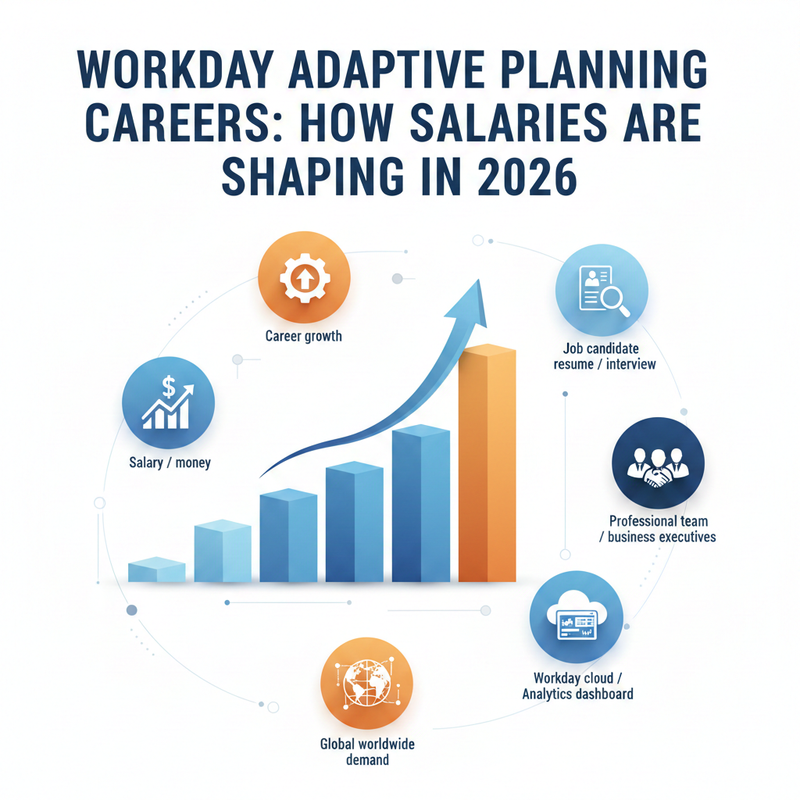
In 2026, Workday Adaptive Planning is emerging as one of the most lucrative and in-demand career paths for finance and technology professionals. With organizations increasingly adopting Workday Adaptive Planning to drive data-driven decision-making, improve operational efficiency, and optimize resource allocation, professionals with expertise in this platform are seeing strong salary growth. Entry-level roles such as Workday Adaptive Planning Analyst or Junior Consultant offer competitive starting salaries, while mid-level professionals with experience in Workday implementations, scenario modeling, financial reporting, and ERP integrations command higher compensation. Senior-level consultants, managers, and solution architects specializing in Workday Adaptive Planning—especially those integrating it with Workday HCM, Workday Financial Management, or ERP systems like SAP and Oracle—receive premium salary packages, including base pay, performance bonuses, and stock options. Salary trends in India show mid-career professionals earning between ₹10–17 LPA, with senior experts exceeding ₹20 LPA, reflecting the increasing adoption of Workday solutions by multinational corporations and large domestic enterprises. Globally, professionals in North America and Europe benefit from higher total compensation due to the high demand for Workday Adaptive Planning skills and the strategic importance of cloud-based planning in enterprise operations. Career opportunities extend beyond finance into HR, operations, consulting, and strategy roles, with skills in AI-driven forecasting, predictive analytics, automated reporting, and scenario planning being highly sought after. Soft skills such as leadership, communication, and cross-functional collaboration further enhance earning potential and career growth. With AI, machine learning, and automation increasingly integrated into Workday Adaptive Planning workflows, professionals who can leverage these technologies to provide predictive insights and continuous planning are positioned to command higher salaries and career advancement opportunities. Hybrid and remote work models are also expanding access to global projects, increasing exposure, and compensation potential. Professionals who earn Workday Adaptive Planning certifications and gain hands-on experience with enterprise planning, budgeting, and forecasting tools have a competitive edge in the market. Overall, Workday Adaptive Planning careers in 2026 offer not only attractive salaries but also long-term professional growth, opportunities for specialization, and the ability to contribute to strategic, data-driven decision-making within global enterprises. For professionals looking to advance their careers in financial planning, cloud-based ERP solutions, and enterprise performance management, acquiring skills in Workday Adaptive Planning is increasingly becoming one of the most lucrative and strategic choices in 2026.
Roadmap to Master Workday Adaptive Planning in 2026: A Complete Learning Path
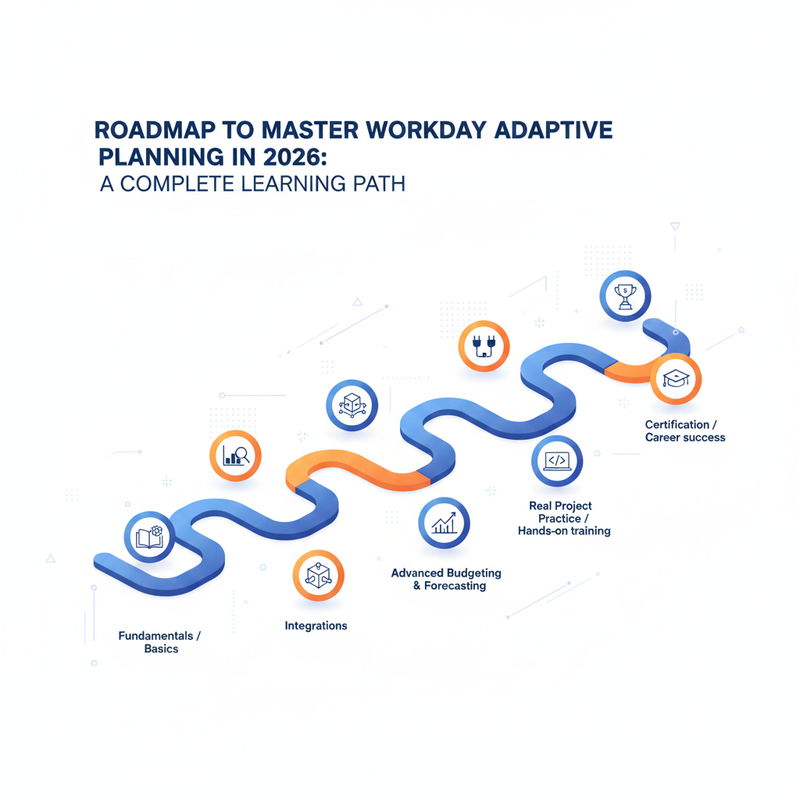
The roadmap to master Workday Adaptive Planning in 2026 involves a structured path that combines foundational learning, hands-on practice, real-world project exposure, and continuous skill enhancement aligned with the latest technological advancements in enterprise planning, and leading training platforms like Tech Pratham play a key role in helping professionals build these capabilities effectively. The journey typically begins with developing a strong understanding of financial planning and budgeting fundamentals, including core concepts such as forecasting, model building, strategic planning, workforce planning, and performance analytics, which form the backbone of the Workday Adaptive Planning platform. The next phase is learning the Workday ecosystem, understanding how Adaptive Planning integrates with modules like Workday HCM and Financial Management, and gaining familiarity with cloud-based enterprise resource planning processes. From here, professionals should begin hands-on training within the Adaptive Planning environment, exploring essential features such as cubes, sheets, dashboards, reporting, discovery boards, and scenario modeling, while learning how to build and manage models aligned with real business requirements. Getting trained through structured courses and certification programs, including specialized guidance from Tech Pratham, is a critical milestone, as Workday certification significantly enhances credibility and employability across global markets. As part of the roadmap, developing strong expertise in integrations becomes essential, particularly understanding how Adaptive Planning connects with ERP systems like SAP, Oracle, and NetSuite using Workday Integration Cloud and APIs to ensure real-time data synchronization and accuracy in enterprise forecasting. Practical, real-world project experience helps professionals apply their knowledge to complex planning use cases involving multi-dimensional modeling, cross-departmental reporting, and advanced scenario-based forecasting. As AI and machine learning capabilities evolve, mastering predictive analytics, automated forecasting, and intelligent planning tools becomes increasingly important to stay competitive. Equally valuable are soft skills such as stakeholder communication, analytical thinking, and solution design, which contribute to success as a Workday Adaptive Planning consultant or solution architect. Continuous learning is necessary, as Workday releases platform updates twice a year, requiring professionals to stay aligned with new features and enhancements. Building a portfolio of real case studies, participating in Workday community discussions, networking with experts, and engaging in team-based projects further accelerates professional visibility and growth. For those aiming for leadership or consulting roles, gaining experience in end-to-end implementation cycles, Agile project delivery, and cross-functional collaboration helps pave the way toward senior positions such as planning manager, solution architect, lead consultant, or enterprise planning strategist. Following this structured roadmap, supported by training resources like Tech Pratham, positions professionals to master both technical capabilities and strategic planning expertise, enabling them to deliver measurable business outcomes and establish themselves in one of the most promising and future-proof career paths in 2026.
Conclusion
In conclusion, Workday Adaptive Planning has become a mission-critical platform for organizations striving to enhance financial performance, improve decision-making accuracy, and accelerate digital transformation in 2026. As businesses face increasing market volatility and pressure to respond faster with data-backed insights, Workday Adaptive Planning provides the agility, scalability, and intelligence needed to build resilient and future-ready enterprises. While successful implementation requires addressing challenges such as data integration, process alignment, and user adoption, the rewards in terms of operational efficiency, collaboration, and forecasting precision are transformative. With AI-driven planning capabilities, real-time analytics, seamless ERP integration, and continuous platform innovations, organizations are empowered to move beyond traditional planning and embrace continuous, automated, and predictive enterprise performance management. The growing demand for skilled Workday Adaptive Planning professionals and rising salary trends reflect the platform’s expanding influence across global industries. By following a well-structured learning and implementation roadmap—supported by expert training partners like Tech Pratham—businesses and professionals can unlock significant value, gain competitive advantage, and lead with confidence in a rapidly evolving digital economy. As 2026 progresses, Workday Adaptive Planning stands at the forefront of enterprise planning technology, shaping the future of intelligent business strategy and performance excellence for organizations worldwide.