

Workday Finance Course Guide – Financial Accounting, Procure-to-Pay, Record-to-Report, Reporting & Analytics
Table of Contents
Workday Finance Course is designed to help finance professionals, graduates, and ERP learners understand how modern organizations manage their financial operations using Workday Financial Management. As companies move away from traditional accounting systems, Workday Finance has become a leading cloud-based solution for handling financial accounting, procure-to-pay, record-to-report, and real-time reporting. This course guide provides a complete overview of how Workday Finance works in real business environments, making it ideal for anyone looking to build a strong foundation in enterprise finance systems.
With structured Workday Finance Training, learners gain practical knowledge of core finance processes, financial reporting, and analytics that support better business decisions. The training focuses on both functional concepts and hands-on understanding, helping users connect accounting theory with Workday’s real-time financial data model. Whether you are starting your career or upgrading your ERP skills, this guide explains each concept clearly and prepares you for roles such as Workday Finance Consultant, Financial Analyst, or ERP Functional Specialist.
What is Workday Financial Management?
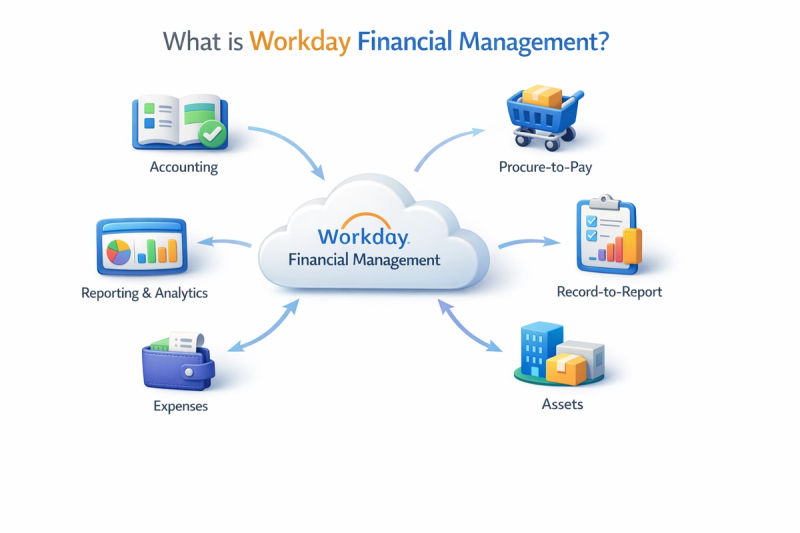
Workday Financial Management is a modern, cloud-based finance system used by companies to manage their accounting, expenses, procurement, assets, and financial reporting in one place. Unlike traditional finance software that depends on separate systems and manual updates, Workday Finance works in real time. This means when a transaction happens—like an expense approval or supplier payment—the data is instantly updated across the system. This helps finance teams see accurate numbers at any time without waiting for end-of-day or month-end updates.
Another important feature of Workday Financial Management is its flexible data structure called Worktags. Worktags allow companies to track financial data by department, cost center, project, region, or business unit without creating complex account codes. This makes reporting simple and meaningful. Overall, Workday Financial Management helps organizations reduce manual work, improve financial accuracy, and make faster, data-driven decisions, which is why it is widely used by global companies.
Why Companies Are Moving from Legacy ERP to Workday Finance
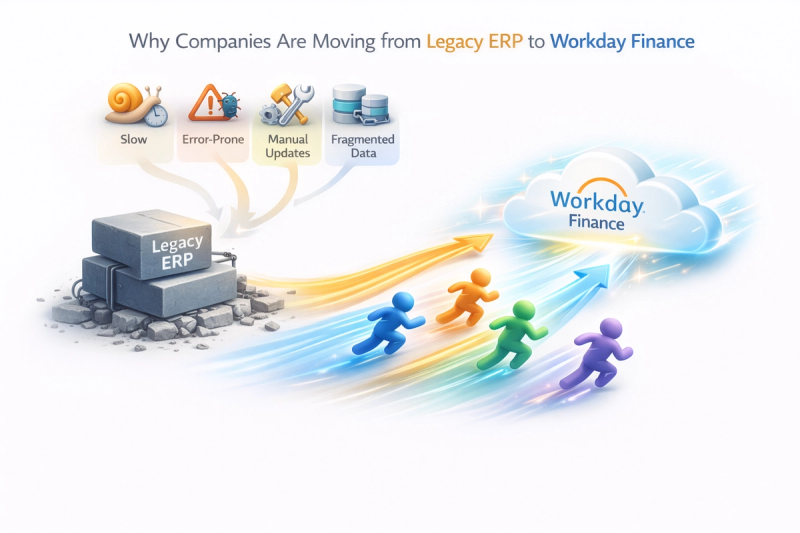
Many companies are moving away from legacy ERP systems because they are complex, slow, and expensive to maintain. Traditional ERP systems often require heavy customization, regular upgrades, and large IT support teams. Reporting in legacy systems usually takes time because data is stored in different modules or databases. This causes delays, errors, and limited visibility into financial performance. In today’s fast-moving business environment, companies need real-time insights, not outdated reports.
Workday Finance solves these problems by offering a single cloud-based platform with real-time data and automatic updates. There is no need for manual upgrades or separate reporting tools. Finance teams can close books faster, manage spending better, and respond quickly to business changes. Workday also provides strong security, compliance support, and scalability, making it suitable for growing organizations. These benefits are the main reasons why companies are replacing legacy ERP systems with Workday Finance.
Who Should Learn Workday Finance (Freshers, Accountants, ERP Professionals)
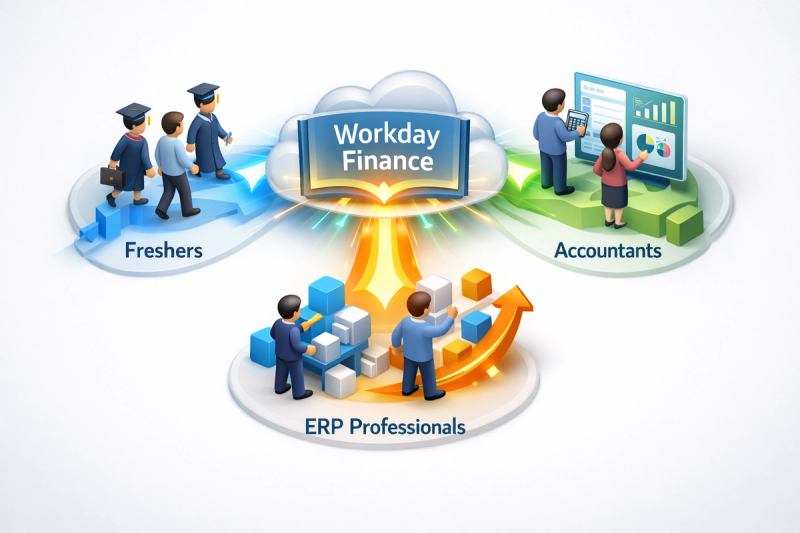
Workday Finance is a great career option for freshers who want to enter the ERP or finance technology field. Even if you do not have prior Workday experience, a structured Workday Finance course can help you understand accounting processes, business workflows, and enterprise systems. Fresh graduates with backgrounds in commerce, finance, or management can build strong job-ready skills and start their careers as junior consultants, analysts, or finance system support professionals.
Accountants and finance professionals can also benefit greatly from learning Workday Finance. It helps them move beyond traditional accounting roles into system-based and analytical roles. By learning Workday Finance, accountants can understand automation, reporting, and financial controls at an enterprise level. ERP professionals from systems like SAP or Oracle can upgrade their skills by learning Workday Finance, as many companies are actively migrating to Workday. This makes Workday Finance training valuable for anyone looking to grow in the modern finance and ERP job market.
Core Components of Workday Finance
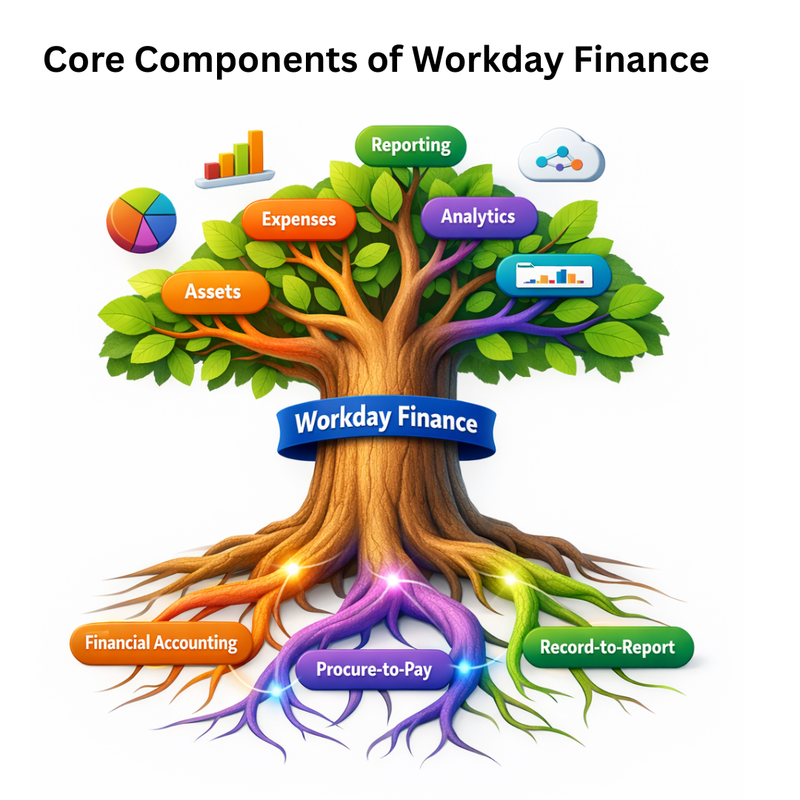
Workday Finance is made up of several core components that work together to manage an organization’s financial activities in one system. These components include Financial Accounting, Procure-to-Pay, Record-to-Report, Assets, Expenses, Reporting, and Analytics. Instead of using different software for each finance function, Workday combines everything into a single cloud-based platform. This makes finance operations more connected and easier to manage.
Each component in Workday Finance shares the same data model. This means when a transaction happens in one area, such as procurement or expenses, it automatically reflects in accounting and reporting. There is no need to manually transfer data between systems. For beginners, this is important to understand because Workday Finance is designed to reduce errors, save time, and give a complete financial picture at all times.
Overview of Workday Finance Architecture
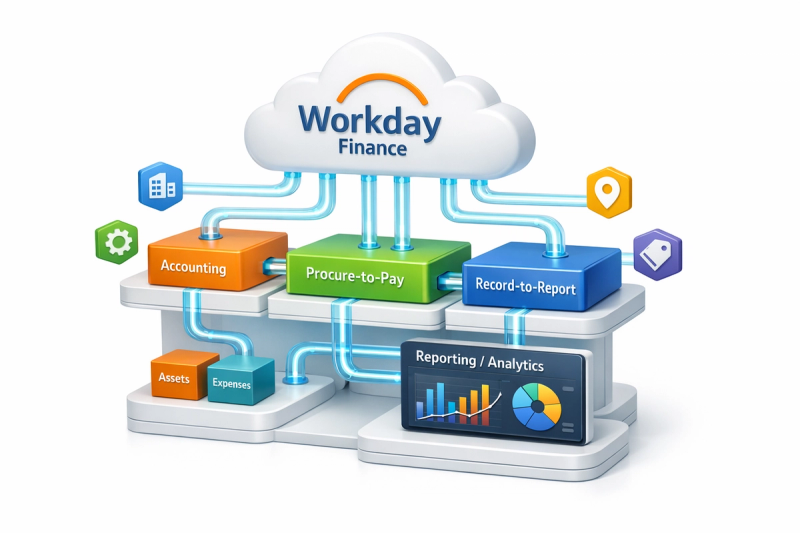
Workday Finance architecture is built on a single, unified cloud platform. Unlike traditional ERP systems that store data in separate modules or databases, Workday uses one shared system for all finance processes. This architecture allows real-time data flow and ensures consistency across accounting, procurement, reporting, and analytics. Users access the system through a web browser, which means no complex local installations are required.
A key part of the Workday Finance architecture is its object-based data model and Worktags. Worktags act like labels that help track financial transactions by department, project, cost center, or location. This design makes reporting flexible and easy. For beginners, this architecture is helpful because it removes the complexity of managing multiple account structures and makes financial data easier to understand and analyze.
How Different Financial Modules Work Together
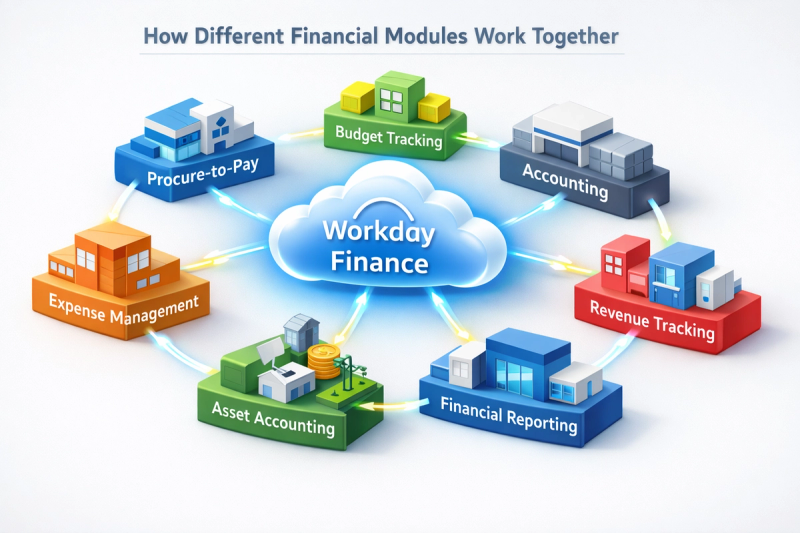
In Workday Finance, all financial modules are tightly integrated. For example, when a user creates a purchase requisition in the Procure-to-Pay module, the data automatically flows to accounting and budget tracking. Once the supplier invoice is paid, the transaction is recorded in the General Ledger without any manual entry. This integration ensures accuracy and saves a lot of manual effort.
Similarly, expense management, asset accounting, and revenue tracking all connect directly to financial reporting. Because the modules work together, finance teams can easily track costs, revenues, and financial performance in one place. For beginners, this means learning Workday Finance is not about memorizing separate systems but understanding how one action affects the entire financial process.
Real-Time Data Processing in Workday
One of the biggest advantages of Workday Finance is real-time data processing. In traditional systems, financial data is often updated in batches, which can delay reporting and decision-making. In Workday, every transaction is processed instantly. This means finance teams always see the most accurate and up-to-date information without waiting for system refreshes or overnight jobs.
Real-time processing also improves financial reporting and analysis. Managers and finance leaders can view live dashboards, track spending, and monitor performance as it happens. For beginners, this feature makes Workday Finance easier to understand because there is a clear connection between actions and results. It also helps organizations respond quickly to business changes and make better financial decisions.
Workday Financial Reporting
Workday Financial Reporting helps organizations turn financial data into meaningful information that supports better decisions. Since Workday Finance stores all data in a single system, reports are always accurate and up to date. Finance teams do not need to export data to Excel or use third-party tools for most reporting needs. Everything—from daily expenses to high-level financial statements—can be viewed directly in Workday.
Another important advantage of Workday Financial Reporting is its flexibility. Users can easily filter, sort, and drill down into data to understand the details behind the numbers. Even beginners can learn reporting faster because Workday uses a simple, user-friendly interface. This makes Workday Financial Reporting useful for both finance professionals and business users.
Standard vs Custom Reports in Workday
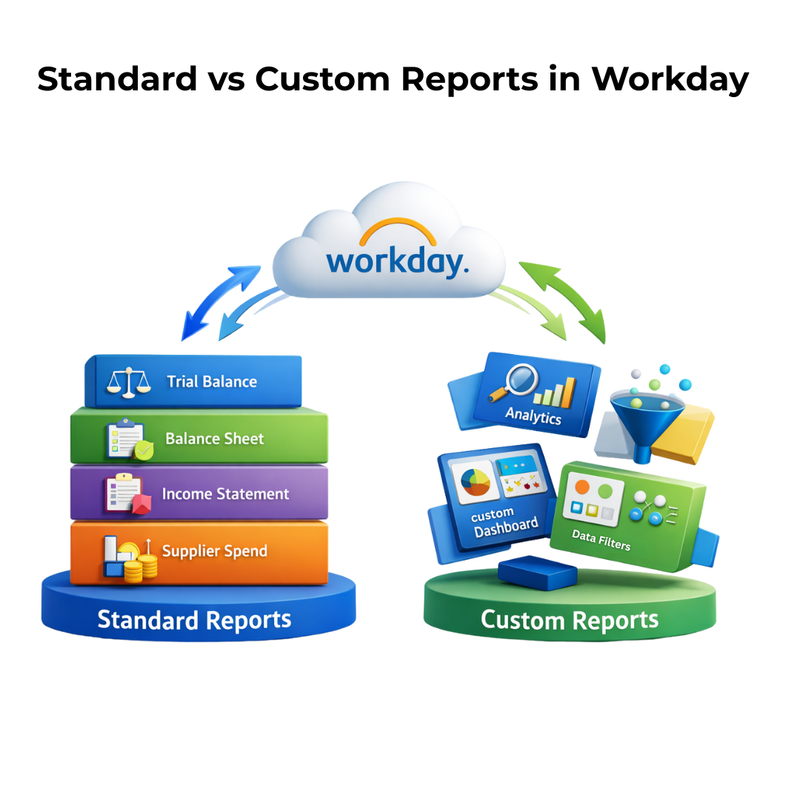
Workday provides standard reports that are already built into the system. These reports cover common business needs such as trial balance, balance sheet, income statement, supplier spend, and expense summaries. Standard reports are ready to use and follow best practices, which is helpful for beginners who are just starting with Workday Finance.
In addition to standard reports, Workday allows users to create custom reports based on business requirements. Custom reports help organizations track specific data points that may not be available in standard reports. The key differences are:
- Standard Reports
- Pre-built and easy to use
- Suitable for common finance needs
- Require little to no configuration
- Custom Reports
- Built using Workday Report Writer
- Flexible and role-specific
- Designed for detailed analysis
This combination allows companies to meet both basic and advanced reporting needs without leaving the Workday system.
Job Roles in Workday Finance
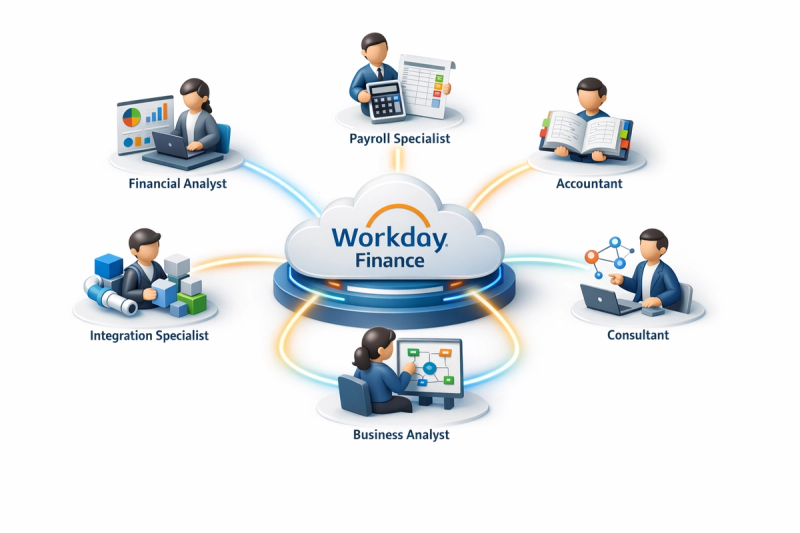
Workday Finance opens doors to multiple career roles that combine finance knowledge with modern ERP systems. These roles support financial operations, reporting, payroll, system integrations, and business decision-making. Each role has a different focus, but all of them benefit from strong understanding of finance processes and Workday Financial Management.
Financial Analysts
Financial Analysts use Workday Finance to analyze financial data and support business decisions. Their main responsibility is to study reports, budgets, expenses, and revenue trends to help management understand the company’s financial performance. They rely heavily on Workday’s real-time reporting and dashboards to provide accurate insights.
In Workday environments, Financial Analysts often create and run reports, compare budget vs actual data, and identify areas where costs can be controlled. This role is suitable for people who enjoy working with numbers, data analysis, and financial planning. A good understanding of Workday reporting and analytics is essential for success in this role.
Payroll Specialists
Payroll Specialists are responsible for managing employee salaries, deductions, taxes, and compliance. When Workday Finance is integrated with Workday HCM, payroll data flows directly into financial accounting, reducing manual effort and errors. Payroll Specialists ensure employees are paid accurately and on time.
In a Workday setup, Payroll Specialists work closely with finance and HR teams to maintain payroll accuracy and reporting. They handle payroll audits, statutory compliance, and reconciliation. This role is ideal for professionals with knowledge of payroll processes, labor laws, and system-based payroll management.
Accountants
Accountants using Workday Finance handle core accounting activities such as journal entries, account reconciliations, month-end and year-end close, and financial statements. Workday automates many accounting tasks, allowing accountants to focus more on accuracy and analysis rather than manual data entry.
In addition, accountants use Workday’s Worktags to track financial transactions across departments, projects, or locations. This role is well suited for commerce graduates and finance professionals who want to move from traditional accounting to a modern, system-driven accounting environment.
Business Analysts
Business Analysts act as a bridge between finance teams and technical teams. They gather business requirements, analyze processes, and help configure Workday Finance to meet organizational needs. Business Analysts ensure that the system supports business goals efficiently.
In Workday Finance projects, Business Analysts document workflows, assist in testing, and support reporting requirements. This role is ideal for individuals who have strong communication skills and enjoy understanding business problems and translating them into system solutions.
Integration Specialists
Integration Specialists focus on connecting Workday Finance with other internal and external systems, such as banks, tax systems, payroll providers, or third-party applications. Their role is critical because organizations often use multiple systems alongside Workday.
These specialists ensure data flows smoothly and securely between systems. They work with APIs, integration tools, and data validation processes. This role is suitable for professionals with technical skills and an interest in system connectivity and automation within finance environments.
Consultants
Workday Finance Consultants help organizations implement, upgrade, and optimize Workday Finance. They work with clients to understand business requirements, configure modules, provide training, and support go-live activities. Consultants play a key role in ensuring successful Workday deployments.
There are different types of consultants, including functional consultants and advisory consultants. This role suits professionals who enjoy problem-solving, working with multiple clients, and applying finance and system knowledge in real-world scenarios. Strong understanding of Workday Finance processes and hands-on experience are essential for this role.
Workday Finance Roadmap 2026 What to Learn First and How to Build a Career
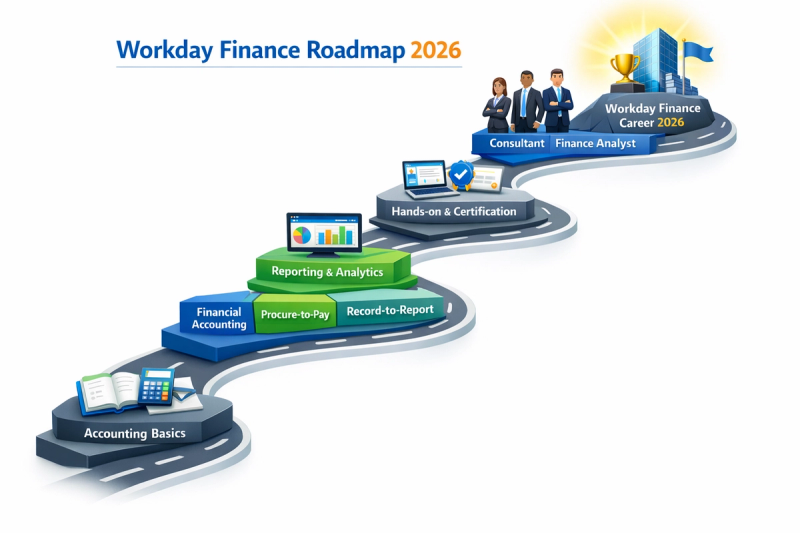
Workday Finance is one of the most in-demand ERP skills as companies continue to move to cloud-based financial systems. In 2026, professionals with strong knowledge of finance processes and Workday Financial Management have excellent career opportunities. Following a clear learning roadmap helps beginners understand what to learn first and how to grow step by step. A structured Workday Finance course makes this journey easier by combining finance concepts with system knowledge.
The first step is to build a strong foundation in accounting and finance, including General Ledger, journal entries, and financial statements. Next, learners should understand Workday Financial Management basics such as system navigation, Worktags, and business processes. After that, focus on core modules like Financial Accounting, Procure-to-Pay, and Record-to-Report. Good Workday Finance training emphasizes how these modules work together in real business scenarios.
The final stage is learning reporting, dashboards, and analytics, followed by hands-on projects and certification preparation. Practical exposure is key to becoming job-ready. Training providers like Tech Pratham focus on real-time learning and career guidance, helping learners move confidently into roles such as Workday Finance Consultant, Finance Analyst, or ERP Specialist.
Conclusion: Why Learning Workday Finance Is a Smart Career Move
The Workday Finance Course Guide – Financial Accounting, Procure-to-Pay, Record-to-Report, Reporting & Analytics provides a complete understanding of how modern organizations manage their financial operations using a single, cloud-based platform. From core accounting concepts and integrated financial modules to real-time data processing and advanced reporting, Workday Finance simplifies complex finance processes and improves decision-making. This guide clearly explains how Workday Financial Management works in real business environments, making it easy for beginners to understand and build confidence step by step.
As companies continue to replace legacy ERP systems with Workday Finance, the demand for skilled professionals is steadily increasing. Whether you are a fresher, accountant, finance professional, or ERP consultant, structured Workday Finance training helps you move toward system-driven, high-growth roles such as Financial Analyst, Payroll Specialist, Business Analyst, Integration Specialist, or Workday Finance Consultant. By following the Workday Finance Roadmap 2026, focusing on fundamentals, hands-on practice, reporting skills, and real-world projects, learners can build a strong, future-ready career. With the right Workday Finance course and guidance from training platforms like Tech Pratham, transitioning into the modern ERP finance ecosystem becomes clear, achievable, and rewarding.