What Are the Different Workday Modules and What Does Each One Do?
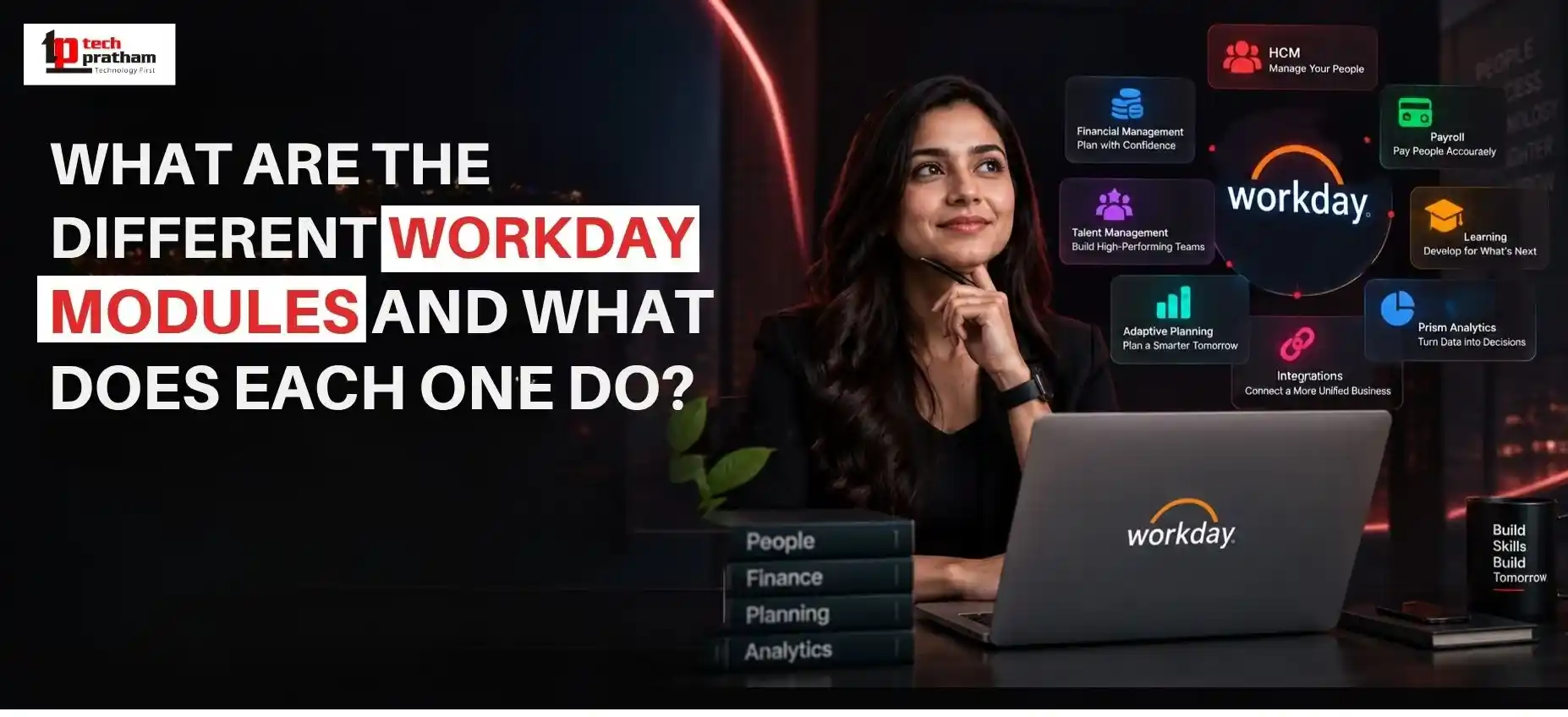
What Is a Workday Module?
- HCM focuses on human resources and employee information.
- Financial Management supports financial operations.
- Recruiting supports hiring.
- Learning supports employee development.
- Payroll helps manage payroll-related processes.
- Reporting and analytics help organizations understand business data.
- Integrations allow Workday to exchange information with other systems.
What Is Workday HCM Used For?
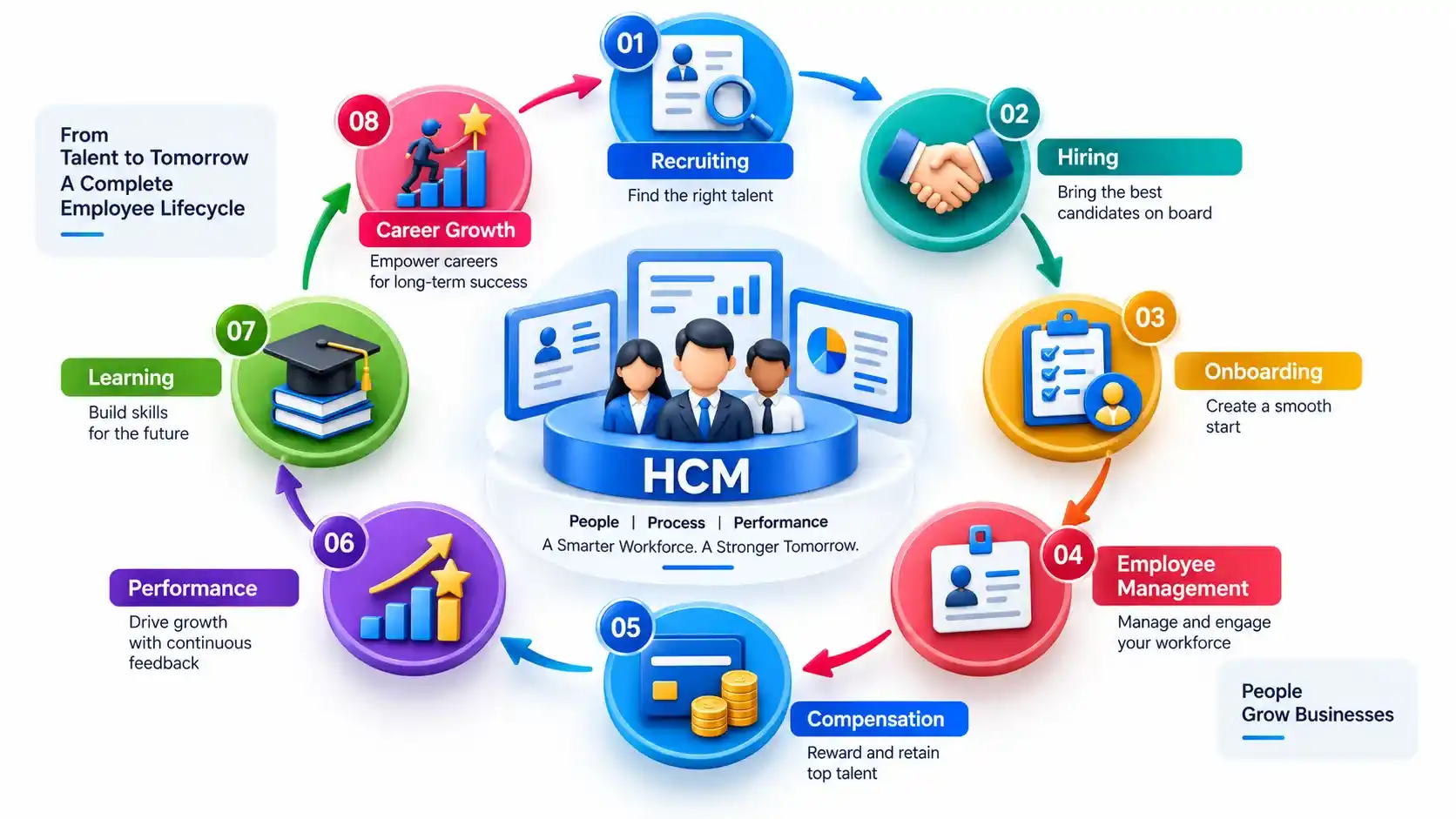
- Employee records
- Organizational structures
- Staffing
- Workforce management
- Compensation
- Benefits
- Absence management
- Talent processes
- Employee data
- HR reporting
Who typically works with Workday HCM?
- Workday HCM consultants
- HR technology professionals
- Workday administrators
- Functional consultants
- HRIS professionals
- Business analysts
What Does Workday Financial Management Do?
- Accounting
- Financial reporting
- Accounts payable
- Accounts receivable
- Expenses
- Revenue-related processes
- Financial transactions
- Financial planning and analysis
Who can consider Workday Finance?
- Accounting
- Finance
- Financial analysis
- ERP systems
- Business processes
- Financial operations
How Does Workday Recruiting Support Hiring?
- Creating job requisitions
- Publishing job opportunities
- Managing candidate applications
- Supporting interview processes
- Managing candidate information
- Extending offers
- Moving candidates into the employee lifecycle
What Is Workday Talent Management?
- Performance management
- Goal management
- Career development
- Succession planning
- Talent reviews
- Skills management
For example, an organization may use performance information and skills data to understand where employees are performing well and where additional development may be useful.
How Does Workday Learning Help Employees Develop Skills?
Organizations increasingly focus on continuous learning because employee skills can change quickly.
Workday Learning supports learning and development activities within the broader employee experience.
It can help organizations manage:
- Learning content
- Training programs
- Required learning
- Employee development
- Learning activities
- Skill development
For employees, learning is not simply about completing courses. It can also be connected to career development and the skills required for future roles.
What Is Workday Payroll?
Workday Payroll focuses on payroll-related processes and employee compensation calculations.
Payroll can involve complex information, including:
- Employee pay
- Earnings
- Deductions
- Taxes
- Payroll calculations
- Payroll reporting
- Payroll-related employee information
Payroll also needs to work with other employee data.
What Is Workday Reporting and Analytics?
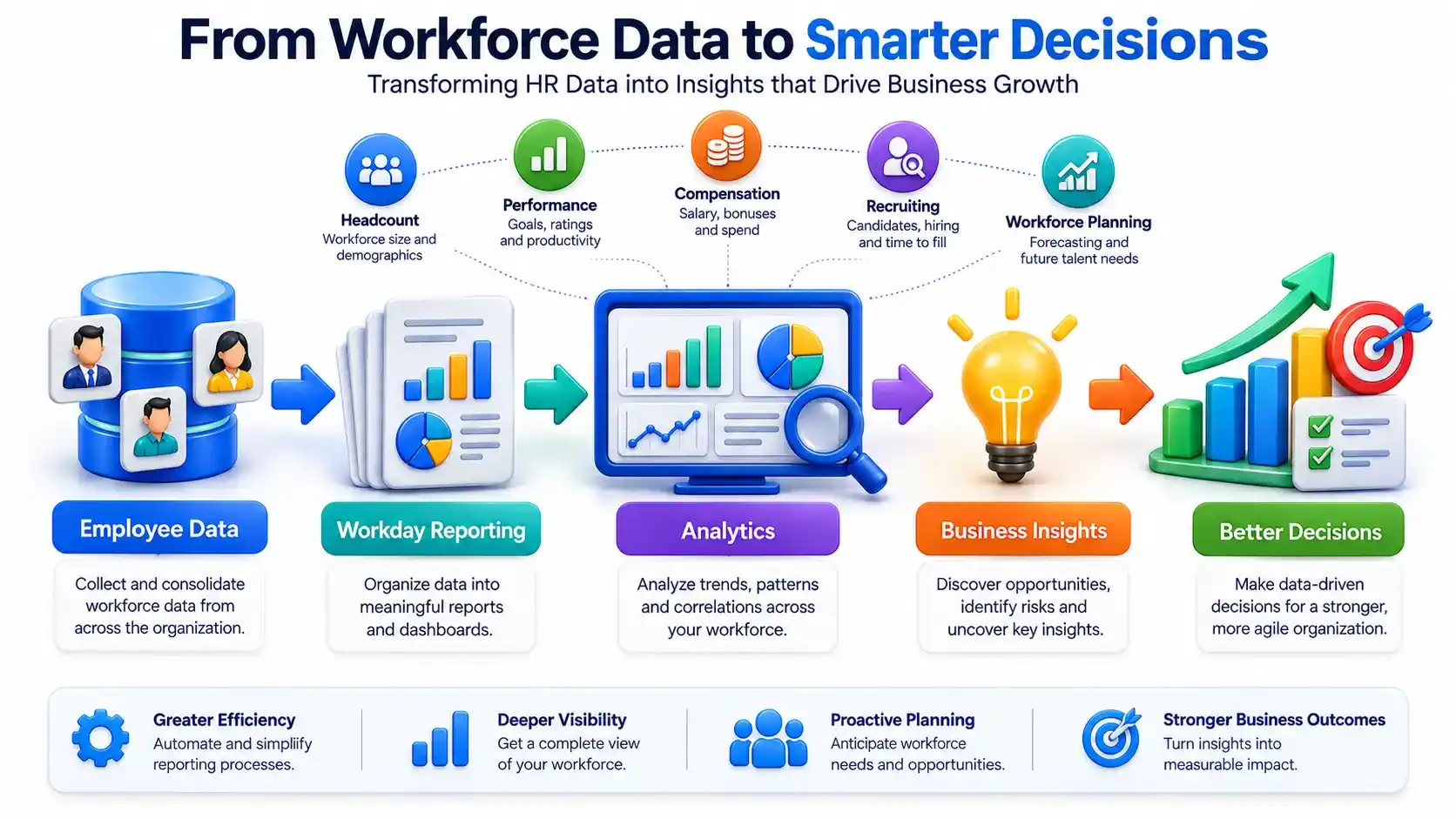
- Headcount
- Employee information
- Compensation
- Workforce trends
- Financial information
- Performance
- Recruiting
- Operational activity
This is why reporting skills can be valuable across different Workday specializations.
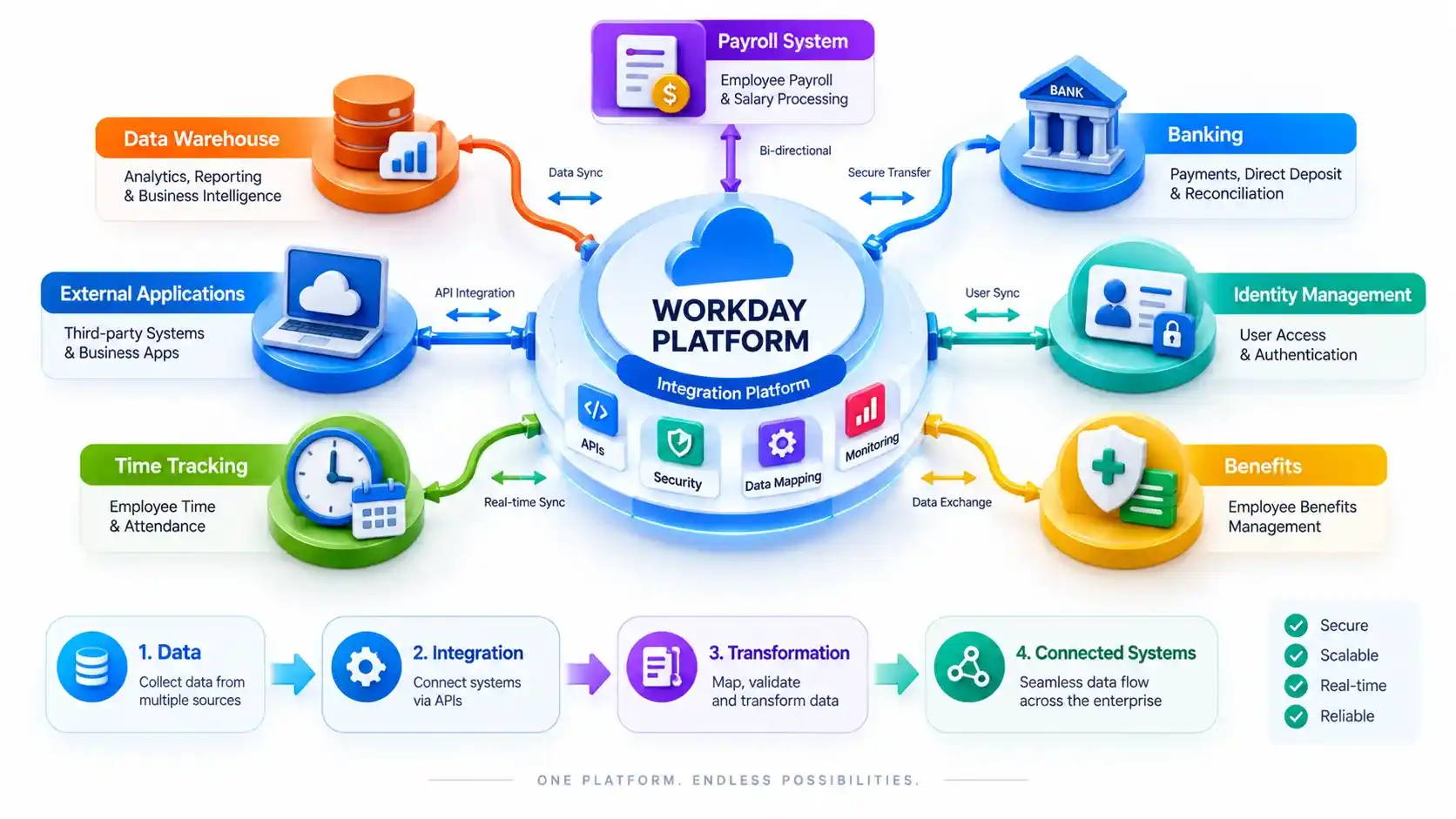
What Are Workday Integrations?
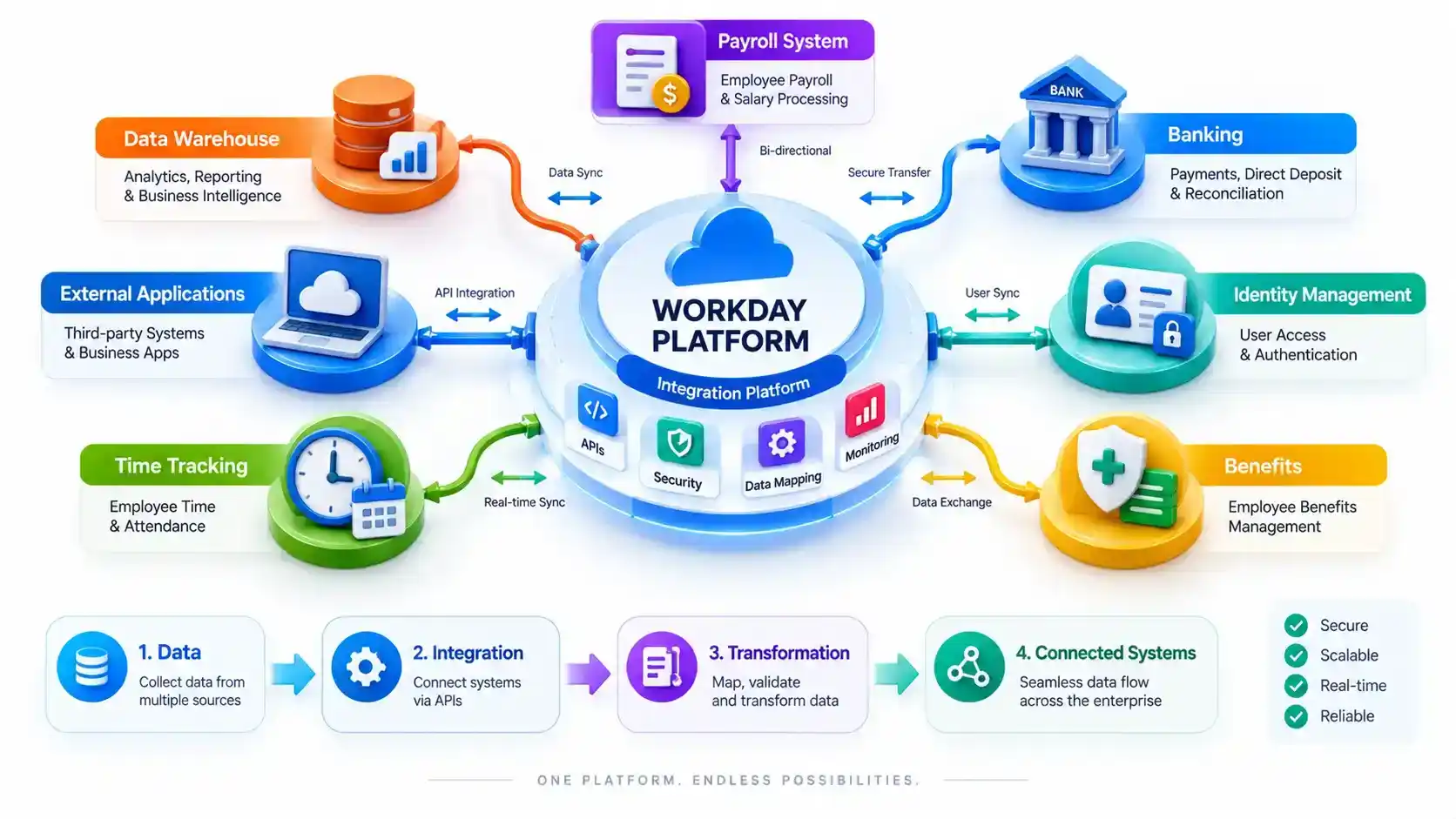
- Identity management
- Payroll
- Benefits
- Finance
- Banking
- Recruiting
- Time tracking
- External applications
- Data warehouses
- APIs
- Web services
- Data transformation
- Integration systems
- Security
- Error handling
- Data exchange
- Integration monitoring
What Is Workday Adaptive Planning?
- Budgets
- Forecasts
- Workforce planning
- Financial planning
- Scenario analysis
- Management reporting
For example, a company planning to expand into a new market may need to estimate hiring requirements, costs, revenue expectations, and other financial factors.
How Do Workday Modules Work Together?
One of the most important things to understand about Workday is that its modules don't necessarily operate as completely independent systems.
Consider a simple employee journey:
Recruiting → Hiring → Onboarding → Core HCM → Compensation → Performance → Learning → Career Development
Different Workday capabilities can contribute to different stages of this journey.
Similarly, workforce information can have an impact on financial planning.
For example:
Employee Data → Workforce Analysis → Workforce Planning → Financial Planning
This interconnected approach allows organizations to work with business information in a more unified environment.
Which Workday Module Should Beginners Learn First?
Background / Interest | Potential Workday Area |
HR / Human Resources | Workday HCM |
Recruitment | Workday Recruiting |
Learning & Development | Workday Learning |
Talent / Performance | Workday Talent Management |
Accounting / Finance | Workday Financial Management |
Payroll | Workday Payroll |
Programming / APIs | Workday Integrations |
Data / Reporting | Workday Reporting & Analytics |
Planning / Finance | Workday Adaptive Planning |
What Skills Are Useful for a Workday Career?
Professionals can benefit from developing a combination of functional, technical, and business skills.
Functional knowledge
- HR processes
- Finance processes
- Payroll
- Recruiting
- Talent management
- Organizational structures
Technical skills
- Integrations
- APIs
- Data concepts
- Reporting
- Security
- XML
- Web services
- Development concepts
Analytical thinking
Workday professionals frequently need to understand business requirements, analyze problems, and translate them into practical solutions.
Communication
Consultants and analysts often work with HR teams, finance teams, IT departments, managers, and other stakeholders.Can You Build a Career by Specializing in One Workday Module?
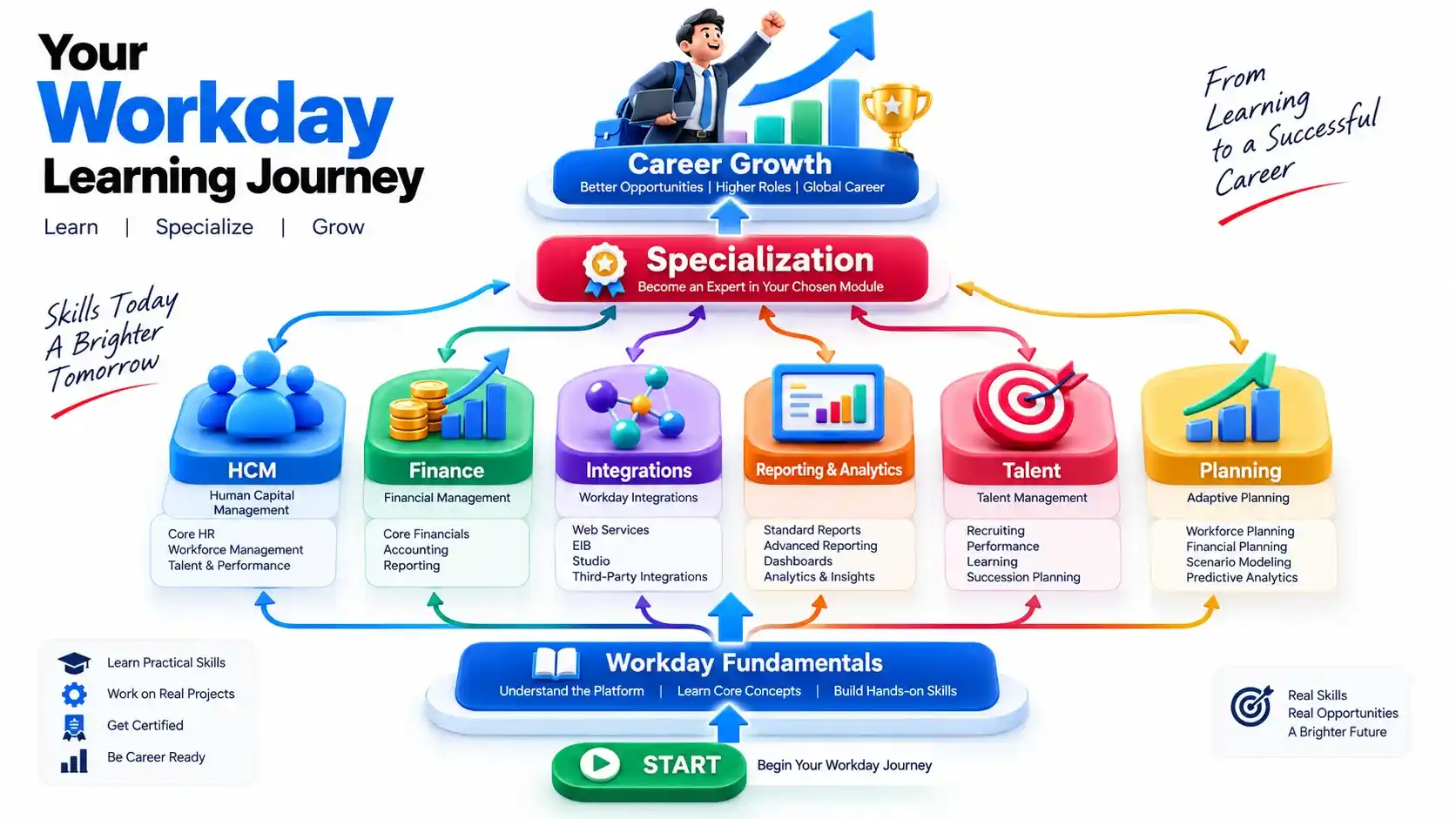
- Workday HCM
- Workday Finance
- Workday Payroll
- Workday Integrations
- Workday Reporting
- Workday Recruiting
- Workday Talent
How Can Practical Workday Learning Help?
- Module coverage
- Hands-on exercises
- Business scenarios
- Reporting practice
- Integration concepts
- Configuration experience
- Interview preparation
- Trainer expertise
- Learning support
What Is the Future of Workday Skills?
- Automation
- Data analysis
- AI-assisted workflows
- Skills management
- Workforce planning
- Reporting and analytics
- Integrations
- Business process understanding
Frequently Asked Questions About Workday Modules
How many Workday modules are there?
Which Workday module is best for beginners?
Is Workday HCM different from Workday Finance?
Is Workday Integration a technical field?
Which Workday module has the most career opportunities?
Do I need programming knowledge to learn Workday?
Is Workday useful only for HR teams?
Conclusion
Related Articles
Future Scope of Workday in India: Jobs, Skills, AI Impact and Salary
Explore Workday career opportunities in India, in-demand skills, AI impact, job roles, salary expectations, and a 90-day learning roadmap.
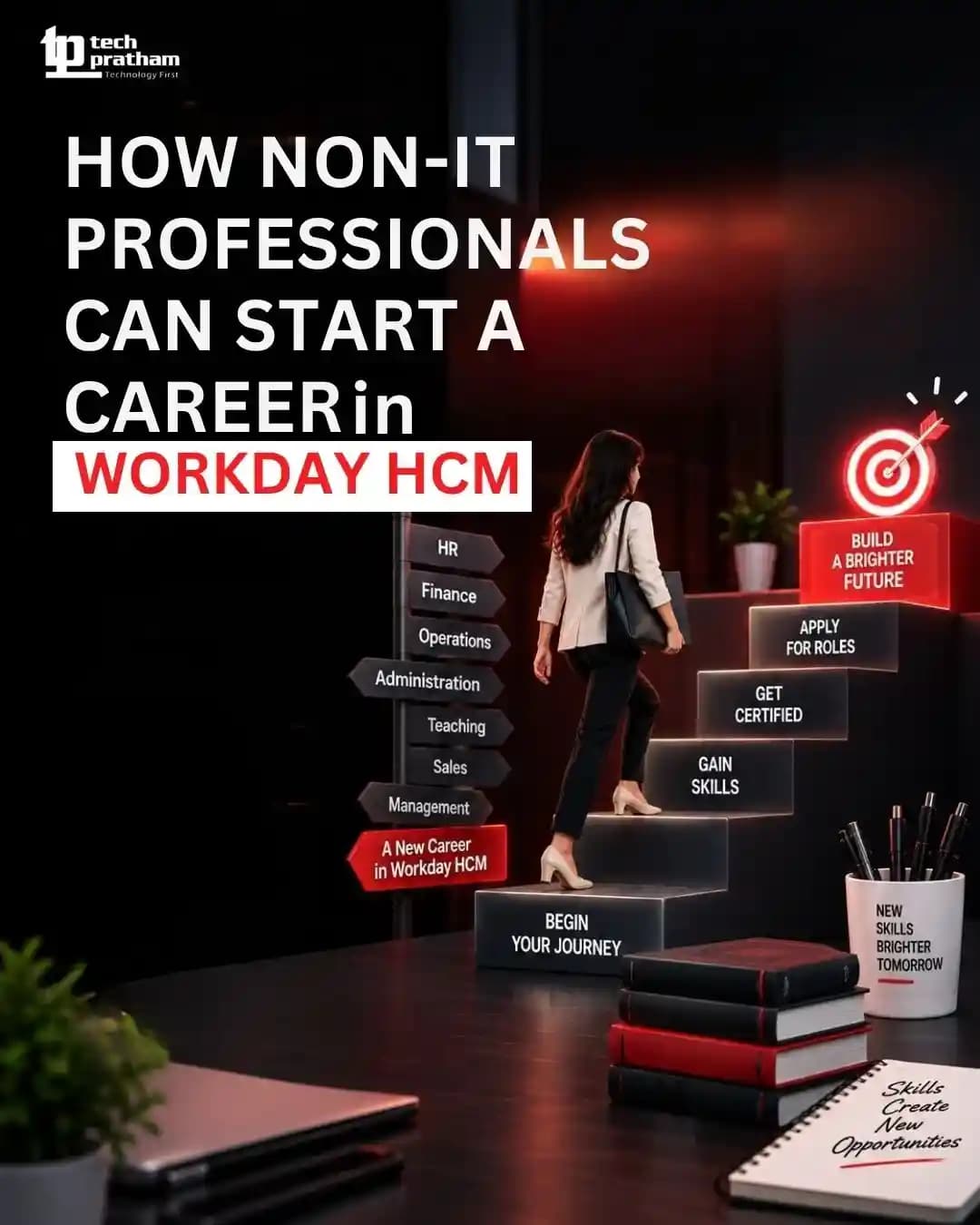
How Can Non-IT Professionals Start a Career in Workday HCM?
Learn how non-IT professionals can enter Workday HCM, build relevant skills, gain practical experience, and explore suitable career opportunities.




 +91-8882178896
 +1 (343) 477-0926