
Why Businesses Are Switching to Adaptive Planning for Better Decision-Making
How Adaptive Planning Improves Financial Forecast Accuracy
Adaptive planning significantly improves financial forecast accuracy by enabling organizations to use real-time data instead of relying on static, outdated information. Traditional forecasting methods often depend on historical data and fixed assumptions, which can quickly become irrelevant in a dynamic market. In contrast, adaptive planning continuously updates financial models based on current business performance, market trends, and external factors. This ensures that forecasts remain relevant and reflect the latest conditions, helping businesses make more precise and timely financial decisions.
Another key advantage of adaptive planning is its ability to support scenario analysis and what-if modeling. Businesses can create multiple financial scenarios based on different assumptions, such as changes in revenue, costs, or market demand. This allows decision-makers to evaluate potential outcomes and prepare for uncertainties in advance. By understanding the financial impact of various scenarios, organizations can reduce risks, allocate resources more effectively, and respond proactively to changes, ultimately improving the reliability of their forecasts.
Additionally, adaptive planning enhances collaboration across departments, which plays a crucial role in improving forecast accuracy. Financial planning is no longer limited to the finance team; it involves inputs from sales, operations, HR, and other business units. This cross-functional collaboration ensures that forecasts are based on comprehensive and accurate data from across the organization. As a result, businesses gain a more holistic view of their financial performance, leading to better alignment, improved forecasting precision, and stronger strategic decision-making. Gaining practical exposure through Workday Adaptive Planning training can further help professionals understand how these real-time forecasting and collaborative planning processes are implemented effectively in modern organizations.
Key Benefits of Adaptive Planning for Modern Businesses
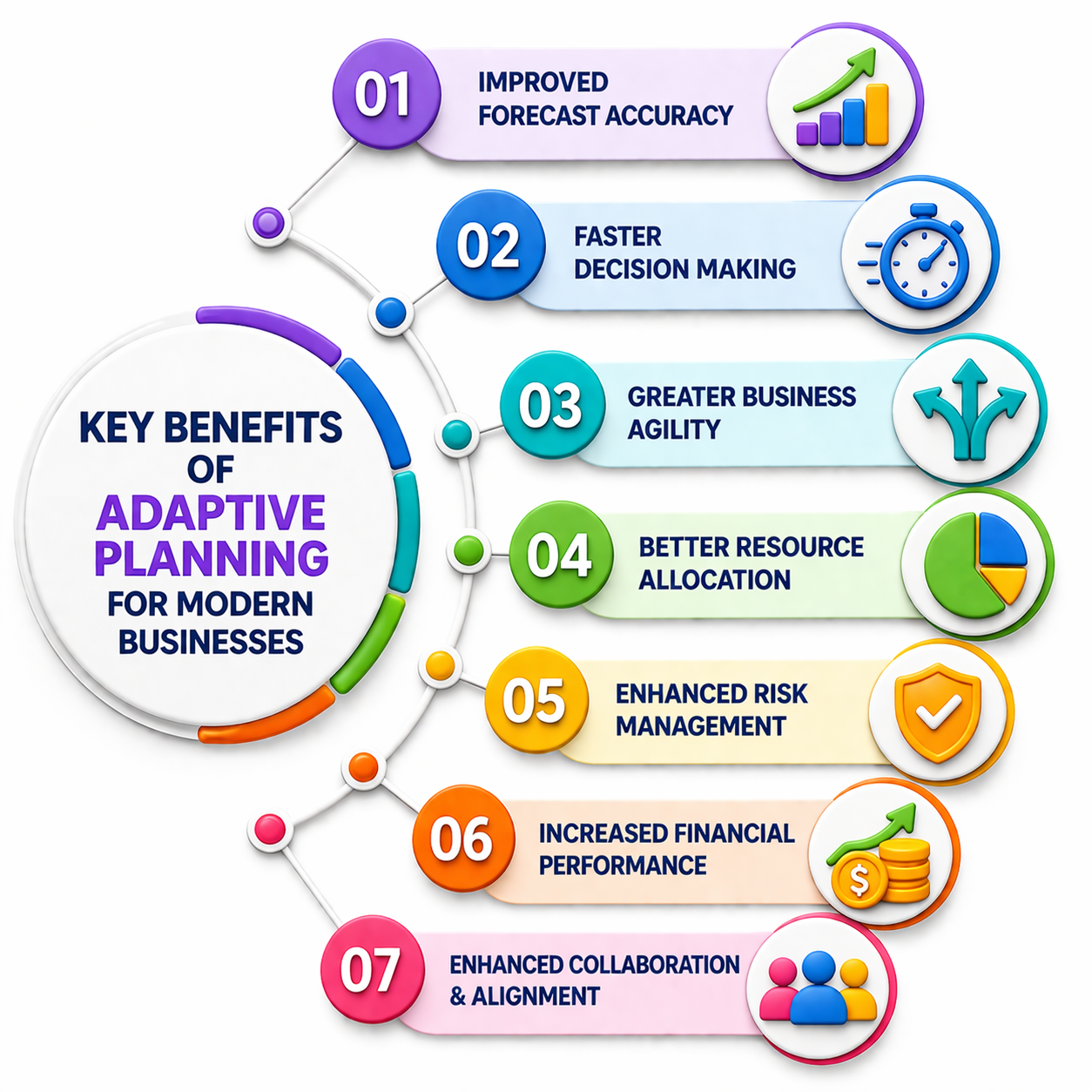
Adaptive planning offers modern businesses a more flexible and data-driven approach to managing uncertainty and driving growth. Unlike traditional planning methods that rely on fixed annual budgets, adaptive planning allows organizations to continuously adjust their strategies based on real-time insights, market shifts, and internal performance. This dynamic approach helps businesses stay competitive, respond quickly to changes, and make more informed decisions. By integrating financial, operational, and strategic planning into a unified process, adaptive planning not only improves efficiency but also strengthens overall business resilience.
- ✔ Enables real-time decision-making with up-to-date data
- ✔ Improves accuracy of financial forecasting and budgeting
- ✔ Enhances business agility in rapidly changing markets
- ✔ Supports better risk management through scenario planning
- ✔ Encourages cross-functional collaboration across departments
- ✔ Reduces dependency on static and outdated planning methods
- ✔ Aligns strategic goals with operational execution
- ✔ Increases efficiency by automating planning processes
- ✔ Helps businesses respond proactively to market uncertainties
- ✔ Drives long-term growth and competitive advantage
Traditional Planning vs Adaptive Planning: A Detailed Comparison
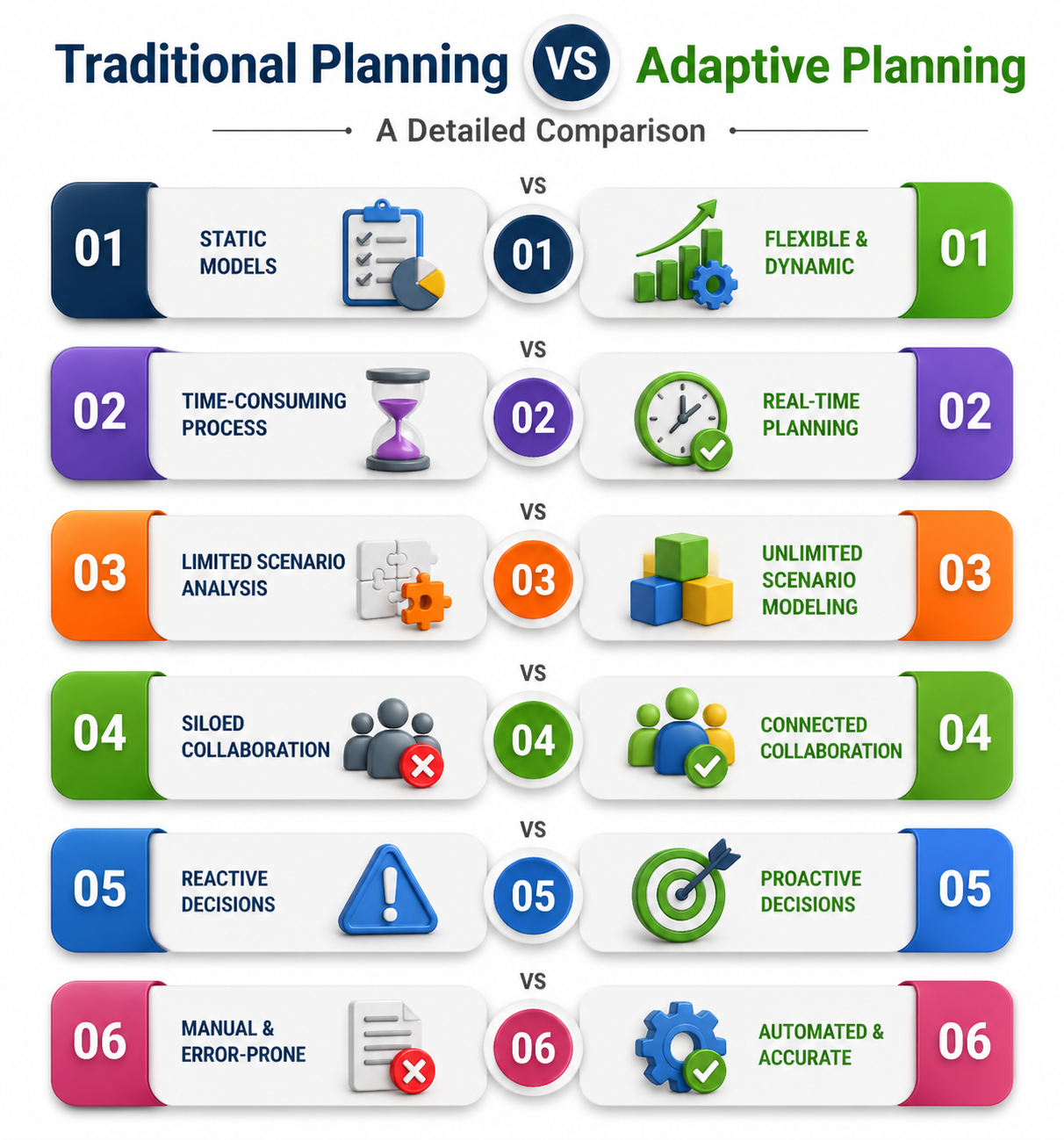
Traditional planning and adaptive planning differ fundamentally in how they approach business strategy and decision-making. Traditional planning typically follows a fixed, annual cycle where budgets and forecasts are created based on historical data and set assumptions. Once established, these plans remain largely unchanged, even when market conditions shift. This rigidity can make it difficult for organizations to respond quickly to unexpected changes, leading to inefficiencies and missed opportunities. In contrast, adaptive planning is a continuous and flexible process that evolves alongside the business environment, allowing organizations to adjust their strategies in real time.
Another key difference lies in how data is used. Traditional planning relies heavily on past performance, often limiting its ability to predict future trends accurately in a dynamic market. Adaptive planning, on the other hand, integrates real-time data, advanced analytics, and ongoing performance tracking to provide more accurate and relevant insights. It also supports scenario analysis, enabling businesses to test multiple outcomes and prepare for uncertainties. This proactive approach helps organizations make better-informed decisions and reduces the risks associated with relying on static forecasts.
Collaboration and responsiveness further set adaptive planning apart from traditional methods. In traditional models, planning is often siloed within finance teams, with limited input from other departments. Adaptive planning encourages cross-functional collaboration, bringing together insights from sales, operations, HR, and other areas to create a more comprehensive view of the business. This not only improves the accuracy of plans but also ensures better alignment across the organization. As a result, businesses using adaptive planning are more agile, resilient, and better equipped to navigate today’s fast-changing business landscape.
How Cloud-Based Tools Enable Adaptive Business Planning
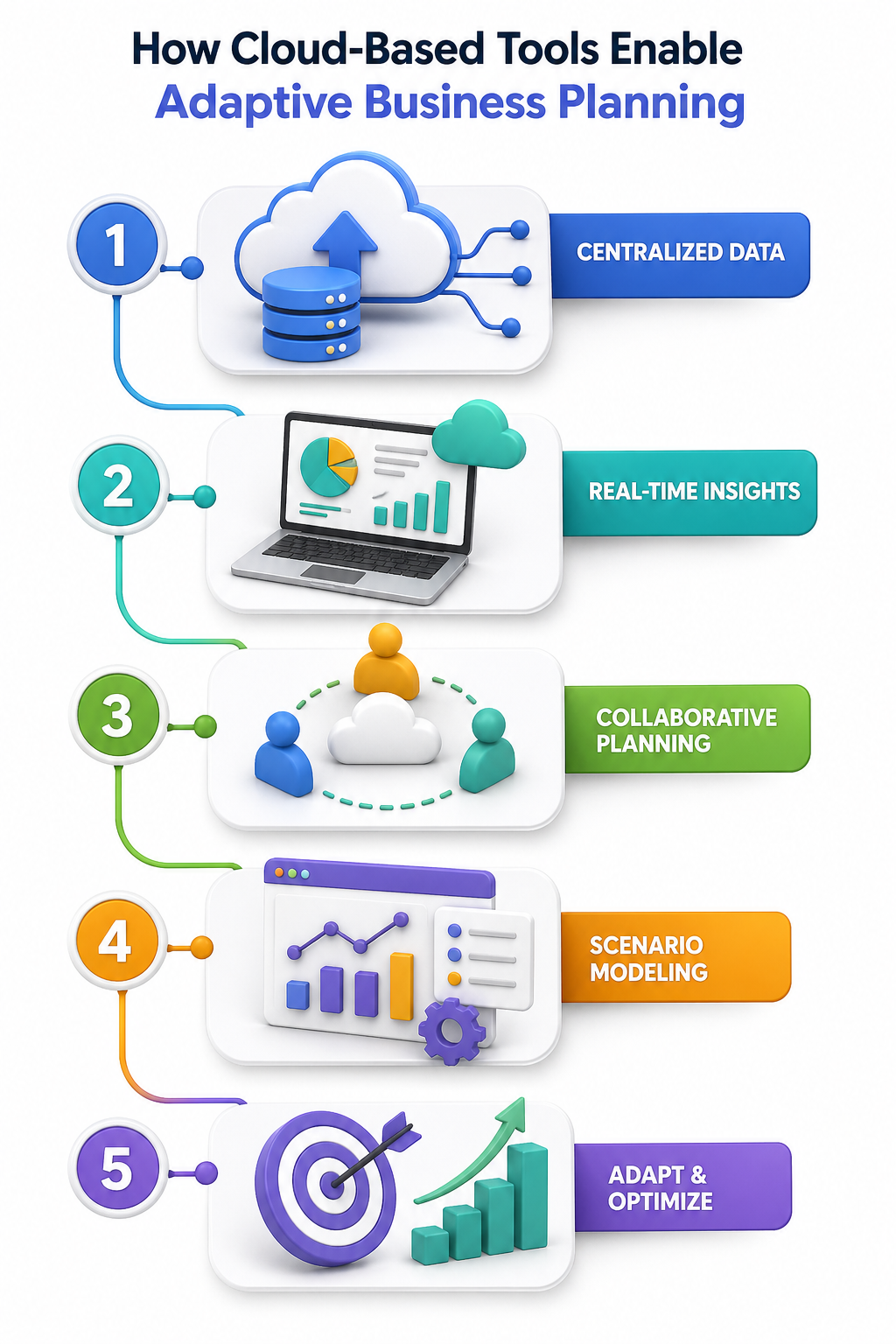
Cloud-based tools play a crucial role in enabling adaptive business planning by providing real-time access to data and insights across the organization. Unlike traditional on-premise systems, cloud platforms centralize information from multiple departments, ensuring that decision-makers are always working with the most current and accurate data. This real-time visibility allows businesses to continuously update forecasts, track performance, and adjust strategies as conditions change. As a result, organizations can respond more quickly to market shifts, customer demands, and operational challenges.
Another important advantage of cloud-based tools is their ability to support collaboration and integration. Teams from finance, HR, sales, and operations can work together on a single platform, contributing data and insights that improve the overall planning process. These tools often integrate seamlessly with other enterprise systems such as ERP and CRM, creating a unified ecosystem for data-driven decision-making. Additionally, features like automated workflows, version control, and role-based access ensure that planning processes are efficient, secure, and well-coordinated across the business.
Cloud-based platforms also enhance the analytical capabilities required for adaptive planning. With built-in features such as advanced analytics, dashboards, and scenario modeling, businesses can evaluate multiple outcomes and prepare for different situations. This allows organizations to move beyond static budgeting and embrace continuous planning practices. Furthermore, the scalability and flexibility of cloud solutions make it easier for businesses to expand their planning capabilities as they grow, without significant infrastructure costs. Overall, cloud-based tools empower organizations to make smarter, faster, and more agile decisions in an increasingly dynamic business environment.
Role of Artificial Intelligence in Adaptive Planning Systems
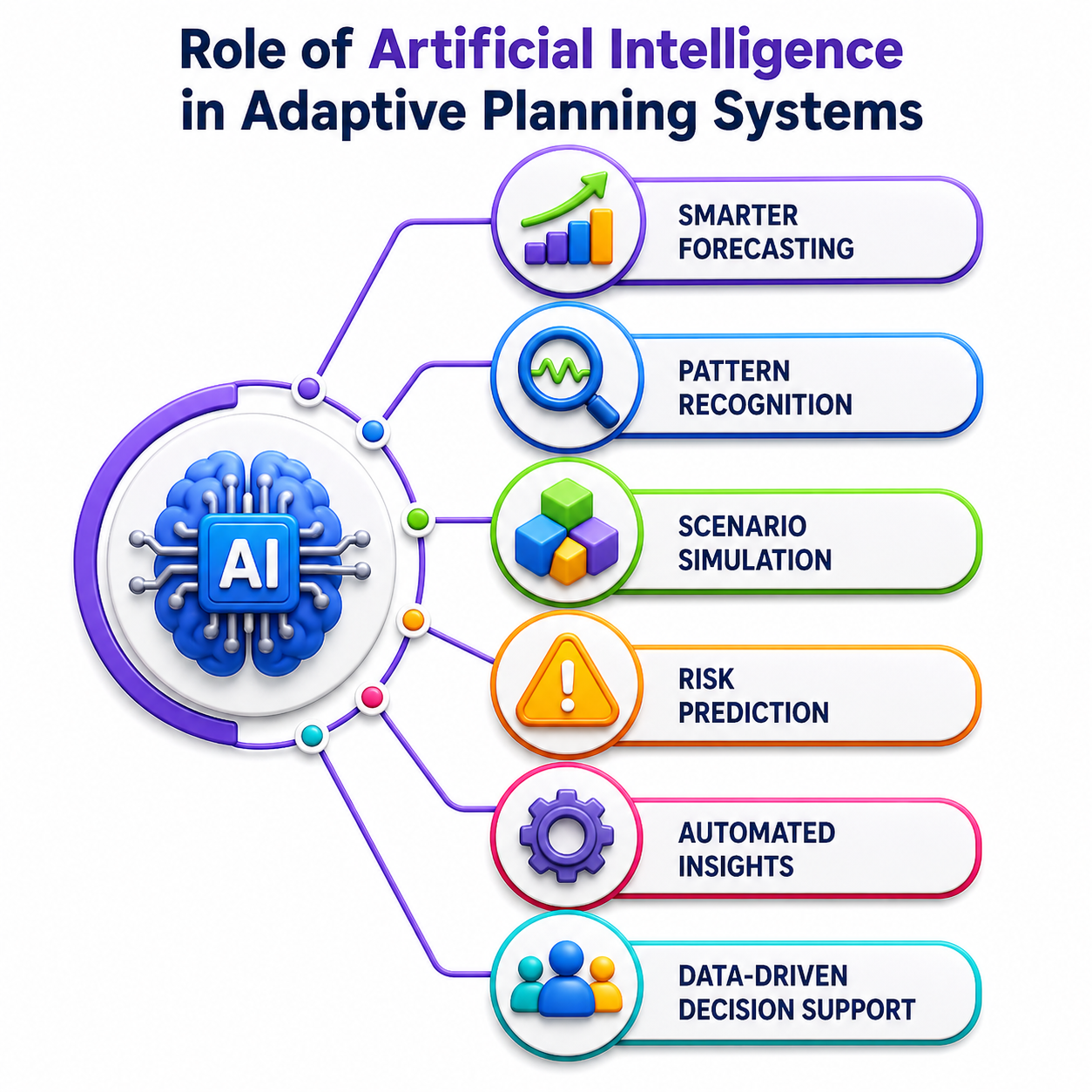
Artificial Intelligence (AI) plays a transformative role in adaptive planning systems by enhancing the speed, accuracy, and depth of business insights. Traditional planning methods often rely on manual analysis and static data, but AI-driven systems can process vast amounts of real-time and historical data simultaneously. By identifying patterns, trends, and anomalies, AI helps organizations generate more accurate forecasts and make data-driven decisions with greater confidence. This allows businesses to move from reactive planning to a more proactive and predictive approach.
Another significant contribution of AI in adaptive planning is its ability to enable advanced scenario analysis and predictive modeling. AI algorithms can simulate multiple business scenarios based on different variables such as market demand, pricing changes, or economic conditions. This helps organizations understand potential outcomes and prepare strategies accordingly. Additionally, machine learning models continuously improve over time by learning from new data, which further refines forecasting accuracy and planning effectiveness. As a result, businesses can better anticipate risks and opportunities in a rapidly changing environment.

Related Articles

How Can Non-IT Professionals Start a Career in Workday HCM?
Learn how non-IT professionals can enter Workday HCM, build relevant skills, gain practical experience, and explore suitable career opportunities.

What Are the Different Workday Modules and What Does Each One Do?
Explore Workday modules, their functions, how they work together, and which specialization may suit your skills and career goals.

How Does Workday HCM Help HR Teams Manage the Employee Lifecycle?
Learn how Workday HCM connects recruitment, onboarding, talent, learning, workforce management, analytics, and employee development.