
Best Data Analytics Course in India: Everything You Need to Know
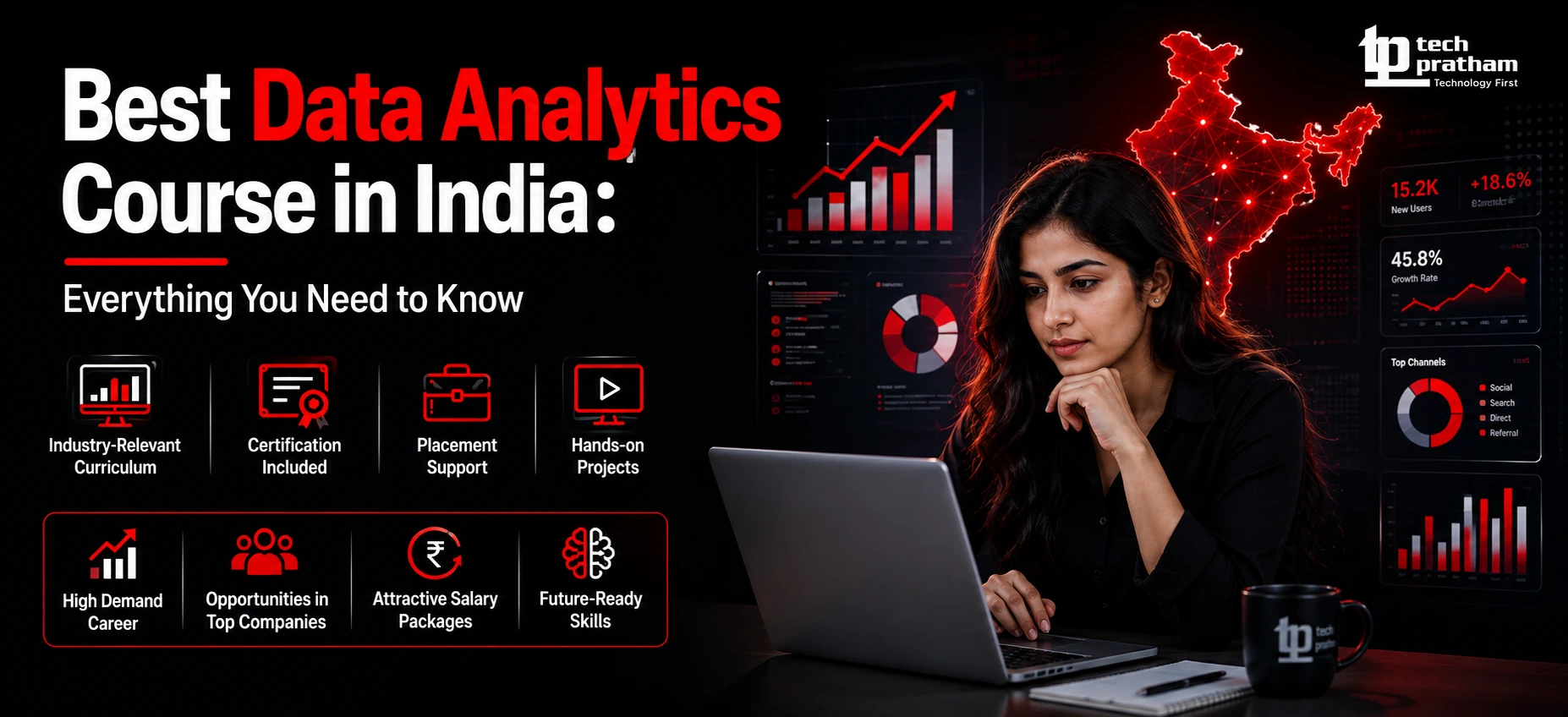
Data is transforming the way businesses operate. From predicting customer behavior to improving operational efficiency, organizations across industries are using data to make smarter decisions. Before investing your time and money, it's important to understand what a quality data analytics course should offer, the skills you will learn, career opportunities after completion, and the factors you should consider before enrolling. This guide will help you make an informed decision and choose a training program that aligns with your career goals. If you're planning to build a career in this exciting field, enrolling in a Data Analytics Course in India is one of the smartest decisions you can make.
Why Data Analytics Is In-Demand
According to industry reports, the demand for data professionals continues to rise as organizations invest more heavily in digital transformation and artificial intelligence. This growing demand has made data analytics one of the most future-proof career choices for students, fresh graduates, and working professionals looking to upskill or switch careers.
- Growing Demand Across Industries
- High-Paying Career Opportunities
- Digital Transformation Is Driving Demand
- AI and Big Data Are Creating More Jobs
- Skills That Every Business Needs
- Opportunities in Every Industry
Unlike many traditional professions, data analytics offers opportunities across multiple industries. Whether you want to work in finance, healthcare, retail, logistics, telecommunications, or technology, analytical skills are highly transferable and widely valued.
Who Can Build a Career in Data Analytics
- College Students
- Fresh Graduates
- Career Switchers
- Software Engineers
- Finance Professionals
- Marketing Professionals
Even candidates with little or no programming experience can learn data analytics through structured training, consistent practice, and real-world projects.
Skills that You Learn During the Course
The quality of your learning depends largely on the curriculum offered by the training institute. Before enrolling, ensure the course covers both foundational concepts and advanced analytical techniques that are relevant in today's job market.
Data Collection and Data Cleaning
Every analytics project begins with collecting data from various sources. However, raw datasets often contain missing values, duplicate records, formatting issues, and inconsistencies.
- Importing datasets
- Data validation
- Removing duplicates
- Handling missing values
- Data transformation
Advanced Microsoft Excel
Although many advanced analytics tools are available today, Microsoft Excel remains one of the most widely used applications in businesses around the world.
- Advanced formulas
- Lookup functions
- Pivot Tables
- Pivot Charts
- Conditional Formatting
- Power Query
SQL for Database Management
Almost every organization stores its business information in databases. SQL (Structured Query Language) allows analysts to retrieve, filter, update, and manipulate data efficiently.
- Writing SQL queries
- Aggregate functions
- Joins
- Subqueries
- Views
Python for Data Analytics
Python has become one of the most popular programming languages for data analysis because of its simplicity and powerful libraries.
- Python basics
- Variables and data types
- Loops and functions
- File handling
- NumPy
- Pandas
Data Visualization Using Power BI
Collecting and analyzing data is only one part of the job. Equally important is presenting insights in a way that decision-makers can easily understand.
- Power BI interface
- Data modeling
- Data transformation
- Dashboard creation
- Interactive visualizations
- KPI reporting
How to Choose the Best Data Analytics Course
The Best Data Analytics Course is not simply the one with the lowest fee or the shortest duration. Instead, it should provide a balanced combination of theoretical knowledge, practical learning, industry exposure, certification preparation, and career guidance.
1. Industry-Relevant Curriculum
Technology evolves rapidly, and the field of data analytics is no exception. A quality course should be updated regularly to reflect current industry practices and employer expectations. Look for a curriculum that includes: (Data Analytics Fundamentals, Microsoft Excel, SQL, Python, Statistics, Power BI, Data Visualization, Business Intelligence, Real-Time Projects, Capstone Project).
2. Experienced Trainers
Your learning experience largely depends on the expertise of your instructors. Trainers with real industry experience can explain concepts using practical business examples rather than relying solely on textbook knowledge.
3. Hands-on Learning
Data analytics is a practical field where employers expect candidates to demonstrate their skills through projects and business case studies. Choose a course that offers: (Live assignments, Real business datasets, Capstone projects, Dashboard creation, Portfolio development, Case studies).
4. Flexible Learning Options
An Online Data Analytics Course with Placement provides the flexibility to attend live instructor-led sessions from anywhere while continuing your current job or education. A good online course should include: Live interactive classes Recorded sessions for revision Trainer support Assignments after every module Practical projects
Why Certification Matters
Completing a data analytics course is only the first step toward building a successful career. Earning a certification validates your knowledge, demonstrates your practical skills, and shows employers that you have completed structured, industry-relevant training.
A Data Analytics Certification Training in India helps you gain a recognized credential that enhances your resume and increases your credibility during the hiring process. Many organizations prefer certified professionals because certifications reflect both technical expertise and a commitment to continuous learning.
Key Benefits of Data Analytics Certification:
- Validates your skills
- Boosts career opportunities
- Enhances your resume
- Increases earning potential
- Improves job prospects
Placement Support: An Important Factor
Many students focus only on course content while overlooking placement assistance. A good institute should not only teach technical skills but also prepare learners for the hiring process.
Look for placement services such as:
- Resume building
- LinkedIn profile optimization
- Mock interviews
- Aptitude preparation
- HR interview guidance
- Technical interview practice
Choosing an Online Data Analytics Course with Placement can significantly improve your chances of securing interviews after completing the training.
Career Opportunities After Completing the Course
One of the biggest advantages of learning data analytics is the wide variety of career opportunities available across industries.
After successfully completing a Data Analyst Course in India, you can apply for several entry-level and mid-level positions based on your experience and skill set.
Some popular job roles include:
- Data Analyst
- Business Analyst
- Reporting Analyst
- MIS Executive
- Power BI Developer
- SQL Developer
As you gain experience, you can progress into senior positions such as Analytics Consultant, Data Science Associate, Analytics Manager, or Business Intelligence Lead.
Industries Hiring Data Analysts
One of the reasons data analytics has become such a popular career choice is that almost every industry generates and uses data.
Some of the major sectors actively hiring data analysts include:
Information Technology
IT companies use analytics to improve software performance, customer experience, cybersecurity, and operational efficiency.
Banking and Financial Services
Banks analyze customer transactions, assess financial risks, detect fraud, and improve investment strategies using data analytics.
Healthcare
Hospitals and healthcare organizations use data to improve patient care, optimize hospital operations, and support medical research.
E-Commerce
Online retailers rely on data analytics to understand customer behavior, recommend products, forecast demand, and optimize pricing strategies.
Manufacturing
Manufacturers use analytics to monitor production, reduce waste, improve quality control, and predict equipment maintenance.
Salary Expectations for Data Analysts in India
Freshers who complete a quality Data Analytics Certification Training in India, build a strong portfolio, and perform well in interviews often have better opportunities than candidates who rely only on theoretical knowledge.
Common Mistakes to Avoid Before Enrolling
Many students make avoidable mistakes while selecting a training institute.
Here are a few things to watch out for:
- Choosing a course based only on low fees.
- Ignoring the course curriculum.
- Not checking trainer experience.
- Selecting theory-only programs.
- Overlooking practical projects.
- Ignoring placement support.
- Not reading student reviews.
Avoiding these mistakes can save you time, money, and disappointment while helping you choose a course that truly prepares you for a successful career.
Tips for Succeeding in Data Analytics
Completing a course is only the first step. Building a successful career requires continuous learning and practical application of your skills.
Here are some tips to help you stand out:
- Practice using real-world datasets regularly.
- Build interactive dashboards with Power BI.
- Participate in online coding and analytics challenges.
- Improve your communication and presentation skills.
- Continue learning as new tools and technologies emerge.
Frequently Asked Questions (FAQs)
1. What is a Data Analytics Course?
A data analytics course teaches learners how to collect, clean, analyze, visualize, and interpret data using tools such as Excel, SQL, Python, and Power BI. It prepares individuals to solve real-world business problems using data-driven insights.
2. Who can join a Data Analytics Course in India?
Anyone interested in learning data analytics can enroll, including students, fresh graduates, IT professionals, engineers, commerce graduates, business analysts, and professionals looking to switch careers.
3. Do I need programming knowledge before enrolling?
No. Most beginner-friendly programs start with the basics and gradually introduce programming concepts. Consistent practice and guided learning are usually enough to build confidence.
4. Why should I choose Data Analytics Certification Training in India?
A Data Analytics Certification Training in India helps validate your skills and demonstrates your commitment to professional development. Certification can strengthen your resume and improve your confidence during job interviews.
5. How long does it take to become job-ready?
The timeline varies depending on the course structure, your learning pace, and the amount of practice you put in. Most learners become more confident by consistently working on projects, improving technical skills, and preparing for interviews.
Final Thoughts
Related Articles

How to Switch Your Career to Data Science: A Pathway to a New Career
Learn how to switch your career to Data Science with the right skills, projects, AI knowledge, portfolio and career guidance.

Is Data Science a Good Career? A Complete Guide for Beginners
Is Data Science a good career? Explore career opportunities, skills, roadmap, AI impact, and practical guidance for beginners.

Best Data Science Courses in India: A Complete Guide
Explore the Best Data Science Courses in India and build in-demand skills with industry-focused training and certification.





 +91-8882178896
 +1 (343) 477-0926