
How to Learn Workday HCM in India: Course, Certification Cost, Tool Training, Placement & Integration Pro Certification
Table of Contents
Learning Workday HCM in India has become a smart career move as companies increasingly adopt cloud based HR solutions. A structured Workday HCM course helps learners understand core HR processes, system configuration, and real-time business workflows. Many aspirants search for how to learn Workday HCM with practical Workday tool training to gain hands-on experience. Another common concern is the Workday HCM certification cost in India and the eligibility required to earn official credentials. Choosing the right training path also involves understanding Workday HCM certification in India and partner-based learning models. For job-focused learners, enrolling in a Workday course with placement support can improve career outcomes. Technical professionals can further advance their careers through Workday integration certification and Workday Integration Pro certification. Overall, the right combination of training, certification guidance, and placement support can help you build a successful Workday HCM career in India.
What Is Workday HCM and Why Learn It in India?
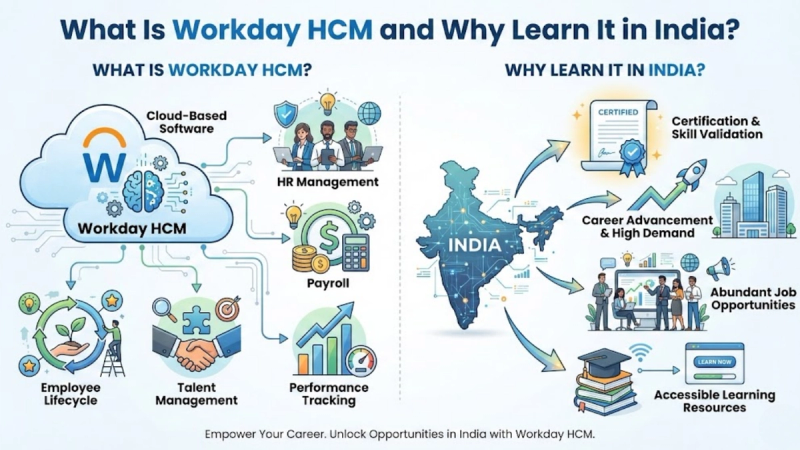
Workday HCM (Human Capital Management) is a leading cloud-based HR management solution designed to help organizations manage their entire workforce lifecycle on a single, unified platform. It covers core HR functions such as employee data management, payroll, benefits administration, talent acquisition, performance management, learning, time tracking, and advanced workforce analytics. Unlike traditional on-premise HR systems, Workday HCM operates on a modern cloud architecture that delivers real-time data visibility, frequent updates, strong security, and seamless user experience. This makes it easier for HR teams and business leaders to make data-driven decisions while improving employee engagement and operational efficiency. For learners and professionals, understanding Workday HCM means gaining exposure to business process frameworks, configuration-based workflows, reporting, and security models rather than heavy coding, which makes it accessible to both HR and IT backgrounds.
The demand for Workday Human Capital Management (HCM) professionals in India is accelerating rapidly, driven by widespread digital transformation and the shift from legacy systems to agile cloud platforms. India has cemented its status as a global hub for Workday implementation and support, with major consulting firms expanding operations in key tech cities like Bangalore, Hyderabad, Pune, Gurgaon, and Chennai.
Enterprises are aggressively hiring for specialized roles—ranging from HCM Consultants and Functional Analysts to Integration Specialists—to manage complex migrations and ongoing operations. This surge is fueled by the need for better scalability, compliance, and real-time workforce insights, offering professionals competitive salaries and global career mobility.
Capitalizing on this momentum, Workday officially announced a massive ₹220 Crore ($26 Million) investment in 2025 to establish a Global Capability Centre (GCC) in Chennai. This facility is not just a support hub but a center for innovation, focusing on product development and Next-Gen AI integration. The expansion is set to create 3,000 high-value jobs, tapping into Chennai’s deep engineering talent pool.
This strategic move dovetails with Workday’s broader India expansion, which includes a newly launched local data center (Dec 2025) to meet data residency needs. For fresh graduates and experienced IT consultants alike, the combination of industry-wide demand and Workday’s direct investment makes this one of the most stable and future-proof career paths in the enterprise cloud ecosystem today.
How to Learn Workday HCM in India (Step-by-Step Guide)
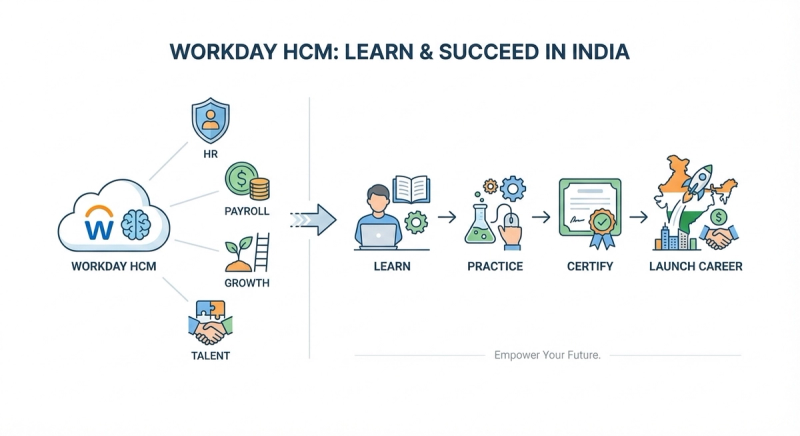
A Workday HCM course in Bangalore and other tech cities is designed to provide learners with a complete understanding of how organizations use Workday to manage their human resources efficiently. The course typically begins with an introduction to Workday architecture, navigation, and core HR concepts such as organizational structures, staffing models, employee lifecycle management, and business process frameworks. Learners gain clarity on how Workday HCM supports real-world HR operations, making it suitable for both HR professionals and individuals from IT or non-technical backgrounds who want to transition into the HR technology domain.
As the course progresses, learners are trained on key functional modules including Core HCM, Security and Roles, Compensation, Talent Management, Time Tracking, and Reporting. A strong focus is placed on hands-on Workday tool training, where participants work on real-time scenarios, system configurations, and practical exercises that simulate implementation and support projects. This practical exposure helps learners understand how to configure business processes, manage approvals, generate reports, and resolve common issues faced during Workday implementations.
Training providers like Tech Pratham enhance the learning experience by offering industry-aligned curriculum, expert-led sessions, and implementation-focused training that matches current market requirements. Along with technical knowledge, Tech Pratham emphasizes job-readiness through resume guidance, interview preparation, and real-world project exposure. This structured approach ensures that learners not only understand Workday HCM concepts but also gain the confidence and skills required to perform effectively in real Workday HCM roles across Indian and global organizations.
Workday Tool Training: Practical Exposure Explained
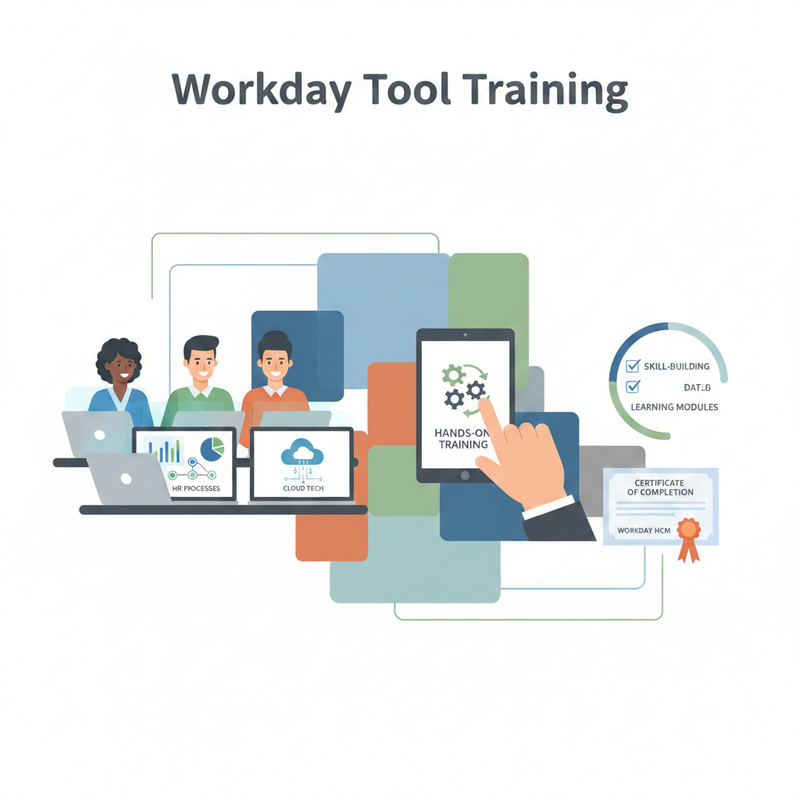
Workday tool training focuses on giving learners real-time, hands-on exposure to the Workday HCM environment so they can confidently apply theoretical knowledge in practical scenarios. This training helps learners understand Workday tenant navigation, system architecture, and how different HR processes are configured within the platform. Instead of just learning concepts, participants work directly on Workday tools to manage employee data, configure organizational structures, and understand how business process frameworks operate in real implementations.
A major part of practical exposure includes working on core Workday components such as business process configuration, security roles, domain permissions, reporting, and data management. Learners practice creating and modifying workflows, handling approvals, generating standard and custom reports, and resolving real-world issues commonly faced by Workday HCM consultants. This hands-on approach ensures that learners develop problem-solving skills and gain the confidence required to work on live projects, support activities, and system enhancements.
Training institutes like Tech Pratham emphasize practical Workday training in chennai and other cities by providing guided lab sessions, real-time implementation use cases, and expert mentoring. Tech Pratham’s industry-focused approach bridges the gap between learning and job performance by simulating real project environments and client scenarios. With structured practice and continuous support, learners are better prepared for certifications, interviews, and real-world Workday HCM roles in the competitive Indian job market.
Workday HCM Certification in India: Eligibility and Process
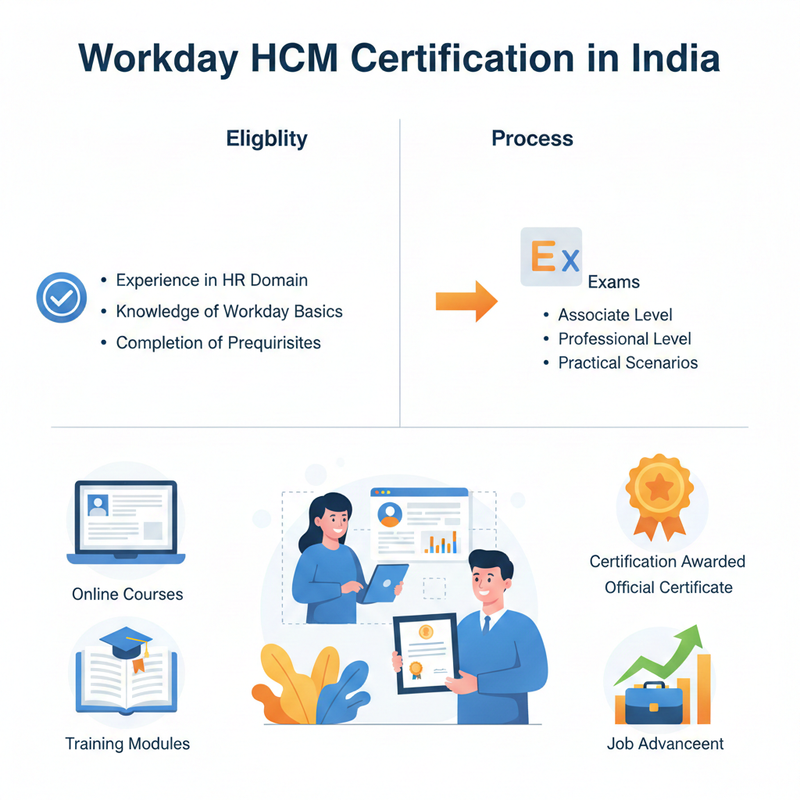
Workday HCM certification in India is a valuable credential that validates a professional’s ability to configure, implement, and support Workday HCM modules. One of the most important things learners should understand is that Workday certifications are officially offered only through authorized Workday partner organizations. This means candidates typically need to be associated with a Workday partner company or enroll in partner-led training programs to become eligible for certification. The certification process is designed to ensure that professionals not only understand theoretical concepts but also have practical exposure to real Workday HCM implementations.
In terms of eligibility, candidates are generally expected to have completed structured Workday HCM training and possess a basic understanding of HR processes, business process frameworks, and system configuration. Some certification tracks may also require prior experience in HR, ERP, or cloud-based applications. The certification process usually includes instructor-led training sessions, hands-on labs, assessments, and a final evaluation or exam conducted by Workday. This structured approach ensures that certified professionals meet Workday’s global quality and implementation standards.
Tech Pratham play an important role in providing workday training in India through the certification journey by offering certification-oriented training, practical exposure, and clarity on partner-based certification pathways. Tech Pratham helps candidates understand eligibility requirements, prepare for assessments, and build real-time implementation skills that align with certification expectations. With expert mentoring and structured guidance, learners can confidently navigate the Workday HCM certification process in India and position themselves for strong career opportunities in the Workday ecosystem.
Workday HCM Certification Cost in India
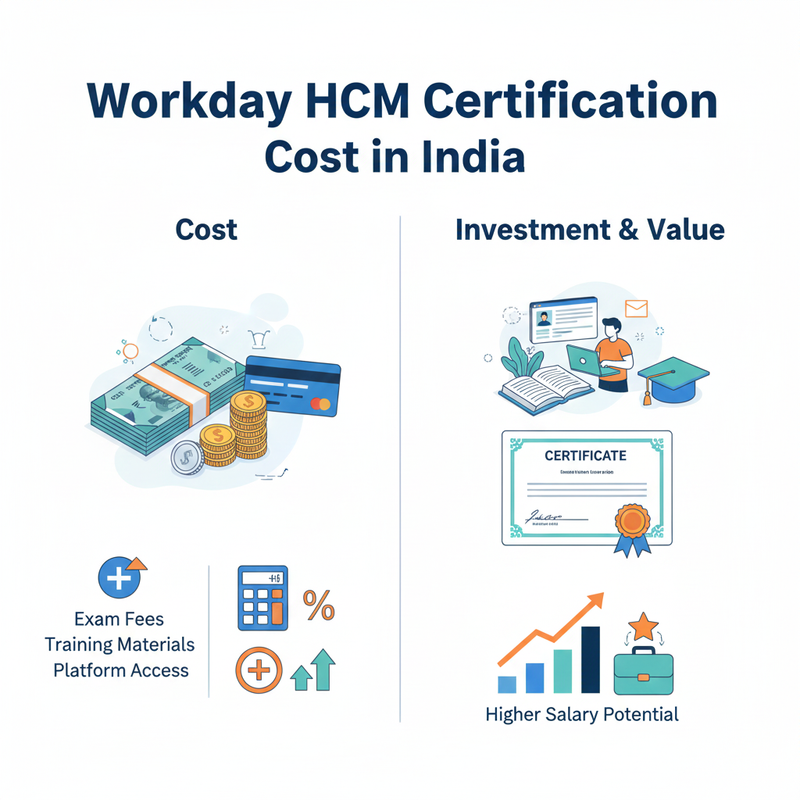
The Workday HCM certification cost in India can vary based on several factors, as Workday certifications are offered only through authorized Workday partner organizations rather than directly to individuals. Typically, the cost includes instructor-led training, access to Workday learning materials, hands-on lab sessions, and the certification assessment or exam. In India, the overall certification cost may differ depending on the specific HCM module, the level of certification, the training provider, and whether the program includes practical project exposure or placement support. Some partners bundle certification preparation with advanced Workday HCM course training, which can affect the total investment. It is also important for learners to note that certification fees are often tied to partner employment or sponsorship, meaning direct standalone certification pricing may not always be publicly available. Understanding these cost components helps candidates make informed decisions and choose the right training path aligned with their career goals and budget.
Workday Course with Placement Support
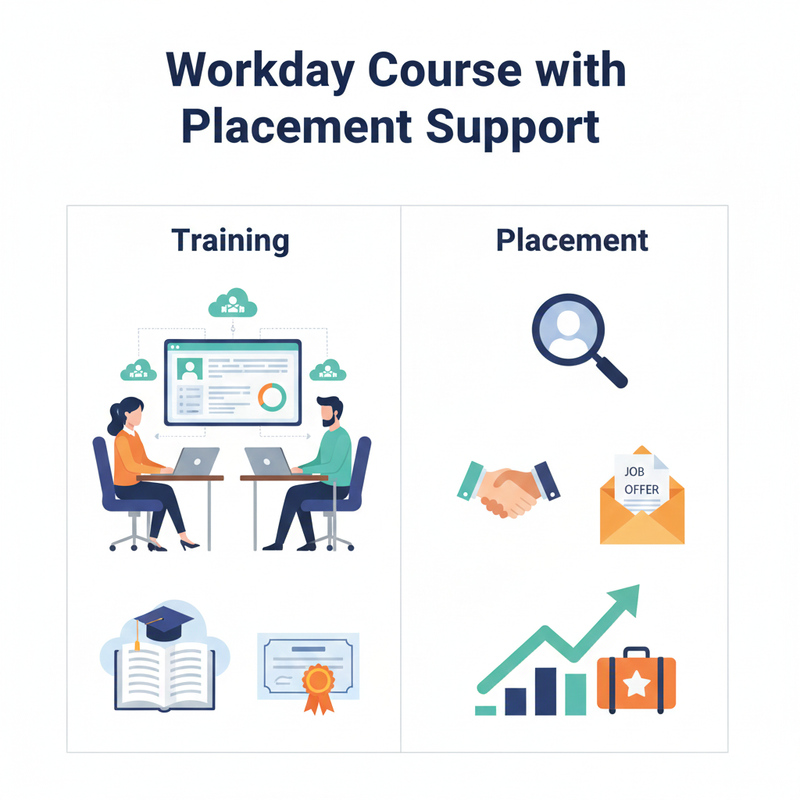
A Workday course with placement support is designed to help learners not only gain technical knowledge of Workday HCM but also transition confidently into real job roles within the enterprise HR technology space. Such courses combine structured training on core Workday HCM modules, hands-on Workday tool training, and real-time project exposure to ensure learners understand how Workday is used in actual implementation and support environments. Placement-focused programs emphasize practical skills like business process configuration, reporting, security roles, and troubleshooting, which are highly valued by employers. Training providers such as Tech Pratham strengthen this learning journey by aligning their curriculum with current industry requirements and hiring trends in India.
In addition to technical training, placement support typically includes resume building, interview preparation, mock interviews, and guidance on role-specific expectations such as Workday HCM Functional Consultant, HRIS Analyst, or Workday Support Specialist. Learners are trained on how to explain real-time scenarios, implementation challenges, and configuration logic during interviews, which significantly improves selection chances. Tech Pratham focuses on making candidates job-ready by offering mentor-led sessions, practical assignments, and career guidance that bridges the gap between training and employment.
A major advantage of enrolling in a Workday course with placement support through Tech Pratham is access to industry networks, partner-oriented training approaches, and continuous career mentoring. This structured support helps learners build confidence, gain relevant experience, and identify the right job opportunities in Workday partner companies and consulting firms. As a result, candidates are better positioned for long-term career growth in the Workday ecosystem, making placement-supported training a valuable investment for aspiring Workday professionals in India.
Workday Integration Certification Overview
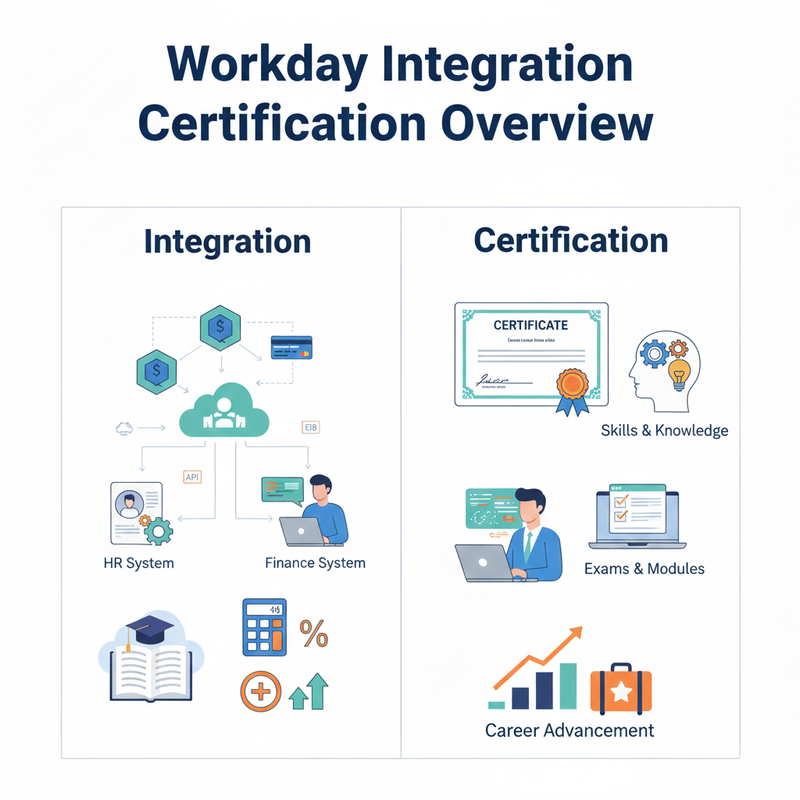
Workday Integration Certification is designed for professionals who want to build expertise in connecting Workday with external systems and enterprise applications. This certification focuses on the technical side of the Workday ecosystem, covering integration concepts such as Enterprise Interface Builder (EIB), Workday Studio, Core Connectors, REST and SOAP APIs, and data transformation techniques. It helps learners understand how employee, payroll, financial, and benefit data flows between Workday and third-party systems in real-time or scheduled processes. The certification validates a candidate’s ability to design, build, deploy, and maintain secure and scalable integrations, which are critical for organizations running complex IT and HR infrastructures.
To pursue Workday Integration certification, candidates usually need a strong foundation in Workday concepts along with basic knowledge of XML, web services, and data mapping. The certification process is partner-driven and often includes instructor-led technical training, hands-on labs, and practical assessments focused on real integration scenarios. Certified Workday Integration professionals are in high demand in India due to the growing number of global Workday implementations and the need for seamless data exchange between Workday and other enterprise platforms. As companies continue to expand their digital ecosystems, Workday Integration certification offers strong career growth, higher salary potential, and opportunities to work on global integration projects across industries.
Workday Integration Pro Certification: Career Scope
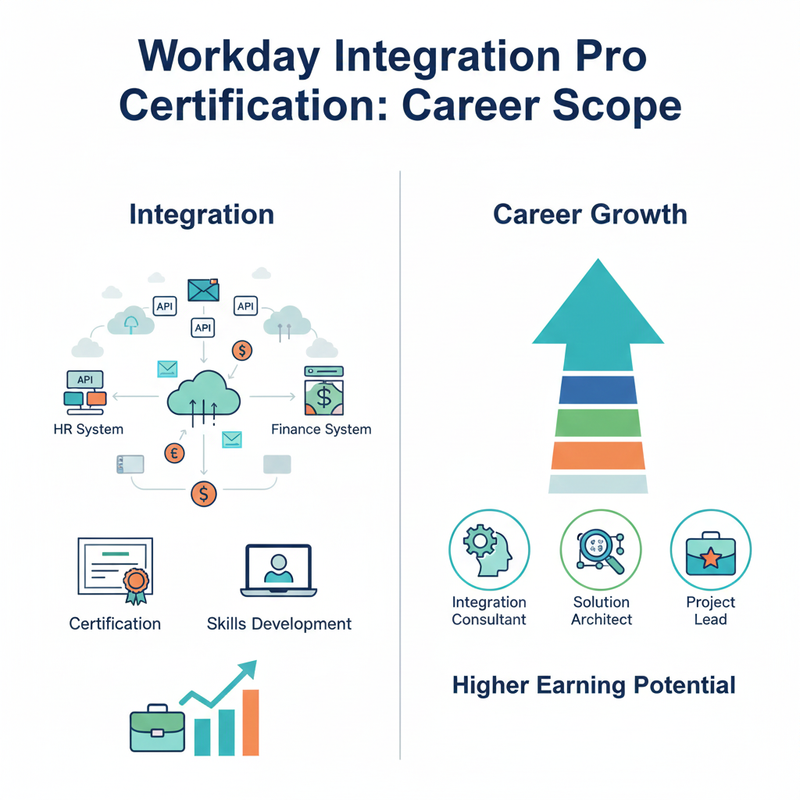
Workday Integration Pro Certification represents an advanced level of expertise within the Workday technical ecosystem and is aimed at professionals who want to specialize in complex integrations and large-scale enterprise implementations. This certification goes beyond basic integration concepts and focuses on designing, developing, and managing sophisticated integration solutions using tools such as Workday Studio, Core Connectors, EIBs, and APIs. It validates a professional’s ability to handle high-volume data transfers, error handling, performance optimization, and security considerations, which are critical in global Workday deployments. Many learners often wonder whether this certification is worth pursuing, and the answer largely depends on their career goals—Integration Pro certification is especially valuable for those with a technical background who want to work on challenging, high-impact projects.
From a career scope perspective, professionals with Workday Integration Pro certification are highly sought after by Workday partner companies, consulting firms, and large enterprises in India and abroad. Certified Integration Pro consultants typically work in roles such as Workday Integration Consultant, Technical Lead, or Integration Architect, where they are responsible for building and maintaining connections between Workday and payroll systems, finance platforms, benefits providers, and other third-party applications. Due to the specialized skill set and complexity involved, these roles often offer higher compensation, faster career progression, and opportunities to work on international projects. This certification also provides long-term career stability, as integrations are a critical and ongoing requirement in every Workday implementation.
For professionals who are unsure about eligibility or readiness, it is important to note that Integration Pro certification usually requires prior Workday integration experience or foundational integration training through a Workday partner. It is not typically recommended for complete beginners, but rather for those who have already worked with Workday or similar integration technologies. By earning Workday Integration Pro certification, professionals position themselves as advanced technical experts in the Workday ecosystem, opening doors to senior-level roles and making them valuable assets in the evolving enterprise cloud and HR technology landscape.
Workday HCM vs Workday Integration: Which Path Should You Choose?
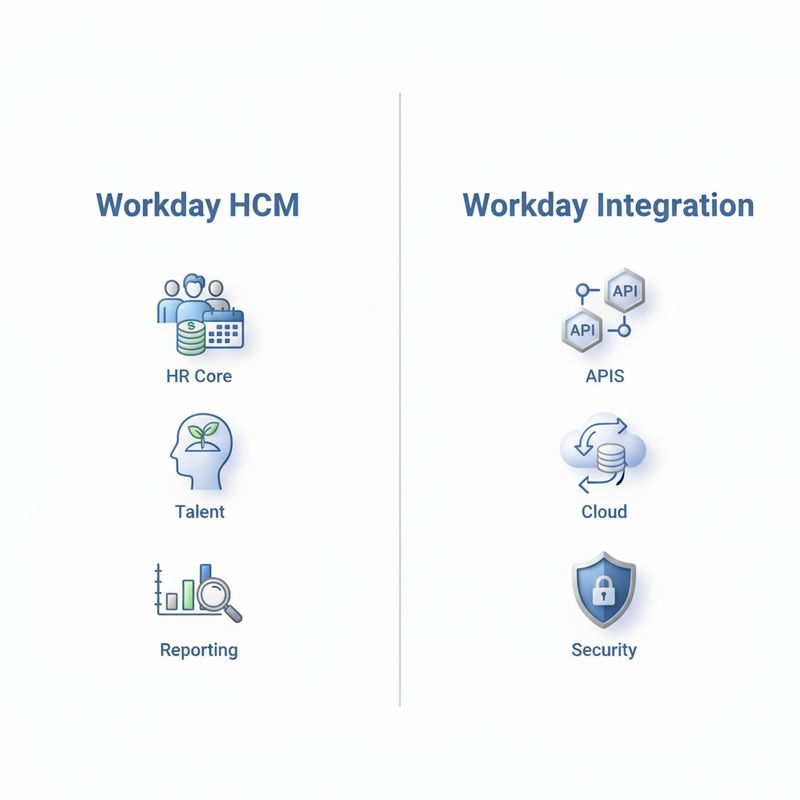
Choosing between Workday HCM and Workday Integration depends largely on your background, interests, and long-term career goals. Both paths are in high demand in India, but they focus on different skill sets and job responsibilities. Understanding the difference between these two roles can help you make an informed decision and avoid confusion early in your Workday career journey.
Workday HCM is primarily a functional and business-focused role. It is ideal for professionals with an HR background, MBA graduates, HR executives, or individuals who enjoy working closely with business processes and stakeholders. Workday HCM consultants configure core HR modules such as employee lifecycle management, compensation, talent management, time tracking, and reporting. They work directly with HR teams to gather requirements, design workflows, and ensure the system aligns with organizational policies. If you prefer process-oriented work, problem-solving related to HR operations, and minimal coding, Workday HCM is the right path. This role offers strong job stability, steady career growth, and global opportunities, especially for those transitioning from traditional HR or ERP functional roles.
Workday Integration, on the other hand, is a technical career path suited for professionals with IT, engineering, or development backgrounds. Integration consultants focus on connecting Workday with external systems such as payroll vendors, finance platforms, benefits providers, and third-party applications. This role requires knowledge of integration tools like EIB, Workday Studio, Core Connectors, APIs, XML, and data mapping. If you enjoy technical challenges, system architecture, troubleshooting, and building data flows between applications, Workday Integration is a better choice. Integration roles often involve complex projects, higher responsibility, and comparatively higher compensation due to their specialized nature.
When deciding which path to choose, assess your existing skills and career preferences. Beginners or professionals from HR and non-technical backgrounds usually find Workday HCM easier to start with, while those with strong technical skills may progress faster in Workday Integration. It is also possible to begin with Workday HCM and later transition into Integration with additional technical training and experience. Both paths offer excellent career prospects in India’s growing Workday ecosystem, so the right choice is the one that aligns with your strengths, learning style, and long-term professional goals.
Job Opportunities After Workday HCM Course in India
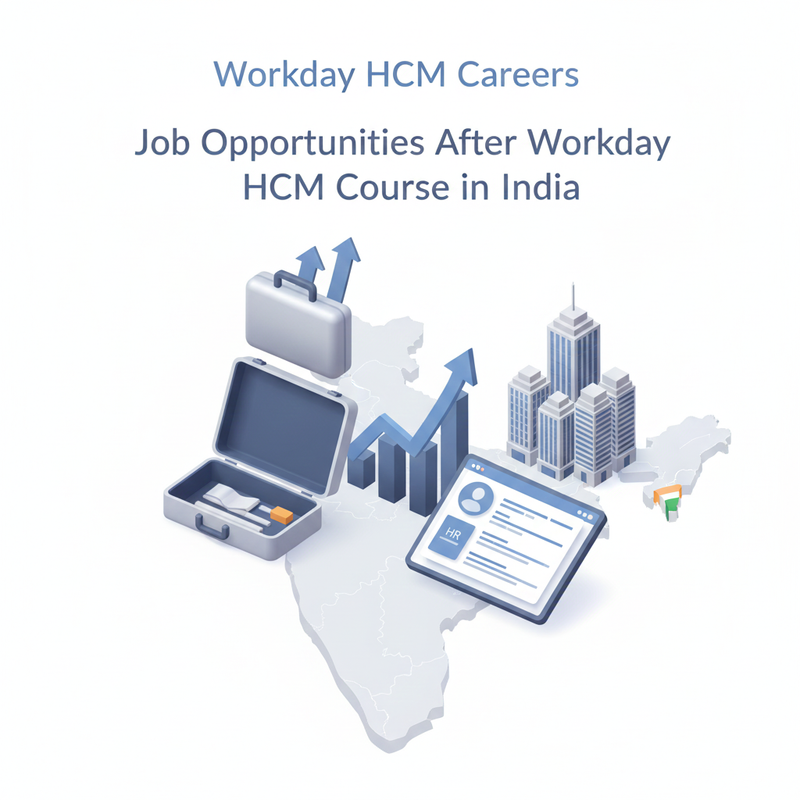
Completing a Workday HCM (Human Capital Management) course in India opens up numerous career opportunities in the rapidly growing HR technology and ERP domain. As organizations increasingly adopt cloud-based HR systems, there is a rising demand for professionals skilled in Workday HCM, both in implementation and ongoing support. Workday HCM expertise allows professionals to streamline HR processes, optimize workforce management, and contribute to strategic decision-making, making certified individuals highly sought after in the Indian market.
Job Opportunities After Workday HCM Certification
After completing a Workday HCM course, professionals can pursue a variety of roles depending on their skills and interests. Key positions include:
- Workday HCM Consultant (Functional/Technical): Focuses on implementing and configuring Workday HCM modules, including Core HCM, Compensation, Benefits, and Recruiting.
- Workday Functional Consultant: Specializes in business processes such as payroll, talent management, and employee engagement, helping organizations optimize their HR workflows.
- Workday Technical/Integration Consultant: Handles integrations between Workday and other enterprise systems, develops custom solutions, and ensures seamless data flow.
- Workday Support/Production Analyst: Manages ongoing support, troubleshooting, and optimization of Workday HCM systems post-implementation.
- Workday Project Lead or Architect: Oversees large-scale Workday implementations, providing strategic guidance and technical expertise to ensure project success.
These roles are available across IT services companies, consulting firms, multinational enterprises, and organizations that have adopted Workday HCM for HR transformation.
Average Salary Trends in India
Workday HCM professionals in India enjoy competitive salaries, which grow significantly with experience and specialization:
- Entry-Level: Freshers or professionals with 1–2 years of experience can expect salaries ranging from ₹4 LPA to ₹6 LPA.
- Mid-Level: Professionals with 3–7 years of experience, particularly functional consultants or technical specialists, can earn between ₹6 LPA and ₹15 LPA.
- Senior-Level: Experienced Workday HCM consultants, project leads, or architects can command ₹15 LPA and above, with specialized expertise in modules like Compensation, Benefits, or Talent Management driving higher packages.
Salaries may vary depending on the city, industry, and size of the organization, with metro cities like Bengaluru, Hyderabad, and Gurugram offering higher packages due to the concentration of IT and consulting firms.
Top Hiring Companies in India
Several leading companies actively hire Workday HCM professionals to support their HR transformation initiatives:
- Consulting Firms: Accenture, Deloitte, Capgemini, and PwC hire Workday consultants for large-scale implementations and advisory roles.
- IT Services Companies: TCS, Cognizant, Wipro, and Infosys recruit both functional and technical consultants for client projects.
- Multinational Enterprises: Companies in finance, technology, healthcare, and manufacturing that have adopted Workday HCM seek in-house specialists for system administration, optimization, and analytics.
- Specialized HR Technology Firms: Niche HR tech consultancies and implementation partners offer roles for project-based and remote Workday engagements.
Conclusion: Building a Successful Workday HCM Career in India
Learning Workday HCM in India presents a strategic career opportunity for professionals aiming to excel in the rapidly evolving HR technology landscape. By enrolling in a structured Workday HCM course, learners gain comprehensive knowledge of core HR processes, system configuration, and real-time business workflows, supported by practical tool training and hands-on exercises. Pursuing Workday HCM certification validates expertise and enhances credibility, while integration-focused certifications, such as Workday Integration and Integration Pro, open doors to technical and high-impact roles. Coupled with placement support and industry-aligned training, this pathway equips candidates with the skills, confidence, and exposure needed to secure roles such as functional consultant, technical/integration consultant, support analyst, or project lead. With competitive salary trends, increasing adoption of cloud-based HR solutions, and strong demand across consulting firms, IT service providers, and multinational enterprises, a career in Workday HCM in India offers not only job stability and growth but also global opportunities, making it a rewarding choice for HR professionals, IT specialists, and aspiring enterprise cloud consultants alike.