
Can Non-IT Professionals Build a Career in Salesforce?
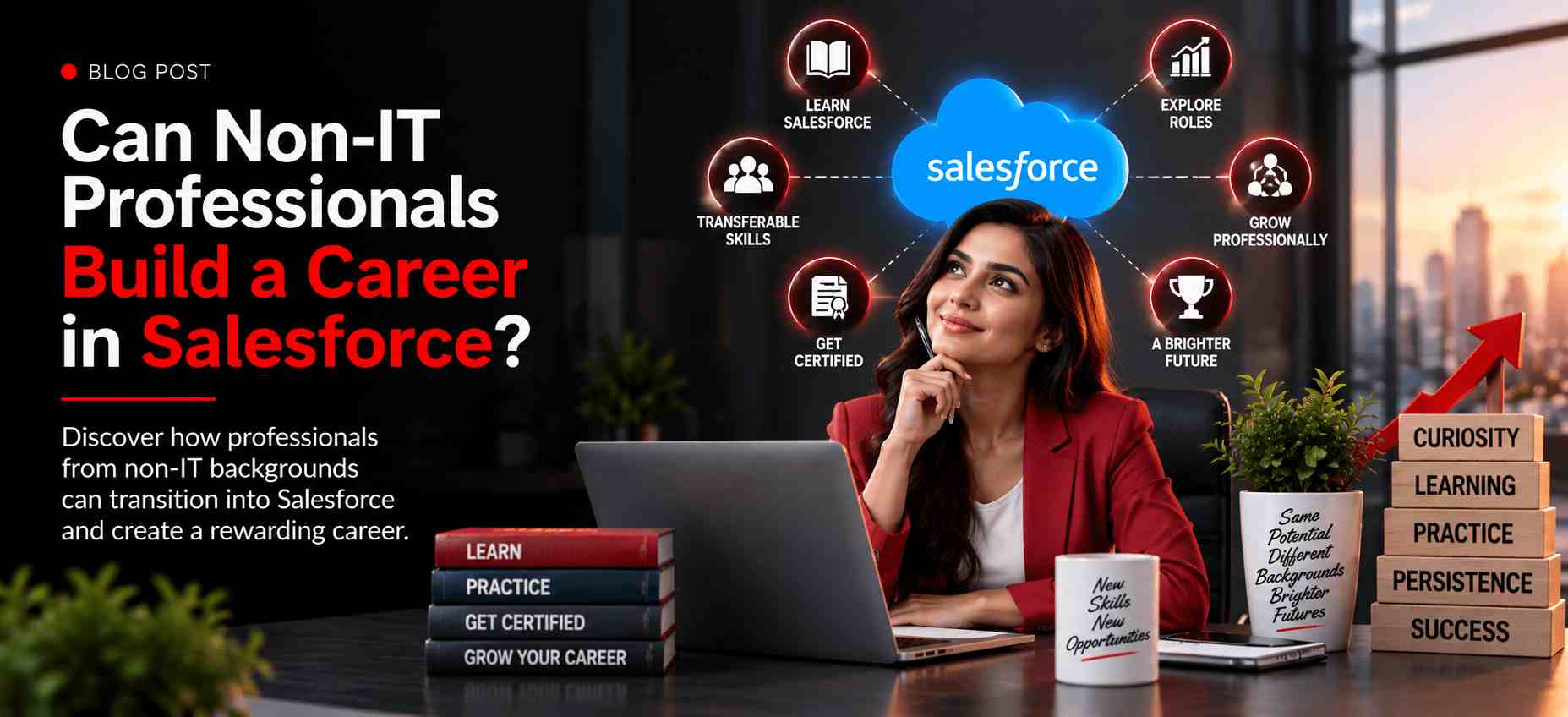
Can non-IT professionals build a career in Salesforce? Yes. A career in Salesforce is not limited to software engineers or experienced programmers. Professionals from finance, sales, marketing, HR, customer service, and operations can also explore Salesforce by combining their existing business knowledge with new CRM and technology skills.
The important part is choosing the right Salesforce career path. Not every role requires programming, and beginners do not need to learn the entire Salesforce ecosystem at once. Depending on their interests and previous experience, they can explore areas such as Salesforce Administration, Business Analysis, Consulting, or Development.
Why Are Professionals From Non-IT Backgrounds Moving Toward Salesforce?
A career change into technology does not always require abandoning your previous experience. In many cases, the skills you have already developed can become useful when learning Salesforce and understanding how businesses use CRM systems. Consider someone working in sales. They already understand leads, customers, follow-ups, opportunities, and sales pipelines. Learning Salesforce can help them understand how these activities are organized, tracked, and managed through a CRM platform.
Similarly, a finance professional may already be comfortable with data, reporting, and structured business processes, while a marketing professional may understand customer engagement, campaigns, and communication. A customer service professional may already have experience handling customer queries and resolving service issues.
Salesforce allows professionals to connect this existing knowledge with technology skills. This makes it an option worth exploring for people looking for a career switch to Salesforce without completely starting from scratch. The transition still requires consistent learning and practical experience. Understanding CRM concepts, Salesforce features, data, reporting, automation, and the requirements of a chosen role can help build a stronger foundation.
Do You Need Coding to Start a Salesforce Career?
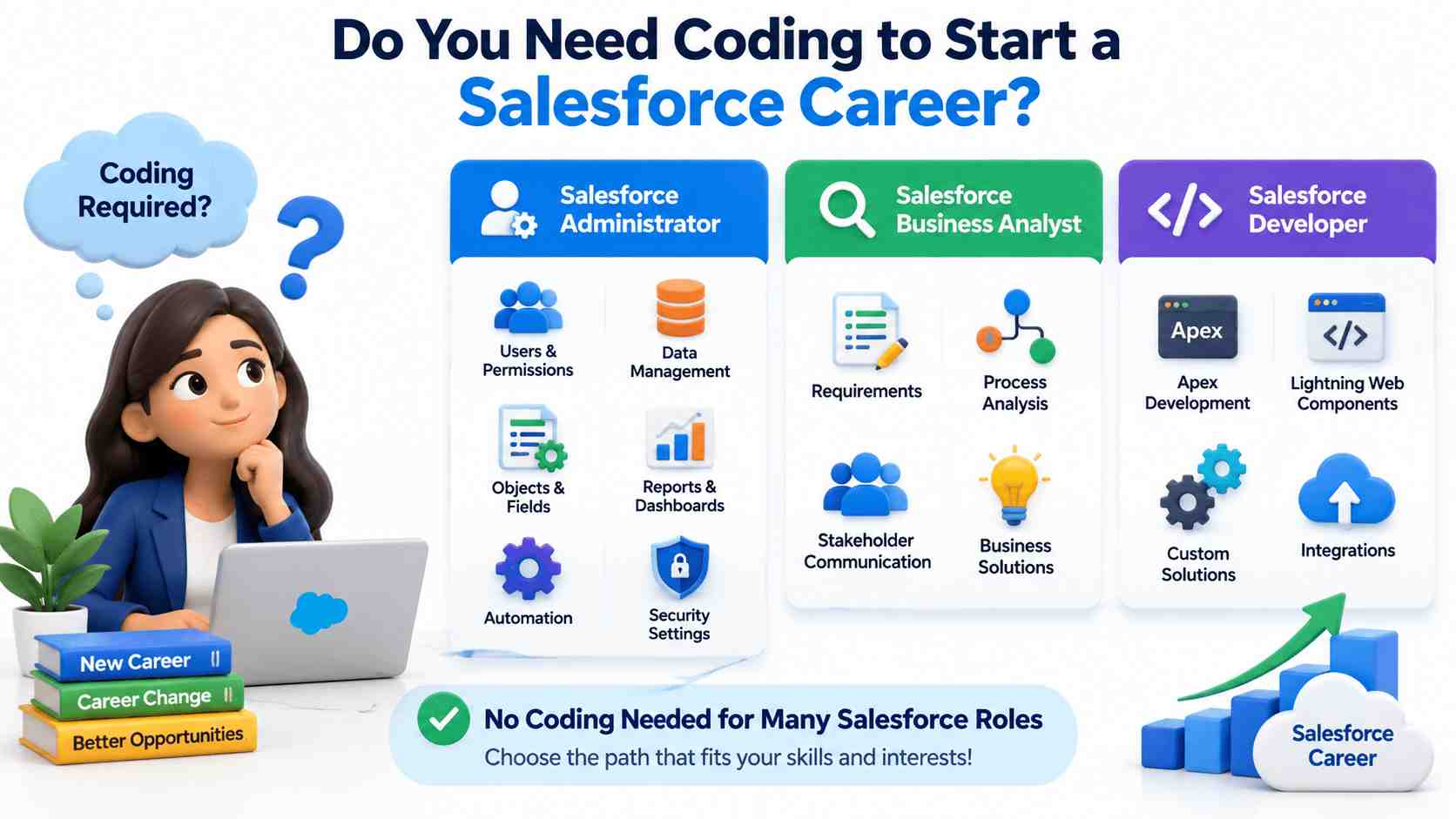
No, coding is not necessary for every Salesforce career path.
This is an important distinction for beginners. Salesforce has roles where the primary work involves configuration, data, reporting, automation, business requirements, and user management rather than programming.
For example, a Salesforce Administrator may work with:
- Users and permissions
- Data management
- Objects and fields
- Reports and dashboards
- Automation
- Security settings
- Platform configuration
A Salesforce Business Analyst may focus more on requirements, process analysis, documentation, stakeholder communication, and translating business needs into Salesforce solutions.
Coding becomes more important if you choose a technical development path involving technologies such as Apex or Lightning Web Components. So, not knowing how to code should not automatically stop a non-IT professional from exploring Salesforce.
Which Salesforce Roles Can Non-IT Professionals Explore?
The right Salesforce role depends on your previous experience, interests, and the type of work you want to pursue. Non-IT professionals can explore different paths by combining their existing domain knowledge with Salesforce skills. Some roles focus more on business processes and CRM management, while others require deeper technical knowledge. The right role depends on your background and interests.
Salesforce Administrator
Salesforce Business Analyst
Salesforce Consultant
Salesforce Developer
Salesforce Data and Marketing Roles
The important point is to choose one career direction first rather than trying to master every Salesforce specialization simultaneously.
Related Articles

Salesforce Business Analytics: How It Works, Key Features, Tools and Benefits
Explore Salesforce Business Analytics, key features, tools, benefits and use cases, with insights into Salesforce Business Analyst Training.
Salesforce CRM Software: Features, Modules, Benefits & How It Works
Explore Salesforce CRM software, its key features, modules, benefits, and working to understand how it helps businesses manage customers and sales.