Top 10 Salesforce Courses to Advance Your Career
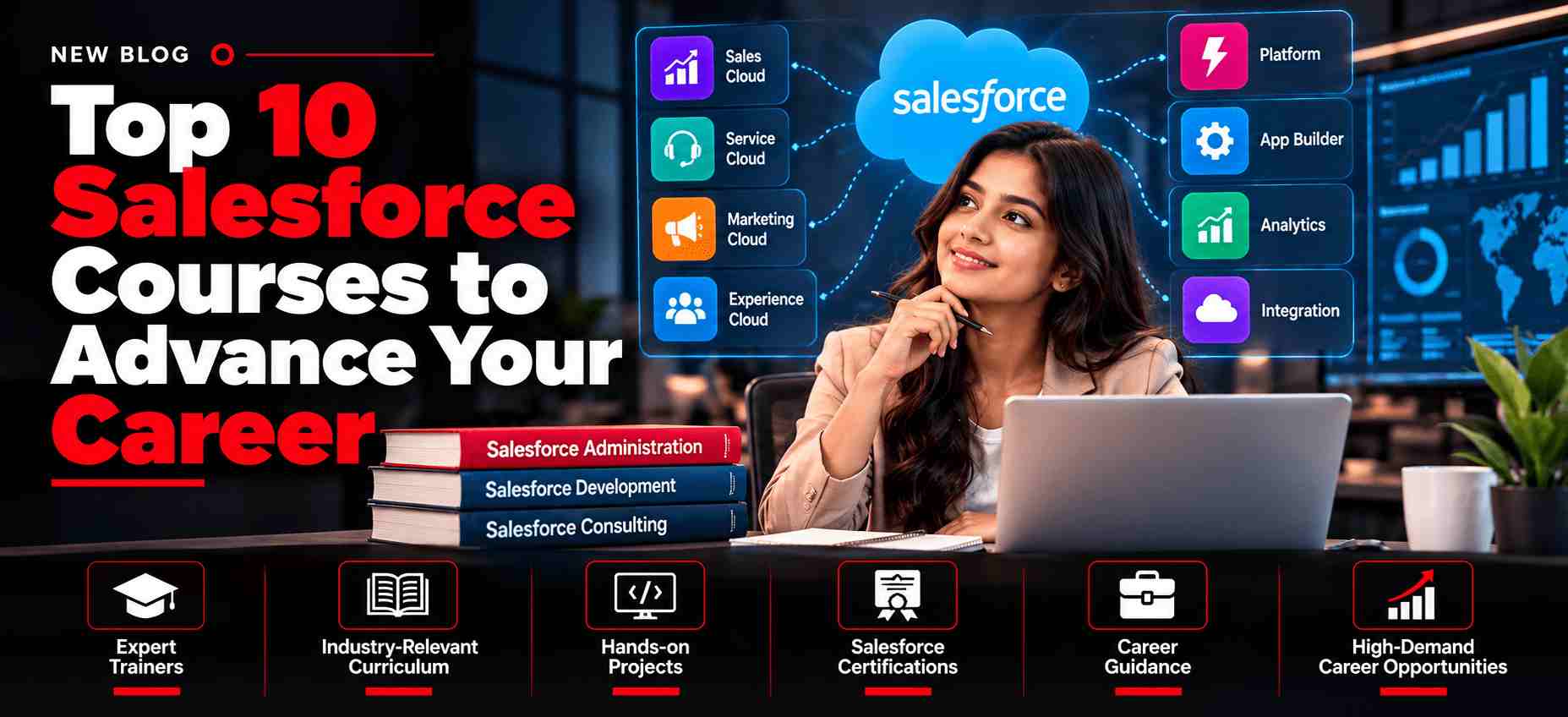
Salesforce has become an important platform for managing customer relationships, sales activities, marketing campaigns, and customer service operations. As businesses continue to improve their digital processes, professionals with Salesforce skills can explore opportunities across administration, development, consulting, data management, and integration.
Choosing the right Salesforce course can help learners understand the platform, develop practical skills, and prepare for relevant career paths. Beginners can start with CRM fundamentals and administration, while experienced IT professionals may prefer development, integration, or specialized Salesforce technologies. AI-powered capabilities are also becoming an important part of the Salesforce ecosystem.
Top 10 Salesforce Courses to Advance Your Career
Salesforce offers learning paths for different roles and experience levels. The following courses cover major areas of the ecosystem, from core platform administration to AI and integration.
1. Salesforce Administrator Training
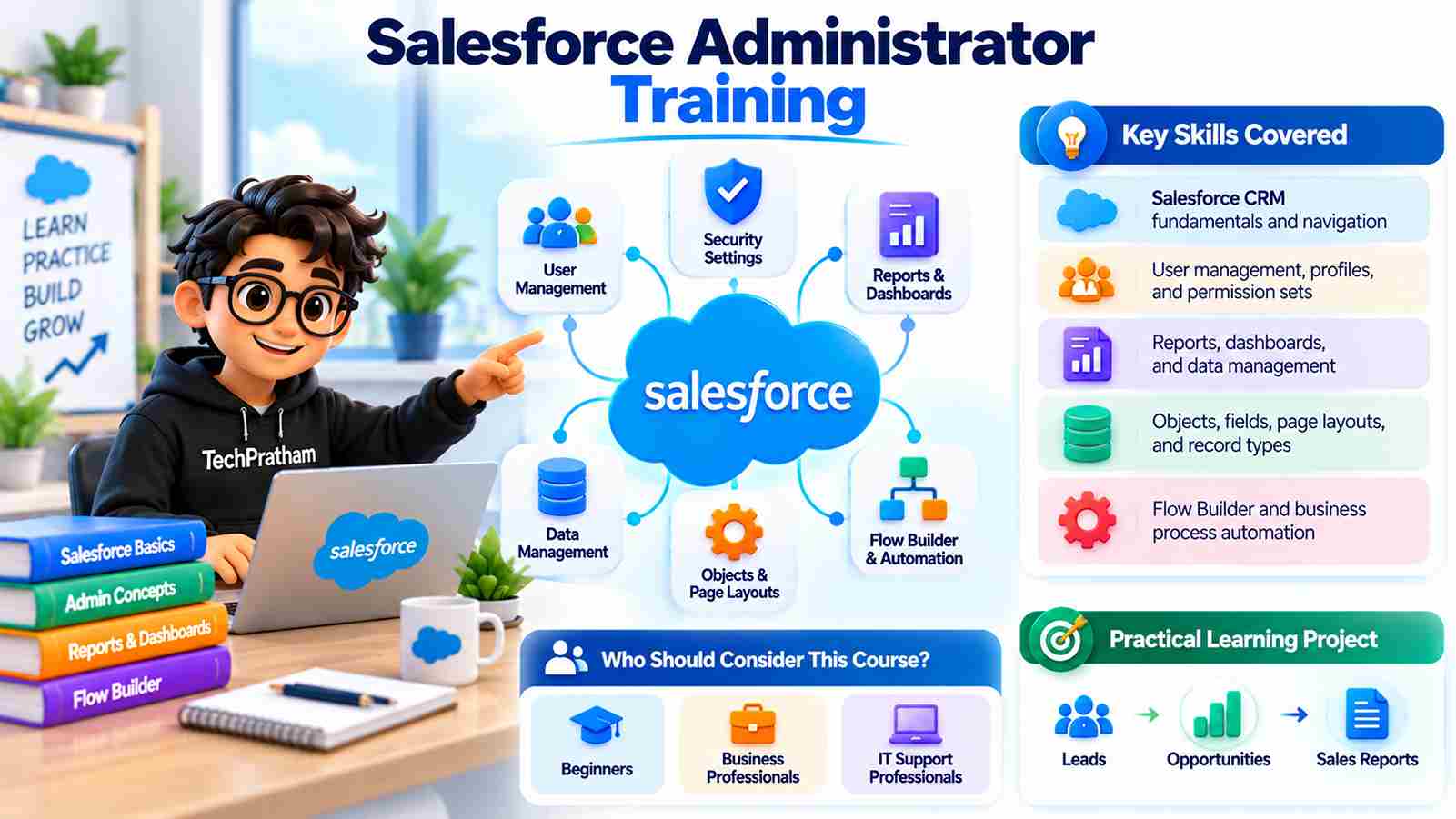
Salesforce Administrator Training is a suitable starting point for learners interested in CRM configuration, user management, and business process automation. The course covers user roles, security settings, reports, dashboards, data management, and workflow automation. It helps learners develop practical skills to manage Salesforce environments and explore career opportunities as Salesforce Administrators or CRM professionals.
Key skills covered:
- Salesforce CRM fundamentals and navigation
- User management, profiles, and permission sets
- Reports, dashboards, and data management
- Objects, fields, page layouts, and record types
- Flow Builder and business process automation
Who should consider this course?
2. Salesforce Developer Training
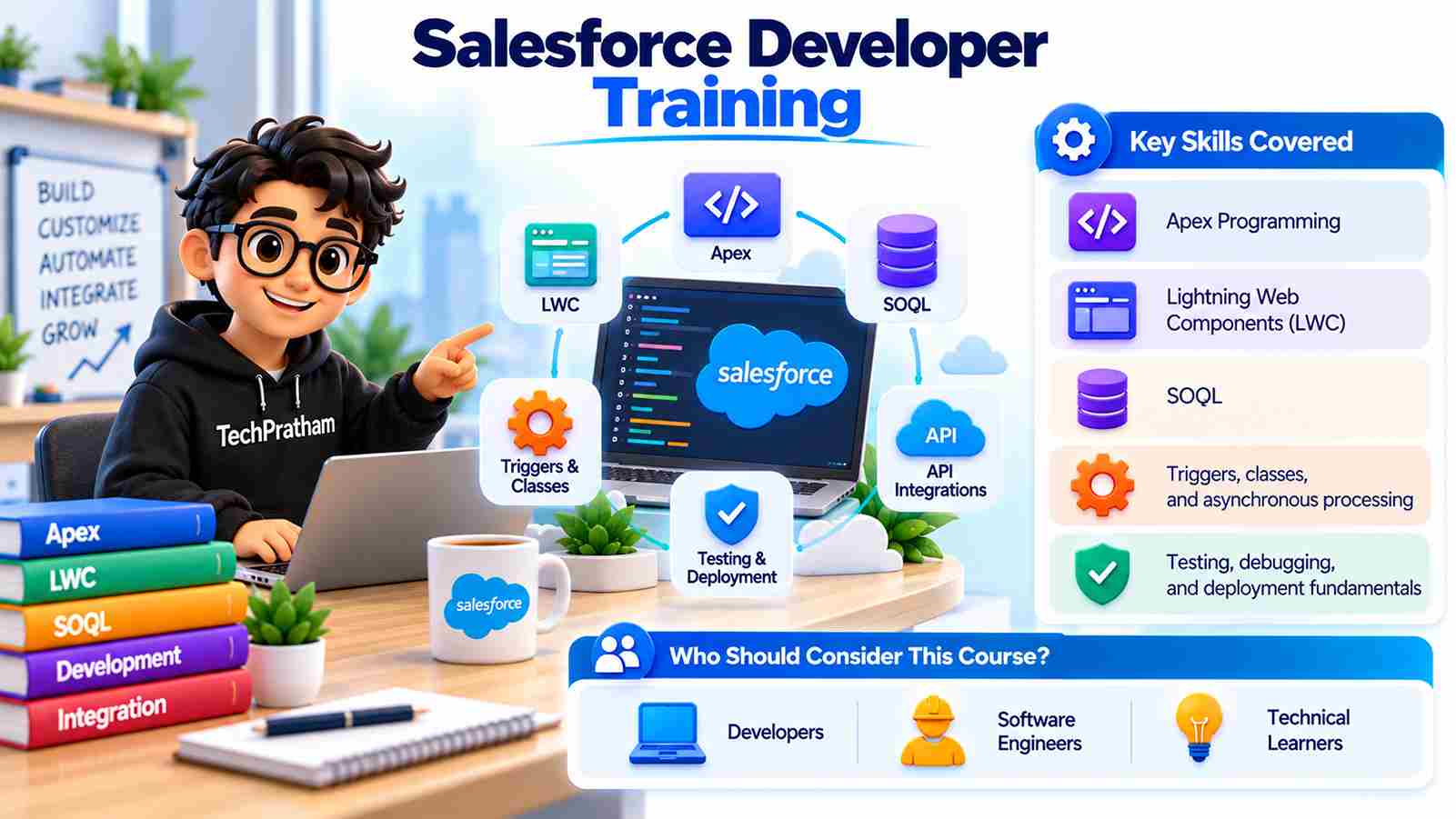
Salesforce Developer Training focuses on customizing the platform through programming and application development. It is relevant for professionals who want to build business logic, create custom interfaces, and extend Salesforce functionality. The course covers Apex, Visualforce, Lightning Web Components (LWC), and API integrations. Learners develop practical skills to build custom applications, automate processes, and explore career opportunities as Salesforce Developers.
Key skills covered:
- Apex programming
- Lightning Web Components (LWC)
- Salesforce Object Query Language (SOQL)
- Triggers, classes, and asynchronous processing
- Testing, debugging, and deployment fundamentals
Who should consider this course?
3. Salesforce CPQ Training
Salesforce CPQ Training focuses on Configure, Price, Quote processes that help businesses manage product configuration, pricing, and sales quotations. The course covers product bundles, pricing rules, quote generation, discount management, and approval workflows. Learners develop skills to streamline sales processes and explore career opportunities in Salesforce CPQ consulting and implementation.
Key skills covered:
- Product configuration and bundles
- Pricing rules and discount management
- Quote creation and management
- Approval workflows
- Sales process automation
Who should consider this course?
4. Salesforce Business Analyst Training
Salesforce Business Analyst Training helps learners understand how to translate business requirements into Salesforce solutions. Business analysts work with stakeholders, document requirements, and support the delivery of systems that meet organizational needs.
Key skills covered:
- Requirements gathering and analysis
- Stakeholder communication
- User stories and acceptance criteria
- Business process mapping
- Functional documentation and user acceptance testing (UAT)
Who should consider this course?
5. Salesforce Sales Cloud Training
Salesforce Sales Cloud Training focuses on tools used to organize sales pipelines, track customer interactions, and support sales teams. The course covers lead management, accounts, contacts, opportunities, sales forecasting, reports, and dashboards. Learners understand how to manage sales activities, monitor deal progress, and automate routine tasks to improve sales productivity.
Key skills covered:
- Leads, accounts, contacts, and opportunities
- Sales pipeline management
- Activities and follow-up tracking
- Reports and dashboards
- Sales process automation
Who should consider this course?
6. Salesforce Service Cloud Training
Salesforce Service Cloud Training focuses on customer support processes and service management. It helps learners understand how organizations handle customer enquiries, service requests, and support cases through Salesforce. The course covers case management, service workflows, escalation rules, knowledge management, and customer support automation. Learners also gain an understanding of reports and dashboards used to monitor service performance and improve customer satisfaction.
Key skills covered:
- Case management and assignment
- Queues and escalation processes
- Service workflows and automation
- Knowledge management concepts
- Customer support reports and dashboards
Who should consider this course?
7. Salesforce Marketing Cloud Training
Salesforce Marketing Cloud Training introduces learners to digital marketing and customer engagement workflows. The course covers email campaigns, audience segmentation, customer journeys, and marketing automation. Learners understand how to create targeted campaigns, manage subscriber data, and analyze campaign performance to improve customer engagement and marketing results.
Key skills covered:
- Email campaign management
- Audience segmentation and subscriber data
- Customer journey design
- Marketing automation
- Campaign performance analysis
Who should consider this course?
8. Salesforce Data Cloud Training
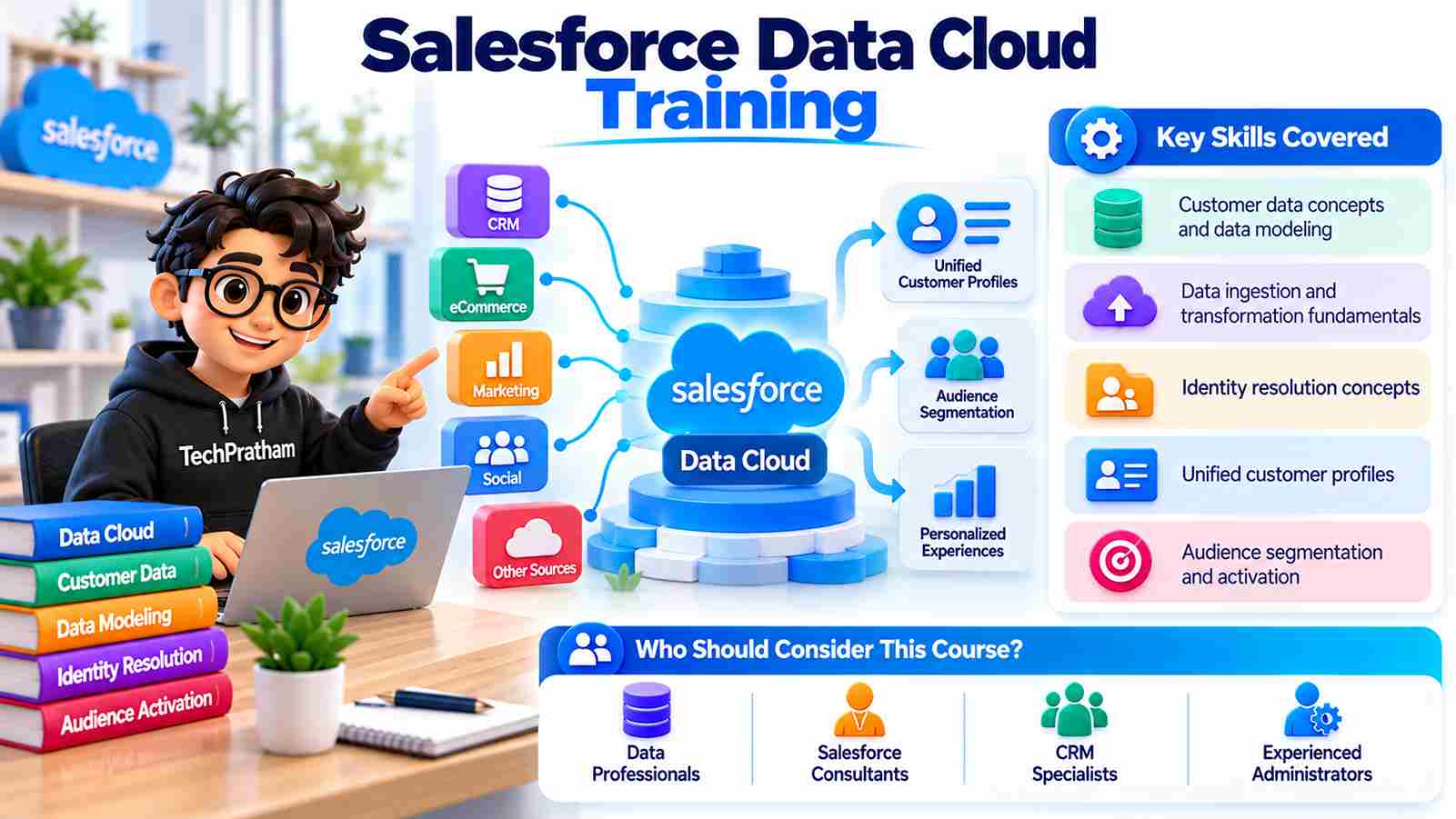
Salesforce Data Cloud Training introduces learners to customer data management and the process of bringing information from different sources together. The course covers data ingestion, data modeling, identity resolution, and unified customer profiles. Learners understand how to organize customer information, create connected data views, and support personalized customer experiences through data-driven insights.
Key skills covered:
- Customer data concepts and data modeling
- Data ingestion and transformation fundamentals
- Identity resolution concepts
- Unified customer profiles
- Audience segmentation and activation
Who should consider this course?
9. Salesforce Integration Training with MuleSoft
Salesforce Integration Training with MuleSoft focuses on connecting Salesforce with external applications, databases, and enterprise systems. The course covers API development, data transformation, system integration, and integration workflows. Learners understand how to exchange data between different applications, streamline business processes, and build reliable connections between Salesforce and other business systems.
Key skills covered:
- API fundamentals and REST concepts
- System and process integration
- Data transformation using DataWeave
- API design and implementation
- Integration testing and error handling
Who should consider this course?
10. Salesforce Agentforce Training
Salesforce Agentforce Training helps learners understand how AI agents are configured, how they use business context, and how their behavior can be tested and monitored. The course introduces agent configuration, instructions, actions, workflow design, and business data integration. Learners gain insights into how AI agents can support customer service, automate routine tasks, and improve business processes within Salesforce.
Key skills covered:
- Agentforce fundamentals and use cases
- Agent configuration and instructions
- Topics, actions, and workflow design
- Grounding agents in relevant business data
- Testing, monitoring, and responsible AI practices
Who should consider this course?
How to Choose the Right Salesforce Course
With several Salesforce online courses available, choosing a course based on your interests and current skills is more useful than selecting one simply because it is popular. Consider your career goals, existing knowledge, course curriculum, and practical learning opportunities before making a decision. The right training can help you build relevant skills, understand real-world business requirements, and prepare for career opportunities in the Salesforce ecosystem.
Which Salesforce Course Is Best for Your Experience Level?
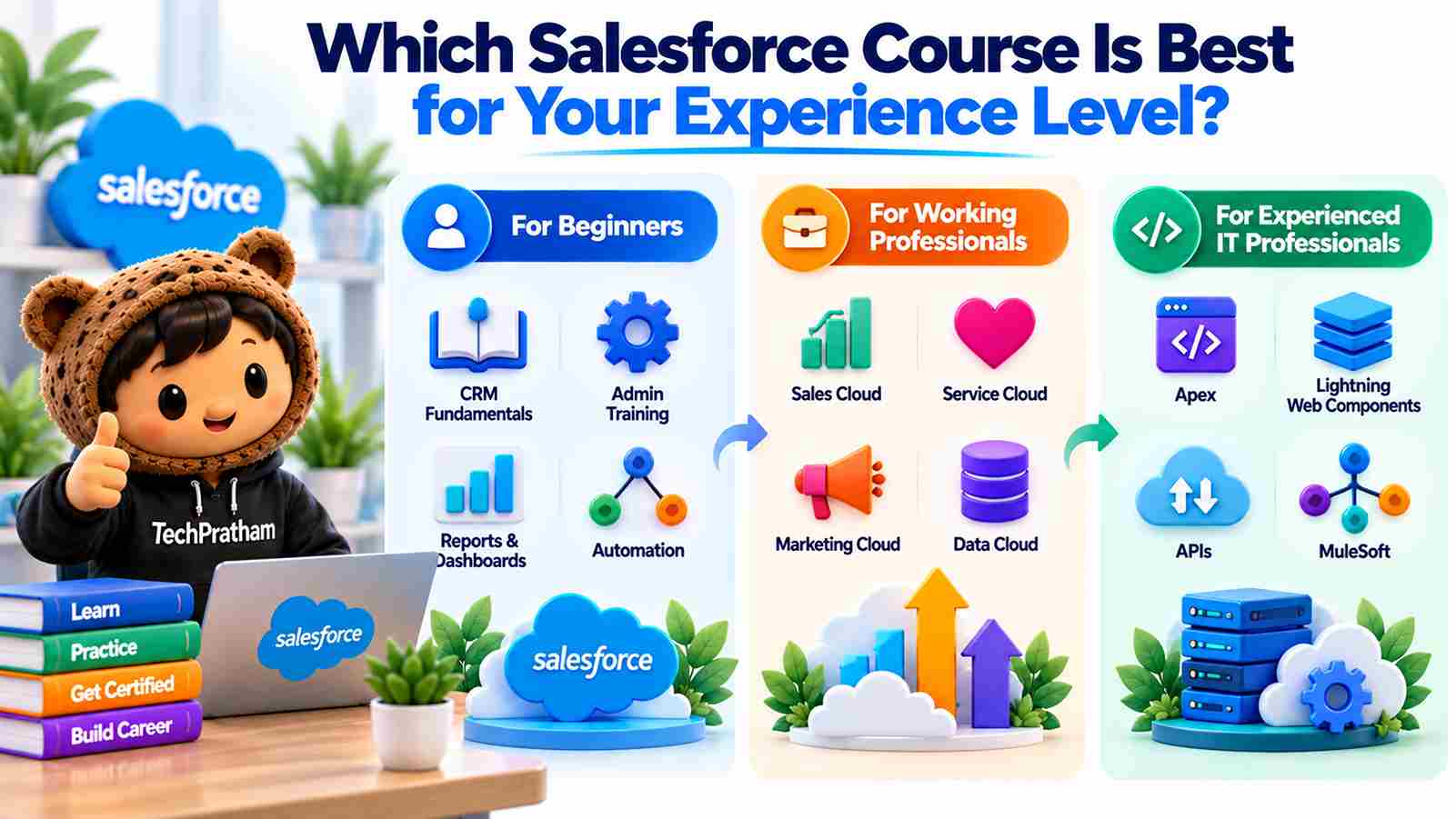
For Beginners
How AI Is Changing Salesforce Career Opportunities
AI is becoming an important part of the Salesforce ecosystem, particularly in customer support, business process automation, and data-driven customer experiences. Agentforce provides tools for creating AI agents that can support defined workflows.
For Salesforce professionals, this creates opportunities to expand existing skills. Administrators can explore automation and agent configuration, developers can investigate integrations and custom actions, and data professionals can learn how data quality and context affect AI-enabled solutions.
Career Opportunities After Salesforce Training
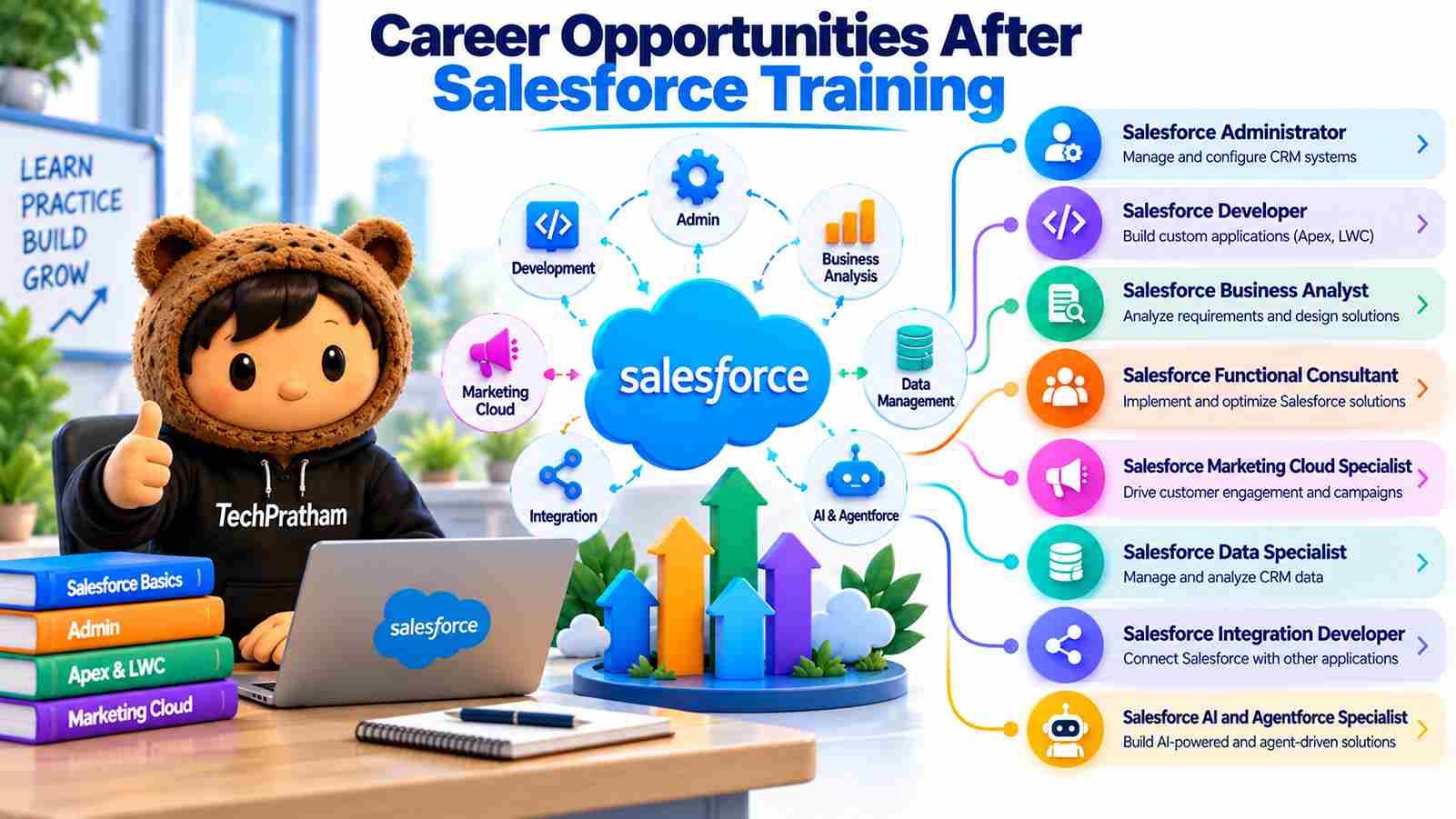
Salesforce training can help learners develop skills for various roles, depending on their interests, experience, and technical knowledge. Career opportunities include Salesforce Administrator, Salesforce Developer, Salesforce Business Analyst, and Salesforce Functional Consultant. Professionals can also explore specialized roles such as Salesforce Marketing Cloud Specialist, Salesforce Data Specialist, Salesforce Integration Developer, and Salesforce AI and Agentforce Specialist. These roles involve managing CRM systems, developing custom applications, analyzing business requirements, connecting applications, and improving customer engagement. Along with training, hands-on practice, problem-solving, communication skills, and practical project experience can help learners prepare for relevant job opportunities.
Why Choose TechPratham for Salesforce Training?
Choosing a training provider is an important step in building Salesforce skills. Learners should look for a course that aligns with their career goals, provides a clear curriculum, and helps them understand how Salesforce concepts are applied in practical scenarios. At TechPratham, learners can explore Salesforce Training options based on their interests and learning objectives.
Frequently Asked Questions About Salesforce Courses
1. Which Salesforce course is best for beginners?
2. Can I learn Salesforce without coding experience?
3. How do I choose between Salesforce Admin and Developer Training?
5. Should I learn Salesforce AI and Agentforce?
Conclusion
Salesforce offers learning opportunities across administration, development, business analysis, sales, service, marketing, data management, integration, and AI. The right Salesforce course depends on your experience, interests, and the skills required for your preferred career path.
Beginners can start with CRM fundamentals and administration, while working professionals can choose specialized learning paths that build on their existing knowledge. Developers and integration specialists may focus on technical skills, and those interested in emerging AI capabilities can explore Agentforce.
Related Articles
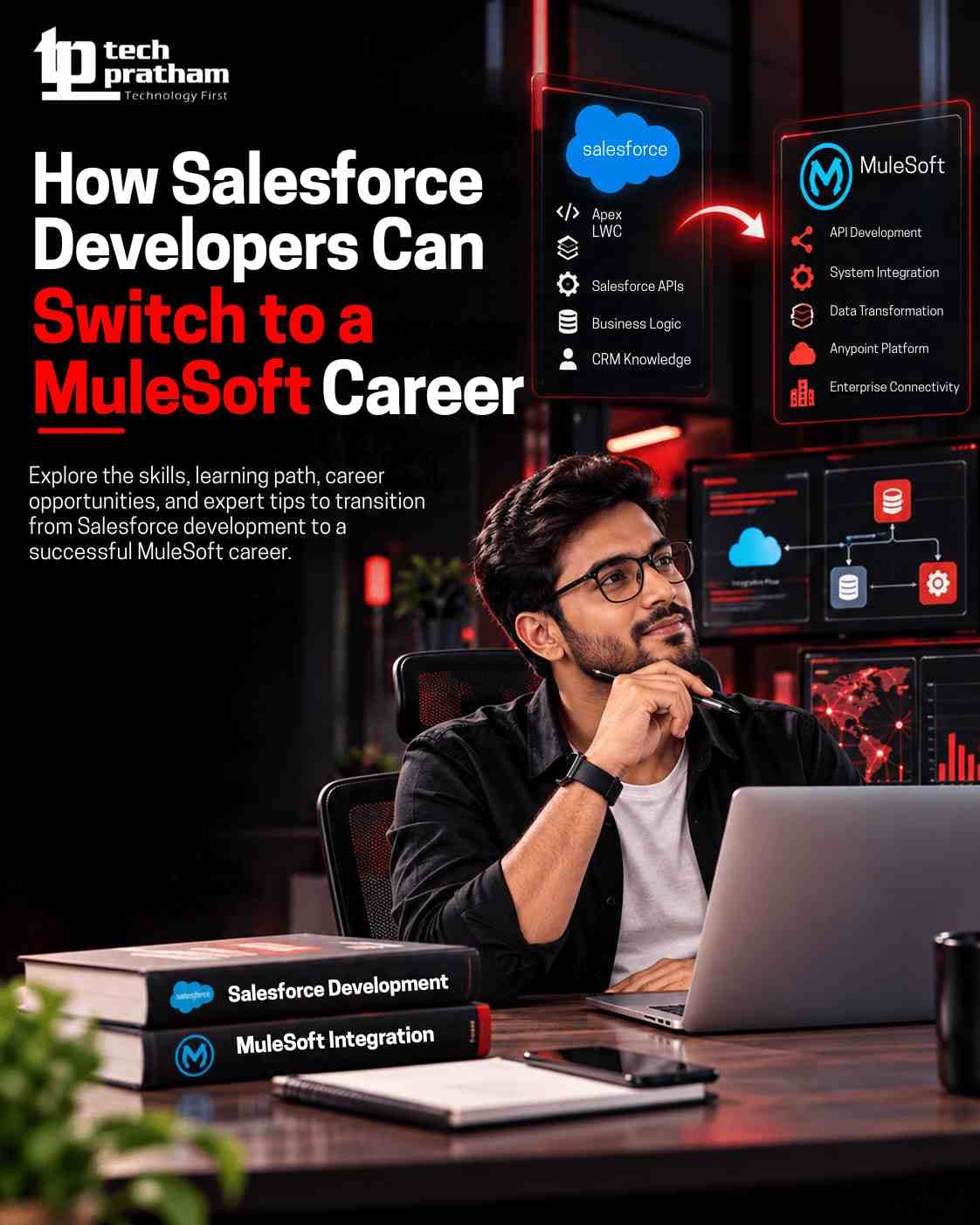
How Salesforce Developers Can Switch to a MuleSoft Career
Learn how Salesforce Developers can transition to MuleSoft, build integration skills, work with APIs, and explore new career opportunities.
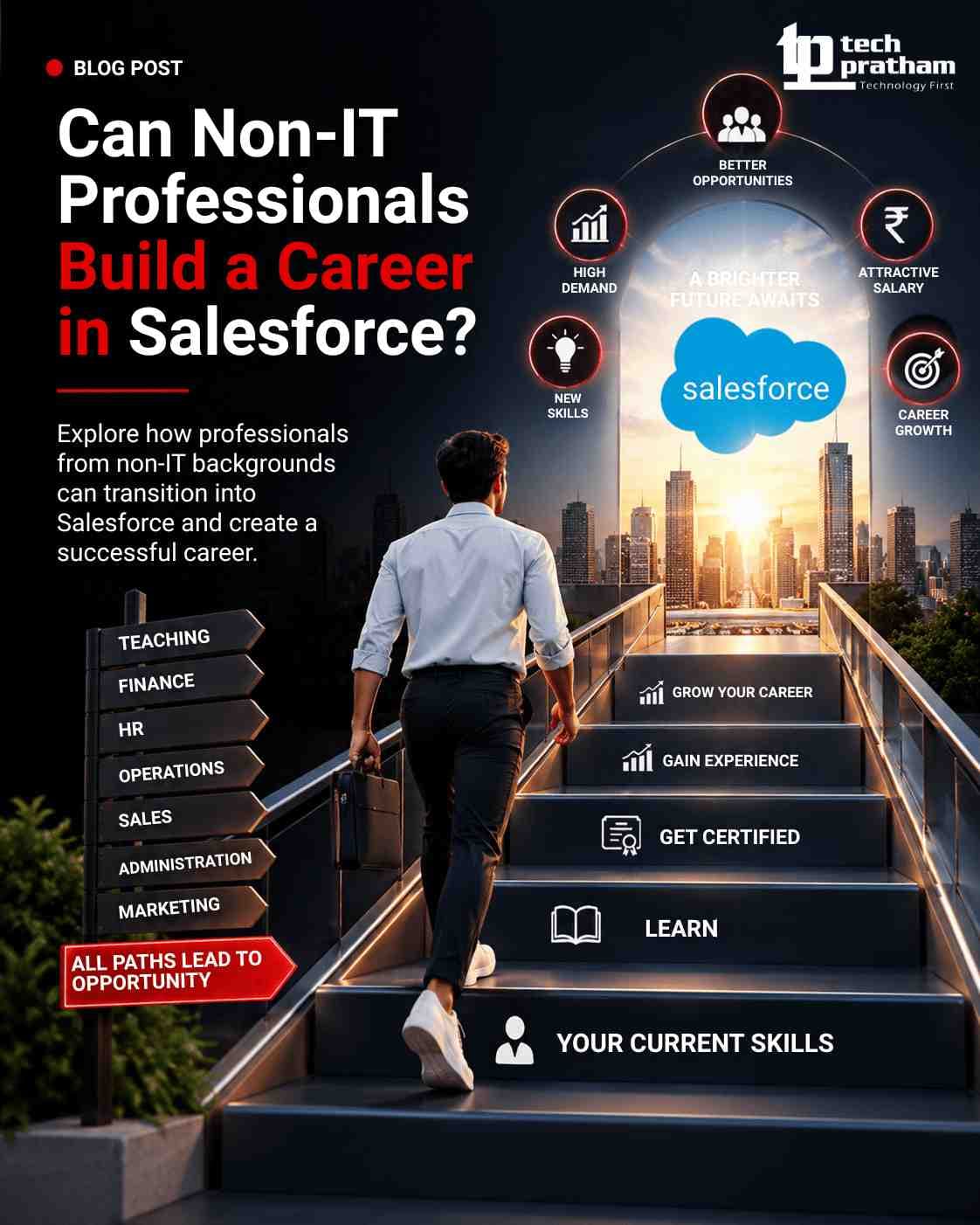
Can Non-IT Professionals Build a Career in Salesforce?
Can non-IT professionals build a career in Salesforce? Learn about Salesforce roles, coding requirements, AI impact, skills, certification, and career




 +91-8882178896
 +1 (343) 477-0926