
How Salesforce Data Cloud Helps Businesses Understand Their Customers Better

Every business wants to build stronger relationships with its customers, but that becomes possible only when it understands their needs, preferences, and behavior. Today, customers interact with brands through websites, mobile apps, emails, social media, online stores, and customer support channels. These interactions generate a large amount of valuable customer data every day.
The challenge is that this information often remains scattered across different platforms. Marketing teams may have one set of data, sales teams may use another, and customer support teams may work with separate records. Without a connected view of the customer, businesses can find it difficult to deliver personalized experiences and make informed decisions.
For professionals exploring Salesforce Training, understanding how Data Cloud connects customer data with CRM, AI, and business processes is becoming increasingly valuable. In this guide, we will explore how Salesforce Data Cloud helps businesses understand their customers better and why it is becoming an important part of modern customer engagement strategies.
Why Businesses Need a Better Understanding of Their Customers
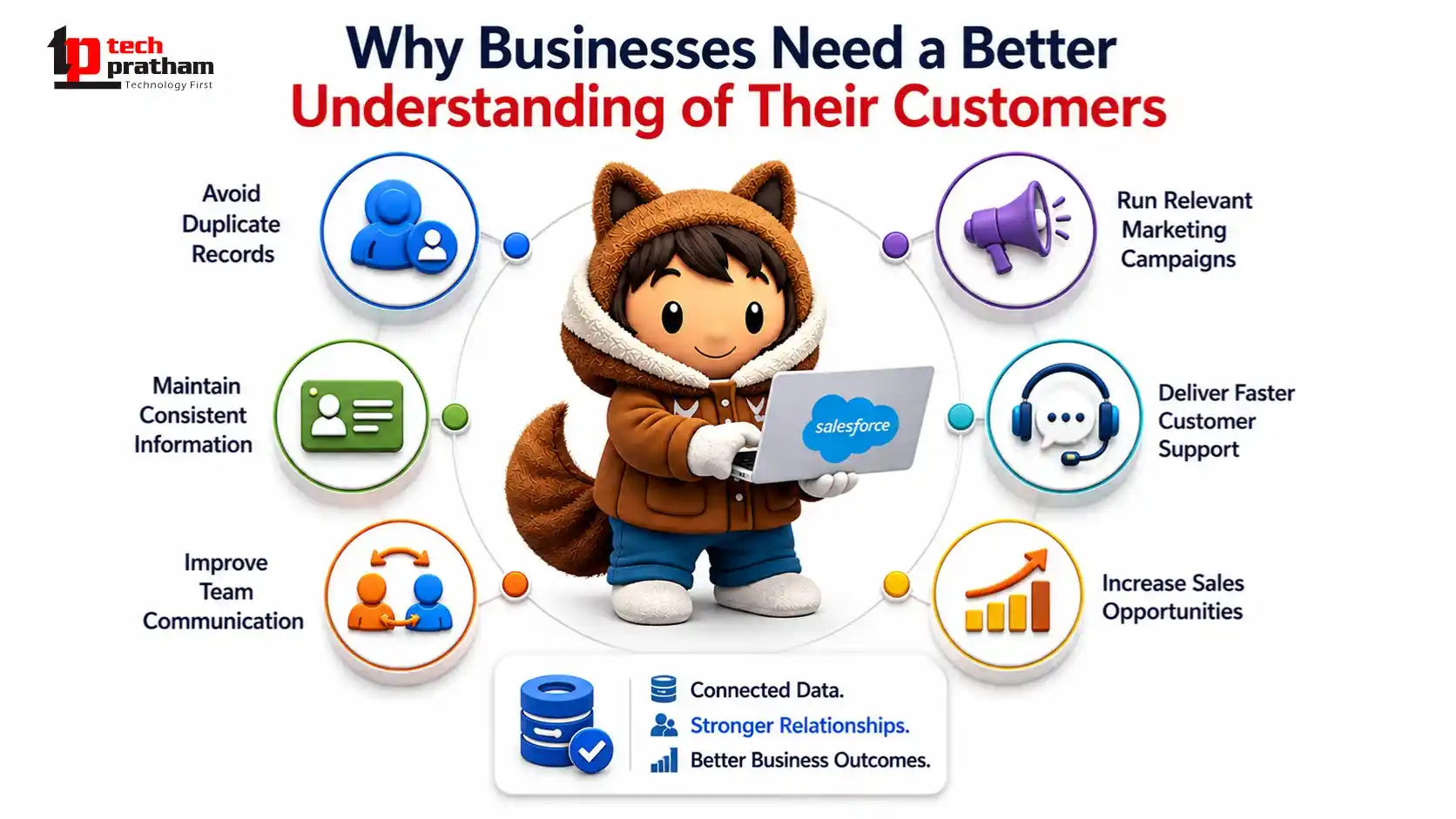
Customer expectations have changed significantly. People expect businesses to recognize their preferences, remember previous interactions, and provide relevant communication across different channels. However, when customer information is stored in separate systems, organizations may face challenges such as:
- Duplicate customer records
- Inconsistent customer information
- Limited communication between departments
- Generic marketing campaigns
- Delayed customer support
- Missed sales opportunities
When customer data is connected, teams can work with more consistent and relevant information. This helps businesses understand the complete customer journey and create better experiences across sales, marketing, and customer service.
How Salesforce Data Cloud Creates a Connected Customer View
Salesforce Data Cloud brings together customer information from different touchpoints and helps organizations build a more complete understanding of each customer. A unified customer profile may include:
- Purchase history
- Website activity
- Email engagement
- Customer support cases
- Marketing interactions
- Product preferences
- Previous communications
- Mobile app activity
Instead of switching between multiple applications, teams can access connected customer information in one place. This saves time, improves collaboration, and helps employees make faster decisions based on a broader view of customer interactions.
How Salesforce Data Cloud Helps Businesses Understand Customers Better
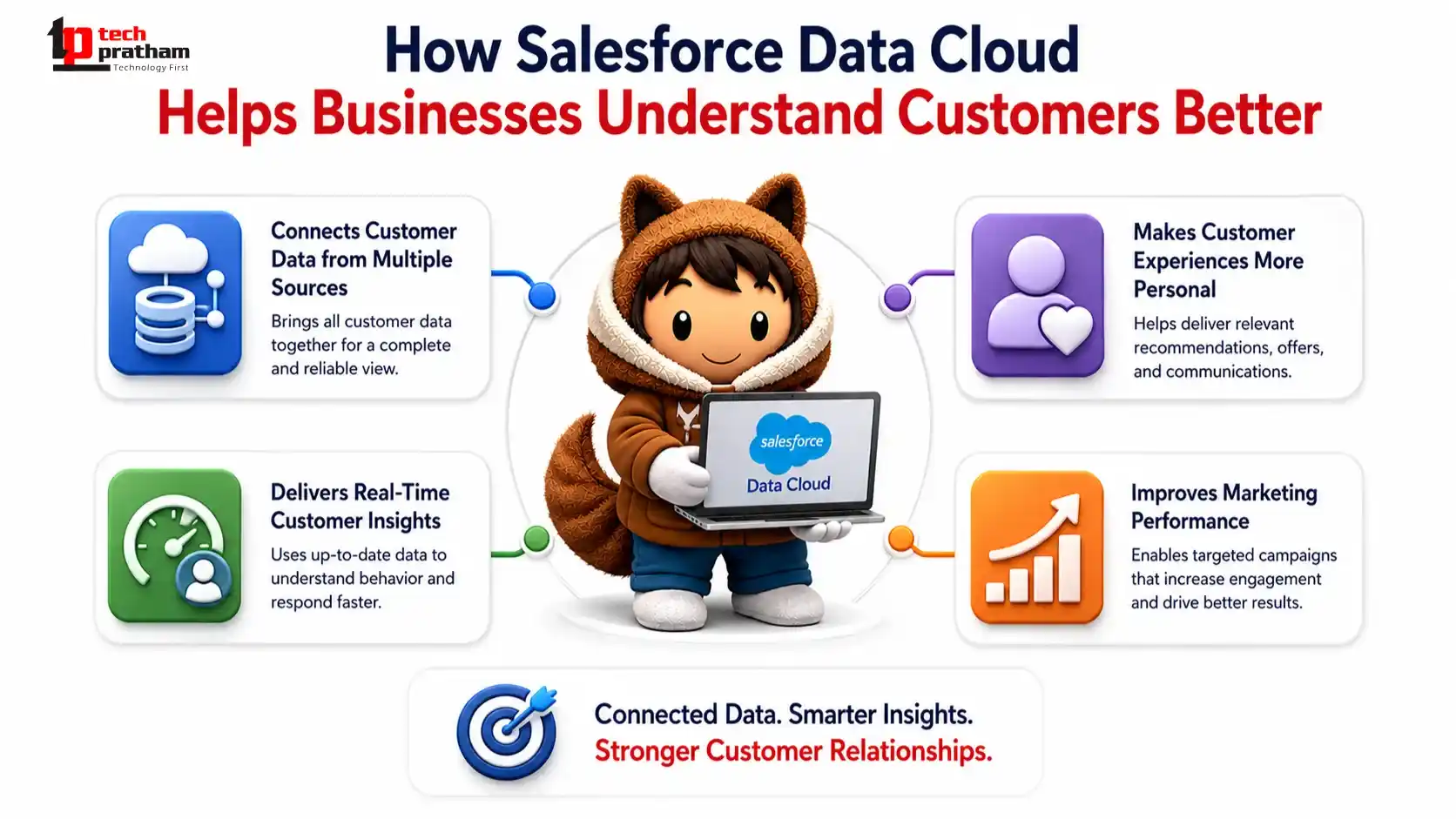
Salesforce Data Cloud helps businesses connect customer information from different sources and create a clearer view of customer behavior, preferences, and interactions. With connected and up-to-date insights, organizations can deliver more personalized experiences, improve customer engagement, and make better business decisions.
Connects Customer Data from Multiple Sources
Businesses use many applications to manage customer interactions. Information may be stored in CRM platforms, websites, eCommerce systems, mobile applications, marketing tools, and customer service software.
Salesforce Data Cloud supports customer data integration by connecting information from different sources and helping reduce data silos. This allows organizations to work with a more connected and reliable view of customer activity.
Delivers Real-Time Customer Insights
Customer behavior changes continuously. A person may browse products today, open an email tomorrow, contact customer support later, and make a purchase after several days. Salesforce Data Cloud can help organizations use updated customer information to understand recent activity and respond more effectively. This provides access to real-time customer insights and allows businesses to:
- Identify customer interests
- Track engagement and buying behavior
- Recognize changing customer preferences
- Understand interaction patterns
- Respond more quickly to customer needs
Access to timely customer insights supports faster and more informed data-driven decision-making.
Makes Customer Experiences More Personal
Customers increasingly expect relevant experiences instead of generic communication. When businesses understand customer interests and previous interactions, they can create more meaningful engagement. Salesforce Data Cloud can support personalized customer experiences by helping organizations:
- Recommend relevant products or services
- Send targeted email campaigns
- Create customized offers
- Deliver more relevant marketing content
- Improve communication across customer touchpoints
Personalized interactions can improve customer satisfaction and help businesses build stronger long-term relationships.
Improves Marketing Performance
Marketing teams depend on accurate customer information to create effective campaigns. When data is disconnected, audience targeting may become less accurate, and customers may receive irrelevant messages.
Salesforce Data Cloud helps marketers understand customer behavior, create more relevant audience segments, and improve campaign targeting. Instead of using broad marketing strategies, businesses can communicate with customers based on their interests, engagement, and interactions.
How Salesforce AI and Analytics Add More Value
Customer data becomes more useful when businesses can turn it into meaningful insights. Salesforce AI and analytics can work with connected customer data to identify patterns, support predictions, and help teams decide what action to take next.
Instead of manually reviewing large volumes of customer records, businesses can use AI-powered insights to better understand:
- Which customers may be interested in a product
- Which products or services are gaining attention
- Which customers may need additional support
- How marketing campaigns are performing
- Which sales opportunities may require immediate attention
These insights help organizations make decisions based on customer behavior and available data rather than relying only on assumptions.
Better CRM Data Management for Every Team
Managing customer information becomes difficult when data is spread across different systems. Salesforce Data Cloud supports better CRM Data Management by helping teams work with more connected customer information.
Sales Teams
Sales representatives can review customer interactions, previous purchases, interests, and engagement before contacting a prospect. They can better understand where a customer is in the buying journey and identify the products or services that may be most relevant to their needs.
Marketing Teams
Marketing professionals can create audience segments based on customer behavior, preferences, purchase history, and engagement across different channels. This allows them to deliver more relevant messages rather than sending the same campaign to every customer.
Customer Support Teams
Support representatives can access previous customer interactions, service requests, purchase details, and communication history more easily. This helps them understand customer concerns without repeatedly asking for the same information.
Improved Collaboration Across Teams
When sales, marketing, and customer support teams work with connected customer information, collaboration becomes more efficient. Teams can share relevant insights, coordinate customer communication, and avoid providing conflicting information. A connected customer view also helps businesses create a smoother experience across different touchpoints. Customers receive more relevant communication, employees have better context, and departments can work toward shared customer experience goals.
Real-World Example of Salesforce Data Cloud
Imagine an online fashion retailer. A customer visits the website several times, views different products, adds an item to the cart, subscribes to promotional emails, and later contacts customer support about an order.
Without connected customer data, these activities may remain separated across different systems. The marketing team may see email engagement, the website team may see browsing activity, and the support team may only see the customer service request. With Salesforce Data Cloud, these interactions can be connected to provide a broader view of the customer journey.
The business can then:
- Recommend products based on browsing activity
- Send more relevant offers
- Help support teams understand previous interactions
- Improve coordination between sales, marketing, and service teams
This creates a smoother and more relevant experience for both the customer and the business.
Industries That Benefit from Salesforce Data Cloud
Salesforce Data Cloud can support organizations across many industries because customer information is important in almost every business environment. Industries that can benefit include:
- Retail and eCommerce
- Banking and financial services
- Healthcare
- Insurance
- Manufacturing
- Telecommunications
- Education
- Travel and hospitality
Although customer journeys differ across industries, the main objective remains similar: understand customers better, improve customer engagement, and make informed business decisions.
How Salesforce Training Helps Professionals Learn Data Cloud
As businesses increasingly rely on connected customer information, professionals need to understand how Data Cloud supports CRM, personalization, analytics, and AI-driven business processes. Salesforce Training helps learners build a strong foundation in Salesforce technologies and understand how different solutions work together.
Through practical learning, professionals can explore customer data integration, unified customer profiles, audience segmentation, customer insights, and real-world business use cases. A structured Salesforce Data Cloud Training in India program helps learners understand how customer information is connected across different systems and used to support CRM, personalization, analytics, and AI-driven business processes.
Through hands-on exercises and real-world projects, learners can develop practical knowledge of Data Cloud features and their business applications. A structured learning program can help learners understand:
- CRM fundamentals
- Customer data management
- Data integration concepts
- Customer segmentation
- Personalized customer engagement
- Salesforce AI and analytics
- Real-world Data Cloud applications
Hands-on exercises and project-based learning can help learners apply these concepts more confidently. Practical experience also helps them understand how organizations use customer data to improve engagement and support business decisions.
Why Salesforce Data Cloud Skills Are in Demand
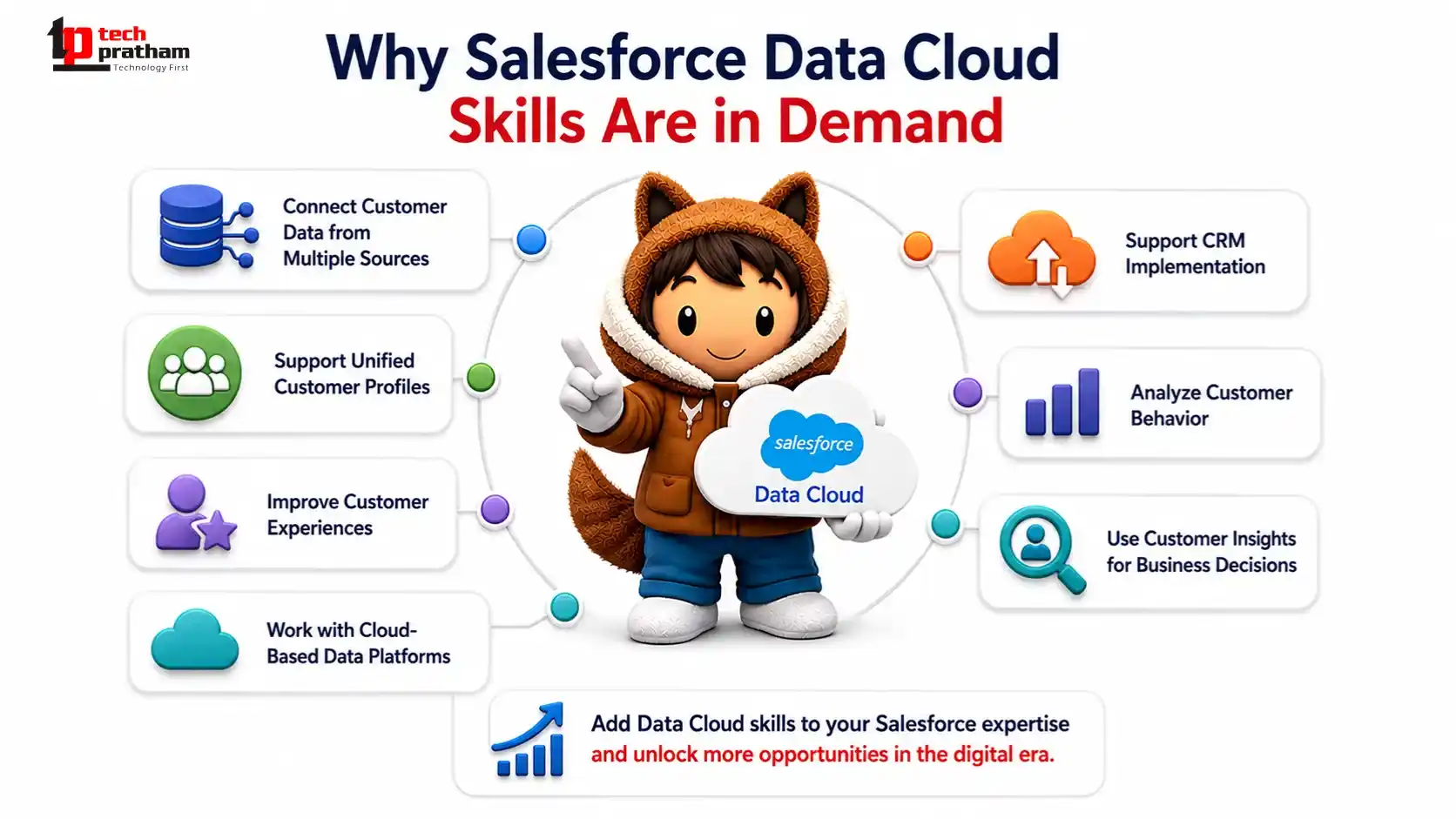
As organizations continue investing in digital transformation, professionals with Salesforce Data Cloud skills are becoming increasingly valuable. Companies are looking for professionals who understand how to:
- Connect customer data from multiple sources
- Support unified customer profiles
- Improve customer experiences
- Work with cloud-based data platforms
- Support CRM implementation
- Analyze customer behavior
- Use customer insights for business decisions
For professionals already learning Salesforce, adding Data Cloud knowledge can strengthen their CRM expertise and create opportunities to work on customer data and digital transformation projects.
Why Practical Learning Matters
Understanding Salesforce Data Cloud concepts is important, but practical experience helps learners apply those concepts to real business situations. A quality Salesforce Data Cloud Training program may include:
- Hands-on exercises
- Live projects
- Business case studies
- Customer data scenarios
- Practical assignments
- Real-world use cases
Working on projects helps learners understand how organizations connect and manage customer information. It also provides experience with practical challenges that may arise in real business environments.
Choosing the Right Salesforce Data Cloud Course
Choosing the right Salesforce Data Cloud Course is important for building practical skills and understanding how customer data is used in real business environments. Before enrolling, learners should look beyond the syllabus and consider factors such as hands-on training, experienced instructors, live projects, and industry-relevant learning.
A useful Salesforce Data Cloud Course should provide:
- An industry-relevant curriculum
- Experienced trainers
- Live instructor-led sessions
- Practical learning opportunities
- Real business examples
- Project-based assignments
- Career guidance
If flexibility is important, Salesforce Data Cloud Online Training can help learners study from different locations while participating in live sessions, practical exercises, and virtual learning environments. Many professionals also prepare for Salesforce Data Cloud Certification after completing their training. Certification can help learners demonstrate their knowledge and strengthen their professional profile.
Tips for Beginners Learning Salesforce Data Cloud
If you are starting your learning journey, these tips can help:
- Understand basic CRM concepts before exploring advanced Data Cloud features.
- Learn how customer information is collected, connected, and managed.
- Practice with realistic business scenarios.
- Focus on understanding business challenges, not only technical features.
- Work on practical projects regularly.
- Explore how Data Cloud works with Salesforce AI and other Salesforce solutions.
- Stay updated with new Salesforce releases and platform changes.
Consistent learning and practical experience can be more valuable than trying to complete every topic quickly.
Frequently Asked Questions
How does Salesforce Data Cloud help businesses?
How does Salesforce Data Cloud improve customer experiences?
Why are Salesforce Data Cloud skills becoming important?
Does Salesforce Training help in learning Data Cloud?
Conclusion
Modern businesses collect customer information from many touchpoints every day. The main challenge is not only gathering this data but also connecting it and turning it into useful insights. Salesforce Data Cloud helps organizations create a more connected view of customer activity, understand customer behavior, improve personalization, and support better business decisions. It also enables sales, marketing, and customer service teams to work with more relevant customer information.
For professionals, Salesforce Data Cloud Training can provide practical knowledge of customer data, CRM, cloud technologies, and real-world business applications. Combined with a strong foundation in Salesforce Training, these skills can support career growth in the expanding Salesforce ecosystem.
Related Articles

Salesforce Business Analytics: How It Works, Key Features, Tools and Benefits
Explore Salesforce Business Analytics, key features, tools, benefits and use cases, with insights into Salesforce Business Analyst Training.

Salesforce CRM Software: Features, Modules, Benefits & How It Works
Explore Salesforce CRM software, its key features, modules, benefits, and working to understand how it helps businesses manage customers and sales.