What Is Salesforce Data Cloud and How Does It Work?
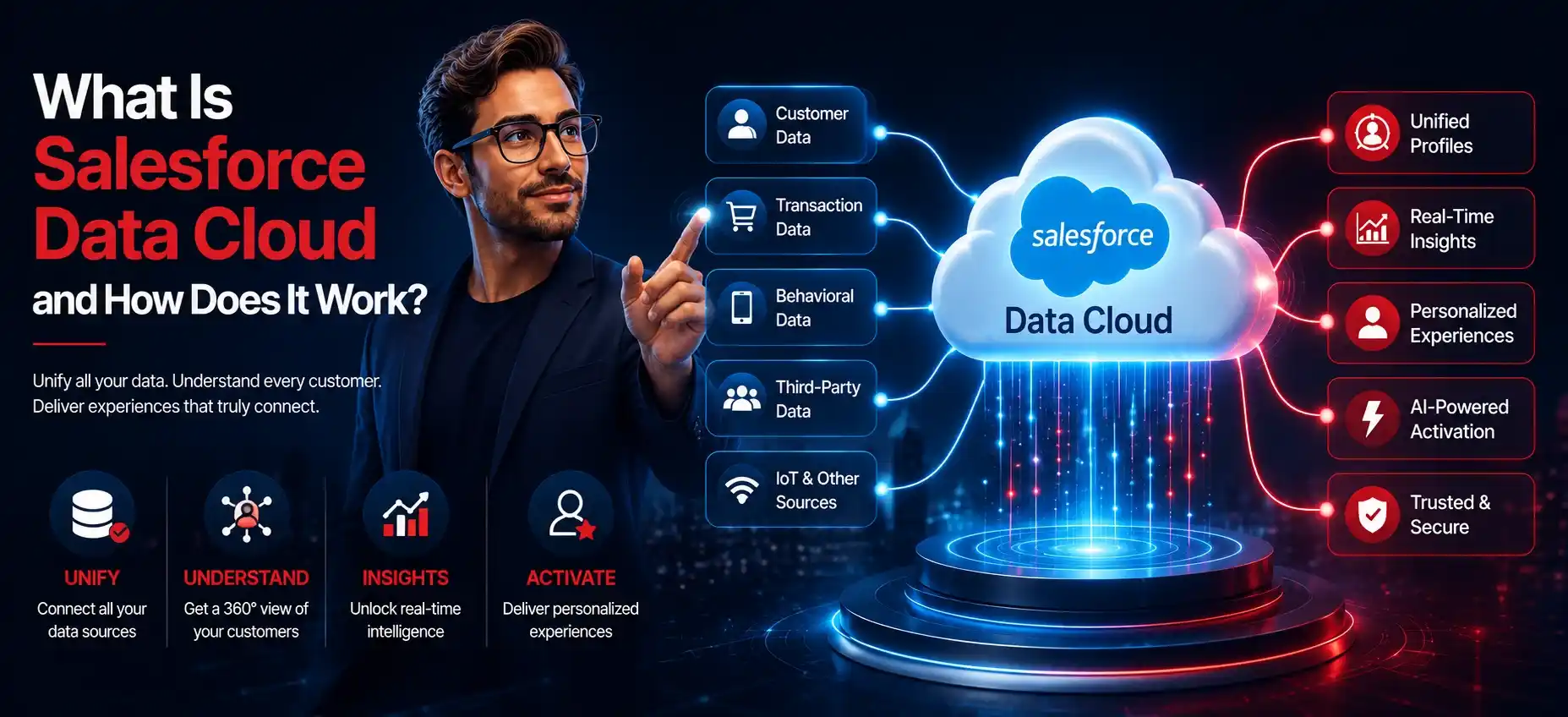
Salesforce Data Cloud is changing the way businesses collect, manage, and use customer information. Today, customers interact with brands through websites, mobile apps, emails, social media, online stores, and customer support channels. These interactions generate valuable data, but it is often stored across different systems, making it difficult for businesses to get a complete view of each customer.
Salesforce Data Cloud solves this challenge by bringing customer data from multiple sources into one centralized platform. It creates a unified customer profile, helping businesses understand customer behavior, deliver personalized experiences, improve marketing campaigns, and make smarter business decisions.
As more organizations focus on data-driven growth, the demand for professionals with Salesforce Data Cloud knowledge is increasing. Whether you're exploring Salesforce Training to build CRM skills or simply want to understand this technology, learning how Salesforce Data Cloud works is a valuable step.
Understanding Salesforce Data Cloud
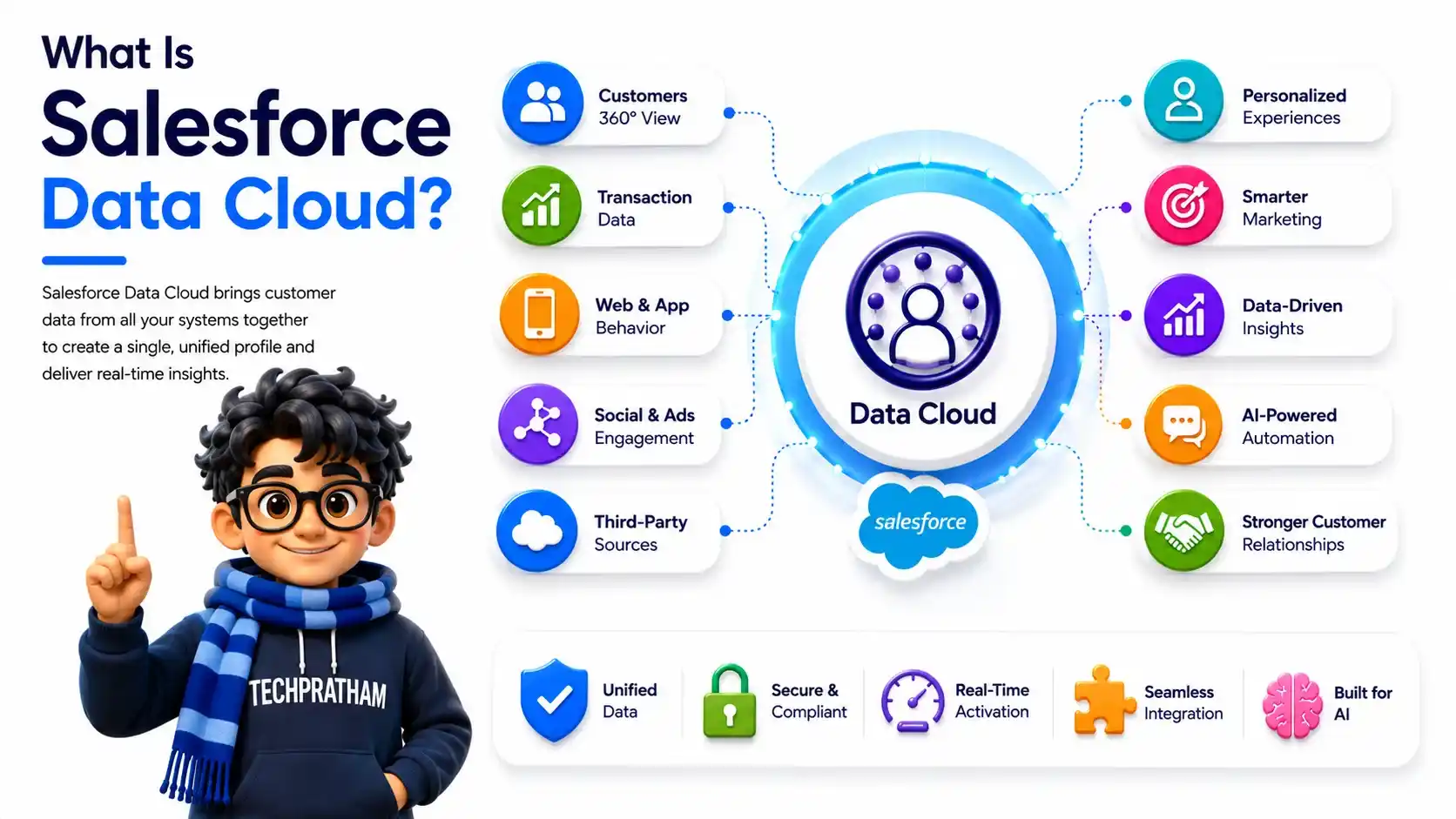
Salesforce Data Cloud is a cloud-based Customer Data Platform (CDP) that collects, connects, and organizes customer data from multiple sources into one unified profile. Instead of storing customer information in separate systems, Salesforce Data Cloud creates a single source of truth where businesses can access accurate and updated customer information.
For example, a customer may:
- Visit your website
- Download a brochure
- Subscribe to your newsletter
- Purchase a product
- Contact customer support
- Interact through social media
Why Was Salesforce Data Cloud Introduced?
As businesses grow, they use many different tools to manage their daily operations. For example, marketing teams use one platform for email campaigns, sales teams work with CRM software, customer support teams use help desk systems, and online stores track customer purchases separately.
The challenge is that all this customer information is stored in different places. This creates data silos, making it difficult for businesses to get a complete view of their customers. As a result, teams may work with incomplete or outdated information, leading to missed opportunities and inconsistent customer experiences.
Salesforce Data Cloud was introduced to solve this problem. It connects customer data from multiple systems into one centralized platform, creating a unified and real-time customer profile. With accurate and connected data, businesses can better understand customer behavior, improve collaboration between teams, and make faster, data-driven decisions.
How Does Salesforce Data Cloud Work?
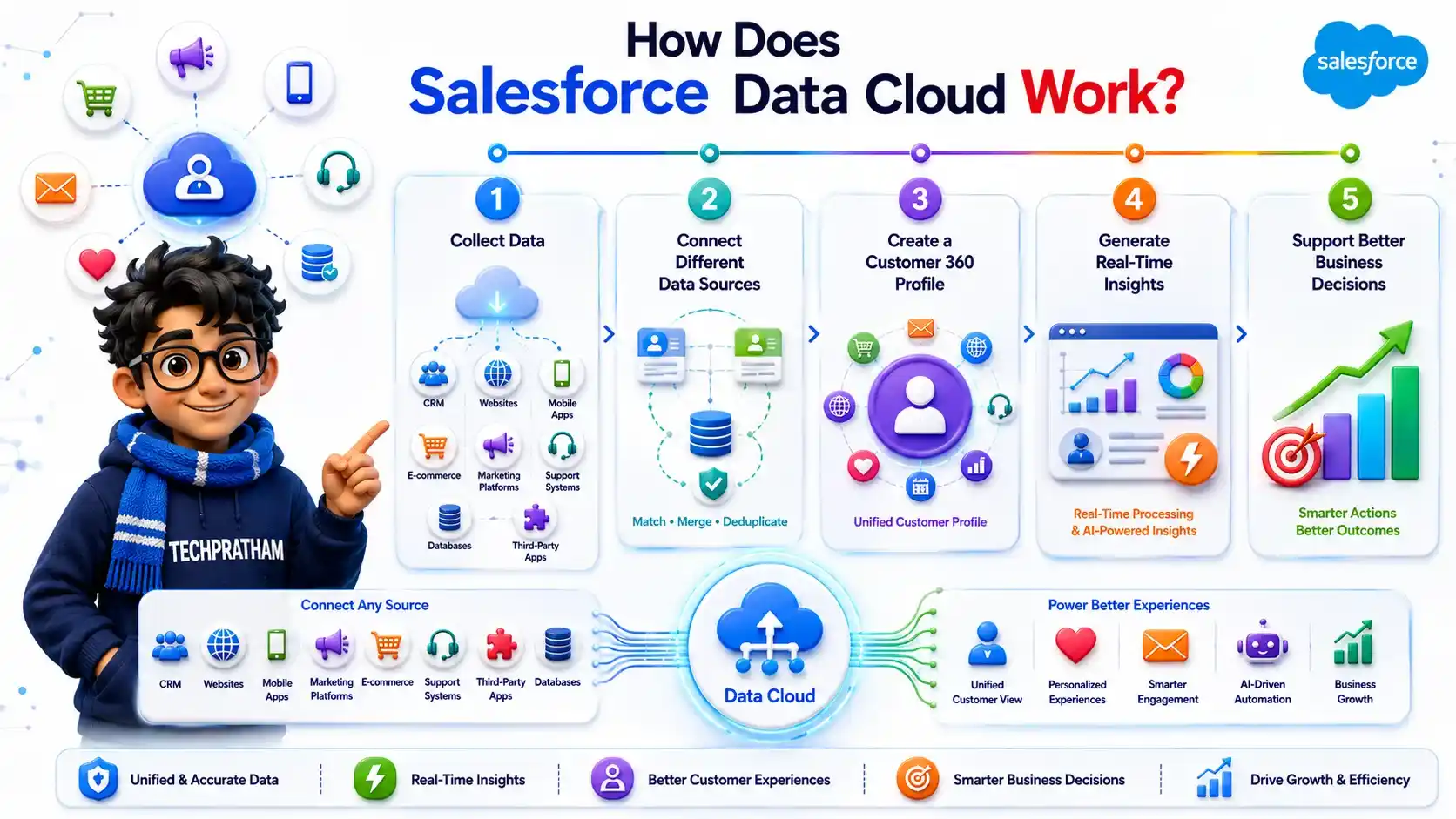
Salesforce Data Cloud works by collecting customer information from different systems, organizing it, removing duplicate records, and creating one unified customer profile. Instead of replacing existing business applications, it connects with them and brings all customer information together.
Step 1: Collect Data
The first step is collecting customer data from various business systems and digital touchpoints. Instead of relying on a single source, Salesforce Data Cloud gathers information from multiple platforms to ensure businesses have a complete view of every customer. The platform gathers information from multiple sources, including:
- CRM applications
- Websites
- Mobile applications
- Marketing platforms
- E-commerce systems
- Customer support software
- Third-party applications
This ensures businesses have access to customer information from every important touchpoint.
Step 2: Connect Different Data Sources
Once the data is collected, Salesforce Data Cloud connects information from different systems into one unified customer profile. For example, the same customer might appear in a CRM system, an online store, and a customer support platform with slightly different information. Salesforce Data Cloud intelligently matches these records and removes duplicate entries to improve CRM Data Management.
Once the data is collected, Salesforce Data Cloud connects information from different systems into one unified customer profile. For example, the same customer might appear in a CRM system, an online store, and a customer support platform with slightly different information. Salesforce Data Cloud intelligently matches these records and removes duplicate entries to improve CRM Data Management.
Step 3: Create a Customer 360 Profile
After connecting customer data, Salesforce Data Cloud creates a Customer 360 profile. This unified profile provides a complete view of each customer by combining information from every interaction. A Customer 360 profile may include:
- Contact information
- Purchase history
- Website activity
- Email engagement
- Customer support interactions
- Marketing campaign responses
- Product preferences
- Loyalty program details
With a complete customer profile, sales, marketing, and customer service teams can work with the same accurate information, improving collaboration and customer experiences.
Step 4: Generate Real-Time Insights
Customer behavior changes continuously, so businesses need access to the latest information. Salesforce Data Cloud processes customer data in real time, allowing organizations to respond quickly to changing customer needs. Real-time insights help businesses:
- Understand customer interests
- Monitor buying behavior
- Identify engagement patterns
- Personalize customer interactions
- Respond quickly to customer actions
Having up-to-date customer insights enables businesses to make timely decisions and deliver more relevant experiences.
Step 5: Support Better Business Decisions
The final step is turning customer data into actionable insights. Salesforce Data Cloud helps organizations analyze customer behavior and identify opportunities to improve business performance. Businesses can use these insights to:
- Improve marketing strategies
- Increase sales opportunities
- Enhance customer service
- Identify customer trends
- Make data-driven business decisions
Instead of relying on assumptions, organizations can use accurate customer data to create strategies that improve customer satisfaction and support long-term business growth.
Key Features of Salesforce Data Cloud
Unified Customer Profiles
Real-Time Data Processing
Customer 360
Salesforce AI Integration
Improved Data Quality
Secure Data Management
Benefits of Salesforce Data Cloud for Businesses
Businesses generate customer data from many different sources every day, but managing and using that data effectively can be challenging. Salesforce Data Cloud helps organizations bring all their customer information together, making it easier to understand customers, improve engagement, and make smarter business decisions.
Better Customer Understanding
Personalized Customer Experiences
Customers expect businesses to understand their needs and provide relevant interactions. Salesforce Data Cloud helps organizations personalize:
- Email campaigns
- Product recommendations
- Website content
- Marketing offers
- Customer communication
By delivering personalized experiences, businesses can improve customer engagement and satisfaction.
Smarter Marketing Campaigns
With accurate and connected customer data, marketing teams can create targeted audience segments and run more effective campaigns. This helps businesses:
- Reach the right audience
- Improve campaign performance
- Increase customer engagement
- Optimize marketing efforts
Improved Sales Performance
Faster Customer Support
Salesforce Data Cloud gives support teams quick access to customer information, allowing them to resolve issues more efficiently. This helps businesses:
- Resolve customer issues faster
- Provide personalized support
- Improve customer satisfaction
- Reduce response times
Increased Customer Retention
Better Data-Driven Decision Making
Industries That Use Salesforce Data Cloud
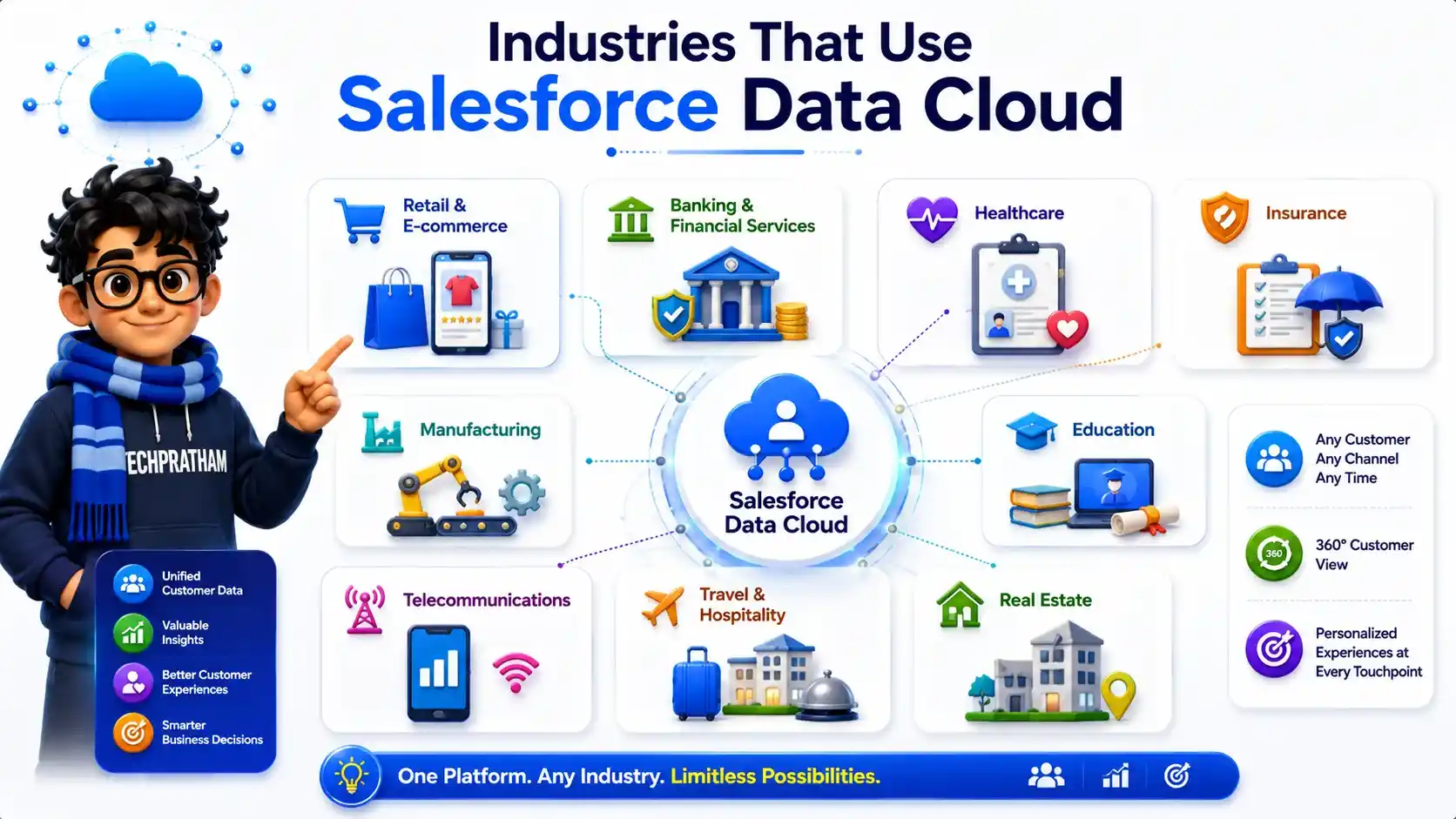
Salesforce Data Cloud is used by organizations across a wide range of industries to unify customer data, gain valuable insights, and deliver better customer experiences. While every industry has different business goals, they all benefit from having accurate and connected customer information. Some of the major industries using Salesforce Data Cloud include:
- Retail and E-commerce
- Banking and Financial Services
- Healthcare
- Insurance
- Manufacturing
- Education
- Telecommunications
- Travel and Hospitality
- Real Estate
As businesses continue their digital transformation journey, Salesforce Data Cloud helps organizations across industries make better decisions and create more personalized customer experiences.
Salesforce Data Cloud and Business Intelligence
Collecting customer data is only the first step. The real value comes from analyzing that data to understand customer behavior and make better business decisions. This is where Business Intelligence (BI) plays an important role.
By combining Salesforce Data Cloud with Business Intelligence, organizations can transform raw customer data into meaningful insights. These insights help teams identify trends, measure performance, and make decisions based on real data instead of assumptions.
Businesses can use these insights to answer questions such as:
- Which products or services are performing best?
- Which customers are most engaged with the brand?
- Which marketing campaigns deliver the highest return?
- Which customers may need additional support or follow-up?
- Which sales opportunities have the highest potential?
- Where can business processes be improved?
With access to real-time insights, businesses can optimize marketing strategies, improve customer experiences, increase sales performance, and make smarter decisions that support long-term growth.
How Salesforce AI Makes Data Cloud More Powerful
Artificial intelligence is transforming the way businesses manage customer relationships and make data-driven decisions. By integrating Salesforce AI with Salesforce Data Cloud, organizations can unlock deeper customer insights, automate processes, and create highly personalized experiences.
Salesforce AI analyzes unified customer data from Data Cloud to help businesses understand customer behavior, predict future actions, and improve engagement strategies.
With Salesforce AI and Data Cloud, businesses can:
- Predict customer preferences
- Identify buying patterns
- Recommend the next best action
- Improve customer engagement
- Support sales and marketing decisions
By combining AI with customer data, businesses can deliver more personalized and efficient customer experiences.
Who Should Learn Salesforce Data Cloud?
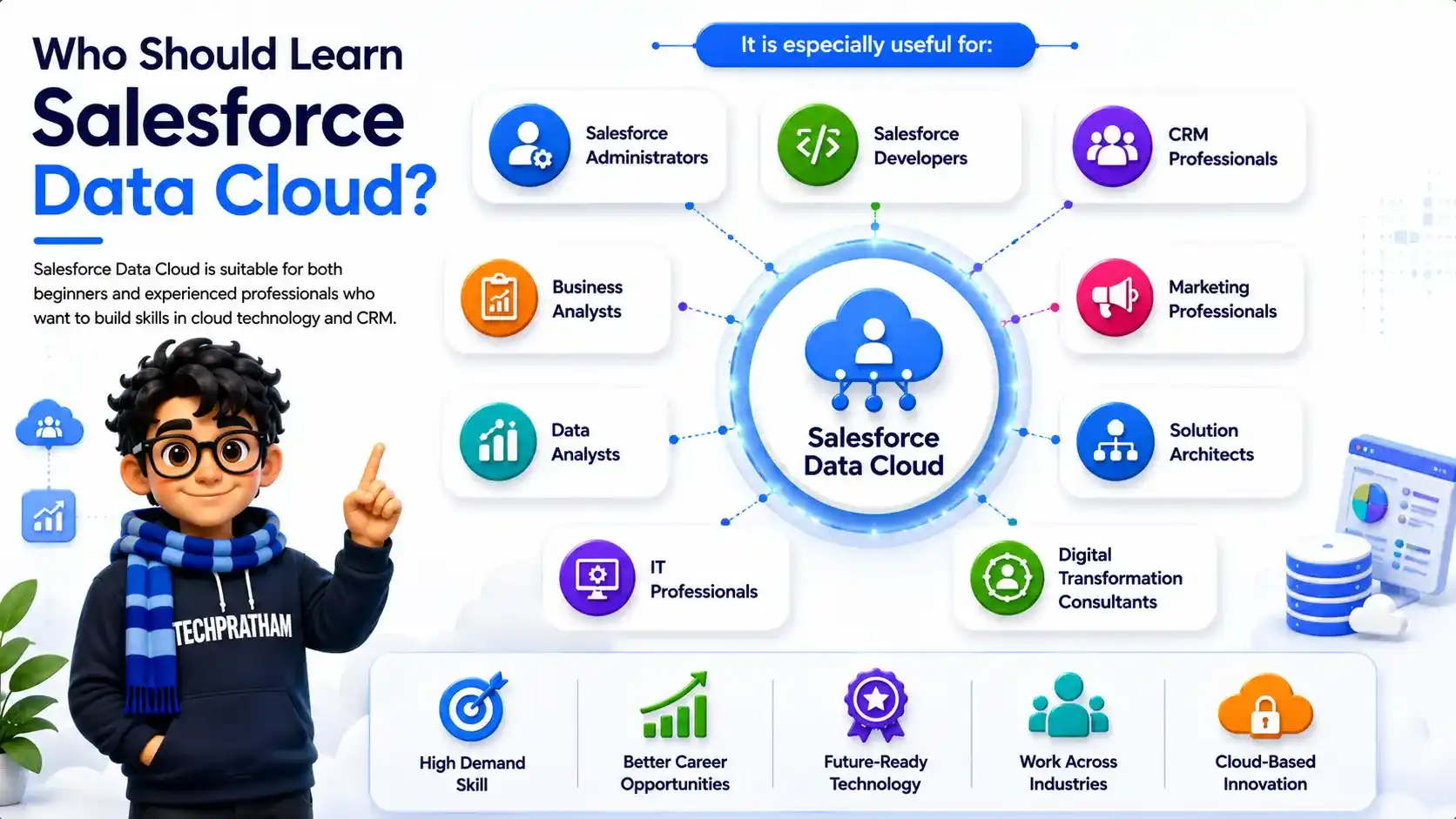
Salesforce Data Cloud is a valuable skill for beginners as well as experienced professionals who want to build expertise in cloud technology, customer data platforms (CDP), and CRM solutions. As businesses increasingly rely on unified customer data and AI-driven insights, professionals with Salesforce Data Cloud skills are becoming highly sought after. It is especially useful for:
- Salesforce Administrators
- Salesforce Developers
- CRM Professionals
- Business Analysts
- Marketing Professionals
- Data Analysts
- Solution Architects
- IT Professionals
- Digital Transformation Consultants
Professionals with Salesforce Data Cloud knowledge can explore better career opportunities as more companies adopt cloud-based customer data platforms, AI-powered CRM solutions, and personalized customer experience strategies.
If you belong to any of these professional groups, Salesforce Data Cloud Training in India can help you build practical skills through live instructor-led classes, hands-on projects, certification guidance, and real-world business scenarios. Whether you're a beginner or an experienced Salesforce professional, structured training can accelerate your career growth.
How to Learn Salesforce Data Cloud
If you want to build a successful career in Salesforce Data Cloud, it is important to focus on practical skills along with theoretical knowledge. A structured learning approach helps you understand how Salesforce Data Cloud is used in real-world business environments. A comprehensive Salesforce Data Cloud Training program should include:
- Live instructor-led sessions
- Hands-on projects
- Business case studies
- Practical assignments
- Real-world implementation scenarios
Project-based learning helps you understand the practical applications of Salesforce Data Cloud and prepares you to handle real business requirements confidently. For professionals and students who need flexible learning options, Salesforce Data Cloud Online Training provides the opportunity to learn from anywhere through virtual classes, interactive sessions, and hands-on practice environments.
Many learners start with Salesforce Training to build a strong foundation in CRM concepts, Salesforce architecture, automation, and customer relationship management. A solid understanding of Salesforce fundamentals makes it easier to learn advanced technologies like Data Cloud and work with customer data, AI capabilities, and cloud-based solutions effectively.
Is Salesforce Data Cloud Certification Worth It?
Pursuing a Salesforce Data Cloud Certification can be a valuable step for professionals who want to strengthen their expertise in customer data platforms, CRM, and cloud technologies. After gaining practical knowledge and hands-on experience, certification helps professionals showcase their skills and improve their credibility in the Salesforce ecosystem.
A Salesforce Data Cloud Certification helps you:
- Validate your skills in Salesforce Data Cloud concepts, data management, and customer insights.
- Demonstrate your knowledge to employers and stand out during job opportunities.
- Improve career opportunities by becoming eligible for roles involving Salesforce CRM, data analytics, and cloud solutions.
- Stay competitive in the job market as more organizations adopt AI-powered customer data platforms.
However, certification alone is not enough to build a successful career. Employers also value practical experience, real-world project knowledge, and the ability to solve business challenges using Salesforce Data Cloud.
Career Opportunities After Learning Salesforce Data Cloud
As businesses continue to adopt digital transformation, AI-powered CRM solutions, and customer data platforms, the demand for professionals with Salesforce Data Cloud skills is increasing. Organizations are looking for experts who can manage customer data, create personalized experiences, and support data-driven business decisions. After learning Salesforce Data Cloud, professionals can explore career opportunities in roles such as:
- Salesforce Data Cloud Consultant
- Salesforce Administrator
- Salesforce Developer
- CRM Consultant
- Business Analyst
- Data Analyst
- Marketing Cloud Consultant
- Solution Consultant
Professionals who combine Salesforce expertise with strong customer data management skills are well-positioned for future career growth.
Frequently Asked Questions
Do I need Salesforce knowledge before learning Data Cloud?
Basic Salesforce knowledge is helpful but not mandatory. Many learners first complete Salesforce Training to understand CRM fundamentals before moving on to Salesforce Data Cloud.
Is Salesforce Data Cloud a good career choice?
Is Salesforce Data Cloud certification worth it?
What are the career opportunities after learning Salesforce Data Cloud?
Conclusion
Modern businesses generate customer data from countless touchpoints every day. The real challenge is turning that information into meaningful insights that improve customer relationships and support better decision-making. Salesforce Data Cloud solves this challenge by connecting customer information from multiple systems, creating a unified Customer 360 view, and helping organizations deliver personalized experiences.
Related Articles

The Future of Salesforce Developers in the Agentic AI Era
Explore how Agentic AI is transforming Salesforce development, the skills developers need, emerging career opportunities, and the role of Agentforce.
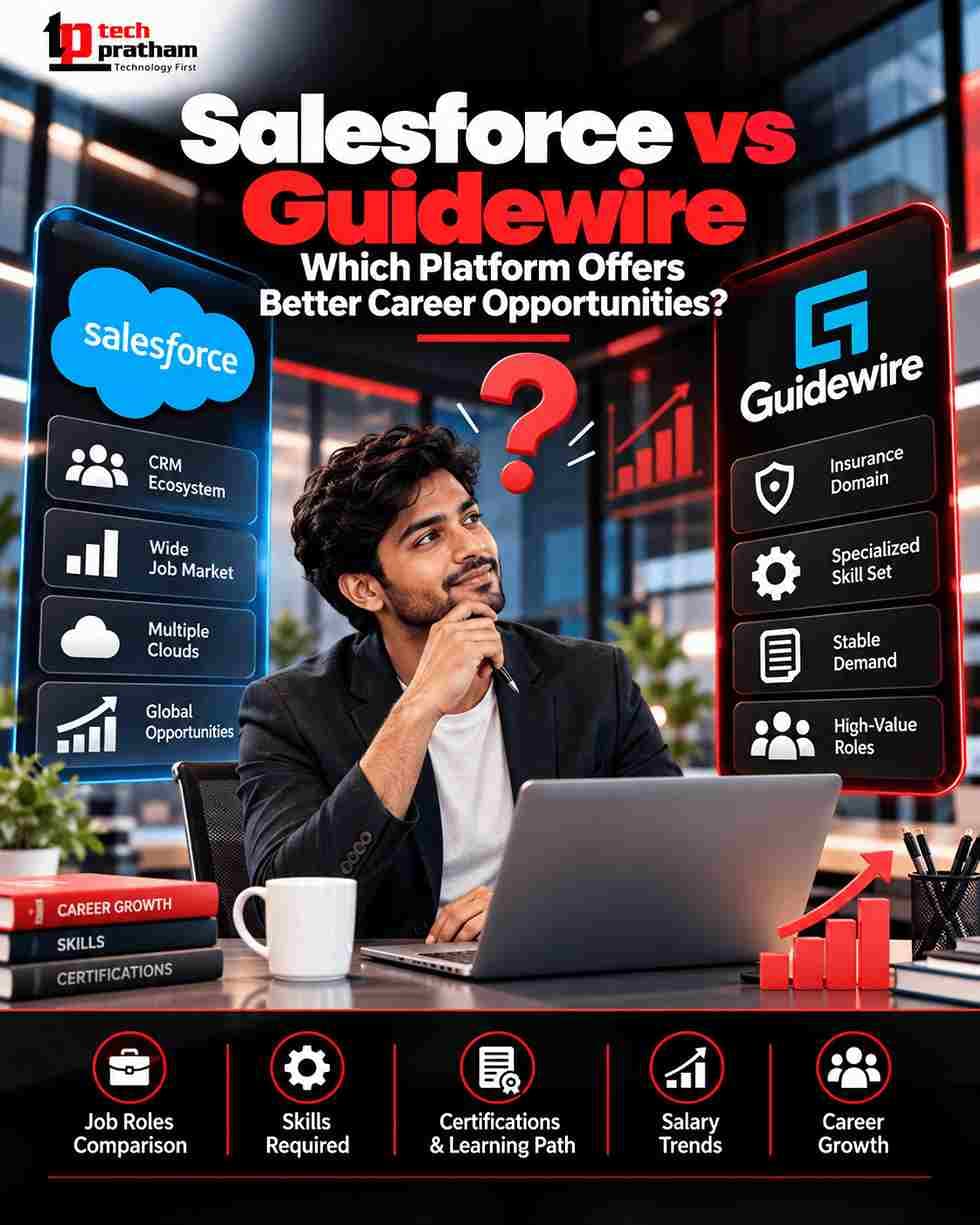
Salesforce vs Guidewire: Which Platform Offers Better Career Opportunities?
Compare Salesforce vs Guidewire career opportunities, job roles, skills, salary factors, and training options to choose the right career path.

Top 10 Salesforce Courses to Advance Your Career
Explore the top 10 Salesforce courses to build in-demand skills, earn certifications, and advance your career in the Salesforce ecosystem.




 +91-8882178896
 +1 (343) 477-0926