
SAP BTP vs SAP ABAP: Which Skill Is Better for SAP Developers

The SAP ecosystem is changing as businesses move toward cloud platforms, intelligent applications, and modern approaches to extending enterprise systems. This change has created new opportunities for developers while also changing the skills expected from traditional SAP professionals.
For anyone exploring SAP Training in India, two technologies often stand out: SAP BTP and SAP ABAP. Both are valuable, but they serve different purposes. ABAP is a core SAP development technology, while SAP Business Technology Platform provides a broader environment for application development, integration, data, automation, and extensions.
The good news is that developers do not always have to choose between the two. Modern ABAP, particularly ABAP Cloud, is closely connected with cloud-based SAP development and can be used within SAP BTP.
What Is SAP BTP?
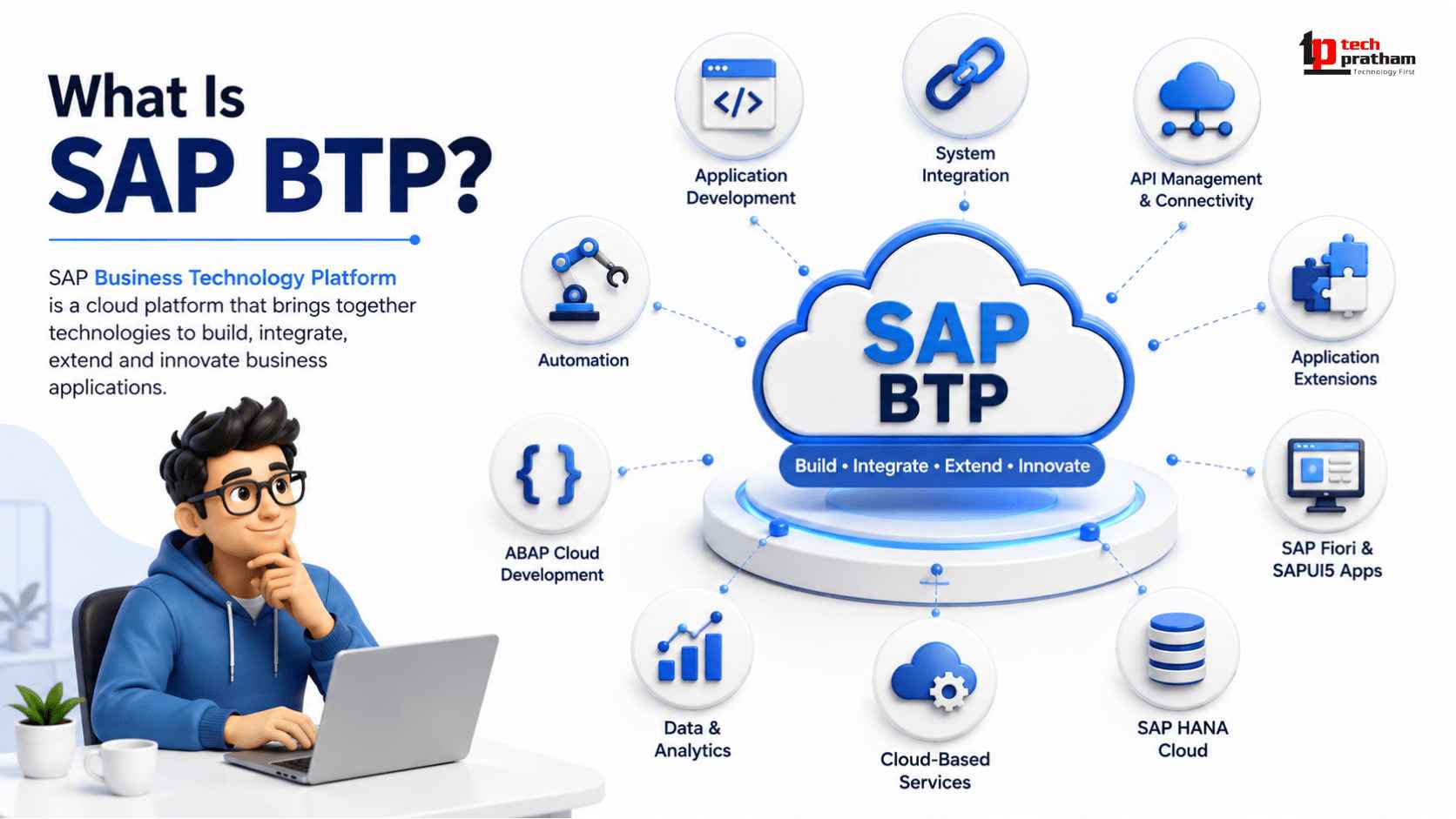
SAP Business Technology Platform, commonly known as SAP BTP, is a cloud platform that brings together technologies for application development, integration, data and analytics, automation, and extensions. Instead of being a single programming language, BTP provides a collection of services and development capabilities that organizations can use to build and connect business applications.
Developers may work with BTP for:
- Application development
- System integration
- API management and connectivity
- Application extensions
- SAP Fiori and SAPUI5 applications
- SAP HANA Cloud
- Automation
- Data and analytics
- Cloud-based services
- ABAP Cloud development
The exact technologies used depend on the project. A developer working on integration may have a very different skill set from someone building a cloud application. This makes BTP a broad area with multiple career paths.
Why Is SAP BTP Becoming Important?
Modern businesses rarely operate with a single software system. An organization may use SAP S/4HANA for core business processes while also depending on CRM platforms, e-commerce applications, third-party tools, databases, and cloud services. For these systems to work efficiently, they need reliable ways to exchange data and support connected business processes. SAP BTP provides a range of capabilities that help organizations build these connections, develop applications, create extensions, manage APIs, integrate SAP and non-SAP systems, and work with business data. It can also help companies extend SAP applications without making unnecessary changes to the core ERP system.
Another important advantage is its role in clean-core development. Instead of heavily modifying the SAP core, organizations can use appropriate extension technologies and cloud services to add required functionality while keeping the core system easier to maintain and upgrade. For developers, this creates opportunities beyond traditional SAP programming. They can work on application extensions, integration scenarios, APIs, cloud applications, automation, data services, and user experiences using technologies available within the BTP ecosystem.
What Is SAP ABAP?
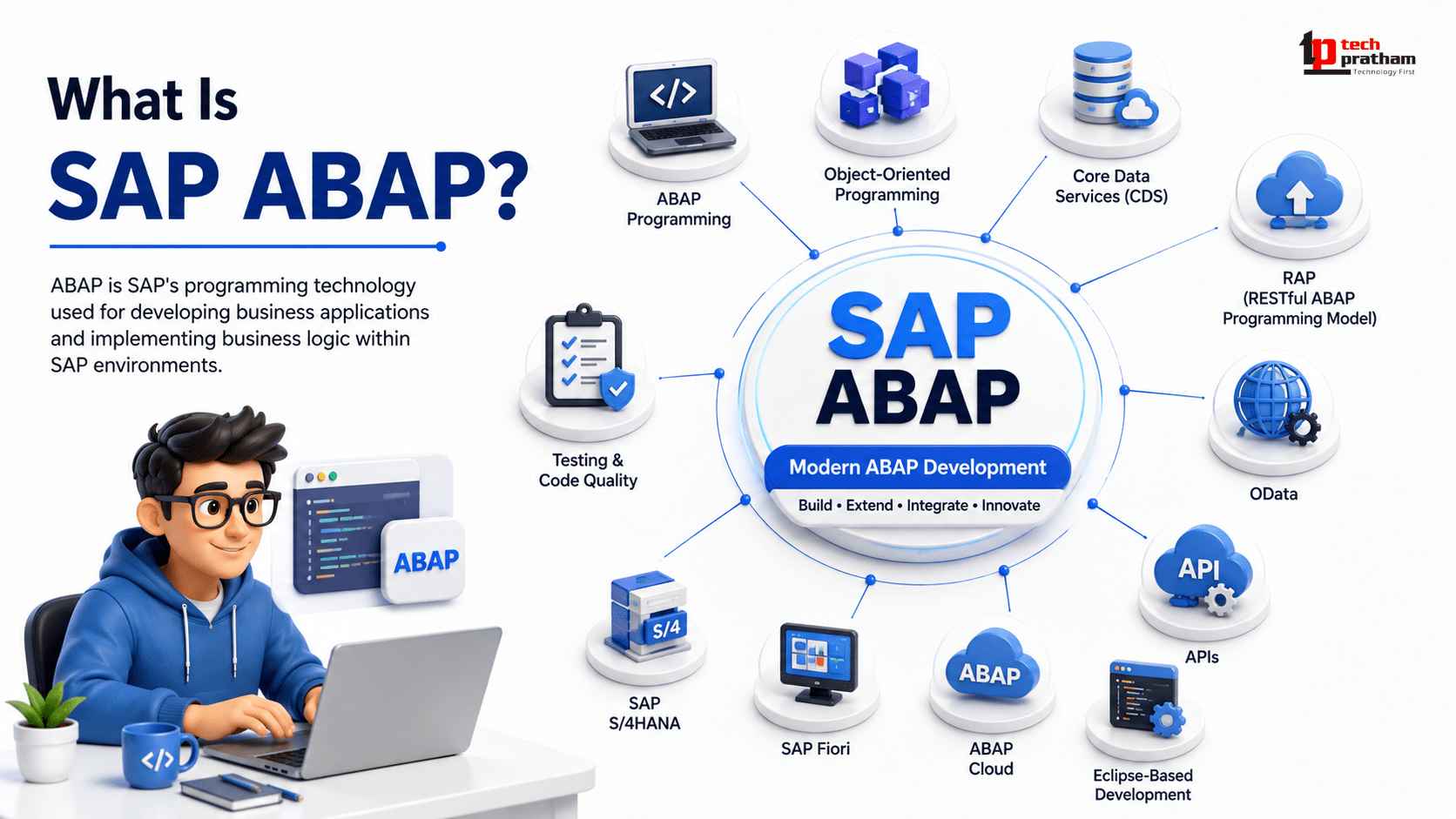
ABAP is SAP's programming technology used for developing business applications and implementing business logic within SAP environments. Traditional ABAP development has been an important part of SAP ERP implementations for many years. However, modern SAP development has introduced new approaches such as ABAP Cloud, which is designed for cloud-ready application development and extensions.
Modern ABAP development can involve:
- ABAP programming
- Object-oriented programming
- Core Data Services
- RAP
- OData
- APIs
- SAP S/4HANA
- SAP Fiori
- ABAP Cloud
- Eclipse-based development
- Testing and code quality
This means an aspiring developer should not think of ABAP as only traditional SAP programming. A modern SAP ABAP Training program should help learners understand how ABAP connects with S/4HANA, cloud development, APIs, CDS, RAP, and extension scenarios.
SAP BTP vs SAP ABAP: What Is the Difference?
The biggest difference is their scope.
SAP BTP is a broader technology platform, whereas ABAP is a development technology. BTP can support several technologies and development approaches. ABAP is specifically focused on SAP application development.
The two should therefore not always be treated as competing technologies. SAP provides an ABAP environment on BTP, allowing developers to use ABAP Cloud for building applications and extensions.
What Skills Are Needed for SAP BTP Development?
SAP BTP development covers several areas, so the skills required can vary depending on the role and type of project. A developer working on application development may need a different skill set from someone specializing in integration, data, or automation. However, a strong understanding of cloud concepts and SAP technologies provides a useful foundation.
Important BTP Skills :
Cloud Fundamentals:
Application Development:
APIs and Connectivity:
Integration:
SAP Fiori and SAPUI5:
SAP HANA Cloud:
Extension Development:
Security and Identity Management:
Monitoring and Troubleshooting:
A well-structured SAP BTP Training program should combine these concepts with practical exercises and real business scenarios. Instead of trying to learn every BTP service at once, developers can first build a strong foundation and then specialize in areas such as application development, integration, APIs, data, or SAP extensions.
What Skills Are Needed for SAP ABAP Development?
A modern SAP ABAP developer needs more than knowledge of basic programming syntax. As SAP development continues to move toward S/4HANA, cloud-based environments, APIs, and clean-core principles, developers need to understand both traditional ABAP concepts and newer development approaches.
A strong ABAP skill set can include:
SAP BTP Career Scope
SAP BTP offers several career directions because it covers multiple areas of enterprise technology. Depending on their specialization, professionals can work toward roles such as:
- SAP BTP Developer
- SAP BTP Consultant
- SAP Integration Developer
- SAP Integration Consultant
- SAP Extension Developer
- SAP Cloud Application Developer
- SAP Technical Consultant
- SAP Solution Architect
The responsibilities can differ significantly between these roles. For example, an integration developer may focus on connecting SAP and external systems, while an application developer may create cloud applications or extensions. This flexibility makes BTP particularly interesting for professionals who want to develop broader cloud and enterprise technology skills.
SAP ABAP Career Scope
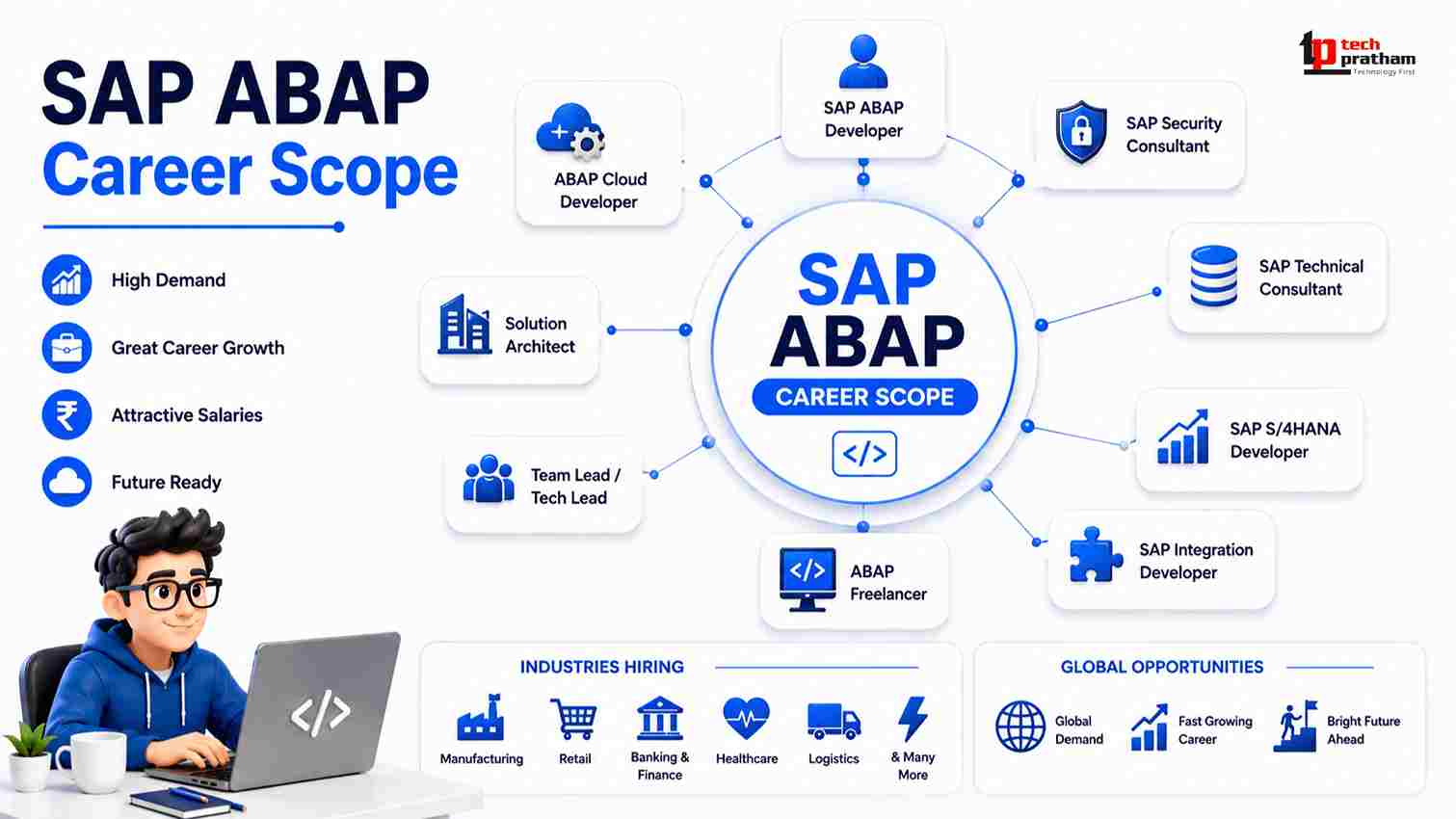
SAP ABAP continues to be an important development skill within the SAP ecosystem. Organizations running SAP ERP and SAP S/4HANA systems require skilled developers to build applications, implement business logic, develop reports, create integrations, and support customized business requirements. At the same time, the nature of ABAP development is changing as SAP adopts cloud-based technologies and modern development frameworks. Today, an ABAP developer can build skills progressively through a path such as:
ABAP → S/4HANA → CDS → RAP → ABAP Cloud → APIs and Extensions
This progression allows developers to move beyond traditional ABAP programming and understand how modern SAP applications are designed and extended. Traditional ABAP knowledge has not lost its relevance. Instead, it provides a strong foundation that can be combined with newer technologies. For example, knowledge of ABAP can help developers understand business logic, database operations, debugging, and SAP application architecture before moving into areas such as CDS views, RAP, and ABAP Cloud.
SAP BTP vs ABAP: Which Is Better for Freshers?
For freshers, choosing between SAP BTP and SAP ABAP largely depends on their technical background, interest, and the type of SAP career they want to pursue. Both skills have different applications, so there is no single option that is better for everyone.
ABAP May Be a Good Starting Point If:
- You are new to SAP and want to build a foundation in SAP development.
- You enjoy programming and backend development.
- You want to understand SAP business processes and application logic.
- You are interested in SAP S/4HANA development.
- You want to build a career as an SAP ABAP Developer or SAP Technical Consultant.
- You prefer learning programming concepts before moving into cloud technologies.
ABAP can provide a strong foundation for understanding how SAP applications work. After learning the fundamentals, developers can expand their skills with S/4HANA, CDS, RAP, OData, APIs, and ABAP Cloud.
BTP May Be a Better Fit If:
- You already have programming or software development experience.
- You are interested in cloud technologies and enterprise applications.
- You want to work with APIs, integration, and connectivity.
- You have experience with web development or cloud platforms.
- You are interested in developing SAP extensions and cloud applications.
- You want to explore areas such as SAP Integration Suite, application development, automation, or data services.
BTP offers a broader technology environment, so beginners should first understand its major areas and then choose a specialization rather than attempting to learn every BTP service at once.
If you are completely new to SAP development, starting with ABAP and SAP fundamentals can be a practical approach. Once you understand SAP development, you can gradually add modern technologies such as S/4HANA, RAP, ABAP Cloud, APIs, and BTP. If you already have a strong programming, web development, or cloud background, starting with SAP BTP Training may make more sense, particularly if you are interested in cloud applications, integration, and SAP extensions.
The important point is to choose a learning path based on your existing skills and career goals rather than trying to learn both technologies at the same time. A focused foundation followed by relevant advanced skills can make the learning process more structured and useful for real-world SAP projects.
Which Is Better for Experienced SAP Developers?
For experienced SAP developers, the choice between SAP BTP and ABAP depends more on their existing specialization and career goals than on which technology is considered better. Developers who already have experience in SAP environments can benefit by adding complementary skills instead of completely changing their existing career path. For an experienced SAP ABAP Developer, learning BTP can be a practical next step. Existing knowledge of SAP development, business processes, data structures, and application logic provides a strong foundation for moving into cloud-based development and extensions.
An experienced ABAP developer can strengthen their profile by learning:s.
- Adding cloud skills can expand that knowledge into areas such as:
- ABAP Cloud
- RAP
- APIs
- SAP BTP
- Integration
- Fiori
- Cloud extensions
This combination can help an ABAP developer move from traditional development projects toward modern S/4HANA, cloud, integration, and extension scenarios. Similarly, developers who already work with SAP BTP can learn ABAP Cloud to gain a better understanding of ABAP-based development within the SAP cloud ecosystem. This can be particularly useful when projects involve S/4HANA extensions, RAP-based applications, or teams working with both BTP and ABAP technologies.
Can SAP BTP and ABAP Be Learned Together?
Yes, SAP BTP and ABAP can be learned together, and combining both skills can give developers a broader understanding of modern SAP development. However, beginners should follow a structured approach instead of trying to learn everything at once. A possible learning path is:
SAP Fundamentals → ABAP → S/4HANA → CDS → RAP → ABAP Cloud → BTP → APIs and Integration
Beginners can start with ABAP to understand SAP development, programming, and business logic before moving toward cloud technologies. Developers who already have programming or cloud experience can start with BTP concepts and later add ABAP Cloud.
Learning both technologies can help professionals understand SAP application development, cloud extensions, APIs, integration, and modern S/4HANA development. The learning order can therefore be adjusted according to your existing skills and the type of SAP role you want to pursue.
How Do SAP BTP and ABAP Cloud Work Together?
SAP BTP and ABAP Cloud are closely connected in modern SAP development. SAP BTP provides an ABAP environment where developers can build cloud-ready applications and extensions using ABAP Cloud. For example, an organization may need to add specific functionality to an SAP application without making unnecessary changes to the standard SAP core. Depending on the requirement, developers can use ABAP Cloud and suitable extension approaches to build the required functionality.
Modern technologies such as CDS, RAP, OData, and APIs can be used as part of this development approach. These technologies help developers create data models, business services, transactional applications, and integrations. This approach also supports the clean-core principle, which aims to keep the SAP core easier to maintain and upgrade.
How Should You Choose Between SAP BTP and SAP ABAP?
Before choosing a course, consider these four questions:
1. What is your current technical background?
2. What type of development interests you?
3. Do you want to specialize or build a broader profile?
4. What skills will complement your existing knowledge?
Ultimately, the better choice is the one that matches your existing knowledge, career goals, and preferred area of SAP development. Instead of choosing a technology simply because it is popular, focus on building skills that are relevant to the type of role you want to pursue.
Final Verdict: SAP BTP or SAP ABAP?
The choice between SAP BTP and SAP ABAP does not have to be an either-or decision.
ABAP remains an important skill for SAP application development, while ABAP Cloud brings modern cloud development practices into the SAP ecosystem. SAP BTP provides a broader platform for cloud development, integration, extensions, data, automation, and related enterprise technologies.
For freshers interested in SAP development, ABAP can provide a strong foundation. For professionals interested in cloud and integration, BTP can open additional career directions. For experienced SAP developers, combining modern ABAP with relevant BTP skills can be a practical way to expand their technical capabilities. If you are comparing options under SAP Training in India, focus on your current skills and the kind of SAP role you want to build toward.
Related Articles

How to Switch from SAP FICO to SAP S/4HANA Finance
Learn how to move from SAP FICO to S/4HANA Finance with practical skills, certification guidance, AI insights, and career tips

How to Start a SAP FICO Career With a Finance Background
Build a successful SAP FICO career with a finance background. Learn the skills, practical steps, career opportunities, and path to move from finance t

Why Are SAP Skills in High Demand in Hyderabad?
Discover why SAP skills are in high demand in Hyderabad, the top SAP modules, career opportunities, and the value of SAP training for professionals.





 +91-8882178896
 +1 (343) 477-0926