Procurement is an essential business activity that helps organizations obtain the materials and services required for daily operations. In industries such as manufacturing, retail, and supply chain management, purchasing activities need proper coordination between departments, suppliers, inventory teams, and finance. SAP MM Training helps learners understand how these activities are managed through SAP Material Management and how different procurement stages work together.
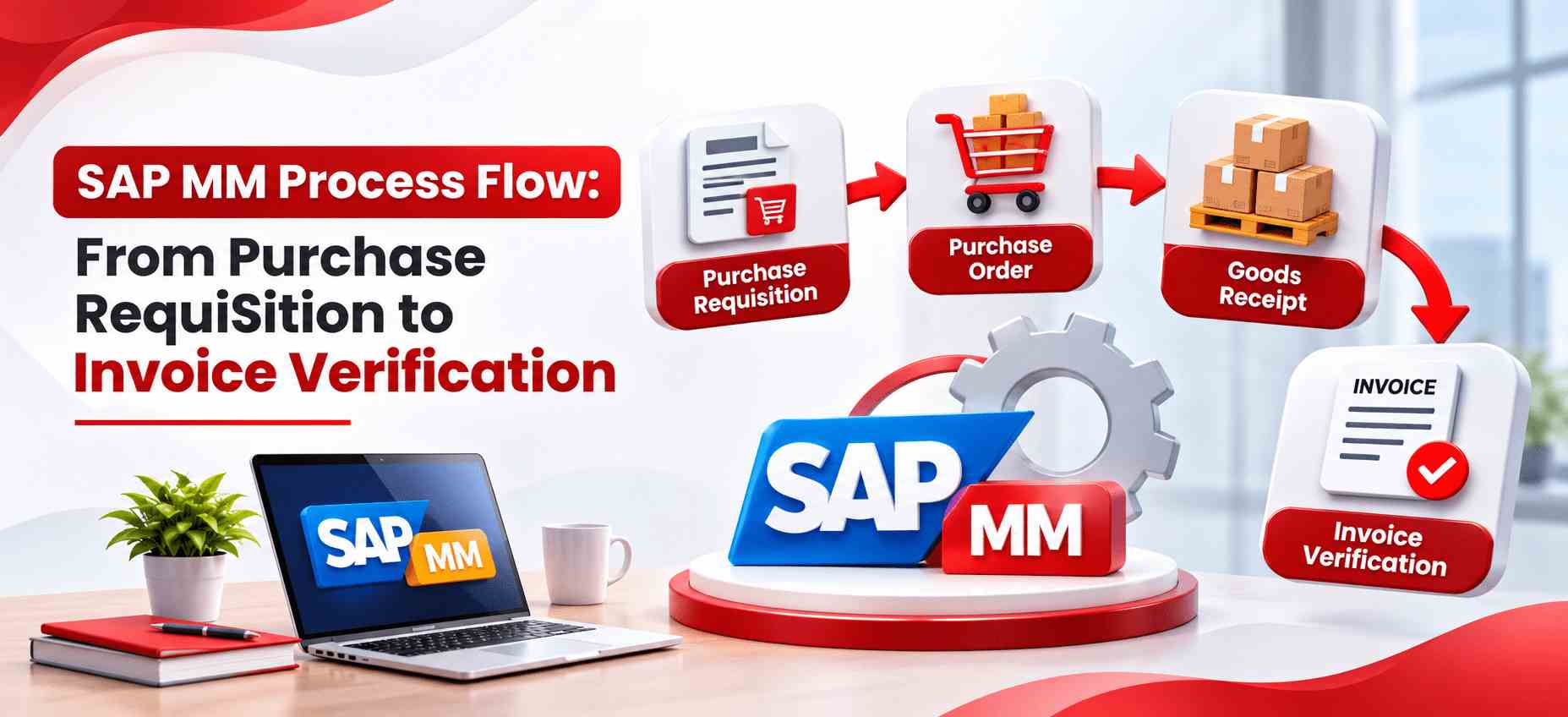
SAP MM provides an organized approach to purchasing, inventory management, material valuation, and invoice processing. Its procurement process begins with a purchase requisition and continues through vendor selection, purchase order creation, goods receipt, and invoice verification. Understanding this complete workflow makes it easier to identify how purchasing decisions affect inventory levels, financial records, and business operations.
What Is the SAP MM Procurement Process?
The SAP MM procurement process refers to the activities involved in purchasing materials or services from external suppliers. It connects purchasing requirements with supplier management, material receipt, and invoice processing.
The process generally follows a structured sequence in which a department identifies a material requirement, creates a purchase requisition, selects a suitable vendor, and generates a purchase order. After the supplier delivers the materials, the organization records the goods receipt and verifies the vendor invoice.
This integrated approach helps businesses maintain purchasing records, monitor material availability, and coordinate procurement activities with financial accounting.
Step-by-Step SAP MM Process Flow
The procurement cycle in SAP MM consists of several connected stages. Each stage has a specific purpose and contributes to the completion of a purchasing transaction.
1. Purchase Requisition Creation
A purchase requisition (PR) is an internal document created when a department needs materials or services for business operations. For example, a manufacturing company may require additional raw materials to meet its production schedule. The concerned department creates a purchase requisition containing information such as material description, required quantity, delivery date, and plant details. The purchasing department reviews this requirement before proceeding with procurement.
Important Transaction Code: ME51N – Create Purchase Requisition.
2. Source Determination and Vendor Selection
After creating the purchase requisition, the purchasing team identifies potential suppliers who can provide the required materials. Source determination involves evaluating available suppliers based on factors such as pricing, delivery timelines, material specifications, and purchasing agreements. In certain procurement scenarios, organizations use a Request for Quotation (RFQ) to collect price offers from multiple vendors. These quotations can then be compared to identify a suitable supplier. This stage helps businesses make informed purchasing decisions and maintain supplier relationships.
3. Purchase Order Creation
Once a suitable vendor is identified, the purchasing department creates a purchase order (PO). It is an official document that communicates the organization's purchasing requirements to the supplier. A purchase order generally includes:
- Vendor details and purchasing organization.
- Material description and quantity.
- Agreed price and payment terms.
- Delivery date and plant information.
- Applicable taxes and conditions.
The purchase order establishes the purchasing arrangement between the organization and the supplier.
Important Transaction Code: ME21N – Create Purchase Order.
4. Purchase Order Approval and Release
Before a purchase order is sent to the supplier, it may need approval according to the organization's purchasing policies. SAP can support purchase order release procedures based on factors such as document value, purchasing group, or organizational requirements. For example, a high-value purchase order may require approval from a department manager or procurement head before it can proceed. This stage helps organizations maintain purchasing control, follow internal policies, and reduce unauthorized purchases.
Important Transaction Code: ME29N – Release Purchase Order (where classic release procedures apply).
5. Goods Receipt in SAP MM
Goods receipt takes place when the supplier delivers the ordered materials to the organization's warehouse or designated location. The receiving team checks the delivered quantity and material details against the purchase order. Once the delivery is accepted, the goods receipt is recorded in SAP. This activity updates relevant inventory records and creates a material document. Depending on the configuration and transaction, an accounting document may also be generated.
For example, if a company orders 500 units of a component and receives 480 units, the goods receipt records the quantity actually received.
Important Transaction Code: MIGO – Goods Movement.
6. Invoice Verification
Invoice verification is the stage where the supplier's invoice is checked against the purchasing and goods receipt records. SAP MM supports this process through Logistics Invoice Verification. One important concept is three-way matching, which involves comparing:
- Purchase Order: What the company agreed to purchase.
- Goods Receipt: What the company actually received.
- Vendor Invoice: What the supplier has billed.
If the information matches within the permitted tolerances, the invoice can be posted. If discrepancies are identified, the invoice may require review or can be blocked according to system settings. This process helps reduce incorrect payments and improves coordination between procurement and finance teams.
Important Transaction Code: MIRO – Enter Incoming Invoice.
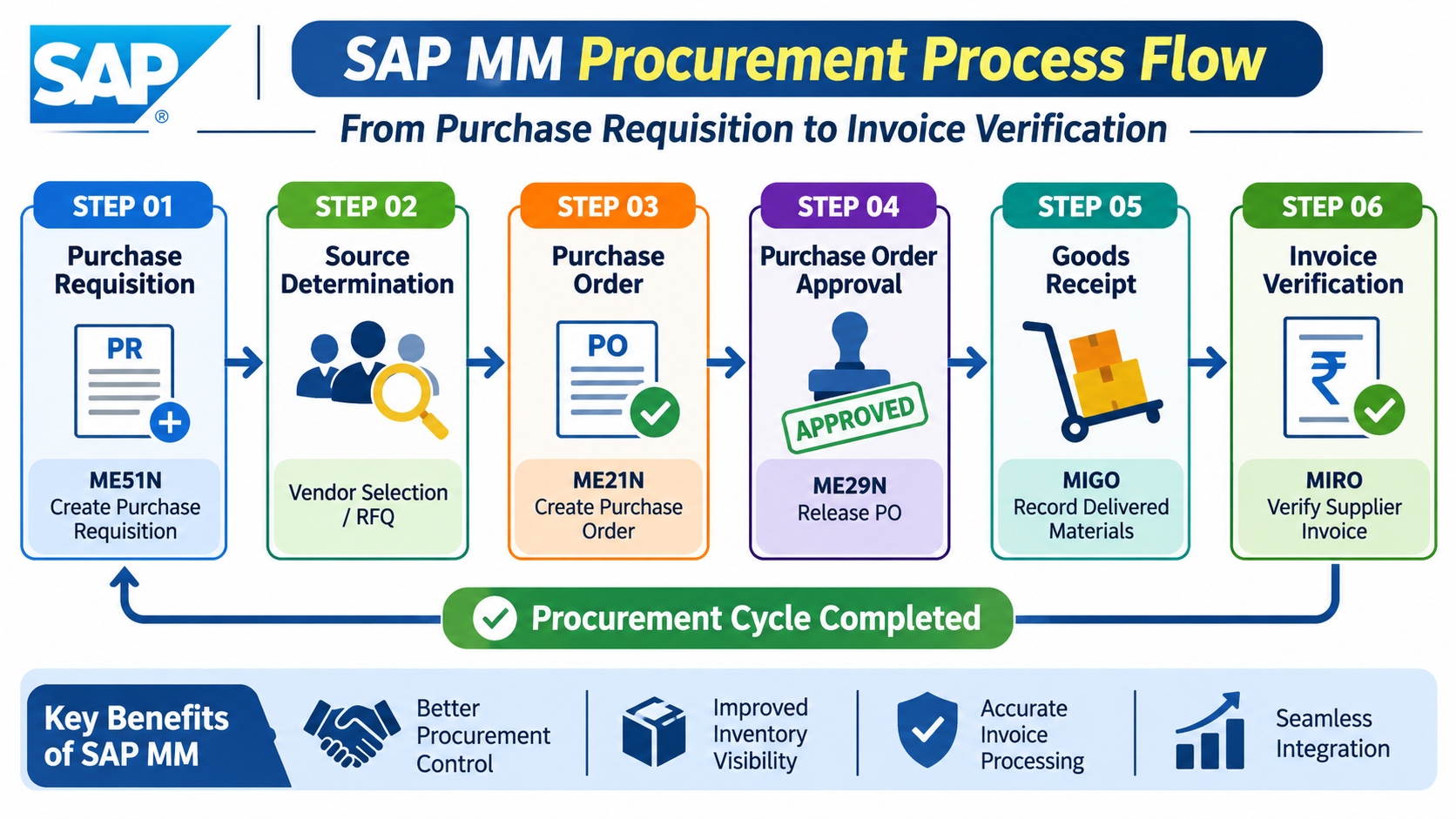
SAP MM Procurement Process Flow Diagram
The SAP MM procurement process follows a systematic sequence of activities, starting with identifying material requirements and ending with supplier invoice verification. Each stage supports the next activity and helps maintain accurate purchasing and inventory records.
The process generally follows these steps:
1. Purchase Requisition (ME51N): The department creates an internal request for required materials or services.
2. Source Determination: The purchasing team identifies suitable vendors and evaluates quotations.
3. Purchase Order (ME21N): A purchase order is created with material details, quantities, prices, and delivery schedules.
4. Purchase Order Approval (ME29N): The purchase order goes through the required approval process.
5. Goods Receipt (MIGO): The warehouse records the materials received from the supplier.
6. Invoice Verification (MIRO): The supplier's invoice is checked against the purchase order and goods receipt before posting.
This sequence connects purchasing, supplier management, inventory updates, and invoice processing within SAP MM.
Important SAP MM Transaction Codes Used in Procurement
Transaction codes allow SAP users to perform specific activities within the material management module. Some commonly used codes in the procurement cycle include:
Create Purchase Requisition
Change Purchase Requisition
Display Purchase Requisition
These transaction codes help users manage purchasing documents, record material movements, and process supplier invoices.
Practical Example: How SAP MM Works in a Manufacturing Company
Consider a manufacturing company that produces electrical equipment and requires copper wires for its production activities.
The production department identifies a requirement for 1,000 units of copper wire and creates a purchase requisition. The purchasing team reviews the requirement, evaluates supplier quotations, and selects a suitable vendor.
A purchase order is then created with the agreed quantity, price, and delivery schedule. After approval, the order is shared with the supplier.
When the materials arrive, the warehouse team checks the delivery and records the goods receipt in SAP. Finally, the finance team verifies the supplier invoice against the purchase order and received quantity.
If the purchase order, goods receipt, and invoice details match, the invoice can be posted for payment processing.
This example demonstrates how SAP MM connects purchasing, warehouse operations, and financial activities through one integrated procurement workflow.
How SAP MM Improves Procurement and Inventory Management
An organized procurement process helps businesses manage materials and purchasing activities more effectively. SAP MM supports this through several important functions.
Better Purchasing Control
SAP MM helps organizations manage purchasing activities through structured documentation and approval procedures. Purchase requisitions and purchase orders maintain records of material requirements, order quantities, pricing, and delivery details. These records make it easier for purchasing teams to review requests and monitor procurement activities.
Improved Inventory Visibility
Inventory management is an important part of the procurement process. SAP MM records goods receipts and material movements, allowing organizations to track stock quantities and material availability. This information helps warehouse teams understand current inventory levels and plan future material requirements.
Vendor and Supplier Coordination
Supplier coordination involves managing purchasing requirements, quotations, order details, and delivery schedules. SAP MM maintains relevant vendor and purchasing information, helping procurement teams review supplier-related transactions and coordinate material deliveries more systematically.
Accurate Invoice Processing
Invoice verification involves checking supplier invoices against purchase orders and goods receipt records. SAP MM helps identify differences in quantities, prices, and other invoice details. This verification process supports accurate invoice posting and helps reduce errors during payment processing.
Better Coordination Between Departments
Procurement activities involve multiple departments, including purchasing, warehouse management, production, and finance. SAP MM connects these activities through related business documents and transaction records. This allows departments to access relevant purchasing and material information, making it easier to coordinate their responsibilities throughout the procurement cycle.
Common Challenges in the SAP MM Procurement Process
Although SAP MM provides structured procurement functionality, organizations may encounter operational challenges during purchasing activities.
Incorrect Purchase Requisition Details: Incomplete material descriptions or incorrect quantities can create problems during purchase order processing.
Supplier Delivery Delays: Late deliveries can affect inventory availability and production schedules.
Goods Receipt Discrepancies: Differences between ordered and delivered quantities may require additional verification.
Invoice Mismatches: Incorrect pricing, quantities, or tax details can result in invoice blocks and payment delays.
Approval Delays: Lengthy approval procedures may affect purchasing timelines, particularly for urgent material requirements.
Understanding these situations helps SAP MM users identify process issues and maintain accurate purchasing records.
Skills Required to Understand SAP MM Procurement Activities
Working with SAP MM involves understanding both material management concepts and business purchasing procedures. Learners should become familiar with the following areas:
- Procurement and purchasing fundamentals.
- Purchase requisition and purchase order processing.
- Vendor and source determination.
- Inventory and goods movement management.
- Material master and vendor-related data.
- Invoice verification and document management.
- Integration between SAP MM and other SAP modules.
A clear understanding of these concepts makes it easier to follow procurement workflows and work with SAP MM transactions.
How SAP MM Training Helps Build Practical Knowledge
Understanding the procurement cycle requires more than knowing the definitions of different purchasing documents. Learners should understand how each stage works within the SAP system and how one transaction affects the next.
A structured SAP MM Course can help learners explore purchasing activities, inventory management, material master data, vendor management, and invoice verification in a systematic manner.
With SAP MM Online Training, learners can also study procurement concepts and transaction workflows through guided sessions and practical system exercises. Working through examples such as purchase requisition creation, purchase order processing, goods receipt, and invoice verification helps develop a better understanding of real business scenarios.
For professionals interested in procurement, inventory management, and SAP functional consulting, learning these processes can provide a useful foundation for working with enterprise resource planning systems.
FAQ
1. What is the SAP MM process flow?The SAP MM process flow is a sequence of procurement activities that starts with purchase requisition creation and continues through vendor selection, purchase order processing, goods receipt, and invoice verification. It helps organizations manage purchasing and inventory-related activities systematically.
2. What are the main steps in the SAP MM procurement cycle?
The main steps include purchase requisition creation, source determination, vendor selection, purchase order creation, purchase order approval, goods receipt, and invoice verification. These activities connect purchasing requirements with material receipt and supplier billing.
3. Which transaction codes are important in SAP MM?
Some commonly used SAP MM transaction codes include ME51N for purchase requisition creation, ME21N for purchase order creation, MIGO for goods movement, and MIRO for invoice verification. These transactions support different stages of the procurement cycle.
4. What is three-way matching in SAP MM?
Three-way matching is the process of comparing a purchase order, goods receipt, and supplier invoice. It helps organizations verify whether the billed materials and quantities correspond with the original order and actual delivery.
5. Is SAP MM useful for procurement and inventory management careers?
Yes. SAP MM knowledge is relevant to purchasing, procurement, inventory management, and SAP functional consulting roles. Understanding purchasing workflows, material movements, and invoice verification can help professionals develop skills related to enterprise procurement operations.
Explore Other SAP Modules
Conclusion
The SAP MM procurement process connects multiple business activities, starting with purchase requisition creation and ending with invoice verification. Each stage plays an important role in managing purchasing requirements, coordinating supplier deliveries, maintaining inventory records, and processing vendor invoices.
Understanding this complete workflow helps learners recognize how procurement operations function within an integrated business environment. Building practical knowledge through
SAP MM Training can help aspiring professionals and working individuals develop familiarity with SAP transactions, purchasing procedures, and material management activities.








 +91-8882178896
 +1 (343) 477-0926