Choosing the right technology course is important for building a successful and stable career. Today, SAP and Workday are two of the most popular enterprise software platforms used by companies worldwide. Both technologies offer excellent job opportunities, high salary packages, and global career growth.
However, many students and working professionals get confused about whether they should choose
SAP Training or
Workday Training . Both platforms are different in terms of functionality, industry usage, modules, career paths, and future opportunities.
If you are planning to build a career in ERP, cloud technology, HR management, finance, or enterprise applications, this guide will help you understand the difference between SAP vs Workday training and decide which option is better for your future.
What is SAP?
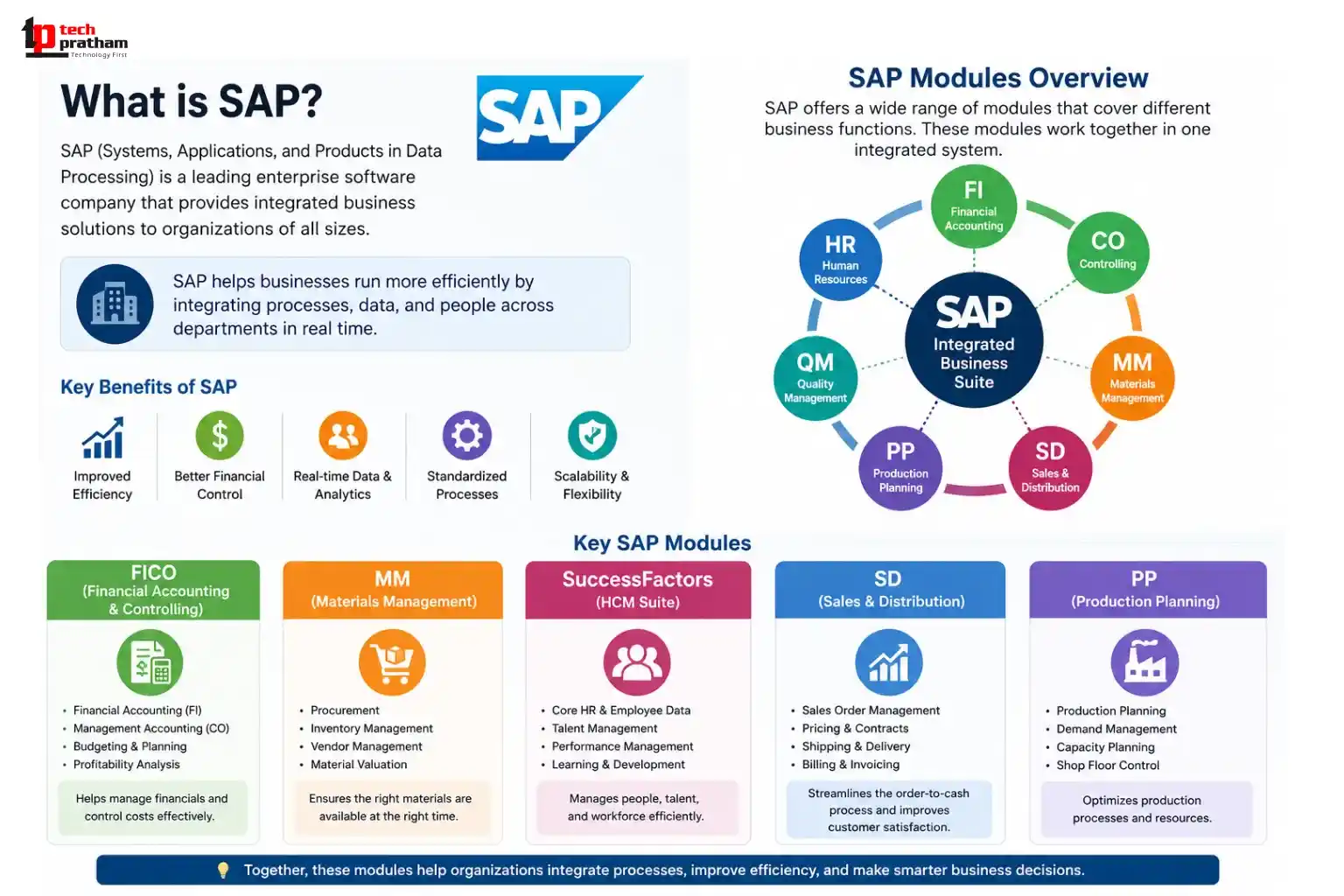
SAP (Systems, Applications, and Products in Data Processing) is one of the world’s leading ERP (Enterprise Resource Planning) software platforms used by businesses to manage daily operations efficiently through a single integrated system.
Companies using SAP solutions can streamline multiple business functions, improve productivity, automate processes, and manage real-time business data more effectively.
In India, SAP usage is growing at a fast pace, especially in major metro cities such as Bangalore, Hyderabad, Pune, Chennai, Mumbai, and Delhi NCR. A large number of multinational companies and enterprise-level organizations are adopting SAP to improve business efficiency, automate core processes, and manage operations like finance, logistics, procurement, sales, and human resources through a single integrated ERP system.
SAP helps organizations handle:
- Finance and Accounting
- Supply Chain Management
- Inventory Management
- Procurement Operations
- Sales and Distribution
SAP is widely used across industries such as manufacturing, banking, retail, healthcare, logistics, automobile, telecom, and IT services.
Popular SAP Modules
SAP offers a wide range of modules designed to manage different business functions in an integrated system. These modules help organizations improve efficiency, automate processes, and maintain real-time control over operations such as finance, sales, production, and human resources. Each SAP module is designed for a specific business area, making SAP one of the most powerful ERP solutions used by companies worldwide.
SAP FICO
SAP FICO is used for managing financial accounting, reporting, budgeting, and cost control. It helps organizations track income, expenses, and overall financial performance in real time.
SAP MM (Material Management)
SAP MM focuses on procurement and inventory management. It handles material planning, stock control, purchase orders, and supplier management to ensure smooth supply chain operations.
SAP SuccessFactors
SAP SuccessFactors is a cloud-based HR module used for employee management, recruitment, payroll, performance evaluation, and talent development within organizations.
SAP SD (Sales & Distribution)
SAP SD manages sales processes such as order processing, pricing, billing, shipping, and customer delivery. It helps companies improve sales efficiency and customer satisfaction.
SAP PP (Production Planning)
SAP PP is used for production planning and manufacturing processes. It manages production schedules, demand planning, material requirements, and efficient execution of manufacturing activities.
What is Workday Training?
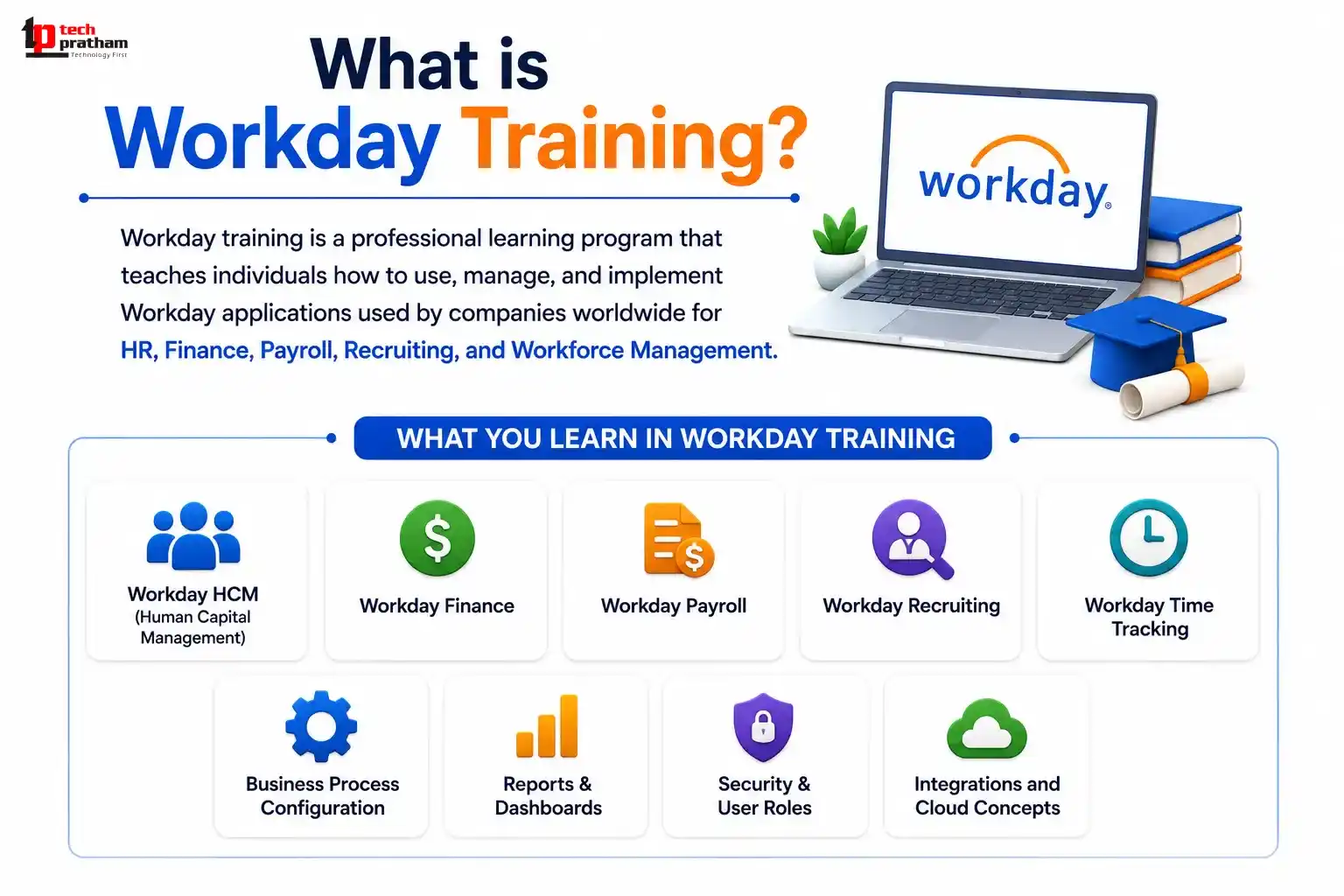
Workday is a modern cloud-based ERP system mainly focused on Human Capital Management (HCM) and Financial Management. It helps businesses manage payroll, recruitment, employee data, workforce planning, and financial operations through a single cloud platform.
Companies looking for cloud-first ERP systems widely use Workday for HR and finance operations, especially in IT services, SaaS companies, and global enterprises. It is also becoming a popular career choice for professionals interested in Workday Training and
Workday HCM Training due to its growing demand in the job market.
In India, Workday adoption is increasing rapidly, especially in metro cities like Bangalore, Hyderabad, Pune, Chennai, and Delhi NCR. Many multinational companies and IT firms in India are implementing Workday to manage workforce operations more efficiently and move toward cloud-based HR systems.
Workday is commonly used for
- Human Resource Management
- Payroll Processing
- Employee Data Management
- Recruitment
- Talent Acquisition
- Workforce Planning
Popular Workday Modules
Workday offers multiple cloud-based modules designed to help organizations manage HR, finance, payroll, recruitment, analytics, and workforce operations efficiently. These modules are widely used by multinational companies for improving business productivity and employee management.
Workday HCM
Workday HCM (Human Capital Management) is a cloud-based solution used for managing employee data, workforce planning, attendance, talent management, and HR operations within organizations.
Workday Finance
Workday Finance helps organizations manage accounting, financial planning, reporting, budgeting, and financial operations through a modern cloud-based platform.
Workday Payroll
Workday Payroll is designed to automate payroll processing, salary calculations, tax management, and employee compensation operations efficiently.
Workday Recruiting
Workday Recruiting helps companies manage hiring processes, candidate tracking, interview scheduling, and talent acquisition through a centralized system.
Workday Integration
Workday Integration is used to connect Workday with third-party applications, databases, and enterprise systems for smooth data transfer and business process automation.
SAP vs Workday: Major Differences
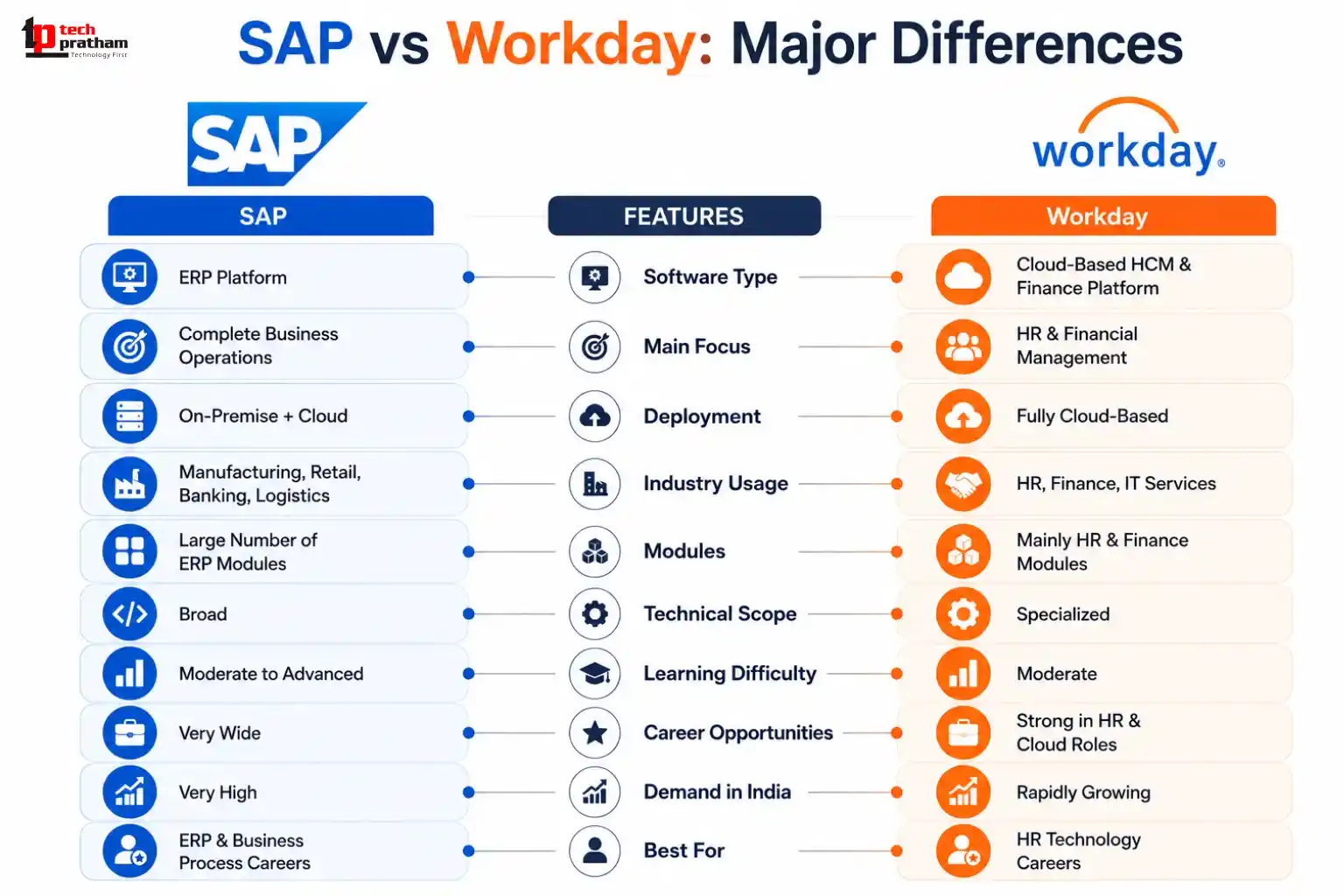
SAP is an ERP platform mainly used for managing complete business operations such as finance, supply chain, inventory, procurement, and analytics. Workday is a cloud-based platform focused mainly on HR management, payroll, workforce planning, and financial operations.
SAP supports both on-premise and cloud deployment, while Workday is fully cloud-based. SAP is widely used across manufacturing, retail, banking, and logistics industries, whereas Workday is more popular in HR, finance, and IT service organizations.
SAP offers a broader range of modules like SAP FICO, SAP MM, SAP SD, and SAP ABAP, making it suitable for ERP and business process careers. Workday mainly focuses on HCM, payroll, recruiting, finance, and integration modules for HR technology careers.
Advantages of SAP Training
SAP training provides excellent career opportunities for students and professionals who want to build a future in ERP and enterprise technologies. SAP is widely used across industries such as finance, manufacturing, retail, logistics, healthcare, and IT services. With multiple modules, strong job demand, high salary potential, and global career opportunities, SAP has become one of the most valuable career options for technical and functional professionals.
1. High Industry Demand
SAP is used by thousands of companies worldwide to manage finance, supply chain, procurement, inventory, and business operations. Organizations regularly hire SAP professionals for implementation, support, migration, customization, and maintenance projects. Due to its strong global presence across multiple industries, SAP professionals continue to have excellent career opportunities and long-term job stability.
2. Multiple Career Opportunities
One of the biggest advantages of SAP training is its wide career scope across technical and functional domains. Students and professionals from finance, HR, engineering, commerce, and IT backgrounds can choose SAP modules based on their career interests. Popular options include SAP FICO for finance professionals, SAP SuccessFactors for HR roles, SAP MM and SAP PP for engineers, and SAP ABAP or SAP HANA for technical and development careers.
3. High Salary Packages
SAP-certified professionals often receive competitive salary packages because organizations rely heavily on SAP systems for business operations. Skilled SAP consultants are valued for their expertise in ERP implementation, support, and business process management, making SAP one of the highest-paying career options in the enterprise technology industry.
4. Global Career Opportunities
SAP-certified professionals often receive competitive salary packages because organizations rely heavily on SAP systems for business operations. Skilled SAP consultants are valued for their expertise in ERP implementation, support, and business process management, making SAP one of the highest-paying career options in the enterprise technology industry.
5. Long-Term Career Stability
SAP has been a leading ERP platform for decades and continues to grow with SAP S/4HANA and cloud technologies.
This makes SAP a stable long-term career option.
Advantages of Workday Training
Workday training offers excellent career opportunities for professionals interested in cloud-based HR and financial management technologies. Workday is widely used by organizations for workforce management, payroll, recruitment, and business operations. With growing demand for cloud applications, user-friendly technology, and strong salary potential, Workday has become a popular career choice for HR professionals, finance specialists, and cloud technology learners.
1. Growing Demand for Cloud Technology
Workday is rapidly growing as organizations continue shifting from traditional systems to modern cloud-based solutions. Companies prefer Workday because of its easy cloud deployment, user-friendly interface, real-time workforce analytics, improved employee experience, and simplified HR operations. This increasing adoption has created strong demand for skilled Workday professionals across various industries.
2. Strong HR Career Opportunities
Workday provides excellent career opportunities for HR and workforce management professionals. It is especially valuable for HR executives, payroll specialists, talent acquisition teams, HR analysts, and workforce management professionals who want to build careers in cloud-based human resource technologies and business operations.
3. Easier Learning Curve
Compared to some SAP modules, Workday is considered easier for beginners because it offers a modern and simple cloud interface.
Many students can learn Workday faster compared to complex ERP systems.
4. High Demand in MNCs
Many multinational companies use Workday for HR and finance operations, increasing demand for certified Workday professionals.
5. Excellent Salary Growth
Workday professionals receive attractive salary packages due to the increasing demand for cloud-based HR and financial management solutions. Skilled Workday consultants are highly valued for their expertise in workforce management, payroll systems, recruiting, and cloud technology implementation, making Workday a strong career option with excellent long-term salary growth potential.
SAP vs Workday Salary Comparison
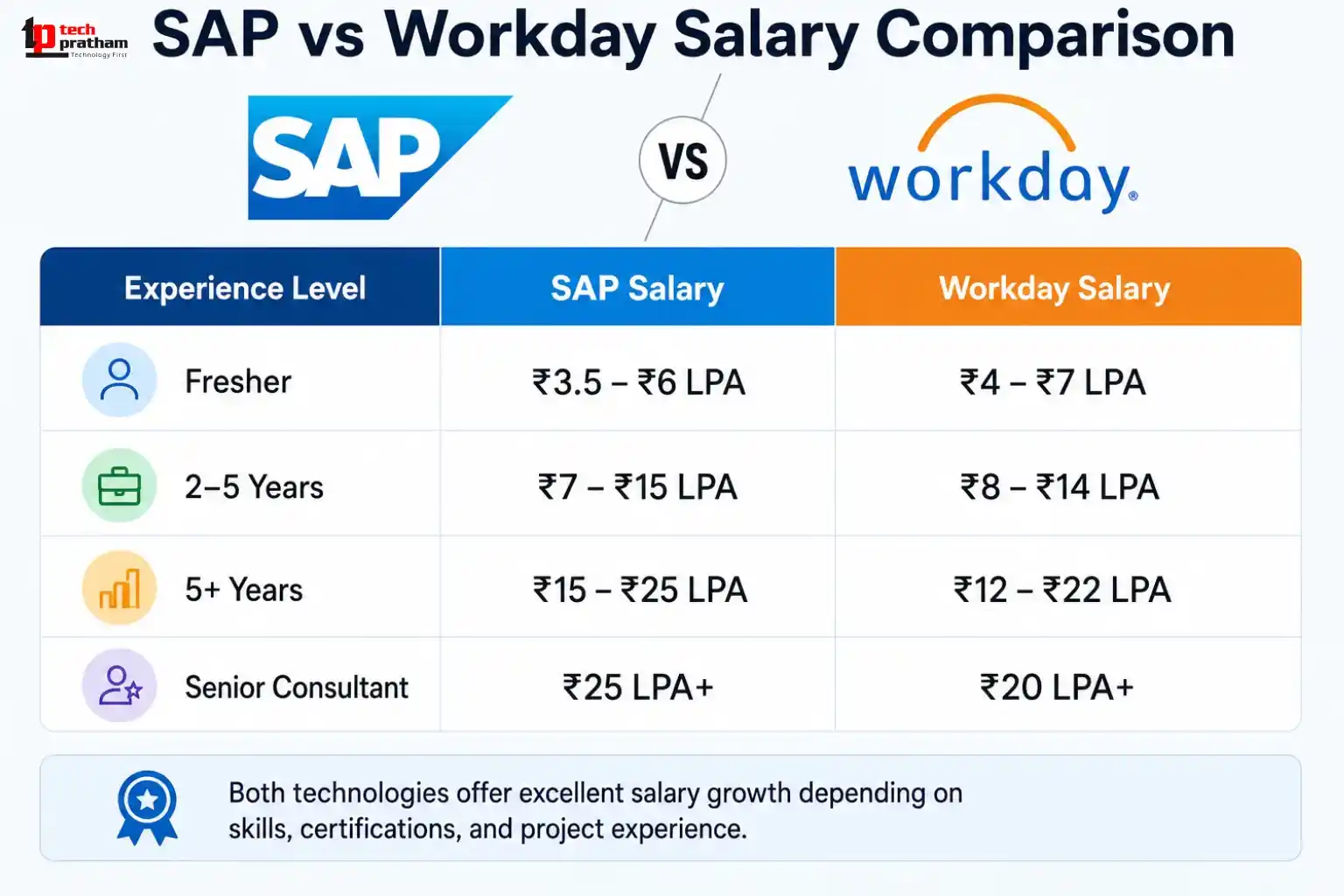
SAP and Workday provide strong salary growth opportunities for freshers as well as experienced professionals. SAP professionals usually earn attractive packages in ERP, finance, supply chain, and enterprise management roles, while Workday professionals are highly valued for their expertise in cloud HR, payroll, workforce management, and financial operations. Salary growth in these technologies mainly depends on skills, certifications, practical knowledge, and project experience.
Which is Better for Freshers?
Both SAP and Workday are excellent career options for freshers. The right choice mainly depends on your educational background, technical interests, and long-term career goals. Students interested in ERP, finance, supply chain, and business operations often prefer SAP, while those interested in HR technology, payroll, and cloud-based applications may find Workday more suitable.
| |
| SAP FICO / Workday Finance
|
| Workday HCM / SAP SuccessFactors
|
| SAP MM / SAP ABAP / SAP HANA
|
| SAP ABAP / Workday Integration
|
Educational BHR Professionals
ackground
| |
| |
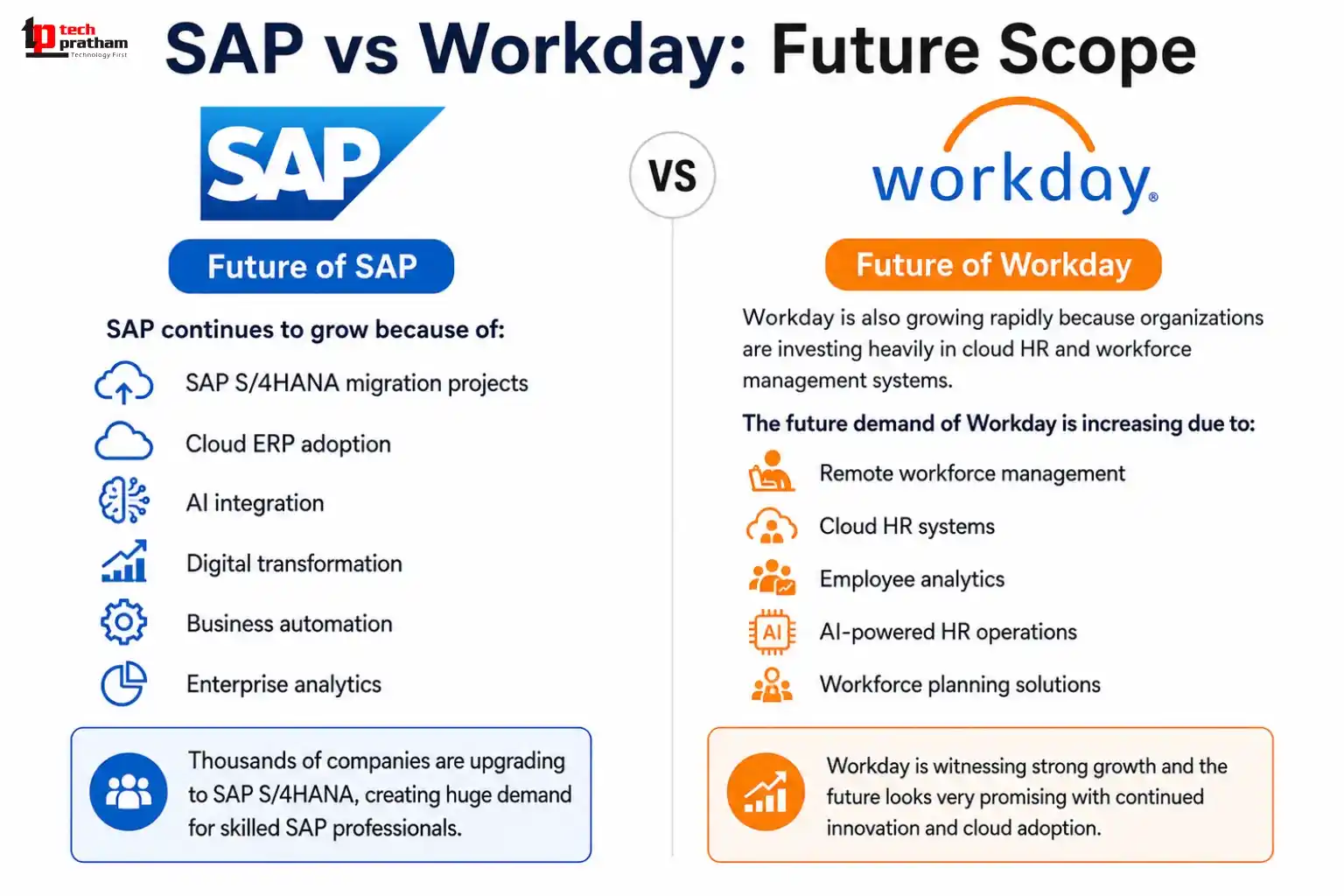
SAP vs Workday: Future Scope
Future of SAP
SAP continues to grow as organizations invest in SAP S/4HANA migration, cloud ERP solutions, AI integration, digital transformation, business automation, and enterprise analytics. Thousands of companies are upgrading their ERP systems, creating strong demand for skilled SAP professionals across technical and functional roles.
Future of Workday
Workday is rapidly expanding as companies adopt cloud-based HR and workforce management solutions. The growing focus on remote workforce management, employee analytics, AI-powered HR operations, and workforce planning is increasing the demand for skilled Workday professionals in modern business environments.
SAP vs Workday: Which One Should You Choose?
The choice between SAP and Workday depends on your career goals and professional interests. SAP training is a better option for students and professionals who want broader ERP career opportunities in areas like finance, logistics, supply chain, analytics, development, and enterprise management. It is suitable for those looking for both technical and functional career paths across multiple industries.
Workday training is ideal for individuals interested in HR technology, cloud-based applications, HCM systems, payroll management, and workforce operations. It is often preferred by professionals who want to build careers in modern cloud platforms with a simpler and more user-friendly environment.
Why Practical Training is Important
Whether you choose SAP or Workday, practical training is extremely important for getting jobs in the industry.
A professional training institute helps students with:
- Real-time projects
- Hands-on practice
- Industry-oriented curriculum
- Resume preparation
- Interview guidance
- Certification support
- Placement assistance
Final Verdict
Both SAP and Workday are excellent career options with strong future demand and high salary potential. SAP is a better choice for students and professionals looking for broader ERP, finance, supply chain, analytics, and business process opportunities. Workday is ideal for those interested in cloud HR technology, payroll systems, workforce management, and modern cloud-based applications.
The right choice depends on your career goals, educational background, technical interests, and preferred industry domain. With proper training, certification, and practical knowledge, both SAP and Workday can help you build a successful long-term career in the enterprise technology industry.
FAQs
1. Which is better: SAP or Workday?
SAP is generally better for building a long-term enterprise ERP career, especially if you want to work across multiple business functions like finance, supply chain, and operations. Workday, on the other hand, is ideal for professionals who want to focus on cloud-based HR and financial systems with a simpler learning path and modern SaaS technology.
2. Is Workday easier than SAP?
Yes, Workday is usually considered easier than SAP because it has a more user-friendly interface and a cloud-based structure. SAP is more complex due to its multiple modules and deeper business process understanding, while Workday is more streamlined and easier for beginners to learn.
3. Which has higher salary in India: SAP or Workday?
Both SAP and Workday offer strong salary packages in India and globally. However, experienced SAP consultants often earn higher salaries because SAP is widely used in large enterprise environments and requires deeper technical and functional expertise. Workday professionals also earn competitive salaries, especially in cloud-focused IT companies and global organizations.
4. Can freshers join SAP or Workday training?
Yes, freshers, graduates, and working professionals can join both SAP and Workday training programs. These courses are designed to start from basics and gradually move toward advanced concepts, making them suitable for beginners who want to build a career in ERP systems.
5. Which ERP technology has better future scope in 2026?
Both SAP and Workday have strong future scope in 2026. SAP continues to dominate the enterprise ERP market across industries like manufacturing, retail, and finance, while Workday is growing rapidly due to increasing demand for cloud-based HR and finance solutions in modern organizations.










 +91-8882178896
 +1 (343) 477-0926