
Can Online Software Testing Training Help You Get a Job in India
.png)
Understanding Software Testing
- Checking whether application features work correctly
- Creating and executing test cases
- Finding and reporting bugs
- Performing regression testing
- Testing APIs
- Checking application compatibility
- Automating repetitive test scenarios
- Validating data and application responses
Why Choose Online Software Testing Training?
.png)
1. Learn From Anywhere
3. Practical Learning
4. Learn Modern Testing Tools
What Skills Should You Learn During Online Software Testing Training?
- Software Development Life Cycle (SDLC)
- Software Testing Life Cycle (STLC)
- Test scenarios and test cases
- Functional testing
- Regression testing
- Smoke and sanity testing
Automation Testing
- Selenium WebDriver
- Playwright
- TestNG or similar frameworks
- Automation frameworks
- Locators
- Assertions
Programming Basics
- Variables
- Conditions
- Loops
- Functions
- Arrays
- Classes and objects
The goal is not to become a software developer. The goal is to write, understand, debug, and maintain automation scripts.
API Testing
- GET requests
- POST requests
- PUT requests
- DELETE requests
- Status codes
- Request parameters
Current QA job descriptions also commonly mention API testing and REST APIs.
SQL and Database Testing
- SELECT
- WHERE
- ORDER BY
- GROUP BY
- JOIN
- INSERT
- UPDATE
You don't need to become a DevOps engineer, but understanding how testing fits into the development pipeline can make your profile stronger.
Can Freshers Get Software Testing Jobs After Online Training?
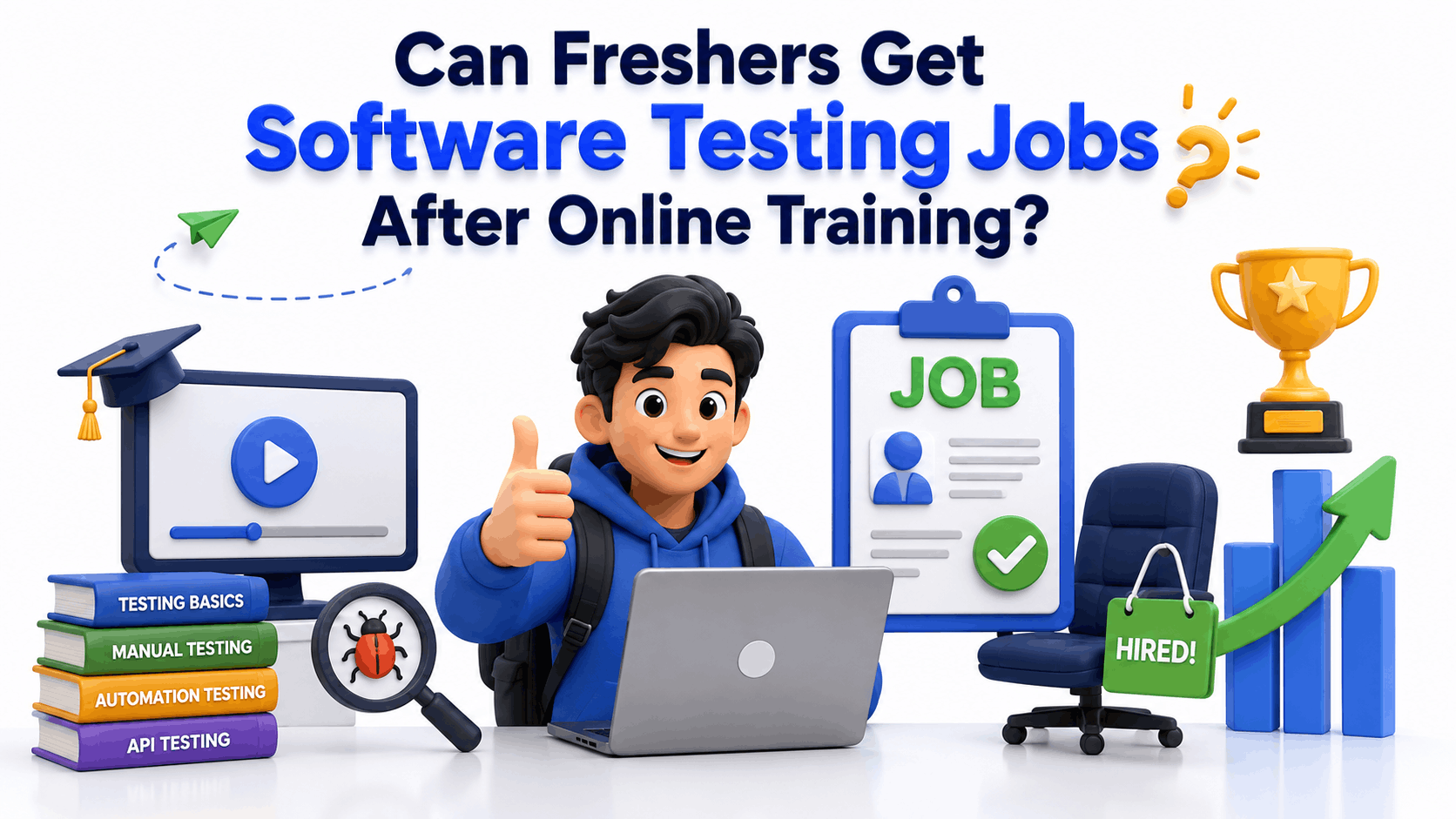
Yes, freshers can apply for entry-level testing positions after completing suitable training. However, training should be treated as a starting point rather than a guarantee of employment.
Employers generally look for evidence that candidates can actually perform testing tasks.
For example, an entry-level candidate should ideally be able to:
- Understand requirements
- Create test scenarios
- Write test cases
- Execute tests
- Identify defects
- Report bugs clearly
- Perform retesting
Internships and personal projects can also help candidates gain practical experience. Indeed's career guidance similarly recommends gaining relevant experience through internships, boot camps, or personal projects.
What Job Roles Can You Target?
After developing software testing skills, candidates can explore several entry-level and junior positions. Some common job titles include:
- Software Tester
- Manual Tester
- QA Tester
- Junior QA Engineer
- Test Engineer
- QA Analyst
- Automation Tester
Your actual job title will depend on your skills, experience, and the requirements of the company.
As you gain experience, you can progress toward roles such as Automation Engineer, Senior QA Engineer, Quality Engineer, QA Lead, or Test Architect.
How Does a Software Testing Course Help With Job Preparation?
A well-designed course can help you in several areas beyond technical concepts.
Practical Projects
Projects allow you to demonstrate that you can apply your knowledge.
For example, you could test an e-commerce application by preparing test cases for:
- User registration
- Login
- Product search
- Shopping cart
- Payment
- Order placement
- Order cancellation
You can also automate selected scenarios and document the results.
Resume Preparation
A good project can be added to your resume to demonstrate practical experience. Instead of simply writing "Completed Software Testing Course," you can mention the testing activities, tools, frameworks, and projects you worked on.
Interview Preparation
Testing interviews can include both theoretical and practical questions. You may be asked:
- What is software testing?
- What is the difference between verification and validation?
- What is regression testing?
- What is a test case?
- How do you report a bug?
- What is the defect life cycle?
Mock interviews can help you communicate your answers more confidently.
Is Certification Necessary for a Software Testing Job?
A certification is not always mandatory for getting a software testing job.
However, a recognized certification can demonstrate that you have studied established testing concepts.
For example, ISTQB certifications are available in India through the Indian Testing Board, which is the ISTQB-approved national board for India. The board also provides information about certification examinations and training options.
Still, certification should complement practical skills rather than replace them.
A candidate with a certificate but no practical knowledge may struggle in a technical interview. On the other hand, someone with strong testing fundamentals, projects, automation practice, and good communication skills can present a stronger profile.
How to Choose the Right Online Software Testing Training?
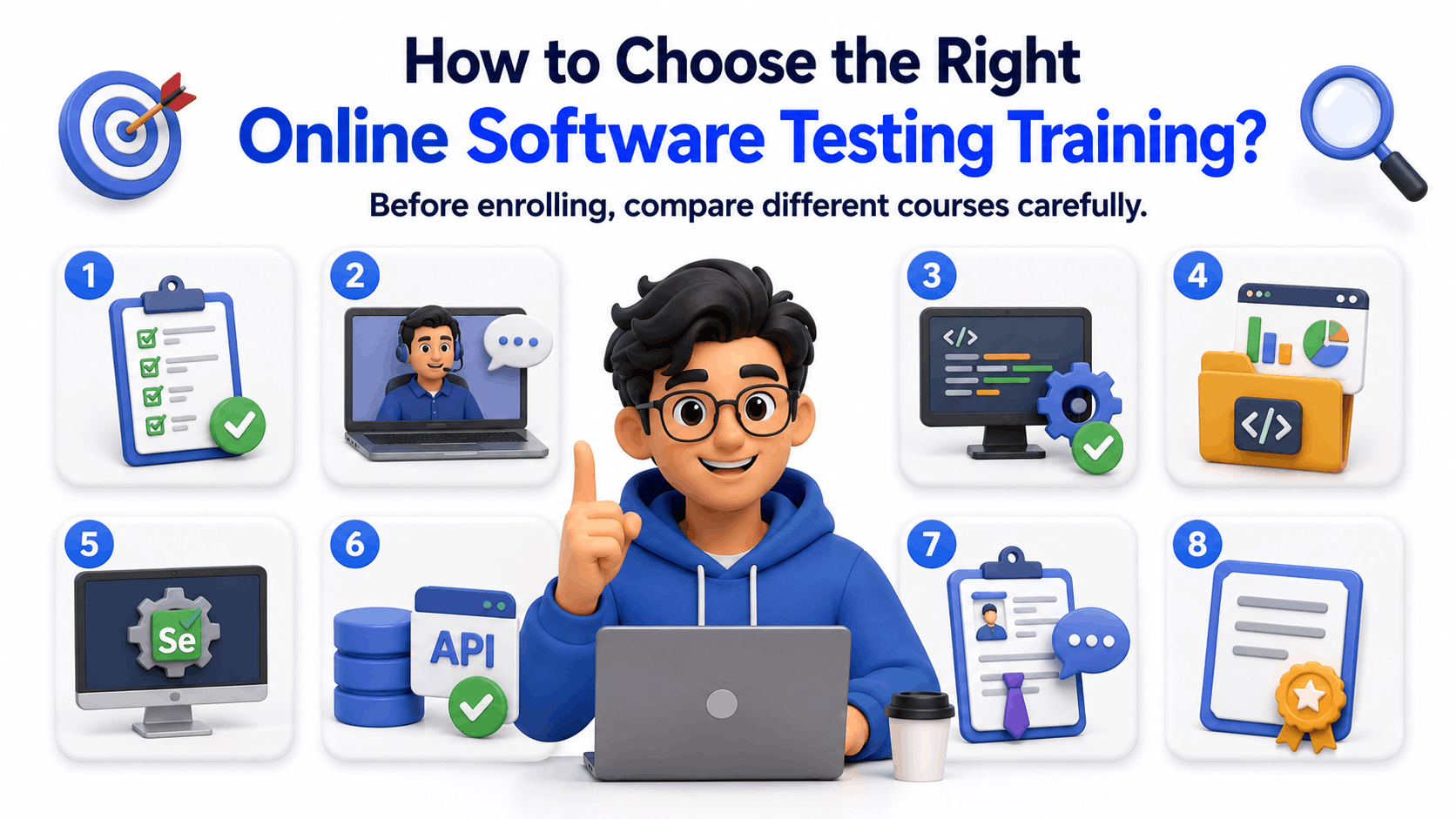
Before enrolling, compare different courses carefully.
Look for a program that provides:
1. Complete curriculum:
The course should cover both testing fundamentals and relevant modern tools.
2. Live or instructor-led learning:
Interaction with trainers can make it easier to ask questions and understand difficult concepts.
3. Hands-on practice:
You should actually use testing tools rather than only watch demonstrations.
4. Real-world projects:
Projects can help you understand how testing works in practical situations.
5. Automation exposure:
Consider courses that introduce automation tools such as Selenium or Playwright.
6. API and SQL testing:
These skills can broaden the type of QA positions you can target.
7. Interview preparation:
Mock interviews, resume guidance, and technical interview practice can be useful.
8. Certification guidance:
If certification is important to you, check whether the training provides preparation for a recognized certification.
Online Training Is the Beginning, Not the End
One of the biggest mistakes beginners make is assuming that completing a course automatically means they are job-ready.
The IT job market is competitive, so continuous practice is important.
A practical roadmap can look like this:
Step 1: Learn software testing fundamentals
Step 2: Practice manual testing
Step 3: Learn SQL and API testing
Step 4: Learn programming basics
Step 5: Learn Selenium or Playwright
Step 6: Build practical testing projects
Step 7: Create a strong resume and LinkedIn profile
Step 8: Practice technical and HR interviews
Step 9: Apply consistently for suitable QA positions
This approach is more effective than completing a course and immediately expecting a job offer.
Does Online Software Testing Training Make Sense for Career Changers?
It can be a good option for career changers who are interested in technology but do not want to start with advanced programming.
Manual testing provides an accessible foundation, while automation, API testing, SQL, and programming can be added progressively.
However, career changers should realistically evaluate their learning time and commitment. Moving into IT requires more than completing video lessons. You need to practice, build projects, understand interview questions, and continuously improve your technical skills.
Final Thoughts
So, can online software testing training help you get a job in India?
Yes—but the course itself is not the job guarantee.
The real value of online training comes from the skills and practical experience you gain from it. A job-focused Software Testing Course in India can help you understand manual testing, automation testing, API testing, SQL, testing tools, and real-world QA processes.
The current QA job market also shows that automation and related technical skills are increasingly important. Recent Indian job postings mention technologies such as Selenium, Playwright, API testing, programming, databases, and CI/CD.
For beginners, the best approach is to build a strong foundation in manual testing and then gradually move toward automation and other modern QA skills.
If you combine quality online training + hands-on projects + practical tools + interview preparation + consistent job applications, you can build a stronger profile for software testing opportunities in India.
The important thing is to focus not only on completing the course, but on becoming capable of doing the actual work expected from a software tester.
Frequently Asked Questions (FAQs)
Can online software testing training help me get a job in India?
Yes, online software testing training can help you develop the skills needed for entry-level QA and software testing jobs in India. A good course should cover manual testing, automation testing, API testing, SQL, testing tools, and practical projects. However, completing training alone does not guarantee a job. You should also practice your skills, create projects, prepare a strong resume, and develop your interview skills.
Is software testing a good career option for freshers in India?
Yes, software testing can be a good career option for freshers who are interested in the IT industry. Beginners can start by learning manual testing fundamentals and then move toward automation testing, API testing, SQL, and programming basics. Entry-level positions may include Software Tester, QA Tester, Junior QA Engineer, Test Engineer, and QA Analyst.
Can I learn software testing online without a technical background?
Yes, beginners can start learning software testing without an advanced technical background. Manual testing provides a good starting point because it focuses on understanding requirements, creating test cases, executing tests, and identifying defects. As you progress, learning basic programming, SQL, API testing, and automation tools can help you become more job-ready.
What should I learn in an online software testing course?
A job-oriented online software testing course should ideally cover manual testing, automation testing, API testing, SQL, defect tracking, Agile methodology, and commonly used testing tools. Depending on the course, you may also learn automation tools such as Selenium or Playwright and programming languages such as Java, Python, JavaScript, or TypeScript. Practical projects are also important because they help you understand how testing concepts are applied to real-world applications.
Is certification necessary to get a software testing job?
Certification is not always mandatory for getting a software testing job. Employers generally evaluate a candidate's practical knowledge, testing fundamentals, technical skills, problem-solving ability, and communication skills. However, a recognized certification can provide additional evidence of your knowledge and may strengthen your resume. Certification should ideally be combined with hands-on practice and project experience.
How long does it take to become job-ready in software testing?
The time required depends on your previous knowledge, learning schedule, and the depth of skills you want to develop. A beginner can start with manual testing fundamentals and gradually learn SQL, API testing, programming basics, and automation. Instead of focusing only on completing a course quickly, it is better to focus on becoming capable of performing practical testing tasks, building projects, and preparing for interviews.
Related Articles
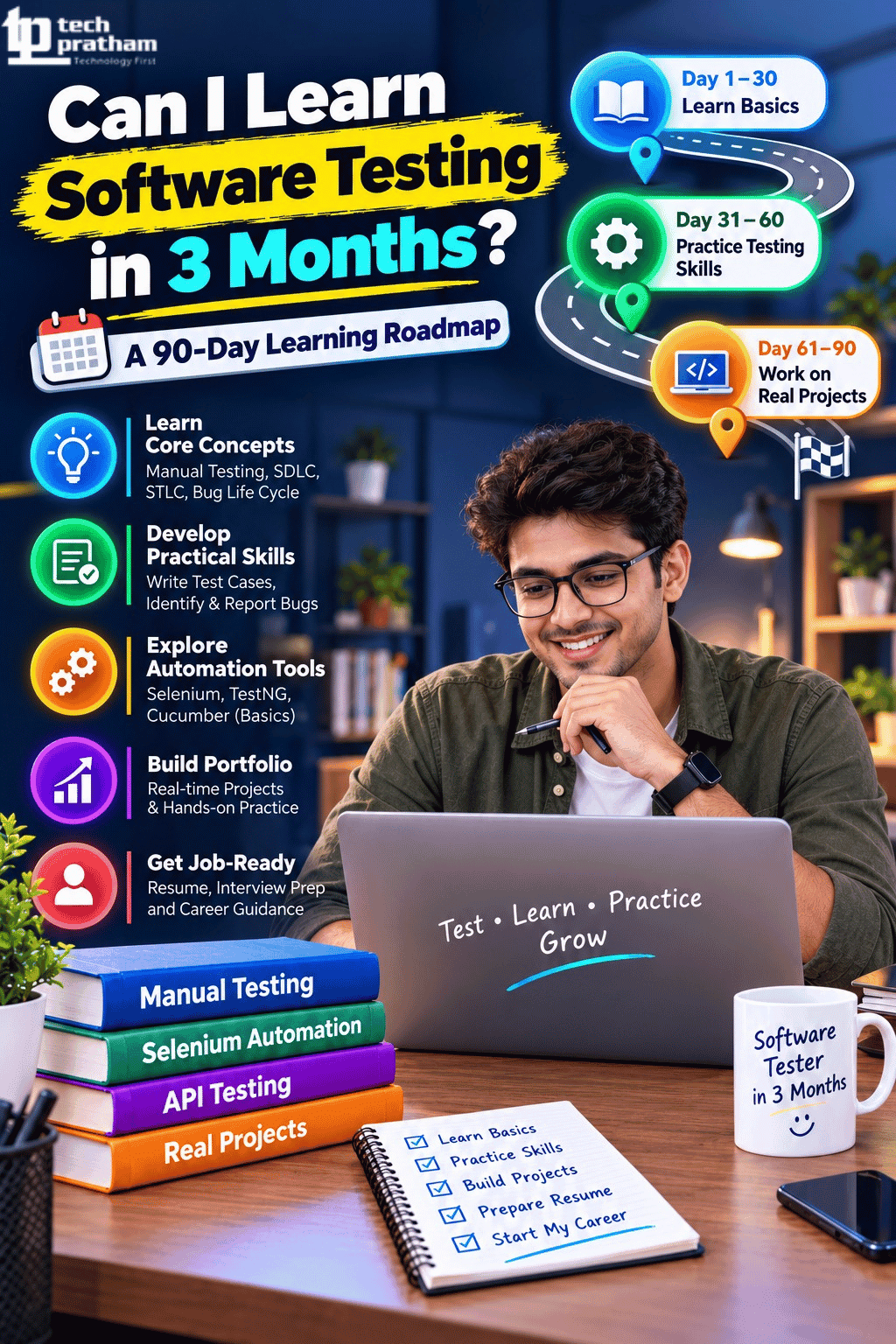
Can I Learn Software Testing in 3 Months? A 90-Day Learning Roadmap
Learn software testing in 3 months with a 90-day roadmap covering manual testing, test cases, SQL, API testing and automation tools.
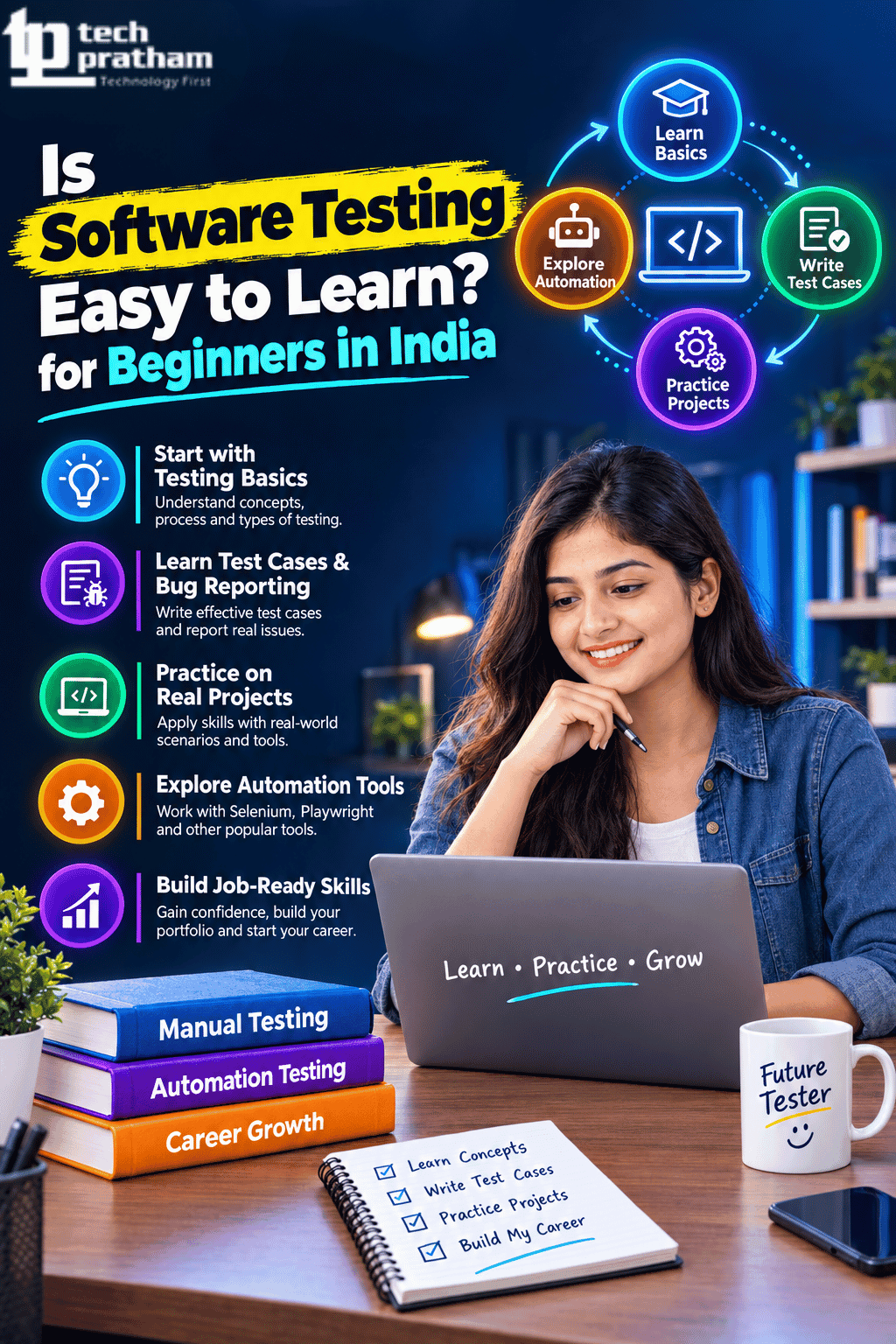
Is Software Testing Easy to Learn for Beginners in India
Learn whether software testing is easy for beginners in India, explore essential skills, course modules and career opportunities.
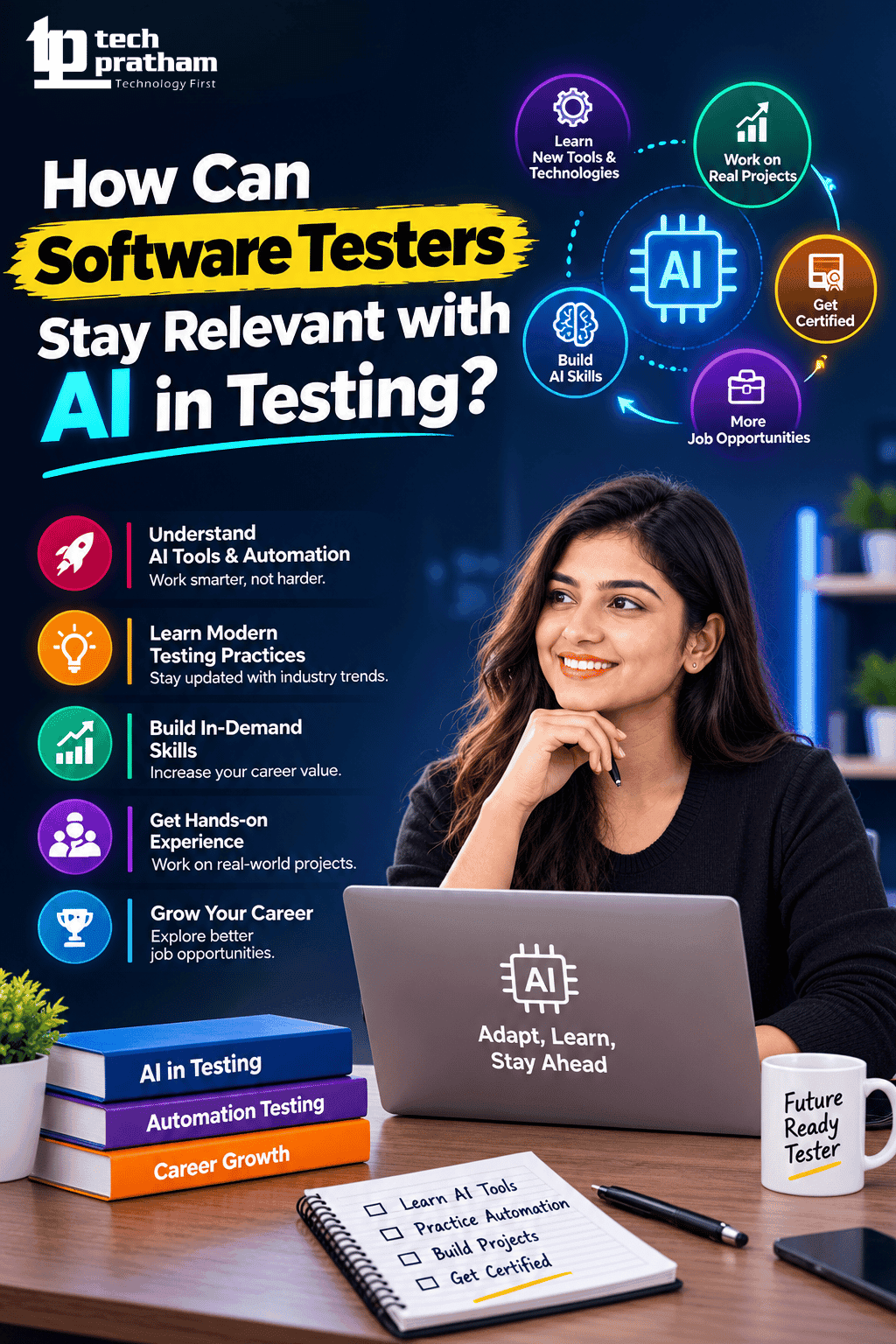
How Can Software Testers Stay Relevant with AI in Testing
Software testers can stay relevant with AI by learning AI tools, automation, prompt skills, data analysis, and modern testing practices.





 +91-8882178896
 +1 (343) 477-0926