
How AI is Transforming software testing in 2026
_11zon (3).webp)
Introduction: The New Era of Software Testing
Software testing has evolved far beyond manual test cases and basic automation scripts. In 2026, Artificial Intelligence is not just supporting QA teams—it is actively redefining how testing is designed, executed, and optimized. Today’s QA engineers are no longer just testers; they are becoming AI-assisted quality strategists. From self-healing test scripts to predictive defect detection, AI is making software testing: Faster Smarter More accurate Cost-efficient AI in software testing refers to the use of machine learning, natural language processing, and predictive algorithms to automate and optimize testing processes.
What Exactly is AI in Software Testing?
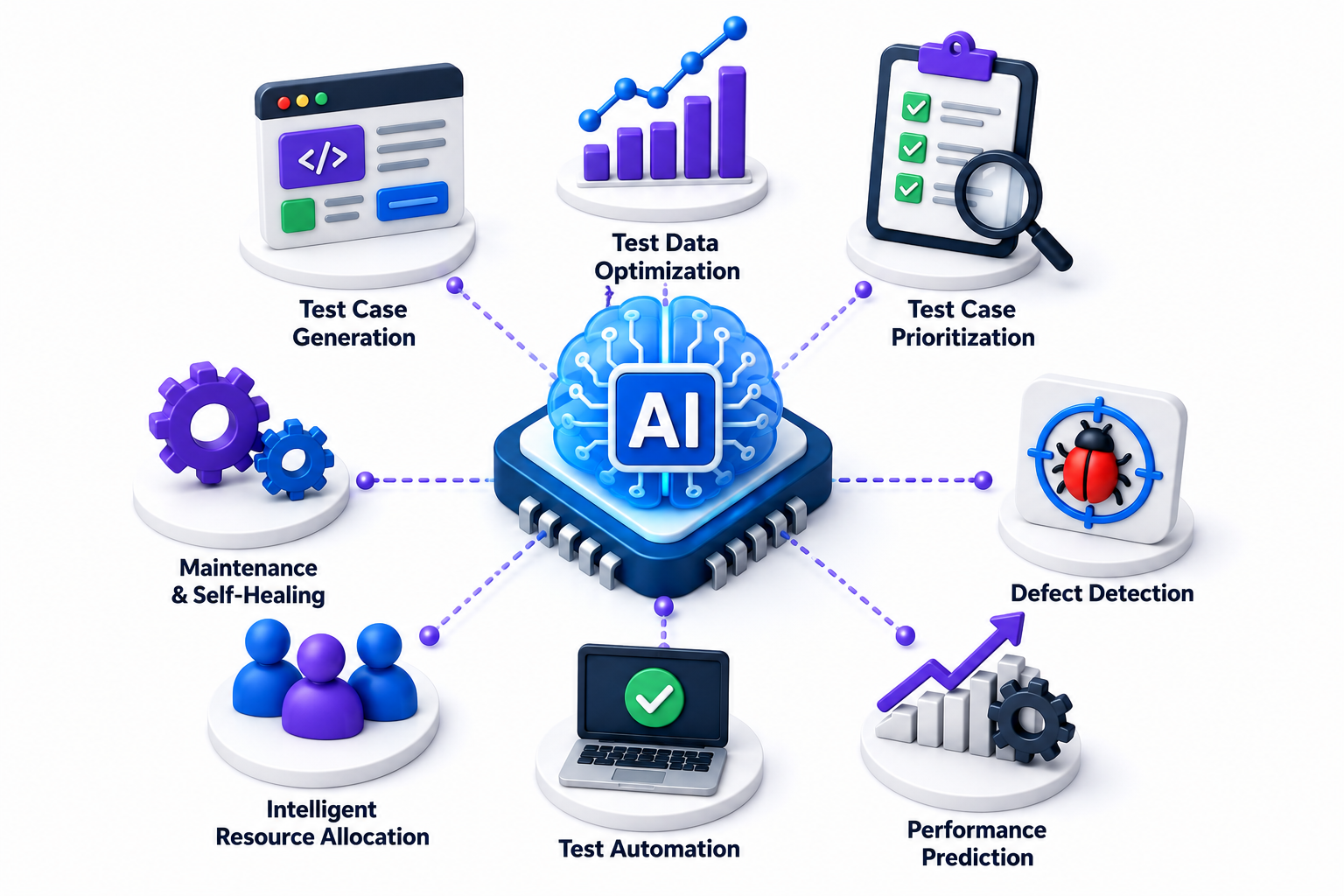
AI in software testing refers to the use of:
- Machine Learning (ML)
- Predictive analytics
- Natural Language Processing (NLP)
- Deep learning algorithms
Traditional testing follows instructions AI testing understands applications.
Manual vs Automation vs AI Testing
Manual Testing relies completely on human effort, making it slower and harder to maintain. Automation Testing improves speed and efficiency through scripts and tools, but still requires regular maintenance. AI-Based Testing is the most advanced approach, using Artificial Intelligence to auto-generate tests, predict bugs early, reduce maintenance, and adapt quickly to application changes, making software testing smarter, faster, and more efficient.
Why AI is Dominating Software Testing in 2026
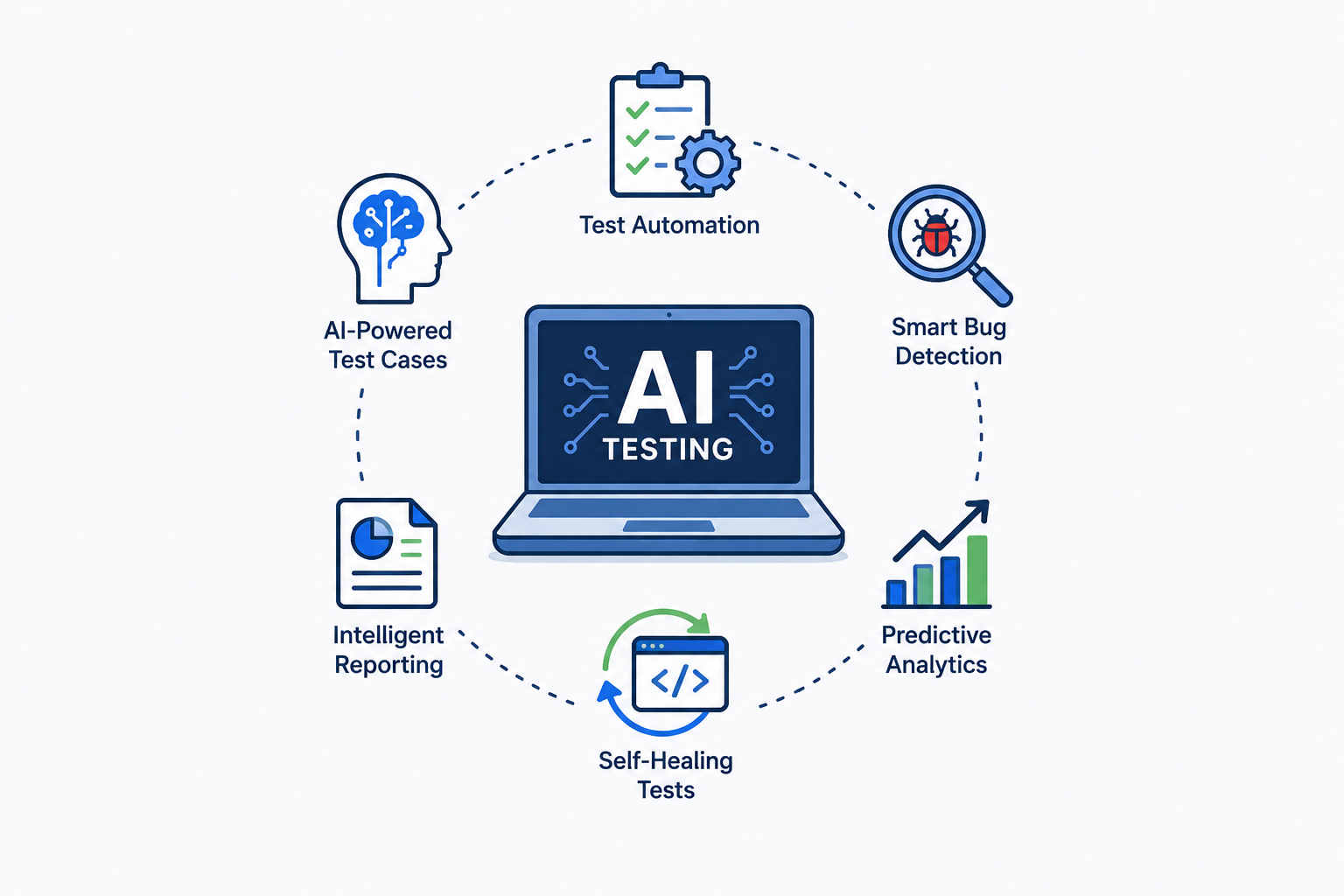
This infographic highlights how Artificial Intelligence automates and enhances the complete software testing process through smart analytics, automation, and predictive testing capabilities.
A visual representation of next-generation testing where AI improves speed, accuracy, scalability, and decision-making across modern QA environments.
This design showcases the transformation of traditional testing into intelligent, data-driven testing powered by AI and machine learning technologies.
An engaging 3D illustration demonstrating how AI simplifies bug detection, accelerates testing workflows, and improves software quality.
This infographic presents a connected ecosystem of AI-powered tools, automation, analytics, and security testing shaping the future of software quality assurance.
Real-World Impact: Before AI vs After AI
Popular AI Testing Tools in 2026
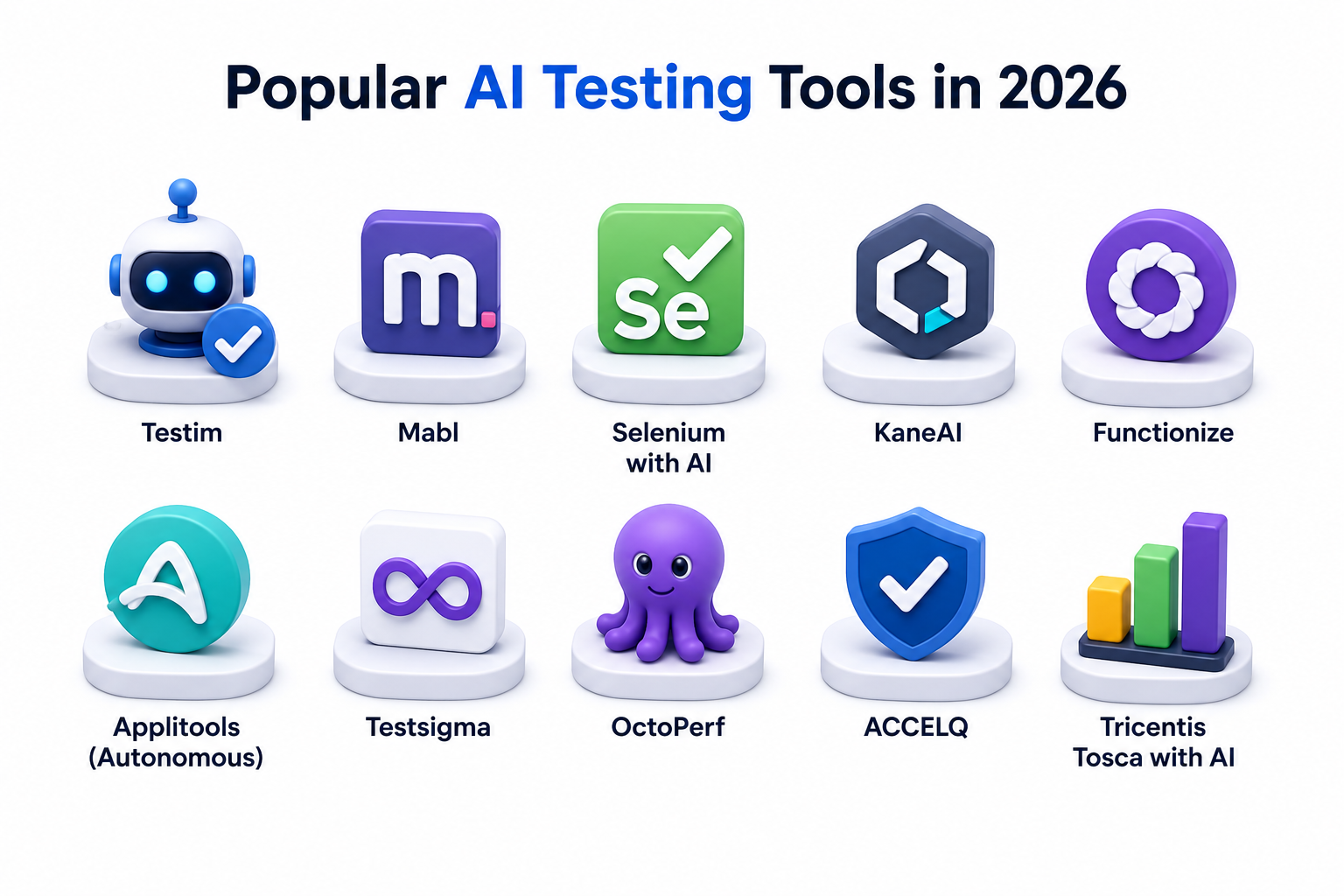
AI-powered test automation platform that creates stable and self-healing test scripts.
Cloud-based intelligent testing tool for automated UI and API testing.
Enhanced Selenium automation using AI for smart element detection and maintenance.
Generative AI testing assistant that simplifies test creation using natural language.
AI-driven testing platform that automates functional and regression testing.
Visual AI testing tool that detects UI and design changes automatically.
Low-code AI testing platform for web, mobile, and API automation testing.
AI-enabled performance testing solution designed for scalable load testing.
Codeless AI-powered test automation platform for continuous quality engineering.
Enterprise automation testing tool with AI-based risk analysis and smart automation.
Benefits of AI in Software Testing
- Reduced QA cost
- Faster time-to-market
- Fewer production failures
- Better customer retention
- Higher test coverage
- Automated regression optimization
- Reduced flaky tests
- Continuous testing integration
- Less repetitive work
- More focus on strategy
- Higher skill demand
- Transition into AI QA roles
Future of AI in Software Testing (Beyond 2026)
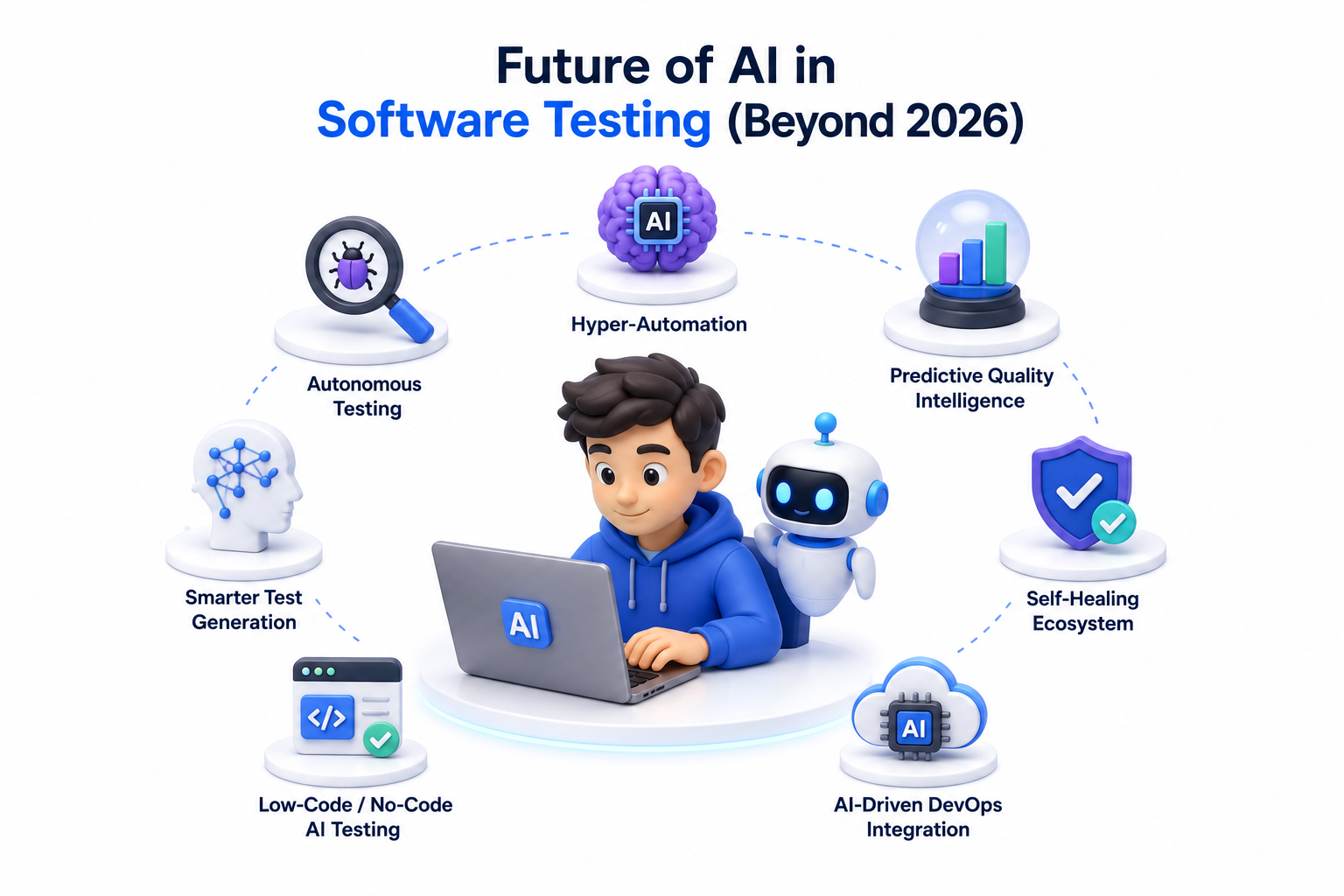
The future of AI in software testing beyond 2026 will focus on fully autonomous and intelligent testing systems. AI-powered tools will automatically generate, execute, and maintain test cases with minimal human involvement. Predictive analytics will help identify defects before deployment, improving software quality and reducing risks. Low-code and no-code AI testing platforms will make automation accessible to non-technical users. Self-healing testing ecosystems will continuously adapt to application changes without script failures. AI-driven DevOps integration will enable faster releases, continuous monitoring, and smarter quality assurance processes across modern software development.
Frequently Asked Questions (FAQs)
1). What is AI in software testing?
AI in software testing refers to the use of Artificial Intelligence and Machine Learning technologies to improve and automate the software testing process. Unlike traditional automation, AI-based testing tools can learn from application behavior, identify patterns, generate test cases, and even predict defects before deployment.
2). How is AI transforming software testing in 2026?
AI is transforming software testing by making QA processes smarter, faster, and more efficient. Modern AI testing tools can automatically create test cases, perform self-healing automation, optimize regression testing, and analyze production risks using predictive analytics.
3). Can AI completely replace manual testing?
No, AI cannot completely replace manual testing. While AI can automate repetitive and data-driven tasks, human testers are still essential for exploratory testing, usability testing, business logic validation, and strategic decision-making. AI works best as an assistant to QA engineers by reducing repetitive work and improving testing efficiency.
4). What skills are required to learn AI-based software testing?
To build a career in AI-powered software testing, professionals should understand manual testing fundamentals, automation testing tools, and basic concepts of Artificial Intelligence and Machine Learning. Knowledge of Selenium, API testing, DevOps, Python, data analysis, and AI testing platforms can provide a strong advantage.
5). What are the major benefits of AI in software testing?
AI in software testing offers several advantages including faster test execution, reduced maintenance effort, improved defect prediction, better test coverage, and smarter regression testing. AI-powered tools also help teams identify high-risk areas in applications and support continuous integration and continuous deployment (CI/CD) pipelines.
Conclusion: The Future is AI-Driven QA
AI is fundamentally transforming software testing in 2026 by making the entire QA process faster, smarter, and more reliable. Traditional testing methods are being replaced with AI-powered approaches such as self-healing automation, predictive defect detection, intelligent regression testing, and auto-generated test cases. Instead of manually executing repetitive tasks, QA engineers now focus more on strategy, quality analysis, and AI-driven decision-making. This shift is helping organizations reduce testing time, lower costs, and improve software quality across web, mobile, and enterprise applications. Overall, AI is not replacing software testers—it is upgrading them into intelligent quality engineers and shaping the future of continuous, autonomous testing systems.
Related Articles
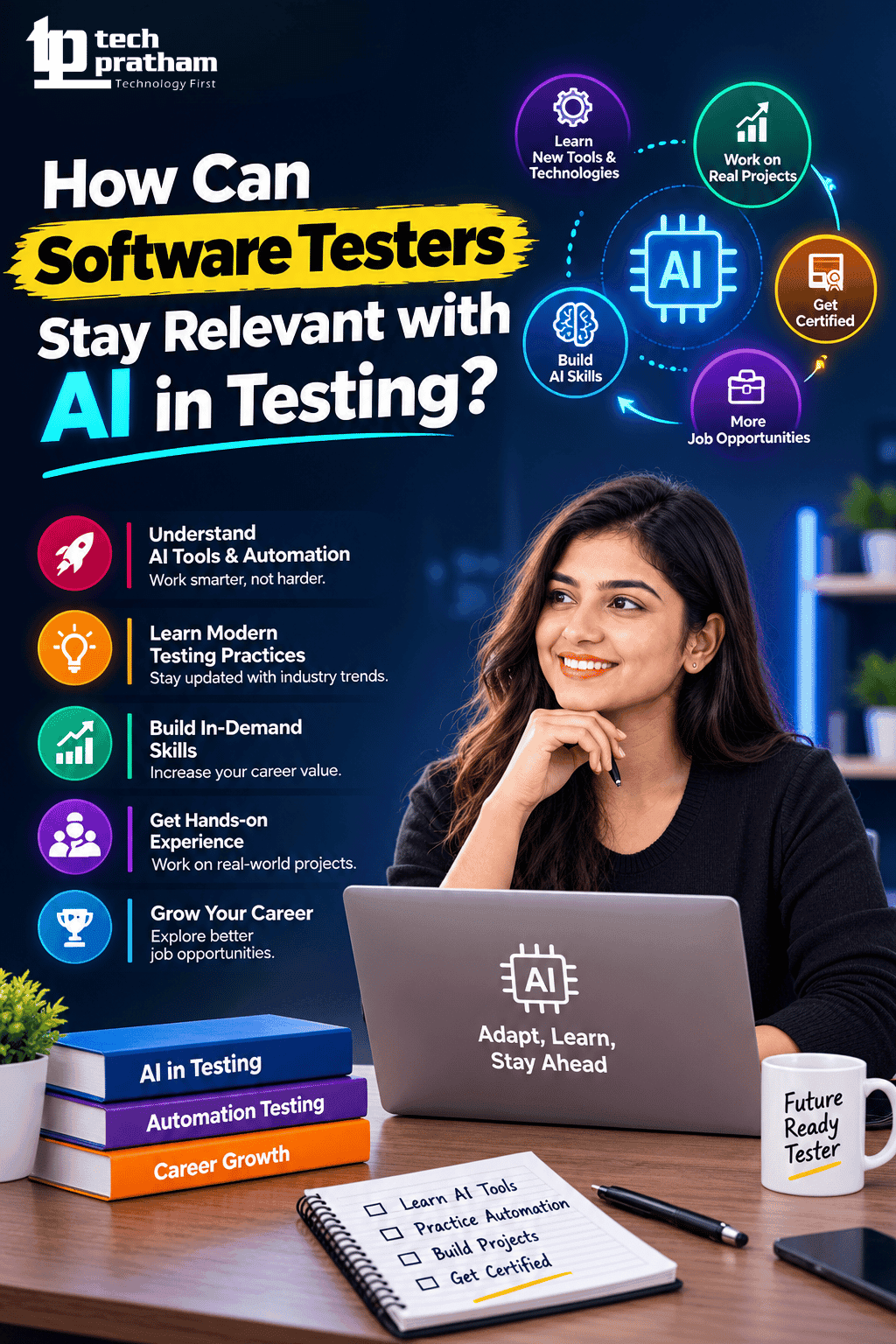
How Can Software Testers Stay Relevant with AI in Testing
Software testers can stay relevant with AI by learning AI tools, automation, prompt skills, data analysis, and modern testing practices.

Tosca to Playwright: What Skills Do You Need to Learn
Learn the key skills needed to move from Tosca to Playwright, including coding, automation, API testing, frameworks, and CI/CD.

What Should an Experienced Software Tester Learn in 2026
Learn what experienced software testers should master in 2026, from automation and AI testing to APIs, cloud, and modern QA tools.





 +91-8882178896
 +1 (343) 477-0926