Software Testing Training
141 min read269 viewsHow to Choose the Best Software Testing Course in India: A Complete Beginner’s Guide
By TechPratham TeamPublished August 27, 2026Updated August 27, 2026
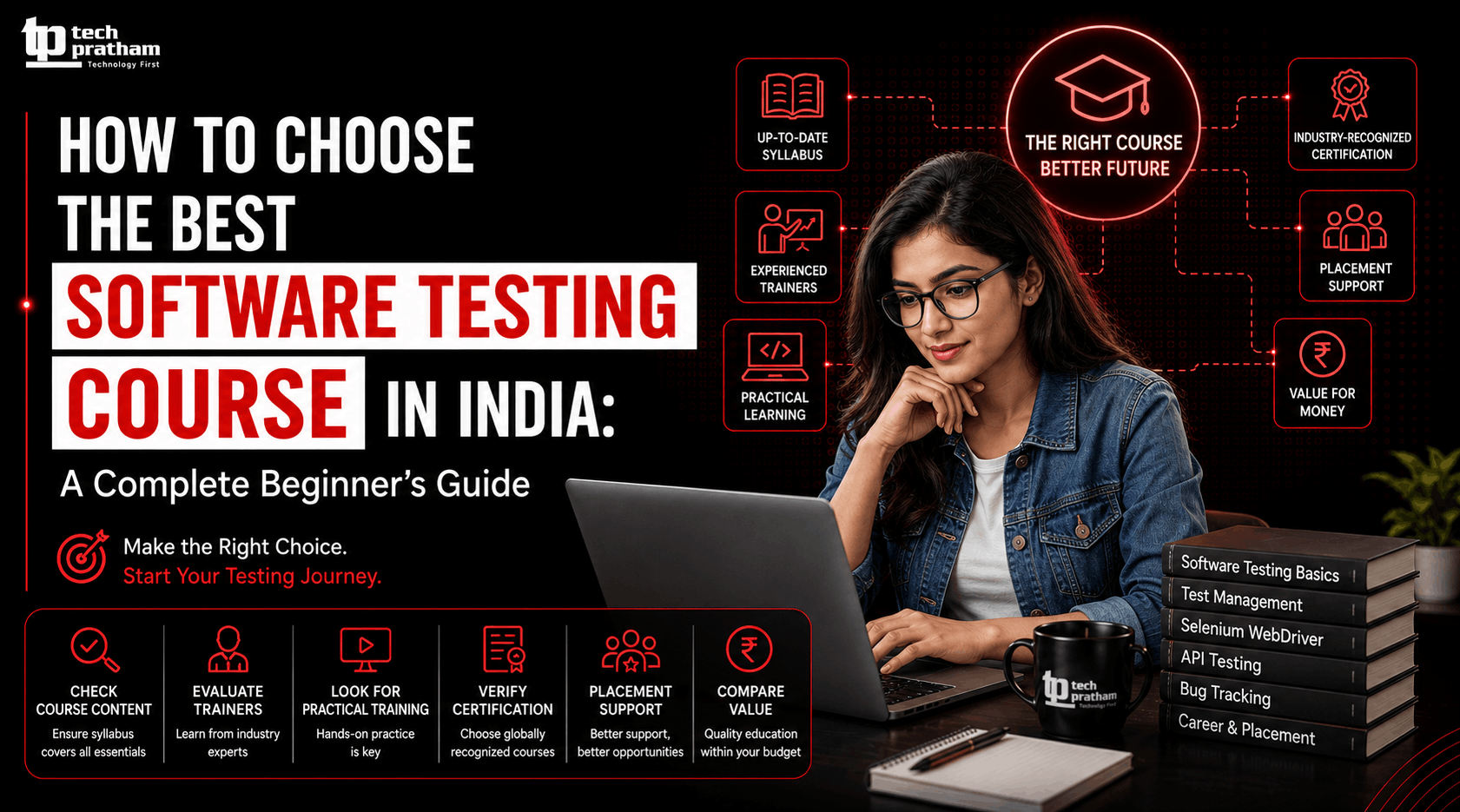
Choosing the right software testing course can be confusing, especially for beginners who are entering the IT industry for the first time. With hundreds of courses available online and offline, it can be difficult to understand which one actually provides the skills needed for a software testing career.
A good course should not only explain testing concepts but also help learners understand how software testing works in real projects. It should cover manual testing fundamentals, automation, API testing, commonly used tools, test documentation, defect management, and practical testing scenarios.
If you are searching for Software Testing Training in India, this guide will help you understand what to look for before choosing a course and how to evaluate whether a training program matches your career goals.
Why Is Choosing the Right Software Testing Course Important?
Software testing is broader than simply finding bugs in an application. Testers need to understand requirements, create test scenarios, execute test cases, report defects, perform regression testing, and communicate effectively with developers and other stakeholders.
For beginners, a structured learning path is particularly important because learning random tools without understanding testing fundamentals can create knowledge gaps.
A suitable Software Testing Training in India program should help you progress from:
Software Testing Fundamentals → Manual Testing → Test Case Design → Defect Management → API Testing → Automation Testing → Testing Tools → Real-World Projects
This structured approach can make it easier to understand how different testing activities fit together in a software development lifecycle.
What Should a Beginner Learn in Software Testing?
Before selecting a course, check its curriculum carefully. A beginner-friendly program should cover the fundamentals before moving into advanced tools.
1. Software Testing Fundamentals
1. Software Testing Fundamentals
The first stage should explain the basics of software testing, including:
- What is software testing?
- Why is testing required?
- Software Development Life Cycle (SDLC)
- Software Testing Life Cycle (STLC)
- Verification and validation
- Types and levels of testing
- Functional and non-functional testing
- Test scenarios and test cases
- Defect lifecycle
- Severity and priority
These concepts form the foundation for almost every software testing role.
2. Manual Testing
Manual testing remains an important starting point for beginners because it teaches how testers think about application behavior and user requirements. A good course should provide practical exposure to:
- Requirement analysis
- Test scenario creation
- Test case writing
- Test data preparation
- Test execution
- Defect reporting
- Regression testing
Learning manual testing first can help beginners understand the purpose behind automation rather than simply learning how to write scripts.
3. Automation Testing
Once the fundamentals are clear, learners can move toward automation testing.
Automation can help testers execute repetitive tests efficiently and support continuous testing practices. A course should explain automation concepts and provide practical experience with at least one widely used automation framework.
Depending on the curriculum, this may include tools such as Selenium or Playwright.
Rather than choosing a course simply because it lists many tools, beginners should check whether the course provides hands-on practice with those tools.
4. API Testing
Modern applications frequently communicate through APIs, making API testing an important skill for testers. A comprehensive software testing course should introduce:
- API fundamentals
- HTTP methods
- GET, POST, PUT and DELETE requests
- Request and response structure
- Status codes
- Headers and parameters
- Authentication
- JSON
Tools such as Postman can be useful for beginners because they allow learners to practice API requests without building a complete application.
Should Beginners Learn Selenium or Playwright?
This is one of the common questions beginners ask when choosing automation training.
Selenium has been widely used for browser automation for many years and remains relevant across many enterprise testing environments.
Playwright is a newer browser automation framework designed for modern web applications and supports multiple browsers with features aimed at reliable end-to-end testing.
The choice does not necessarily have to be either-or. Beginners should first understand automation fundamentals and then learn how the selected framework works.
When comparing courses, look at whether the curriculum teaches:
- Locators
- Assertions
- Wait strategies
- Browser automation
- Test execution
- Test organization
- Reporting
- Page Object Model
- Data-driven testing
Understanding these concepts is often more valuable than simply memorizing tool commands.
Does a Beginner Need Programming Skills?
This is another important consideration.
A beginner does not necessarily need to be an advanced programmer before starting software testing. However, anyone planning to move into automation testing should gradually develop programming skills.
Depending on the automation framework, learners may encounter languages such as Java, Python, JavaScript or TypeScript.
A beginner-friendly course should therefore introduce the programming concepts needed for testing, such as:
- Variables
- Data types
- Conditions
- Loops
- Functions
- Classes and objects
- Exception handling
- Collections
- Basic file handling
You do not need to become a software developer to start testing, but basic programming knowledge can significantly expand your automation testing opportunities.
Should a Software Testing Course Include Real Projects?
Yes. Practical experience is one of the most important factors to consider.
Reading about test cases and defects is different from testing an actual application.
A useful course should provide opportunities to work with realistic projects where learners can practice:
- Understanding requirements
- Preparing test scenarios
- Writing test cases
- Executing tests
- Identifying defects
- Reporting bugs
- Performing regression testing
- Creating automation scripts
- Testing APIs
- Preparing testing documentation
Projects can also help beginners build examples that they can discuss during interviews.
What Tools Should a Beginner Learn?
A beginner does not need to master dozens of tools. A focused toolset is generally more practical. Depending on the course and career goal, learners can consider:
The important point is not the number of tools listed in a brochure. It is whether learners actually get an opportunity to use them.
How Important Is Certification?
Certification can demonstrate that you have completed a structured learning program, but certification alone does not guarantee testing skills or employment. Before choosing a certification-oriented course, check:
- Who issues the certification?
- What topics are covered?
- Is there an assessment?
- Does the program include practical work?
- Is the certification recognized or relevant to your career goal?
For beginners, it is usually better to combine certification with practical knowledge, projects, testing documentation, and interview preparation.
Should You Choose Online or Classroom Training?
Both options can work. The better choice depends on your learning style, schedule, location, and level of support.
Online Training
- Flexible schedules
- Access from different locations
- Recorded sessions in some programs
- Easier revision
- Convenience for working professionals
Classroom Training
- Direct interaction with trainers
- Immediate doubt resolution
- A structured learning environment
- Peer interaction
- Face-to-face practical sessions
When evaluating Software Testing Training in India, do not select a format only because it is cheaper or more convenient. Consider whether the learning environment will help you consistently practice testing.
What About Course Duration and Fees?
Course duration and fees vary significantly depending on the curriculum, delivery format, practical exposure, instructor experience, and included tools. Instead of choosing a course solely because it has a low fee, compare what you actually receive.
Ask:
Ask:
- How many hours of live training are included?
- Are practical sessions included?
- Are projects provided?
- Is automation covered?
- Is API testing included?
- Are interview preparation sessions available?
- Is course material provided?
- Can learners ask questions outside training sessions?
- Is there post-training support?
A longer course is not automatically better, and an inexpensive course is not automatically worse. The curriculum and practical value should be the deciding factors.
What Should You Check About the Trainer?
The instructor can significantly influence the learning experience. Before enrolling, try to understand:
- The trainer's testing experience
- Experience with real-world projects
- Knowledge of current testing tools
- Teaching methodology
- Practical demonstrations
- Student reviews
A good instructor should be able to explain not only how to perform a testing activity but also why that activity is required.
How AI Is Changing Software Testing
Artificial intelligence is becoming increasingly relevant to software testing. Testers may use AI-powered tools to assist with activities such as generating test ideas, analyzing test results, creating test data, identifying potential risks, and supporting automation.
At the same time, AI-generated code and AI-generated tests need human validation.
This means future testers should not think of AI simply as a replacement for testing knowledge. Instead, they should learn how to use AI responsibly while applying fundamental testing principles.
A modern Software Testing Training in India program can therefore benefit from introducing learners to AI-assisted testing alongside manual testing, automation, and API testing.
Final Thoughts
Choosing the best software testing course in India is not simply about finding the course with the longest syllabus or the highest number of tools. Beginners should focus on practical learning, structured curriculum, current testing skills, experienced instruction, projects, and career preparation.
A strong Software Testing Course in India program should build your understanding step by step—from manual testing fundamentals and test case design to API testing, automation, programming, modern testing tools, and AI-assisted testing.
If you are comparing Software Testing Training in India, take time to evaluate the curriculum, practical exposure, trainer experience, certification, learning format, and career support before enrolling.
Most importantly, remember that completing a course is only the beginning. Regular practice, real-world projects, continuous learning, and interview preparation are what help transform training into job-ready software testing skills.
Frequently Asked Questions
1. Which software testing course is best for beginners in India?
The right course depends on your background and career goals. Beginners should generally look for a structured program covering software testing fundamentals, manual testing, test case design, defect management, API testing, automation, and practical projects. A course that provides hands-on experience and interview preparation can be more useful than one focused only on theoretical concepts.
2. Can I learn software testing without a programming background?
Yes. You can start with manual testing without advanced programming knowledge. However, if you want to move into automation testing, learning basic programming is highly recommended. Languages such as Java, Python, JavaScript, or TypeScript can be useful depending on the automation tools you choose.
3. Is software testing a good career for beginners?
Software testing can be a suitable career path for people interested in technology, problem-solving, quality assurance, and analyzing how applications work. Beginners can start with manual testing fundamentals and gradually develop skills in API testing, automation, databases, and modern testing tools.
4. Should I learn manual testing before automation testing?
For most beginners, learning manual testing fundamentals first is a practical approach. Manual testing helps you understand requirements, test scenarios, test cases, defects, regression, and other core concepts. Once these fundamentals are clear, automation frameworks become easier to understand because you know what you are trying to automate and why.
5. How long does it take to learn software testing?
The time required depends on your previous experience, learning schedule, and the skills you want to develop. Learning basic manual testing can take less time than becoming comfortable with automation, API testing, programming, frameworks, and CI/CD. Consistent hands-on practice is more important than simply completing a course quickly.
6. Is certification necessary for a software testing job?
Certification is not always mandatory, and it should not be considered a substitute for practical skills. However, a relevant certification can demonstrate structured learning. Candidates should ideally combine certification with testing knowledge, practical projects, tool experience, and interview preparation.
7. What tools should a beginner learn for software testing?
A beginner can start with tools and technologies relevant to the desired role, such as Jira for defect management, Postman for API testing, SQL for database testing, Git for version control, and Selenium or Playwright for web automation. It is better to understand a focused set of tools well than to list many tools without practical experience.
Related Articles
Software Testing Training
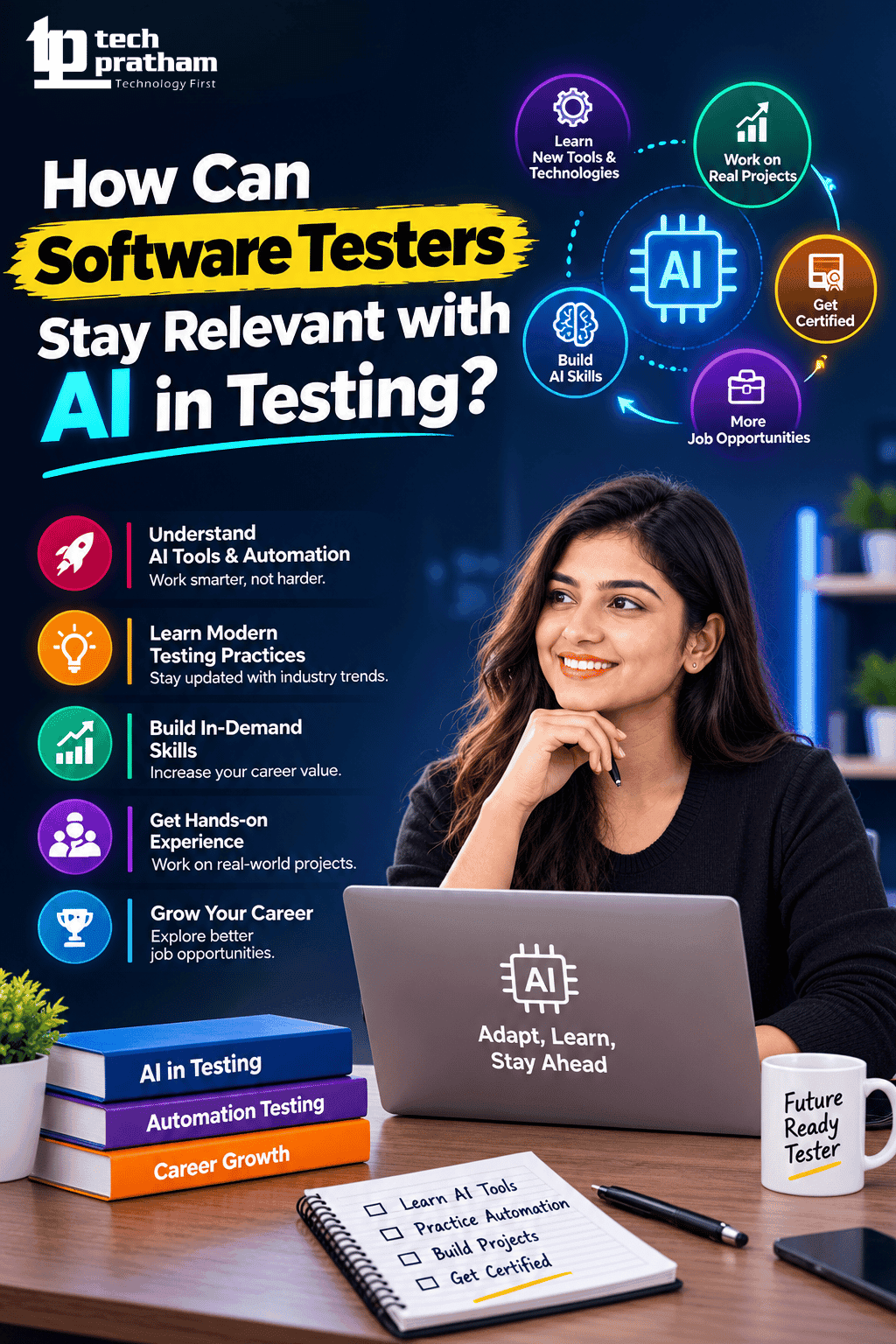
How Can Software Testers Stay Relevant with AI in Testing
Software testers can stay relevant with AI by learning AI tools, automation, prompt skills, data analysis, and modern testing practices.
Software Testing Training
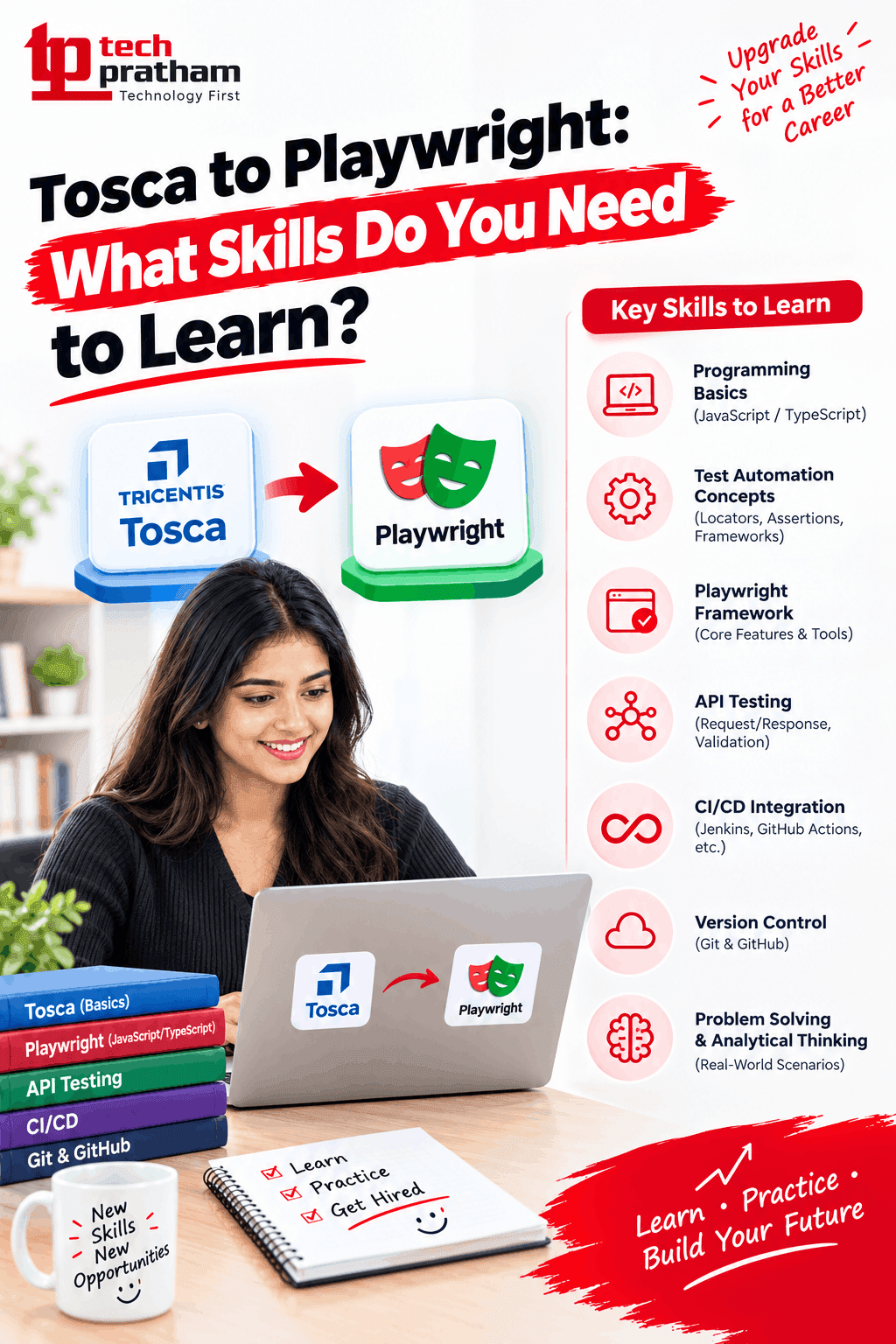
Tosca to Playwright: What Skills Do You Need to Learn
Learn the key skills needed to move from Tosca to Playwright, including coding, automation, API testing, frameworks, and CI/CD.
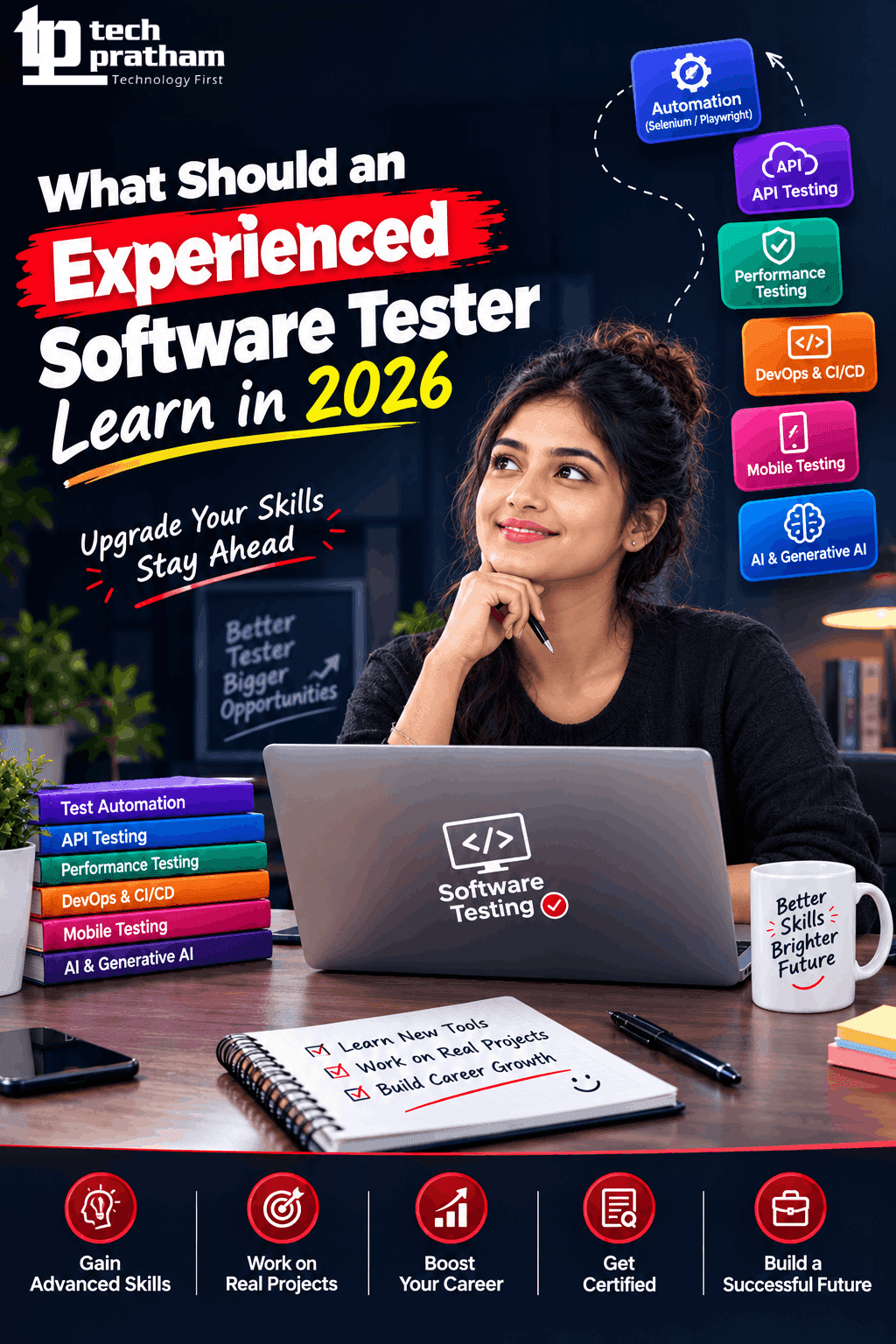
Software Testing Training
What Should an Experienced Software Tester Learn in 2026
Learn what experienced software testers should master in 2026, from automation and AI testing to APIs, cloud, and modern QA tools.





 +91-8882178896
 +1 (343) 477-0926