
Software Testing Training
177 min read300 viewsHow to Start a Career in Software Testing in India as a Fresher
By TechPratham TeamPublished September 12, 2026Updated September 12, 2026
.png)
Starting a career in IT can feel confusing when you are a fresher. There are many career options, programming languages, technologies, and job roles to choose from. Software testing is one career path that can be a good starting point for people who are interested in technology, problem-solving, and improving software quality.
Software testers play an important role in the software development process. They check applications, identify defects, verify whether requirements are working correctly, and help teams deliver better-quality products. Testing is also not limited to finding bugs. Modern testers work with developers, business teams, automation tools, APIs, Agile processes, and different testing technologies.
For freshers, the biggest question is usually: How can I start a career in software testing in India?
The good news is that you do not need to know everything before applying for your first testing job. You need a clear learning path, strong testing fundamentals, practical knowledge, and the ability to explain what you have learned.
This guide explains a step-by-step roadmap for starting a software testing career as a fresher.
What Does a Software Tester Do?
A software tester checks whether an application works as expected and whether it meets the requirements given by the business or product team.
For example, imagine an e-commerce website. A tester may check:
- Whether users can register successfully
- Whether login works with valid and invalid credentials
- Whether products can be searched
- Whether products can be added to the cart
- Whether payment works correctly
- Whether incorrect information generates proper error messages
- Whether the website works on different browsers and devices
- Whether changes to one feature have affected another feature
A tester thinks from different user perspectives and tries to identify problems before the software reaches the end user.
Software Testing Training in India therefore requires logical thinking, attention to detail, curiosity, communication skills, and technical knowledge.
Can a Fresher Start a Career in Software Testing?
es. Freshers can start their careers in software testing if they develop the right skills.
You do not necessarily need advanced programming knowledge to begin learning software testing. Manual testing is often a useful starting point because it helps beginners understand requirements, test scenarios, test cases, defects, and the overall testing process.
However, freshers should not stop at basic manual testing. The testing industry is becoming more technical, with automation, API testing, CI/CD, cloud technologies, and AI-based testing becoming increasingly relevant.
A practical career strategy is to first understand manual testing fundamentals and then gradually learn automation and supporting technical skills.
Step 1: Understand Software Testing Fundamentals
Before learning automation tools, start with the basics.
A beginner should understand concepts such as:
- What is software testing?
- Why is software testing important?
- Verification and validation
- Software Development Life Cycle (SDLC)
- Software Testing Life Cycle (STLC)
- Test scenarios
- Test cases
- Test data
- Defect or bug
- Defect life cycle
These concepts create the foundation for a testing career.
For example, if you find a login button that does not work, simply reporting "login is not working" is not enough. A professional tester should be able to explain the environment, steps to reproduce the problem, expected result, actual result, severity, and other relevant information.
Strong fundamentals help you communicate such issues clearly.
Step 2: Learn How to Write Test Cases
Test case writing is one of the most important skills for a beginner.
A test case generally contains information such as:
- Test case ID
- Test scenario
- Preconditions
- Test steps
- Test data
- Expected result
- Actual result
- Status
Suppose you are testing a login page.
Instead of testing only a successful login, think about multiple situations:
Test Case 1: Login with valid username and password.
Test Case 2: Login with an invalid password.
Test Case 3: Login with an invalid username.
Test Case 4: Login with both fields empty.
Test Case 5: Check password field behavior.
Test Case 6: Check whether the appropriate error message appears.
This way of thinking is important because testers need to consider normal as well as unexpected user behavior.
Step 3: Learn Defect Reporting
Finding a bug is only one part of testing. Reporting it properly is equally important.
A good defect report should make it easy for developers to understand and reproduce the problem.
A basic defect report may include:
Title: Login button does not respond after entering valid credentials
Environment: Chrome, Windows 11
Steps to reproduce:
1) Open the application
2) Navigate to the login page
3) Enter valid credentials
4) Click Login
Expected result: User should be redirected to the dashboard.
Actual result: Nothing happens after clicking Login.
Severity: Based on the impact of the issue.
Freshers should practice writing different types of defect reports because interviewers may ask them to explain how they would report a real-world bug.
Step 4: Learn Manual Testing in a Practical Way
Manual testing is an important starting point for beginners because it teaches you how testers think.
Do not learn manual testing only through definitions. Practice it on real websites and sample applications.
For example, choose an e-commerce website and create your own testing checklist.
Test:
- Registration
- Login
- Search
- Product filtering
- Product details
- Cart
- Checkout
- Payment flow
- Logout
Try to identify positive and negative test scenarios.
This practical approach will help you understand how testing concepts are applied in real projects.
Step 5: Learn SQL and Database Testing Basics
A fresher who understands basic SQL can have an advantage during testing interviews.
Software applications store information in databases. Testers may need to verify whether data entered through an application is correctly stored, updated, or retrieved.
Start with basic SQL commands such as:
- SELECT
- WHERE
- ORDER BY
- GROUP BY
- JOIN
- INSERT
- UPDATE
- DELETE
You do not need to become a database administrator to start your testing career. The objective is to understand how applications interact with databases and how you can validate data.
For example, if a user changes their email address in an application, a tester may need to verify that the updated information is correctly stored in the database.
Step 6: Learn API Testing
APIs allow different software systems and components to communicate with each other.
API testing has become an important technical skill for testers because many modern applications depend on APIs.
Beginners can start with tools such as Postman and learn concepts including:
- GET
- POST
- PUT
- PATCH
- DELETE
- HTTP status codes
- Request and response
- Headers
You should understand how to send an API request and check whether the response is correct.
Learning API testing also helps you understand what happens behind the user interface.
Step 7: Start Learning Automation Testing
After developing manual testing fundamentals, move toward automation.
Automation testing involves using tools and programming languages to execute tests automatically.
Popular automation technologies include Selenium and Playwright. Depending on the career path, testers may also work with frameworks, API automation, CI/CD tools, and programming languages such as Java, Python, or JavaScript/TypeScript.
You do not need to learn every automation tool available.
Instead, choose one practical path and become comfortable with it.
For example:
Manual Testing → Programming Basics → Selenium/Playwright → Framework → API Testing → CI/CD
Automation should be learned as an extension of testing knowledge rather than as a replacement for understanding testing fundamentals.
Step 8: Learn Basic Programming
Many freshers are worried about programming when they hear about automation testing.
You do not necessarily need to become an expert software developer. However, basic programming knowledge is very useful for writing and maintaining automation scripts.
Depending on your chosen automation technology, you can start with Java, Python, or JavaScript/TypeScript.
Focus on concepts such as:
- Variables
- Data types
- Conditions
- Loops
- Functions
- Arrays
- Strings
Once you understand these concepts, automation frameworks become easier to learn.
Step 9: Understand Agile and Scrum
Most modern software teams work with structured development processes. Freshers should therefore understand the basics of Agile and Scrum.
Learn concepts such as:
- Sprint
- Product backlog
- User story
- Acceptance criteria
- Daily stand-up
- Sprint planning
- Sprint review
- Sprint retrospective
As a tester, you may be involved in reviewing requirements, preparing test cases, executing tests, reporting defects, participating in meetings, and providing feedback during the sprint.
Understanding Agile can therefore help you answer practical interview questions.
Step 10: Consider Software Testing Certification
Certification is not the only way to get a testing job, but it can help you structure your learning and demonstrate knowledge of testing concepts.
One commonly recognized certification path is ISTQB. The ISTQB Certified Tester Foundation Level, or CTFL, provides fundamental software testing knowledge and acts as a foundation for further certifications. ISTQB also offers advanced and specialist certification paths.
If you are preparing for certification, choose a structured Software Testing Certification Training in India program that covers the syllabus while also giving you practical exposure.
However, remember that certification alone does not guarantee a job. Employers also look for practical skills, problem-solving ability, communication, and an understanding of real testing situations.
Step 11: Choose the Right Learning Program
Many freshers search for a Software Testing Classes in India because they want a structured way to learn testing.
A good learning program should not focus only on theory.
Before selecting a course, look for training that covers:
- Manual testing
- Test case design
- Defect management
- SQL
- API testing
- Automation testing
- Programming basics
- Agile and Scrum
A structured Software Testing Training in India program can help beginners follow a roadmap instead of trying to learn unrelated topics from different sources.
Similarly, Software Testing Classes in India can be useful for learners who prefer instructor-led learning, demonstrations, assignments, and guided practice.
The most important point is to select learning based on skills and practical exposure rather than choosing a course only because of its title.
Step 12: Build Practical Projects
One of the biggest challenges for freshers is the lack of professional experience.
You can solve part of this problem by building your own testing portfolio.
Choose a sample application and prepare:
- Test scenarios
- Test cases
- Bug reports
- Regression checklist
- API test cases
- SQL validation examples
- Automation scripts
You can also document your work using GitHub or another suitable platform.
A portfolio gives you something practical to discuss during interviews.
Instead of saying, "I learned software testing," you can explain:
"I tested a sample e-commerce application, created test cases for the login and checkout modules, reported defects, performed API testing, and automated selected regression scenarios."
That sounds much more practical and demonstrates your learning.
Step 13: Prepare a Fresher Resume
Your resume should clearly communicate your testing skills.
Include:
Career objective: A short statement describing your interest in software testing.
Technical skills: Manual testing, SQL, API testing, automation tools, programming language, Agile, and other relevant skills.
Projects: Explain what you tested and what activities you performed.
Certifications: Mention relevant certifications if completed.
Education: Include your degree and relevant academic details.
Avoid filling your resume with every technology you have seen once. Include skills that you can explain during an interview.
Step 14: Prepare for Software Testing Interviews
Once you have developed your skills, start interview preparation.
Freshers may be asked questions such as:
- What is software testing?
- What is the difference between verification and validation?
- What is SDLC?
- What is STLC?
- What is a test case?
- What is a test scenario?
- What is regression testing?
- What is smoke testing?
- What is sanity testing?
- What is severity and priority?
- What is the defect life cycle?
- How would you test a login page?
- How would you test an ATM?
- What is API testing?
- What is SQL?
- Why is automation testing useful?
- What is Agile?
- What would you do if a developer rejected your bug?
Do not memorize only one-line definitions.
Interviewers may give you a real situation and ask how you would test it. Therefore, practice explaining your thinking clearly.
A Simple Roadmap for Freshers
If you are confused about where to start, follow this learning sequence:
Month 1: Testing Fundamentals
Learn SDLC, STLC, testing types, test cases, defect management, and basic testing techniques.
Month 2: Practical Manual Testing
Practice testing websites and applications. Create test cases, execute them, and prepare defect reports.
Month 3: SQL and API Testing
Learn basic SQL and practice API testing with Postman.
Month 4: Programming Basics
Choose Java, Python, or JavaScript/TypeScript and learn the programming fundamentals needed for automation.
Month 5: Automation Testing
Learn one automation tool and create practical automation scripts.
Month 6: Projects and Job Preparation
Build a testing portfolio, improve your resume, practice interviews, and start applying for entry-level QA positions.
The exact timeline can be shorter or longer depending on your previous knowledge and the amount of time you can dedicate to learning.
Common Mistakes Freshers Should Avoid
Many beginners make similar mistakes when starting a testing career.
Learning Too Many Tools at Once
Do not try to learn Selenium, Playwright, Cypress, JMeter, Postman, multiple programming languages, and several frameworks simultaneously.
Build a strong foundation first and then expand.
Focusing Only on Certificates
A certificate can demonstrate structured learning, but practical knowledge is essential.
Be ready to explain how you would actually test an application.
Ignoring Communication Skills
Testers communicate with developers, product managers, business analysts, and other team members.
You should be able to explain a defect clearly and discuss testing results professionally.
Avoiding Programming Completely
You can start with manual testing, but learning programming basics can help you move toward automation and more technical testing roles.
Not Practicing
Reading testing concepts without applying them is not enough.
Practice test cases, defect reports, API requests, SQL queries, and automation scripts regularly.
Career Options After Learning Software Testing
Software testing can lead to different career paths as your skills grow.
You may start as a:
- QA Tester
- Software Tester
- Manual Tester
- Test Engineer
- QA Analyst
Later, you can move toward roles such as:
- Automation Test Engineer
- QA Automation Engineer
- SDET
- API Test Engineer
- Performance Tester
- Test Analyst
- QA Lead
ISTQB's certification framework also includes specialist areas such as test automation, performance testing, security testing, usability testing, mobile application testing, and AI testing, showing how testing can develop into different specializations over time.
FAQs:
What is the best software testing training in India?
The best software testing training should provide a strong foundation in manual testing along with practical knowledge of automation testing, API testing, SQL, Agile, and testing tools. Freshers should look for training that includes assignments, real-world projects, test case writing, defect reporting, and interview preparation rather than focusing only on theoretical concepts.
What are the 7 pillars of QA?
The commonly discussed principles of quality assurance include customer focus, prevention of defects, continuous improvement, process orientation, fact-based decision-making, employee involvement, and a systematic approach to quality. The exact terminology can vary between QA frameworks, but the overall objective is to build quality into the software development process rather than only finding defects at the end.
Which course is best in software testing?
A good software testing course should cover the complete testing journey, starting with manual testing fundamentals and progressing to SQL, API testing, automation, programming basics, Agile, and practical projects. For freshers, a course that combines theory with hands-on practice is generally more useful than one focused only on certification or tool-based training.
Is testing a good career in 2026?
Yes, software testing can still be a good career option in 2026. The role of testers is changing as automation, API testing, CI/CD, cloud technologies, and AI-assisted testing become more common. Freshers who combine strong testing fundamentals with technical and automation skills can explore roles such as QA Tester, Test Engineer, QA Analyst, Automation Test Engineer, and SDET.
Is software testing a good career option for freshers in India?
Yes. Freshers can enter software testing by building strong fundamentals in manual testing and gradually developing skills in SQL, API testing, automation, and programming. Practical projects and the ability to explain testing scenarios clearly can also help during the job search.
Final Thoughts
Starting a software testing career as a fresher does not require you to learn everything at once. The better approach is to build your skills step by step.
Begin with manual testing fundamentals. Learn how to create test cases and report defects. Then add SQL, API testing, Agile, programming, and automation. Work on practical projects and create a resume that clearly demonstrates your skills.
A structured Software Testing Training in India program can also help you follow a defined learning path and gain guided practical exposure.
If you are considering certification, Software Testing Certification Training in India can help you prepare for a recognized certification while building your understanding of testing concepts. The ISTQB Foundation Level is specifically designed to provide fundamental testing knowledge and serves as the foundation for further certification paths.
Whether you choose a Software Testing Course in India, instructor-led Software Testing Course in India, or self-learning, your focus should remain on practical skills.
For a fresher, the goal should not simply be to say, "I completed a testing course."
The goal should be to confidently say:
"I understand how software testing works, I can create and execute test cases, identify and report defects, perform basic SQL and API testing, and I am building my automation skills."
That combination of knowledge, practice, and continuous learning can give you a strong starting point for a career in software testing.
Related Articles
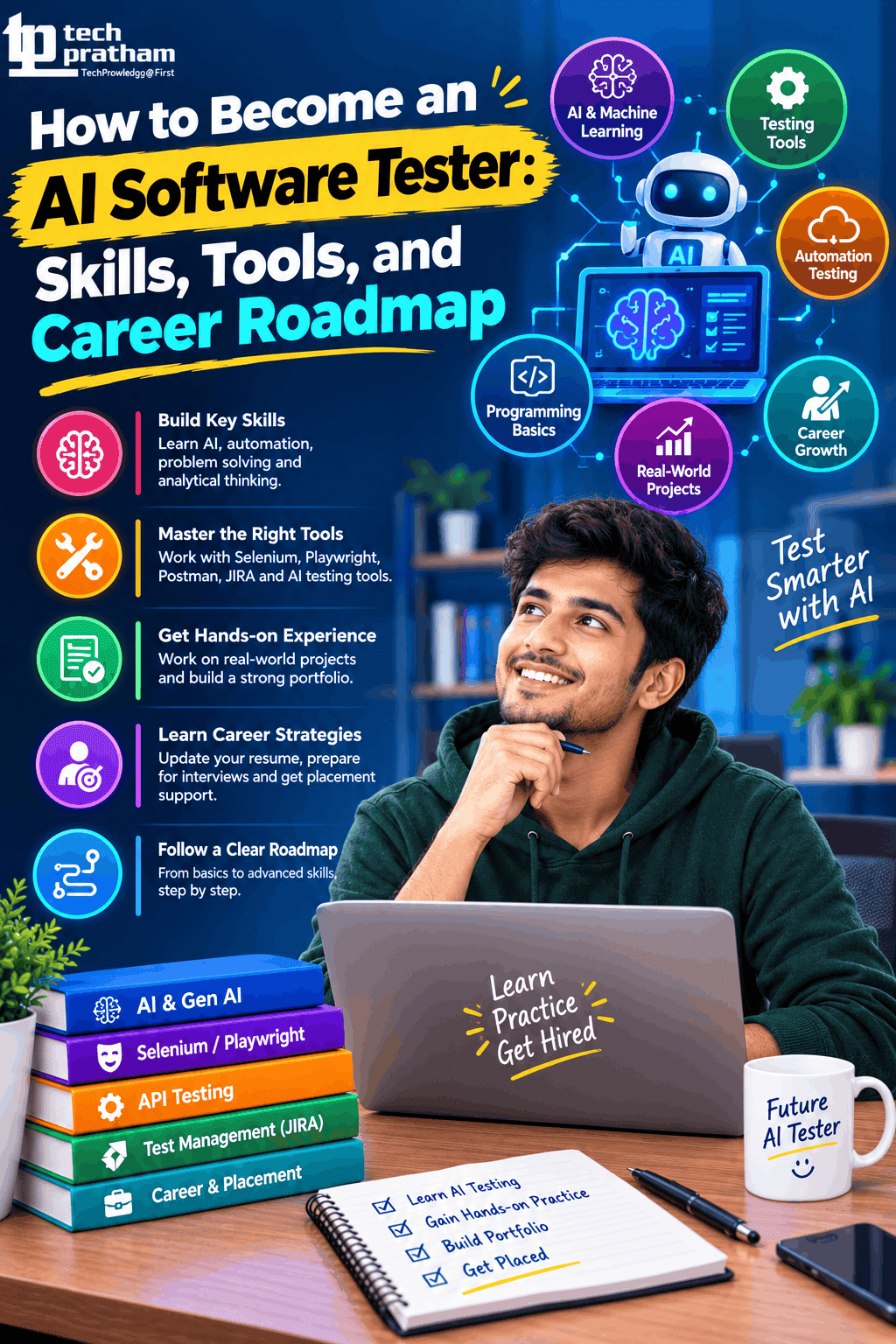
Software Testing Training
How to Become an AI Software Tester: Skills, Tools, and Career Roadmap
Learn how to become an AI software tester with essential skills, testing tools, practical projects, and a step-by-step career roadmap.
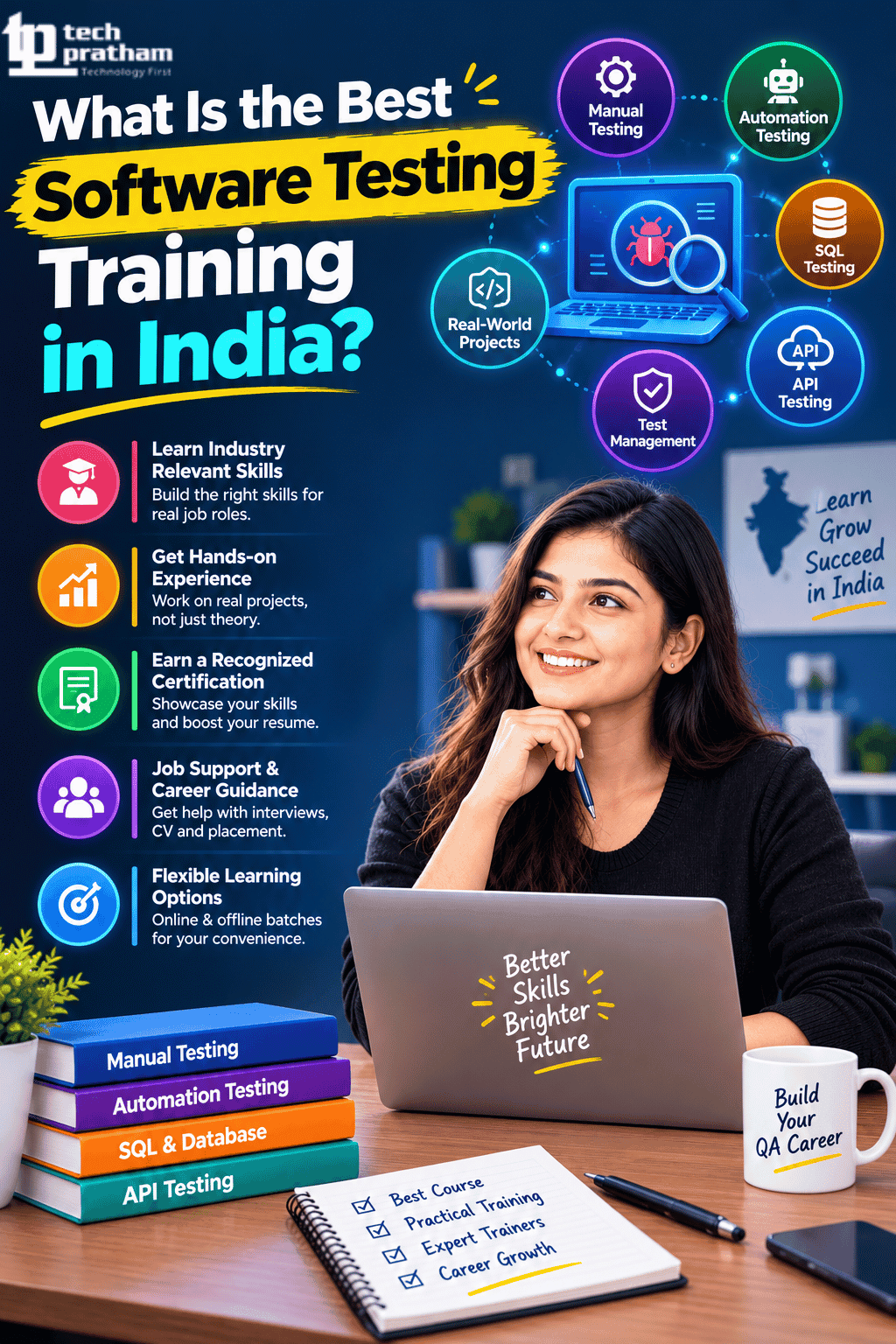
Software Testing Training
What Is the Best Software Testing Training in India?
Explore the best Software Testing Training in India with practical projects, expert guidance, certification, and career support.
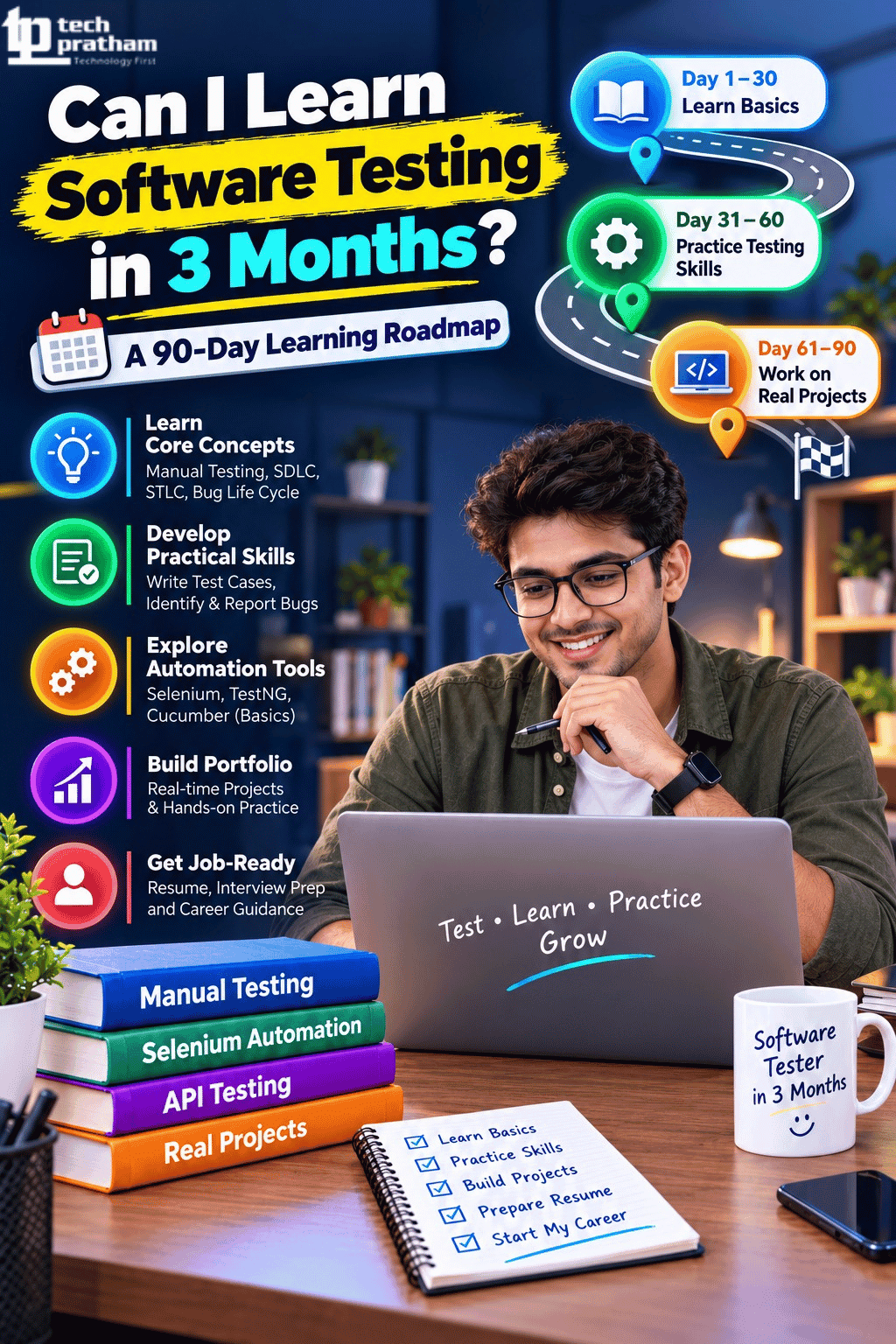
Software Testing Training
Can I Learn Software Testing in 3 Months? A 90-Day Learning Roadmap
Learn software testing in 3 months with a 90-day roadmap covering manual testing, test cases, SQL, API testing and automation tools.





 +91-8882178896
 +1 (343) 477-0926