
Is Software Testing Still a Good Career in 2026?
_11zon (1).webp)
The technology industry is evolving faster than ever, and with the rapid rise of Artificial Intelligence, automation tools, cloud applications, and digital transformation, many students and professionals are asking one important question As businesses continue shifting toward digital platforms, the demand for reliable, secure, and high-performing software applications is increasing rapidly. Modern companies now release software updates more frequently than ever before, making software quality one of the most critical parts of the development process. From banking applications and healthcare systems to e-commerce platforms and cloud-based services, every industry depends heavily on software performance and user experience.
Software Testing Careers Are Still Growing
.webp)
The short answer is — Yes.
Software Testing continues to be one of the most stable, beginner-friendly, and high-demand career paths in the IT industry. While technologies are changing, companies still need skilled professionals who can ensure software quality, user experience, performance, security, and reliability. Modern companies release software updates very frequently. Manual testing alone cannot handle large-scale testing requirements.
- Reduce repetitive testing work
- Improve testing speed
- Detect bugs earlier
- Increase release efficiency
- Save operational costs
- Understanding business requirements
- Performing risk analysis
- Identifying edge-case scenarios
- Validating usability
- Testing real-world workflows
Because of this, companies continue to depend heavily on skilled QA engineers and automation professionals.
Will AI Replace Software Testing Jobs?
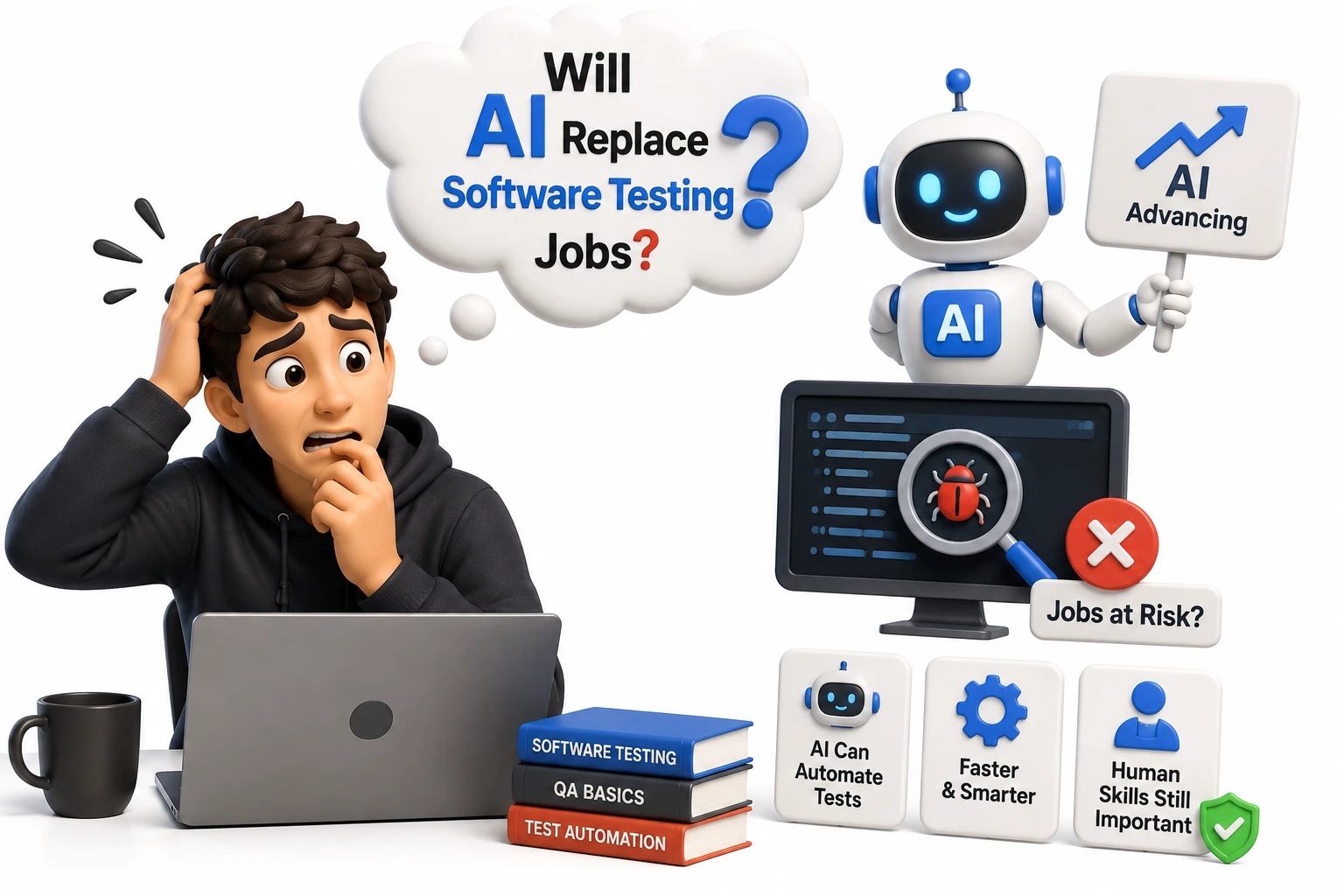
One of the biggest concerns among beginners is whether Artificial Intelligence will replace software testers or the Future of Software Testing is Safe or not because of AI.
AI tools can:
- Generate test cases
- Suggest automation scripts
- Detect repetitive patterns
- Improve test coverage
Companies still need skilled QA professionals who can think critically and identify practical software issues. Instead of replacing testing careers, AI is transforming the role of testers into more advanced and intelligent quality engineering positions.
AI Will Create More Advanced Testing Roles
Instead of removing jobs, AI is creating demand for more skilled and technically advanced testing professionals.
- Modern QA roles are evolving into:
- SDET (Software Development Engineer in Test)
- AI-assisted Automation Engineer
- Quality Engineering Specialist
- DevTestOps Engineer
- Intelligent Test Architect
Professionals who learn both testing fundamentals and AI-assisted automation tools will have stronger career opportunities in the coming years. Companies now prefer testers who can:
- Work with automation frameworks
- Use AI-powered testing platforms
- Analyze testing data intelligently
- Integrate testing into CI/CD pipelines
- Improve software quality using smart testing strategies
Why Software Testing Remains a Strong Career Choice
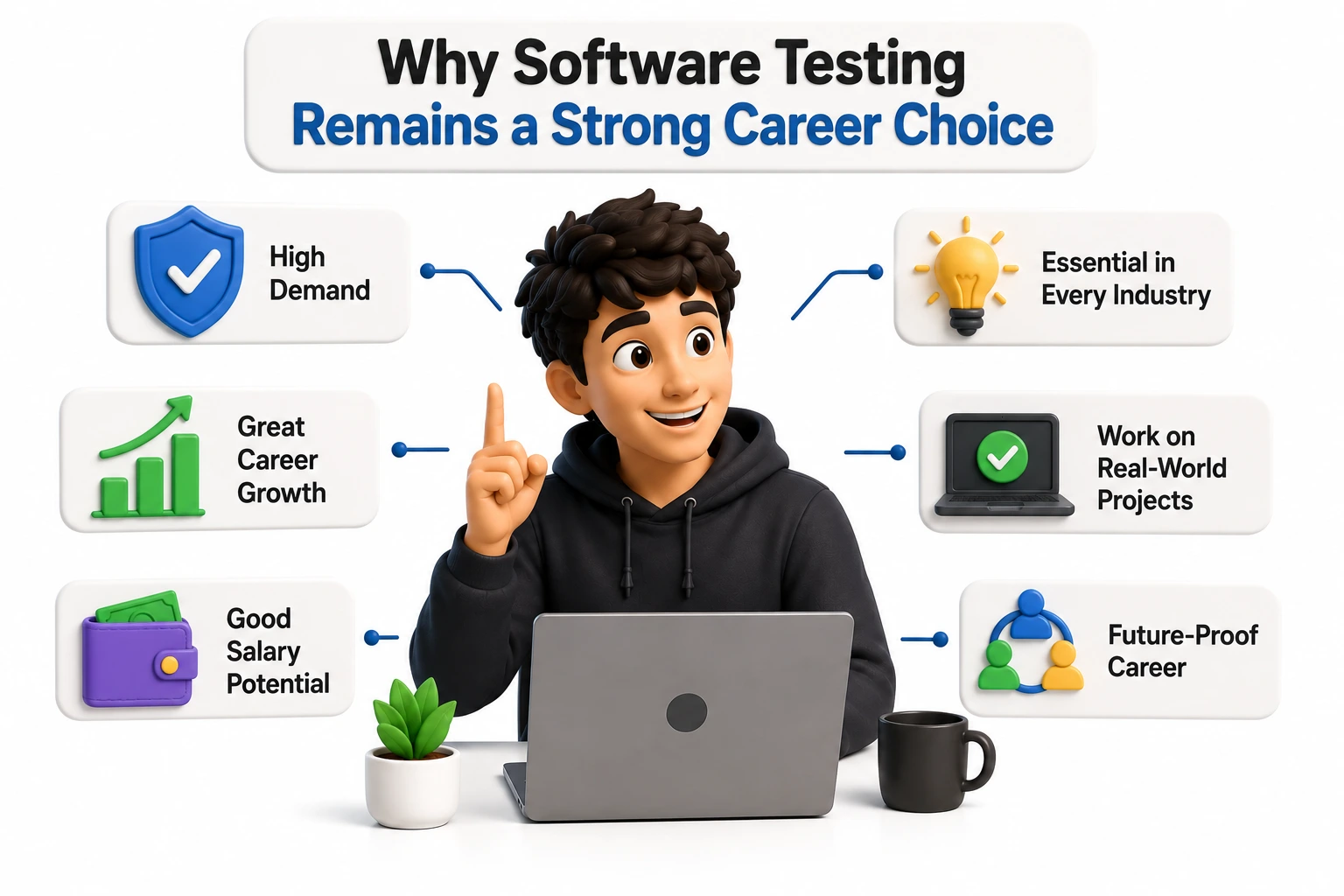
Despite technological advancements, software testing continues to remain one of the most important parts of software development. Every application needs:
- Reliability
- Security
- Performance
- Stability
- User satisfaction
Without proper testing, software failures can lead to financial losses, security risks, and poor customer experiences. As businesses continue digital transformation, the need for skilled testing professionals will continue growing.
How to Start a Career in Software Testing
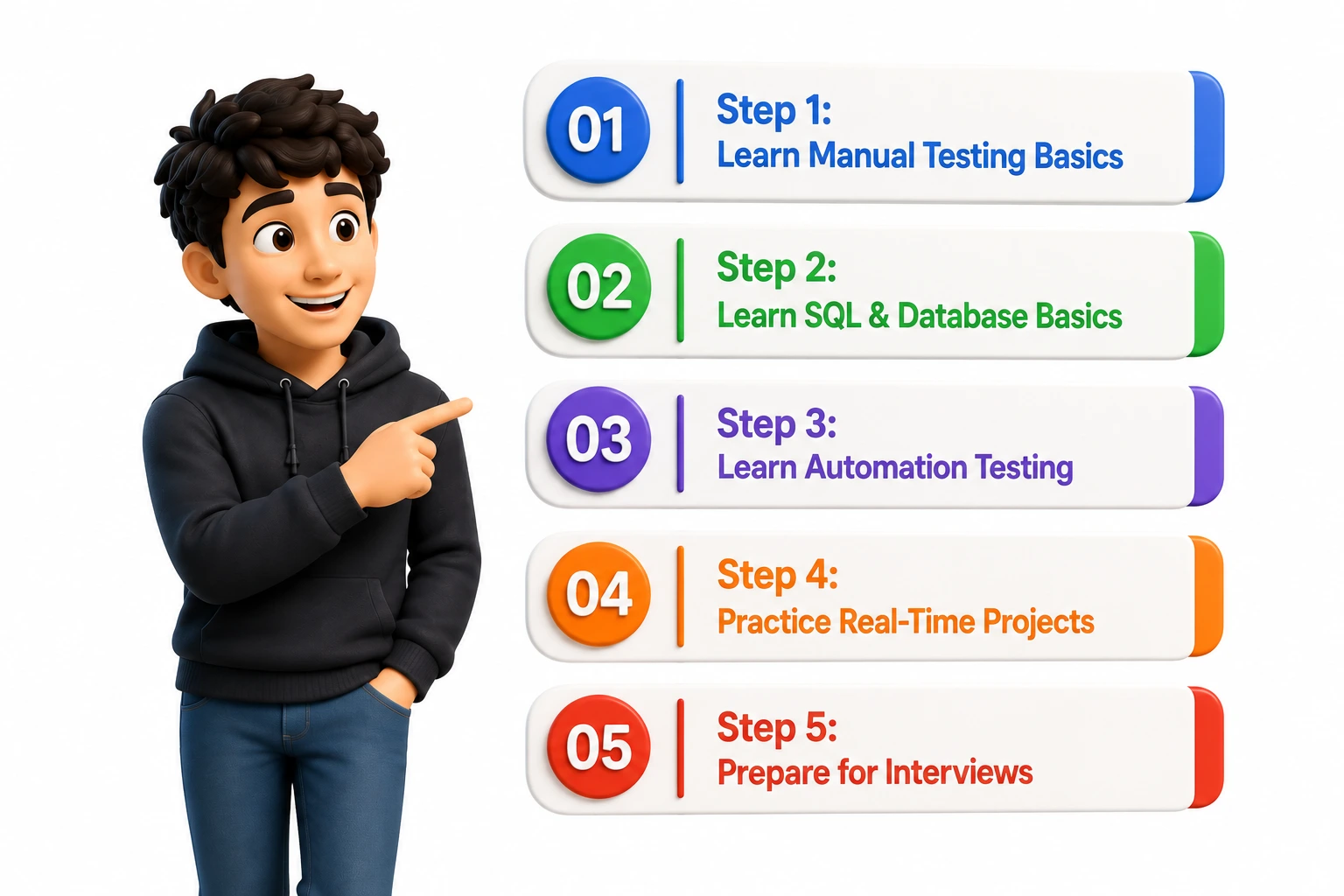
Learn the fundamentals of Manual Testing and build a strong foundation in software quality assurance. This course helps beginners understand testing concepts, SDLC, STLC, bug reporting, test case creation, and real-time testing scenarios used in the IT industry.
- SDLC
- STLC
- Test cases
- Defect lifecycle
Learn SQL and Database Basics to understand how data is stored, managed, and tested in real-world applications. This course covers SQL queries, database concepts, joins, constraints, functions, and data validation techniques essential for software testing and backend validation.
- Queries
- Joins
- Data validation
Learn Automation Testing and master the skills required to automate software testing processes efficiently. This course covers automation frameworks, Selenium basics, test script creation, web element handling, reporting, and real-time project scenarios.
- Selenium
- Playwright
- Java or Python basics
Practice Real-Time Projects and gain hands-on experience with industry-level software testing scenarios. Work on live project environments, execute test cases, report bugs, and understand real-world QA workflows used in companies.
- Live projects
- Bug reporting
- Framework understanding
Prepare for Interviews with expert guidance on software testing interview questions, resume building, mock interviews, and real-time problem-solving techniques.
- Interview questions
- Resume building
- Practical scenarios
Real-World Software Failures Caused by Poor Testing
Software testing is one of the most critical parts of software development because even small defects can create massive business and operational problems. Some of the world’s biggest companies have faced serious failures due to software issues, system bugs, or insufficient testing processes.
Facebook, Instagram & WhatsApp Global Outage
Facebook, Instagram, and WhatsApp experienced one of the biggest global outages when millions of users suddenly lost access to all platforms for several hours. Businesses, advertisers, creators, and users worldwide were affected. This incident highlighted the importance of:
- Infrastructure testing
- Network validation
- Performance testing
- Risk monitoring
- System reliability testing
Even leading technology companies require continuous quality assurance to prevent large-scale service disruptions.
Amazon Website Downtime
- Load testing
- Scalability testing
- Cloud testing
- Performance testing
- Continuous monitoring
Stable software performance is essential for large digital businesses.
Boeing 737 MAX Software Failure
The Boeing 737 MAX software crisis became one of the most serious technology failures in the aviation industry. Software-related issues and insufficient validation processes created major global safety concerns. This situation demonstrated why:
- Safety testing
- System validation
- Real-time software testing
- Risk analysis
- Quality engineering
What These Failures Teach Future QA Professionals
These incidents prove that software testing is not optional — it is essential for business success, customer satisfaction, and operational reliability. As companies continue digital transformation, the demand for skilled professionals in:
Top Business Sectors Using Software Testing
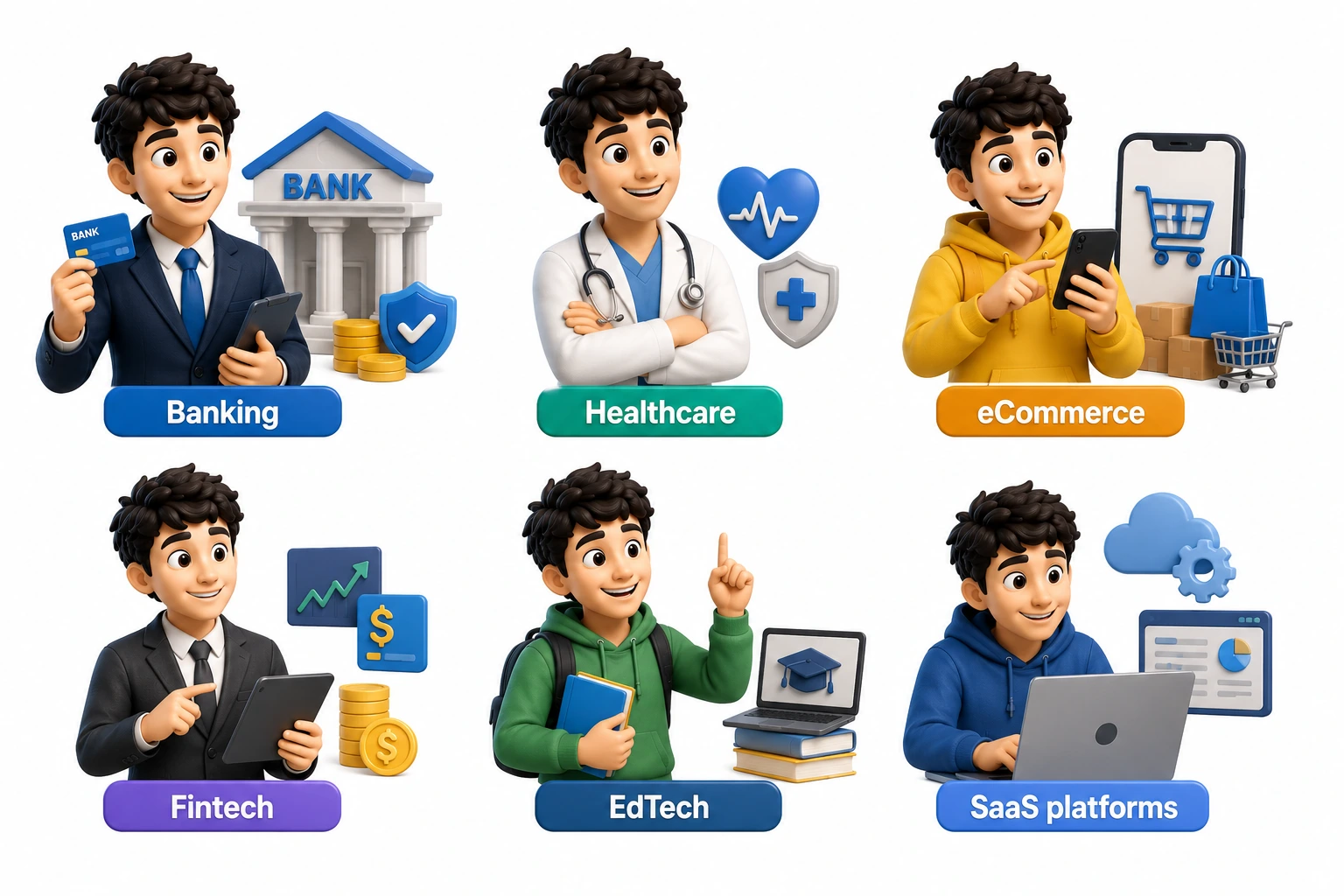
As technology continues to evolve, software applications are becoming more advanced, data-driven, and user-focused. Businesses are rapidly adopting cloud computing, Artificial Intelligence, machine learning, mobile applications, IoT devices, and automation technologies to improve customer experiences and operational efficiency. With this rapid digital transformation, the demand for high-quality, secure, and error-free software has increased significantly across every industry. Companies now rely heavily on software applications for banking, healthcare, e-commerce, education, entertainment, logistics, and communication, making software reliability more important than ever before.
Future of AI and Software Testing
The future of software testing will involve collaboration between AI tools and human testers rather than replacement.
- Work faster
- Improve productivity
- Reduce repetitive tasks
- Increase automation coverage
- Detect risks earlier
Top Certifications for AI-Driven Software Testing Careers
As AI and automation continue transforming the software industry, companies are actively hiring testing professionals with modern QA and intelligent automation skills. Certifications help candidates validate expertise, improve career opportunities, and stay competitive in the evolving IT market.
In-Demand Certifications for Modern Testers
- Selenium Automation Testing Certification
- Playwright Testing Certification
- API Testing Certification
- AI-Powered Testing Certification
- DevOps & CI/CD Testing Certification
- Cloud Testing Certification
- Manual Testing Certification
Professionals who continuously upgrade their skills often gain better job opportunities, higher salaries, and faster career growth.
Final Thought
AI is transforming software testing, but it is not destroying testing careers. In fact, companies now need smarter QA professionals who can use AI tools effectively while still applying human intelligence, creativity, and business understanding. The future belongs to testers who adapt to modern technologies and continuously improve their technical skills. Instead of fearing AI, software testing professionals should learn how to work alongside AI-driven testing solutions to build stronger and more future-proof careers.
Related Articles
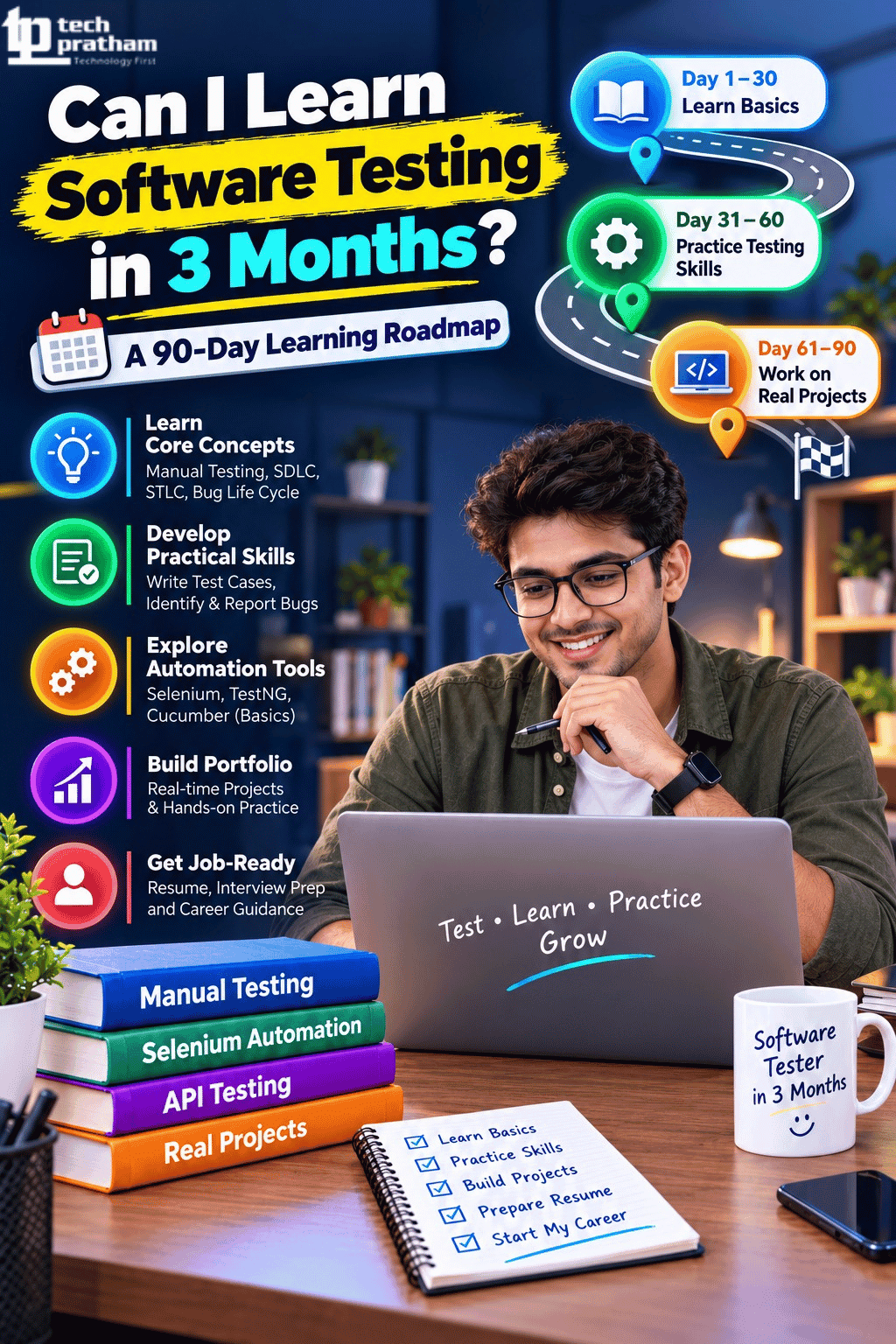
Can I Learn Software Testing in 3 Months? A 90-Day Learning Roadmap
Learn software testing in 3 months with a 90-day roadmap covering manual testing, test cases, SQL, API testing and automation tools.
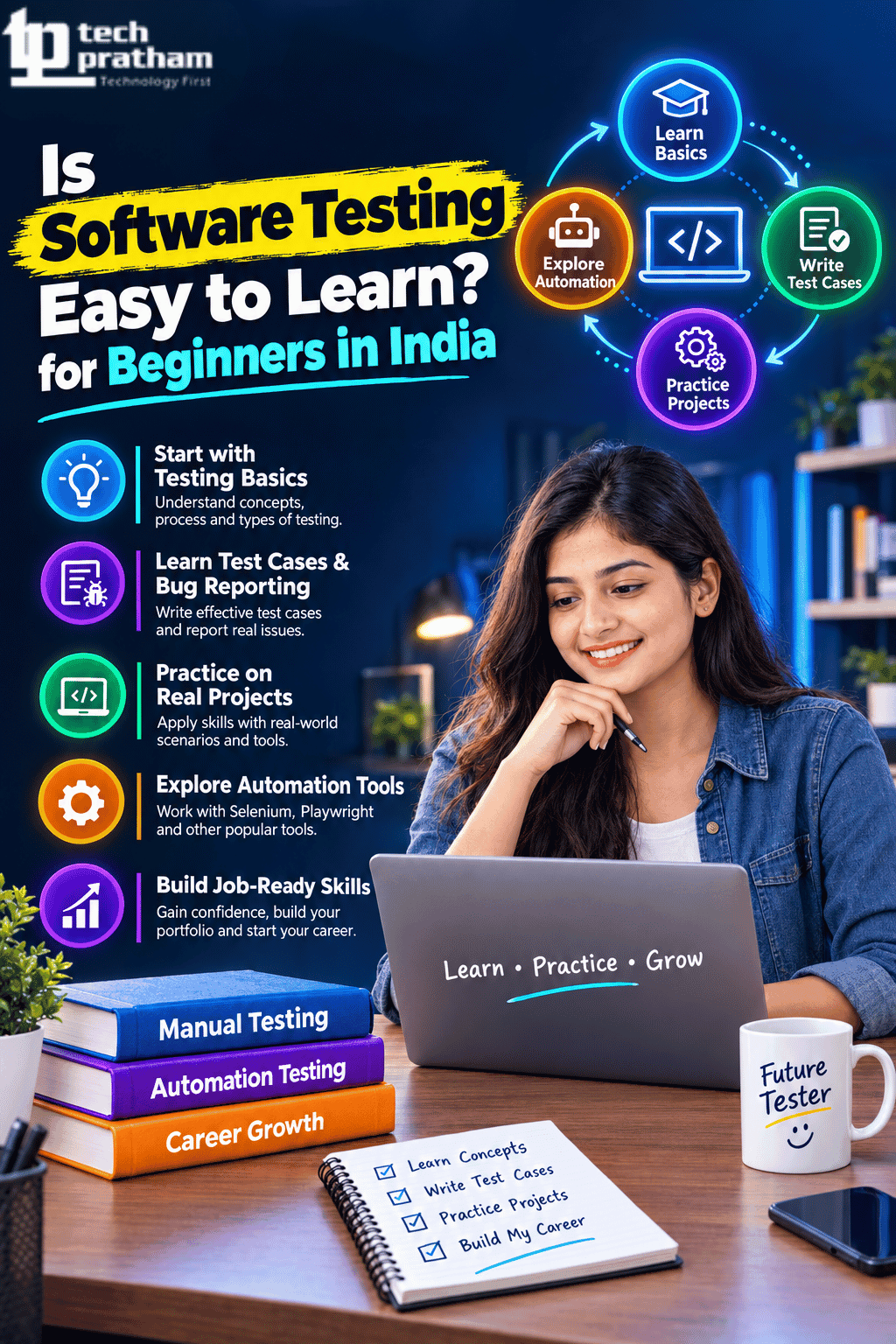
Is Software Testing Easy to Learn for Beginners in India
Learn whether software testing is easy for beginners in India, explore essential skills, course modules and career opportunities.
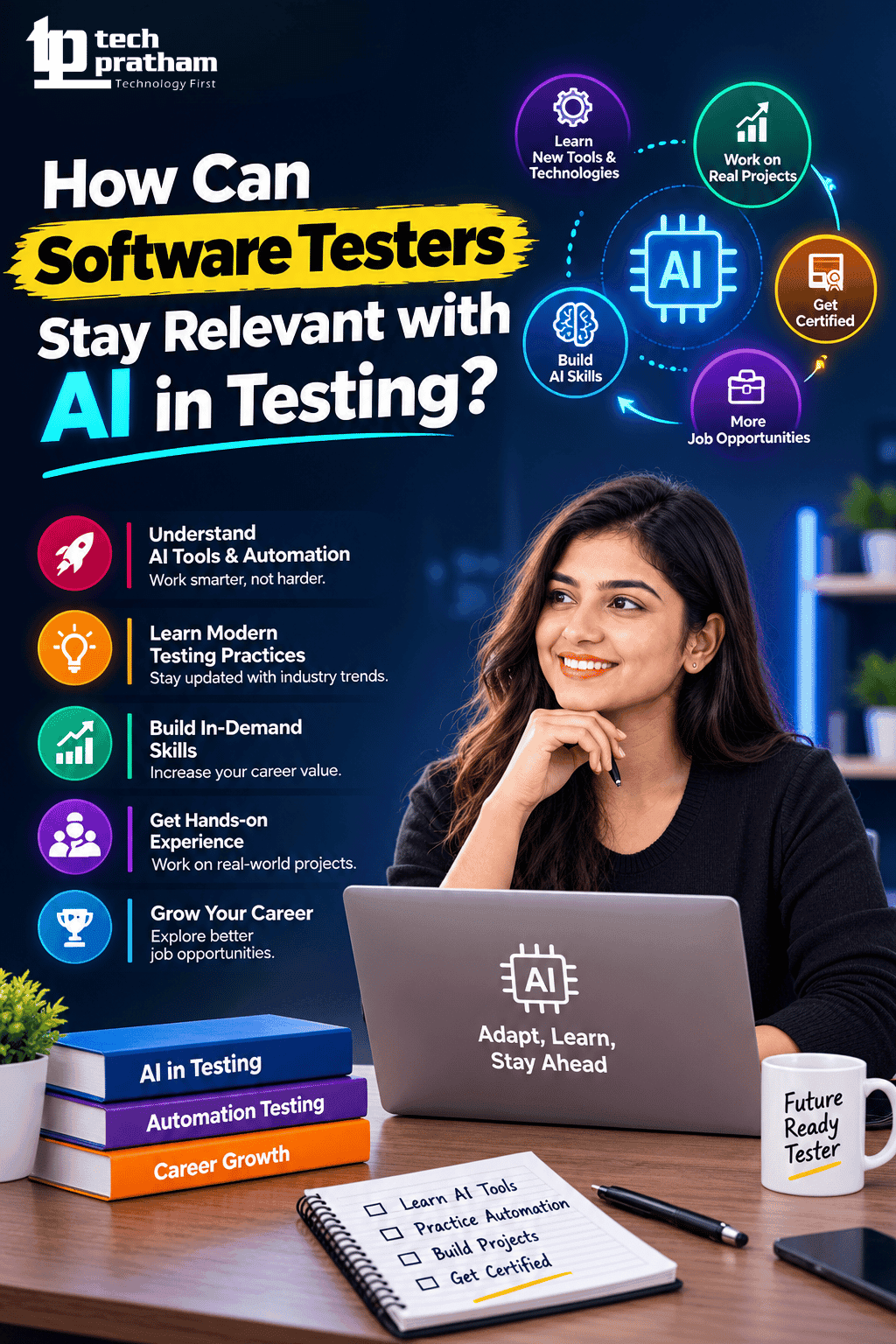
How Can Software Testers Stay Relevant with AI in Testing
Software testers can stay relevant with AI by learning AI tools, automation, prompt skills, data analysis, and modern testing practices.





 +91-8882178896
 +1 (343) 477-0926