


What is Workday Finance & Workday Financial Management? Why Companies Are Switching to It
Table of Contents
Workday Finance, part of the broader Workday platform, is a modern cloud-based financial management solution designed to help organizations streamline their financial operations in real time. Unlike traditional on-premise ERP systems, Workday Financial Management brings together accounting, financial reporting, planning, and analytics into a single unified system. This integration allows businesses to gain better visibility into their financial data, make faster decisions, and improve overall efficiency through automation and intelligent insights. As demand for skilled professionals grows, many individuals are enrolling in Workday Finance online training to build expertise in this powerful platform and enhance their career opportunities.
Workday Financial Management goes beyond basic accounting by offering advanced capabilities such as real-time reporting, continuous auditing, and seamless integration with HR and operational data. As businesses face increasing pressure to adapt to digital transformation, many companies are switching to Workday Finance to replace outdated legacy systems that lack flexibility and scalability. Its cloud-native architecture, user-friendly interface, and ability to support global operations make it a preferred choice for organizations looking to modernize their finance functions and stay competitive in a rapidly evolving business environment.
What is Workday Finance?
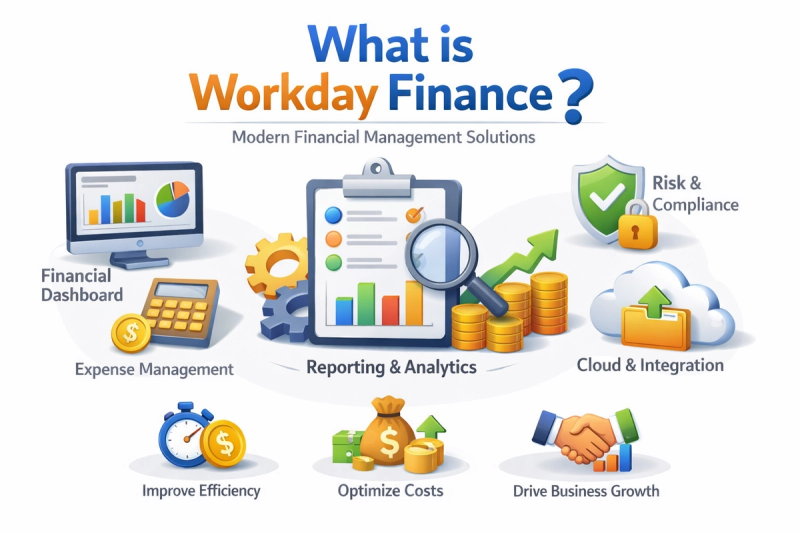
Workday Finance is a cloud-based financial management solution developed by Workday that helps organizations manage their core financial processes in a unified and efficient way. It combines accounting, financial reporting, planning, and analytics into a single system, allowing businesses to access real-time financial data and insights. Unlike traditional on-premise ERP systems, Workday Finance is built on a modern cloud architecture, which enables seamless updates, better scalability, and easier integration with other business functions like human resources and payroll.
One of the key advantages of Workday Finance is its ability to provide real-time visibility into financial performance, helping organizations make faster and more informed decisions. It automates routine financial tasks such as transaction processing, reporting, and compliance, reducing manual effort and errors. With features like continuous accounting, built-in analytics, and a user-friendly interface, Workday Finance supports organizations in improving efficiency, maintaining accuracy, and adapting quickly to changing business needs in today’s digital and data-driven environment.
What is Workday Financial Management?
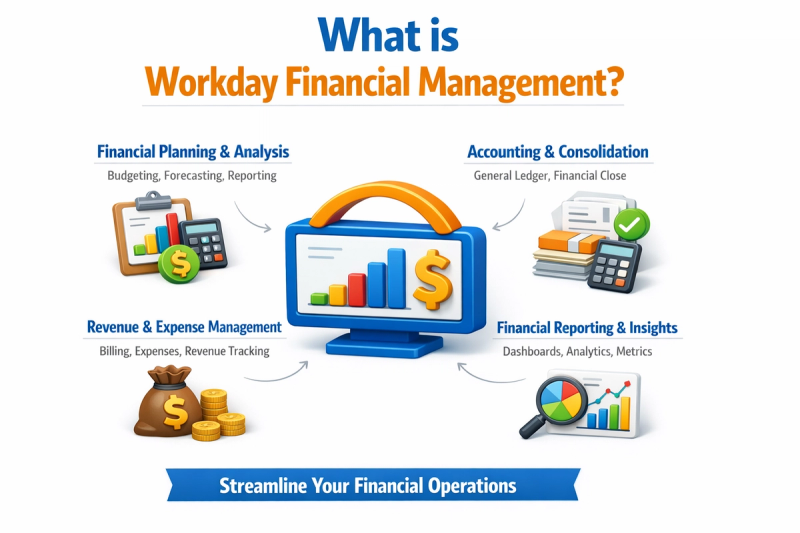
Workday Financial Management is a comprehensive cloud-based solution offered by Workday that helps organizations manage, track, and optimize their financial operations in real time. It serves as the core component of Workday Finance, bringing together key financial functions such as general ledger, accounts payable, accounts receivable, asset management, and expense tracking into a single unified platform. By using a centralized data model, Workday Financial Management ensures that all financial information is accurate, consistent, and easily accessible across the organization.
What sets Workday Financial Management apart is its ability to deliver real-time insights and continuous accounting capabilities, enabling businesses to close their books faster and make data-driven decisions with confidence. The system also supports automation, compliance, and global financial operations, making it suitable for organizations of all sizes. With its intuitive interface and seamless integration with other Workday modules like HR and planning, it empowers finance teams to move beyond traditional accounting and focus on strategic growth and business performance.
Key Features of Workday Financial Management
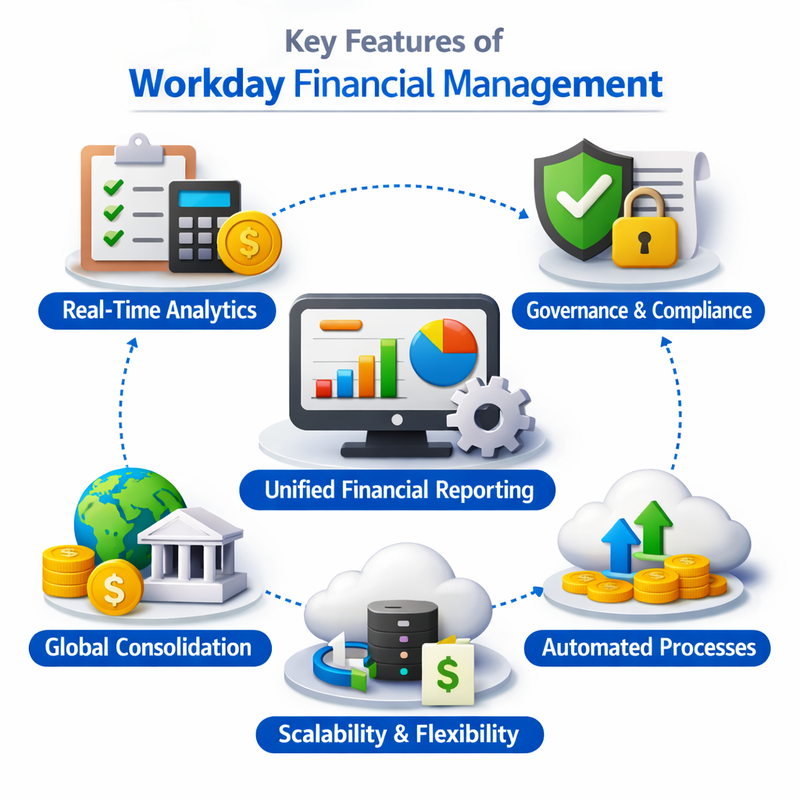
Workday Financial Management, developed by Workday, offers a range of powerful features designed to modernize and simplify financial operations. One of its most important features is real-time financial reporting and analytics, which allows organizations to access up-to-date financial data at any time. This eliminates delays associated with traditional reporting systems and enables faster, more informed decision-making. The platform also uses a unified data model, ensuring that all financial and operational data is consistent, accurate, and easily accessible across departments.
Another key feature is its cloud-based architecture, which provides flexibility, scalability, and automatic updates without the need for manual system maintenance. Workday Financial Management also includes automation capabilities, such as continuous accounting and automated transaction processing, which reduce manual work and minimize errors. Additionally, it offers built-in compliance and audit features, helping organizations meet regulatory requirements while maintaining transparency and control over financial data.
The system also stands out for its user-friendly interface and seamless integration capabilities. It integrates smoothly with other Workday modules like Human Capital Management (HCM) and planning tools, enabling a holistic view of business operations. Features like multi-currency support, global consolidation, and expense management make it ideal for organizations operating across multiple regions. Overall, Workday Financial Management combines innovation, efficiency, and ease of use to help businesses streamline financial processes and drive strategic growth, which is why enrolling in a Workday course in Bangalore is a popular choice for professionals looking to build expertise in this field.
Benefits of Workday Finance for Businesses
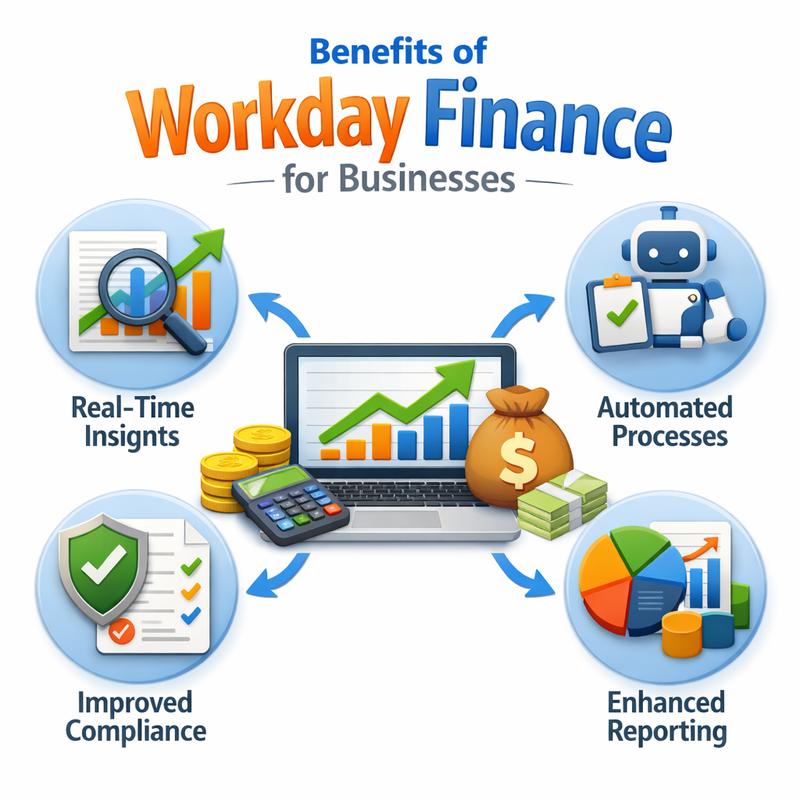
Workday Finance, offered by Workday, provides significant advantages for businesses looking to modernize their financial operations. One of the primary benefits is real-time visibility into financial data, which enables organizations to make faster and more informed decisions. By eliminating data silos and integrating financial processes into a single system, Workday Finance improves accuracy and reduces the risk of errors. This streamlined approach allows finance teams to focus more on strategic planning rather than manual data handling. As a result, many professionals are choosing to enroll in a Workday finance course to better understand these capabilities and enhance their expertise in modern financial systems.
Another major benefit is its scalability and flexibility, making it suitable for both growing businesses and large enterprises. As a cloud-based solution, Workday Finance reduces the need for costly infrastructure and ongoing system maintenance. It also supports automation of routine tasks such as reporting, compliance, and transaction processing, which improves efficiency and reduces operational costs. Overall, Workday Finance empowers organizations to stay agile, improve performance, and adapt quickly to changing business environments, which is why enrolling in a Workday course in Chennai has become a popular option for individuals aiming to build a strong career in this field.Improved accuracy with a unified data model
- Automation of routine financial processes
- Reduced operational and IT costs
- Scalable solution for growing businesses
- Enhanced compliance and audit capabilities
- Seamless integration with HR and other business functions
- User-friendly interface for better productivity
- Faster financial close and reporting cycles
- Better decision-making with data-driven insights
Why Companies Are Switching to Workday Finance
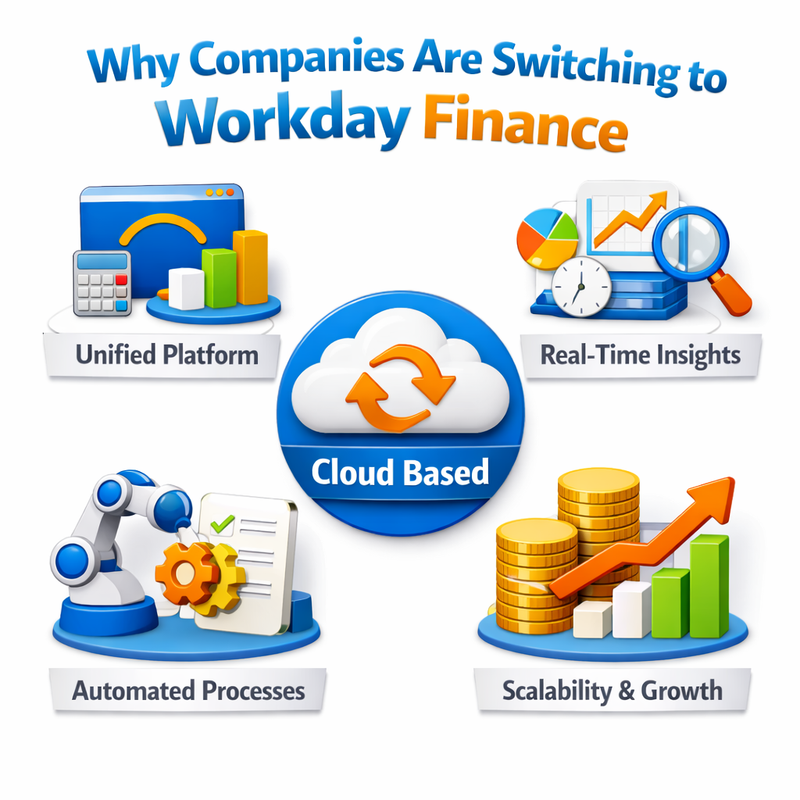
Companies are increasingly switching to Workday Finance, developed by Workday, because it offers a modern, cloud-based alternative to traditional financial systems. Legacy ERP solutions often rely on outdated infrastructure, require manual updates, and lack flexibility, making them difficult to manage and scale. In contrast, Workday Finance operates entirely in the cloud, allowing organizations to reduce IT complexity, lower maintenance costs, and benefit from automatic updates. This shift enables businesses to focus more on strategic initiatives rather than spending time on system management.
Another key reason for this transition is the growing demand for real-time financial insights and faster decision-making. Workday Finance provides a unified platform where financial data is continuously updated, giving leaders instant visibility into business performance. This eliminates delays caused by disconnected systems and manual reporting processes. With built-in analytics and automation, companies can streamline financial operations, reduce errors, and improve overall efficiency, which is essential in today’s fast-moving business environment.
Additionally, organizations are choosing Workday Finance for its scalability, flexibility, and innovation. As businesses expand, they need systems that can easily adapt to changing requirements, new markets, and increasing transaction volumes. Workday Finance supports global operations with features like multi-currency handling, compliance management, and configurable workflows. Its ability to integrate seamlessly with other business functions and continuously evolve with new technologies makes it a preferred choice for companies aiming to stay competitive and future-ready.
Workday vs Traditional ERP Systems
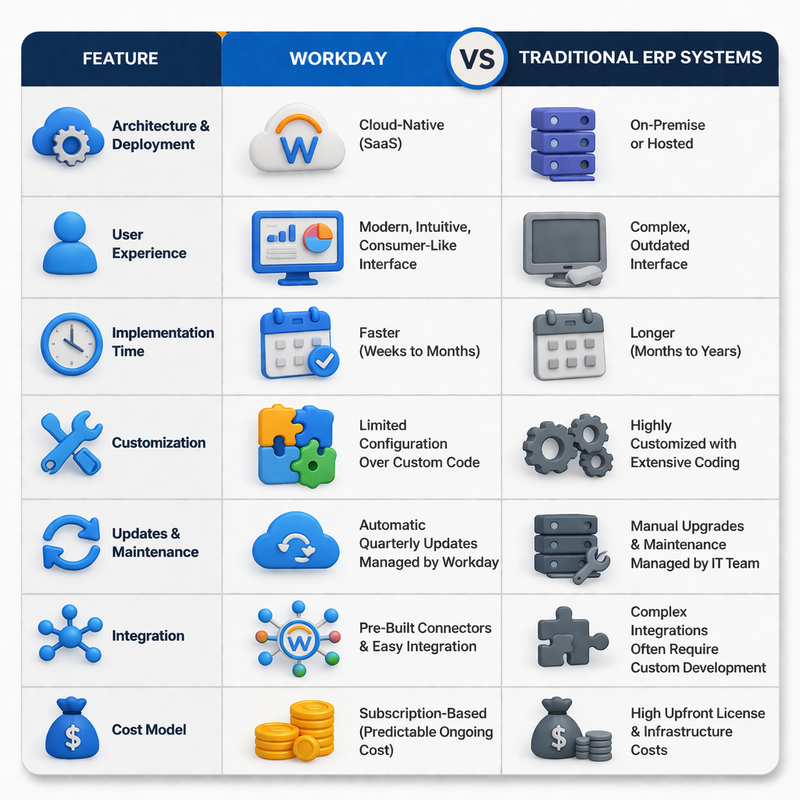
Workday, developed by Workday, represents a modern approach to enterprise resource planning compared to traditional ERP systems. Traditional ERP solutions are typically on-premise, requiring significant infrastructure, manual upgrades, and ongoing maintenance. These systems often operate in silos, making it difficult to access real-time data across departments. In contrast, Workday is built on a cloud-native architecture, offering a unified platform where financial, human resources, and operational data are seamlessly connected, enabling better visibility and collaboration.
One of the key differences between Workday and traditional ERP systems lies in usability and real-time capabilities. Traditional systems often rely on batch processing, which can delay reporting and decision-making. Workday, however, provides real-time data access and continuous updates, allowing organizations to make faster and more informed decisions. Its intuitive and user-friendly interface also improves adoption among employees, reducing the need for extensive training and increasing overall productivity.
Another important distinction is scalability and innovation. Traditional ERP systems can be rigid and costly to scale, often requiring major upgrades or system overhauls as a business grows. Workday, being cloud-based, offers greater flexibility and can easily adapt to changing business needs without significant disruption. Additionally, Workday continuously delivers new features, including automation, analytics, and AI-driven insights, helping organizations stay competitive and future-ready, while traditional systems struggle to keep pace with rapid technological advancements.
Challenges in Implementing Workday Finance
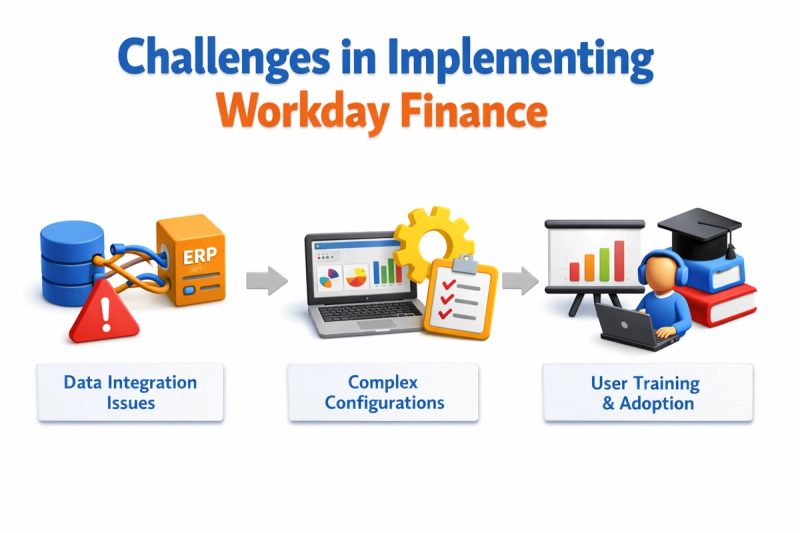
Implementing Workday Finance, offered by Workday, can bring significant benefits, but it also comes with certain challenges that organizations must carefully manage. One of the primary challenges is the complexity of initial implementation, which involves configuring the system to align with existing business processes. Since Workday operates differently from traditional ERP systems, organizations often need to redesign workflows, migrate large volumes of financial data, and ensure proper system integration. This process can be time-consuming and requires careful planning and expertise.
Another major challenge is change management and user adoption. Employees who are accustomed to legacy systems may find it difficult to adapt to a new cloud-based platform. Training staff, redefining roles, and ensuring that teams are comfortable with the new system can require significant effort and resources. Without proper training and communication, resistance to change can impact productivity and delay the successful adoption of Workday Finance across the organization.
Additionally, organizations may face challenges related to cost, customization, and integration. While Workday reduces long-term IT costs, the initial investment for implementation, consulting, and training can be high. Moreover, Workday follows a standardized approach, which may limit deep customization compared to some traditional systems. Integrating Workday with existing third-party applications or legacy tools can also require technical expertise. Despite these challenges, with the right strategy and support, businesses can successfully implement Workday Finance and achieve long-term value.
Workday Finance Tool
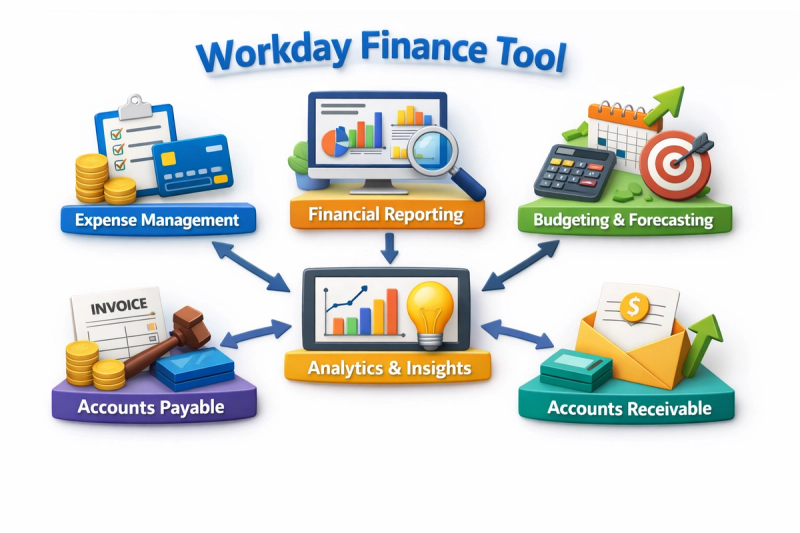
Workday Finance is a powerful cloud-based financial management tool developed by Workday that helps organizations streamline and manage their financial operations in a unified system. It combines key financial processes such as accounting, budgeting, reporting, and analytics into a single platform, eliminating the need for multiple disconnected systems. With its real-time data capabilities, businesses can gain instant insights into their financial performance, enabling faster and more accurate decision-making.
One of the standout aspects of the Workday Finance tool is its ability to automate routine financial tasks and provide a user-friendly experience. Features like continuous accounting, automated workflows, and built-in compliance controls help reduce manual effort and improve efficiency. Additionally, its cloud-based architecture ensures scalability, security, and seamless updates, making it ideal for organizations of all sizes. By integrating finance with other business functions such as HR and planning, Workday Finance empowers companies to operate more strategically and stay competitive in a rapidly evolving digital landscape.
conclusion
In conclusion, Workday Finance, developed by Workday, represents a significant shift from traditional financial systems to a more modern, cloud-based approach. By integrating core financial processes into a unified platform, it enables organizations to gain real-time visibility, improve accuracy, and make faster, data-driven decisions. Its automation capabilities and user-friendly design help reduce manual effort, allowing finance teams to focus more on strategic initiatives rather than routine tasks.
While the implementation of Workday Finance may come with challenges such as system complexity, cost, and change management, the long-term benefits far outweigh these hurdles. Organizations that successfully adopt this solution can achieve greater efficiency, scalability, and adaptability in an increasingly digital business environment. Overall, Workday Finance empowers businesses to modernize their financial operations, enhance performance, and remain competitive in a rapidly evolving market.