
Workday and the Rise of Intelligent Enterprises: Leveraging Data, AI, and Cloud
Table of Contents
The future of business isn’t just digital—it’s intelligent. In a world where decisions must be made in milliseconds and data grows exponentially, organizations can no longer rely on static reports or fragmented systems. Instead, they are evolving into intelligent enterprises that leverage real-time data, artificial intelligence, and cloud technology to predict outcomes, automate processes, and continuously adapt to change. This shift marks a fundamental transformation in how businesses operate, moving from reactive decision-making to proactive and even autonomous strategies.
At the center of this transformation is Workday, a platform designed to unify data, embed AI into core business functions, and deliver continuous innovation through the cloud. By integrating human capital management, financial systems, and advanced analytics into a single ecosystem, Workday enables organizations to turn raw data into actionable intelligence. As enterprises strive to become more agile, efficient, and insight-driven, Workday plays a critical role in helping them harness the full potential of data, AI, and cloud to build a smarter, future-ready organization.
The Shift from Digital Transformation to Intelligent Transformation
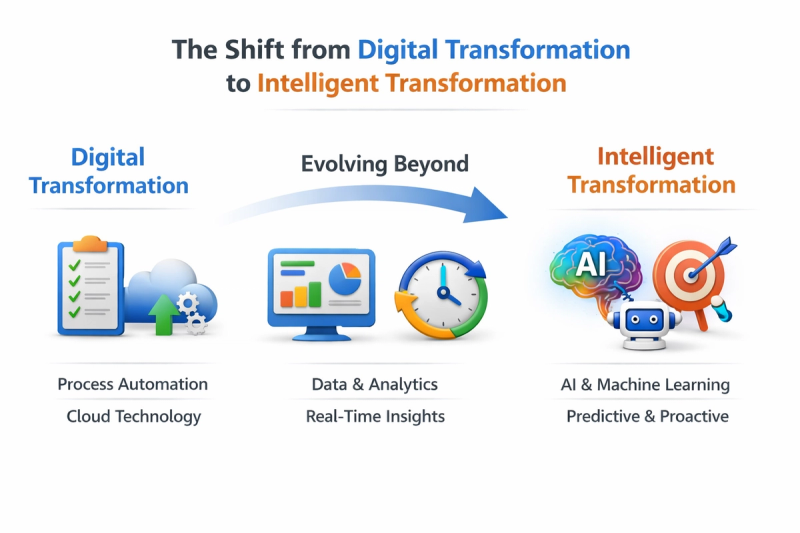
The journey of modern enterprises has evolved beyond simple digitization into what is now known as intelligent transformation. Initially, organizations focused on converting manual and paper-based processes into digital formats—this was the first step toward efficiency. As competition increased, businesses embraced digital transformation by adopting cloud systems, automation tools, and integrated platforms to streamline operations. However, while digital transformation improved speed and accessibility, it often remained limited to process optimization rather than true decision intelligence. This growing demand for smarter systems is also driving interest in specialized skills, such as Workday HCM training in Bangalore, where professionals learn to navigate modern cloud-based enterprise solutions.
Intelligent transformation takes this evolution a step further by embedding artificial intelligence, real-time analytics, and machine learning directly into business operations. Instead of just digitizing workflows, organizations now aim to create systems that can learn from data, identify patterns, and provide predictive and prescriptive insights. Platforms like Workday enable this shift by unifying data across functions and applying AI to generate actionable recommendations. This allows businesses to move from reactive decision-making—based on past reports—to proactive strategies driven by real-time intelligence.
What truly differentiates intelligent transformation is its continuous and adaptive nature. Unlike digital transformation, which is often treated as a one-time initiative, intelligent transformation is an ongoing capability that evolves with new data and changing business conditions. It empowers organizations to not only respond to change but anticipate it—whether it’s forecasting workforce needs, identifying financial risks, or optimizing operations automatically. In this new paradigm, success is defined not just by being digital, but by being data-driven, AI-enabled, and capable of making smarter decisions at every level of the enterprise.
Unified Data Architecture: The Core Advantage of Workday
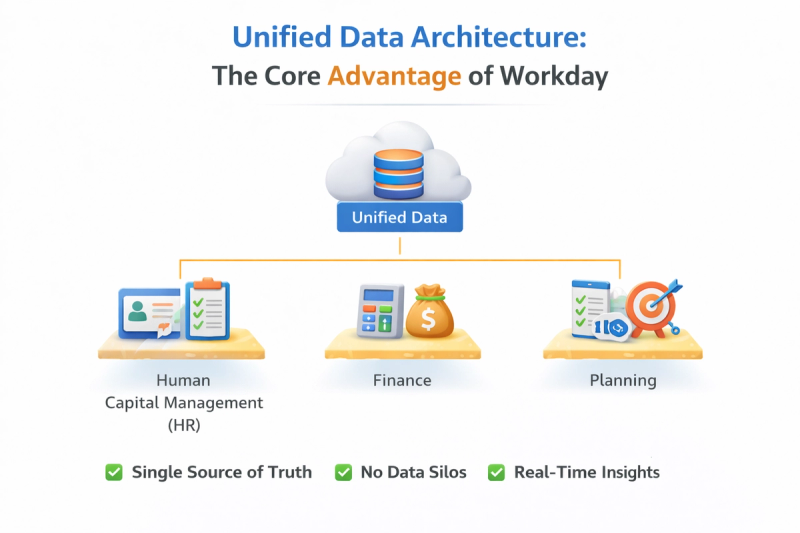
A unified data architecture is one of the most powerful enablers of an intelligent enterprise, and it lies at the heart of Workday. Unlike traditional ERP systems that rely on multiple disconnected databases, Workday is built on a single, unified data model where all information—HR, finance, and planning—resides in one place. This eliminates data silos and ensures that every department operates from the same consistent and up-to-date information. As a result, organizations gain a “single source of truth,” which is critical for accurate reporting, compliance, and decision-making. This is why professionals looking to master such modern systems often explore a Workday online course in Chennai to build expertise aligned with industry demands.
This architecture significantly improves data integrity and accessibility. In legacy systems, data often needs to be extracted, transformed, and loaded across multiple platforms, increasing the risk of errors, delays, and inconsistencies. Workday removes this complexity by allowing real-time data updates across all modules, meaning that any change made in one area is instantly reflected everywhere else. This not only enhances operational efficiency but also empowers business leaders with live insights, enabling faster and more confident decisions without waiting for batch reports or manual reconciliation.
Moreover, unified data architecture plays a crucial role in enabling advanced analytics and artificial intelligence. AI systems depend heavily on high-quality, consistent data to generate reliable predictions and recommendations. By maintaining clean, structured, and interconnected data, Workday creates a strong foundation for machine learning and predictive analytics. This allows organizations to move beyond basic reporting and leverage deeper insights—such as forecasting workforce trends, detecting financial anomalies, or optimizing business processes—ultimately transforming data into a strategic asset rather than just a byproduct of operations.Real-Time Analytics vs Traditional Reporting
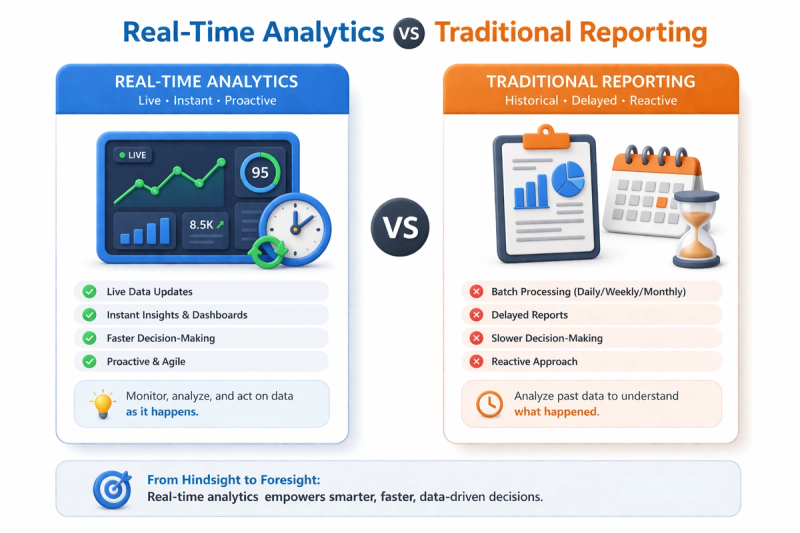
Traditional reporting has long been the backbone of enterprise decision-making, but it is inherently limited by its reliance on historical, batch-processed data. In most legacy systems, reports are generated at fixed intervals—daily, weekly, or monthly—meaning decisions are often based on outdated information. This delay creates a gap between what is happening in the business and what leaders can actually see, leading to slower responses, missed opportunities, and reactive strategies. While traditional reporting provides structured insights, it lacks the speed and agility required in today’s fast-changing business environment.
Real-time analytics addresses these limitations by enabling organizations to access and analyze data as it is generated. Instead of waiting for scheduled reports, decision-makers can monitor live dashboards, track key performance indicators instantly, and respond to changes as they occur. Platforms like Workday make this possible by leveraging a unified data model and in-memory processing, ensuring that data is always current and readily available. This allows businesses to detect trends early, identify anomalies in real time, and make proactive decisions that improve operational efficiency and competitiveness.
The shift from traditional reporting to real-time analytics fundamentally transforms how organizations operate. It reduces decision latency—the time between an event and the action taken—enabling a more agile and responsive business model. For example, HR teams can immediately identify workforce changes, while finance teams can monitor cash flow and risks continuously rather than retrospectively. Ultimately, real-time analytics empowers enterprises to move beyond hindsight and insight toward foresight, where decisions are driven by live data and predictive intelligence rather than past performance alone.
Predictive and Prescriptive Intelligence in Workday
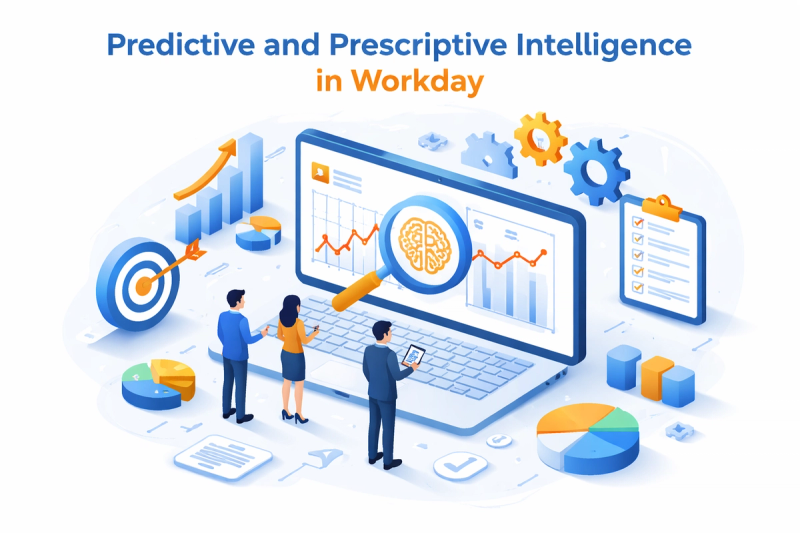
Predictive and prescriptive intelligence represent the next evolution of data-driven decision-making within modern enterprises. Predictive intelligence focuses on analyzing historical and real-time data to forecast what is likely to happen in the future, while prescriptive intelligence goes a step further by recommending the best course of action based on those predictions. Within platforms like Workday, these capabilities are deeply embedded into core business processes, enabling organizations to move beyond static reporting and toward forward-looking, strategic planning.
In practical terms, predictive intelligence in Workday allows organizations to anticipate trends such as employee attrition, hiring needs, financial performance, and operational risks. By leveraging machine learning models trained on large datasets, Workday can identify patterns that may not be visible through traditional analysis. Prescriptive intelligence builds on this by suggesting actionable steps—for example, recommending retention strategies for at-risk employees, optimizing workforce allocation, or adjusting financial plans based on projected outcomes. This combination of prediction and recommendation helps businesses not only understand what might happen but also how to respond effectively.
The true value of predictive and prescriptive intelligence lies in its ability to transform decision-making from reactive to proactive and even automated. Instead of waiting for issues to arise, organizations can address them in advance with data-backed strategies. Over time, this leads to improved efficiency, reduced risk, and better alignment between business goals and operational execution. By integrating these intelligent capabilities directly into its cloud platform, Workday empowers enterprises to continuously learn from their data and make smarter, faster decisions that drive long-term success.
Data-to-Decision Pipeline: How Workday Creates Intelligent Workflows
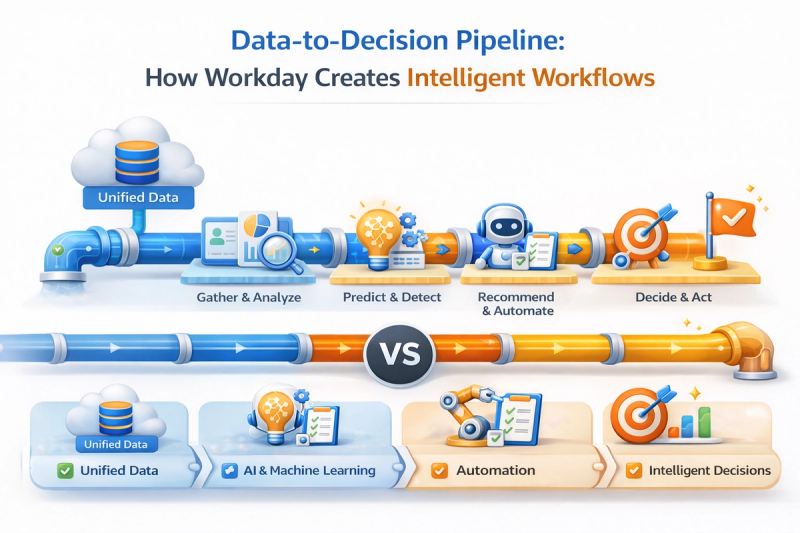
The data-to-decision pipeline is a critical concept in intelligent enterprises, representing the seamless flow of information from raw data collection to actionable business decisions. In traditional systems, this pipeline is often fragmented—data is gathered in one system, processed in another, and analyzed separately, leading to delays and inefficiencies. In contrast, Workday integrates this entire pipeline within a unified platform, ensuring that data moves continuously and securely from input to insight without unnecessary handoffs or manual intervention.
Within Workday, this pipeline begins with real-time data capture across core functions such as HR, finance, and operations. This data is immediately processed and analyzed using built-in analytics and machine learning models, transforming raw information into meaningful insights. These insights are then embedded directly into workflows, enabling the system to trigger actions automatically or provide intelligent recommendations to users. For example, a change in workforce data can instantly generate alerts, update forecasts, and initiate approval processes—all within the same system.
What makes this approach powerful is its ability to turn passive data into active intelligence. Instead of simply presenting information for review, Workday enables decision-making to happen within the flow of work, reducing delays and improving accuracy. This creates a closed-loop system where every action generates new data, continuously refining future insights and decisions. As a result, organizations can operate with greater agility, respond to changes faster, and build truly intelligent workflows that align data, analytics, and execution in real time.
Workforce Intelligence: Redefining HR with AI
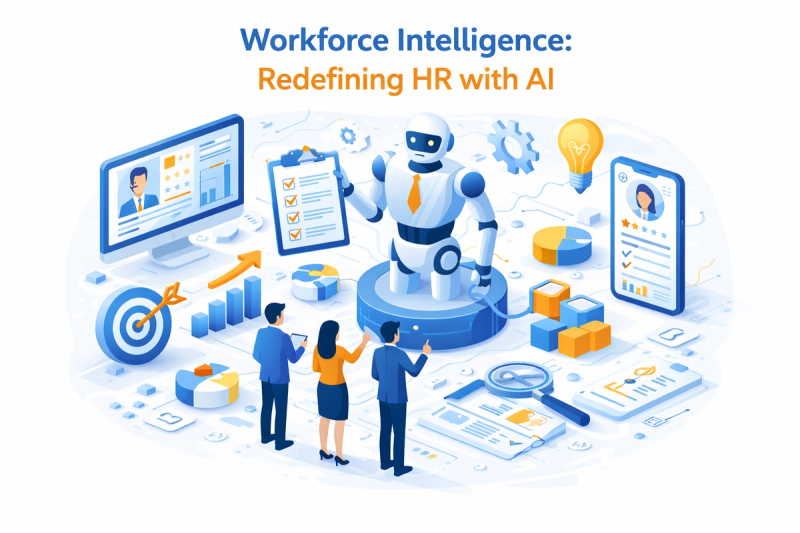
Workforce intelligence is transforming the role of HR from an administrative function into a strategic driver of business value. Traditionally, HR relied on historical data and manual processes to manage hiring, performance, and employee engagement. However, with the integration of artificial intelligence, platforms like Workday enable organizations to analyze workforce data in real time and uncover deeper insights about employee behavior, skills, and productivity. This shift allows HR teams to move beyond basic management and focus on optimizing talent to meet evolving business needs.
AI-powered workforce intelligence provides organizations with the ability to predict and respond to key workforce trends. For example, machine learning models can identify employees who may be at risk of leaving, recommend personalized learning and development paths, and match candidates to roles based on skills rather than just experience. These insights help organizations make more informed decisions about recruitment, retention, and workforce planning. Instead of reacting to problems after they occur, HR leaders can proactively address challenges and align talent strategies with long-term organizational goals.
Moreover, workforce intelligence enhances the overall employee experience by making it more personalized and data-driven. Employees benefit from tailored career recommendations, skill development opportunities, and transparent performance insights, all delivered through intelligent systems. This not only improves engagement and satisfaction but also drives productivity and innovation across the organization. By leveraging AI to understand and support employees at every stage of their journey, Workday helps redefine HR as a forward-looking, insight-driven function that plays a critical role in building a resilient and future-ready workforce.
Conclusion
In conclusion, the evolution toward intelligent enterprises marks a significant shift in how organizations operate, compete, and grow in a data-driven world. As highlighted throughout, businesses are moving beyond traditional digital transformation into a more advanced phase where real-time data, artificial intelligence, and cloud technologies work together to enable faster, smarter, and more proactive decision-making. This transformation is not just about improving efficiency, but about creating systems that continuously learn, adapt, and deliver value across all business functions.
At the center of this shift, Workday stands out as a powerful enabler by providing a unified data architecture, real-time analytics, and embedded AI capabilities. Its ability to integrate finance, HR, and planning into a single ecosystem allows organizations to eliminate silos, gain deeper insights, and turn data into actionable intelligence. From predictive and prescriptive analytics to intelligent workflows and workforce optimization, Workday empowers enterprises to operate with greater agility, accuracy, and foresight.