Best Workday Training Institute in Bangalore: How to Choose the Right Course in 2026
_11zon.webp)
As businesses continue to adopt cloud-based Human Capital Management (HCM) and Enterprise Resource Planning (ERP) solutions, Workday has emerged as one of the most sought-after platforms for managing HR, payroll, finance, talent acquisition, and workforce planning. Organizations across industries are investing heavily in Workday implementation, creating strong demand for skilled and certified Workday professionals. Recent industry reports and market trends show that Workday continues to expand its global presence, with growing adoption of AI-powered HR and finance solutions across enterprises.
For aspiring professionals, fresh graduates, HR executives, finance specialists, and IT consultants, learning Workday can open doors to high-paying career opportunities in India and abroad. As more companies transition from legacy systems to modern cloud platforms, the need for Workday consultants, administrators, analysts, and integration specialists continues to rise.
Why Workday Skills Are in High Demand in 2026
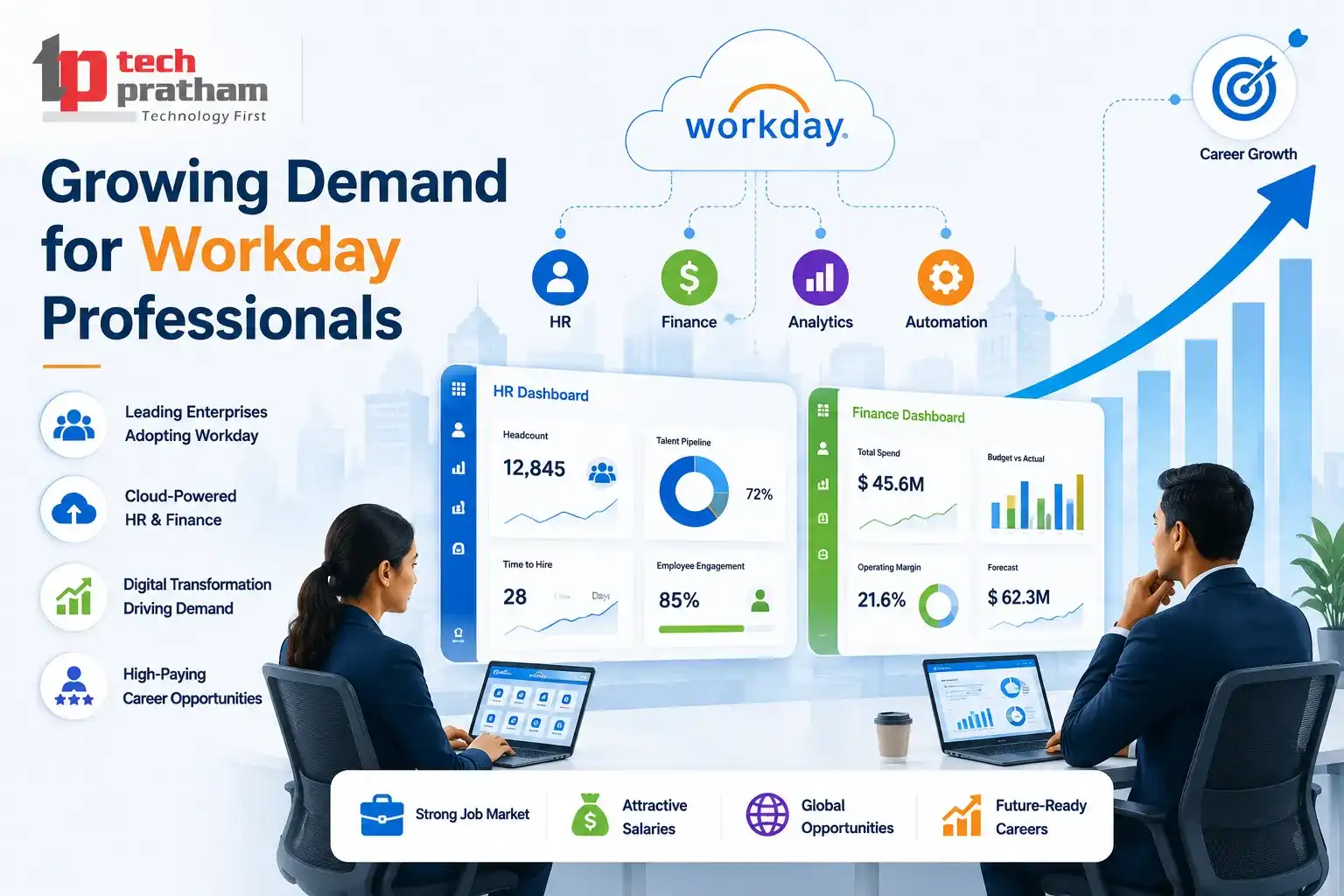
The demand for Workday professionals continues to grow rapidly in 2026 as organizations worldwide accelerate their digital transformation initiatives. Companies are increasingly replacing traditional HR and financial management systems with cloud-based platforms that offer better scalability, automation, security, and real-time insights. Among these solutions, Workday has become a preferred choice for enterprises looking to streamline workforce and financial operations.
Human Capital Management (HCM)
Businesses today require flexible and data-driven systems that can support remote workforces, global operations, and evolving compliance requirements. Workday's cloud-native architecture allows organizations to manage human resources, finance, payroll, planning, and analytics from a unified platform. As more enterprises adopt cloud ERP solutions, the need for trained Workday professionals continues to increase across industries such as IT, healthcare, manufacturing, retail, banking, and consulting.
Expanding Opportunities Across Multiple Workday Modules
One of the biggest advantages of learning Workday is the wide range of career opportunities available across different functional and technical domains.
- Workday HCM (Human Capital Management):- Manage employee lifecycle, talent management, workforce planning, and HR operations.
- Workday Payroll:- Support payroll processing, compliance management, and workforce compensation.
- Workday Financial Management:- Handle accounting, budgeting, procurement, and financial reporting.
- Workday Recruiting:- Help organizations attract, hire, and onboard top talent efficiently.
- Workday Integrations and Studio:- Build integrations between Workday and third-party business applications.
- Workday Reporting and Analytics:- Generate business insights and support data-driven decision-making.
This variety enables professionals from HR, Finance, Payroll, and IT backgrounds to build specialized careers based on their expertise and interests.
Strong Global Career Growth and Salary Potential
Workday expertise is highly valued by multinational corporations, consulting firms, implementation partners, and managed service providers. Organizations frequently seek certified Workday consultants, administrators, analysts, integration developers, and support specialists to manage their Workday environments.
As Workday adoption expands globally, professionals with practical training and hands-on experience can access opportunities not only in India but also in international markets. The combination of high demand, limited skilled talent, and continuous platform innovation makes Workday one of the most promising career paths for professionals looking to future-proof their skills in 2026 and beyond.
What Makes a Workday Training Institute Stand Out?
With multiple training providers offering Workday courses in Bangalore , selecting the right institute requires careful evaluation. A high-quality Workday training institute does more than teach theoretical concepts—it prepares learners for real-world implementation scenarios, certification success, and career growth. Here are the key factors that distinguish a reputable Workday training institute from the rest.
Industry-Expert Trainers
The quality of trainers plays a crucial role in your learning experience. The best Workday training institutes have instructors who possess real-time industry experience and have worked on actual Workday implementations, upgrades, and support projects.
Experienced trainers can provide practical insights into business processes, client requirements, system configurations, and common implementation challenges. Their industry knowledge helps students understand how Workday is used in real organizational environments rather than simply learning platform features.
Hands-On Learning Environment
Workday is a practical, application-based platform that requires hands-on experience. A leading training institute should offer interactive sessions, system demonstrations, practice exercises, and guided lab activities that allow students to apply concepts in real scenarios.
Hands-on training helps learners gain confidence in navigating Workday modules, understanding workflows, creating reports, and working with various business processes. Practical exposure significantly improves job readiness and problem-solving skills.
Real-World Project Experience
One of the strongest indicators of a quality Workday course is the inclusion of real-world project training. Project-based learning allows students to understand how Workday implementations are planned, configured, tested, and deployed within organizations
Working on realistic case studies helps learners gain experience with business requirements, process design, reporting, integrations, data management, and user support activities. This practical knowledge can become a valuable advantage during interviews and professional assignments.
Comprehensive Certification Guidance
Workday HCM certifications are highly respected within the industry and can enhance career opportunities. Although certification pathways may vary depending on Workday partner and customer programs, a good training institute should provide structured guidance on certification preparation.
Look for institutes that offer:
- Updated curriculum aligned with current Workday releases
- Practice assessments and mock tests
- Interview preparation sessions
- Career mentoring and skill development support
- Guidance on certification-related concepts and best practices
Proper certification preparation helps students build confidence and strengthen their understanding of Workday applications and business processes.
A Combination of Knowledge, Practice, and Career Support
The best Workday training institutes focus on developing both technical expertise and practical skills. When evaluating a course, prioritize institutes that provide experienced trainers, extensive hands-on learning, project exposure, and certification-focused training. These factors can significantly improve your learning outcomes and help you build a successful career in the growing Workday ecosystem.
Key Factors to Consider Before Enrolling in a Workday Course
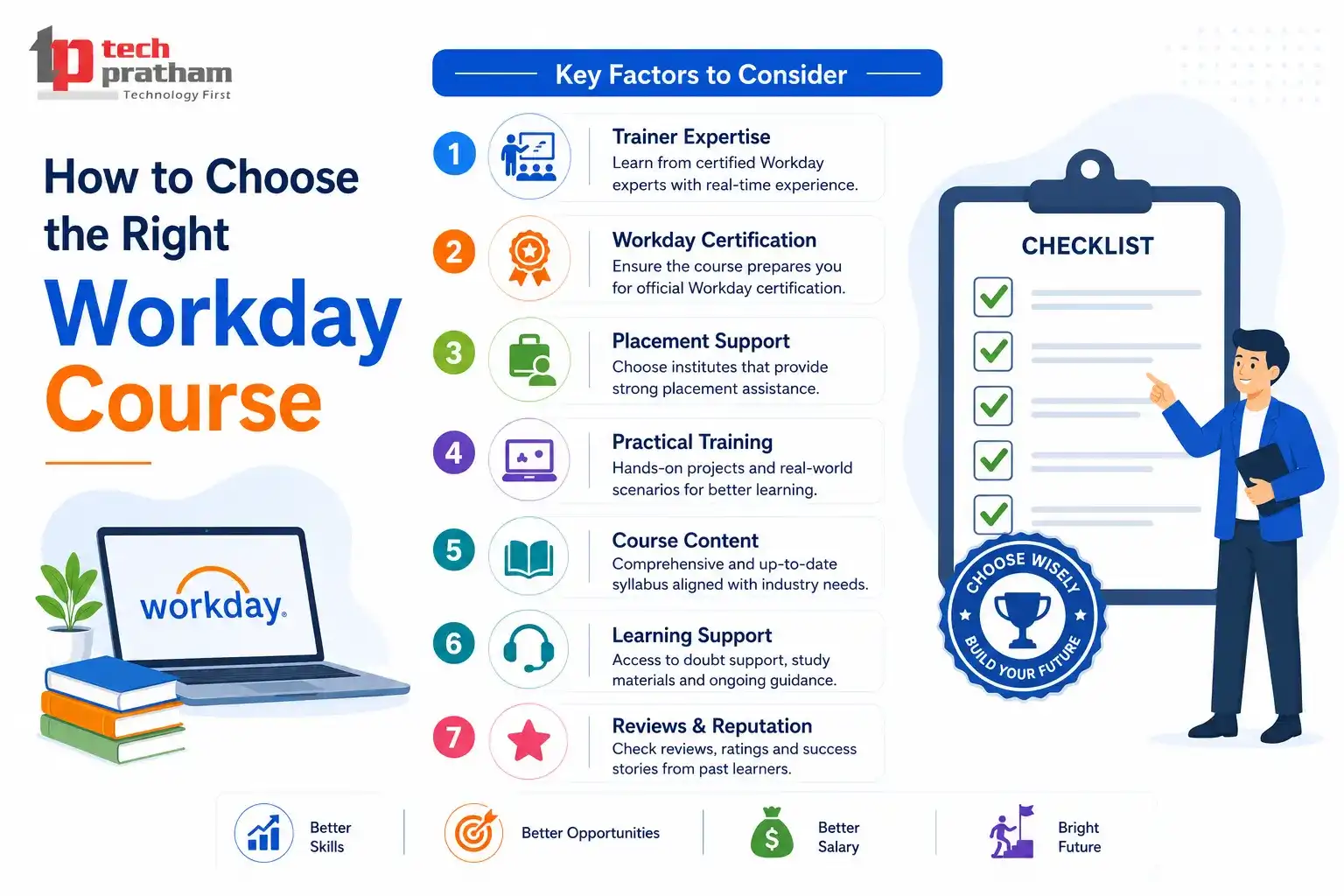
Investing in Workday training can be a significant step toward building a successful career in cloud-based HR, finance, payroll, and enterprise applications. However, not all training programs offer the same level of quality, practical exposure, and career support. Before enrolling in a Workday course, it is important to evaluate several key factors to ensure you receive the best learning experience and return on your investment.
Trainer Experience and Industry Exposure
A trainer's expertise can directly influence how effectively you learn Workday concepts and business processes. Look for instructors who have hands-on experience working on real Workday implementation, support, upgrade, or integration projects.
Industry-experienced trainers can provide practical examples, share implementation best practices, and explain how organizations use Workday to manage HR, payroll, and financial operations. Their real-world knowledge helps bridge the gap between theory and practical application.
Course Curriculum and Module Coverage
A well-structured curriculum is essential for developing comprehensive Workday skills. Before enrolling, review the course content to ensure it covers both foundational and advanced concepts.
Depending on your career goals, the course should include relevant modules such as:
- Workday HCM (Human Capital Management)
- Workday Payroll
- Workday Financial Management
- Workday Recruiting
- Workday Compensation
- Workday Prism Analytics
- Workday Adaptive Planning
- Workday Reporting
- Workday Studio and Integrations
An updated curriculum aligned with current industry requirements ensures that you learn the latest features and best practices used by organizations worldwide.
Practical Assignments and Case Studies
Workday is a highly practical platform, and theoretical knowledge alone is rarely sufficient. The best training institutes incorporate hands-on exercises, assignments, and real-world case studies into their programs.
Practical learning helps students understand business processes, workflow configurations, reporting requirements, and problem-solving techniques commonly encountered in Workday environments. Working on case studies also prepares learners for project-based roles and technical interviews.
Placement Assistance and Career Support
For many learners, securing a job after training is a primary objective. Therefore, placement support should be an important consideration when choosing a Workday training institute.
Look for institutes that offer:
- Resume-building assistance
- Mock interview sessions
- Career counseling and mentoring
- Job referral opportunities
- Interview preparation workshops
- Professional profile optimization
Strong career support can help learners transition smoothly into Workday-related roles and improve their chances of finding suitable employment opportunities.
Flexible Learning Options
Modern professionals often balance training with work, education, or personal commitments. A quality Workday training institute should offer flexible learning formats that accommodate different schedules and learning preferences.
Popular options include:
- Instructor-led online training
- Weekend batches
- Weekday fast-track programs
- Self-paced learning resources
- Recorded session access
- Classroom training where available
Flexible learning options allow students and working professionals to upskill without disrupting their existing responsibilities.
Choosing the Right Training Program
Before making a final decision, compare multiple training institutes based on trainer expertise, curriculum quality, practical exposure, career support, and learning flexibility. A well-rounded Workday course should not only teach platform functionality but also prepare you for real-world projects, certification readiness, and long-term career success in the Workday ecosystem.
Which Workday Module Should You Choose?
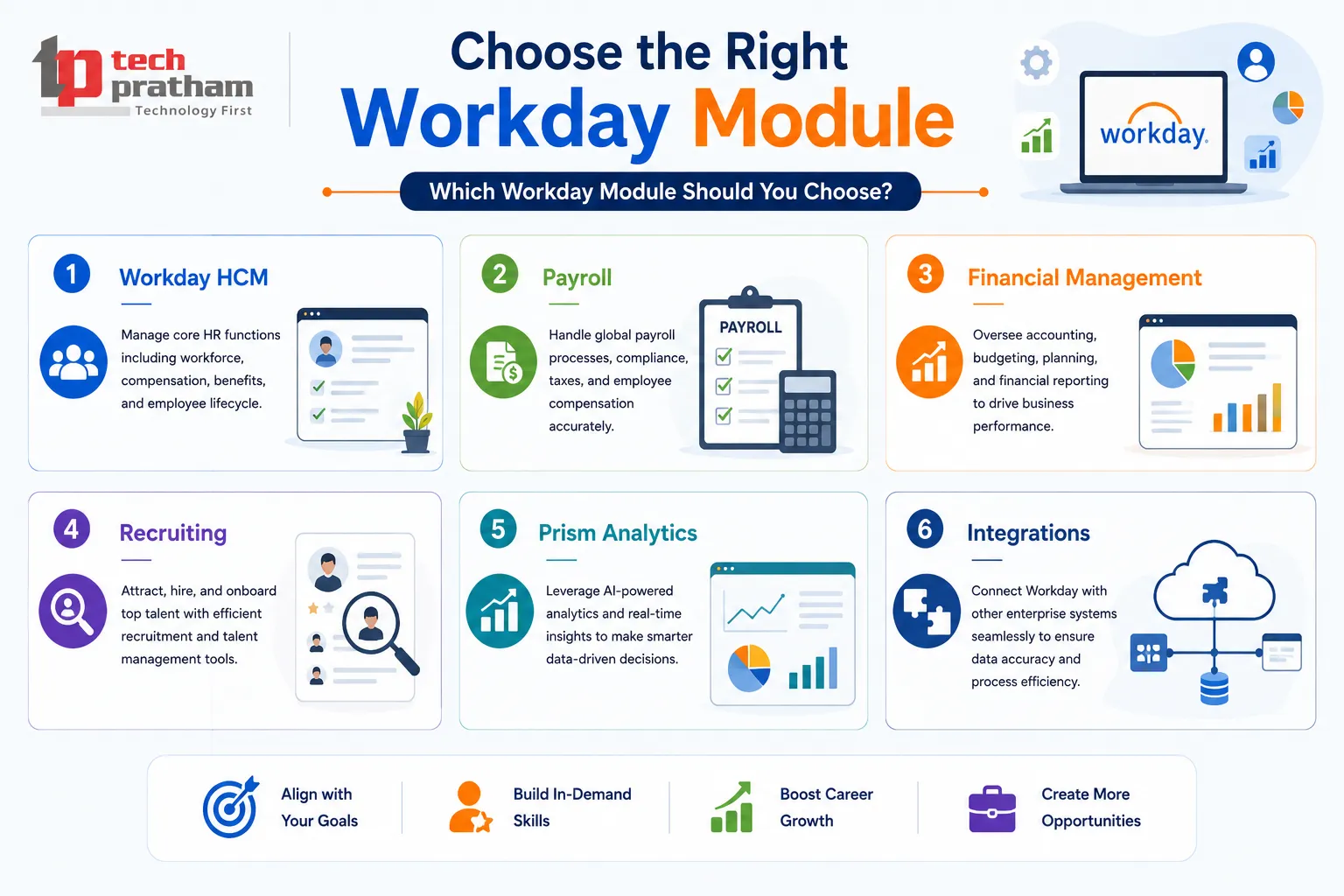
One of the biggest advantages of the Workday ecosystem is the variety of specialized modules available for different business functions. Whether you come from an HR, Finance, Payroll, or IT background, there is a Workday module that aligns with your skills and career goals. Understanding the purpose of each module can help you choose the right learning path and maximize your career opportunities in 2026.
Workday HCM (Human Capital Management)
Workday HCM Training is the foundation of the Workday platform and one of the most popular modules among professionals entering the Workday ecosystem.
This module focuses on:
- Employee lifecycle management
- Organizational structure management
- Workforce planning
- Talent management
- Performance management
- Employee self-service processes
Workday Payroll
Workday Payroll helps organizations manage employee compensation, payroll calculations, tax compliance, deductions, and payroll reporting through a unified cloud platform.
Key learning areas include:
- Payroll processing
- Earnings and deductions management
- Payroll compliance
- Tax calculations
- Payroll reporting and auditing
Workday Financial Management
Workday Financial Management enables organizations to streamline accounting, procurement, budgeting, financial reporting, and business operations.
Topics commonly covered include:
- General ledger management
- Accounts payable and receivable
- Financial reporting
- Procurement management
- Expense management
- Budget planning
Workday Recruiting
Workday Recruiting helps organizations attract, evaluate, hire, and onboard talent through a modern recruitment management system.
Key features include:
- Job requisition management
- Candidate tracking
- Interview scheduling
- Offer management
- Recruitment analytics
- Onboarding support
Workday Prism Analytics
Workday Prism Analytics is designed for advanced reporting, data integration, and business intelligence. It enables organizations to combine Workday data with external sources to generate deeper business insights.
Key learning areas include:
- Data preparation and transformation
- Analytics reporting
- Data visualization
- Business intelligence workflows
- Advanced workforce and financial analytics
Workday Adaptive Planning
Workday Adaptive Planning helps organizations improve budgeting, forecasting, workforce planning, and financial modeling processes.
This module focuses on:
- Financial forecasting
- Budget planning
- Scenario modeling
- Workforce planning
- Strategic business planning
- Performance analysis
Workday Studio and Integrations
Workday Studio and Integrations are among the most in-demand technical modules within the Workday ecosystem. These tools allow organizations to connect Workday with third-party applications, cloud services, payroll systems, and enterprise software platforms.
Key concepts include:
- Workday Studio development
- Enterprise integrations
- Web services
- API connectivity
- Data migration
- Integration troubleshooting
Career Opportunities After Completing Workday Training
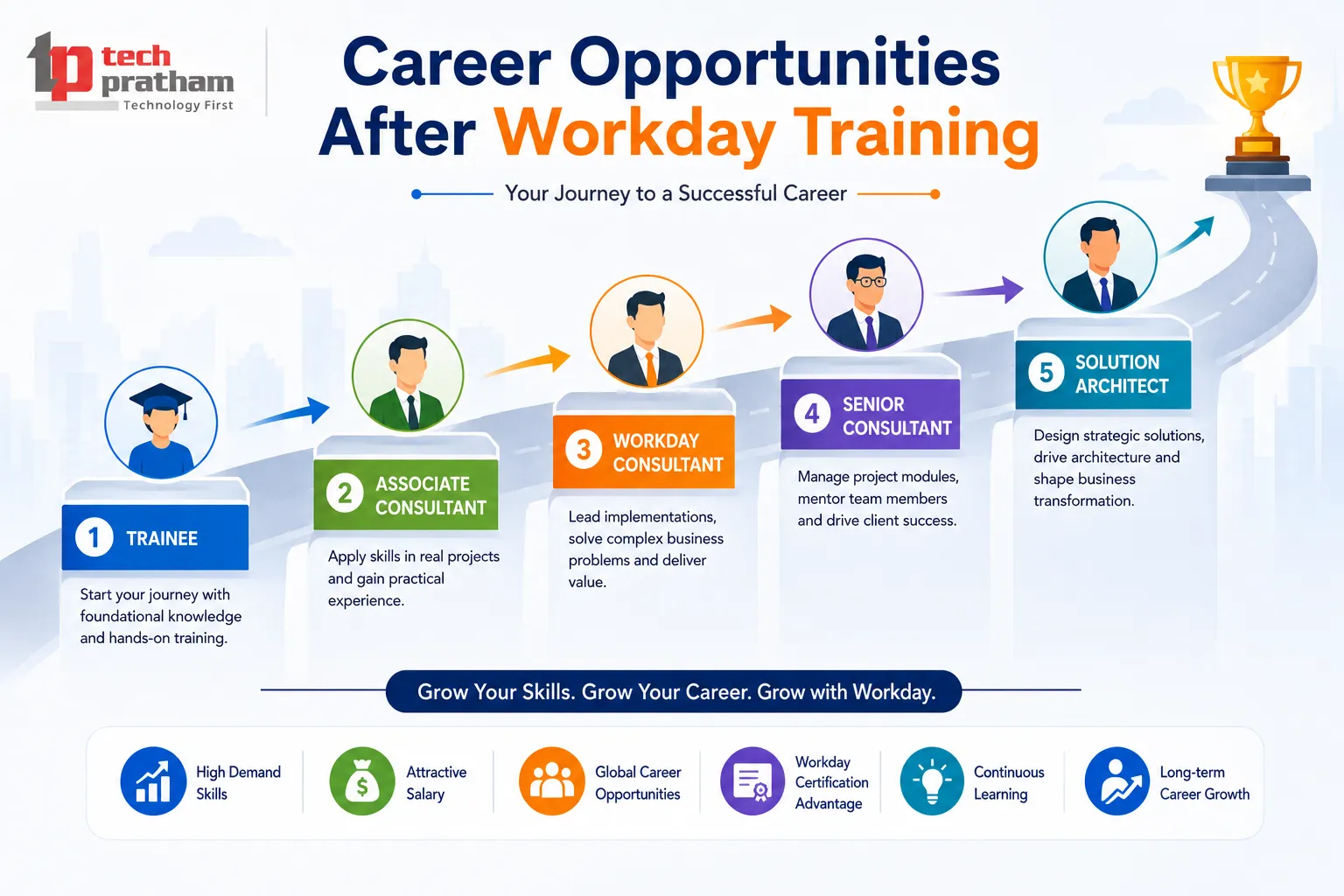
Workday skills are highly sought after by organizations implementing cloud-based HR and finance solutions. After completing a Workday course, professionals can explore various career paths based on their background, skills, and chosen Workday module.
Workday Consultant
Workday Consultants help organizations implement, configure, and optimize Workday applications. They work closely with clients to understand business requirements and deliver effective solutions.
HCM Consultant
HCM Consultants specialize in Workday Human Capital Management (HCM) and support organizations in managing employee data, talent management, workforce planning, and HR processes.
Functional Consultant
Functional Consultants focus on specific Workday modules such as HCM, Payroll, Recruiting, or Financial Management. They bridge the gap between business requirements and system functionality.
Integration Consultant
Integration Consultants are responsible for connecting Workday with third-party applications and enterprise systems. This role is ideal for IT professionals with technical and development expertise.
Business Analyst
Workday Business Analysts analyze business processes, gather requirements, create reports, and help organizations improve operational efficiency through Workday solutions.
A Promising Career Path
With growing global demand for Workday professionals, these roles offer excellent career growth, competitive salaries, and opportunities to work with leading organizations across industries. Choosing the right Workday training program can help you build the practical skills needed to succeed in these high-demand positions.
Why Bangalore Is a Leading Destination for Workday Training
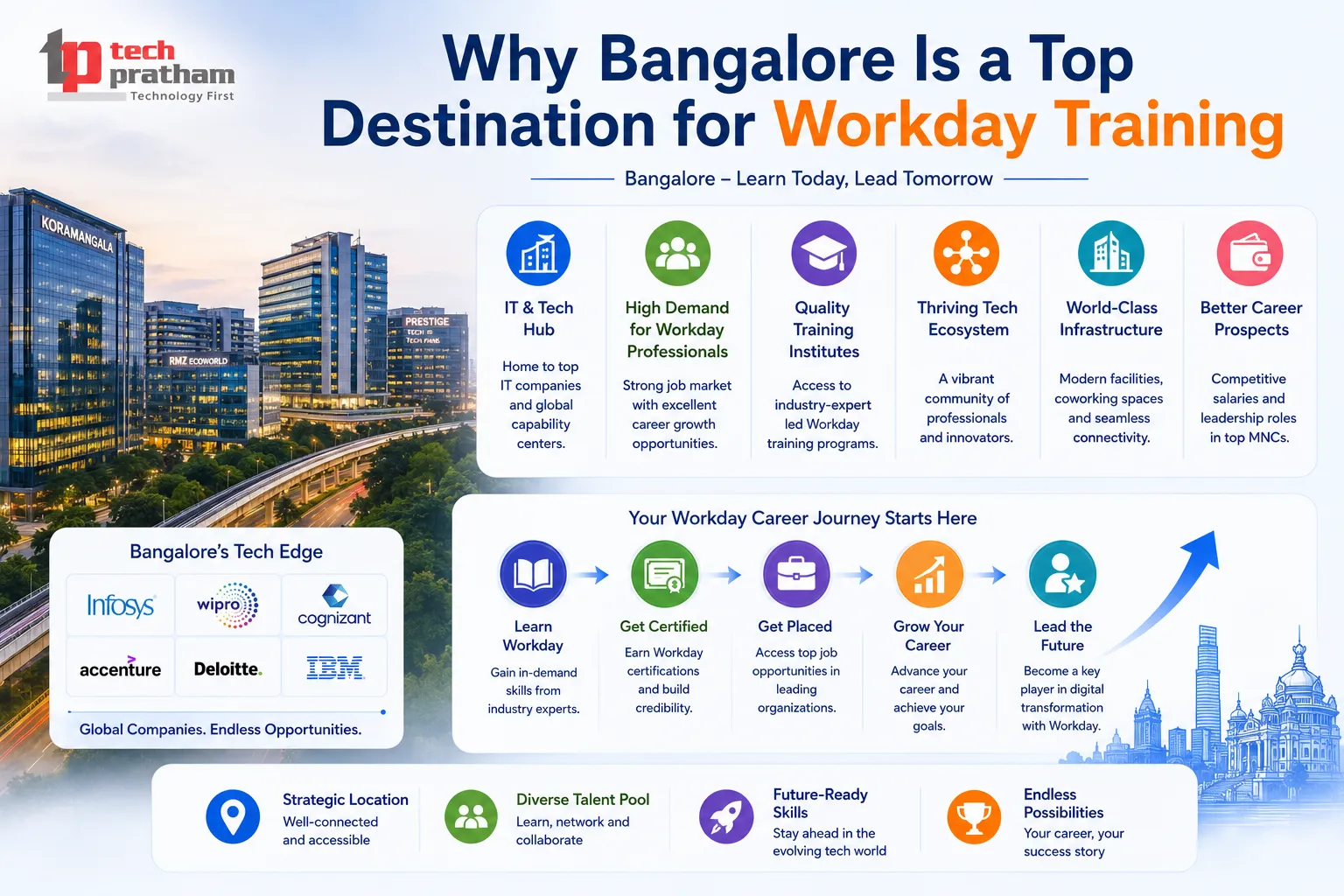
Bangalore is widely recognized as India's technology hub and has become one of the most preferred destinations for Workday training and career development . The city's strong IT presence and growing demand for enterprise software professionals create excellent opportunities for aspiring Workday experts.
Thriving IT Ecosystem
Home to numerous IT companies, consulting firms, and global technology centers, Bangalore offers a dynamic environment for learning and building a career in Workday. The city's technology-driven culture makes it an ideal place to gain industry-relevant skills.
Growing Demand for Enterprise Software Professionals
As organizations continue adopting cloud-based HR and financial management solutions, the demand for skilled Workday professionals is increasing. Many companies in Bangalore actively seek Workday consultants, administrators, analysts, and integration specialists to support their digital transformation initiatives.
Excellent Networking and Job Opportunities
Bangalore provides access to a vast professional network through industry events, training communities, consulting firms, and multinational organizations. Learners can connect with experienced professionals, explore career opportunities, and gain valuable industry exposure.
A Strong Foundation for Career Growth
With its thriving technology ecosystem, expanding enterprise software market, and abundant job opportunities, Bangalore remains one of the best locations for pursuing Workday training and building a successful career in the Workday ecosystem.
FAQs About Workday Training in Bangalore
Which Workday Module Has the Highest Demand?
Workday HCM remains one of the most in-demand modules due to its widespread adoption across organizations. However, Workday Integrations, Financial Management, and Adaptive Planning are also experiencing strong demand as companies expand their cloud ERP capabilities.
How Long Does It Take to Learn Workday?
The learning duration depends on the module and your background. Most Workday training programs can be completed within 6 to 12 weeks, while mastering advanced concepts and gaining practical experience may take additional time.
Is Workday Certification Worth It?
Yes. Workday certification can enhance your professional credibility, validate your skills, and improve your career prospects. Combined with hands-on project experience, certification can help you stand out in a competitive job market.
Can Freshers Learn Workday?
Absolutely. Fresh graduates can start with beginner-friendly modules such as Workday HCM or Workday Recruiting. A structured training program with practical exercises and industry guidance can help freshers build a strong foundation in Workday.
What Is the Average Salary After Workday Training?
Salaries vary based on experience, skills, location, and the Workday module you specialize in. Entry-level professionals can expect competitive packages, while experienced Workday Consultants, Functional Consultants, and Integration Consultants often earn significantly higher salaries due to strong market demand.
Conclusion
Choosing the right Workday training institute in Bangalore can make a significant difference in your career growth. Focus on factors such as experienced trainers, comprehensive curriculum, hands-on projects, certification guidance, and placement support. Practical training and expert mentorship are essential for developing real-world Workday skills and improving job readiness. Select an institute that offers industry-relevant training, practical exposure, and career assistance to help you succeed in the growing Workday job market. With the right training and support, you can build a rewarding career in the Workday ecosystem.
Related Articles

Future Scope of Workday in India: Jobs, Skills, AI Impact and Salary
Explore Workday career opportunities in India, in-demand skills, AI impact, job roles, salary expectations, and a 90-day learning roadmap.

How Can Non-IT Professionals Start a Career in Workday HCM?
Learn how non-IT professionals can enter Workday HCM, build relevant skills, gain practical experience, and explore suitable career opportunities.

What Are the Different Workday Modules and What Does Each One Do?
Explore Workday modules, their functions, how they work together, and which specialization may suit your skills and career goals.





 +91-8882178896
 +1 (343) 477-0926