Top Workday Training Courses in 2026: Which Module Offers the Best Career Opportunities?
_11zon.webp)
If you've started exploring careers in enterprise software, you've probably come across Workday. Over the last few years, Workday has become one of the most widely adopted cloud platforms for managing HR, payroll, finance, analytics, and workforce planning. As organizations continue their digital transformation journeys, the demand for skilled Workday professionals is growing rapidly across India and global markets.
One of the most common questions learners ask is:
"Which Workday module should I choose for the best career opportunities?"
The answer depends on your background, interests, and long-term career goals. Some modules are ideal for HR professionals, while others are better suited for finance experts, data analysts, or technical consultants.
In this guide, we'll explore the most popular Workday training courses, the career paths they support, and how to choose the right specialization in 2026.
Why Workday Skills Are in High Demand
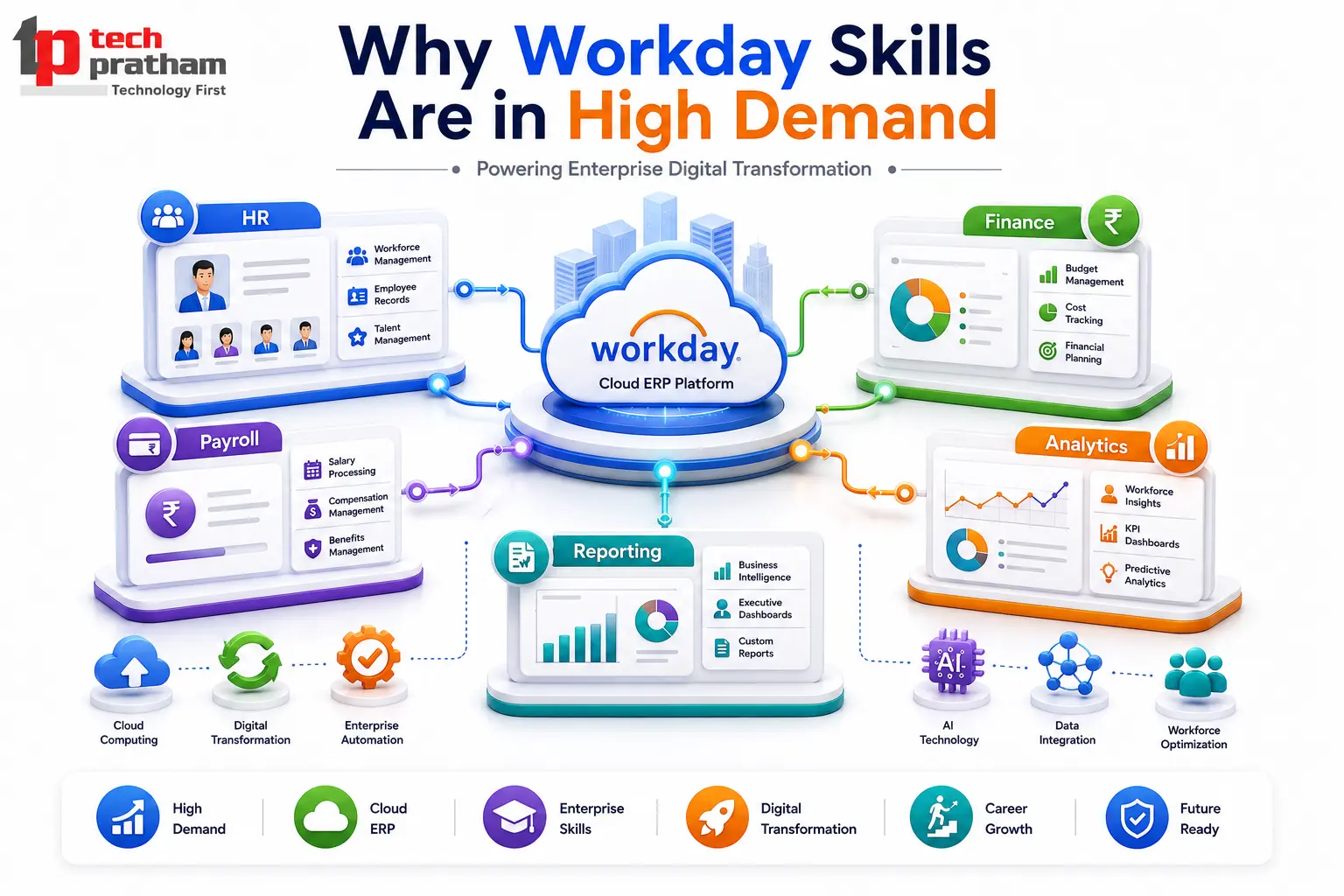
Modern organizations need more than traditional HR and finance systems. They need intelligent platforms that can automate processes, improve decision-making, and provide real-time business insights.
Workday helps businesses manage:
- Human Capital Management (HCM)
- Workforce Management
- Payroll Administration
- Talent Acquisition
- Financial Planning and Analysis
- Data Analytics and Reporting
- Enterprise Application Integration
As companies invest in cloud-based HR systems and enterprise resource planning solutions, they need professionals who understand how to configure, manage, and optimize these platforms.
This growing demand has made Workday one of the most promising career domains for students, freshers, working professionals, and consultants.
For more details, read: Workday Training – The Best Workday HCM Course
How to Choose the Right Workday Module
Before selecting a course, ask yourself three questions:
What is your current background?
- HR professionals often start with HCM, Recruiting, or Payroll.
- Finance professionals usually prefer Financial Management or Adaptive Planning.
- Technical professionals often choose Integrations, Studio, or Analytics.
What type of work do you enjoy?
Some people enjoy working directly with business users and HR teams, while others prefer technical development, integrations, or data analytics.
What are your long-term career goals?
Your ideal module should align with the type of consultant, analyst, or specialist role you want to pursue in the future.
Workday HCM: The Most Popular Starting Point for Workday HR Training
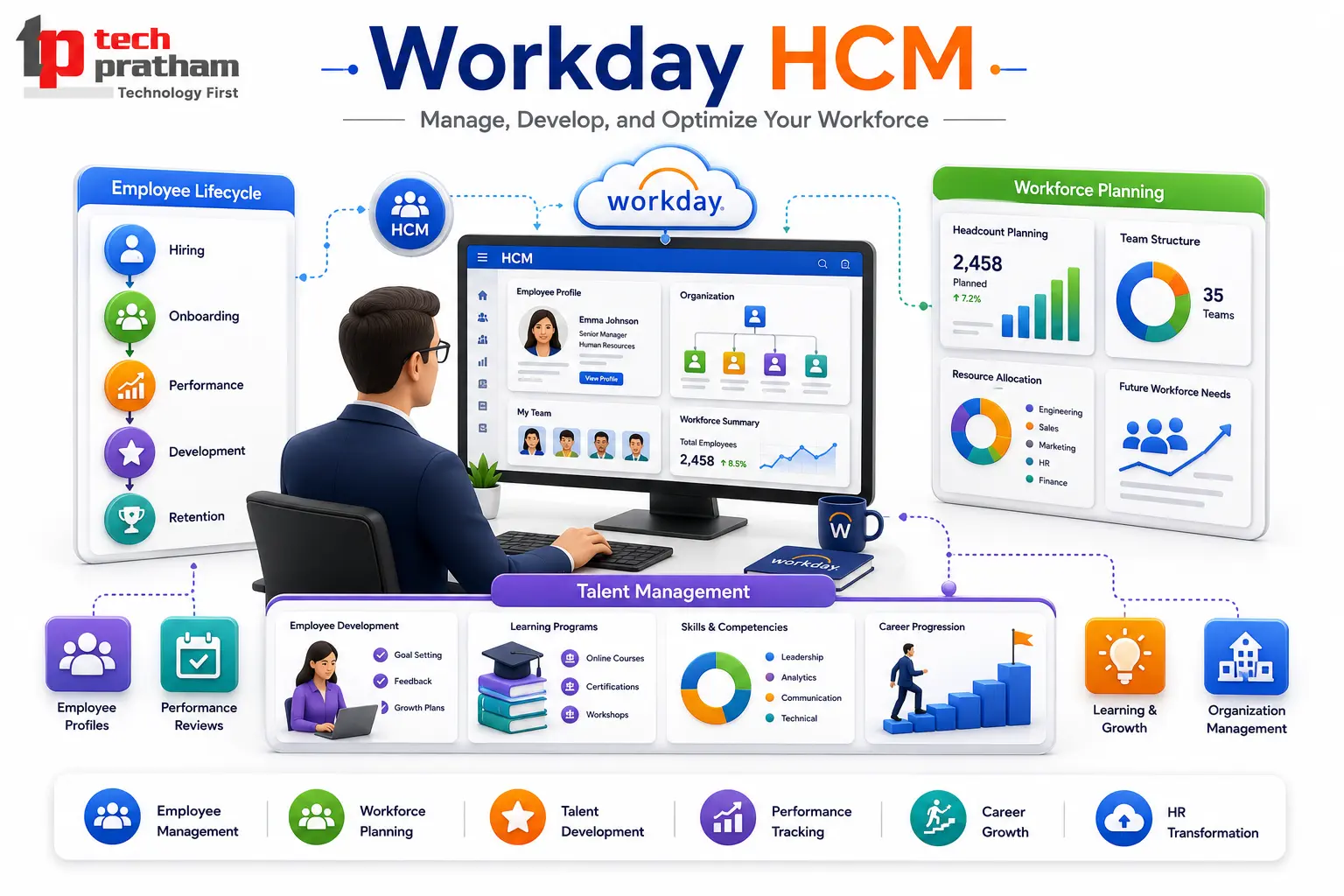
For many professionals, Workday HR Training through the Workday HCM module is the gateway into the Workday ecosystem. Among various Workday Training Courses, HCM remains one of the most popular choices for learners starting their Workday career path.
Workday HCM Training is designed to streamline employee lifecycle management, improve workforce visibility, and support strategic HR decision-making. The module covers key areas such as organizational structures, staffing models, compensation management, benefits administration, talent management, workforce planning, and employee data management.
As organizations continue investing in cloud-based HR systems and digital HR transformation initiatives, the demand for professionals with Workday HCM expertise continues to grow. Companies actively seek consultants and administrators who can configure business processes, support HR operations, and optimize workforce management solutions.
This specialization is particularly suitable for:
- HR Professionals
- Recruiters and Talent Acquisition Specialists
- HRIS Analysts
- Payroll and Benefits Professionals
- Fresh Graduates interested in HR Technology
- Business Analysts transitioning into HR systems
One of the biggest advantages of starting with Workday HCM is the wide range of career opportunities it offers. Professionals can pursue roles such as Workday HCM Consultant, Workday Functional Consultant, HRIS Analyst, Workday Administrator, and HR Technology Specialist. Because HCM forms the foundation of many Workday implementations, it also provides a strong base for learning advanced modules such as Recruiting, Payroll, Learning, Compensation, and Talent Management.
For learners seeking a stable, versatile, and future-ready career path, Workday HCM remains one of the most valuable and beginner-friendly specializations in the Workday ecosystem.
Workday Payroll Training: A Specialized Career with Strong Demand
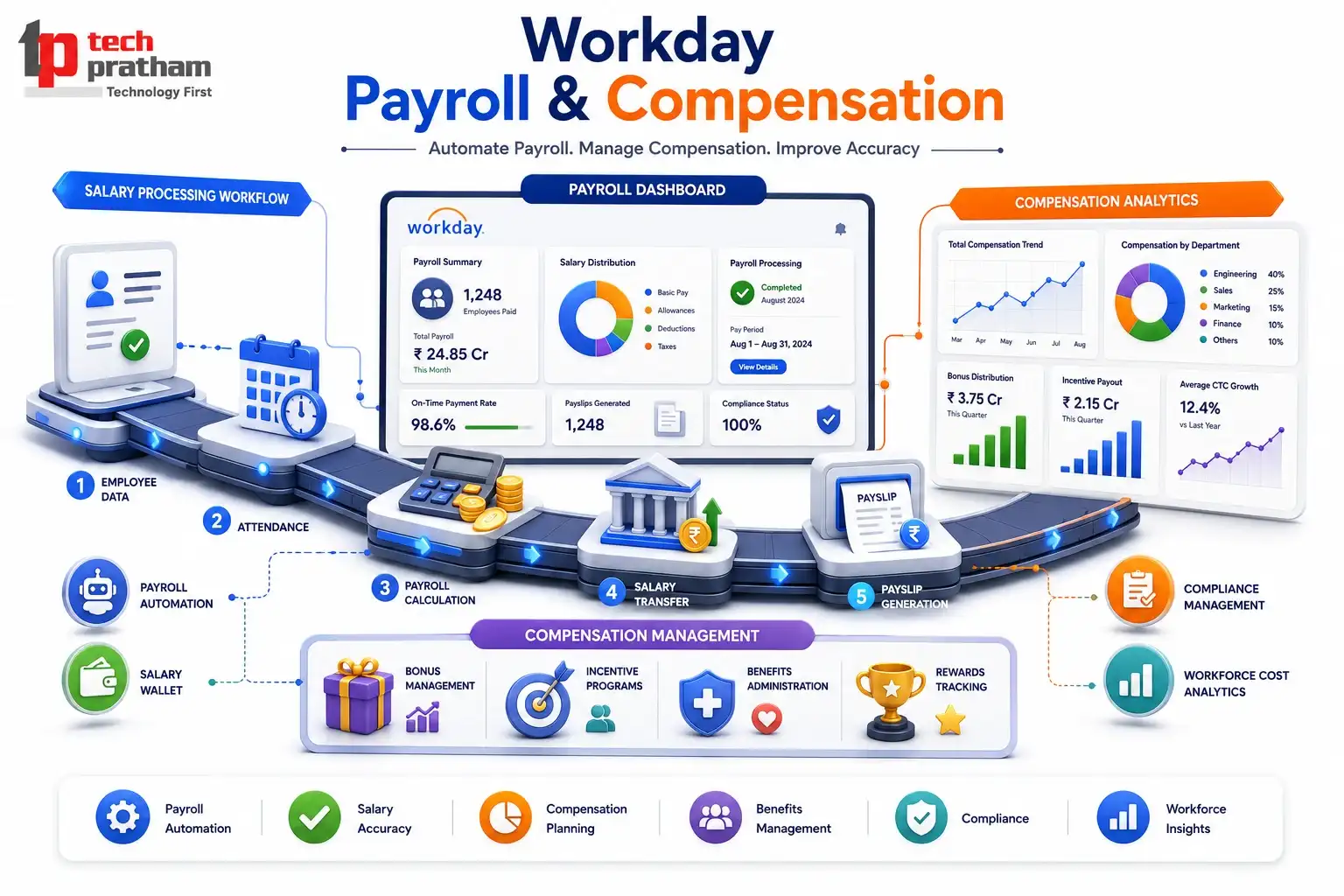
Payroll is one of the most critical business functions in any organization, directly impacting employee satisfaction, compliance, and financial operations. Every company needs a reliable system to manage salary processing, tax calculations, deductions, benefits, and regulatory requirements. This is where Workday Payroll plays a vital role by helping organizations automate and streamline payroll operations through a modern cloud-based platform.
Workday Payroll training provides learners with a comprehensive understanding of payroll administration, payroll processing workflows, compensation management, earnings and deductions, tax reporting, compliance requirements, and payroll-related business processes. Professionals also learn how payroll integrates with Human Capital Management (HCM), benefits administration, time tracking, and workforce management solutions.
As organizations continue adopting cloud-based HR and payroll systems, the demand for payroll professionals with Workday expertise continues to rise. Companies seek specialists who can manage payroll operations efficiently while ensuring accuracy and compliance with changing regulations.
This specialization is particularly suitable for:
- Payroll Executives
- HR Professionals
- Compensation and Benefits Specialists
- HR Operations Teams
- Compliance Professionals
- Payroll Administrators
Career opportunities include roles such as Workday Payroll Consultant, Payroll Functional Analyst, Payroll Administrator, HR Payroll Specialist, and Workday Functional Consultant. Because payroll directly affects every employee within an organization, experienced Workday Payroll professionals are highly valued and often enjoy strong career growth opportunities across industries.
Workday Financial Management Training: A Great Choice for Finance Professionals
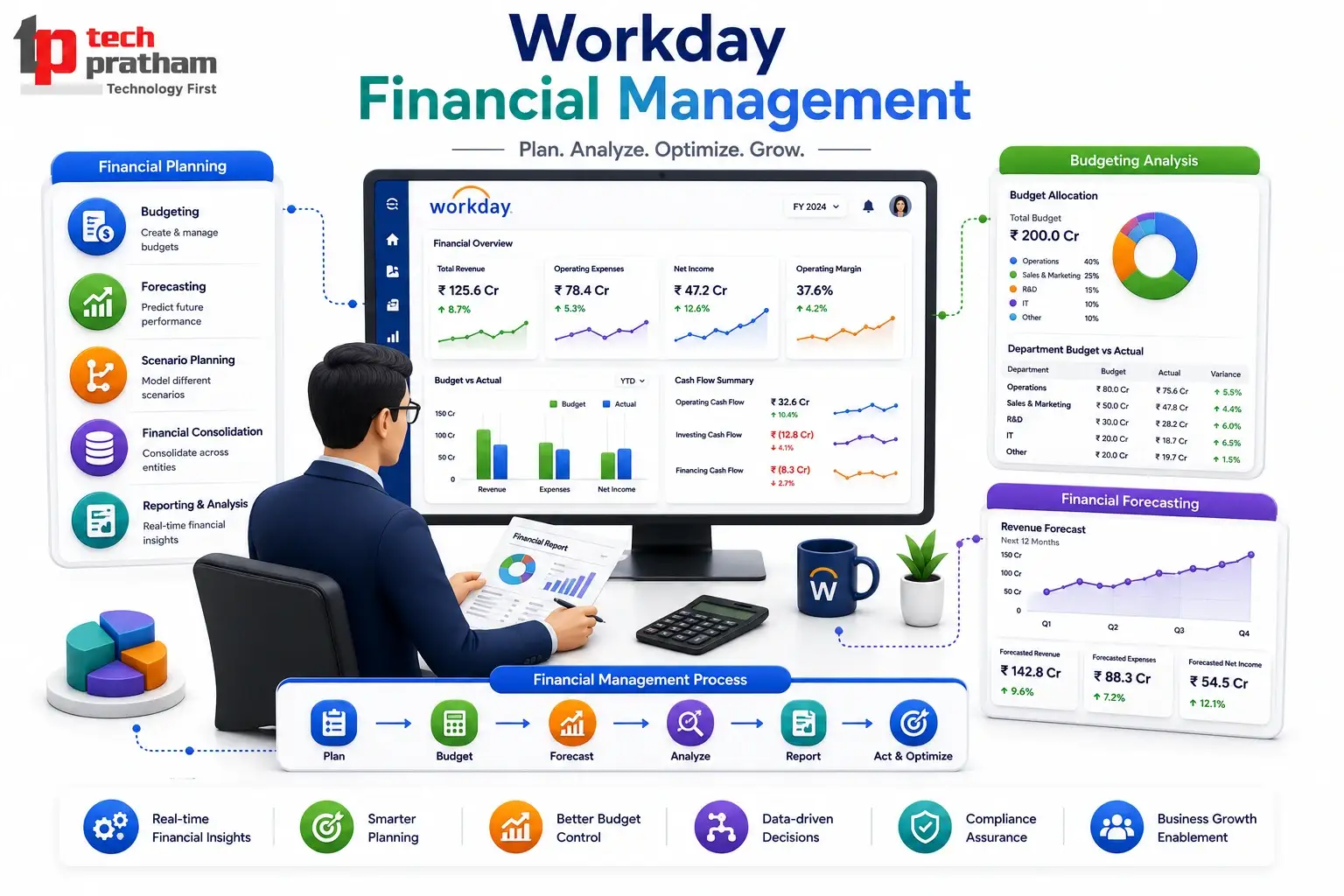
For professionals interested in finance transformation and Enterprise Resource Planning, Workday Financial Management Training offers valuable skills in budgeting, accounting, and financial operations. As organizations move away from traditional financial systems and adopt cloud-based enterprise solutions, the demand for professionals who can manage and optimize modern finance platforms continues to grow.
Workday Financial Management helps organizations streamline financial operations by providing real-time visibility into financial data, improving reporting accuracy, and supporting better business decision-making. The module is designed to simplify complex financial processes while enabling organizations to manage their resources more effectively.
Key areas covered include:
- Financial Planning and Analysis (FP&A)
- Budget Management
- Expense Management
- Revenue Tracking
- Financial Reporting
- Accounting and General Ledger Processes
- Procurement and Spend Management
- Financial Compliance and Auditing
Professionals trained in this module gain expertise in managing financial workflows, generating business insights, supporting strategic planning, and improving operational efficiency. As businesses increasingly invest in digital transformation and cloud ERP solutions, professionals who understand both financial processes and enterprise applications are becoming highly valuable assets.
Workday Recruiting Training: Building a Career in Talent Acquisition
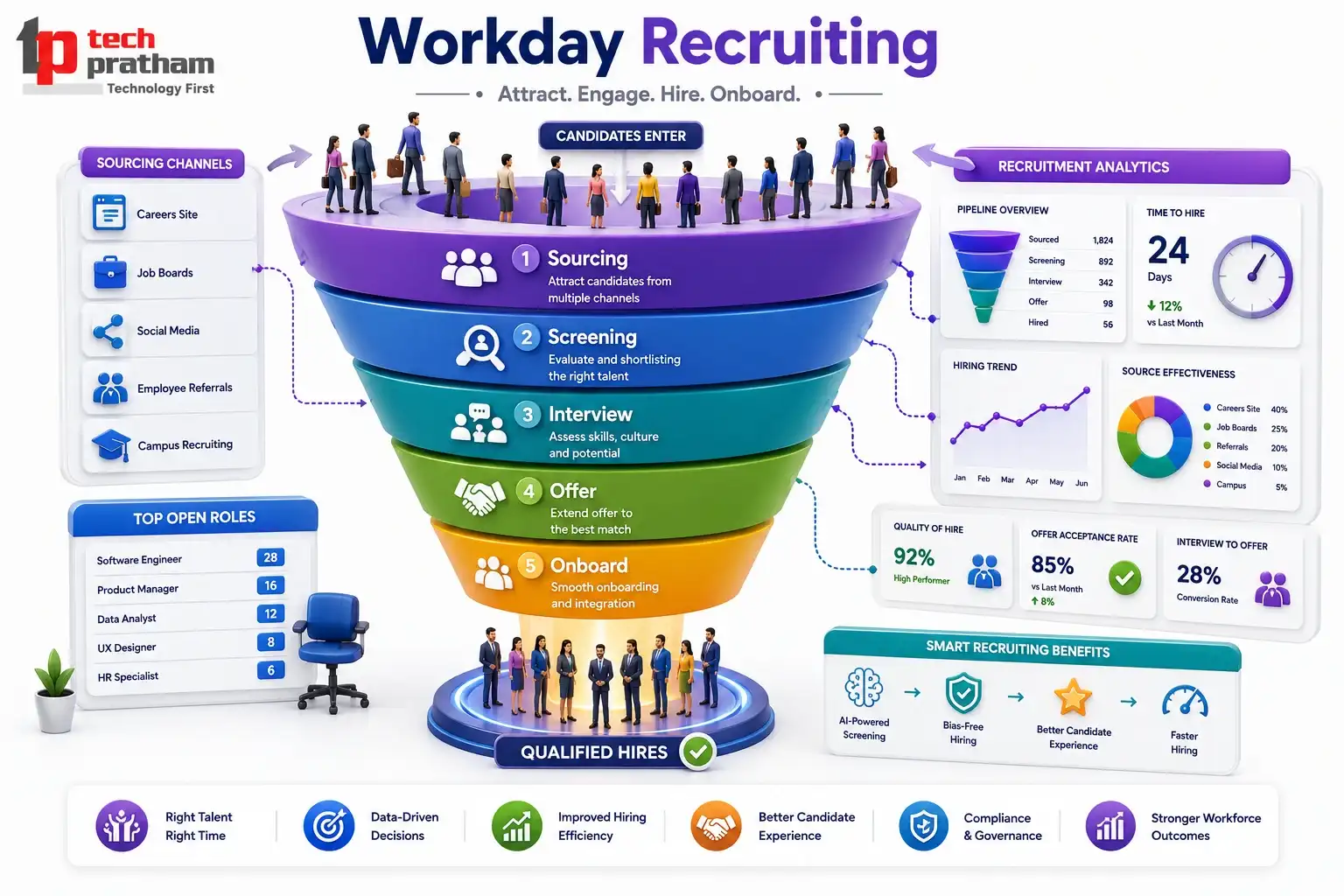
Workday Recruiting Training focuses on modern Talent Acquisition Management processes and helps organizations streamline hiring activities. Companies are investing heavily in modern recruitment technologies to improve hiring efficiency, enhance candidate experiences, and build strong workforces. Workday Recruiting is designed to support these goals by providing a comprehensive talent acquisition solution within the Workday ecosystem.
This module helps organizations manage the entire recruitment lifecycle, including job requisitions, candidate sourcing, application tracking, interview scheduling, offer management, and onboarding processes. It enables recruiters and hiring managers to collaborate effectively while improving visibility into hiring activities and recruitment performance.
Key areas covered in Workday Recruiting include:
- Job Requisition Management
- Candidate Tracking
- Interview Coordination
- Offer Management
- Recruitment Analytics
- Talent Acquisition Management
- Onboarding Processes
- Hiring Workflow Automation
Career opportunities in this domain include Workday Recruiting Consultant, Talent Acquisition Analyst, Recruitment Systems Specialist, HR Technology Consultant, and Workday Functional Consultant. As organizations continue focusing on workforce growth, employer branding, and strategic hiring initiatives, professionals with Workday Recruiting expertise are expected to remain in strong demand across industries.
Workday Integration Training: The Bridge Between Systems
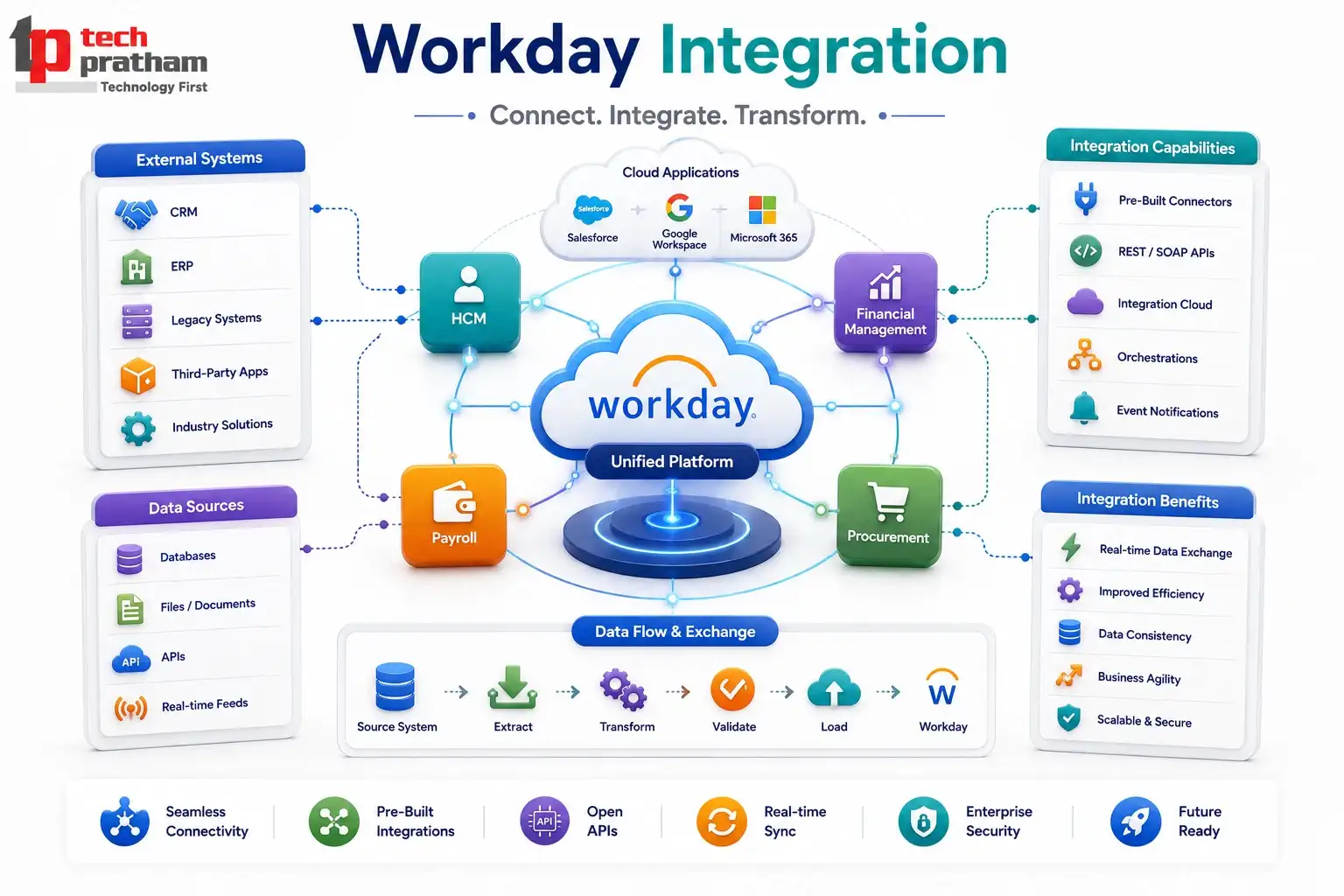
Workday Integration Training is ideal for professionals interested in Enterprise Application Integration, APIs, and cloud-based business systems. This is where Workday Integrations plays a crucial role by connecting Workday with external applications, databases, cloud platforms, and third-party enterprise systems.
Workday Integration professionals are responsible for designing, developing, testing, and maintaining integrations that enable organizations to exchange data securely and efficiently. They work with technologies such as web services, APIs, Enterprise Interface Builder (EIB), Core Connectors, and integration frameworks to support business operations and automation.
Key areas covered in Workday Integration include:
- Enterprise Application Integration
- Workday Web Services
- REST and SOAP APIs
- Data Transformation and Mapping
- Core Connectors
- Enterprise Interface Builder (EIB)
- Integration Monitoring and Troubleshooting
- Business Process Automation
This specialization is ideal for:
- Developers
- Technical Consultants
- IT Professionals
- System Analysts
- Integration Specialists
- Middleware Professionals
Career opportunities include Workday Integration Consultant, Workday Technical Consultant, Integration Developer, Technical Analyst, Workday Integration Lead, and Enterprise Integration Specialist. Since integration projects are often complex, business-critical, and highly technical, professionals with Workday Integration expertise are among the most sought-after resources in the Workday ecosystem and often enjoy excellent salary packages and long-term career growth.
Workday Studio Training: One of the Highest-Paying Technical Paths
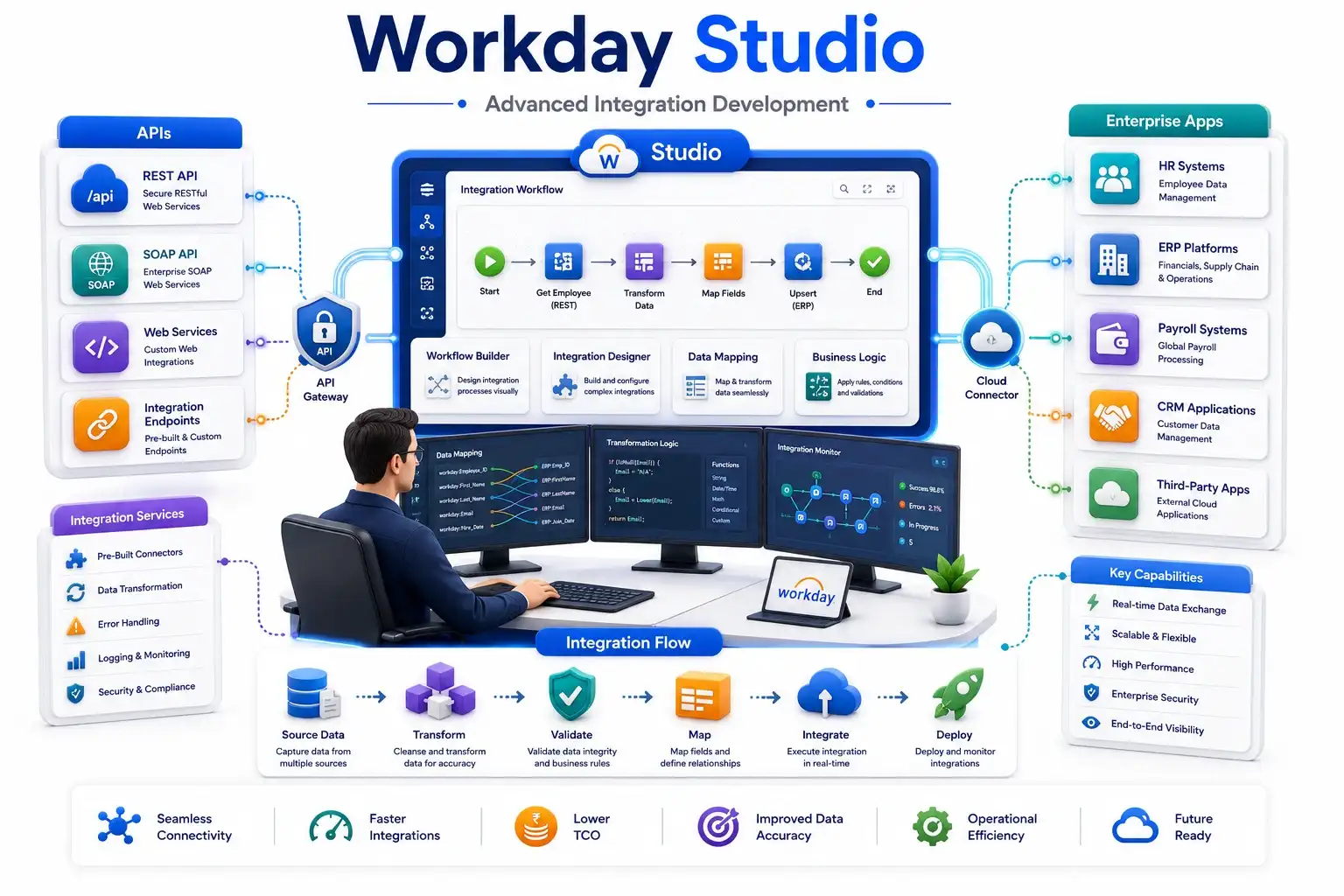
Among technical Workday Training Courses, Workday Studio Training is often considered one of the most advanced specializations. It is an advanced integration development tool used to build sophisticated, custom integrations between Workday and external applications, making it a preferred specialization for technical consultants and developers.
Workday Studio enables organizations to automate data exchange, streamline business processes, and support large-scale integration requirements. Because it is used for mission-critical business operations, professionals working with Studio are expected to have a strong understanding of integration architecture, data flows, and enterprise application connectivity.
Key skills developed through Workday Studio include:
- REST and SOAP APIs
- XML and XSLT
- Data Transformation and Mapping
- Integration Design and Development
- Enterprise Connectivity
- Error Handling and Troubleshooting
- Web Services
- Integration Deployment and Monitoring
Workday Prism Analytics Training: The Future of Business Intelligence
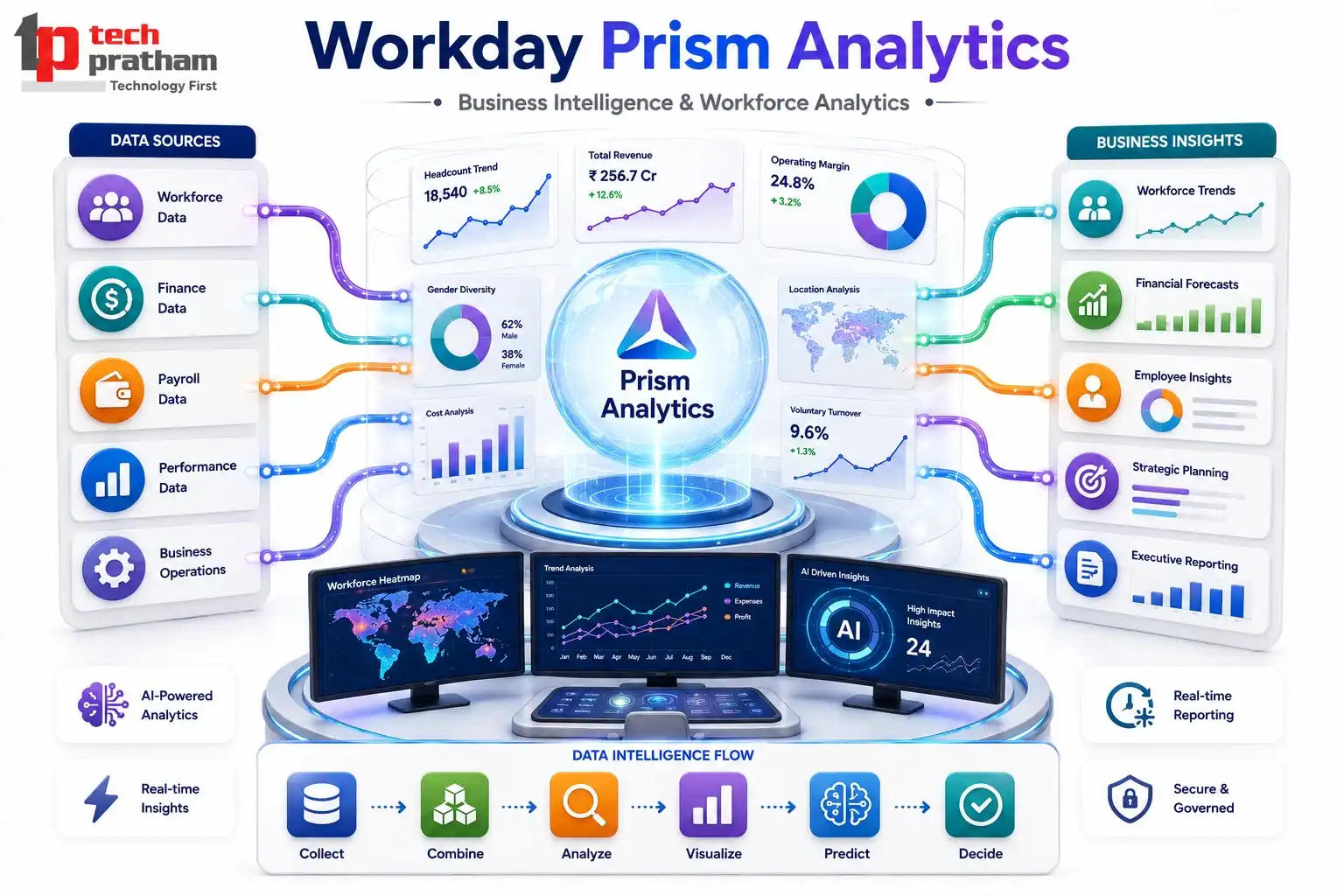
Workday Prism Analytics Training combines Data Analytics and Reporting, business intelligence, and workforce analytics to help organizations make better decisions. The challenge is not collecting data—it's turning that data into meaningful insights that support smarter business decisions. This is where Workday Prism Analytics plays a crucial role.
Workday Prism Analytics is a powerful analytics and data management solution that allows organizations to combine data from multiple sources, transform it into usable information, and create advanced reports, dashboards, and visualizations. By bringing together internal and external data within a single platform, businesses can gain deeper visibility into workforce performance, financial metrics, operational trends, and strategic planning initiatives.
Career opportunities include Workday Prism Analytics Consultant, Business Intelligence Analyst, Reporting Consultant, Workforce Analytics Specialist, Financial Analytics Consultant, Data Analyst, and Enterprise Reporting Specialist. For professionals who enjoy working with data, analytics, and business strategy, Workday Prism Analytics offers a future-ready career path with strong growth potential and increasing demand across industries.
Workday Adaptive Planning Training: Where Finance Meets Strategy
.webp)
Workday Adaptive Planning Training is becoming increasingly popular among professionals working in Financial Planning and Analysis and workforce planning. Traditional spreadsheet-based planning methods often struggle to keep up with the complexity of modern business operations. This is why many organizations are adopting Workday Adaptive Planning, a cloud-based planning solution that helps businesses make faster, smarter, and more data-driven decisions.
Workday Adaptive Planning enables finance teams, business leaders, and planning professionals to create dynamic budgets, build forecasting models, analyze business performance, and evaluate different business scenarios in real time. By combining financial data, workforce information, and operational metrics into a single platform, organizations can improve planning accuracy and respond quickly to changing business needs.
This specialization focuses on:
- Financial Forecasting
- Budget Planning and Management
- Workforce Planning
- Financial Modeling
- Scenario Analysis
- Strategic Planning
- Financial Planning and Analysis (FP&A)
- Performance Management
Professionals trained in Workday Adaptive Planning gain valuable skills in business forecasting, financial analysis, and enterprise planning. These capabilities are increasingly sought after by organizations looking to improve operational efficiency and support long-term growth strategies.
Which Workday Module Offers the Best Salary?
Some of the highest-paying specializations include Workday Studio Training, Workday Integration Training, Workday Prism Analytics Training, and Workday Adaptive Planning Training. There is no single answer because salaries depend on experience, location, certifications, and project exposure. However, technical specializations such as Studio, Integrations, and Analytics often offer higher earning potential due to the complexity of the skills involved. Functional specializations like Workday HCM Payroll, and Recruiting provide strong job stability and broader implementation opportunities. Instead of choosing a module solely based on salary, focus on selecting a specialization that matches your interests and strengths.
Functional vs Technical Careers: Which Path Is Better?
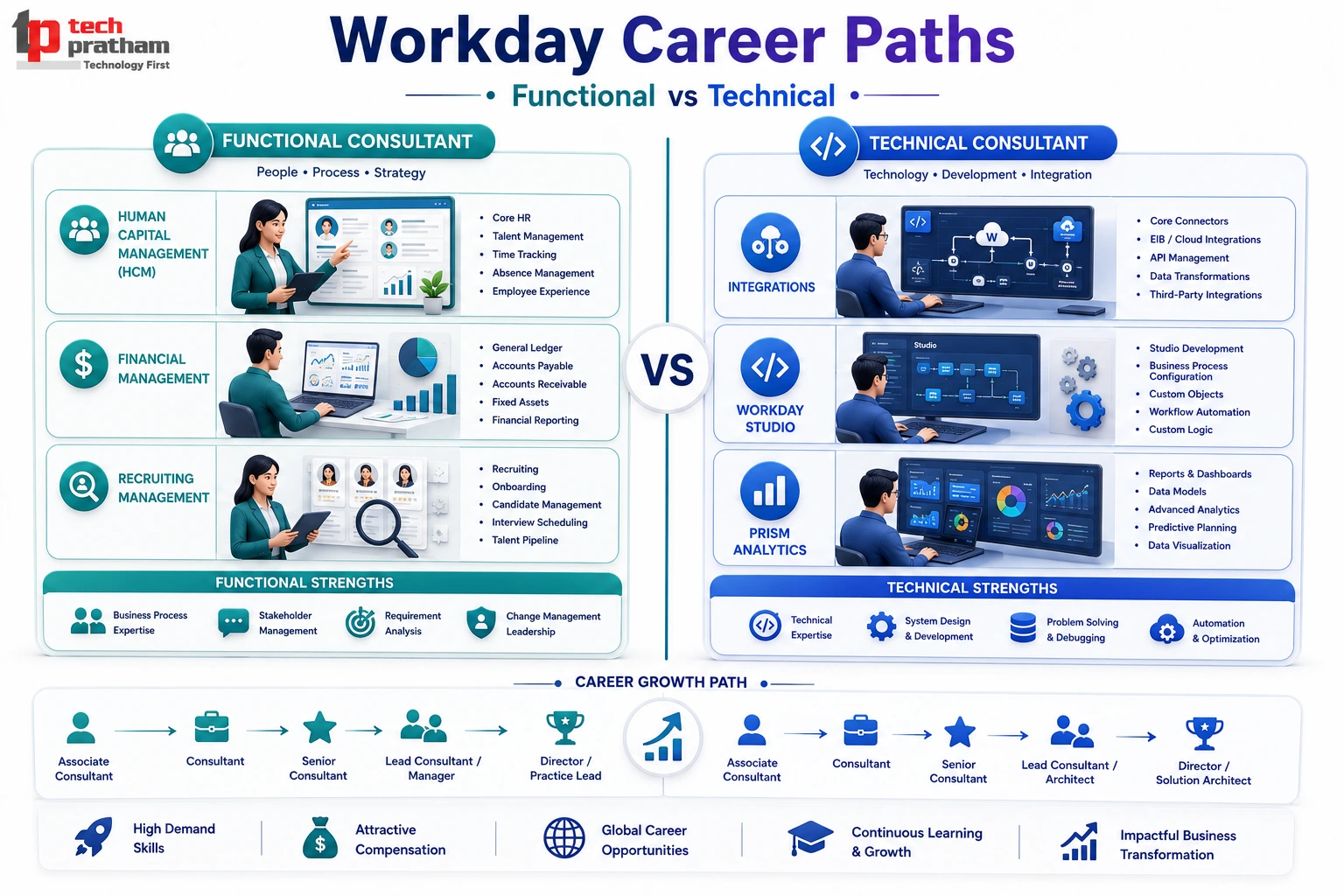
One of the most common questions among aspiring Workday professionals is whether to choose a functional or technical career path. Both offer excellent growth opportunities, but the right choice depends on your skills and interests.
Functional consultants work closely with HR, payroll, finance, and business teams to configure Workday and improve business processes. Modules such as Workday HCM, Payroll, Recruiting, and Financial Management are part of the functional path.
Technical consultants focus on integrations, reporting, analytics, security, and system connectivity. Popular technical modules include Workday Integrations, Studio, Prism Analytics, and Reporting.
Choose a functional path if you enjoy business processes and consulting. Choose a technical path if you enjoy technology, data, integrations, and analytics. Both career paths offer strong demand, competitive salaries, and long-term growth opportunities in the Workday ecosystem..
What Skills Are Employers Looking for in 2026?
Employers are increasingly searching for professionals who can combine business knowledge with technology expertise.
Some of the most valuable skills include:
- Business Process Configuration
- Workforce Planning
- Talent Management
- Payroll Administration
- Reporting and Analytics
- Financial Planning
- Enterprise Integrations
- Data Analysis
- Problem Solving
- Stakeholder Communication
Developing these skills can significantly improve your employability regardless of the module you choose.
Final Thoughts
The best Workday course isn't necessarily the one with the highest salary—it's the one that aligns with your career goals.
If you're from an HR background, HCM, Payroll, or Recruiting may be the right fit. Finance professionals often find success with Financial Management or Adaptive Planning. Technical professionals typically thrive in Integrations, Studio, or Analytics roles.
The good news is that Workday continues to expand across industries, creating opportunities for professionals with diverse backgrounds. By choosing the right specialization and building practical skills, you can position yourself for a successful and future-ready career in the Workday ecosystem.
Related Articles
Future Scope of Workday in India: Jobs, Skills, AI Impact and Salary
Explore Workday career opportunities in India, in-demand skills, AI impact, job roles, salary expectations, and a 90-day learning roadmap.
How Can Non-IT Professionals Start a Career in Workday HCM?
Learn how non-IT professionals can enter Workday HCM, build relevant skills, gain practical experience, and explore suitable career opportunities.
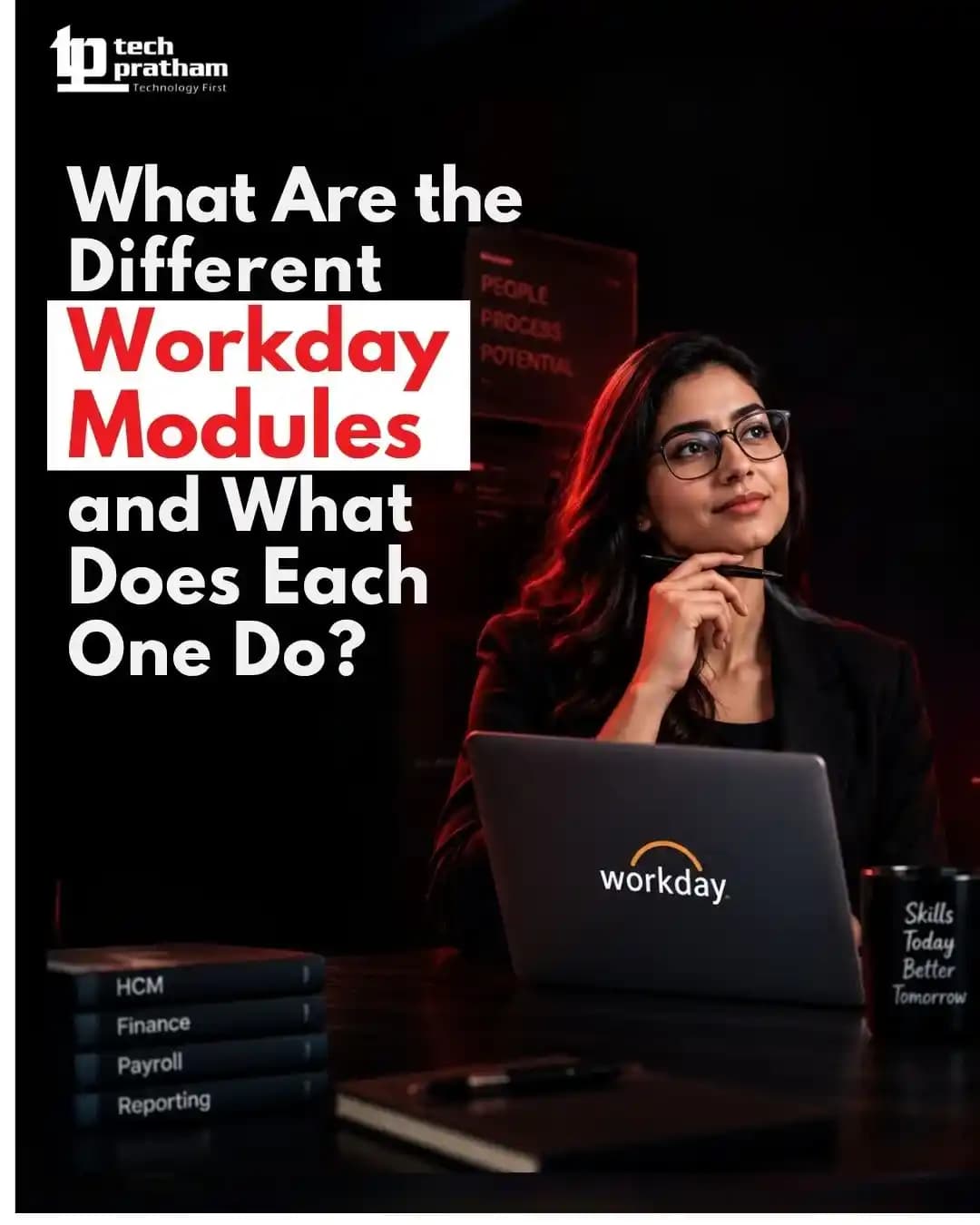
What Are the Different Workday Modules and What Does Each One Do?
Explore Workday modules, their functions, how they work together, and which specialization may suit your skills and career goals.




 +91-8882178896
 +1 (343) 477-0926