Workday Training – The Best Workday HCM Course

In today's rapidly evolving digital workplace, organizations are moving away from traditional HR systems and adopting cloud-based Human Capital Management (HCM) platforms. Among the leading solutions available, Workday has emerged as one of the most trusted platforms for managing human resources, payroll, finance, talent acquisition, and workforce planning.
As companies continue their digital transformation journey, the demand for certified Workday professionals is increasing across industries. This has created exciting career opportunities for fresh graduates, HR professionals, IT consultants, and business analysts who want to build a rewarding career in enterprise cloud applications.
If you are looking for the best Workday Training in India, enrolling in a professional Workday HCM Course can help you gain industry-relevant skills, practical knowledge, and certification guidance required to succeed in today's competitive job market.
What Is Workday?
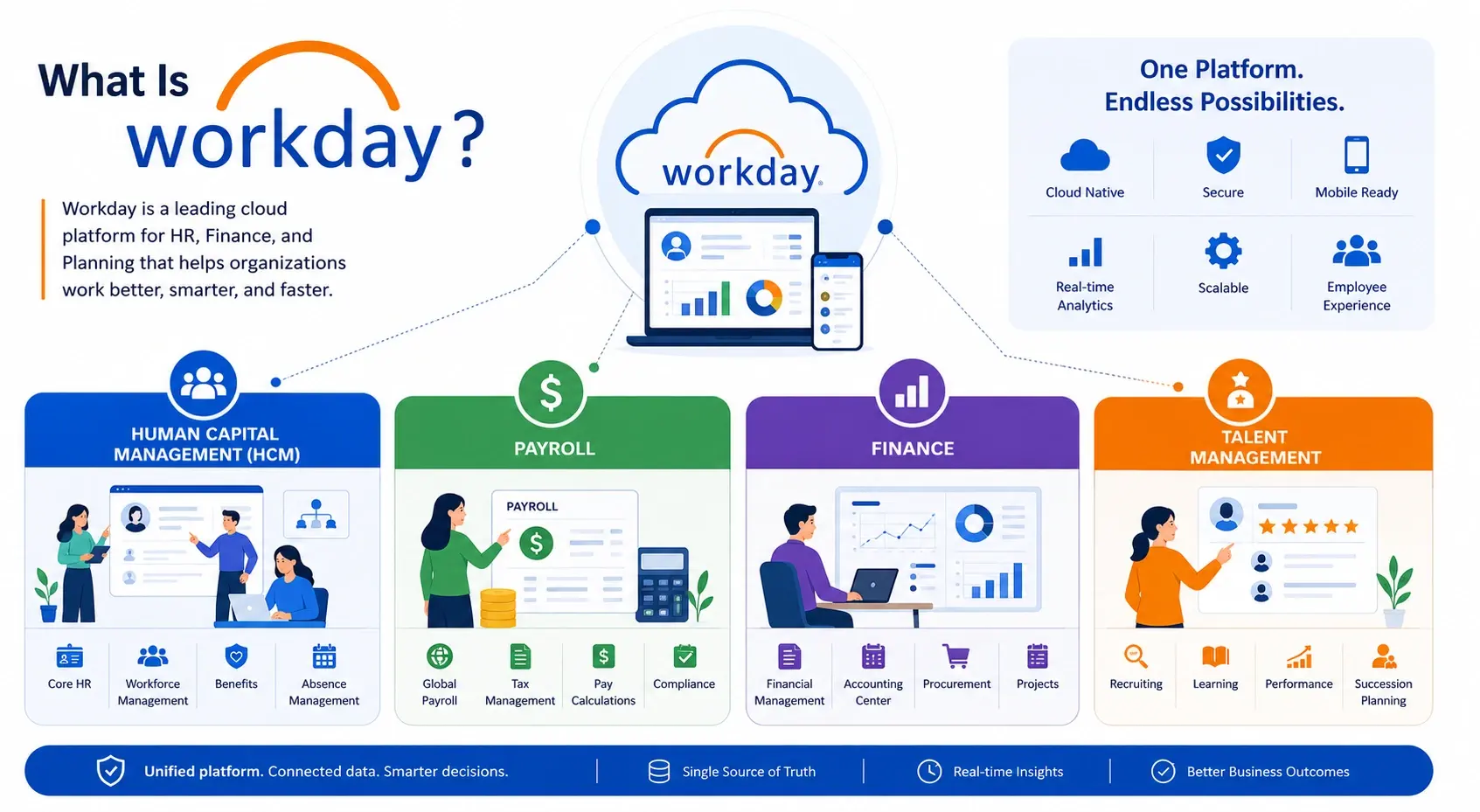
Workday is a cloud-based enterprise software platform designed to help organizations manage their workforce and financial operations efficiently. It combines Human Capital Management (HCM), Payroll Management, Workforce Management, Talent Management, and Financial Management into a single integrated system.
Unlike traditional HR software, Workday provides real-time data access, automation capabilities, analytics dashboards, and user-friendly interfaces that improve business processes and employee experiences.
Organizations use Workday to manage:
- Employee Lifecycle Management
- Recruitment and Onboarding
- Compensation Management
- Workforce Planning
- Payroll Processing
- Benefits Administration
- Talent Management
- Performance Management
- Learning and Development
- Financial Operations
Today, thousands of multinational companies rely on Workday to streamline their HR and business operations.
Why Is Workday Training in High Demand?
The growing adoption of cloud ERP and HCM solutions has significantly increased the demand for skilled Workday professionals. Businesses are continuously searching for experts who can implement, configure, maintain, and optimize Workday applications.
As organizations migrate from legacy HR systems to modern cloud platforms, the need for trained Workday consultants and administrators continues to rise. Workday Training helps professionals develop practical expertise in HCM, payroll, reporting, integrations, and business process management, making them highly valuable in today's job market.
With increasing enterprise adoption and digital transformation initiatives, Workday Training continues to create excellent career opportunities, attractive salary prospects, and long-term growth for professionals in the cloud ERP and HR technology domain.
Reasons Behind the Growing Demand
1. Rapid Cloud Adoption
Organizations are replacing traditional systems with cloud-based HR software solutions to improve efficiency and scalability.
2. Global Workday Implementations
Large enterprises across healthcare, retail, manufacturing, banking, IT services, and consulting industries use Workday for HR and finance management.
3. Digital Transformation Initiatives
Companies require professionals who understand business process automation and workforce management technologies.
4. Strong Career Growth
Workday specialists enjoy excellent career progression opportunities due to the limited availability of experienced professionals.
5. Attractive Salary Packages
Certified Workday professionals often receive competitive salary packages compared to many traditional HR and ERP roles.
What Is Included in a Workday HCM Course?
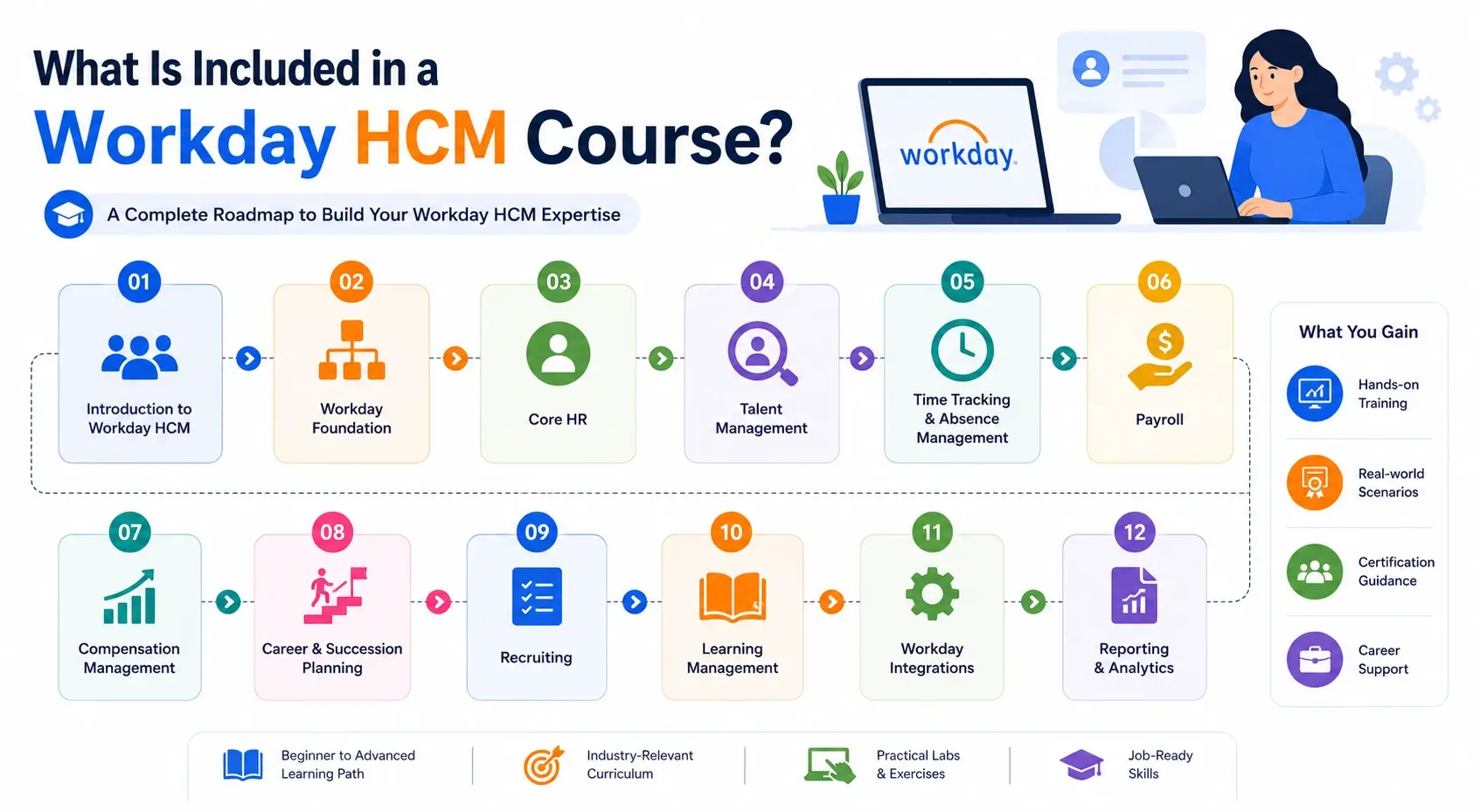
A comprehensive Workday HCM Course covers both theoretical concepts and practical implementation techniques.
The course is designed to help learners understand Workday architecture, business processes, security frameworks, and core HCM functionalities.
Core Modules Covered in Workday Training
Our Workday Training program provides comprehensive knowledge of Workday applications, business processes, reporting, and workforce management concepts required in modern enterprise environments.
Introduction to Workday
Learn the fundamentals of the Workday platform, including Workday architecture, cloud ERP concepts, navigation, user interface, and how organizations use Workday to manage HR and business operations efficiently.
Human Capital Management (HCM)
Understand core HCM concepts such as employee data management, organizational structures, supervisory organizations, staffing models, and job profiles. This module helps learners understand how Workday manages the employee lifecycle.
Business Process Framework
Gain practical knowledge of configuring business processes, approval workflows, routing rules, notifications, and process automation to support organizational requirements and improve operational efficiency.
Workforce Management
Learn workforce management concepts including time tracking, absence management, employee scheduling, and workforce planning to support day-to-day HR operations.
Talent Management
Explore performance management, goal tracking, career development, succession planning, and employee growth strategies that help organizations develop and retain talent.
Payroll and Compensation Management
Understand payroll processing, compensation planning, benefits administration, and payroll-related business processes used to manage employee rewards and compliance requirements.
Security and User Roles
Learn Workday security concepts, including security groups, domain security policies, role-based access controls, and user permissions to ensure secure data management.
Reporting and Analytics
Develop skills in creating custom reports, calculated fields, dashboards, and workforce analytics that help organizations make data-driven decisions.
Integration Fundamentals
Gain an understanding of Workday integrations, EIB basics, data migration concepts, and third-party system connectivity to support enterprise data exchange and automation requirements.
These modules provide learners with the practical skills needed to work as Workday Consultants, HCM Specialists, Administrators, Business Analysts, and Implementation Professionals in the growing Workday ecosystem.
Benefits of Learning Workday HCM
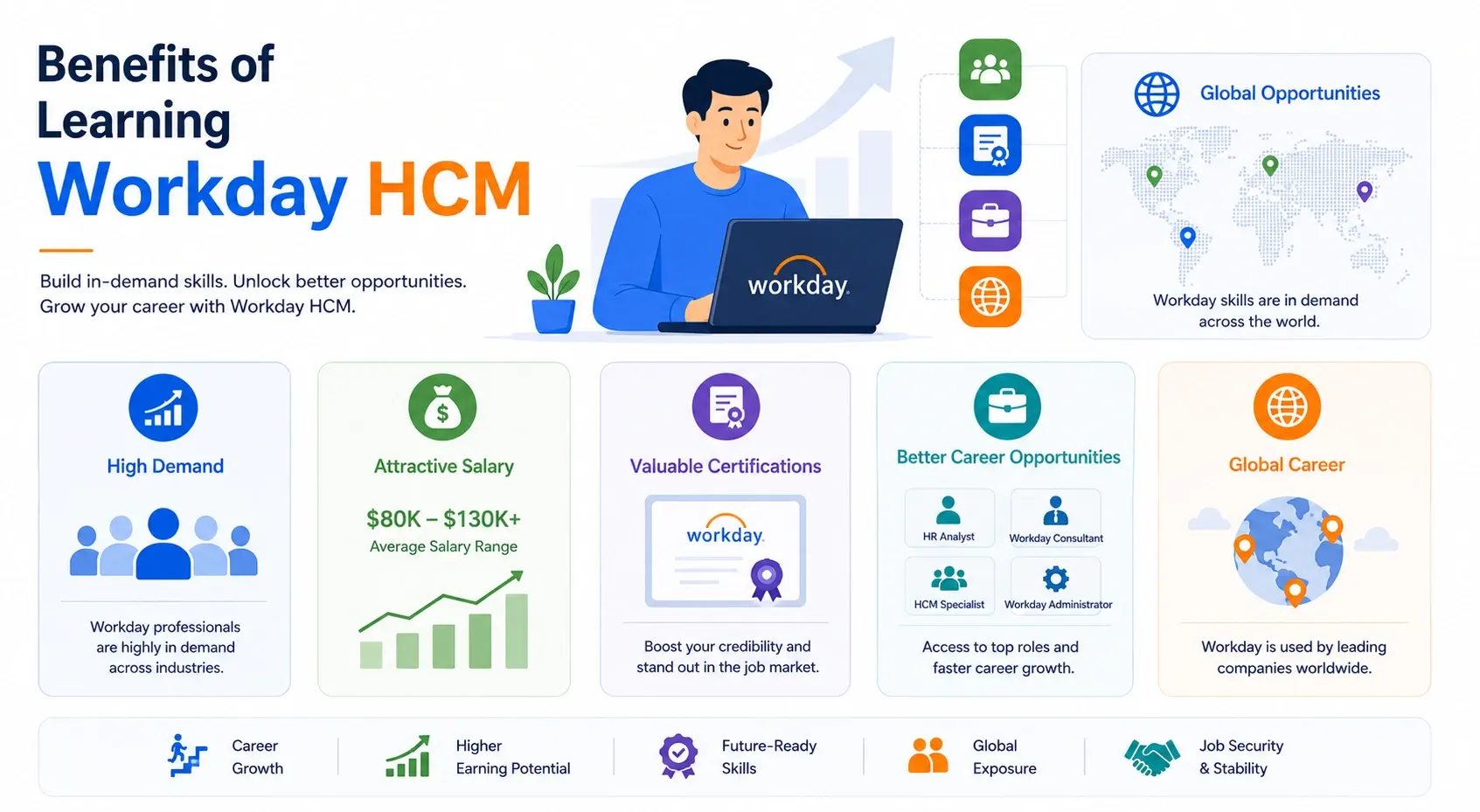
Learning Workday HCM offers numerous career advantages for professionals looking to build expertise in cloud-based HR technology, workforce management, and enterprise applications. As more organizations adopt Workday to modernize their HR operations, the demand for skilled professionals continues to grow.
Access to High-Paying Jobs
Workday professionals are highly sought after by consulting firms, IT service providers, and multinational organizations. Skilled consultants and administrators often enjoy competitive salary packages and strong career progression opportunities.
Industry-Relevant Skills
Through Workday training, learners gain practical knowledge of Human Capital Management (HCM), workforce management, payroll systems, talent management, reporting, and business process automation, making them valuable assets to employers.
Global Career Opportunities
Workday is used by organizations across various industries worldwide. This widespread adoption creates opportunities to work on domestic and international implementation, support, and consulting projects.
Future-Proof Career Path
As businesses continue investing in cloud HR solutions and digital transformation initiatives, Workday remains one of the fastest-growing enterprise platforms, ensuring long-term career stability and growth.
Professional Recognition
Completing a Workday Certification Course validates your skills and demonstrates your commitment to professional development. Certifications can enhance credibility, improve employability, and increase opportunities for career advancement.
With strong industry demand, growing adoption, and diverse career paths, Workday HCM continues to be an excellent choice for professionals seeking long-term success in the cloud ERP and HR technology domain.
Who Should Enroll in Workday Training?
Workday Training is suitable for professionals from various educational and professional backgrounds.
- Fresh Graduates
- HR Professionals
- Payroll Specialists
- ERP Consultants
- Business Analysts
- IT Professionals
Career Opportunities After Completing Workday Training
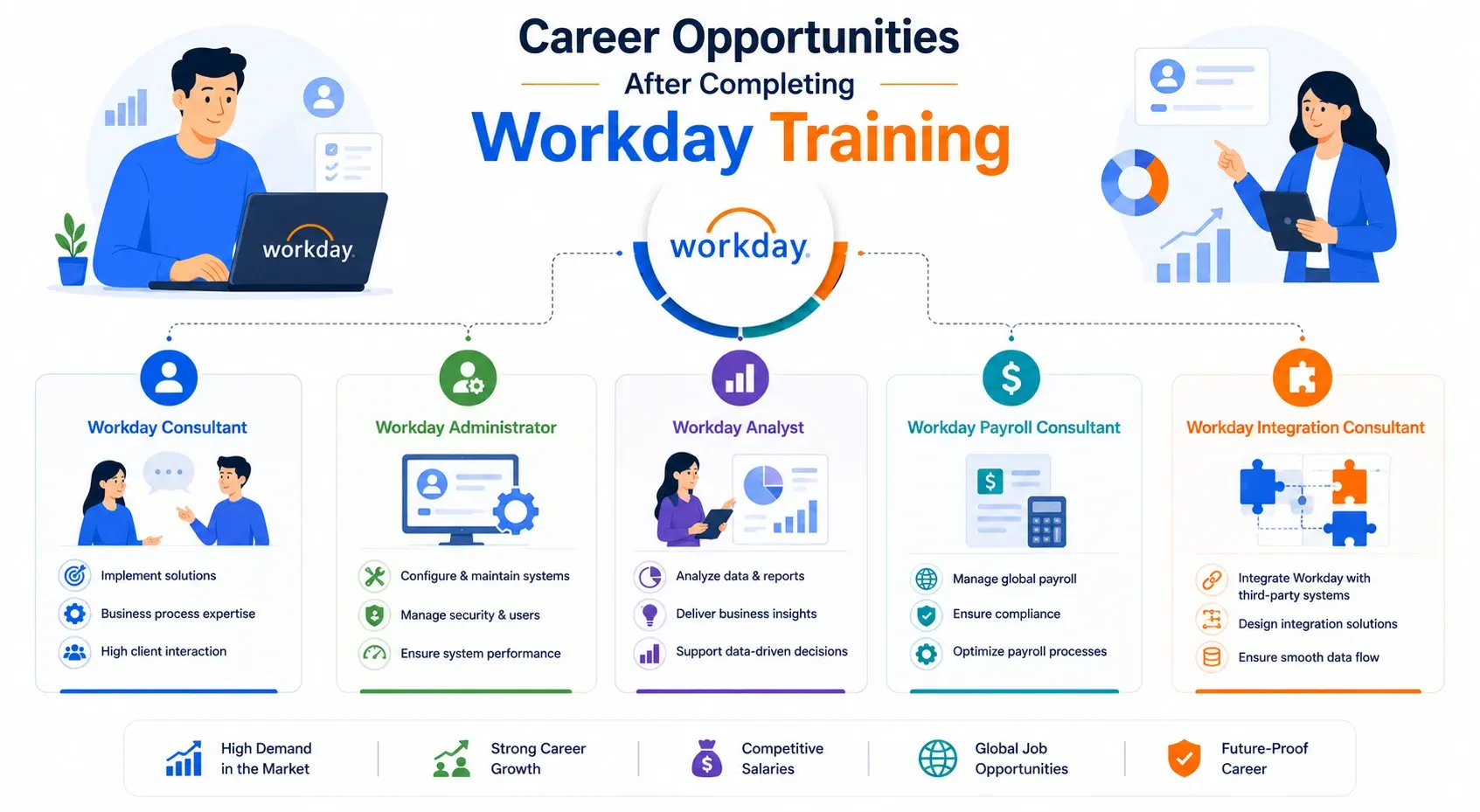
One of the biggest advantages of enrolling in Workday Training is the wide range of career opportunities available across consulting firms, IT companies, multinational corporations, and enterprise organizations. As businesses continue adopting cloud-based HR and workforce management solutions, the demand for skilled Workday professionals continues to grow.
Workday HCM Consultant
Workday HCM Consultants help organizations configure, implement, and optimize Human Capital Management processes, ensuring efficient workforce and HR operations.
Workday Functional Consultant
These professionals work closely with business teams to gather requirements, configure Workday applications, and support process improvements across various HR functions.
Workday Administrator
Workday Administrators manage system configuration, user access, security settings, business processes, and day-to-day platform operations.
Workday Analyst
Workday Analysts create reports, dashboards, and workforce analytics that help organizations make informed business decisions using real-time data.
Workday Payroll Consultant
Payroll Consultants specialize in payroll configuration, compensation management, benefits administration, payroll processing, and compliance requirements within the Workday platform.
Workday Integration Consultant
Integration Consultants manage data migration, system connectivity, Workday integrations, EIB processes, and third-party application integrations to ensure seamless data flow across enterprise systems.
Workday Support Consultant
Support Consultants provide troubleshooting, system maintenance, user assistance, issue resolution, and ongoing support for Workday applications and business processes.
With experience and certifications, professionals can progress into senior consultant, solution architect, project lead, and implementation manager roles, making Workday a highly rewarding career path with strong growth potential.
Top Industries Hiring Workday Professionals in India
The demand for Workday professionalsis growing across multiple industries as organizations adopt cloud-based HR, payroll, and workforce management solutions. Companies are actively seeking skilled consultants, administrators, analysts, and implementation specialists to support their digital transformation initiatives.
Information Technology (IT)
Leading IT companies and global technology service providers implement, customize, and support Workday solutions for clients worldwide. This sector offers numerous opportunities for Workday consultants and implementation professionals.
Banking and Financial Services
Banks and financial institutions use Workday for workforce planning, talent management, payroll administration, and employee data management, creating strong demand for Workday specialists.
Healthcare
Hospitals, healthcare networks, and medical organizations rely on Workday to manage employee records, workforce scheduling, payroll processes, and talent development programs.
Manufacturing
Manufacturing companies use Workday to streamline workforce management, employee lifecycle processes, performance tracking, and organizational planning across multiple locations.
Retail and E-Commerce
Retail and e-commerce businesses depend on Workday for recruitment, employee engagement, payroll management, workforce scheduling, and talent development initiatives.
Consulting Services
Consulting firms are among the largest employers of Workday professionals. They continuously hire Workday HCM Consultants, Functional Consultants, Integration Consultants, and Support Specialists to work on implementation, migration, and optimization projects for enterprise clients.
Workday Certification Course: Why It Matters
A Workday Certification Course plays a crucial role in helping professionals build a successful career in the rapidly growing cloud ERP industry. As more organizations adopt Workday for Human Capital Management (HCM), Payroll, Finance, and Workforce Planning, employers increasingly prefer candidates who possess strong Workday knowledge and practical implementation skills.
A structured Workday certification course helps learners gain a deeper understanding of Workday applications, business processes, and real-world implementation scenarios. It not only strengthens technical and functional expertise but also demonstrates a commitment to professional development, making candidates more competitive in the job market.
Workday certification training typically focuses on key areas such as:
- Workday Functional Concepts
- Business Process Configuration
- Security Administration
- Reporting and Analytics
- Organizational Structures
- Staffing Models
- Compensation and Benefits Management
- Workday HCM Implementation Strategies
- Data Management and Integrations
One of the biggest advantages of completing a Workday Certification Course is the ability to apply theoretical knowledge to practical business situations. Through hands-on exercises, case studies, and project-based learning, professionals develop the skills required to support Workday implementations, optimize business processes, and improve workforce management operations.
For more details, read: Complete guide to Workday Certification Course
Essential Skills You Will Gain During Workday Training
A structured training program helps learners develop technical and functional expertise.
Key Skills Include
- Human Capital Management (HCM)
- Workforce Management
- Payroll Management
- Talent Management
- Employee Lifecycle Management
- HR Software Training
- Business Process Automation
- Cloud ERP Fundamentals
- Reporting and Analytics
- Security Administration
- Data Management
- Process Optimization
These skills are highly valued by employers implementing digital HR transformation projects.
Why Companies Prefer Workday Professionals
In today's competitive business environment, organizations are continuously looking for ways to improve operational efficiency, optimize workforce management, and accelerate digital transformation initiatives. As more companies adopt Workday as their preferred cloud-based HR and finance solution, the demand for skilled Workday professionals continues to grow across industries.
Workday professionals play a critical role in helping organizations implement, configure, manage, and optimize Workday applications. Their expertise enables businesses to streamline complex processes, improve workforce productivity, and make data-driven decisions that support long-term growth.
Streamlined HR Processes
One of the primary reasons organizations hire Workday professionals is their ability to simplify and automate HR operations. Workday experts help configure workflows for recruitment, onboarding, employee management, performance evaluations, promotions, and offboarding processes. This reduces manual effort, minimizes administrative tasks, and improves overall operational efficiency.
Improved Employee Experience
Modern employees expect seamless digital experiences in the workplace. Workday professionals help organizations create user-friendly systems that allow employees to access information, manage benefits, request leave, update personal details, and complete HR-related tasks easily. A better employee experience often leads to higher engagement and satisfaction levels.
Better Data Accuracy and Compliance
Accurate workforce data is essential for effective business operations. Workday professionals help organizations maintain clean, consistent, and reliable employee records while reducing data duplication and manual errors. This also supports compliance with internal policies and regulatory requirements.
Faster Decision-Making Through Real-Time Insights
Organizations increasingly rely on workforce analytics and business intelligence to make strategic decisions. Workday professionals help configure reporting tools, dashboards, and analytics solutions that provide real-time access to critical workforce and operational data. This enables business leaders to make informed decisions quickly and confidently.
Business Process Automation
Workday offers powerful automation capabilities that help organizations eliminate repetitive manual tasks. Workday experts design and optimize automated workflows for approvals, employee transactions, payroll processing, performance reviews, and workforce planning. Automation improves efficiency, reduces processing time, and allows teams to focus on strategic business activities.
Enhanced Workforce Planning
Effective workforce planning is essential for organizational growth. Workday professionals help companies analyze workforce trends, forecast staffing requirements, identify skill gaps, and support talent management initiatives. These capabilities allow organizations to align workforce strategies with business objectives.
Advanced Reporting and Analytics
Workday professionals play a key role in developing custom reports and dashboards that provide valuable insights into employee performance, recruitment metrics, turnover rates, compensation trends, and workforce productivity. These insights help organizations identify opportunities for improvement and optimize business performance.
Scalable Cloud-Based Infrastructure
Unlike traditional on-premise systems, Workday operates on a cloud-based infrastructure that supports business growth and scalability. Workday professionals help organizations maximize the benefits of cloud technology by ensuring efficient system configuration, performance optimization, and seamless integration with other enterprise applications.
Support for Digital Transformation Initiatives
Many organizations are investing heavily in digital transformation to improve operational agility and competitiveness. Workday professionals contribute to these initiatives by helping companies modernize HR and finance operations, automate business processes, and adopt cloud-first strategies that support future growth.
Ability to Manage Complex Workday Implementations
Large organizations often require customized Workday implementations that align with unique business requirements. Skilled Workday consultants and analysts help manage implementation projects, configure system functionality, support data migration activities, and ensure successful deployment with minimal disruption to business operations.
Strong Return on Technology Investments
Organizations invest significantly in enterprise software solutions and expect measurable business outcomes. Workday professionals help maximize the value of these investments by optimizing system usage, improving process efficiency, enhancing reporting capabilities, and driving better workforce outcomes.
How to Start a Career in Workday
With the growing adoption of Workday across industries, many students, HR professionals, finance specialists, and IT professionals are exploring Workday as a long-term career option. The platform offers excellent opportunities in Human Capital Management (HCM), Payroll, Finance, Reporting, and Integration, making it one of the most sought-after cloud ERP career paths in 2026.
If you are wondering how to become a Workday consultant in India, following a structured learning and career development approach can significantly improve your chances of success.
Step 1: Understand Human Capital Management (HCM) Fundamentals
Before learning Workday, it is important to understand the basic concepts of Human Capital Management (HCM) and workforce operations. Workday is widely used to manage employee data, organizational structures, recruitment, compensation, payroll, benefits, and performance management.
Developing a strong foundation in HR processes and business workflows helps learners understand how Workday supports organizational operations and employee lifecycle management. Even professionals from non-HR backgrounds can benefit from learning these fundamentals before moving into advanced Workday modules.
Step 2: Enroll in a Professional Workday Training Program
The next step is to join a structured Workday training program that provides comprehensive coverage of Workday concepts and practical business scenarios. A professional training course helps learners understand the platform's functionality, navigation, business processes, reporting capabilities, and implementation methodologies.
A well-designed Workday training program typically includes:
- Workday HCM concepts
- Organization structures
- Staffing models
- Business process configuration
- Security administration
- Reporting and analytics
- Workforce management
- Practical exercises and projects
Choosing a course that includes hands-on learning and real-world use cases can significantly improve job readiness.
Step 3: Gain Practical Experience Through Real-Time Projects
Practical experience is one of the most valuable aspects of Workday learning. Organizations prefer candidates who can apply their knowledge in real business environments rather than relying solely on theoretical concepts.
Working on real-time scenarios helps learners understand:
- Employee lifecycle management
- Business process automation
- Reporting requirements
- Organizational structures
- Data management workflows
- Workforce planning processes
Practical exposure builds confidence and helps learners understand how Workday is used in day-to-day business operations.
Step 4: Develop Expertise in Workday Business Processes
To build a successful career in Workday, professionals should focus on understanding business processes and system configurations. This includes learning how organizations manage recruitment, onboarding, promotions, transfers, compensation, payroll processing, performance evaluations, and workforce planning within Workday.
A deeper understanding of these business processes helps professionals contribute effectively during implementation, support, and optimization projects.
Step 5: Prepare for Workday Certification
Workday certification preparation can help learners strengthen their knowledge and demonstrate their expertise to potential employers. Certification-focused training helps professionals understand Workday functionality, business process configuration, reporting techniques, security administration, and implementation best practices.
Employers often value candidates who have invested time in developing specialized Workday knowledge because it indicates commitment to professional growth and industry standards.
Step 6: Build a Professional Resume and Online Presence
A strong resume plays an important role in securing Workday job opportunities. Learners should highlight:
- Workday training completed
- Project experience
- Relevant skills
- Certifications
- Business process knowledge
- Reporting and analytics expertise
Maintaining a professional profile on platforms such as LinkedIn can also help candidates connect with recruiters, hiring managers, and Workday professionals within the industry.
Step 7: Apply for Entry-Level and Mid-Level Workday Roles
Once learners gain sufficient knowledge and practical experience, they can begin applying for Workday-related positions. Depending on their background and specialization, suitable roles may include:
Once learners gain sufficient knowledge and practical experience, they can begin applying for Workday-related positions. Depending on their background and specialization, suitable roles may include:
- Workday Consultant
- Workday HCM Analyst
- Workday Administrator
- Workday Support Specialist
- Workday Reporting Analyst
- Workday Functional Consultant
- Workday Payroll Consultant
- Workday Integration Associate
Many organizations provide on-the-job training and mentorship opportunities that help professionals further develop their Workday expertise.
Step 8: Continue Learning and Expanding Your Skills
The Workday ecosystem continues to evolve with new features, business applications, reporting capabilities, and automation technologies. Successful Workday professionals stay updated with industry trends, emerging technologies, and best practices.
Continuous learning in areas such as workforce analytics, reporting, integrations, security administration, and cloud ERP technologies can create additional career advancement opportunities and improve long-term earning potential.
Building a Long-Term Career in Workday
A career in Workday offers excellent growth opportunities for individuals interested in cloud ERP systems, workforce management, HR technology, and digital transformation. By combining structured training, practical project experience, business process knowledge, and continuous learning, professionals can build a strong foundation for a rewarding and future-focused career.
As organizations continue investing in cloud-based HR and finance solutions, the demand for skilled Workday consultants, analysts, administrators, and implementation specialists is expected to remain strong, making Workday one of the most promising career paths in the enterprise technology sector.
Why Choose Tech Pratham for Workday Training in India?
Tech Pratham offers industry-focused Workday training designed to help learners build practical skills and achieve their career goals in the growing cloud ERP industry. The program combines expert-led instruction, hands-on learning, certification guidance, and placement support to create a complete learning experience.
Industry-Relevant Curriculum
Learn essential Workday HCM concepts, business processes, reporting, security administration, and workforce management aligned with current industry requirements.
Experienced Trainers
Get trained by industry professionals with real-world Workday implementation and consulting experience.
Hands-On Practical Learning
Gain practical exposure through real-time projects, assignments, case studies, and business scenarios that help you build job-ready skills.
Certification Guidance
Receive expert support to strengthen your Workday knowledge and prepare for certification opportunities.
Placement Assistance
Benefit from resume-building support, interview preparation, mock interviews, and career guidance to improve your job prospects.
Flexible Learning Options
Choose convenient online training programs designed for students, freshers, and working professionals.
Career-Focused Support
Get personalized mentoring and guidance to help you start and grow a successful career in the Workday ecosystem.
With practical training, industry expertise, and dedicated career support, Tech Pratham helps learners confidently prepare for Workday career opportunities in India and beyond.
Explore TechPratham's programs:
Future Scope of Workday in India
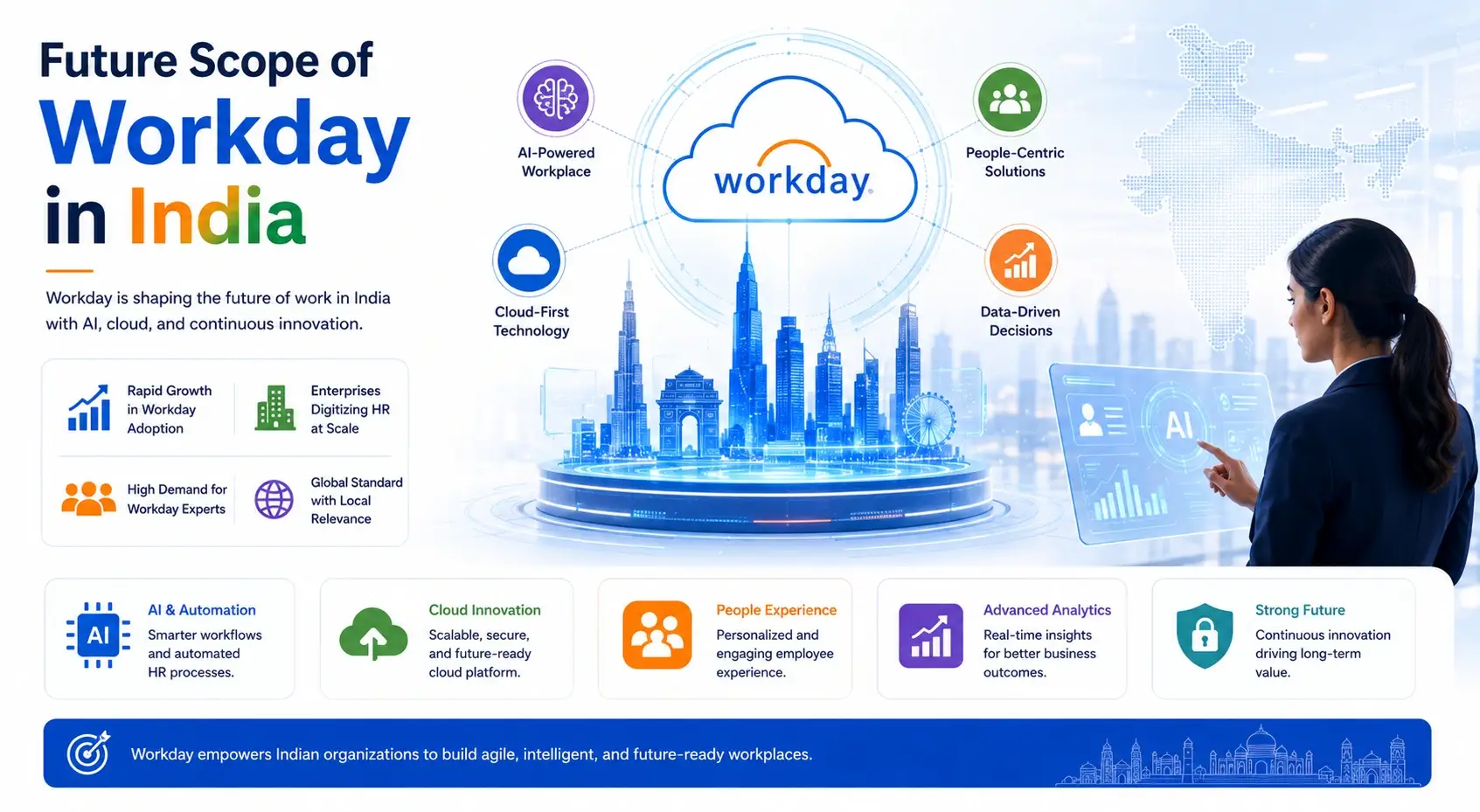
The future of Workday in India looks extremely promising as organizations continue accelerating their digital transformation initiatives and adopting cloud-based HR and finance solutions. Businesses across industries are increasingly moving away from traditional systems and investing in modern enterprise platforms that improve efficiency, workforce management, and business decision-making.
As Workday adoption continues to grow, the demand for skilled professionals with expertise in the following areas is expected to increase significantly:
- Workday HCM
- Workforce Management
- Talent Management
- Payroll Management
- Reporting and Analytics
- Business Process Automation
- Workday Integration
- Cloud ERP Systems
Organizations are actively seeking professionals who can help implement, manage, optimize, and support Workday applications. This growing demand is creating excellent career opportunities for freshers, HR professionals, finance specialists, and IT professionals looking to build careers in cloud technology.
With competitive salary packages, global job opportunities, and strong industry demand, Workday continues to be one of the most promising career paths in the enterprise software industry. Professionals who start learning Workday today and gain practical experience can position themselves for long-term career growth and success in one of the fastest-growing cloud ERP domains.
Conclusion
Workday has become one of the most powerful cloud-based Human Capital Management platforms used by organizations worldwide. With growing demand for skilled professionals, enrolling in a comprehensive Workday Training program is an excellent investment for your future
Whether you are a fresher, HR professional, payroll specialist, or IT consultant, a professional Workday HCM Course can help you acquire in-demand skills, enhance your employability, and unlock rewarding career opportunities.
If you are looking for the best Workday Training in India, Tech Pratham provides industry-focused learning, practical exposure, certification guidance, and placement support to help you achieve your career goals.
Related Articles

How Can Non-IT Professionals Start a Career in Workday HCM?
Learn how non-IT professionals can enter Workday HCM, build relevant skills, gain practical experience, and explore suitable career opportunities.

What Are the Different Workday Modules and What Does Each One Do?
Explore Workday modules, their functions, how they work together, and which specialization may suit your skills and career goals.
How Does Workday HCM Help HR Teams Manage the Employee Lifecycle?
Learn how Workday HCM connects recruitment, onboarding, talent, learning, workforce management, analytics, and employee development.





 +91-8882178896
 +1 (343) 477-0926