
Table of Contents
The Ultimate Guide to Microsoft Dynamics 365 Finance & Operations Implementation: A Step-by-Step Roadmap for Enterprise Integration
Organizations today rely on modern enterprise software to streamline operations, improve financial management, and gain real-time insights into business performance. Microsoft Dynamics 365 Finance & Operations has become one of the most powerful cloud-based ERP solutions used by global enterprises to manage finance, supply chain, and operational processes.
Because of its growing adoption, professionals and organizations are increasingly exploring Dynamics 365 Finance and Operations Training to understand how the platform works and how it can be successfully implemented within complex business environments. Many companies across India, especially in major technology hubs like Hyderabad and Noida, are actively adopting Dynamics 365 solutions to modernize their operations.
This guide explains the implementation process, key modules, benefits, and how professionals can build expertise through Microsoft Dynamics 365 Training in India.
Understanding Dynamics 365 Finance & Operations for Modern Enterprises
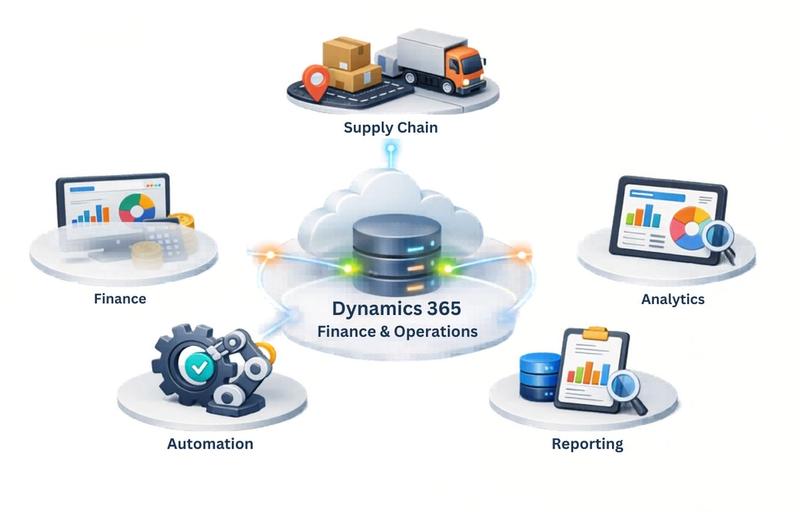
Microsoft Dynamics 365 Finance & Operations is a cloud-based enterprise resource planning (ERP) system designed to help organizations manage financial processes, supply chain operations, and business analytics within a unified platform.
Unlike traditional ERP systems, Dynamics 365 integrates advanced technologies such as artificial intelligence, automation, and predictive analytics. These capabilities enable companies to gain real-time financial insights, automate workflows, and improve operational efficiency.
Many professionals who want to work with enterprise ERP solutions enroll in Dynamics 365 Finance and Operations Training to understand financial modules, business process automation, and enterprise implementation strategies.
Why Organizations Are Adopting Dynamics 365 Finance & Operations
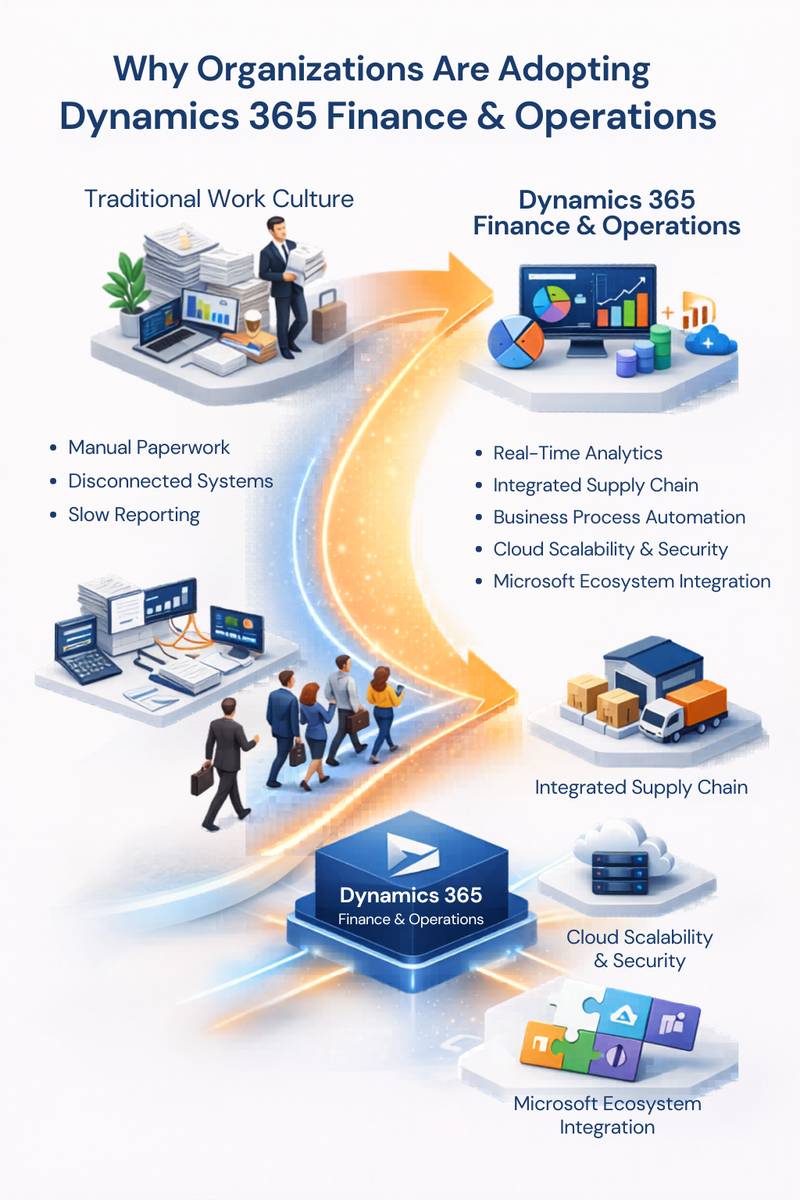
Businesses across industries are rapidly adopting Dynamics 365 Finance & Operations because it offers scalability, flexibility, and deep integration with the Microsoft ecosystem.
Several key advantages make this platform a preferred choice for modern enterprises:
- Real-time financial reporting and analytics
- Integrated supply chain management
- Automation of business processes
- Cloud-based scalability and security
- Seamless integration with Microsoft tools such as Power BI and Azure
Because of these capabilities, professionals with expertise gained through D365 training in india are increasingly valuable in the ERP consulting and enterprise technology sectors.
Learn More
Dynamics 365 Finance and Operations Training: Building Implementation Expertise
Learning the implementation and configuration of Dynamics 365 requires both technical and functional knowledge. Professionals who enroll in Dynamics 365 Finance and Operations Training gain a deep understanding of how organizations deploy and customize the platform.
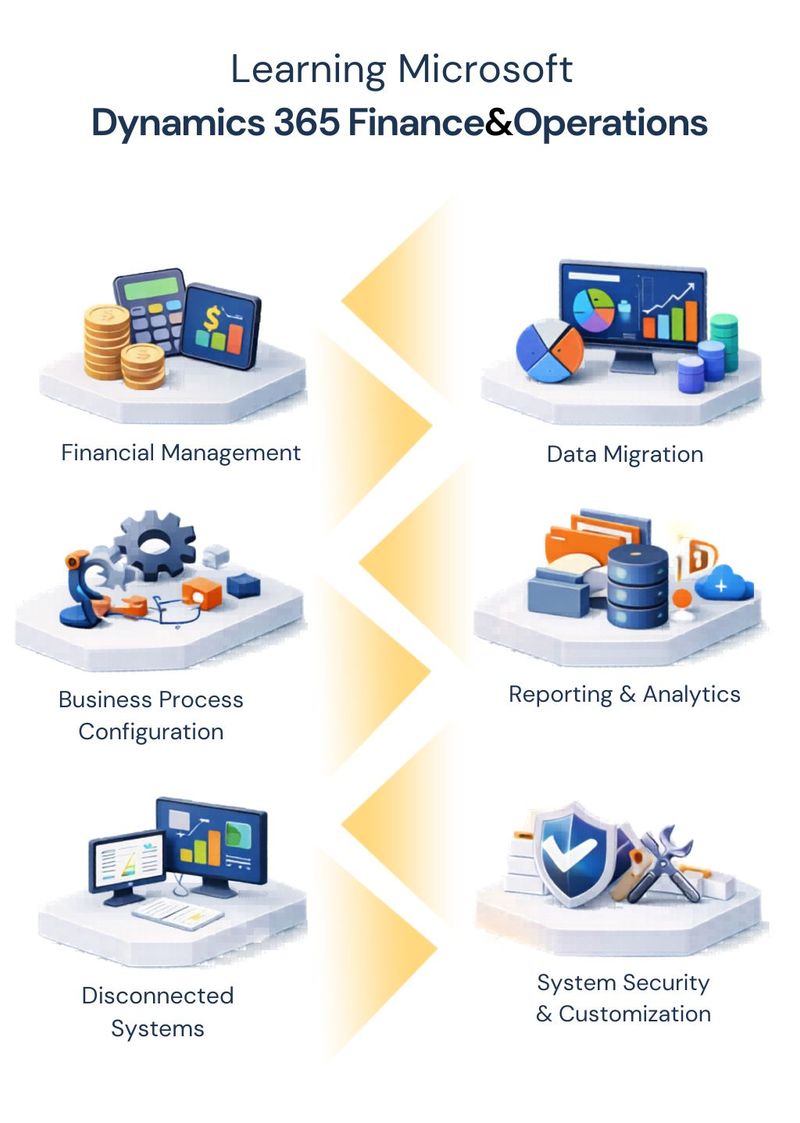
Training programs generally focus on:
- Financial management modules
- Business process configuration
- Enterprise integration strategies
- Data migration and reporting
- System customization and security
Professionals pursuing Dynamics 365 Functional Training India learn how to align business processes with ERP systems, while those interested in development often explore Dynamics 365 Technical Training India programs to build customization and integration skills.
Step-by-Step Roadmap for Dynamics 365 Finance & Operations Implementation
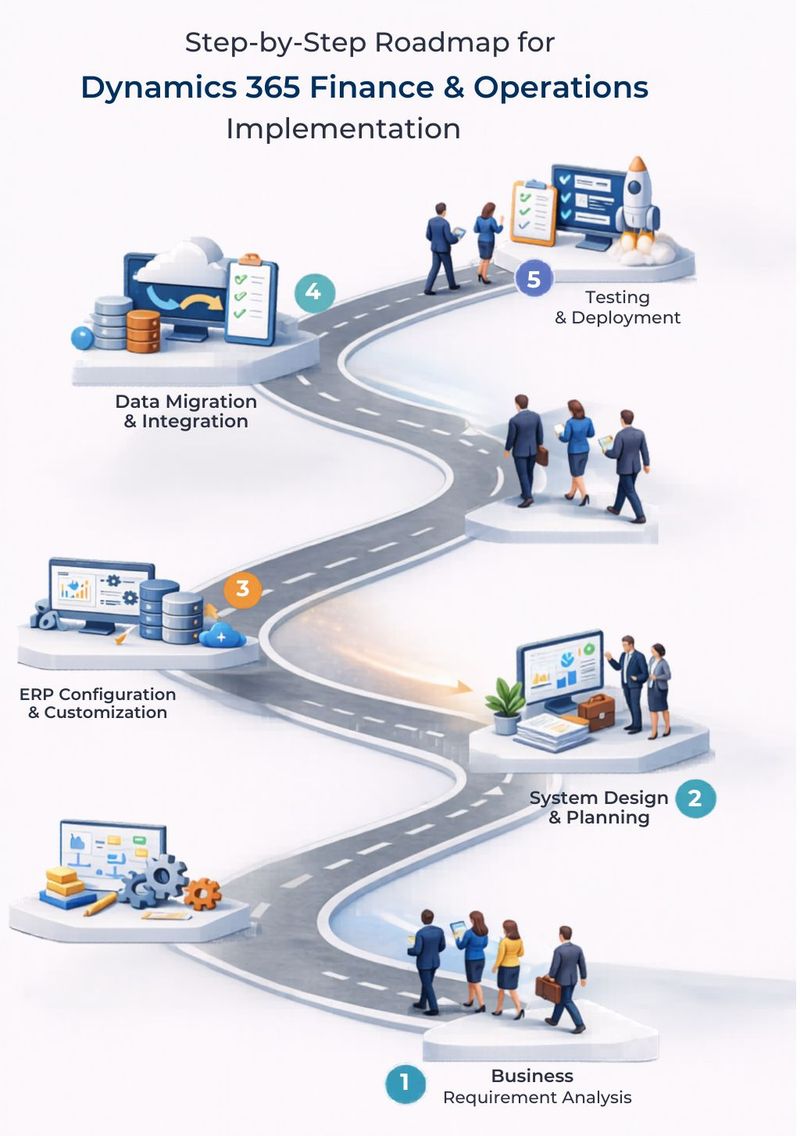
Implementing an enterprise ERP system requires careful planning and execution. Organizations typically follow a structured roadmap to ensure a successful deployment.
1. Business Requirement Analysis
The first step involves analyzing the organization’s business processes and identifying the requirements for financial management, supply chain operations, and reporting.
Consultants work with stakeholders to understand business needs and determine how Dynamics 365 can support those processes.
2. System Design and Planning
During this stage, consultants design the system architecture and determine how modules will be configured. This includes defining workflows, security roles, and data structures.
Professionals trained through Microsoft Dynamics 365 Training in India often participate in these planning activities during implementation projects.
3. Configuration and Customization
The next step involves configuring the ERP system according to the organization’s requirements. Functional consultants configure financial modules, procurement processes, and reporting tools.
Technical specialists who complete Dynamics 365 Technical Training India focus on customization, integrations, and application development.
4. Data Migration and Integration
Organizations must migrate existing data from legacy systems into Dynamics 365. This stage ensures that financial records, customer data, and operational information are transferred accurately.
ERP consultants often integrate Dynamics 365 with other enterprise systems such as CRM platforms and business intelligence tools.
5. Testing and Deployment
Before going live, organizations conduct extensive testing to ensure that all business processes function correctly within the new ERP system.
Once testing is complete, the system is deployed and employees are trained to use the platform effectively.
Dynamics 365 CRM Training for Integrated Customer Management
While Finance & Operations focuses on ERP processes, many organizations also integrate Dynamics 365 CRM applications to improve customer engagement and sales management.
Professionals who complete Dynamics 365 CRM Training learn how companies manage customer relationships, service requests, and marketing automation using Dynamics CRM modules.
Combining CRM capabilities with ERP functions allows organizations to build a fully integrated digital business ecosystem.
Dynamics 365 Sales Training for Revenue Optimization
Sales teams rely on data-driven insights to track opportunities, manage leads, and improve customer interactions. Through Dynamics 365 Sales Training, professionals learn how organizations use sales automation tools to manage their pipelines and improve revenue performance.
Sales modules integrate seamlessly with financial systems, providing organizations with a complete view of customer transactions and business performance.
Dynamics 365 Supply Chain Management Training for Operational Efficiency
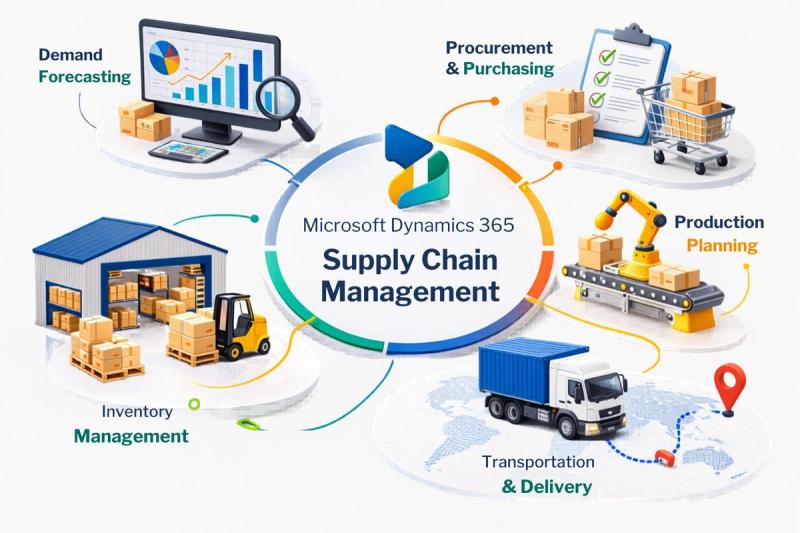
Efficient supply chain management is essential for organizations operating in manufacturing, retail, and logistics industries. Dynamics 365 provides advanced tools to manage inventory, procurement, and production planning.
Professionals who pursue Dynamics 365 Supply Chain Management Training learn how to configure supply chain workflows and optimize operational processes within the ERP system.
Dynamics 365 Finance and Operations Training Certification
Earning a certification after completing Dynamics 365 Finance and Operations training and certification programs helps professionals validate their expertise in ERP implementation and financial management processes. Many learners enroll in a Microsoft Dynamics 365 Finance and Operations certification course in India to gain practical knowledge and prepare for official Microsoft certification exams.
These certifications demonstrate a strong understanding of Dynamics 365 modules, business workflows, and enterprise system integration. As a result, certified professionals often gain better career opportunities in roles such as ERP consultant, functional consultant, or business analyst within the growing enterprise technology industry.
Dynamics 365 Finance and Operations Certification Exam Details
Exam Overview
Exam Code: MB-300
Duration: 120 minutes
Format: 40–60 questions including multiple-choice, multiple-select, drag-and-drop, and case study–based questions.
Passing Score: 700 out of 1000.
This certification exam measures a candidate’s ability to implement and configure core features in Microsoft Dynamics 365 Finance and Operations. It evaluates knowledge in areas such as system administration, data migration, security management, and environment configuration.
Online vs. Offline Testing
You can take the exam in two formats through Microsoft Certification and Pearson VUE.
Online (Remote Proctored Exam)
You can take the exam from your home or office using a webcam and microphone through Pearson VUE’s secure online proctoring system.
Offline (Testing Center)
You can also schedule and take the exam in person at an authorized Pearson VUE testing center located near your city.
Cost of the Exam
Standard Exam Fee: $165 USD (₹13,500 – ₹14,000 INR approx)
Retake Fee: $165 USD for each retake attempt (₹13,500 – ₹14,000 INR approx.)
Microsoft occasionally provides discount vouchers, student offers, and certification events where candidates may receive reduced exam fees.
Recommended Prerequisites
Although there is no mandatory prerequisite exam, Microsoft recommends that candidates:
- Have experience working with Microsoft Dynamics 365 Finance and Operations applications
- Understand ERP implementation concepts
- Know about system configuration, security, and integrations
- Complete learning modules available on Microsoft Learn
Many professionals also enroll in Dynamics 365 Finance and Operations Training programs to gain practical experience before attempting the certification exam.
How to Book the Exam
Step 1 – Create a Microsoft Certification Account
Visit the Microsoft certification portal and sign in using your Microsoft account.
Step 2 – Navigate to the Certification Page
Search for the MB-300 exam in the certification catalog.
Step 3 – Schedule with Pearson VUE
Click Schedule Exam, which redirects you to the Pearson VUE portal.
Step 4 – Select Exam Format
Choose whether you want to take the exam online (remote proctored) or at a testing center.
Step 5 – Choose Date and Time
Select your preferred exam date and time slot and complete the payment to confirm your booking.
Attempts and Retake Policy
Microsoft follows a structured retake policy for certification exams.
First Retake:
You must wait 24 hours after your first failed attempt.
Second Retake:
You must wait 48 hours before attempting the exam again.
Maximum Attempts:
Candidates can attempt the exam up to 5 times within a 12-month period.
If you fail the exam five times in one year, you must wait 12 months from your first attempt before trying again.
Certification Validity and Renewal
Microsoft role-based certifications require annual renewal.
After earning the certification, you must complete a free online renewal assessment on Microsoft Learn every year to keep your certification active and maintain your credentials.
Career Opportunities After Dynamics 365 Finance and Operations Training
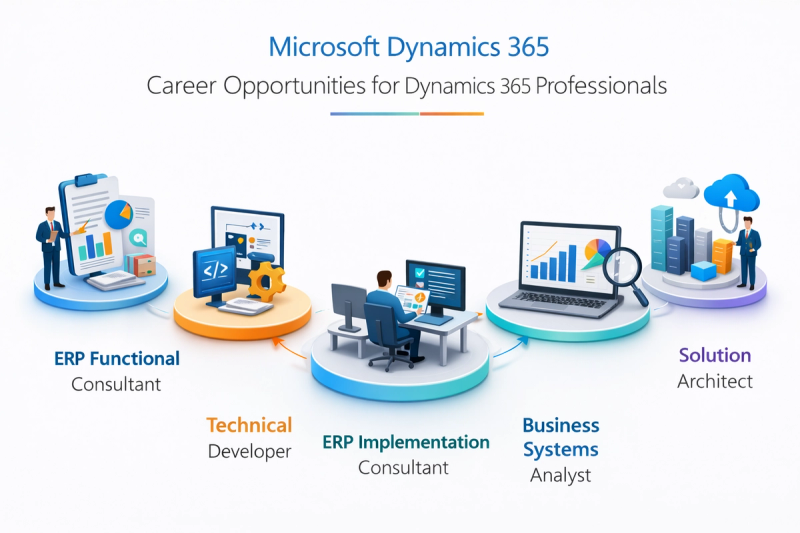
The growing adoption of enterprise ERP systems has created strong demand for professionals with Dynamics expertise. Completing Dynamics 365 Finance and Operations Training can open doors to several high-demand roles.
Common job roles include:
- Dynamics 365 Functional Consultant
- ERP Implementation Consultant
- Dynamics 365 Technical Developer
- Business Systems Analyst
- ERP Solution Architect
Many learners also pursue a Microsoft Dynamics 365 Course with Placement to gain practical experience and prepare for industry roles.
Demand for Dynamics 365 Professionals in Hyderabad and Noida
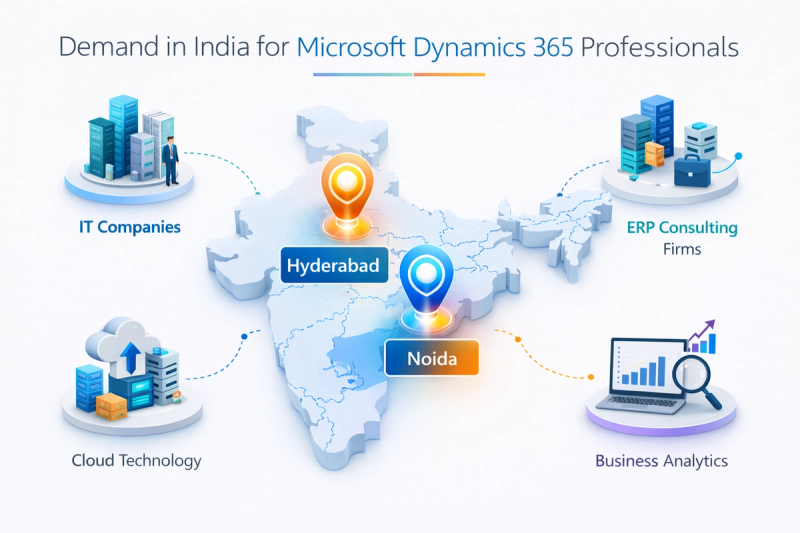
India has become a major hub for ERP consulting and enterprise technology services. Cities such as Hyderabad and Noida host numerous multinational companies, consulting firms, and Microsoft partners that implement Dynamics 365 solutions.
IT hubs like HITEC City, Madhapur, and Gachibowli in Hyderabad actively recruit professionals who possess Dynamics ERP and CRM expertise. Similarly, Noida has become an important technology destination for ERP consulting services.
Because of this growing demand, many professionals enroll in Microsoft Dynamics 365 Training to prepare for opportunities in these technology hubs.
How to Start Learning Dynamics 365 Finance & Operations
Professionals who want to build careers in ERP consulting should follow a structured learning approach. A typical learning roadmap includes:
Understanding ERP fundamentals and business processes
Learning Dynamics 365 financial modules and supply chain operations
Practicing system configuration and reporting tools
Preparing for Microsoft certification exams
Gaining real-world project experience
By following this learning path through D365 training , professionals can develop the expertise needed to work on enterprise implementation projects.
Future Scope of Dynamics 365 Finance & Operations
The future of enterprise software is driven by automation, artificial intelligence, and cloud computing. Microsoft continues to enhance Dynamics 365 with advanced analytics, AI-powered insights, and automation capabilities.
Organizations are increasingly adopting these technologies to modernize their business processes. As a result, professionals who complete D365 Finance and Operations will remain in high demand across industries.
Conclusion
Microsoft Dynamics 365 Finance & Operations has become a critical platform for organizations seeking to improve financial management, supply chain visibility, and operational efficiency. Its powerful integration capabilities and cloud-based architecture make it one of the most widely adopted ERP solutions in the world.
For professionals looking to build expertise in enterprise technology, enrolling in Dynamics 365 Training provides the knowledge required to understand ERP implementation and system configuration. With growing demand in major technology hubs such as Hyderabad and Noida, gaining expertise through Microsoft Dynamics 365 Training in India can open the door to rewarding career opportunities in ERP consulting and digital transformation.